California Tiger Salamander: Status, Range and Life Cycle
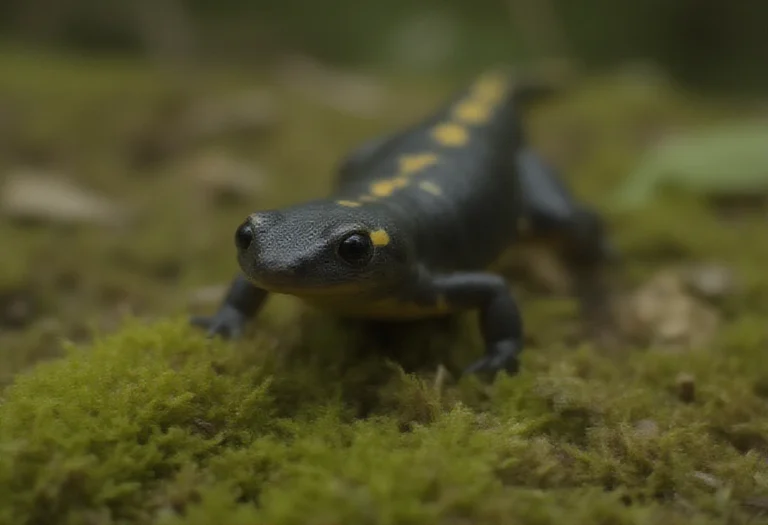
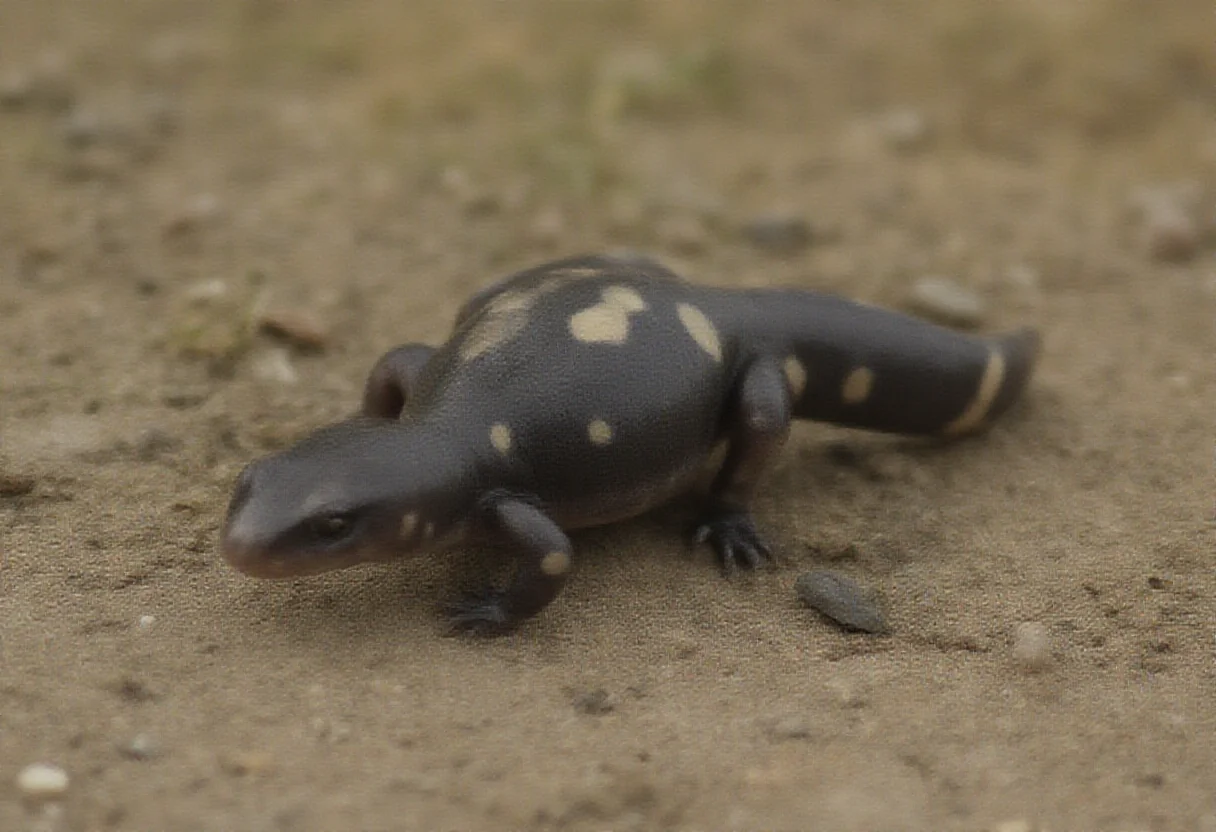
The California tiger salamander (Ambystoma californiense) is a large, mostly underground salamander found only in California. Adults average 16 to 24 cm. They shelter in rodent burrows and travel to ponds on rainy nights to breed. The US Fish and Wildlife Service protects three populations: Central California is threatened, while the Sonoma County and Santa Barbara County populations are endangered.
This salamander was once treated as a subspecies of the tiger salamander. Today it is recognised as its own species, and it lives in only one state.
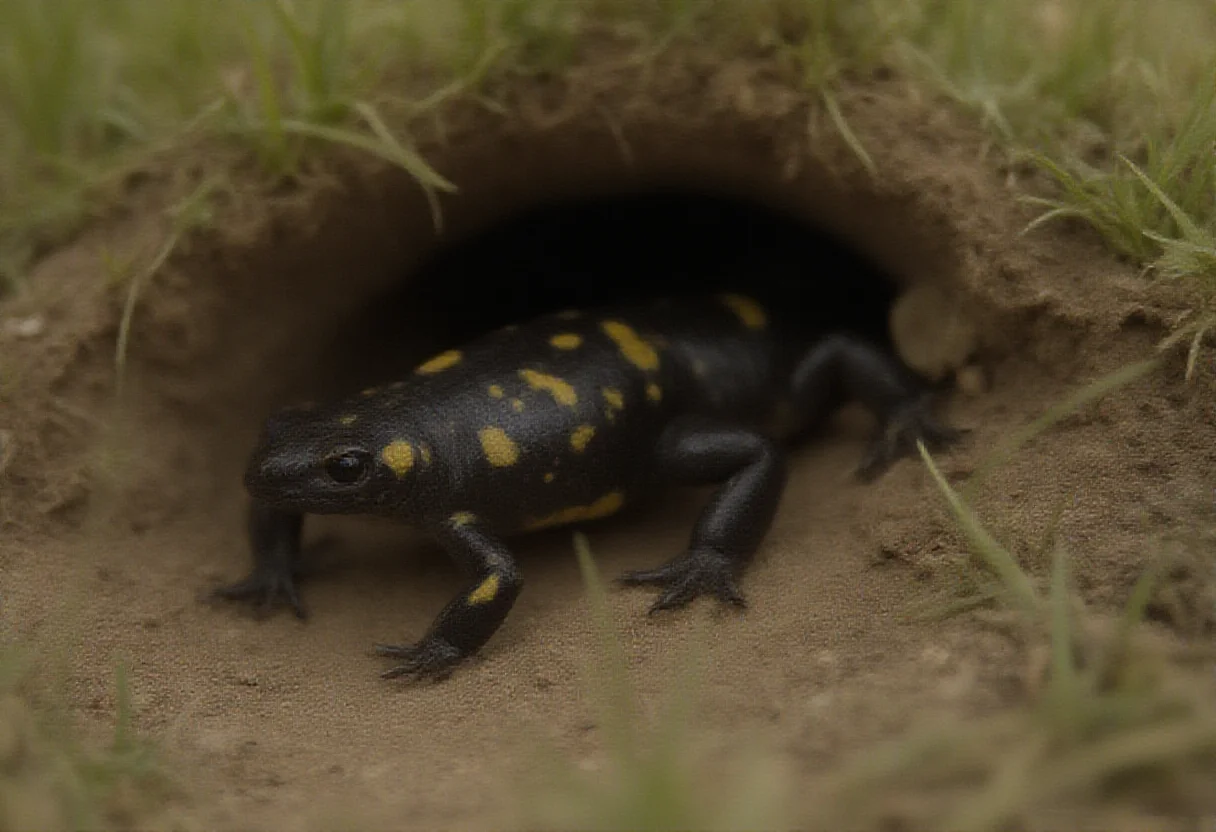
Most of its life happens out of sight. Adults spend dry months in burrows dug by other animals. They come out only on a few wet nights each year. That makes the species hard to study and easy to harm.
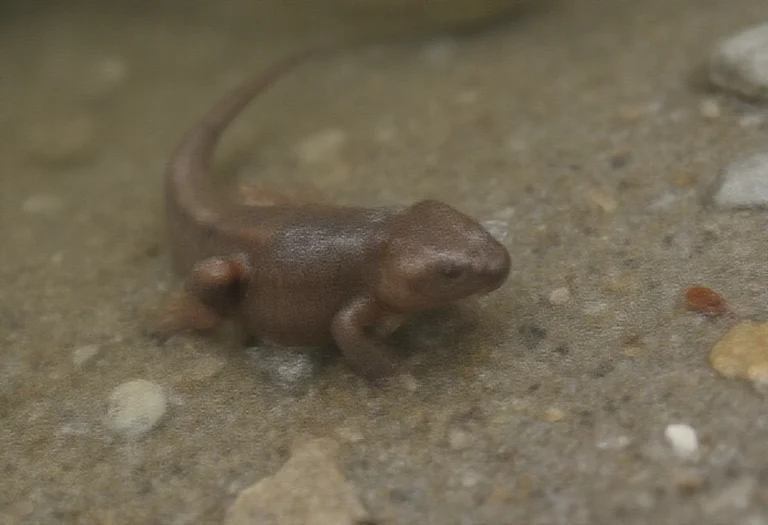
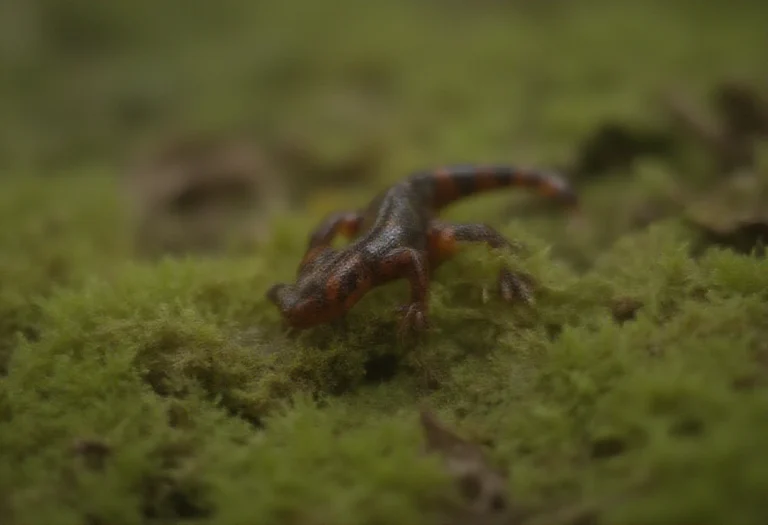
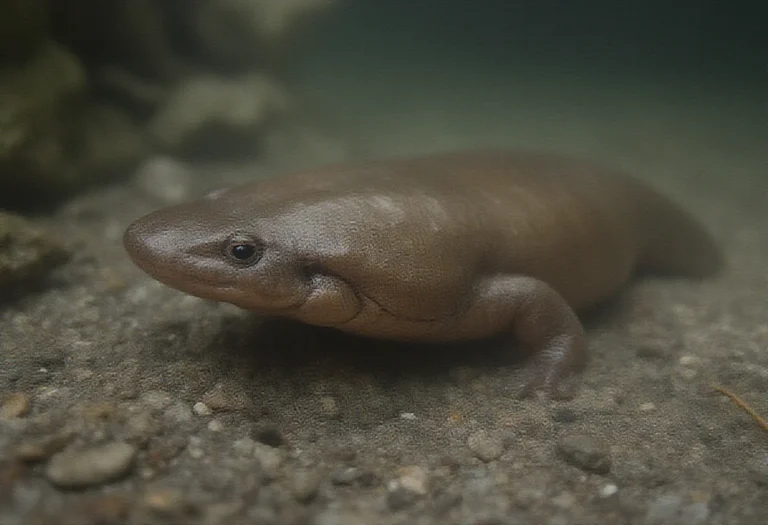
How this was made: prepared with AI assistance and checked against the sources listed at the end. Images are AI-generated illustrations, not photographs of real animals or products.
Key Takeaways
- The species is found only in California.
- Adults average 16 to 24 cm, and males are typically larger.
- They need both ponds that hold water for at least 12 weeks and nearby rodent burrows.
- Federal status differs by population: Central California threatened, Sonoma and Santa Barbara endangered.
- Hybridisation with introduced barred tiger salamanders is a growing threat.
- Wild adults live roughly 10 to 15 years.
Pin this infographicShare on Facebook
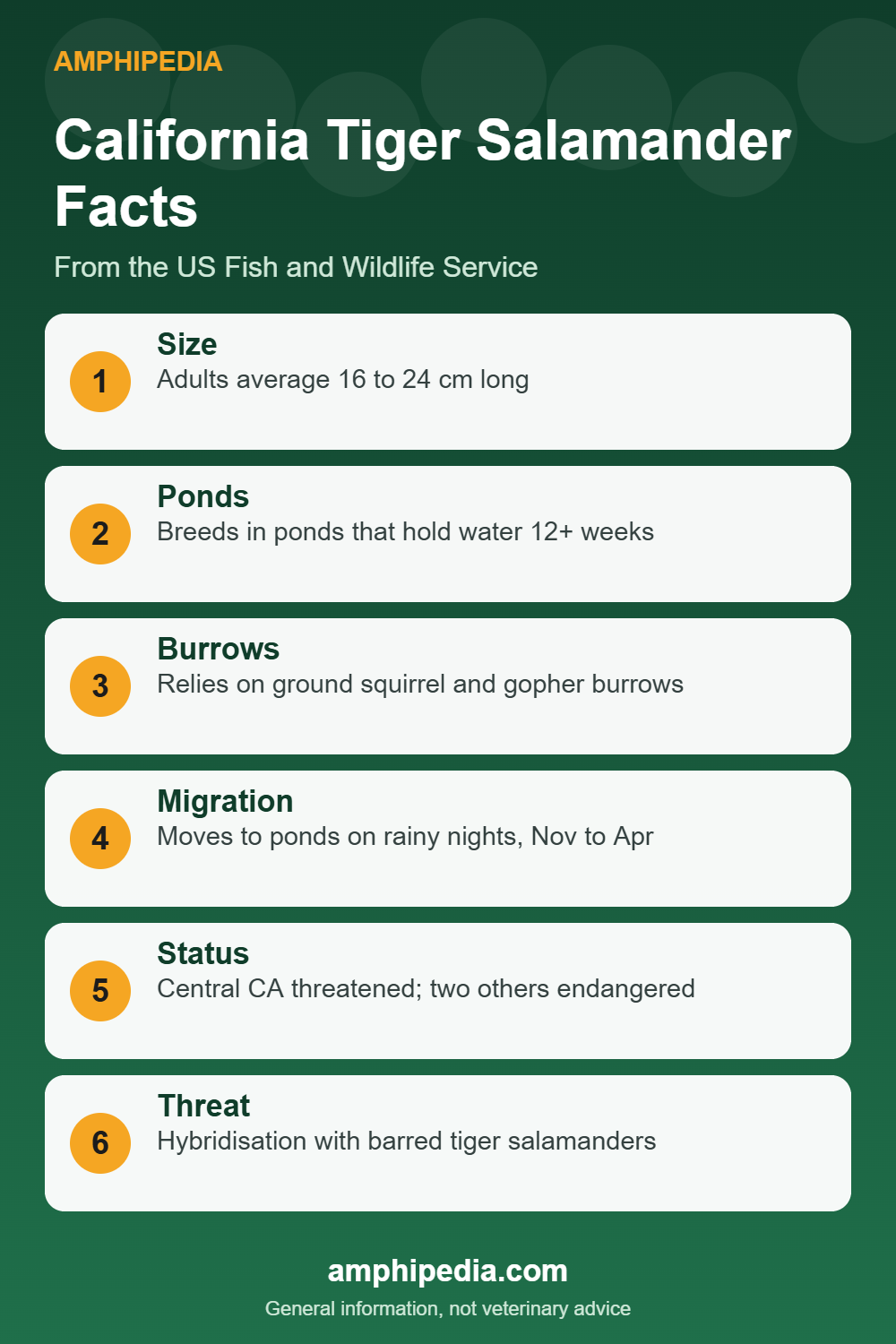
California tiger salamander quick facts
| Fact | What sources report |
|---|---|
| Scientific name | Ambystoma californiense |
| Adult length | 16 to 24 cm (USFWS); 17 to 20 cm (ADW) |
| Lifespan | 10 to 15 years (USFWS); 12 to 15 wild, up to 25 captive (ADW) |
| Breeding season | Rainy nights, mainly November to April |
| Eggs hatch | 10 to 28 days |
| Larval stage | Usually 3 to 6 months |
| Federal status | Threatened (Central CA); endangered (Sonoma, Santa Barbara) |
Where it lives
The US Fish and Wildlife Service (USFWS) says the historical range covered the San Joaquin and Sacramento valleys, the bordering foothills and coastal valleys of Central California. Each population’s range has since shrunk.
The Central California population lives in the Central Valley and Inner Coast Range, from Tulare and San Luis Obispo counties north to Sacramento and Yolo counties. The Sonoma County population has a core range of about 18,000 to 20,000 acres of fragmented habitat on the Santa Rosa Plain. The Santa Barbara County population lives only in the northern part of that county.
ADW adds that most records come from lower elevations, with an average of 427 m.
Habitat: ponds below, burrows above
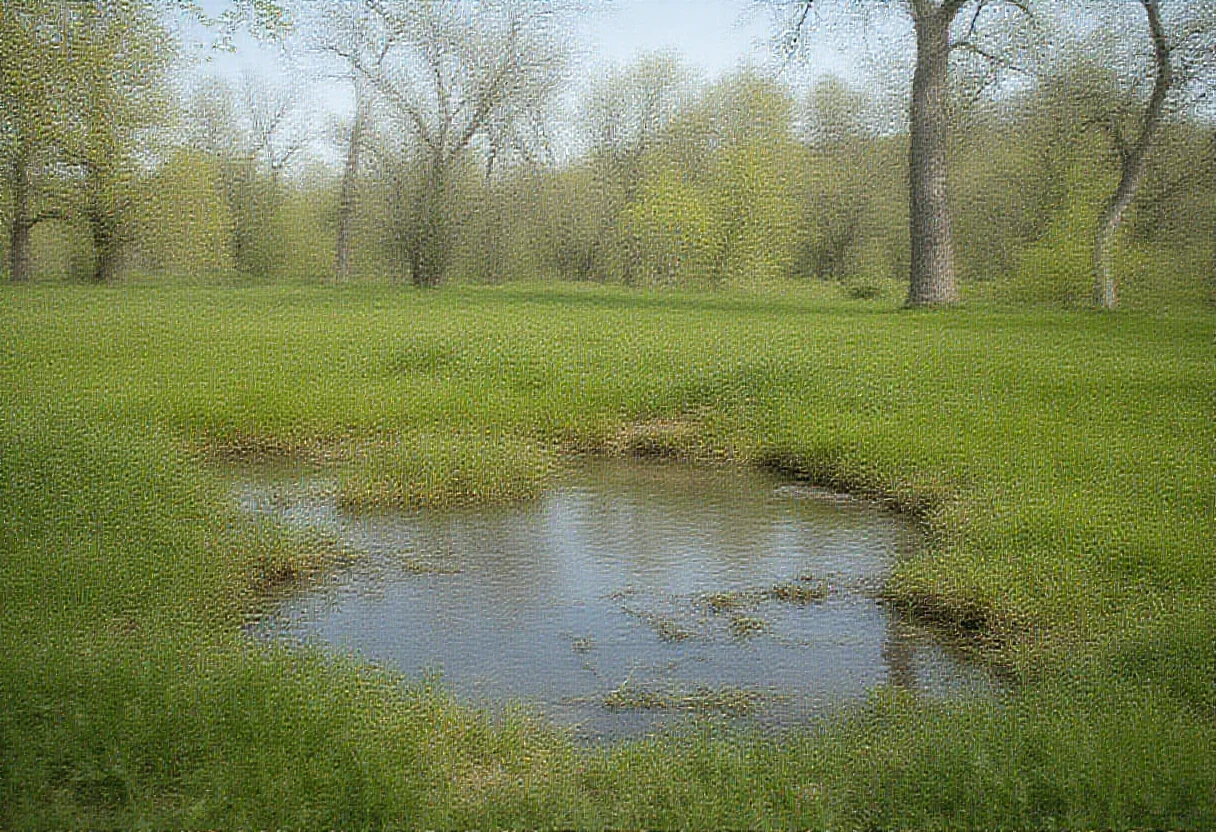
This salamander needs two habitats. For breeding, it uses standing fresh water such as ponds and vernal pools that hold water for at least 12 weeks. That is the minimum the USFWS gives for larval development. ADW adds that fish-free sites are preferred.
For the rest of the year, it lives underground. The USFWS says it uses burrows dug by California ground squirrels and valley pocket gophers. Those burrows give shelter, protection from predators and drying out, and a place to find insect prey.
A USFWS species account explains why this matters: the salamanders are poor burrowers. They depend on burrows that other animals made. ADW reports adults in burrows from 0.2 to 1.36 m deep, usually within 1 mile of breeding ponds.
Size and appearance
The USFWS gives an adult average of 6 to 9.5 inches (16 to 24 cm), with males typically larger than females. ADW gives 170 to 200 mm and says males are about 30 mm longer on average.
For comparison with other tiger salamanders, see our guide to tiger salamander size and the page on the eastern tiger salamander.
What it eats
Larvae eat algae, crustaceans and insect larvae. As they grow, ADW says they add tadpoles, aquatic insects and other invertebrates. Cannibalism occurs in some conditions.
Adults eat arthropods and other land invertebrates. ADW says they feed mainly underground or on the surface at night.
Breeding and life cycle
Adults migrate to breeding ponds on a few rainy nights per year, mostly between November and April. Males arrive before females and stay far longer: about 44.7 days on average, compared with 11.8 days for females, according to the USFWS.
Eggs hatch in 10 to 28 days. Larvae usually stay in the pond for 3 to 6 months before metamorphosis. Juveniles leave their birth ponds mainly between May and July.
The pond must stay wet long enough. A pool that dries early can strand larvae before they transform.
Conservation status
The USFWS lists three populations. Central California is threatened. Sonoma County and Santa Barbara County are endangered. ADW describes an older all-endangered federal listing and an IUCN rating of Vulnerable, so check the current USFWS page for the latest status.
ADW also says California lists the species under the state Endangered Species Act. Check the California Department of Fish and Wildlife for the current category before any work that could affect the animals.
Threats
Hybridisation is the threat that sets this species apart. The USFWS says hybrids with barred tiger salamanders are increasing. They can produce fertile offspring with higher survival than either parent, and hybrids and pure barred salamanders prey on young California tiger salamanders and compete with them.
An older USFWS species account notes that barred salamanders were imported as fish bait. The same account lists habitat loss from development and farming as the primary cause of decline.
Other threats on that list include bullfrogs, introduced fish and crayfish, ground squirrel poisons, mosquito-control pesticides and cars that kill migrating adults.
How it compares with other tiger salamanders
Tiger salamanders are a group of related species. Some, like the Sonoran tiger salamander, are also threatened. The Sonoran tiger salamander guide explains that case.
Unlike widespread species, the California tiger salamander has a small home range and a long list of local threats. That is why it is protected.
Frequently Asked Questions
Is the California tiger salamander endangered?
The USFWS lists the Central California population as threatened and the Sonoma and Santa Barbara populations as endangered.
How big is a California tiger salamander?
Adults average 16 to 24 cm according to the USFWS. ADW gives 17 to 20 cm.
Where do California tiger salamanders live?
Only in California, in the Central Valley, Inner Coast Range, Santa Rosa Plain and northern Santa Barbara County.
Why do they use rodent burrows?
They are poor burrowers. They rely on burrows dug by ground squirrels and gophers for shelter in the dry season.
What is the biggest threat?
Habitat loss is listed as the primary cause of decline. Hybridisation with introduced barred tiger salamanders is increasing.
How long do they live?
The USFWS says 10 to 15 years. ADW reports 12 to 15 in the wild and up to 25 in captivity.
Bottom Line
The California tiger salamander shows why protecting breeding ponds is not enough. The animals also need the grassland burrows around them, and the squirrels that dig those burrows.
If you live in its range, avoid poisoning ground squirrels and keep fish and non-native salamanders out of ponds.
Sources
- US Fish and Wildlife Service: California tiger salamander species page, accessed 31 October 2026
- Animal Diversity Web (University of Michigan): Ambystoma californiense, accessed 31 October 2026
- USFWS Sacramento office: California Tiger Salamander species account (2009), accessed 31 October 2026