Barred Tiger Salamander: Range, Size and Facts
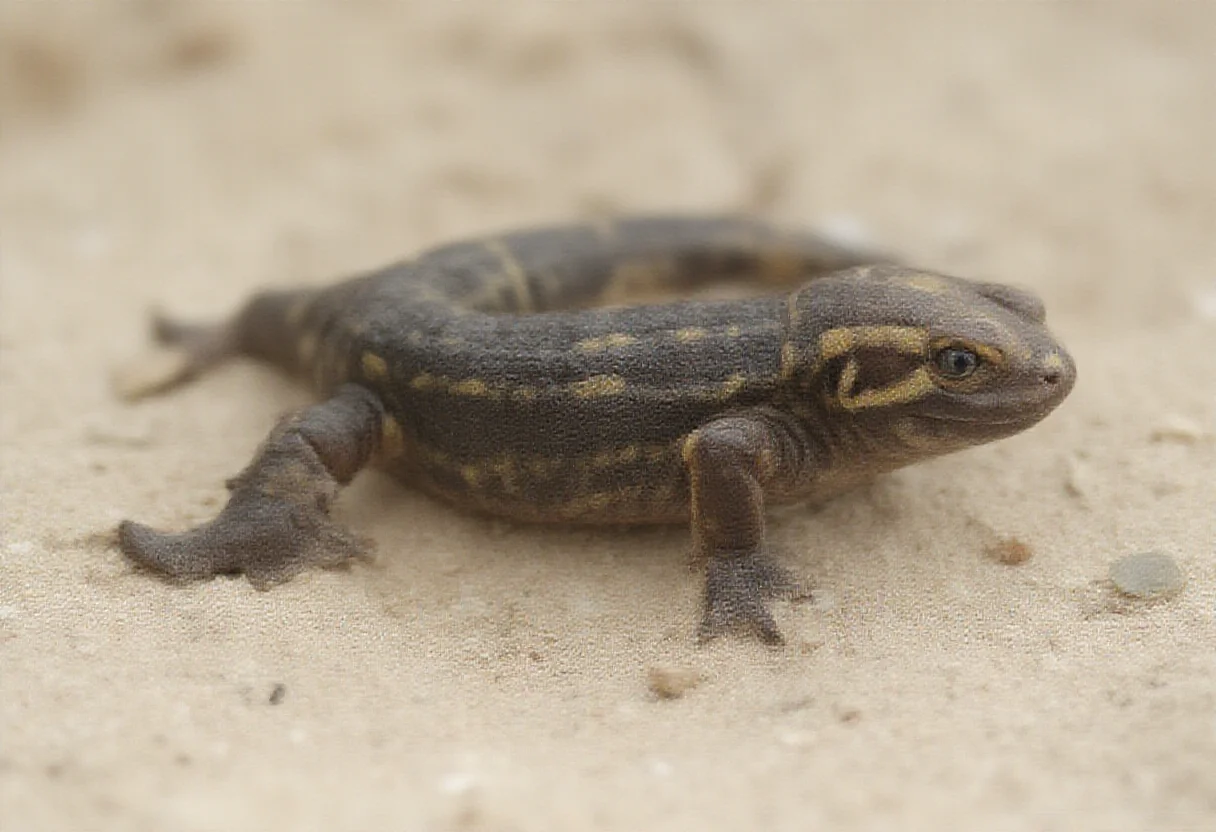
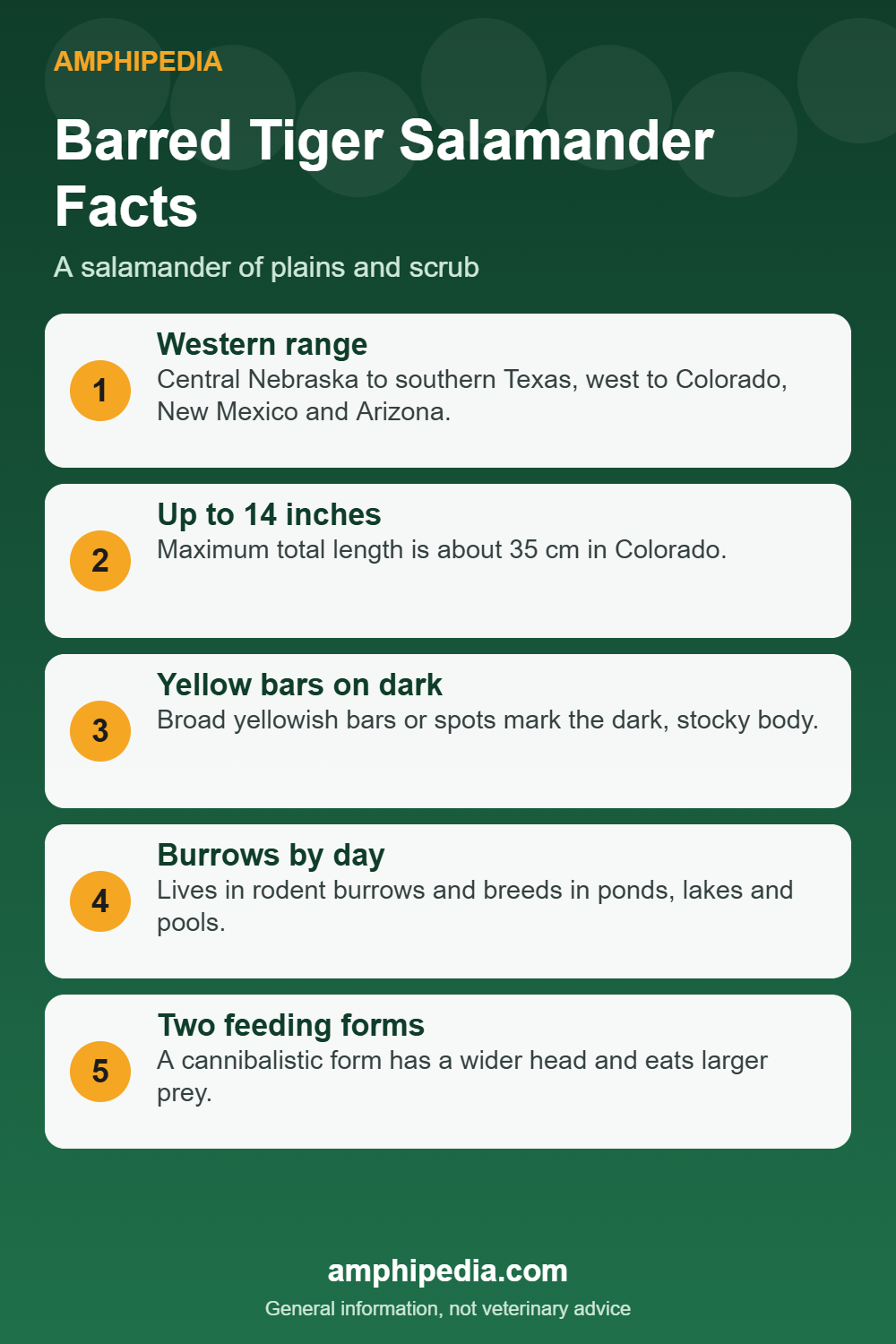
The barred tiger salamander (Ambystoma mavortium mavortium) is a stocky, dark salamander with broad yellowish bars or spots. It lives in the Great Plains and Southwest, from central Nebraska south to southern Texas and west to central Colorado and New Mexico. Adults reach about 14 inches (35 cm) in total length. They spend most of their lives in burrows and visit ponds and lakes to breed. It is not a Great Lakes species.
The barred tiger salamander is often mixed up with other tiger salamanders, and its range is often described wrongly. It is a western species of open grassland and scrub, not an animal of the Great Lakes.
This guide covers where it lives, how it looks, how big it grows and how its life cycle works. For its Arizona cousins, see the Arizona tiger salamander guide.
How this was made: prepared with AI assistance and checked against the sources listed at the end. Images are AI-generated illustrations, not photographs of real animals or products.
Key Takeaways
- It is a western subspecies found from Nebraska to Texas and west to Colorado and New Mexico.
- Adults reach up to about 14 inches (35 cm) in total length.
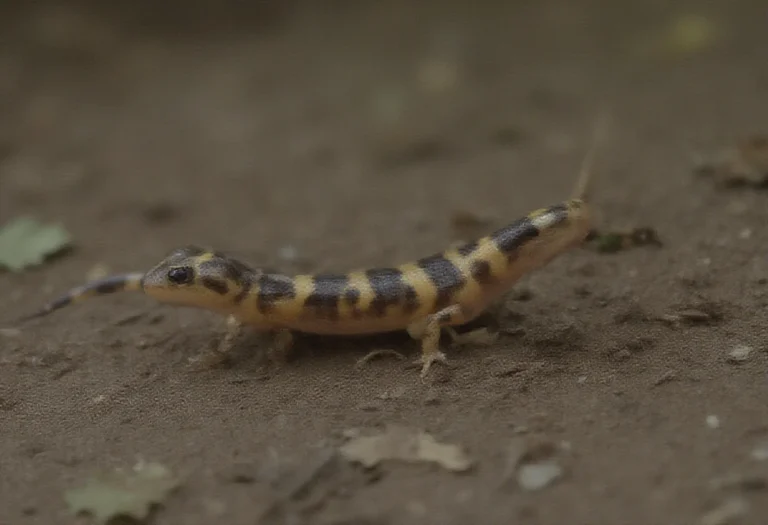
- It has broad yellowish bars or spots on a dark body.
- It breeds in lakes, ponds and pools, then returns to rodent burrows.
- Some larvae turn into large, cannibalistic gilled forms.
Pin this infographicShare on Facebook
Where the barred tiger salamander lives
Caudata Culture gives the range of the barred form as central Nebraska south to southern Texas, and west to central Colorado and New Mexico. The Arizona Game and Fish Department adds central and southeast Arizona. None of these sources list the Great Lakes region.
The eastern tiger salamander (Ambystoma tigrinum) is the tiger salamander of the east. See the eastern tiger salamander guide to compare.
Barred, eastern, Arizona and Sonoran: how they differ
Colorado Parks and Wildlife notes that the barred tiger salamander was once treated as a subspecies of the tiger salamander. It is now often listed in its own species, Ambystoma mavortium. It is lighter in color, with dark speckles and bars, while the eastern species has a darker body with lighter spots.
Within Ambystoma mavortium, the barred form shares the species with the Arizona, blotched, gray and Sonoran forms. The Arizona field guide says the Sonoran type often looks like the barred type, so range is a key clue. See the Sonoran tiger salamander page.
What it looks like and how big it gets
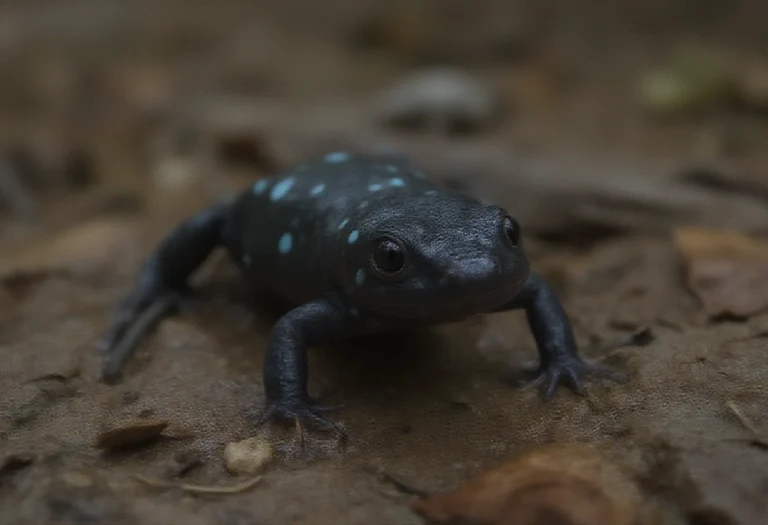
Adults are stocky, with a broad head, small eyes and smooth, moist skin. Colorado Parks and Wildlife describes colors from black with yellowish bars or spots to pale or dark with dark mottling. The Arizona field guide describes large, distinct yellowish bars or spots on a dark background.
The maximum total length in Colorado is about 35 cm (under 14 inches). The Arizona field guide gives 13.6 inches for terrestrial adults. See the tiger salamander size guide for more on growth.
| Feature | What sources report |
|---|---|
| Total length | Up to about 35 cm (14 in) |
| Body | Stocky, broad head, small eyes, smooth moist skin |
| Pattern | Yellowish bars or spots on a dark body |
| Side grooves | 11 to 14 on each side |
| Larvae | Three pairs of feathery gills |
Habitat and daily life
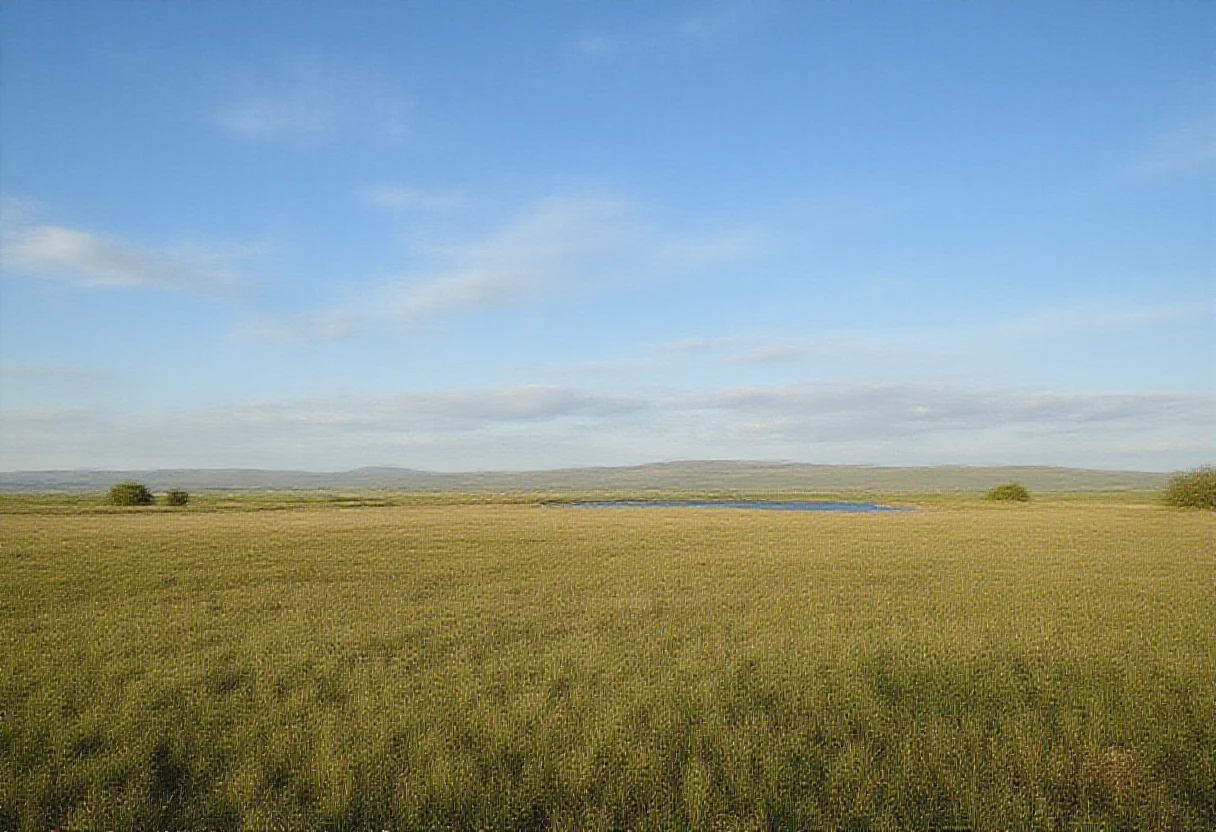
Barred tiger salamanders breed in lakes, reservoirs, ponds and pools. On land they are usually found in rodent burrows, according to Colorado Parks and Wildlife. They are most active on the surface at night during damp weather.
In Arizona, they live mainly in desert scrub and semi-desert grassland. Adults can be found 2 to 3 miles from their breeding ponds.

Breeding and life cycle
The Colorado agency says breeding happens in spring or summer. Eggs are attached to submerged plants or objects, singly, in short rows or in small clusters. In Arizona, breeding runs January to May and females lay 200 to 2,000 eggs.
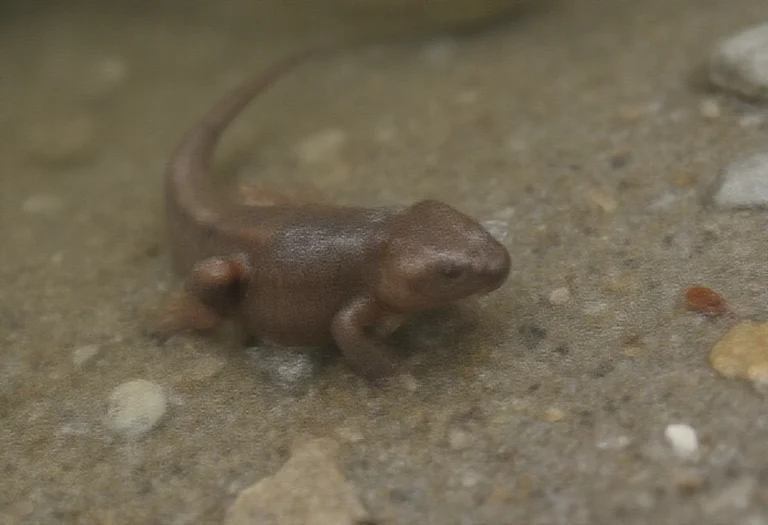
Larvae have three pairs of gills, and the front legs develop before the hind legs. Some gilled larvae mature and breed without leaving the pond. See the guide to tiger salamander eggs for the egg stage.
Two feeding forms
Colorado Parks and Wildlife describes a typical form and a cannibalistic form. The cannibalistic form has large rounded upper teeth, a slimmer body and a wider head. It matures earlier and lives in drier areas and shallow water.
It eats larger prey, including fathead minnows. Caudata Culture says this form appears when larvae of different sizes live together. Typical larvae eat small aquatic animals.
Living with rain and drought
The Arizona field guide says the life history of this species helps populations persist in changing conditions. During drought, adults wait in the uplands and breed in later wet years. In wet periods, both terrestrial adults and gilled adults breed, and if upland adults decline, the aquatic gilled adults can still sustain the population.
Caudata Culture says breeding follows rains that trigger migration to ponds, with males arriving first and leaving last. It reports that sexual maturity can come in as little as five months in ephemeral pools and take up to three years in some subalpine lakes.
Timing varies with water temperature. The Arizona guide gives egg hatching as 14 to 50 days, and says larvae can metamorphose in as little as 2 months, though the larval period is usually longer and some larvae overwinter. Caudata Culture gives 19 to 50 days for hatching.
What it eats at each stage
The Arizona field guide separates the diet by life stage:
- Larvae and gilled adults: a wide range of invertebrates. Cannibalistic forms take larger prey and may prefer their own kind.
- Terrestrial adults: surface and subterranean invertebrates.
- Adults and large larvae: also vertebrates such as tadpoles, lizards, small snakes and mice.
Colorado Parks and Wildlife adds that eating competitors gives the cannibalistic form more food overall. Caudata Culture says tiger larvae rarely use breeding waters where predatory fish are present.
Fine details that help with identification
Color is a poor guide on its own, so researchers and agencies note smaller features.
- Colorado Parks and Wildlife lists four toes on each front foot, small bumps on the bottom of the feet, and 11 to 14 grooves on each side of the body.
- It says mature males have large dark papillae at the rear of the vent during the breeding season, and a relatively long tail.
- AZGFD says adult males have two black cloacal folds, which help separate them from females.
- AZGFD also notes that old adults tend to darken, which makes subspecies identification difficult.
Range and location remain the strongest clues. A salamander in a Nebraska stock pond is a different question from one in a southern Arizona cattle tank.
The Sonoran cousin: why moving salamanders matters
The Sonoran tiger salamander (Ambystoma mavortium stebbinsi) is a subspecies of the same species. In Arizona the field guide places it in the San Rafael Valley and nearby slopes of the Huachuca and Patagonia mountains. The Arizona Game and Fish Department (AZGFD) abstract adds that it also occurs in Sonora, Mexico, and that known Arizona populations sit at about 1,418 to 1,897 m (4,650 to 6,220 ft). Both sources say it was listed as endangered under the Endangered Species Act in 1997.
The listed threats are predation by non-native fish, die-offs from an iridovirus, hybridization with barred salamanders, and drought. The guide notes that the barred form has been widely introduced by anglers and bait collectors, and is sometimes found in southern Arizona.
AZGFD names the key habitat feature as standing water from January through June. It lists non-native fish and bullfrogs, drought, pond drying, illegal bait collection, habitat loss, inbreeding and hybridization with introduced barred tiger salamanders among the threats. Its management notes stress habitat preservation, control of exotic introductions, and keeping pure stock in isolated tanks.
That is the practical lesson. The Arizona guide says many Sonoran salamanders are indistinguishable from barred ones, and that federal and state law protect the Sonoran subspecies from harassment, harm and collection. Do not move any tiger salamander between ponds.
Reading the size claims
Sources give slightly different maximums, partly because they measure different forms.
- Colorado Parks and Wildlife: maximum total length about 35 cm (under 14 inches).
- Caudata Culture: up to 13.78 inches (35 cm) for tiger salamanders, and it says they may be the longest terrestrial salamander in the world.
- Arizona field guide: terrestrial adults reach 13.6 inches total length, and cannibalistic forms up to about 15 inches.
The numbers fit together once you separate terrestrial adults from the large cannibalistic forms. Treat 14 inches as a ceiling for typical adults.
If you find one: a short guide
- Watch from a distance, especially on damp nights when adults move on the surface.
- Leave it where you found it. See the Sonoran notes above for why relocation is a problem.
- Do not take one home. Rules on collecting wild salamanders vary by state, so check your state wildlife agency first.
- If you touch one or its water, wash your hands with soap and water. The CDC says children younger than 5 years old should not handle or touch reptiles or amphibians or their environments.
Common mix-ups
- Axolotl: Caudata Culture says tiger larvae, often called waterdogs, closely resemble axolotls and are sometimes sold under that name.
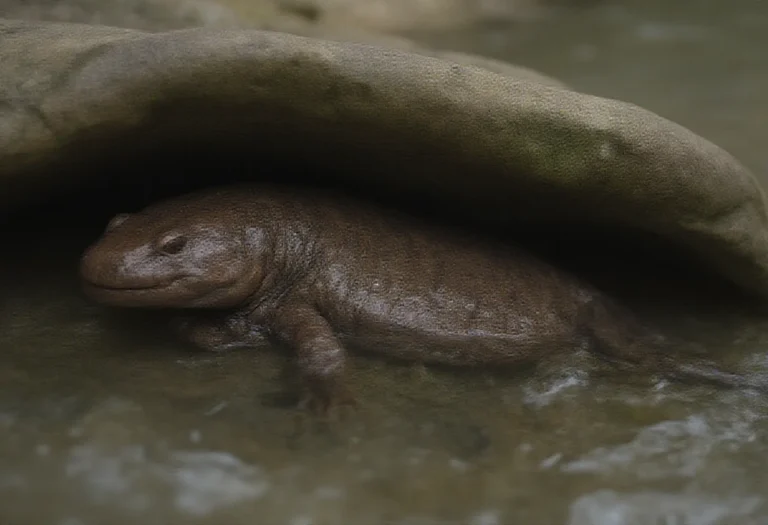
- Mudpuppy: the same page notes a superficial resemblance between mudpuppies (Necturus) and larval tigers.
- One species, one look: Caudata Culture lists eastern, barred, Arizona, blotched, gray and Sonoran types, so color alone is unreliable.
- Great Lakes salamander: not this one. The sources here do not list the Great Lakes in its range.
Frequently Asked Questions
Where do barred tiger salamanders live?
From central Nebraska south to southern Texas, and west to central Colorado and New Mexico. They also live in central and southeast Arizona.
Does the barred tiger salamander live around the Great Lakes?
No. The sources used here do not list the Great Lakes in its range. The eastern tiger salamander is the tiger salamander of the east.
How big does a barred tiger salamander get?
Up to about 35 cm (under 14 inches) in total length in Colorado.
What does a barred tiger salamander look like?
It is stocky and dark, with broad yellowish bars or spots. Some are pale or mottled.
Is it the same as the Sonoran tiger salamander?
No, but they are close relatives in the same species. The Sonoran form is a federally endangered subspecies from southern Arizona that often looks like the barred form.
What do they eat?
Typical forms eat small animals found in water or soil. The cannibalistic form eats larger prey, including fish and other salamanders.
Bottom Line
The barred tiger salamander is a common but secretive animal of open country. It spends most of its life underground and is easiest to see on damp nights and at breeding ponds.
To explore related species, read about the western tiger salamander and the Colorado tiger salamander.
Sources
- Colorado Parks and Wildlife: Barred Tiger Salamander, accessed 31 October 2026
- Caudata Culture: Ambystoma mavortium species page, accessed 31 October 2026
- Arizona Game and Fish Department: Ambystoma mavortium abstract, accessed 31 October 2026
- Online Field Guide to the Reptiles and Amphibians of Arizona: Tiger Salamander, accessed 31 October 2026
- CDC: Reptiles and amphibians, accessed 13 November 2026

4 Comments