Axolotl Facts for Kids: 12 Cool Things to Know
An axolotl is a salamander that lives in water and keeps its feathery gills for life. It comes from lakes near Mexico City, grows to about 20 to 30 cm long, and eats worms, insects and small animals. Axolotls can regrow lost limbs, which is why scientists study them. In the wild they are critically endangered.
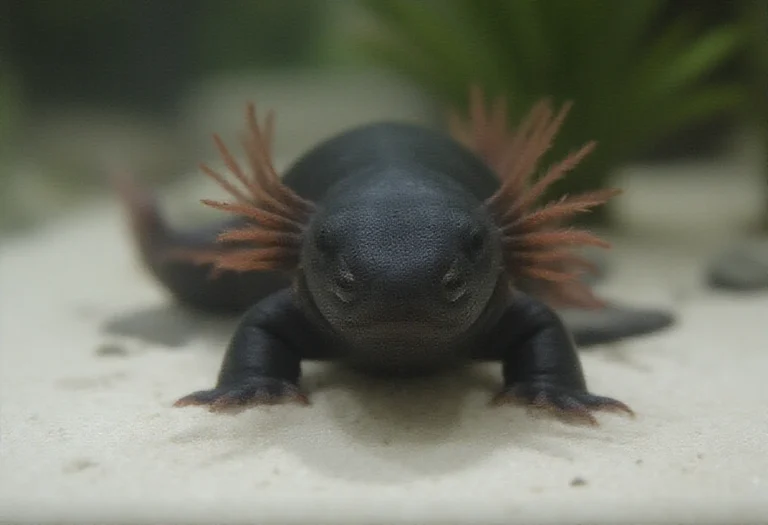
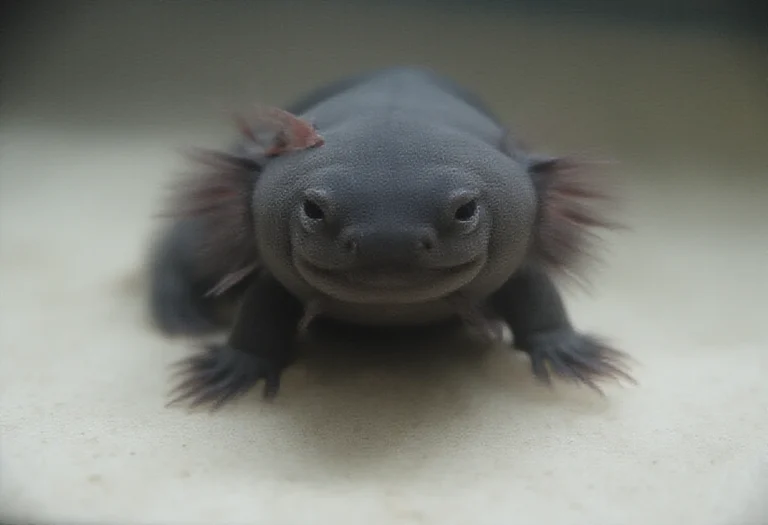
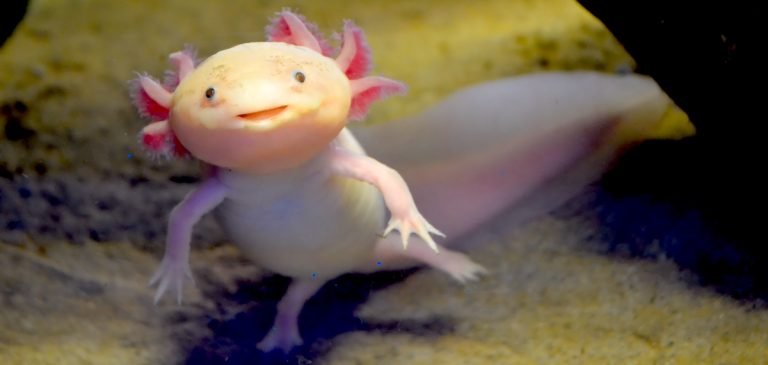
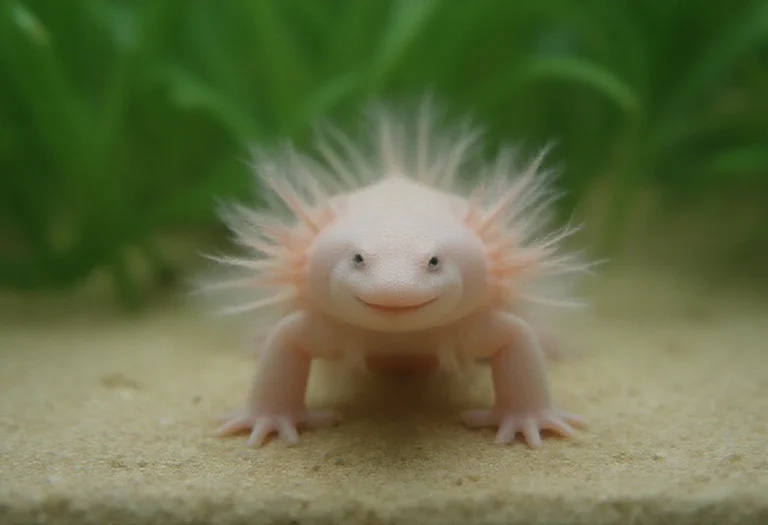
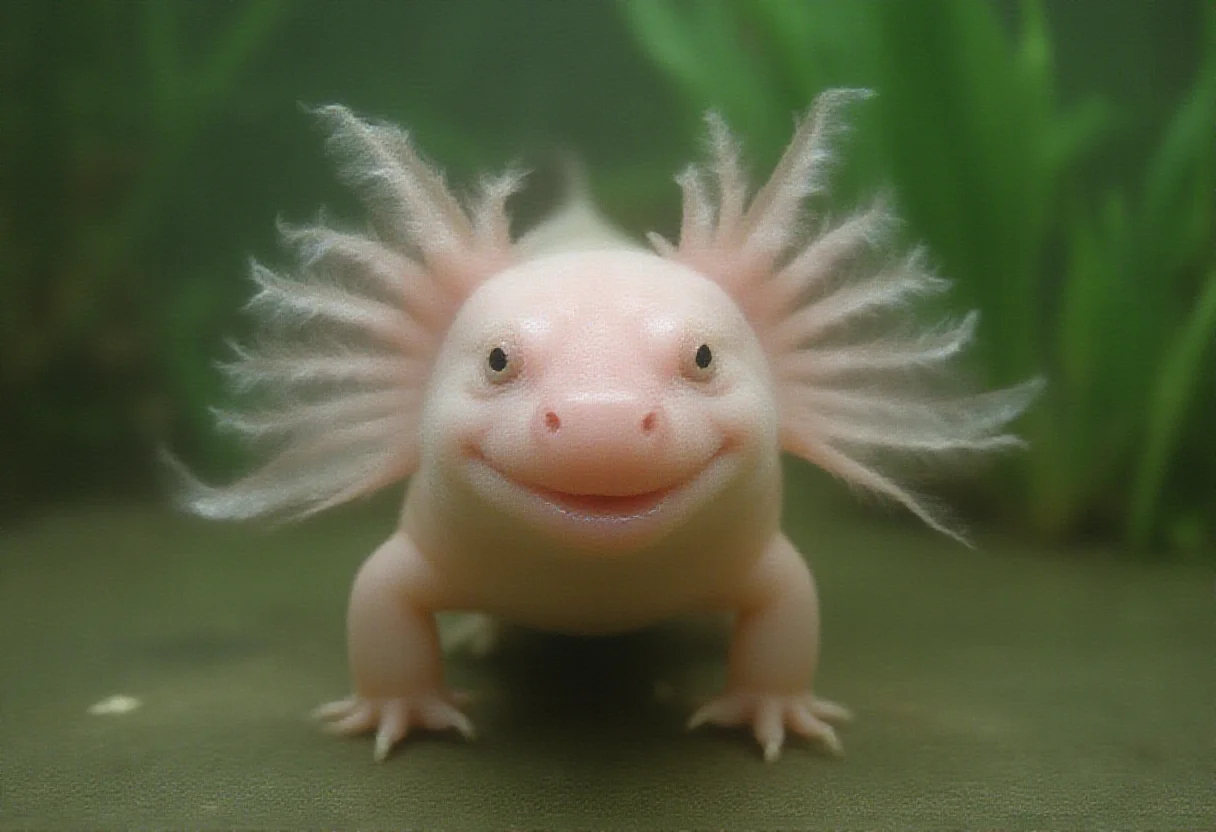
Axolotls look like smiling water dragons with feathery pink or dark gills. They are real animals, and they have some of the strangest skills in the animal world.
Read on for 12 facts from museums, universities and wildlife experts. Ask a grown-up to read along if a word is tricky.
How this was made: prepared with AI assistance and checked against the sources listed at the end. Images are AI-generated illustrations, not photographs of real animals or products.
Key Takeaways
- Axolotls are salamanders that live in water all their lives.
- They keep their feathery gills even as adults.
- Axolotls can regrow limbs, and scientists study how.
- Wild axolotls only live in canals near Mexico City.
- They are critically endangered in the wild.
- Kids should wash their hands after touching an axolotl tank.
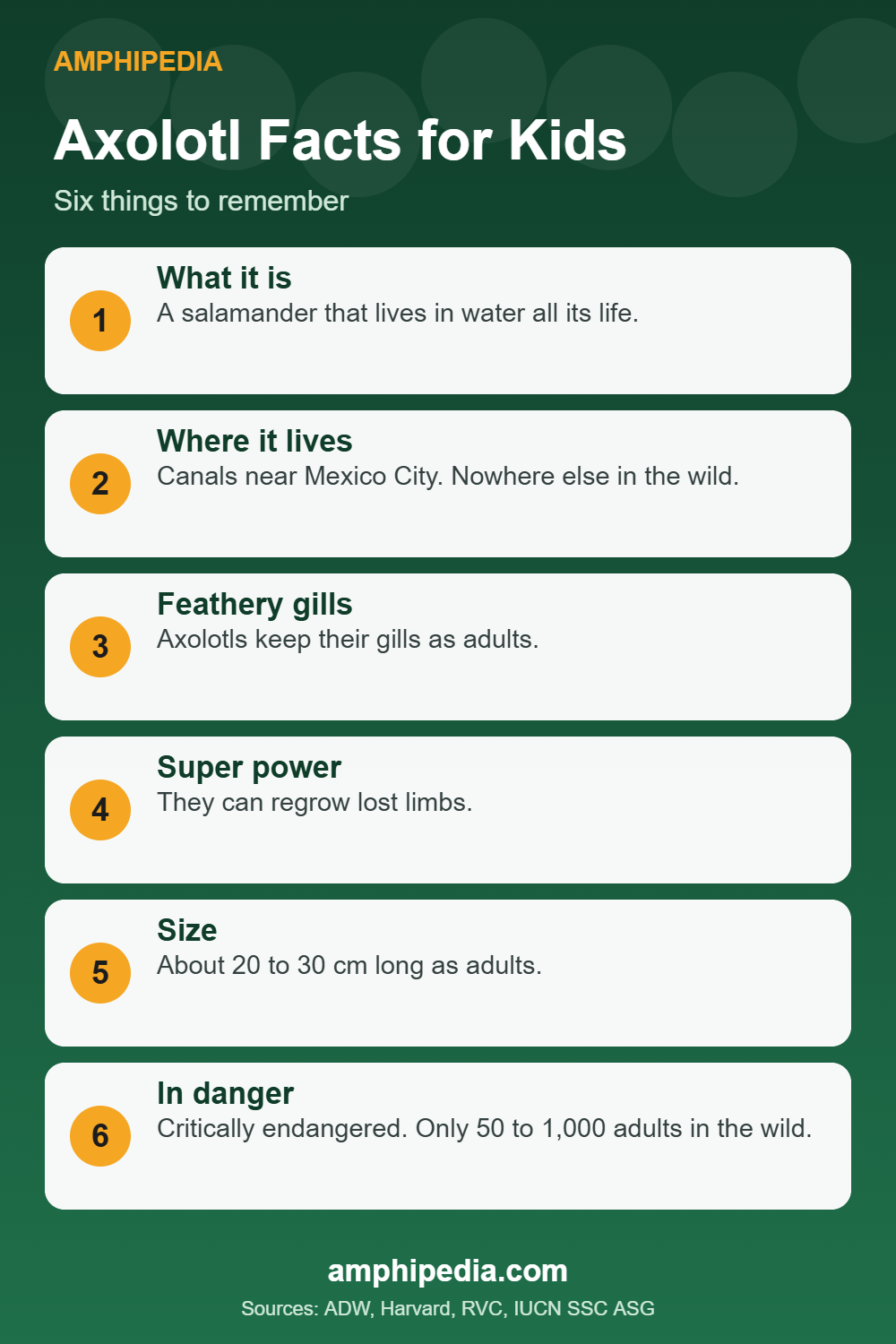
Pin this infographicShare on Facebook
12 axolotl facts for kids
- Axolotls belong to the salamander family. Salamanders are amphibians, like frogs and newts.
- Their only wild home is the lakes and canals near Mexico City, according to the Animal Diversity Web.
- The name comes from Nahuatl, a language of the Aztec people. A UC Santa Barbara article links it to the god Xolotl.
- Axolotls keep their feathery gills for life. Scientists call this staying young, or paedomorphosis.
- They live in water all their lives. Almost none ever climb onto land as adults.
- Adults are about 20 to 30 cm long. That is about the length of a school ruler.
- They eat meat. In the wild they catch fish, insects, worms, mollusks and tiny animals.
- They can regrow lost limbs. A Harvard lab studies how a clump of cells called a blastema builds the new limb.
- A female lays eggs one at a time, and each egg is about 2 mm wide. They hatch in about 10 to 14 days.
- In a lab, axolotls live 5 to 6 years on average. With good care, vets at the Royal Veterinary College say 10 to 12 years is common.
- They are critically endangered. An estimate from 2020 says only 50 to 1,000 adults remain in the wild.
- An axolotl appears on Mexico’s 50-peso banknote, which was released in 2021.

Where do axolotls live?
Wild axolotls live in fresh water, high up in the mountains near Mexico City. The Animal Diversity Web puts the average height at about 2,290 meters above sea level.
One of their lakes, Lake Chalco, has been drained. Today wild axolotls survive mostly in the canals of Xochimilco.
What do axolotls look like?
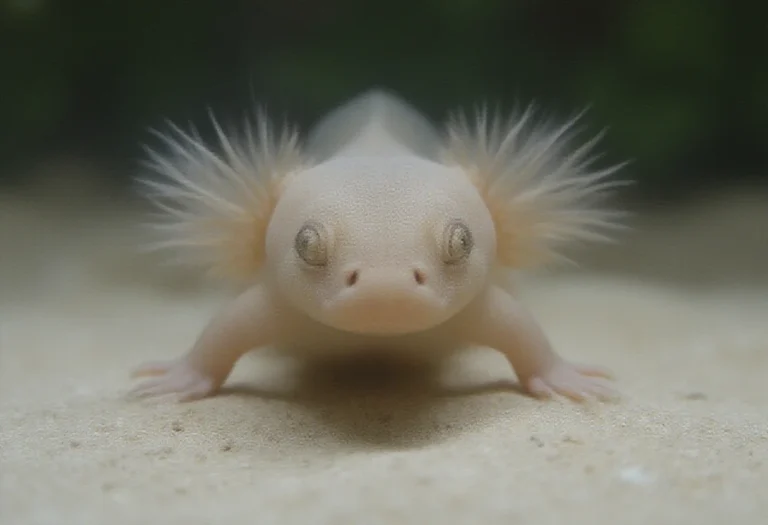
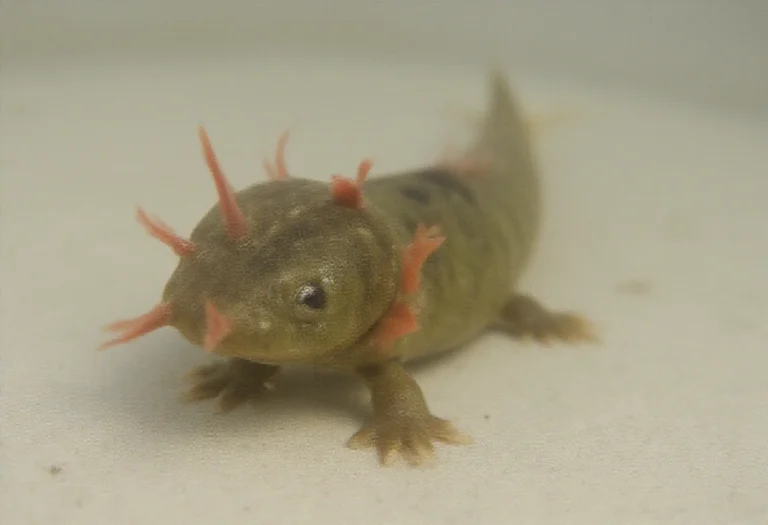
An axolotl has a wide head, tiny eyes, four short legs and a long tail with a fin. Feathery gills stick out from both sides of its head.
Axolotls come in several colors. In tanks you can see dark, pink, golden and spotted ones.
| Body part | What it is like |
|---|---|
| Gills | Feathery, outside the head, used for breathing |
| Tail | Long, with a fin for swimming |
| Legs | Four short legs |
| Size | About 20 to 30 cm for adults |
How do axolotls regrow body parts?
Harvard’s Whited Lab studies limb regeneration in axolotls. The lab says the key is the blastema, a group of stem cells that forms from the stump tissue and grows the new limb.
The lab adds that mammals, which includes people, generally do not form a blastema after most amputations. That may be why we cannot regrow arms or legs. Researchers hope the axolotl can teach us how medicine could help the human body heal.
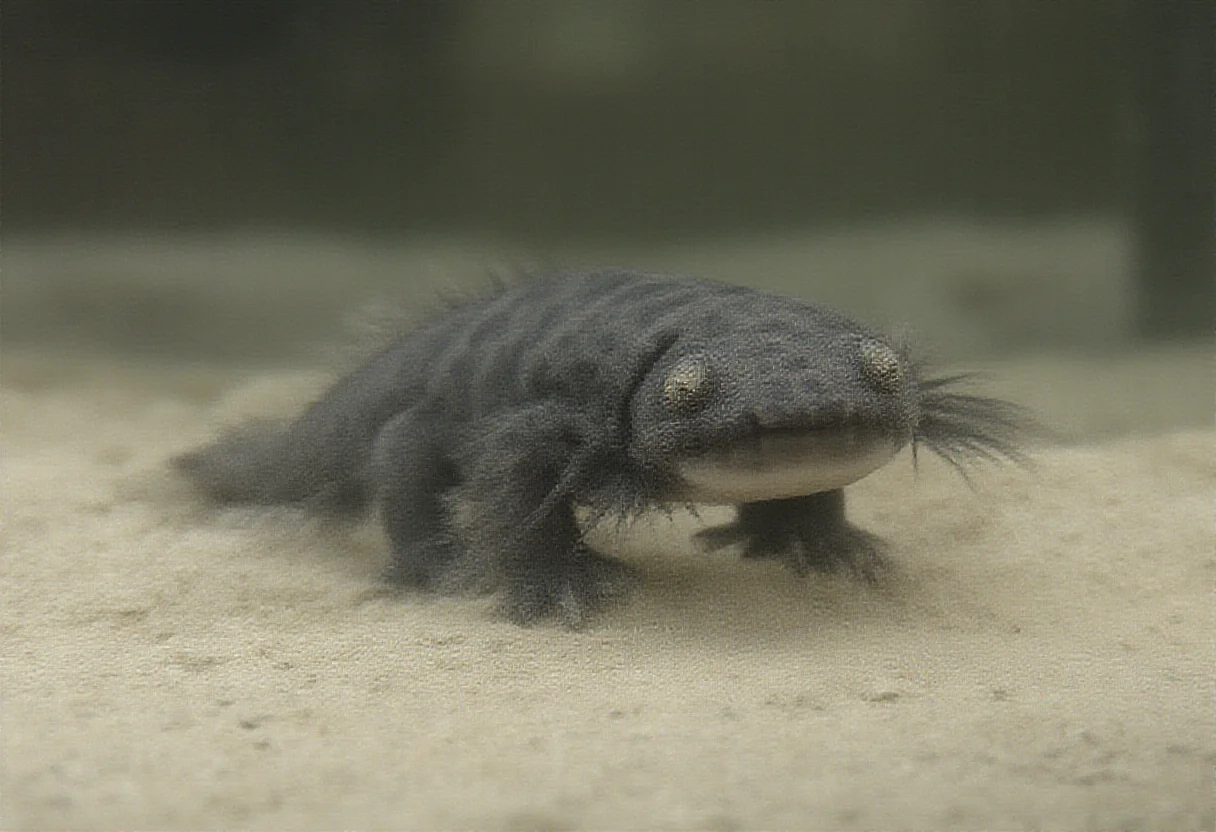
Why are axolotls in danger?
Wild axolotls face big problems. City growth and dirty water have hurt the canals, and new kinds of fish do not belong there. A UC Santa Barbara article says tilapia and carp eat young axolotls.
In 1998 there were about 6,000 axolotls in each square kilometer of Xochimilco. By 2014 there were only about 36.
Can kids keep an axolotl?
Some people keep axolotls as pets, but they need cool, clean water and an adult who knows how to care for them. The Royal Veterinary College says water should be 16-18°C and never above 24°C.
The CDC says children under 5 should not handle amphibians or their environments, and all kids should wash their hands with soap after touching an amphibian tank. Rules about owning axolotls differ by place, so ask an adult to check with your state wildlife agency.
Want more? Read our axolotl facts and fun facts about axolotls posts, or learn about the axolotl life cycle.
Frequently Asked Questions
Is an axolotl a fish?
No. It is an amphibian and a salamander, even though it lives in water all its life.
Why do axolotls have gills outside their bodies?
They are paedomorphic, which means they keep larval features such as external gills as adults (ADW).
Can axolotls grow back legs?
Yes. A Harvard lab studies how axolotls regrow limbs using a blastema.
What do axolotls eat?
In the wild they eat fish, insects, worms, mollusks and zooplankton, per ADW.
How long do axolotls live?
About 5 to 6 years in labs and often 10 to 12 years in good care.
Are axolotls endangered?
Yes. The IUCN lists them as Critically Endangered.
Bottom Line
Axolotls are smiling salamanders with feathery gills, and they can regrow lost limbs. They are also one of the rarest animals in the wild.
Share these facts with friends and family. Learning about axolotls is one of the best ways to help protect them.
Sources
- Animal Diversity Web: Ambystoma mexicanum (University of Michigan), accessed 31 October 2026
- Royal Veterinary College: Axolotl care and advice, accessed 31 October 2026
- Harvard Stem Cell and Regenerative Biology: Whited Lab research, accessed 31 October 2026
- UC Santa Barbara Geography: Mexico’s Water Monsters Are Becoming Extinct, accessed 31 October 2026
- San Diego Zoo Wildlife Alliance library: Axolotl population, accessed 31 October 2026
- Global Press Journal: Meet the surprising star of Mexico’s new bank note, accessed 31 October 2026
- CDC: Reptiles and amphibians, accessed 31 October 2026