African Bullfrog as a Pet: Is It Right for You?
This post contains affiliate links. As an Amazon Associate I earn from qualifying purchases. Prices and availability are shown by Amazon and can change.
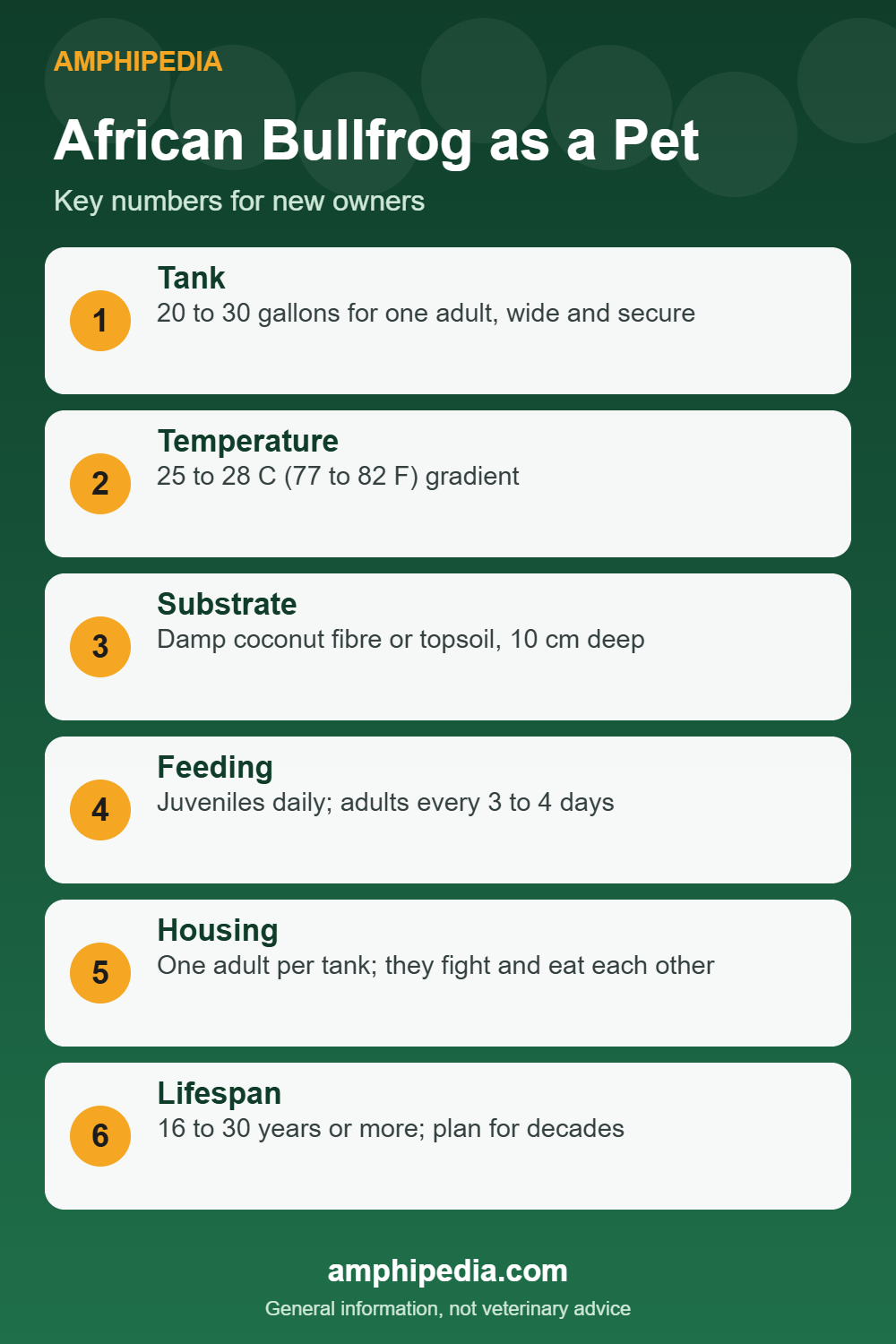
An African bullfrog can be a rewarding pet for an experienced keeper, but it is a long commitment and not a beginner frog. Adults reach 20 to 25 cm, live 16 to 30 years or more, can bite painfully and must live alone. They need a 20 to 30 gallon tank, 25 to 28 C, damp substrate, clean water and supplemented insects.
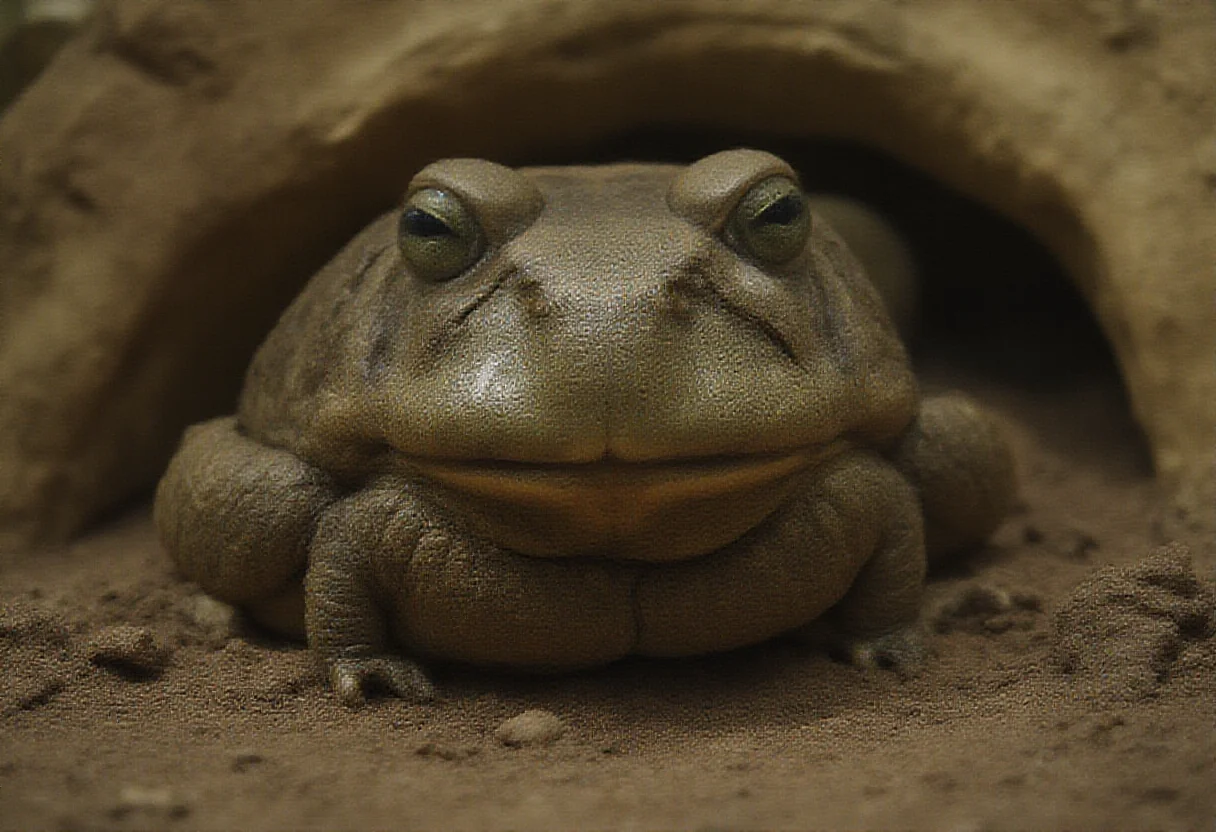
African bullfrogs are bold, round and hungry. They sit buried and wait for food, which makes them fun to watch.
This guide covers the key facts for a new owner: size, lifespan, housing, feeding and safety. Rules on keeping them vary by place, so check your local wildlife agency.
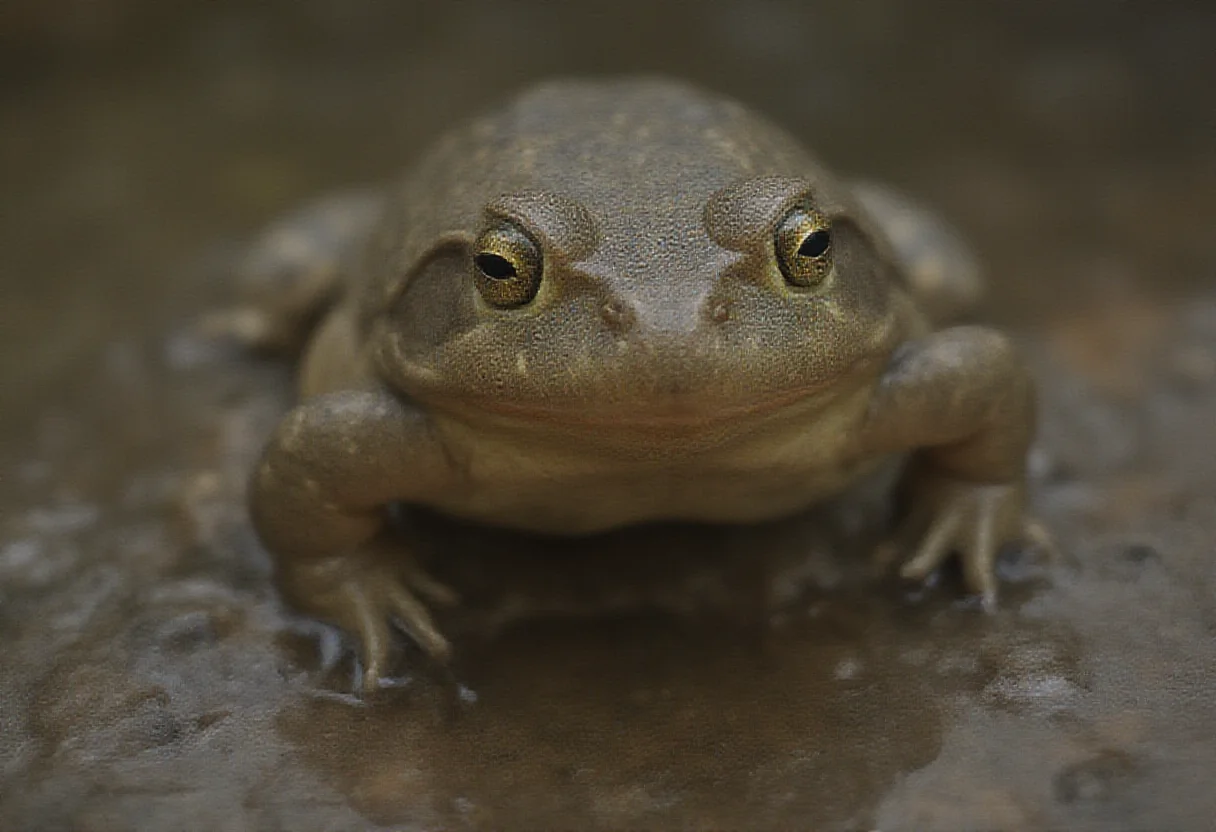
How this was made: prepared with AI assistance and checked against the sources listed at the end. Images are AI-generated illustrations, not photographs of real animals or products.
Key Takeaways
- Adults need a tank of 20 to 30 gallons for one frog.
- Keep the temperature at 25 to 28 C (77 to 82 F).
- House adults alone; they are aggressive and cannibalistic.
- Feed with tongs and dust prey with vitamins and calcium.
- Handle rarely, if at all.
- Expect to care for the frog for 16 to 30 years or more.
Pin this infographicShare on Facebook
Gear for an African Bullfrog Setup
These product types match the setup points above. Check size and material before you buy.


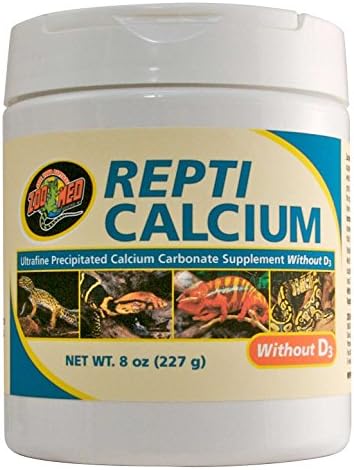

Product titles, prices and ratings are provided by Amazon and are accurate only at the time they are displayed.
Is an African bullfrog a good pet?
It depends on your experience. Adults are big, strong and can inflict a painful bite, per Lafeber Veterinary. They also produce a lot of waste and need frequent cleaning.
Lifespan is long. Animal Diversity Web cites 16.2 years in captivity, and VetVerified says 20 to 30 years with proper care. Plan for decades.
Tank size and setup
Lafeber says one adult can live in a 20 gallon long terrarium. VetVerified recommends at least 30 gallons (110 litres) and a wide, shallow, secure enclosure. A larger tank is easier to keep clean.
Use 10 cm (4 in) or more of moisture-retaining substrate, such as coconut fibre or organic topsoil, says VetVerified. Avoid gravel. Add a hide at each end and a large shallow water dish. Lafeber also lists a bare tank with 1 to 2 in of water and a haul-out platform as an option.
| Need | Figure | Source |
|---|---|---|
| Tank, one adult | 20 gallons long (Lafeber); at least 30 gallons (VetVerified) | Lafeber, VetVerified |
| Temperature | 25 to 28 C (77 to 82 F) gradient | Lafeber |
| Night drop | To about 21 C is acceptable | VetVerified |
| Humidity | 50 to 80 percent; above 70 percent per Exotics Keeper | VetVerified, Exotics Keeper |
| Substrate depth | At least 10 cm (4 in) | VetVerified |
| Lighting | Low-intensity full-spectrum; UVB not required | Lafeber, VetVerified |
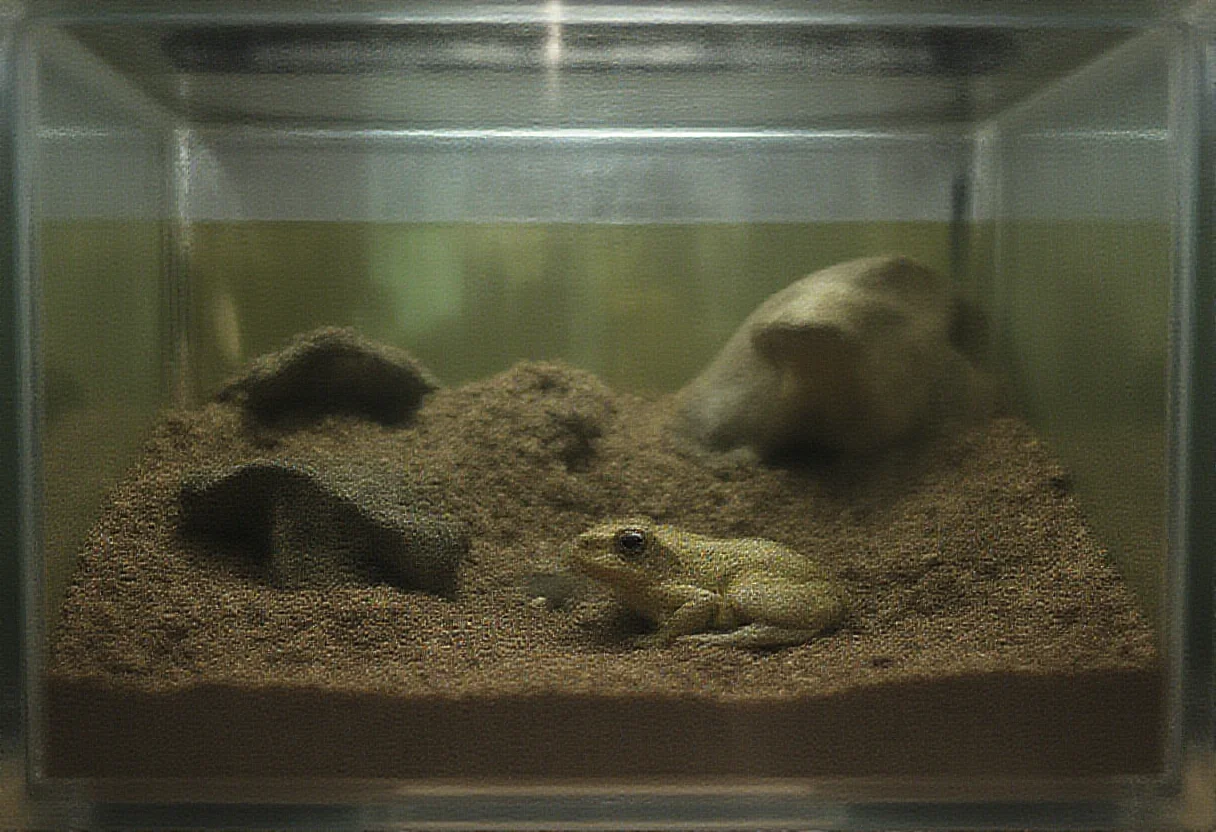
Temperature, water and humidity
Lafeber advises avoiding radiant heat sources because they dry out the enclosure. Mist regularly and keep the substrate damp, not waterlogged.
Use dechlorinated water. Lafeber says to let tap water sit open for 24 to 48 hours, or use bottled spring water or filtered tap water. Change the water dish daily, says VetVerified.
What and how often to feed
Adults eat insects, fish, earthworms and an occasional mouse, says Lafeber. Dust insects regularly with a vitamin and mineral supplement. Feed with tongs, since the frog may mistake fingers for food.
VetVerified suggests juveniles eat daily, sub-adults every other day and adults every 3 to 4 days. It lists obesity as a risk and says to feed pinky mice rarely.
Handling and safety
Lafeber says handle infrequently and briefly, with clean wet hands or moistened surgical gloves. VetVerified does not recommend handling. We advise watching the frog instead.
Keep adults separate. Lafeber says to house them separately, and Exotics Keeper notes that males can fight to the death. For why they bite, see our guide to African bullfrog aggression and the bite risk.
Common mistakes
New owners often make a few errors that sources warn about.
- Using a tank that is too small or too tall.
- Using gravel or bark that can cause impaction.
- Skipping calcium and vitamin dusting.
- Overfeeding, which leads to obesity.
- Housing two adults together.
- Using tap water without dechlorinating it.
Common health problems
Lafeber lists foreign body ingestion, metabolic bone disease and obesity. VetVerified also lists bloating, skin infections and impaction.
Do not treat these at home. See an exotics vet through the ARAV directory. Read about the African bullfrog lifespan to plan long term.
Where the African bullfrog comes from
Animal Diversity Web places the species (Pyxicephalus adspersus) mostly in sub-Saharan Africa, from Somalia in the east to Nigeria in the west and south to the Cape. It is very tolerant of harsh conditions. Some habitat stays dry for years, and records run from the Kalahari Desert to high veld at 4,000 to 5,000 feet.
Adults spend most of their lives underground. ADW says they rest in an estivation chamber, where body functions slow or nearly stop for a year or more, behind a cocoon made of shed skin layers. They are active only in the rainy season, sitting partly buried with just the nose showing to ambush prey.
This explains what you see at home. A pet frog that buries itself, waits and lunges is following its wild routine. ADW also says cannibalism begins at metamorphosis and that larger males fight and sometimes eat smaller males. Both facts support keeping each frog alone.
Enclosure size: where three sources disagree
Published minimums differ, so read them as a range rather than a rule:
- Lafeber Veterinary: one adult in a long 20-gallon (75 L) terrarium.
- VetVerified: at least 110 L (30 gallons) for one adult, larger preferred, wide and shallow because the frogs are poor climbers.
- Exotics Keeper Magazine (Thomas Marriott, 2025): at least 90 x 45 x 45 cm for a single adult male, roughly 180 litres, with females and juveniles in something slightly smaller.
The same article suggests a paludarium with a 70/30 split of land to water, divided by a glass panel sealed with aquarium-safe silicone. It also says bullfrogs typically scavenge within about 20 metres of their burrow, so room to roam matters. Plastic tubs are acceptable for cost and practicality.
Where a source is silent, do not guess. Choose the larger option, keep a secure lid, and plan for the size of an adult, since males are reported at 20 to 25 cm by Lafeber and up to 30 cm by Exotics Keeper.
Humidity and lighting: what the sources say
Lafeber gives no humidity figure and says to mist regularly and keep the substrate damp, not waterlogged. VetVerified gives 50 to 80 percent. Exotics Keeper says to keep humidity above 70 percent. All three call for a damp enclosure.
Lighting advice also differs. Lafeber suggests low-intensity full-spectrum light, said to aid calcium absorption. VetVerified says UVB is not required but a low-output UVB bulb may help, with a 12-hour day-night cycle. None of the sources gives a UVB intensity, so ask an exotics vet before choosing a bulb.
Feeding by life stage
Lafeber gives no feeding frequency. VetVerified does, and it is the only source here with a schedule:
- Juveniles: daily, about 2 to 4 small insects.
- Sub-adults: every other day, about 3 to 5 medium items.
- Adults: every 3 to 4 days, several roaches or one appropriately sized rodent.
VetVerified lists earthworms, crickets, Dubia roaches, locusts, black soldier fly larvae, small fish (occasionally) and pinky mice (rarely). It advises against feeding other frogs or amphibians because of disease risk. It suggests calcium dusting once a week and a multivitamin every two weeks.
Exotics Keeper adds that offering aquatic prey is possible in a paludarium, and that the species eats almost anything that fits its mouth. Because obesity is a listed health risk in both Lafeber and VetVerified, size prey to the frog and stop when it loses interest.
Dormancy in a pet frog
Lafeber warns that if temperatures drop below recommended levels the frog may estivate or enter partial hibernation. VetVerified says dormancy is unnecessary in captivity unless breeding. It describes burrowing and forming a protective cocoon when temperatures fall.
Exotics Keeper says novice keepers should probably avoid inducing it, and that a paludarium helps prevent drying out. A buried frog that stops eating is not always sick, but sudden changes are worth a call to an exotics vet. Check the heat source first.
Buying a frog: sources, sexing and ethics
Lafeber notes that pet-trade animals come from both captive breeding and wild collection, and that several subspecies or species may be sold as pixie frogs. VetVerified advises buying only from reputable breeders, not from the wild.
- Males are larger, with a yellow or orange throat and nuptial pads on the thumbs (Lafeber).
- Females are about half the size, with a cream throat and a rounder body (Lafeber).
- Males call during breeding season; VetVerified says females are silent.
ADW lists the species as Least Concern on the IUCN Red List with no CITES status, but says collection for the pet trade and food continues. It also warns that this resilient frog could harm ecosystems if introduced outside its native range. Never release a pet.
Exotics Keeper stresses that breeding needs a sincere commitment and clear routes to new homes. Because the frog is long-lived and females lay thousands of eggs, unplanned breeding is a real concern.
Choosing gear: what to check before you buy
Match gear to the points above rather than to marketing. The table near the top of this page lists product titles only. Check each title against these criteria:
- Enclosure floor area and height: wide and shallow with a secure lid.
- Substrate: moisture-retaining and deep enough to burrow, with no gravel.
- Water dish: large, shallow and heavy enough that it will not tip.
- Heat source: gentle, not radiant, to avoid drying the enclosure.
- Feeding tongs, since Lafeber notes the frog may mistake fingers for food.
Frequently Asked Questions
Are African bullfrogs good pets for beginners?
Not usually. They are strong, can bite painfully and live for decades. VetVerified says they are not ideal for handling.
How big a tank does an African bullfrog need?
Lafeber says 20 gallons long for one adult. VetVerified recommends at least 30 gallons. Bigger is easier to keep clean.
What temperature do African bullfrogs need?
Lafeber gives a gradient of 25 to 28 C (77 to 82 F). VetVerified allows a night drop to about 21 C.
What do pet African bullfrogs eat?
Insects, earthworms, fish and an occasional mouse, per Lafeber. Dust insects with a vitamin and mineral supplement.
Can I keep two African bullfrogs together?
No. Lafeber says to house adults separately. Males can fight and the species is cannibalistic.
Can I hold my African bullfrog?
Lafeber allows brief, infrequent handling with wet gloves. VetVerified does not recommend it. A bite can be painful.
Bottom Line
An African bullfrog can be a long-lived, fascinating pet for a prepared keeper. It needs a roomy tank, steady warmth and safe feeding habits.
If you are not ready for a 20-year commitment, consider a smaller species first.
Sources
- Lafeber Veterinary: Giant African Bullfrog, accessed 12 November 2026
- VetVerified: Keeping African Bullfrogs, accessed 12 November 2026
- Exotics Keeper Magazine: Captive Husbandry of Giant African Bullfrogs, Thomas Marriott (2025), accessed 12 November 2026
- Animal Diversity Web: Pyxicephalus adspersus, accessed 12 November 2026
- CDC: Reptiles and amphibians, accessed 12 November 2026
- ARAV: Find a professional, used for: exotics vet directory

2 Comments