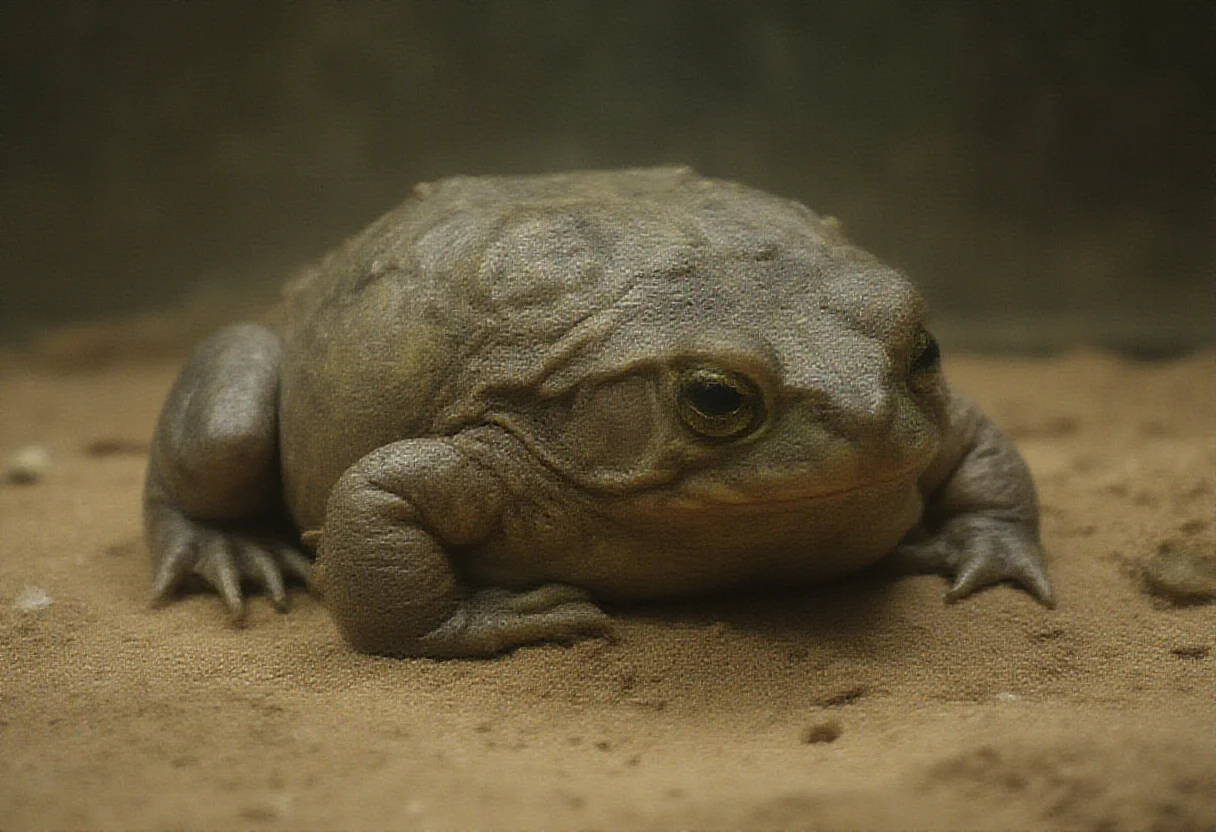
African Bullfrog Lifespan: How Long Do They Live?
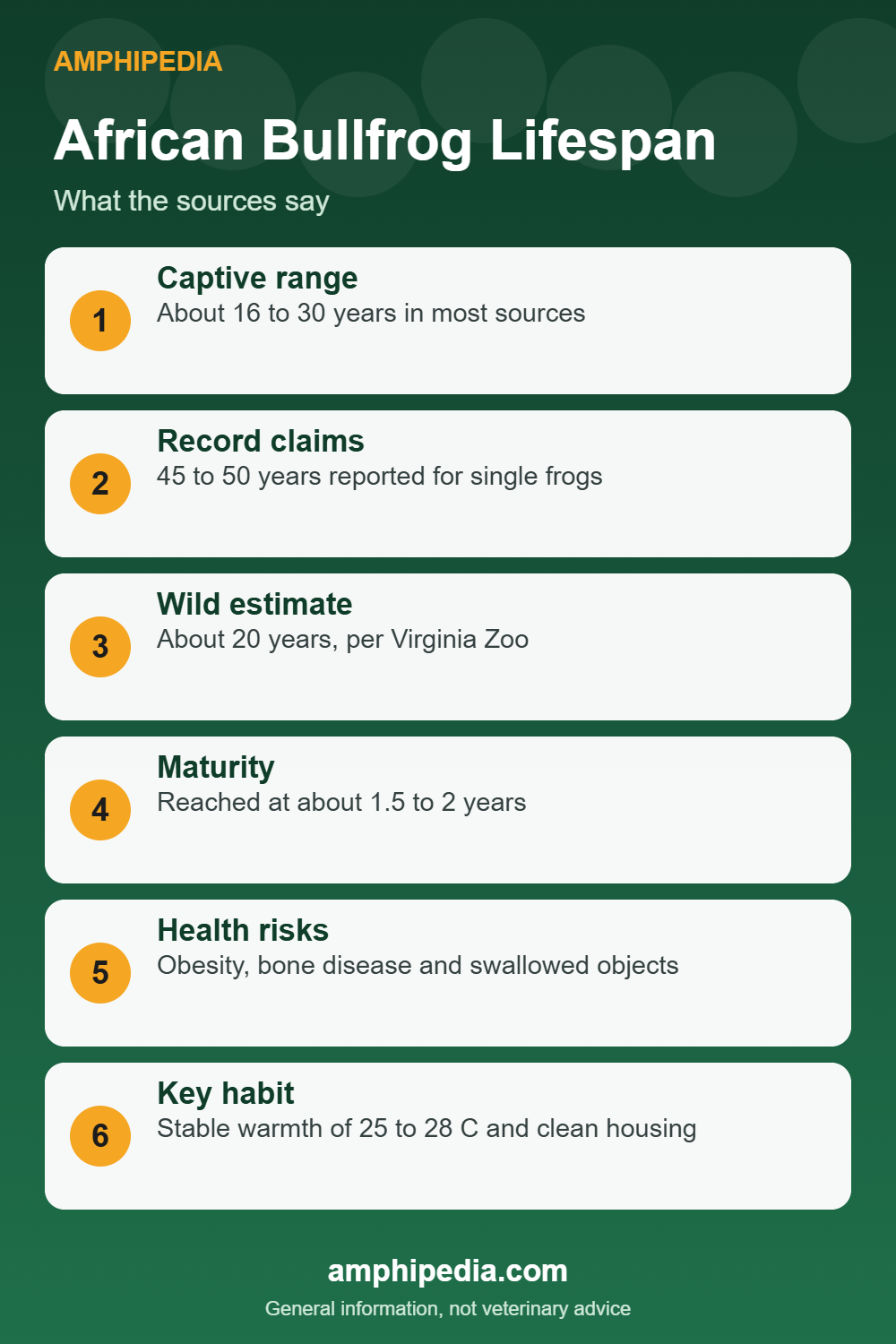
Sources give a wide range for African bullfrog lifespan. Animal Diversity Web cites 16.2 years in captivity. Lafeber Veterinary says up to 20 years is common and some live 45 or more. VetVerified and Exotics Keeper give 20 to 30 years. The Virginia Zoo cites about 20 years in the wild and up to 40 in human care. Good care and a stable diet matter most.
African bullfrogs are among the longest-lived frogs kept as pets. Care sheets often promise decades.
The sources do not agree on exact numbers, so this guide shows each figure with its source. It also covers what the evidence says about how to help a frog reach a long life.
How this was made: prepared with AI assistance and checked against the sources listed at the end. Images are AI-generated illustrations, not photographs of real animals or products.
Key Takeaways
- Captive figures run from about 16 to 45 years, depending on the source.
- Most care sources give 20 to 30 years as a normal captive range.
- Virginia Zoo cites about 20 years in the wild.
- Frogs mature at about 1.5 to 2 years, says Lafeber.
- The frog buries itself for long dry spells, which is part of its biology.
- Obesity and bone disease are health risks in captivity.
Pin this infographicShare on Facebook
What do sources say about lifespan?
The figures differ because they come from different kinds of records. Some are database values, some are zoo estimates and some are keeper reports. Each one is listed as stated.
| Source | Lifespan stated |
|---|---|
| Animal Diversity Web (AnAge) | 16.2 years in captivity |
| Lafeber Veterinary | Up to 20 years common; some 45 or more |
| VetVerified | 20 to 30 years with proper care |
| Exotics Keeper Magazine | 20 to 30 years typical; males reported up to 50 |
| Virginia Zoo | About 20 years wild; up to 40 in human care |
| Oregon Zoo | Up to 45 years |
| BDI frog atlas | A captive specimen estimated at up to 45 years |
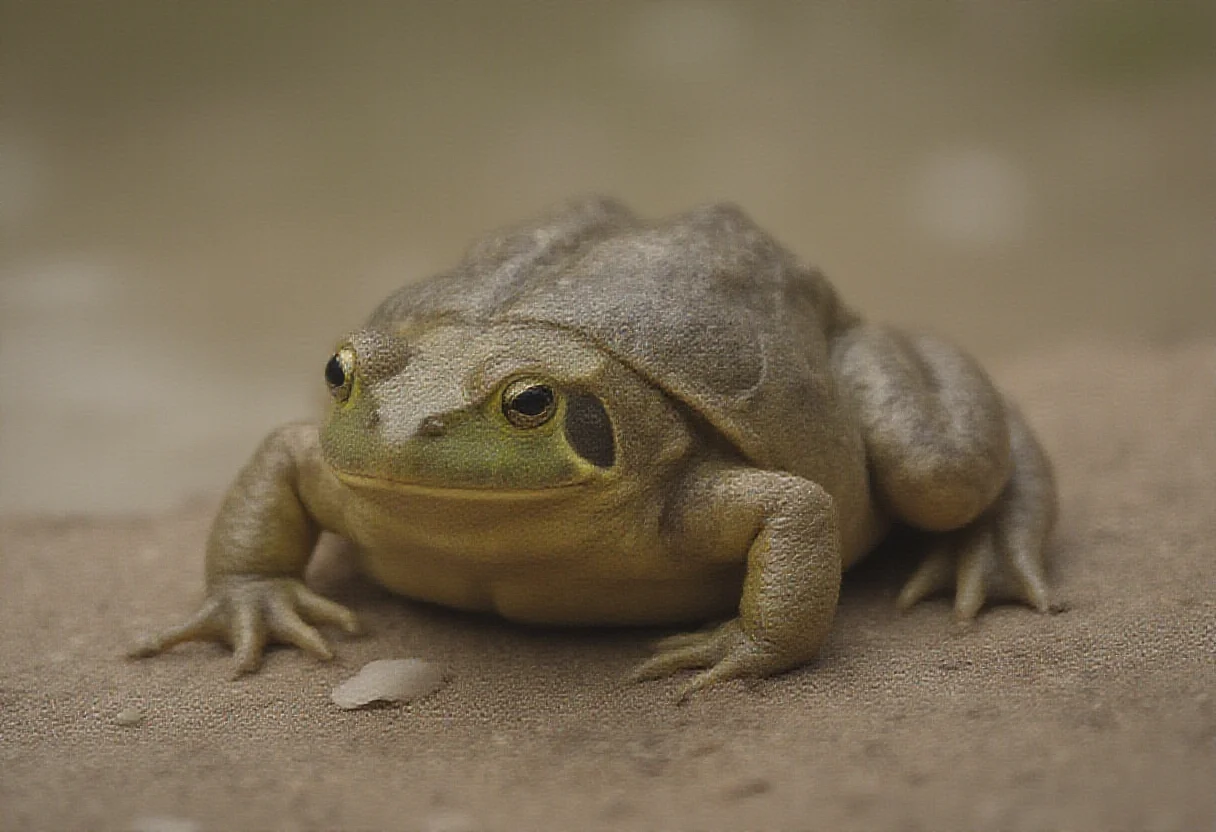
Wild vs captive lifespan
Virginia Zoo says about 20 years in the wild and up to 40 in human care. Animal Diversity Web gives no wild lifespan.
No source reviewed here describes a study that follows wild individuals across their lives, so the wild figure is an estimate.
Growth and maturity
Lafeber says African bullfrogs mature at 1.5 to 2 years. Males reach 20 to 25 cm and often weigh over 2 kg, and females are about half the male size.
The BDI frog atlas reports that tadpoles completed metamorphosis 18 to 33 days after forming schools, which only works if the pool lasts long enough.
What may help a frog live long
None of the sources reviewed ties specific husbandry steps to lifespan in this species. The vet sources do list the main health problems to avoid.
Lafeber names foreign body ingestion, nutritional secondary hyperparathyroidism (metabolic bone disease) and obesity. Cold temperatures may trigger estivation, a dormant state. VetVerified adds skin infections from poor hygiene and impaction from swallowed substrate.
- Keep temperatures in the 25 to 28 C range Lafeber gives (77 to 82 F).
- Dust insects with a vitamin and mineral supplement.
- Avoid overfeeding to prevent obesity.
- Keep the enclosure and water clean.
- Use a vet who treats amphibians for any problem.
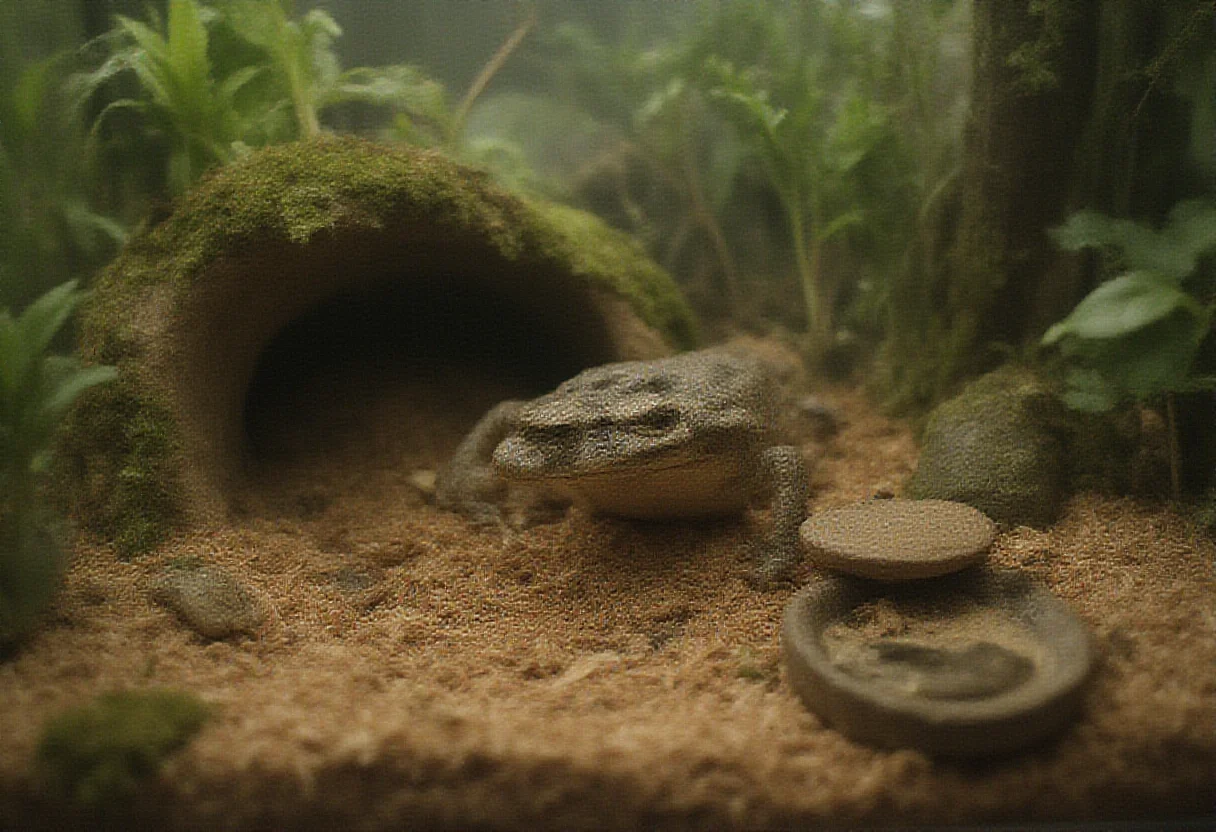
Natural dormancy
In the wild, the frog spends dry periods in a burrow. The BDI atlas says adults dig burrows 0.5 to 1 m deep and shed skin layers to form a protective cocoon. Animal Diversity Web says dormancy may last a year or more.
A buried frog in captivity can be normal, but check temperature and humidity first. The post on how big African bullfrogs get has more on growth.
Why the lifespan figures disagree
The table above mixes three kinds of record. Animal Diversity Web cites an average from a longevity database, 16.2 years in captivity. The zoos give upper estimates, and the keeper and vet sheets give typical ranges.
Several sources repeat 45 years: Lafeber says 45 or more, Oregon Zoo says up to 45, and the BDI frog atlas calls 45 an estimated maximum for a captive specimen. None of the pages reviewed traces that figure to one documented animal, so read it as a ceiling that has been reported, not a promise.
The safest planning number sits in the middle. Vet and keeper sources most often give 20 to 30 years, which already outlasts many pets by a wide margin.
Size also varies by source
Lifespan is not the only figure that changes. Sources give these adult sizes:
- Lafeber: males 20 to 25 cm, often over 2 kg, with females about half the male size.
- Exotics Keeper: up to 30 cm and 1.5 kg, with females about half the size of an adult male.
- Virginia Zoo: males 9.5 inches, females 4.5 inches.
- Oregon Zoo: males 9 inches, females 4 inches.
- BDI frog atlas: Gauteng males reach 245 mm snout-vent length and 1.4 kg, while frogs in the Eastern Cape and Free State seldom exceed 140 mm.
The BDI result suggests that size depends on where the frog lives. Lafeber also notes that males being larger than females is unusual among frogs.
What the wild life cycle looks like
Rain drives the calendar. The BDI atlas says adults emerge to breed after a downpour of at least 30 mm, and breeding pools must hold water for at least 30 days. Oregon Zoo says the frog hibernates through the dry season, spending about 10 months underground.
Clutch figures are consistent across sources. BDI and Oregon Zoo give 3,000 to 4,000 eggs, and Animal Diversity Web says up to 4,000. Tadpoles emerge after 36 hours according to BDI and after about two days according to Oregon Zoo.
These traits explain why wild frogs cope with long dry spells and why a wide lifespan range is plausible: the animal spends much of its life dormant.
How the species is doing
Animal Diversity Web and Virginia Zoo list the IUCN status as Least Concern. Virginia Zoo names harvesting for food and the exotic pet trade as the main threats.
The BDI atlas is more cautious for South Africa. It lists the frog as Near Threatened in the atlas region, with declines of over 80 percent in parts of Gauteng over 20 years and a loss of more than 50 percent of habitat and population area over 100 years.
The two ratings do not conflict. One covers the whole species and the other covers a regional population.
Care ranges the sources give
Care sheets disagree in small ways, and none of them is a lifespan study. They are still useful for seeing what vets and keepers treat as normal:
- Temperature: Lafeber gives a gradient of 25 to 28 C (77 to 82 F) and says to avoid radiant heat sources. VetVerified gives 24 to 28 C (75 to 82 F), with a night drop to 21 C acceptable.
- Humidity: VetVerified gives 50 to 80 percent, and Exotics Keeper says keep it above 70 percent.
- Substrate: VetVerified recommends a moisture-retaining substrate at least 10 cm deep and says to avoid gravel and other hard materials.
- Enclosure: VetVerified says a minimum of 110 litres (30 gallons) for one adult, wide and shallow, with a secure lid. Exotics Keeper suggests a 90 x 45 x 45 cm terrarium for an adult male.
- Water: a large shallow dish that is changed daily, with dechlorinated water, per VetVerified.
Use these as ranges to discuss with an exotics vet, not as a prescription.
Feeding and handling risks
VetVerified gives a feeding rhythm by age: juveniles daily, sub-adults every other day and adults every 3 to 4 days. It lists impaction, caused by swallowing substrate or prey that is too large, and obesity among the health problems.
Lafeber recommends tongs at feeding. VetVerified says frequent handling is not recommended, because the strong feeding response can make the frog mistake fingers for food and handling can stress the animal.
Exotics Keeper advises novice keepers to probably avoid triggering dormancy, and Lafeber says a frog may estivate if temperatures fall below the recommended range.
Planning for a 20-year commitment
- Decide who will care for the frog if your circumstances change.
- Find an exotics vet before you buy the frog, using the ARAV directory at arav.org/professionals.
- Budget for a large, wide enclosure, since an adult needs far more room than a juvenile.
- Plan to clean the tank and equipment away from food areas, as CDC advises, and to wash your hands afterward.
- Keep records of feeding and weight so that obesity is noticed early.
If the commitment does not fit, choose a different pet. A frog that can live for decades is not a short-term animal.
Frequently Asked Questions
How long do African bullfrogs live in captivity?
Sources range from 16.2 years (Animal Diversity Web) to 20 to 30 years (VetVerified, Exotics Keeper). Some reports reach 40 to 50 years.
How long do African bullfrogs live in the wild?
Virginia Zoo says about 20 years. No long-term field study was found to confirm it.
What is the oldest African bullfrog?
Exotics Keeper reports males up to 50 years, and BDI cites an estimate of 45 years for a captive frog. These are individual reports, not averages.
At what age is an African bullfrog an adult?
Lafeber says they mature at 1.5 to 2 years.
Can I make my bullfrog live longer?
No study proves it. Vets list good temperature, supplemented food, a clean enclosure and avoiding obesity as the main steps.
Which health problems do vets list for captive African bullfrogs?
Lafeber names foreign body ingestion, metabolic bone disease and obesity. VetVerified adds skin infections and impaction. See an exotics vet for any health concern.
Bottom Line
Plan for 20 years or more if you keep an African bullfrog, and know that records go higher. The numbers differ by source, so treat them as a range.
Read the guide to keeping an African bullfrog as a pet before you decide.
Sources
- Animal Diversity Web: Pyxicephalus adspersus, accessed 13 November 2026
- Lafeber Veterinary: Giant African Bullfrog, accessed 13 November 2026
- VetVerified: Keeping African Bullfrogs, accessed 13 November 2026
- Exotics Keeper Magazine: Captive Husbandry of Giant African Bullfrogs, by Thomas Marriott, 4 June 2025, accessed 13 November 2026
- Virginia Zoo: African bullfrog, accessed 13 November 2026
- Oregon Zoo: African bullfrog, accessed 13 November 2026
- BDI: Giant Bullfrog (Pyxicephalus adspersus), accessed 13 November 2026
- CDC: Reptiles and amphibians, accessed 13 November 2026
One Comment