African Pixie Frog Facts: Size, Looks and Habits
The African pixie frog is a pet-trade name for the African bullfrog, Pyxicephalus adspersus. Despite the cute name it is not small. Males reach about 9 to 10 inches and over 2 kg, while females are much smaller. It is olive green with bumpy skin, lives in open grassland in Africa, spends much of the year underground and eats almost anything it can fit in its mouth.
Many pet shops call the African bullfrog a pixie frog. The name suggests a tiny frog, but adults are among the largest frogs in Africa.
This guide explains the name, and it covers size, looks, range, diet and behaviour from zoo, university and frog-atlas sources.
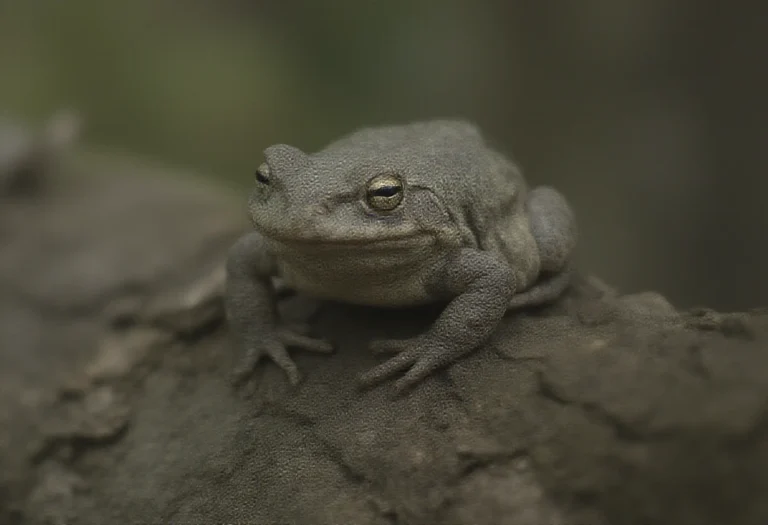
How this was made: prepared with AI assistance and checked against the sources listed at the end. Images are AI-generated illustrations, not photographs of real animals or products.
Key Takeaways
- Pixie frog usually means the African bullfrog, Pyxicephalus adspersus.
- The dwarf bullfrog, P. edulis, is sometimes also called pixie, so the name is vague.
- Males are far bigger than females.
- The skin is olive green and bumpy, says the FROGLAND frog FAQ.
- The frog spends much of the year underground.
- Adults can bite painfully.
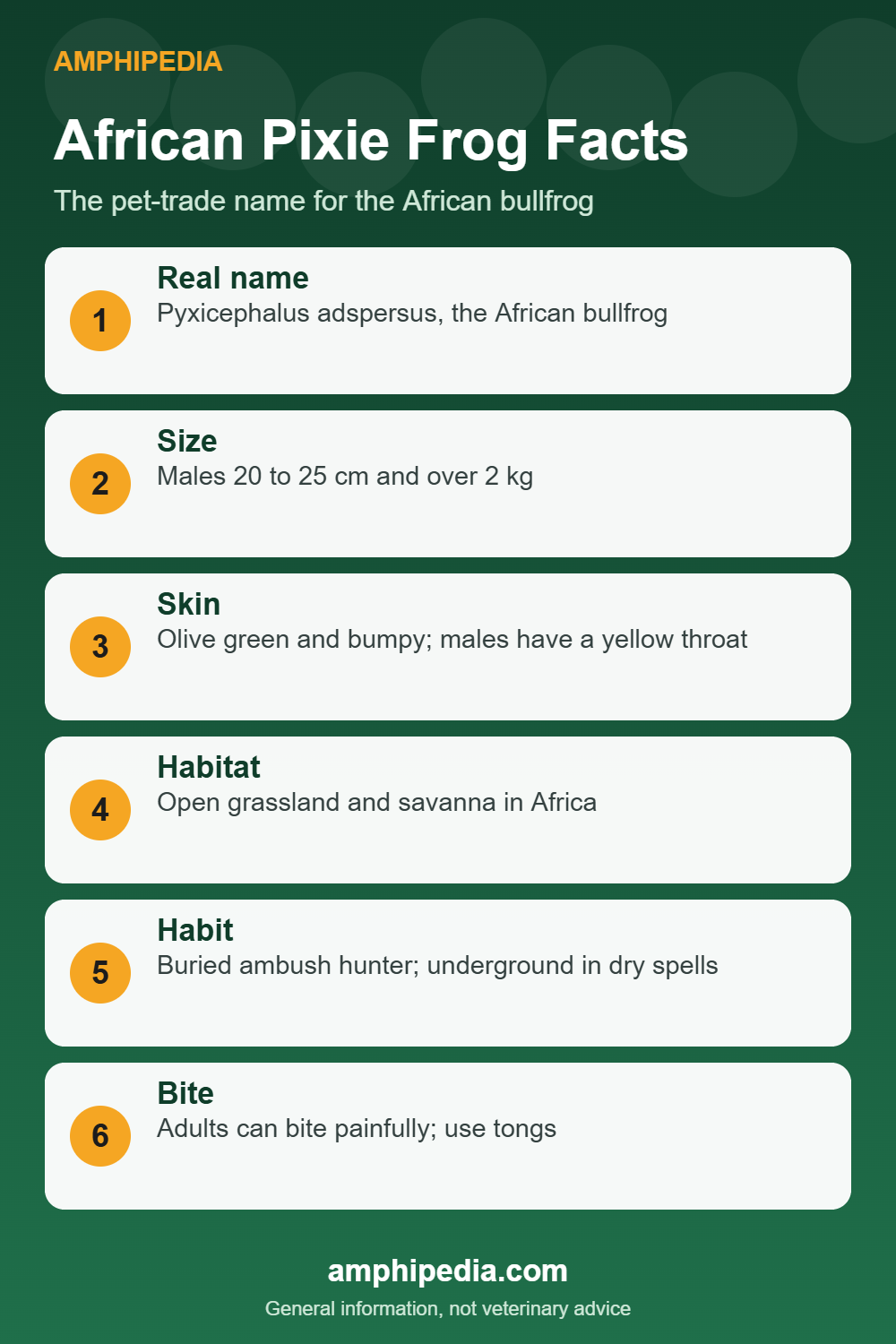
Pin this infographicShare on Facebook
What is the African pixie frog?
The FROGLAND pet-frog FAQ says the African bullfrog is often called a pixie frog because of its Latin name, Pyxicephalus. It also says P. edulis is sometimes called pixie, and that the two are often confused.
Scientists prefer the full name, so this post uses Pyxicephalus adspersus. The dwarf African bullfrog facts post covers the smaller species.
How big does it get?
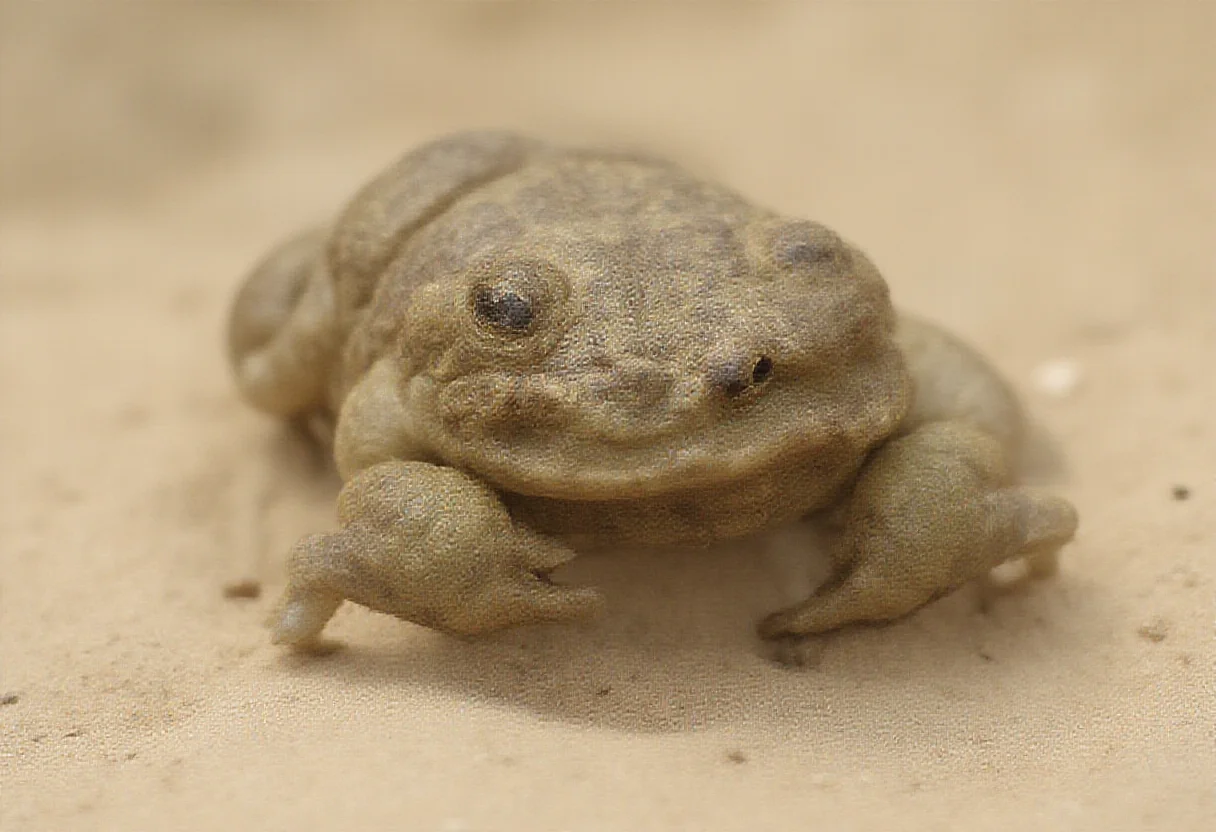
The Oregon Zoo says males reach about 9 inches and females about 4 inches. Lafeber Veterinary says males reach 20 to 25 cm and often weigh over 2 kg. FROGLAND gives up to 9.5 inches (24 cm) and a female of about 12 cm.
The South African frog atlas (BDI) reports Gauteng males reaching 245 mm and 1.4 kg. Males are always the larger sex. Sizes vary by region, since frogs in the Eastern Cape and Free State seldom exceed 140 mm.
Appearance
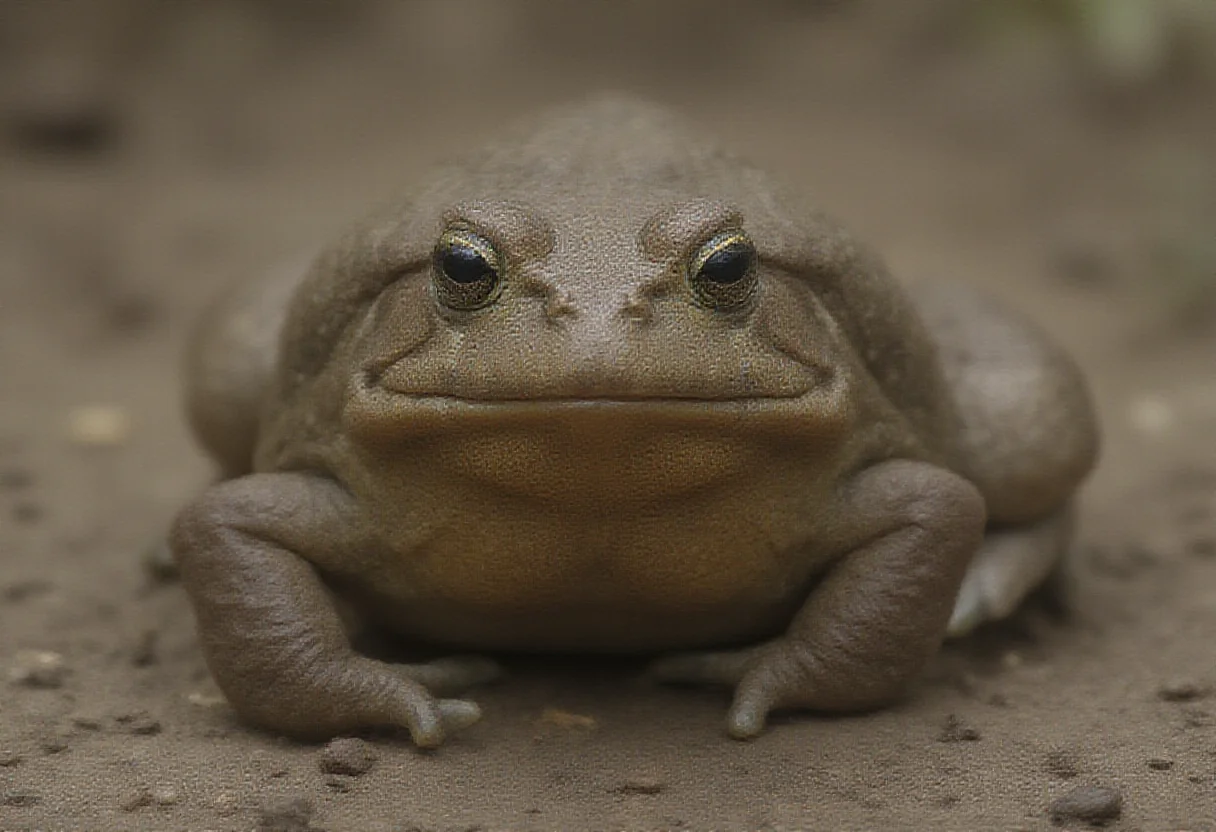
FROGLAND describes olive green, bumpy skin, with a yellow throat on males and a cream throat on females. Only the hind toes are webbed.
The Oregon Zoo notes short, blunt fingers without webbing. Animal Diversity Web says the lower jaw carries three large tooth-like odontodes.
Where it lives
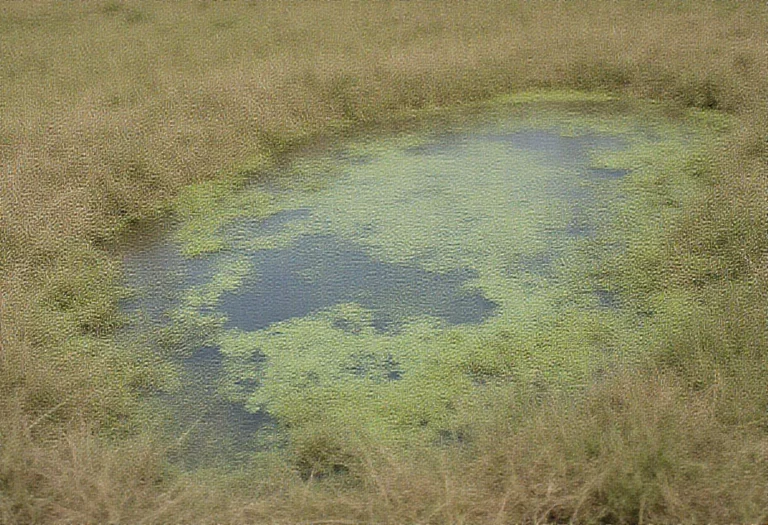
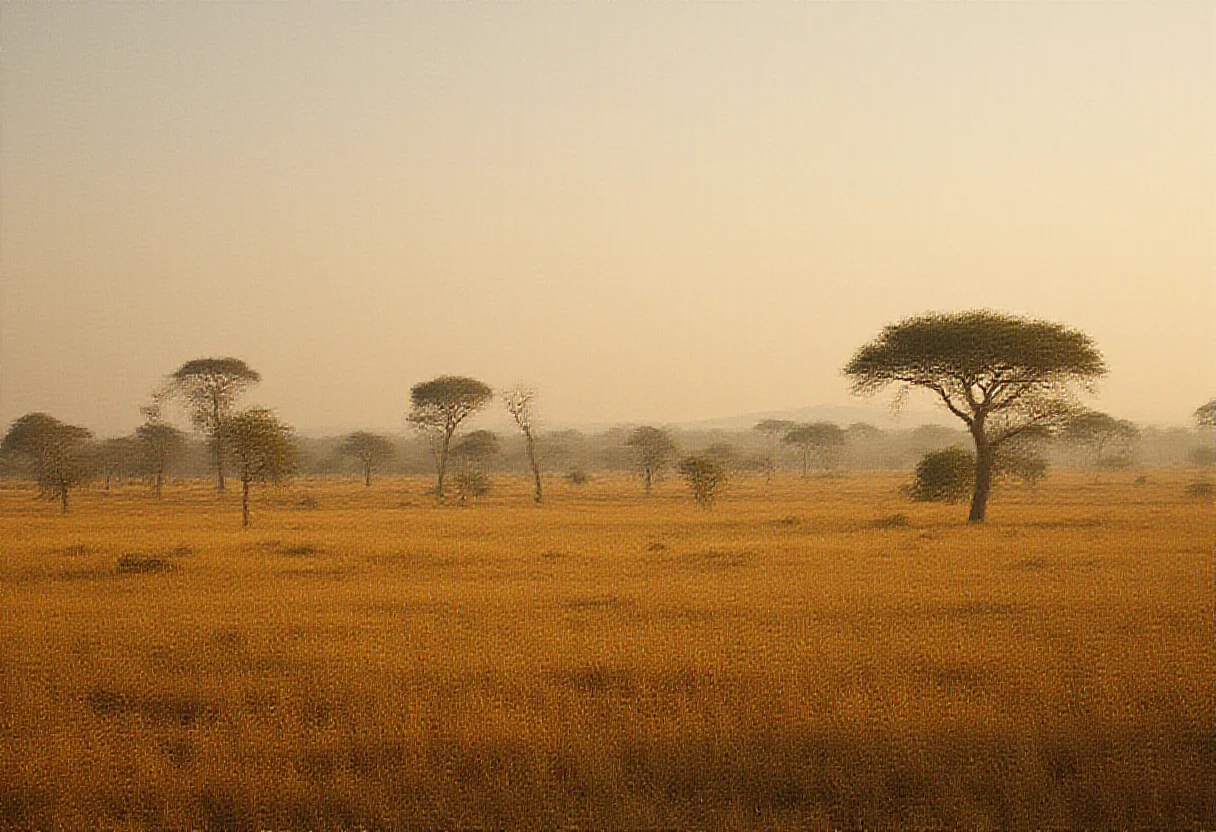
FROGLAND says it favours open grassland and ranges from Nigeria east and south through the savanna regions. The Virginia Zoo lists savannas, shrublands and tropical swamps of central and southern Africa.
BDI says it is widely distributed across southern Africa, including central Namibia, Botswana and the Zimbabwean highveld.
Diet and behaviour
It is an ambush predator. FROGLAND lists large insects, fish, mice, lizards and other frogs. BDI adds birds, snakes, scorpions and crabs, and notes cannibalism.
Adults dig burrows 0.5 to 1 m deep and form a skin cocoon in dry spells, says BDI. FROGLAND says the frog can inflate its body when frightened and that males can bite.
Pixie frogs as pets
Lafeber says one adult can live in a 20 gallon long terrarium, at 25 to 28 C (77 to 82 F), and that adults should be housed separately. VetVerified gives a lifespan of 20 to 30 years.
Before buying, read pixie frog care and keeping an African bullfrog as a pet.
Pixie frog or dwarf bullfrog: how the names overlap
FROGLAND says there are two frogs sold as pixie frogs: Pyxicephalus edulis and Pyxicephalus adspersus. Animal Diversity Web describes P. edulis as closely related, slightly smaller and with a smaller range in southern Africa.
The BDI frog atlas gives one way to tell them apart in the wild, which is the call. P. adspersus makes a long, low whoop of 1 to 2 seconds at 200 to 250 Hz. P. edulis gives a call of 0.19 to 0.22 seconds that rises from about 250 Hz to 450 to 600 Hz.
A buyer cannot hear a call in a shop. The practical answer is to ask for the scientific name and not to rely on the label pixie.
Breeding: a short burst after heavy rain
The BDI atlas calls this frog an explosive breeder. Adults emerge after a downpour of at least 30 mm, and continuous light spring rain does not trigger emergence. Mating and egg laying happen within 48 hours.
| Stage | What BDI reports |
|---|---|
| Trigger | Heavy rain of at least 30 mm |
| Pool | Must hold water for at least 30 days |
| Clutch | 3,000 to 4,000 eggs, 1.1 to 1.3 mm across |
| Hatching | About 36 hours |
| Metamorphosis | 18 to 33 days after hatching |
Animal Diversity Web and the Oregon Zoo agree on the clutch size of up to about 4,000 eggs and a hatch within about two days. The Oregon Zoo adds that adults spend about ten months of the dry season underground.
Fathers that guard the tadpoles
Male African bullfrogs are unusual for their parental care. BDI says territorial males guard the offspring through the whole larval period and chase off intruders.
If the pool shrinks, males dig channels to open water. BDI records an average channel length of 3 m, and the longest was 18.7 m. The Virginia Zoo and Animal Diversity Web also describe males digging a channel to nearby water.
The care has limits. Animal Diversity Web notes that guarding males may eat many tadpoles, and BDI reports cannibalism in tadpoles, juveniles and adults.
Why the males are the big ones
BDI points out that males are larger than females, unlike most frogs. Size appears to matter in the breeding pools. Animal Diversity Web says males gather in large groups, and the larger males push to the centre, claim a small area and call. Females swim to the centre and surface in the territory of a larger male.
BDI describes three size-related mating strategies: territorial males, non-territorial males in a breeding arena, and satellite males. It also calls this species the largest amphibian in southern Africa and the second-largest frog in the world.
That explains why size figures in guides differ so much. A figure for a male and a figure for a female describe animals of very different bulk.
Life underground: burrows and the skin cocoon
BDI describes adults as burrowing frogs that emerge only to breed. Dry-period burrows are typically 0.5 to 1 m deep, depending on soil type and humidity. One male in clay was found at 10 cm, and others in sandy soil were at 1.2 m. Old crab holes are sometimes reused.
After digging in, the frog sheds several skin layers to form a cocoon with the nostrils left open to the air. The Virginia Zoo describes the cocoon as dead skin and mucus.
In captivity, Lafeber notes that a frog may estivate or enter partial hibernation if temperatures fall below the recommended range.
How long do they live? The sources disagree
| Source | Lifespan reported |
|---|---|
| Animal Diversity Web | 16.2 years average in captivity (AnAge) |
| Lafeber Veterinary | Up to 20 years is common; 45 or more possible |
| VetVerified | 20 to 30 years with proper care |
| Virginia Zoo | About 20 years wild; up to 40 in human care |
| Oregon Zoo | Up to 45 years |
| BDI | Maximum captive longevity estimated at 45 years |
The range runs from about 16 to 45 years. The high figures are records or estimates, and the lower ones are averages. Anyone thinking of keeping one should plan for at least two decades.
Conservation: safe overall, falling locally
Animal Diversity Web and the Virginia Zoo list the species as Least Concern on the IUCN Red List. BDI agrees that it does not appear to warrant threatened status globally, but rates it Near Threatened in the southern African atlas region.
BDI reports declines of more than 80 percent in parts of Gauteng over 20 years. Its listed threats are habitat loss to crops and urban growth, road deaths of adults and juveniles on the move, illegal collection for the pet trade and harvesting for food in parts of Limpopo.
The pet trade is one pressure among several. Asking where an animal came from is a sensible question for any buyer.
Diet: wild prey versus captive feeding
In the wild this frog eats almost anything it can overpower. BDI lists small birds, rats, snakes, lizards, insects, scorpions, crabs, slugs and other frogs. It also reports attacks on drinking birds and the eating of newborn Rinkhals snakes.
Captive diets are much narrower. VetVerified names earthworms, crickets, dubia roaches, locusts and black soldier fly larvae as staples, with small fish and pinky mice only occasionally because too many can cause obesity. It does not recommend feeding frogs or other amphibians because of disease risk.
- Juveniles: fed daily, according to VetVerified
- Sub-adults: every other day
- Adults: every three to four days
- Prey is dusted with a vitamin and mineral supplement, as both Lafeber and VetVerified advise
Feeding intervals are a husbandry detail, not medical dosing. Ask an exotics vet about a specific frog.
Housing numbers from different sources
Care advice for this frog is not uniform. These figures come from three of the sources above.
| Topic | Lafeber | VetVerified | FROGLAND |
|---|---|---|---|
| Tank for one adult | 20 gallon long | 30 gallon (110 L) minimum | Large terrestrial or half-and-half |
| Temperature | 25 to 28 C | 24 to 28 C | Tolerates up to 83 F |
| Substrate | Sandy soil | At least 10 cm, moisture-retaining | About 6 cm soft substrate |
All three agree the frog needs soft material to burrow in. Lafeber says to house adults separately, and FROGLAND says to house alone except for breeding because of cannibalism.
Health problems and the bite
Lafeber lists foreign body ingestion, metabolic bone disease and obesity. VetVerified adds bloating, skin infections and impaction from swallowing substrate or oversized prey.
Lafeber warns that adults can inflict a painful bite and suggests using tongs when feeding, because the frog can mistake fingers for food. If a frog looks ill, see an exotics vet from the ARAV directory instead of treating it at home.
Frequently Asked Questions
What is a pixie frog?
It is a pet-trade name for the African bullfrog, Pyxicephalus adspersus. FROGLAND says P. edulis is sometimes called pixie too.
How big is a pixie frog?
Males reach 20 to 25 cm and often weigh over 2 kg, per Lafeber. Females are about half that size.
Is a pixie frog small?
No. The name misleads. Adult males are among the largest frogs in Africa.
Where do pixie frogs live?
In open grassland, savanna and shrubland across central and southern Africa.
Can a pixie frog bite?
Yes. Lafeber says adults can inflict a painful bite, and FROGLAND notes males can bite.
Is it the same as an African bullfrog?
Usually yes. Check the scientific name when buying, since the dwarf bullfrog is also sold as pixie.
Bottom Line
The African pixie frog is a heavy, burrowing ambush predator with a name that undersells it. Check the scientific name before you buy, and do not expect a small frog.
Learn more about how big African bullfrogs get.
Sources
- FROGLAND: African Bullfrog (Pixie Frog), accessed 13 Nov 2026
- BDI: Giant Bullfrog (Pyxicephalus adspersus), accessed 13 Nov 2026
- Animal Diversity Web: Pyxicephalus adspersus, accessed 13 Nov 2026
- Oregon Zoo: African bullfrog, accessed 13 Nov 2026
- Virginia Zoo: African bullfrog, accessed 13 Nov 2026
- Lafeber Veterinary: Giant African Bullfrog, accessed 13 Nov 2026
- VetVerified: Keeping African Bullfrogs, accessed 13 Nov 2026
- CDC: Reptiles and amphibians, accessed 13 Nov 2026