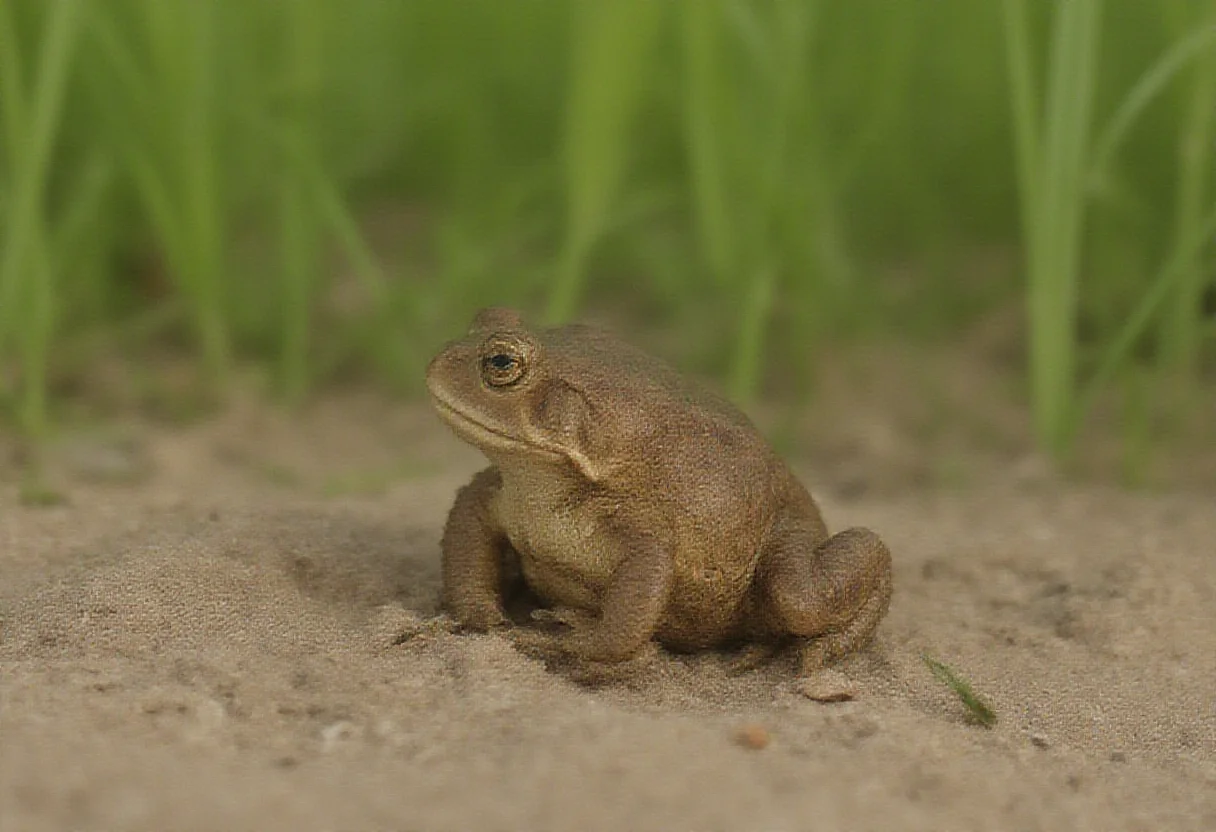
Are Southern Toads Nocturnal? Night Habits Explained
Yes, southern toads (Anaxyrus terrestris) are mainly nocturnal. Animal Diversity Web says they hide in burrows during the day and feed at night, and the Florida Museum agrees. They are not strictly night-only, though. South Carolina PARC notes they are seen most often on warm, humid days, and they come out in daylight during wet weather and breeding.
If a toad sits under your porch light at 10 p.m., there is a good chance it is a southern toad. The species spends most daylight hours out of sight and comes out when the air cools and insects gather.
This guide explains the daily rhythm, what changes it, and how to tell a healthy night-active toad from one that needs help. It also compares this species with the oak toad, which breaks the usual toad pattern.
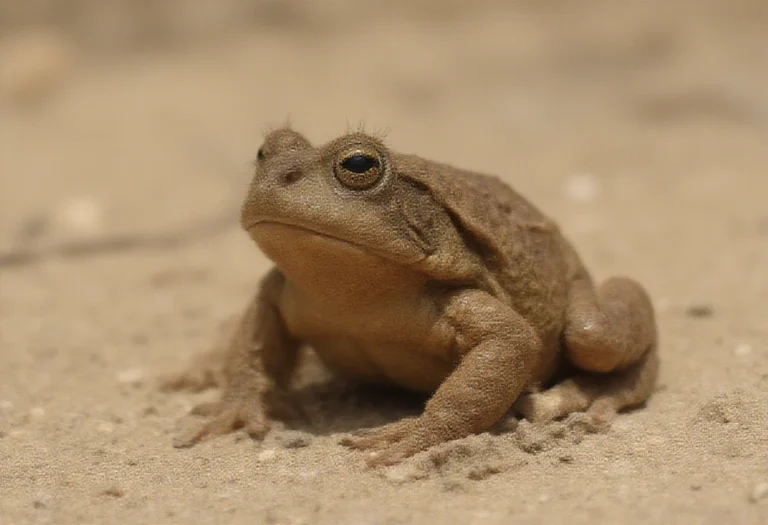
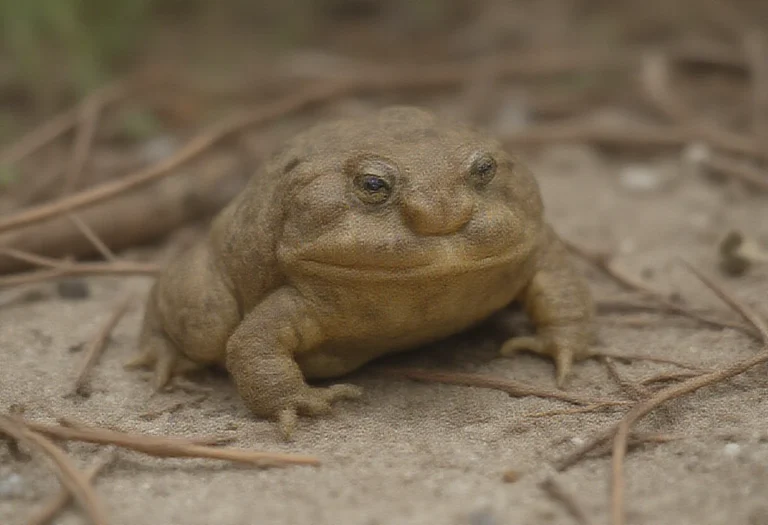
How this was made: prepared with AI assistance and checked against the sources listed at the end. Images are AI-generated illustrations, not photographs of real animals or products.
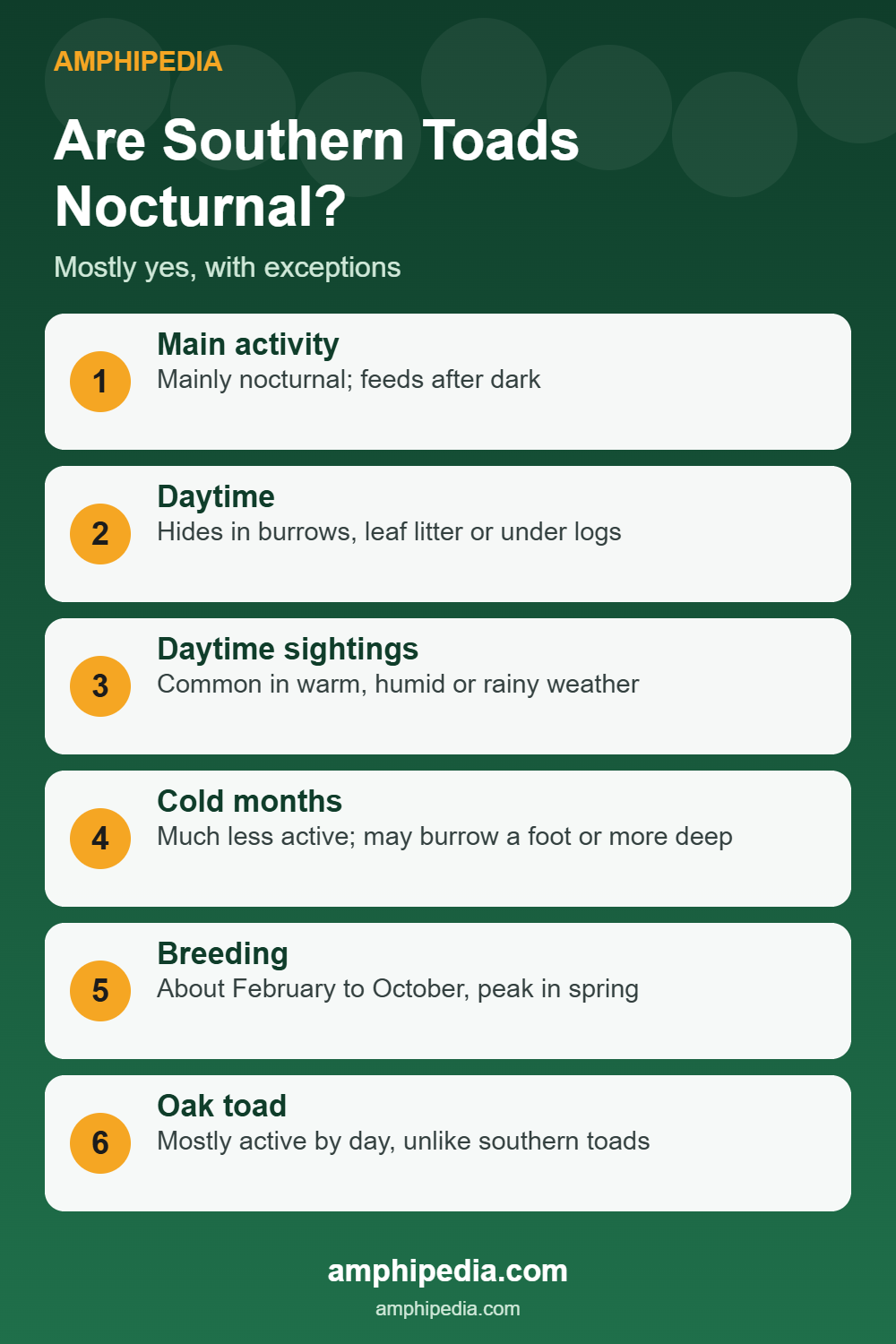
Key Takeaways
- Southern toads are mainly nocturnal and feed after dark.
- By day they hide in burrows, leaf litter or under logs and other debris.
- Warm, humid or rainy weather can bring them out earlier.
- They are much less active in cold months and may burrow a foot or more deep.
- The oak toad is the odd one out: it is mostly active by day.
Pin this infographicShare on Facebook
The short answer: mostly nocturnal
Animal Diversity Web describes the southern toad as mainly nocturnal, hiding in burrows by day and feeding at night. The Florida Museum gives the same picture: toads stay in burrows or under debris during the day and come out at night to feed.
“Mainly” matters. Toad activity follows temperature and moisture, not a fixed clock. A rainy afternoon can look like night to a toad, because the air is cool and damp.
What southern toads do by day
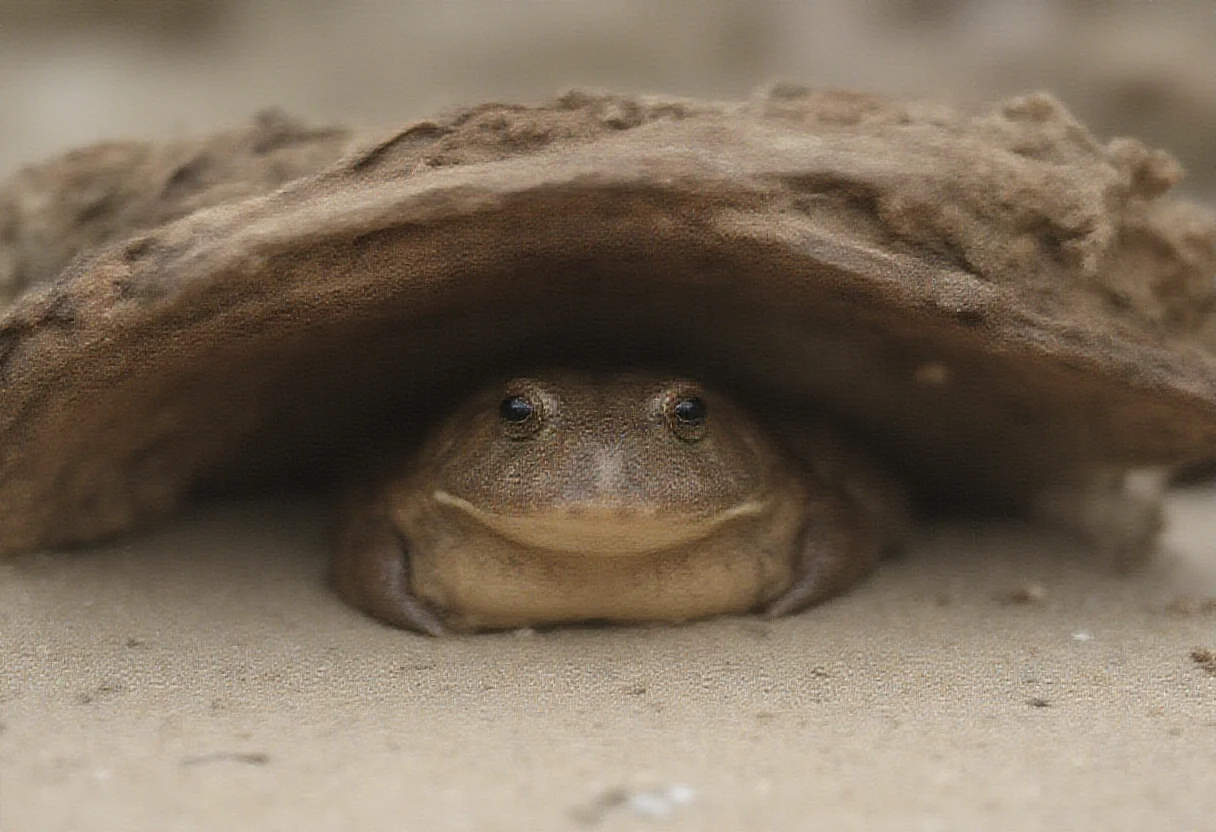
Sandy soil is the key. Southern toads dig into it, and they also use animal burrows, leaf litter and fallen logs. The Florida Museum notes they live at ground level under debris or in sandy burrows.
Hiding protects them from heat, dry air and predators. Skin that loses water quickly is a risk, and a cool burrow keeps it moist until evening.
If you flip a flowerpot or board in the afternoon and find a toad, leave it as you found it. Replace the cover gently so it can stay hidden.
What southern toads do at night
After dusk they leave cover and hunt on the ground. Animal Diversity Web says adults eat mostly insects, spiders, beetles and ants, caught with a sticky tongue.
Outdoor lights concentrate insects, so toads gather there. The Virginia Herpetological Society notes the species often appears in yards and gardens, sometimes under lights at night.
Breeding adds a second night job. Males call at the edge of shallow water, and calling gets louder on warm, rainy nights.
When you might see one in daylight
Sources do not describe southern toads as strictly nocturnal. South Carolina PARC says they are active on warm days nearly year-round and are seen most often in warm, humid weather. Sources differ slightly, so both views are worth keeping in mind.
- After heavy rain, when the ground is wet and the air is cool.
- During the breeding season, when toads move to shallow water.
- On warm, humid days in mild winters, especially in Florida and the Gulf Coast.
- When disturbed from a hiding place, such as under a log or board.
Seasonal changes in activity
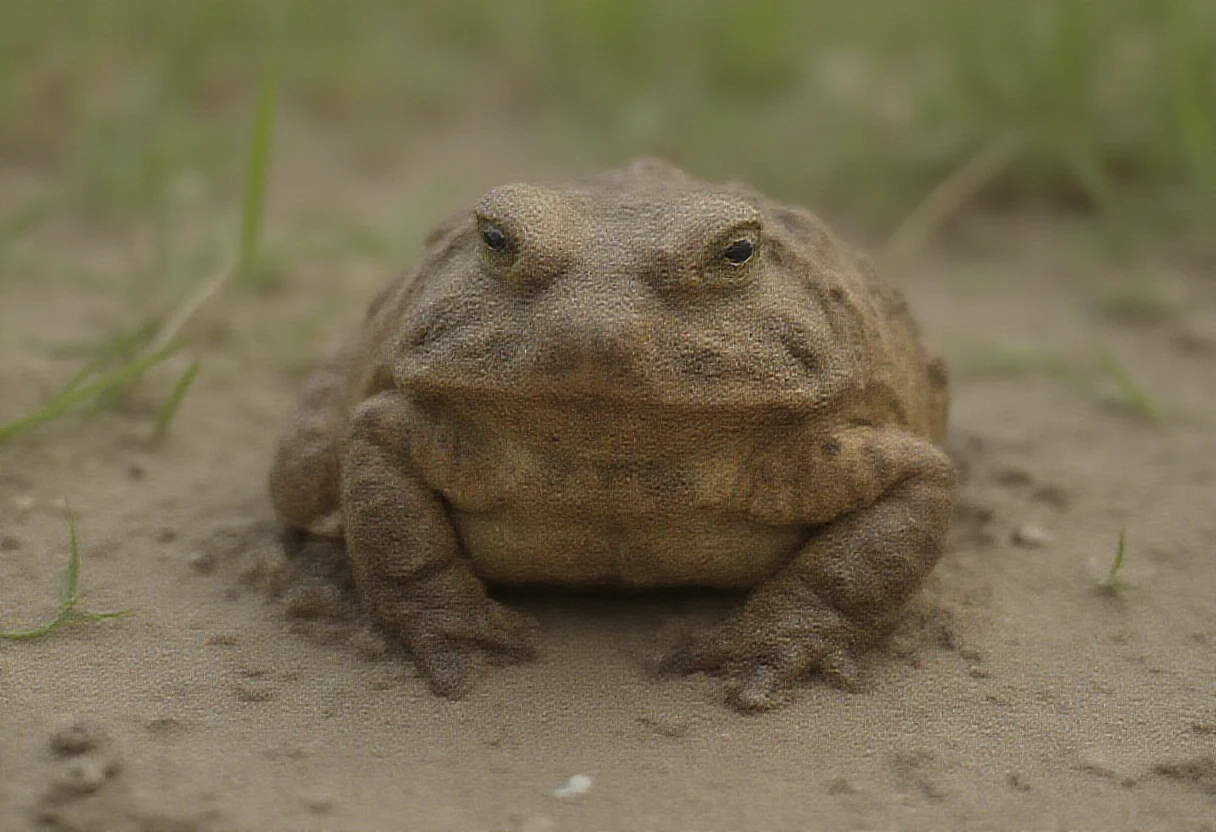
Activity drops in cold months. Animal Diversity Web says southern toads burrow a foot or more deep when it is cold. In the warm South they can stay active nearly all year on mild days.
Breeding runs from about February to October depending on latitude, with a spring peak after warm rain, according to SREL. That is when you are most likely to see and hear toads in numbers.
A look-alike with different habits: the oak toad
The oak toad (Anaxyrus quercicus) shares the Southeast but behaves differently. SREL describes it as primarily diurnal, which is unusual for a toad. It is also much smaller, about 1.75 inches at most.
If you see a tiny toad hopping in a sandy pine woodland at noon, it may well be an oak toad. For a full comparison, read southern toad vs oak toad.
How to help toads in your yard
A few small steps support night-active toads without any special gear.
- Leave a few flat stones, logs or leaf piles as daytime shelter.
- Turn off or shade outdoor lights that are not needed, so fewer insects and toads gather.
- Keep a shallow dish of fresh, chlorine-free water in a shady spot.
- Avoid pesticides on lawns and beds, since toads live on the insects found there.
Frequently Asked Questions
Are southern toads nocturnal?
Mainly, yes. They hide by day and feed at night, but warm, wet weather can bring them out in daylight.
Where do southern toads go during the day?
Into sandy burrows, animal burrows, leaf litter or under logs and other debris.
Why are toads under my porch light?
Lights attract insects, which are the toad’s food. The species is often seen under lights at night.
Do southern toads hibernate?
They become much less active in cold months and burrow a foot or more deep, according to Animal Diversity Web.
Is it normal to see a toad in the day?
Yes, especially after rain or in warm, humid weather, or if it was disturbed from cover.
Are oak toads nocturnal too?
No. SREL describes the oak toad as primarily diurnal.
What time of year are southern toads most active?
Spring, when warm rain triggers breeding. Breeding can run from February to October depending on latitude.
Bottom Line
Southern toads follow cool, damp conditions more than the clock. Night is when those conditions are most reliable, so night is when you see them most.
To learn more about this species, see what a southern toad is and how long they live.
Sources
- Animal Diversity Web: Southern toad, accessed Activity, diet, cold-weather behaviour
- Florida Museum: Southern Toad, accessed Nocturnal habits, habitat
- South Carolina PARC: Southern Toad, accessed Daytime activity in warm, humid weather
- Savannah River Ecology Laboratory: Oak Toad, accessed Diurnal oak toad
- Savannah River Ecology Laboratory: Southern Toad, accessed Breeding season, calls
- Virginia Herpetological Society: Southern Toad, accessed Yards and lights
- CDC: Reptiles and Amphibians, accessed Salmonella
3 Comments