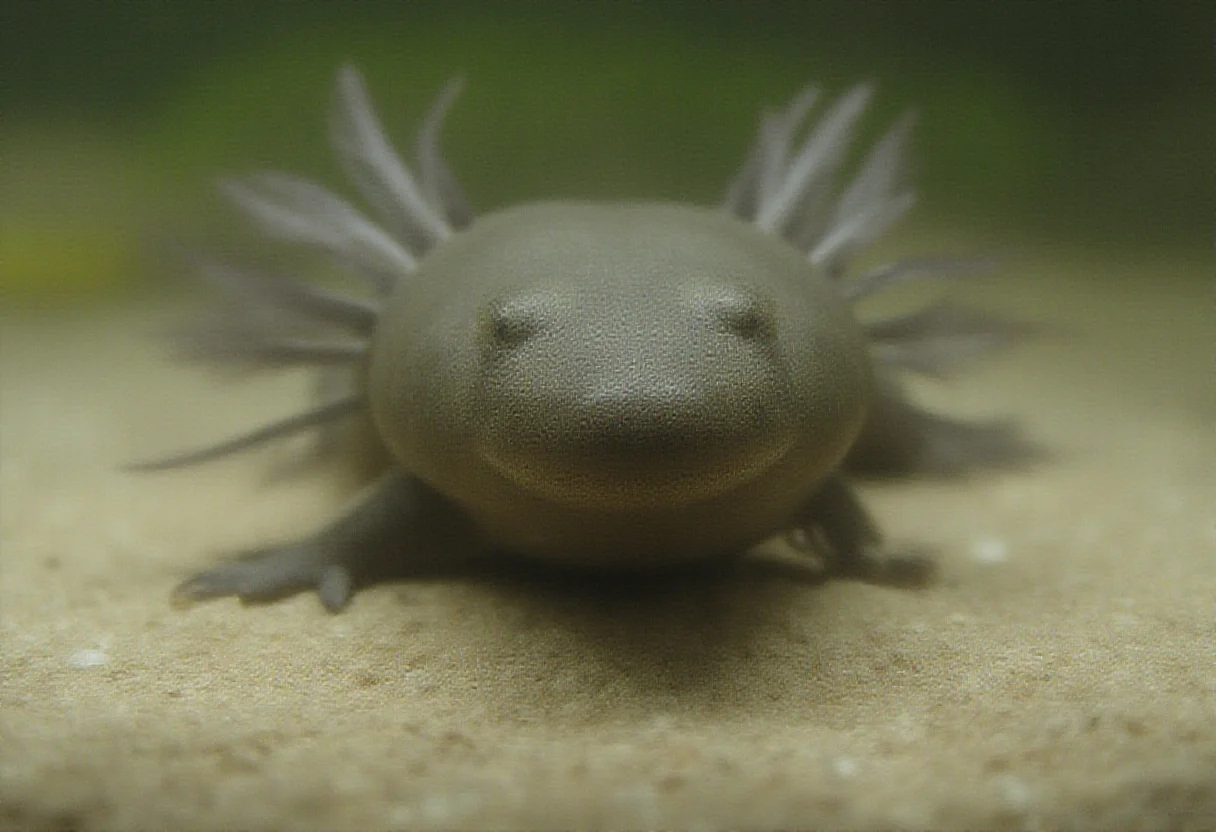
Can Axolotls Live on Land? What the Science Says
No, axolotls cannot live on land. They keep external gills for life and stay in water from hatching to old age. They do have lungs and can gulp air at the surface when oxygen runs low, but that is a backup, not a way to live dry. A rare, hormone-induced metamorphosis exists in laboratories, yet it carries serious risks and is not a safe project for pet owners.
People often assume that an animal with legs and lungs must be able to walk out of the water. The axolotl is the classic exception, and the reason is built into how it grows up.
This guide explains what axolotls breathe with, why they stay in water, what the lab-induced land form really is, and what to do if one ends up out of its tank.
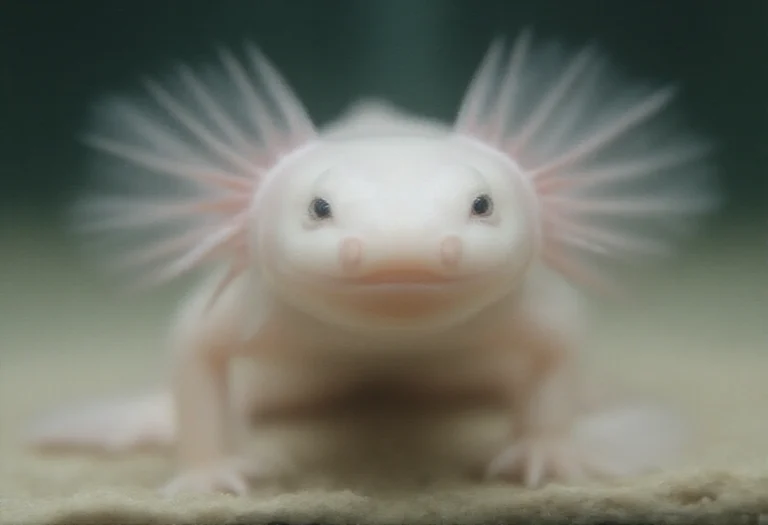
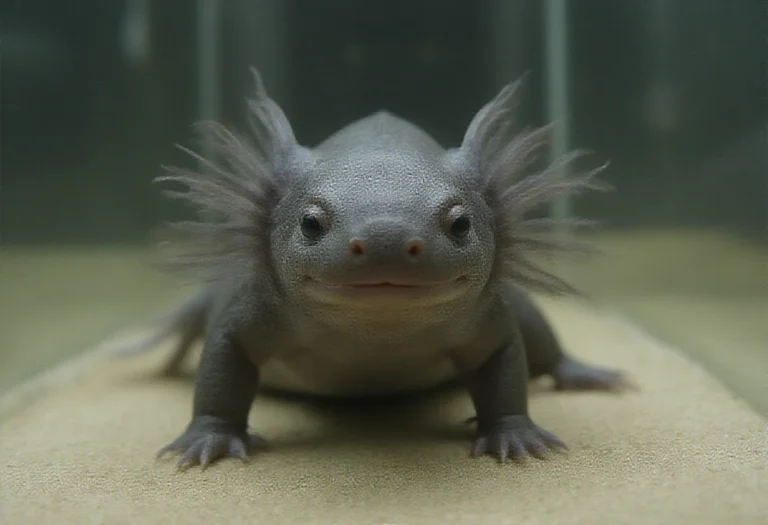
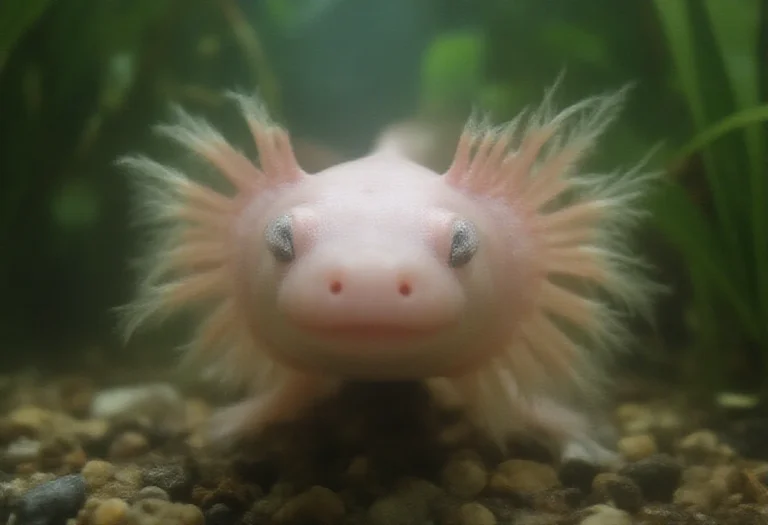
How this was made: prepared with AI assistance and checked against the sources listed at the end. Images are AI-generated illustrations, not photographs of real animals or products.
Key Takeaways
- Axolotls are fully aquatic and keep their feathery external gills for life.
- They have lungs, but use them only as a backup when water oxygen is low.
- In nature they rarely or never metamorphose, according to Animal Diversity Web.
- Induced metamorphosis is a laboratory method and most lab animals die soon after it.
- A pet axolotl needs a deep, cool, filtered tank, not a land area.
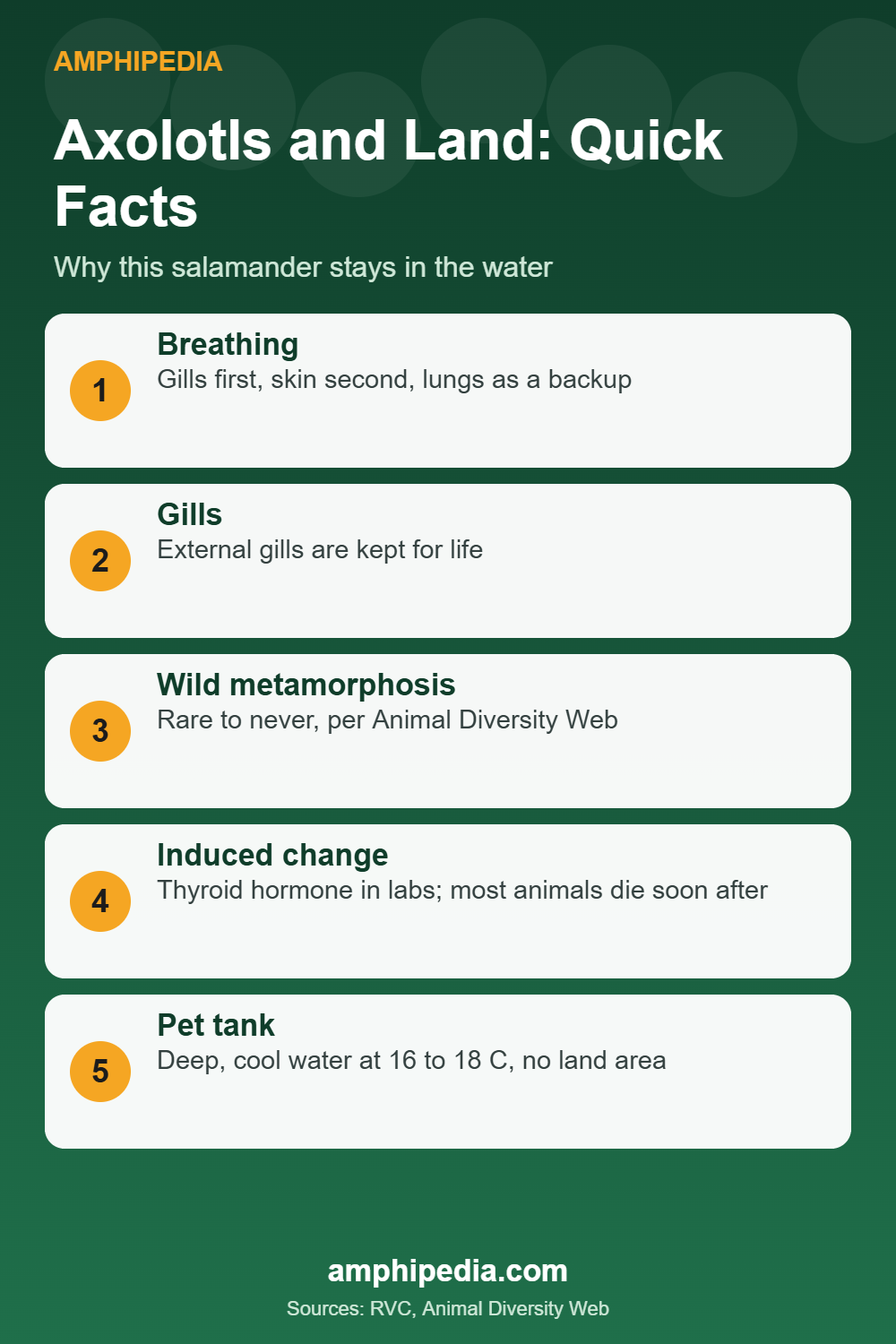
Pin this infographicShare on Facebook
Why axolotls stay in the water
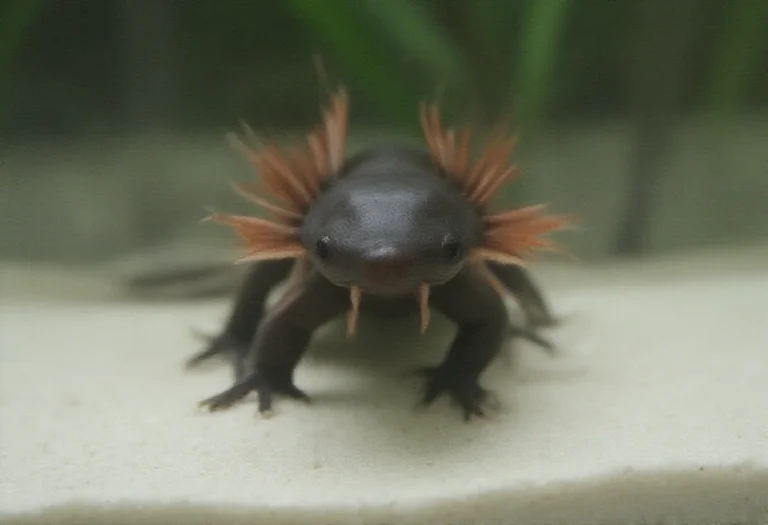
The axolotl is a salamander that never finishes growing up in the usual way. Scientists call this neoteny or paedomorphosis. The adult keeps larval traits: external gills, a finned tail and a fully aquatic lifestyle.
Britannica notes that the axolotl keeps its external gills throughout life and breeds while still in this larval-type body. Most other salamanders lose their gills and walk onto land. The axolotl does not.
Its natural home reflects this. Animal Diversity Web describes large, relatively permanent, high-altitude lakes near Mexico City. There was never a need to leave the water.
Do axolotls have lungs?
Yes, but they are not the main way an axolotl breathes. The Royal Veterinary College (RVC) says axolotls have rudimentary lungs and breathe mainly through their gills, and to a lesser extent through their skin.
A KQED science report describes the lungs as fully functional leftovers of evolution. It says the animal can use them to gulp air from the surface when oxygen in the water is low.
The two sources use different words, so treat the exact lung capacity as unsettled. Both agree on the practical point: gills and skin do most of the work, and the lungs are a backup.
- Gills: the main breathing organ, kept for life.
- Skin: a smaller extra route for oxygen, per RVC.
- Lungs: used for surface air gulps when water oxygen is low.
What happens out of water?
The sources do not give a safe time limit out of water, so nobody should test one. The gills are built to work in water, and RVC notes the skin helps with breathing and is sensitive to toxins.
An axolotl found on the floor or a countertop needs to go back into clean, dechlorinated, cool water straight away. Call an exotics vet if it looks limp, dry or damaged.
Escapes usually happen from open tanks and bowls. The University of Kentucky colony keeps juveniles in containers with sides tall enough to prevent jumping, which is a useful hint for home setups.
Can an axolotl metamorphose?
Sometimes, but not by itself in any dependable way. Animal Diversity Web says axolotls rarely if ever metamorphose in the wild. Metamorphosis can be induced with thyroid hormone injections.
Britannica makes the same point and names thyroxine as the hormone that can trigger the change. The animal then moves away from its larval body plan.
The same Animal Diversity Web account says most laboratory animals die shortly after metamorphosis. That is the main reason to avoid it. It is a research technique, not a pet-keeping option.
| Feature | Normal axolotl | Induced metamorphosed animal |
|---|---|---|
| Gills | External, kept for life | Larval features change |
| How it happens | Default development | Hormone treatment in a laboratory |
| Outlook | Typical captive lifespan 10 to 12 years, per RVC | Most lab animals die shortly after, per ADW |
Where the land myth comes from
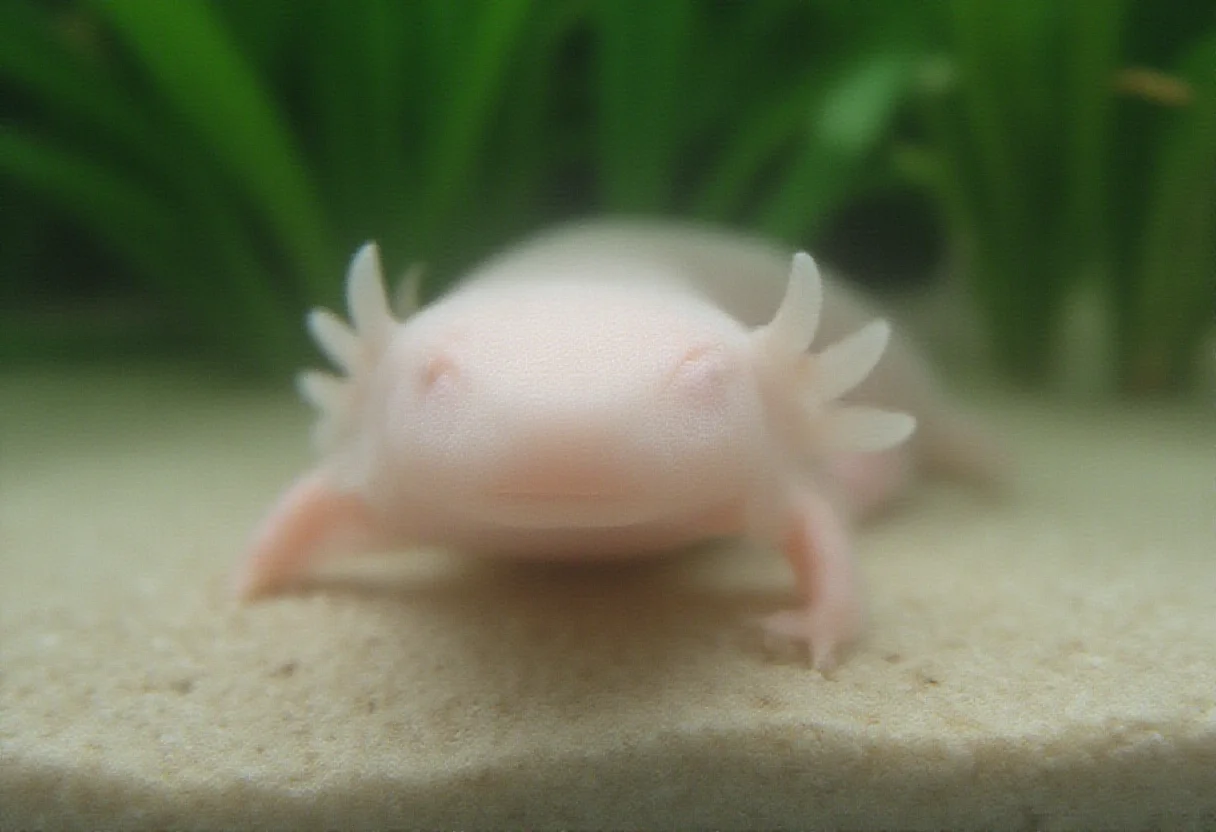
Several things feed the confusion. Axolotls have four legs, so they look like they can walk. They are salamanders, a group that mostly lives on land as adults. And photos of rare metamorphosed animals circulate online with little context.
Another common claim is that axolotls lack lungs entirely. That is wrong, as shown above. The accurate statement is that they have lungs but depend on gills.
If you want a deeper look at the change itself, see our guides on axolotls turning into salamanders and on axolotl transformation.
What this means for a pet tank
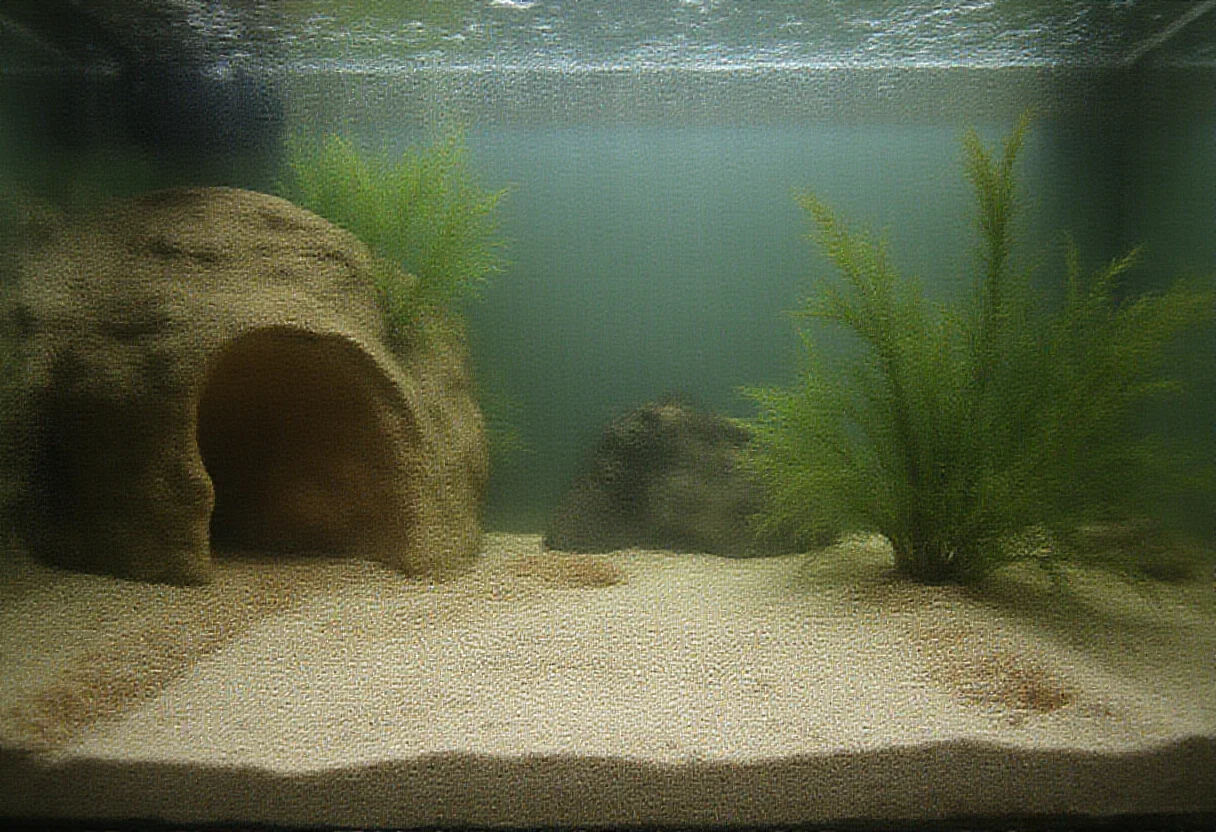
A pet axolotl does not need a dry area, a ramp or a basking spot. Give it deep water, a hide and a secure lid or tall sides.
RVC recommends water of 16 to 18 C that should never exceed 24 C, plus a filter and weekly partial water changes of 10 to 20 percent. The University of Kentucky colony gives a slightly lower upper limit of about 22 C and an ideal range of 15 to 18 C.
Because the two sources differ on the ceiling, aim for the cool end of both ranges. Our axolotl tank set up guide covers the full build.
What thyroid hormone does, and why axolotls skip it
Most amphibians change body form under the control of thyroid hormone. Lazcano and colleagues, in “Differential effects of 3,5-T2 and T3 on the gill regeneration and metamorphosis of the Ambystoma mexicanum (axolotl)” (Frontiers in Endocrinology, 2023), describe axolotls as neotenic animals that have lost the ability to undergo metamorphosis under natural conditions.
The paper reports that axolotl plasma thyroid hormone is much lower than in frogs about to metamorphose, even though their tissues have working receptors and enzymes. Giving the animals T4 or T3 can still trigger metamorphosis, which confirms the hormone is the missing signal. Animal Diversity Web agrees that metamorphosis can be induced with thyroid hormone injections and that wild axolotls rarely, if ever, change.
This page gives no doses or methods, and a pet owner should not try them.
What induced metamorphosis changes and what it costs
The 2023 study found that two forms of the hormone act differently on the gills. T3 and T4 caused irreversible gill absorption. A related compound, 3,5-T2, retracted the secondary gills at first, but the gills grew back after treatment stopped, with full length recovered in about 45 days.
- Skin: animals treated with different compounds looked different. The paper describes yellow-spotted skin in one group and dark, almost spotless skin in another.
- Survival: animals that reached the salamander stage showed about 30 percent higher lethality, which the authors say was unrelated to which hormone was used.
- Laboratory outcome: Animal Diversity Web says most laboratory animals die shortly after metamorphosis.
The study has limits. Group sizes were small, at three to four animals, and protocols varied between experiments. Treat the 30 percent figure as a signal of risk, not a precise rate. The key message is the same in both sources: the change is hard on the animal.
How long do axolotls live? Sources differ
The table above uses the Royal Veterinary College figure of commonly 10 to 12 years, sometimes over 20. Animal Diversity Web gives a different picture: an expected laboratory lifespan of 5 to 6 years, with some animals reportedly reaching 10 to 15 years and a captivity range of up to 15.
Neither source explains the gap. Plan for a pet to live a decade or more, and know that a longer life depends on cool, clean water.
Breathing depends on water quality
If gills and skin do most of the breathing, the water around them matters more than any land area. The RVC axolotl sheet lists several water factors, and they all affect how an axolotl breathes and feels.
- Chlorine and chloramines. Tap water must be dechlorinated or left to stand for 24 hours, and a dechlorinator is essential where chloramines are used.
- Ammonia. Filters are strongly advised to keep ammonia low, and the sheet recommends changing 10 to 20 percent of the water weekly, depending on the filter system.
- Flow. The sheet says strong flow is a severe cause of stress and that over-filtration also causes stress. It says it is essential that filters do not cause strong water flow.
- Light. No strict lighting is needed, sudden changes are stressful, and UV-b bulbs are not advised.
- pH. The sheet gives an ideal range of 7.4 to 7.6.
An axolotl that hangs at the surface gulping air, or stays pressed against the glass, may be telling you something is wrong with the water. Test the water and check the filter flow before anything else. If the animal looks limp or its gills look damaged, see an exotics vet.
Keeping an axolotl in its tank
The sources do not give a rule for lids. The Kentucky colony, as noted earlier, uses containers with sides tall enough to prevent jumping. The RVC sheet does not address escapes at all. Because an axolotl out of water has no safe time limit, a secure top or high sides is a reasonable precaution.
Check the area around the tank each day. If you find the axolotl out of water, follow the steps above and call an exotics vet if it looks dry, limp or damaged.
Frequently Asked Questions
Can axolotls breathe air?
They can gulp air at the surface using their lungs when water oxygen is low, according to KQED. This is a backup. Gills and skin do most of the breathing, per RVC.
Can an axolotl survive out of water for a short time?
No source gives a safe time. The animal depends on water for its gills and skin, so return it to clean, cool, dechlorinated water immediately and ask an exotics vet if it seems unwell.
Do axolotls turn into salamanders on their own?
Rarely, if ever, in nature, per Animal Diversity Web. In laboratories, thyroid hormone can trigger metamorphosis, and most lab animals die shortly after.
Can I let my axolotl walk on the floor or grass?
No. Skin is sensitive, floors carry chemicals and germs, and the animal can dry out or be injured. Keep it in water.
Does my tank need a land area?
No. Give deep water, hides and a secure top. A land area adds escape risk and no benefit.
Are axolotls amphibians?
Yes. They are salamanders in the amphibian group that never complete the usual move onto land.
Bottom Line
Axolotls are built for life in water. Their gills, their skin and their whole lifestyle depend on it, and the lungs are a minor extra.
If you keep one, spend your effort on cool, clean, well-filtered water. That is what keeps an axolotl healthy, not a chance to walk.
Sources
- Royal Veterinary College: Axolotl care and advice (PDF), accessed 12 November 2026. Used for: lungs, gills, skin, water temperature and changes, lifespan, flow, light.
- Animal Diversity Web: Ambystoma mexicanum, accessed 12 November 2026. Used for: neoteny, induced metamorphosis, habitat, lifespan.
- Britannica: axolotl. Used for: External gills kept for life, thyroxine.
- KQED: The axolotl salamander doesn’t wanna grow up. Used for: Gills and lungs.
- University of Kentucky Ambystoma Genetic Stock Center: guide to axolotl husbandry. Used for: Temperature and housing.
- CDC: Reptiles and amphibians. Used for: Salmonella advice.
- Lazcano et al. (2023), Frontiers in Endocrinology 14: Differential effects of 3,5-T2 and T3 on the gill regeneration and metamorphosis of the Ambystoma mexicanum (axolotl), accessed 12 November 2026
One Comment