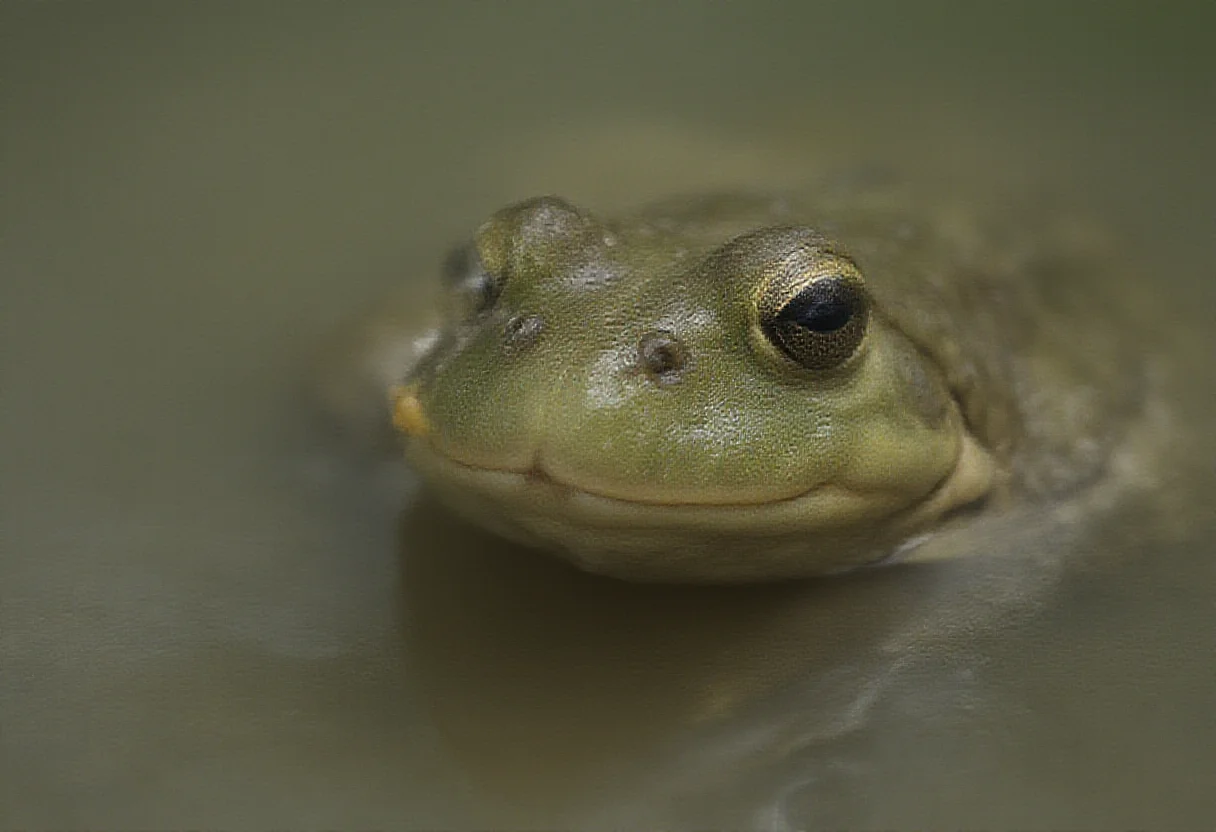
Frog Face Explained: Eyes, Eardrums, Mouth and Tongue
A frog’s face packs several specialized parts. The eyes protrude and, in leopard frogs, pull down into the head to help push food down the throat. The round eardrum (tympanum) sits on the head, and in bullfrogs and green frogs its size can show whether the frog is male or female. The tongue catches insects in under 0.07 seconds. Each part is covered below, with sources.
Look at a frog from the front and you see big eyes, a wide mouth and a round disc on each side of the head. Each one has a job. This guide explains them using state wildlife agencies, a Georgia Tech study and a university swallowing study.
For the rest of the body, see our frog anatomy guide. This page stays on the head, and it leaves out details I could not confirm in a source.
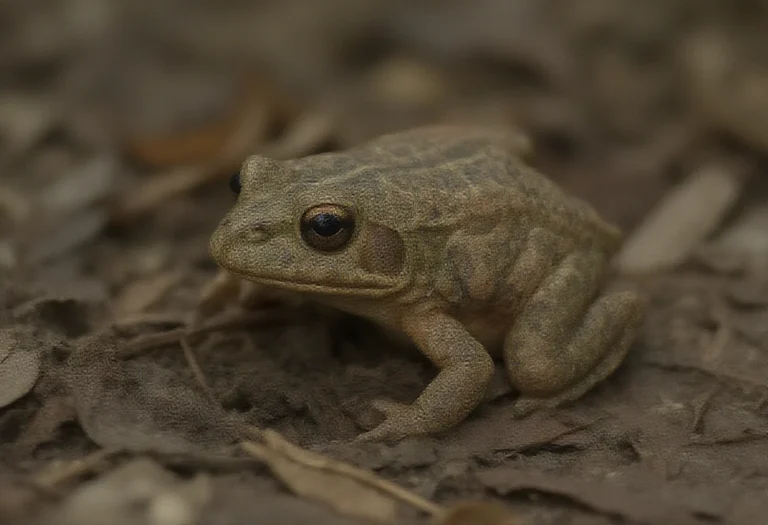
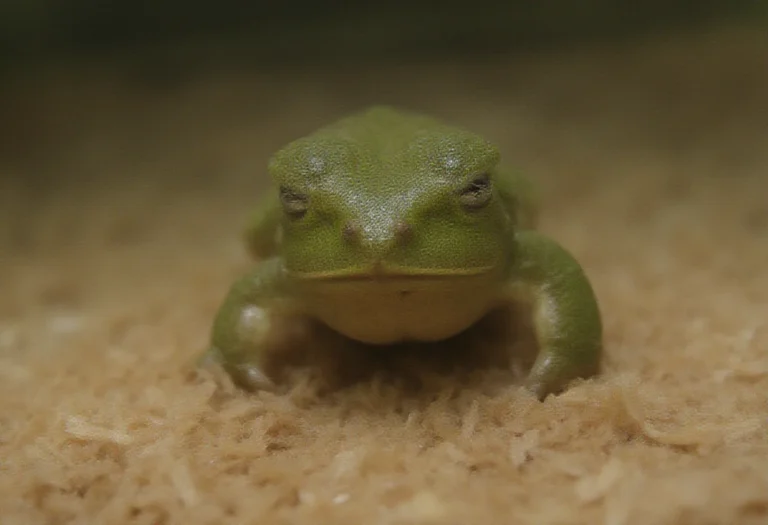
How this was made: prepared with AI assistance and checked against the sources listed at the end. Images are AI-generated illustrations, not photographs of real animals or products.
Key Takeaways
- Frog eyes protrude, and in northern leopard frogs they retract to help swallowing.
- The tympanum is the round eardrum on the side of the head.
- In bullfrogs and green frogs, a male’s eardrum is larger than his eye; a female’s is about eye-sized.
- The tongue catches insects in under 0.07 seconds, about five times faster than a human blink.
- Frog tongue tissue is about as soft as brain tissue.
- Breeding males can show darker throats or yellow chins.
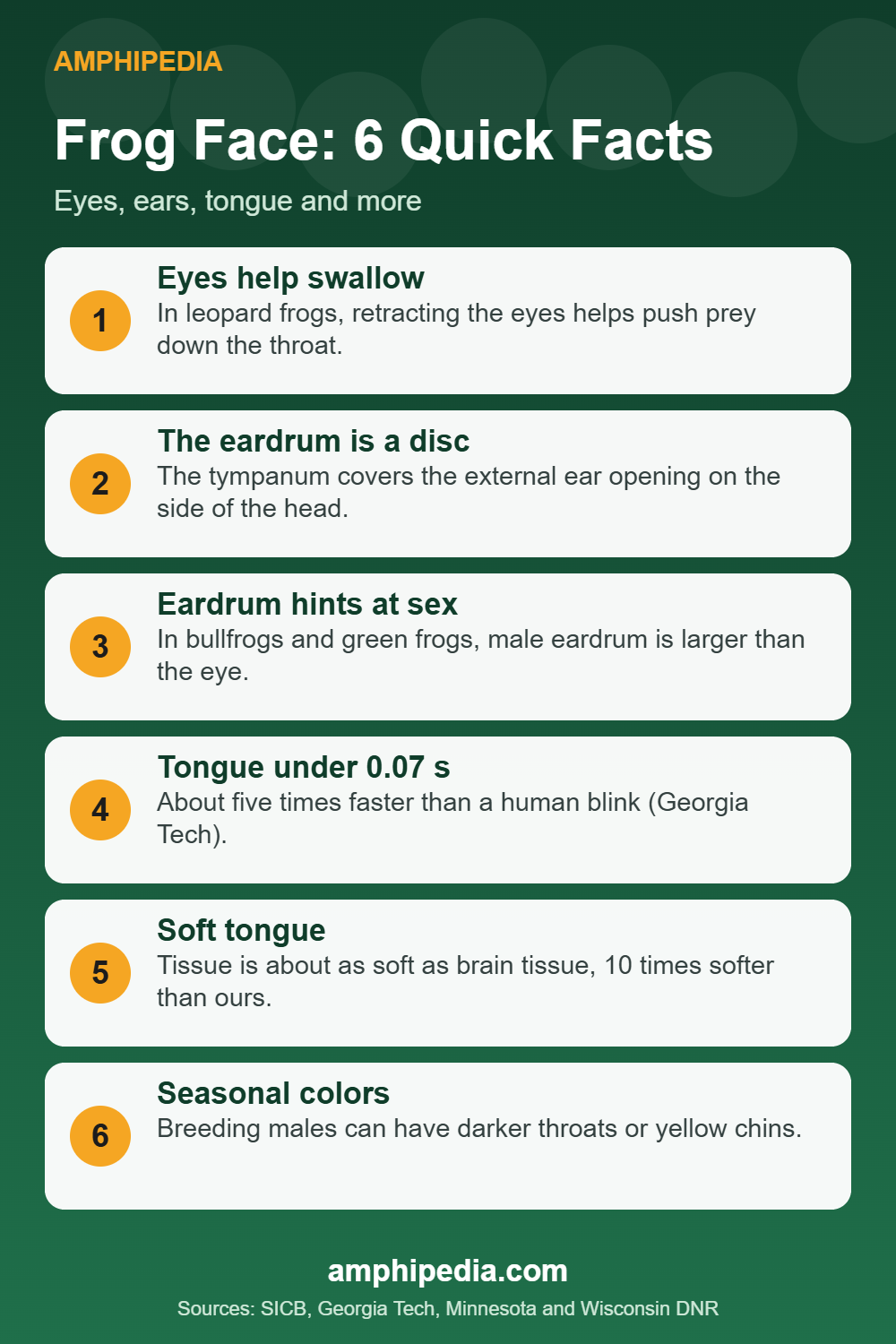
Pin this infographicShare on Facebook
The eyes: bulging and useful at mealtime
Britannica describes frogs as having protruding eyes. That bulge is only half the story. Researchers at UMass Amherst and Northern Arizona University studied what the eyes do while a frog swallows.
In northern leopard frogs (Rana pipiens), imaging showed the eyes move down and back, touch the prey and appear to push it toward the throat. Frogs with the eye-retracting muscles denervated could still swallow, but they needed more swallows per cricket: a mean of 4 instead of 2.3.
The authors call eye retraction an accessory mechanism that supports the main tongue-based one. It is a conference abstract on one species. For a longer look, see how do frogs swallow food.
The eardrum: a round disc on the side of the head
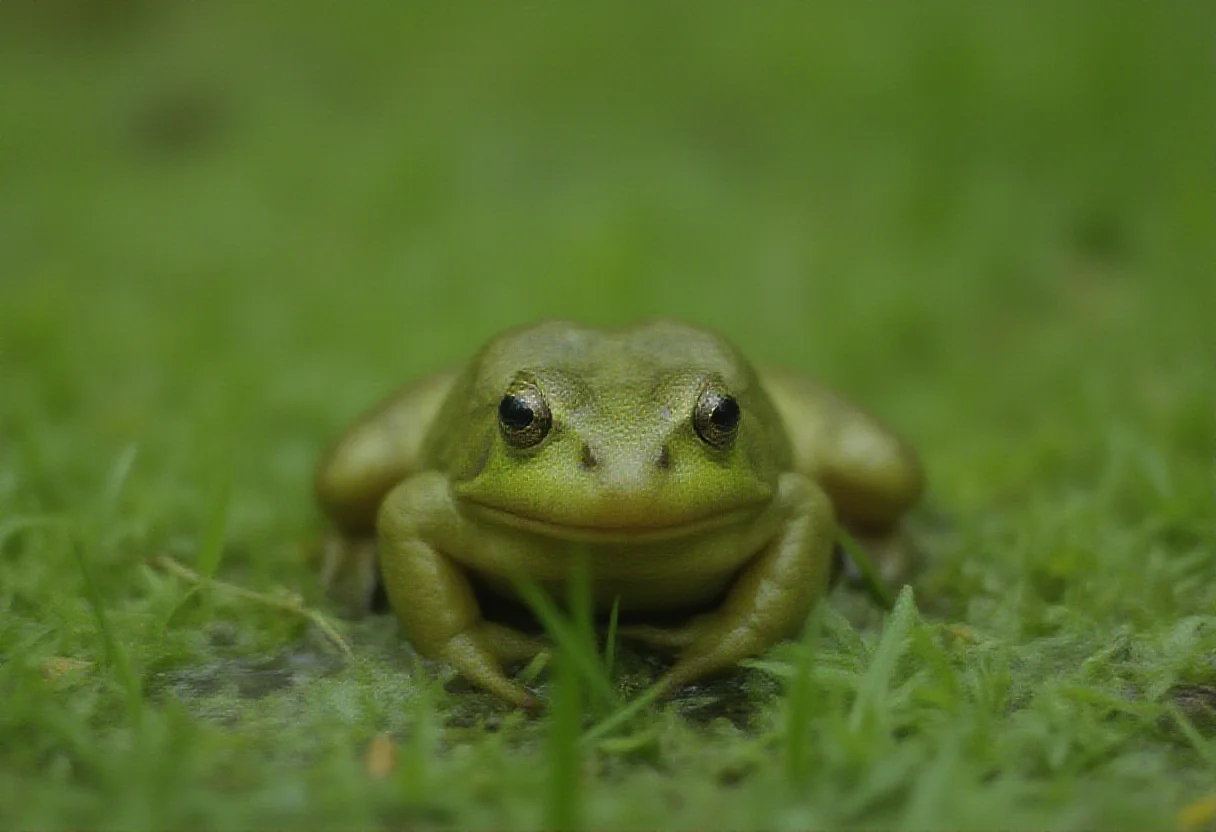
A round disc called the tympanum covers the external ear opening. The Minnesota Department of Natural Resources says it is useful for telling the sex of some species.
In Cope’s gray treefrogs, gray treefrogs, bullfrogs, green frogs and mink frogs, the male’s tympanum is larger than his eye. The female’s is about the same size as her eye.
The Wisconsin DNR is more specific for the American bullfrog (Lithobates catesbeianus): the male’s tympanum is twice as big as his eye, and the female’s is about eye-sized.
| Species | Male eardrum vs eye | Female eardrum vs eye | Source |
|---|---|---|---|
| American bullfrog | About twice the eye | About eye-sized | Wisconsin DNR |
| Bullfrog, green frog, mink frog, gray treefrogs | Larger than the eye | About eye-sized | Minnesota DNR |
Reading the face: a caution
The eardrum rule works for the species the agencies list. It is not a universal test for every frog. Minnesota DNR says the trait is useful for “some species,” so check a field guide for your region before you trust it.
The mouth and the fast, soft tongue
A Georgia Tech team led by Alexis Noel and David Hu studied how frog tongues catch insects. They found tongues capture prey in under 0.07 seconds, about five times faster than a human blink. Insects accelerate toward the mouth at up to 12 times gravity.
The tongue tissue turned out to be about as soft as brain tissue and roughly 10 times softer than a human tongue. Frog saliva is a “two-phase viscoelastic fluid.” It is thick at low shear rates and thin at high shear rates, so it can grip prey and then let go.
In a 2014 test on the horned frog (Ceratophrys cranwelli), adhesion reached up to 1.4 times the frog’s body weight. The tongue acts like a pressure-sensitive adhesive, similar to tape. During a strike it wraps around the insect and stretches like a spring, which reduces impact forces.
The study was published in the Journal of the Royal Society Interface. The researchers collected saliva from about 15 dead northern leopard frog tongues, so the numbers describe those species and not every frog.
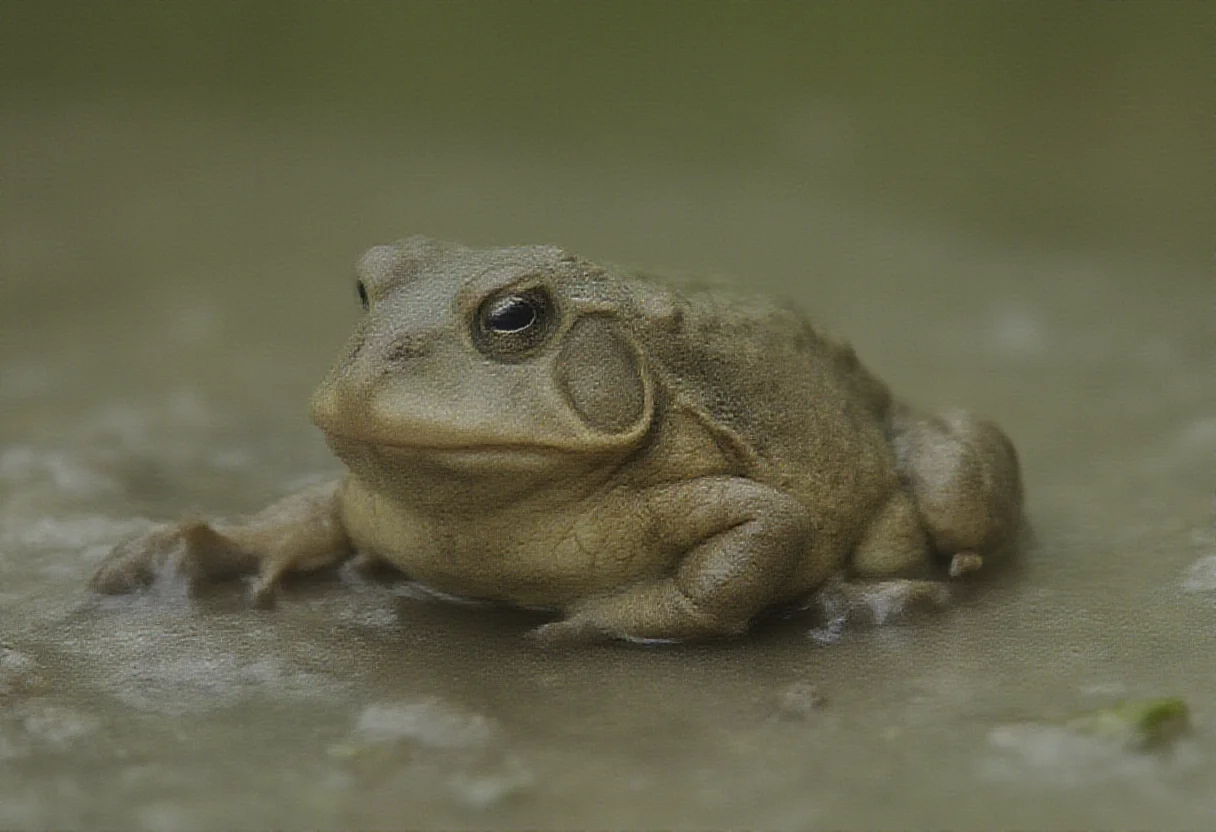
Throat and chin colors in the breeding season
Minnesota DNR says males have a darker throat color during the breeding season. Wisconsin DNR says breeding male bullfrogs often have bright yellow chins.
These color changes are seasonal clues, not permanent traits. They help explain why one frog can look different from the same species in another month.
What I could not confirm
The sources I opened did not describe frog nostrils, pupil shapes or the frog’s teeth. I also did not find a source that clearly compares frog and toad faces. I left those topics out rather than guess.
If you are identifying a frog in the field, your state wildlife agency is a better guide than a general article. Photos from the same region help most.
Frequently Asked Questions
What is the round circle behind a frog’s eye?
That is the tympanum, a round disc that covers the external ear opening, according to Minnesota DNR.
How can I tell a male bullfrog from a female?
Wisconsin DNR says the male’s eardrum is twice as big as his eye, while the female’s is about eye-sized.
How fast is a frog’s tongue?
Georgia Tech researchers found tongues capture insects in under 0.07 seconds, about five times faster than a human blink.
Why do frogs pull their eyes in when eating?
In northern leopard frogs, eye retraction appears to help push prey toward the throat. Without it, frogs needed more swallows per cricket.
Where is a frog’s ear?
Minnesota DNR describes the tympanum as a round disc that covers the external ear opening.
Do all frogs show sex through eardrum size?
No. Minnesota DNR says the trait helps with some species. Check a regional field guide.
Bottom Line
A frog face is a toolkit: bulging eyes that help swallow, an eardrum that can hint at sex, and a soft, sticky tongue that works faster than a blink.
Pair this guide with our frog anatomy guide for the full body, or with physical characteristics of a frog for a quick overview.
Sources
- Levine, Monroy and Brainerd: Contribution of eye retraction to swallowing performance in the northern leopard frog (SICB abstract), accessed 31 October 2026
- Minnesota DNR: Shapes and sizes of frogs and toads, accessed 31 October 2026
- Wisconsin DNR: North American Bullfrog, accessed 31 October 2026
- Georgia Tech: The frog tongue is a high-speed adhesive (Noel and Hu), accessed 31 October 2026
- Encyclopaedia Britannica: Frog, accessed 31 October 2026
One Comment