How Long Do Frogs Live? What Shortens or Extends Life
A frog’s lifespan depends on its species, its life stage, predators, disease and the quality of its care. The best data I found comes from the American toad, a close relative. Most do not survive more than a year or two, and the majority die before leaving the tadpole stage, yet a captive toad lived 36 years. Frogs show the same gap between records and averages, so a long record never describes a typical frog.
This post pairs with our guide to frog lifespans by species. That page gives numbers. This one explains what raises or lowers them.
The evidence is uneven. Detailed survival data exists for only a few species, so I use the American toad as the clearest example and say so where it applies.
How this was made: prepared with AI assistance and checked against the sources listed at the end. Images are AI-generated illustrations, not photographs of real animals or products.
Key Takeaways
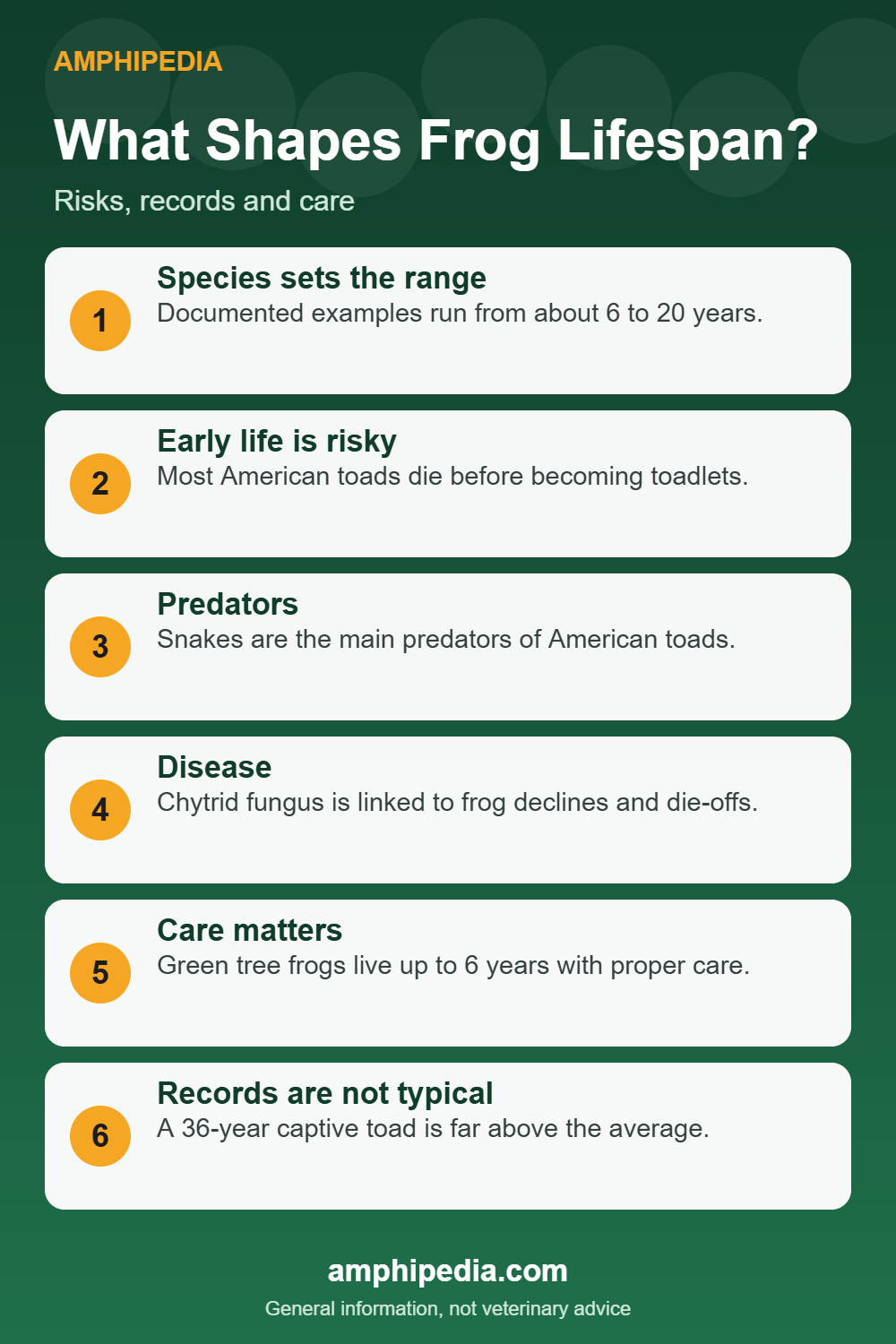
- Species sets the possible range, but life stage and risks set the real outcome.
- Early life is the riskiest stage: most American toads die before becoming toadlets.
- Snakes are the main predators of American toads.
- Chytrid fungus is linked to frog declines and die-offs.
- Proper care is tied to the longest captive lifespans in the sources I found.
- Records, such as a 36-year captive toad, are not typical lifespans.
Pin this infographicShare on Facebook
Averages and records tell different stories
Animal Diversity Web (ADW) lists the American toad (Anaxyrus americanus) with a wild range of 0 to 10 years and captive animals that reached 36. It also says most American toads probably do not survive more than a year or two, and that the majority die before transforming from tadpoles into toadlets.
That is a toad, not a frog. But toads and frogs share the same order, Anura, and the same egg-and-tadpole life cycle. The pattern shows why a record age tells you little about a typical animal.
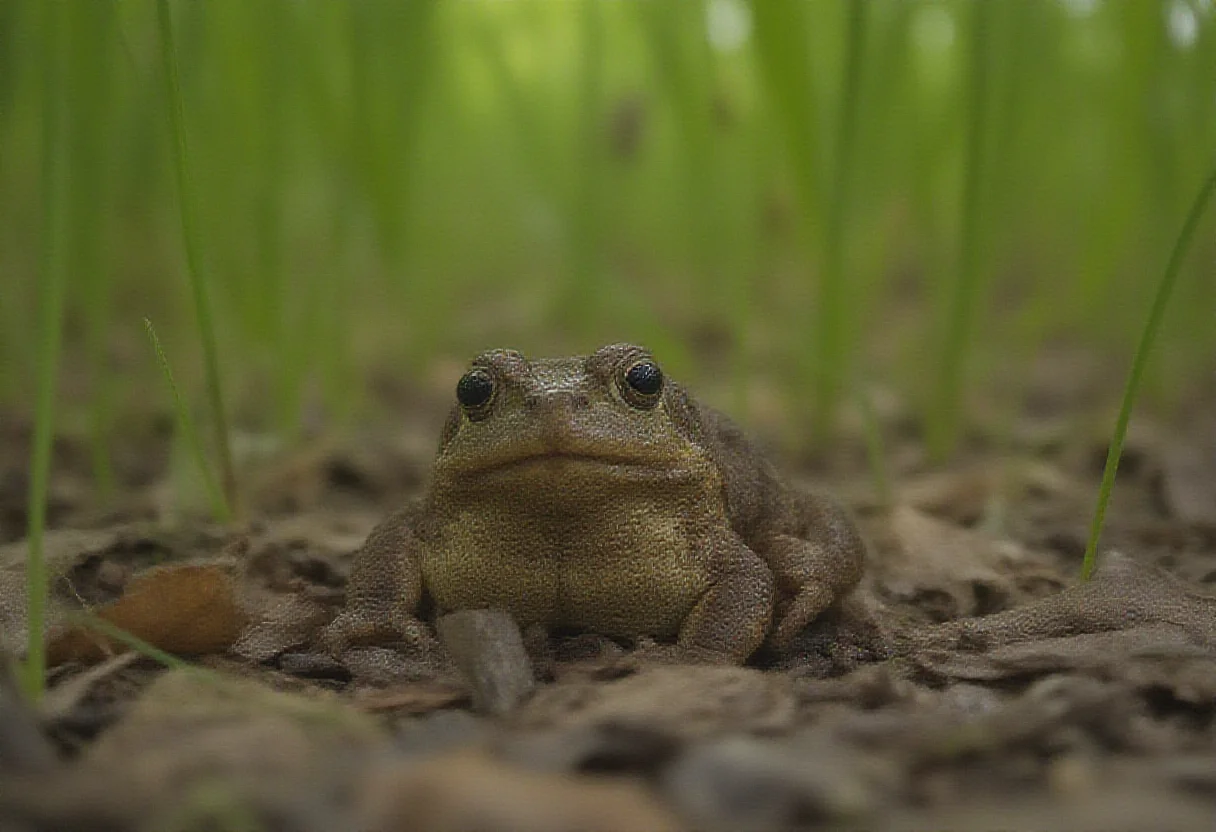
Predators
ADW states that the main predators of American toads are snakes. Eastern hognose snakes specialize in eating toads, and garter snakes are immune to the toads’ toxins. The known predator list also includes diving beetles, predaceous diving bugs, hawks, herons and raccoons.
Toads have defenses. ADW says they may urinate or inflate their bodies when faced with a snake. Tadpoles swim in very shallow water, school together by day and have toxic skin. Females prefer ponds without fish, and the eggs are countershaded to blend in.
ADW does not connect predation directly to the low average lifespan, so I will not claim that it explains it.
Disease
Chytrid fungus (Batrachochytrium dendrobatidis) is a major disease threat. A US Geological Survey publication reports that the fungus is associated with declines of frogs in the American and Australian tropics and may explain many earlier unexplained declines.
The same publication diagnosed chytridiomycosis in six wild adult toads in Colorado. Deaths spread through the group and occurred only in post-metamorphic animals. The authors state the fungus played a proximate role and that the group faces a risk of extinction.
These are results for toads in one region. They show how disease can shorten wild lives, but they do not give a typical frog figure.
Care in captivity
ADW says captive green tree frogs (Hyla cinerea) live up to 6 years with proper care. It lists the African clawed frog at up to 20 years in captivity.
The wild lifespan of the green tree frog is unknown, so I cannot say whether captivity adds years. What the sources do show is that care is part of the story.
Pet frogs need species-specific housing, food and temperature. This post does not give care protocols. An exotics veterinarian can advise on your species.
How scientists estimate wild age
Wild frogs are hard to age. Scientists count growth rings, called lines of arrested growth, in thin sections of bone. A study in the Annals of the Brazilian Academy of Sciences explains that each narrow line marks one growth year, but only in species that grow on an annual cycle.
The study counted 1 to 7 rings in nine South American frog species. It used only three specimens per species, and the authors call it exploratory. So it shows the method, but it is too small to state lifespans.

Summary table
The table links each factor to what the sources say.
| Factor | What the sources say |
|---|---|
| Life stage | Most American toads die before leaving the tadpole stage |
| Predators | Snakes are the main predators of American toads |
| Disease | Chytrid fungus linked to frog declines and Colorado toad deaths |
| Care | Green tree frogs live up to 6 years with proper care |
| Records | A captive toad reached 36 years, far above the average |
Frequently Asked Questions
What shortens a frog’s life?
Predators, disease such as chytrid fungus and poor conditions all play a role. Early life stages are especially risky.
Do most frogs reach adulthood?
In American toads, the majority die before transforming from tadpoles into toadlets. I did not find equivalent numbers for most frogs.
What eats frogs and toads?
For American toads, ADW names snakes as the main predators, plus beetles, hawks, herons and raccoons.
Do frogs live longer in captivity?
Some captive records are high, such as 20 years for the African clawed frog, but wild data are limited for many species.
How do scientists age wild frogs?
They count growth rings in bone. The method works only in species with annual growth cycles.
Where can I see lifespan numbers by species?
See our companion guide on frog lifespans by species.
Bottom Line
Species sets a frog’s ceiling, but predators, disease and care decide where it lands. Early life is the roughest stretch.
Use records with caution, and check species-specific sources before you expect a number.
Sources
- Animal Diversity Web (University of Michigan): Anaxyrus americanus, accessed Toad survival, predators and defenses
- USGS: Evidence of disease-related amphibian decline in Colorado, accessed Chytrid fungus and toad deaths
- Annals of the Brazilian Academy of Sciences: growth rings in 11 subtropical anuran species, accessed Age estimation by bone growth rings
- Animal Diversity Web (University of Michigan): Hyla cinerea, accessed Green tree frog captive lifespan
- Animal Diversity Web (University of Michigan): Xenopus laevis, accessed African clawed frog captive lifespan