How Much Are Pacman Frogs? Price and Care Costs
This post contains affiliate links. As an Amazon Associate I earn from qualifying purchases. Prices and availability are shown by Amazon and can change.
Pacman frogs are not expensive to buy, but the sticker price is the small part. One online retailer listed Pac-Man frogs from $19.99 to $69.99 on October 31, 2026, with many sold out. Price depends on morph, size and seller. The bigger cost comes later: a 10 to 20 gallon enclosure, heat, clean dechlorinated water, supplemented live prey and exotics vet care.
Pacman frog is a trade name used for horned frogs of the genus Ceratophrys. The sources we cite cover the ornate horned frog, Ceratophrys ornata, so we use that species as our reference. Other species are sold under the same name.
This guide gives a dated price snapshot, explains what moves the price, and lists the recurring costs that matter more than the sticker price.
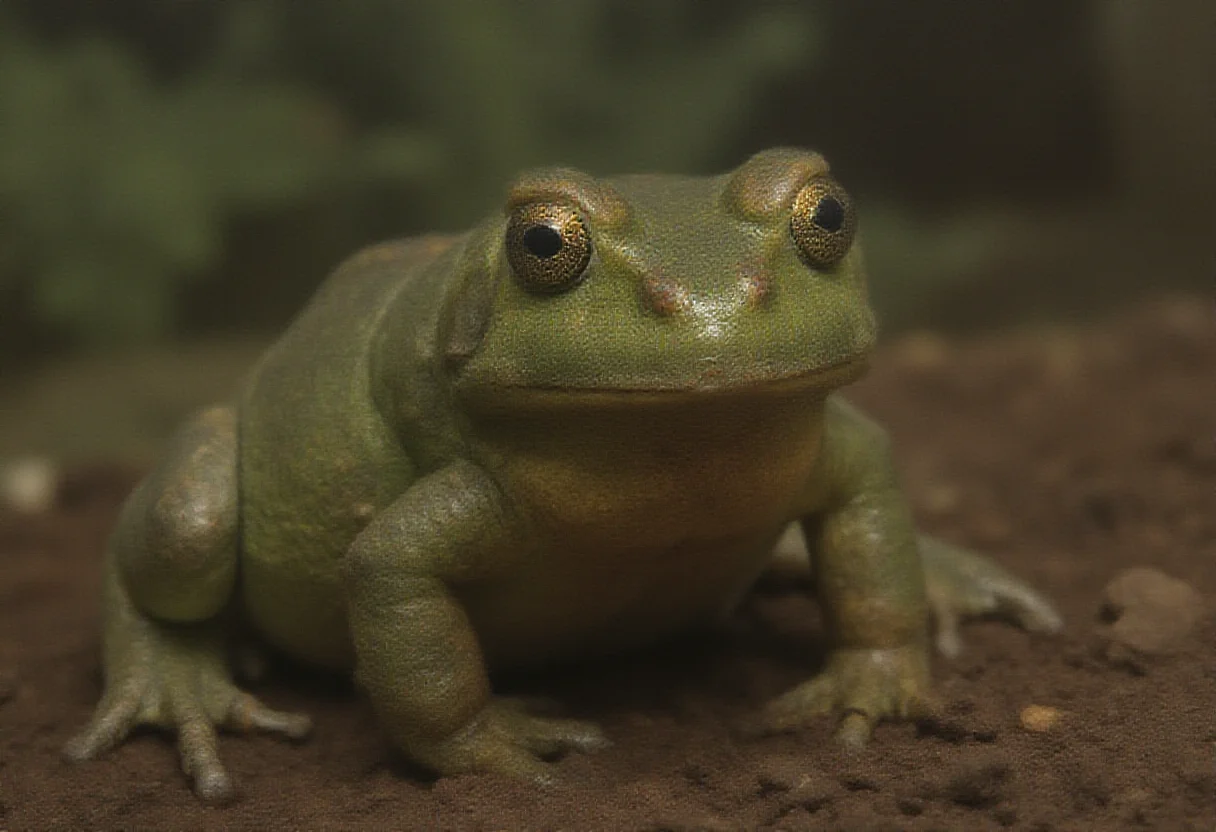
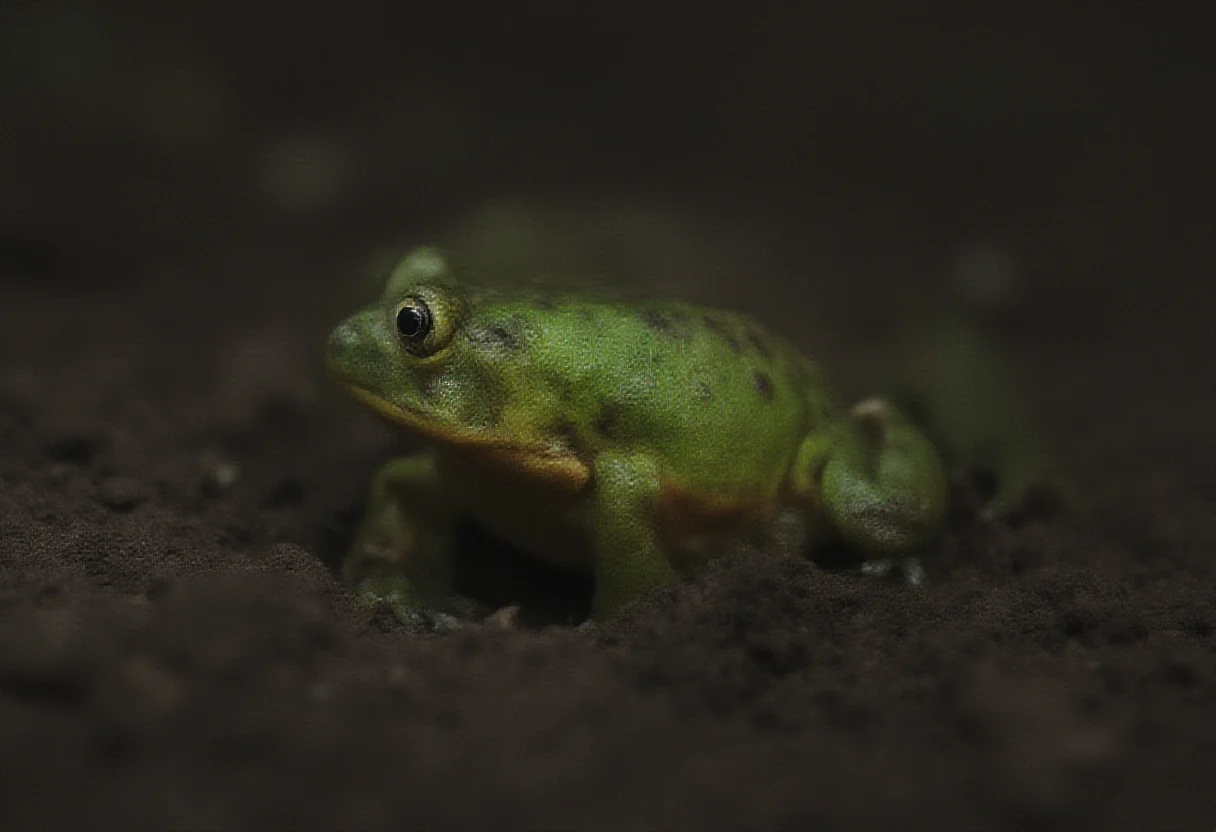
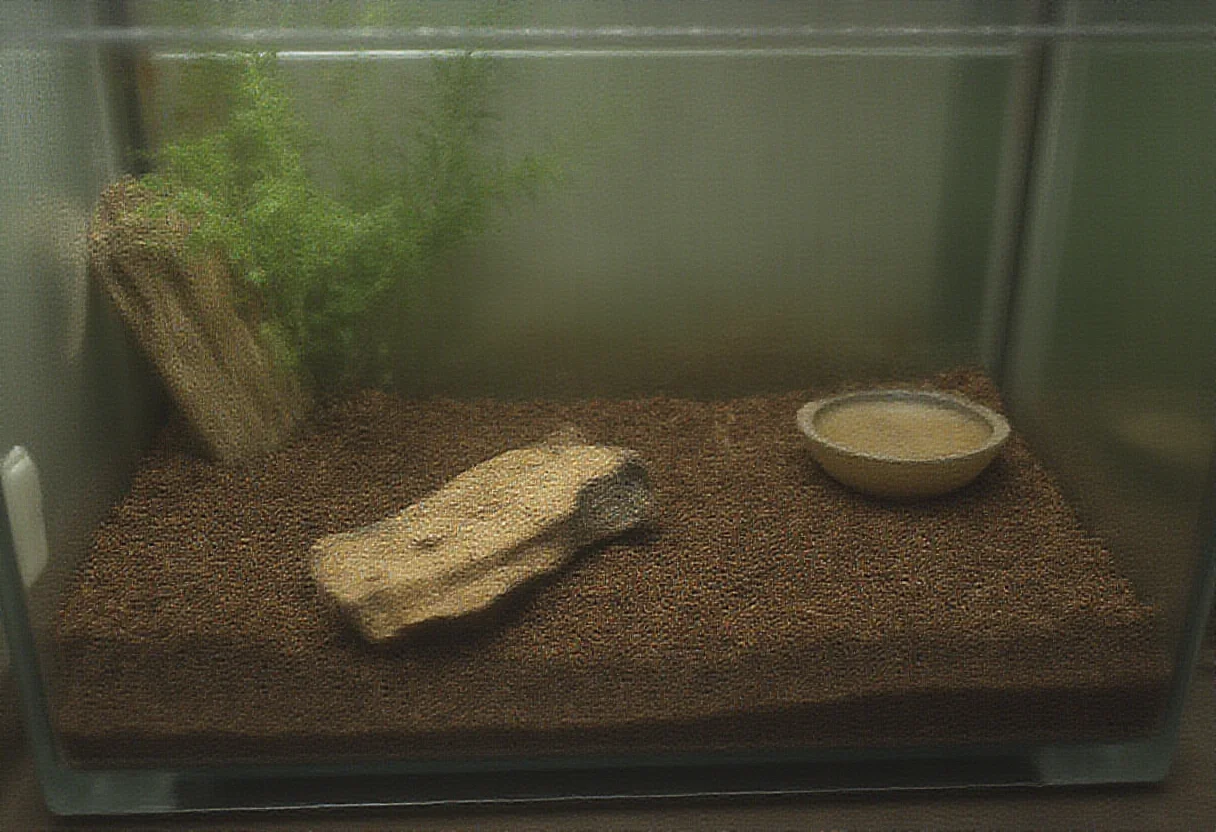
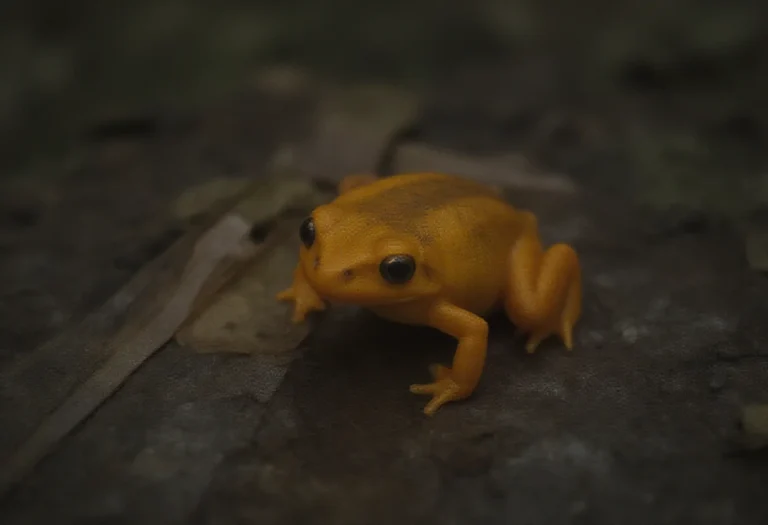
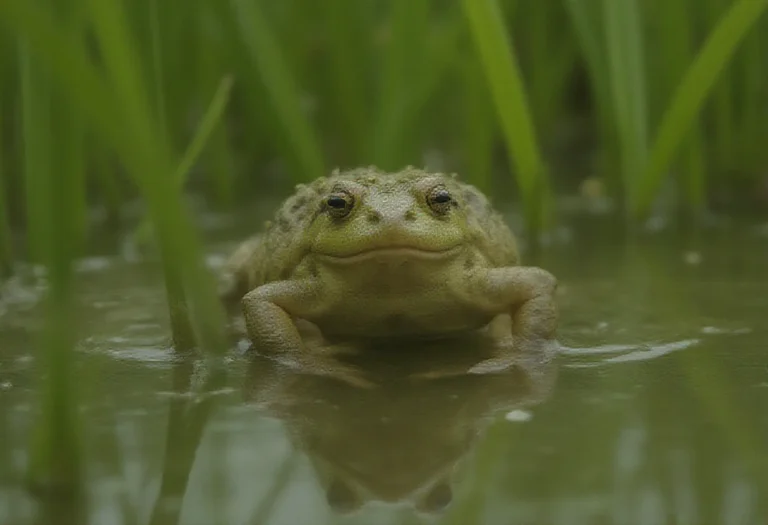
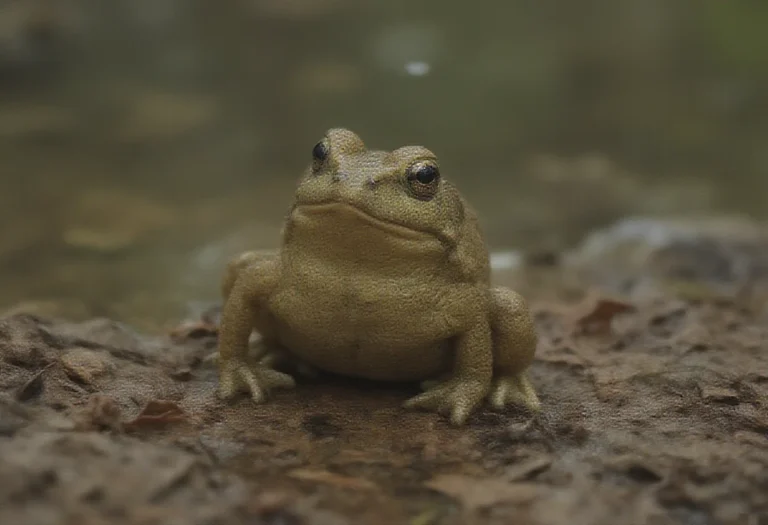
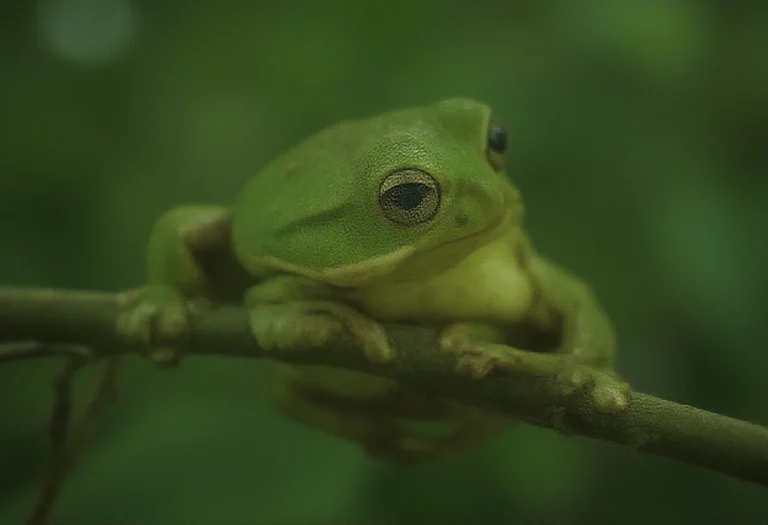
How this was made: prepared with AI assistance and checked against the sources listed at the end. Images are AI-generated illustrations, not photographs of real animals or products.
Key Takeaways
- One retailer listed Pac-Man frogs from $19.99 to $69.99 on October 31, 2026. Many were sold out.
- Morph, size and seller change the price. Captive-bred frogs are widely available.
- Adults need a 10 to 20 gallon enclosure, according to Josh’s Frogs.
- Water must be filtered and dechlorinated, says the WWF.
- Lifespan sources differ: about 6 years (WWF) and about 15 years in captivity (Josh’s Frogs).
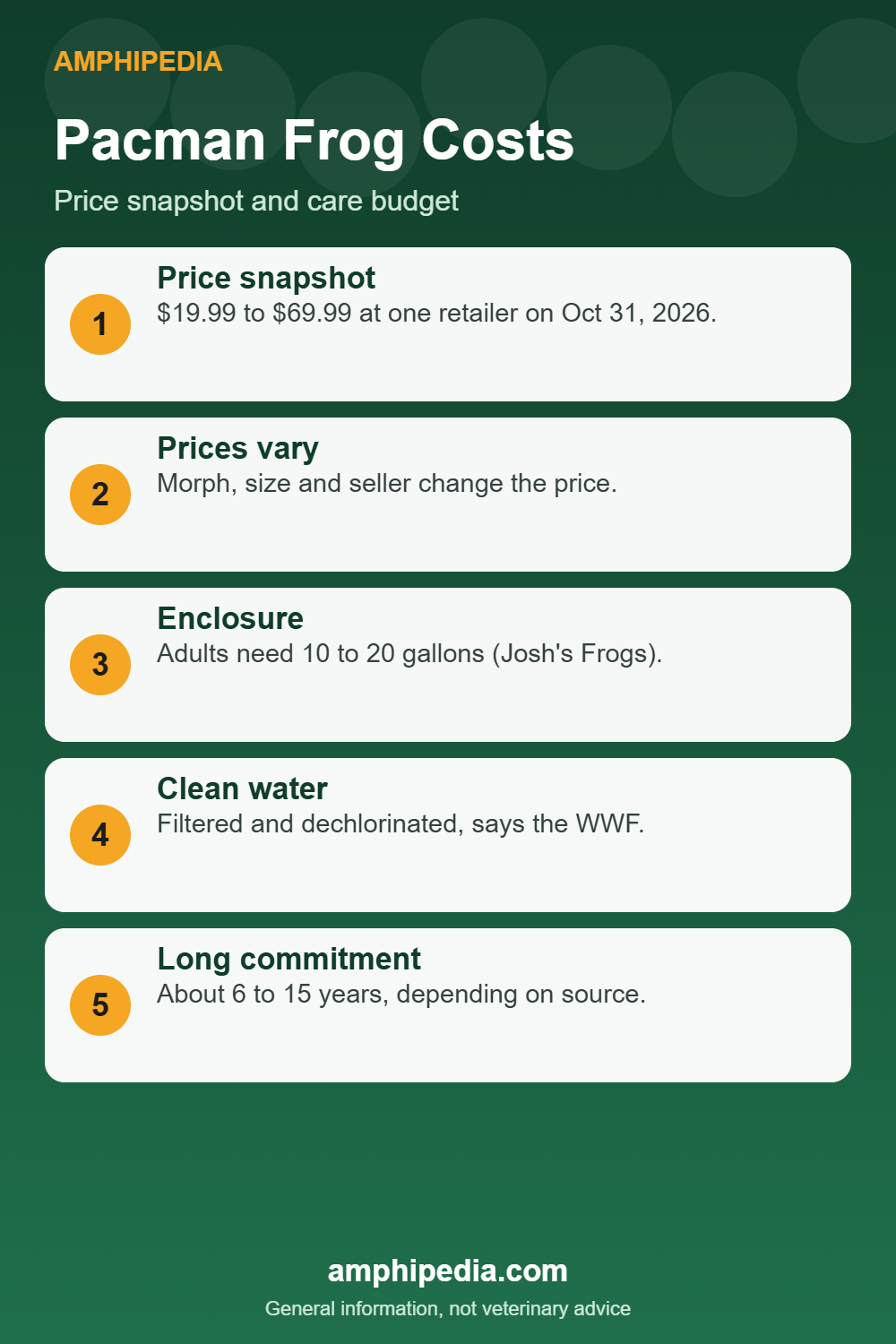
Pin this infographicShare on Facebook
Setup supplies to budget for
These listings show the kinds of substrate, hides, heat and humidity supplies a Pacman frog setup needs. Check size and wattage for your enclosure.





Product titles, prices and ratings are provided by Amazon and are accurate only at the time they are displayed.
Price snapshot
A check of the Pac-Man frog care and category page at Josh’s Frogs on October 31, 2026 showed listed prices from $19.99 to $69.99. Many listings were marked sold out. Wholesale listings also appeared.
The page lists many morphs, including Albino, Apricot, Fantasy, Strawberry and Ornate. It does not explain how morph affects price, so we cannot say which cost more.
This is one seller on one day. Treat it as an example, not a market average. Prices at local stores and breeders may differ.
What changes the price
Morph and size are the obvious factors. Josh’s Frogs lists subadults and many color morphs.
Source matters too. Josh’s Frogs says captive-bred Pac-Man frogs are widely available from online vendors and most pet stores, although wild-caught imports still appear.
The WWF says Pacman frogs are in high demand in the pet trade and are sometimes illegally collected from the wild. A Honolulu Zoo page lists the species as Near Threatened, with collection for the pet trade among the causes of decline. Ask sellers for proof of captive breeding.
Costs after you buy
Here is where the real budget goes. The table combines figures from the WWF, Josh’s Frogs and Reptiles Magazine.
| Cost area | What the sources say | Source |
|---|---|---|
| Enclosure | Adults need 10 to 20 gallons. Reptiles Magazine says 15 to 20 gallons horizontal for a female or pair. | Josh’s Frogs; Reptiles Magazine |
| Heat and humidity | 75 to 85 F by day, 65 to 75 F at night, humidity 50 to 80% | WWF |
| Water | Filtered and dechlorinated. Very sensitive to water quality. | WWF |
| Food | Lizards, mice, frogs and insects, often dusted with supplements | WWF |
| Supplements | Vitamin and mineral dusting recommended | Josh’s Frogs |
| Vet care | Access to an amphibian vet recommended | WWF |
How big do they get, and how long do they live?
Size affects the enclosure. Josh’s Frogs says females reach 4 to 7 inches and males 2.5 to 4 inches. Honolulu Zoo says males reach about 4.5 inches and females about 6.5 inches. The WWF gives 3 to 6 inches.
Lifespan sources disagree. The WWF gives about 6 years. Josh’s Frogs says about 15 years in captivity under optimal conditions. Plan for the longer figure, since you are making a long commitment.
Feeding costs
The Honolulu Zoo calls the species an extreme carnivore that eats almost anything small enough to fit in its mouth. Frogs ambush prey and wait for it to come close.
Reptiles Magazine says adults need feeding about once every two weeks, with several small items better than one large one. Josh’s Frogs does not give a frequency. It says to feed according to size and temperature and to cut back if the frog looks too round. Ask a vet for the schedule your frog needs.
Welfare and health notes
The WWF rates the species low risk as a pet if well cared for. It rates welfare risk as moderate because care needs are hard to meet or not well known. It rates public health risk as moderate.
The WWF advises avoiding handling. If handling is necessary, wear non-powdered gloves because of the frog’s sensitive skin. It also says never to release a pet into the wild.
Before you buy: a checklist
Use this list to turn a price into a budget.
- Ask whether the frog is captive-bred and from what source.
- Check the rules in your state. We do not give a legal ruling here, so check your state wildlife agency.
- Price the enclosure, heating, hides, substrate and water treatment.
- Plan for supplemented live food, then multiply by the expected lifespan.
- Find an amphibian vet through the ARAV directory at arav.org/professionals.
What we could not verify
We did not find a neutral price survey. The price range above is a single seller on a single day. We also did not find a sourced average for yearly food or vet costs.
Different sources give different lifespans and sizes. We list each source rather than choosing one.
Heat and humidity: the sources do not agree
Heating is a running cost, so the target temperature matters. Josh’s Frogs gives 72 to 78 F. The WWF gives a daytime range of 75 to 85 F and a nighttime range of 65 to 75 F, with humidity of 50 to 80 percent. Josh’s Frogs gives no humidity figure and says only that the substrate should stay damp but not soaking wet.
The overlap is roughly 75 to 78 F in the daytime, so a room that holds a steady mid-70s may need little extra heat. Check what your room actually does before you buy a heater, and ask an exotics vet which range suits your frog.
Enclosure choices that change the budget
Josh’s Frogs says babies can live in small plastic reptile enclosures, while adults need 10 to 20 gallons. It stresses that caging does not need to be spacious, because these are sit-and-wait predators that stay mostly buried. It recommends coir for burrowing, hiding spots and live plants such as pothos.
Reptiles Magazine suggests a 15 to 20 gallon aquarium oriented horizontally for an adult female or a pair. It also describes a plain terrarium holding only half an inch of water, and warns that these need frequent, if not daily, cleaning because bacteria multiply quickly.
The sources split on water bowls. Josh’s Frogs says the author kept frogs with and without one, as long as the substrate stayed moist. The WWF lists a water bowl the frog can sit in as part of the setup. Whichever you choose, plan on filtered, dechlorinated water, which the WWF says these frogs are very sensitive to.
Feeding changes as the frog grows
Reptiles Magazine says a frog of 3 to 4 weeks can eat a pinky mouse or several crickets every 3 to 4 days. Several small items are better than one large one. As the frog grows, prey can get bigger and feedings less frequent, and adults need feeding about once every two weeks.
That means the food bill is front-loaded. A young frog eats often, while an adult eats far less. Josh’s Frogs says staple foods are crickets and roaches, with fish, worms and small mice also mentioned, and advises dusting feeders with a vitamin and mineral supplement. It adds that the frog should look round, and that you should cut back if it looks unnaturally large.
Dry skin cocoons and food refusal
Josh’s Frogs describes a behaviour that can alarm new owners. When the substrate dries out or food is scarce, the frog encases itself in a tough outer skin. Once rehydrated, it sheds this skin and eats it.
The same care sheet says that if the frog is allowed to cool and dry out somewhat, it may refuse food in a state it calls brumation. Josh’s Frogs does not describe this as routine, so if your frog stops eating, check temperature and substrate moisture first and then call a vet.
Which frog are you actually pricing?
Pacman frog is a trade name. Josh’s Frogs titles its care sheet for both Ceratophrys cranwelli and C. ornata and says adult male size varies by species. Reptiles Magazine titles its page Pac-Man Frog but describes the ornate horned frog from Colombia and Argentina.
Descriptions also differ on habits. The Honolulu Zoo calls the ornate horned frog diurnal and says it lives in grasslands near temporary water in Argentina, Brazil and Uruguay. The WWF calls the group nocturnal and not very active, and places it in rainforests of Argentina, Uruguay and southern Brazil. Ask a seller for the exact species so you can read the right care sheet.
A simple way to sort the costs
Because prices change, this page gives no totals. Sort what you need into three groups and price each one yourself.
- One-time: enclosure, lid, hides, substrate, thermometer and humidity gauge, and any heater.
- Recurring: feeder insects or mice, vitamin and mineral supplement, dechlorinating treatment or filtered water, and replacement substrate.
- Occasional: a vet visit with a clinician who treats amphibians, plus the cost of replacing equipment over a lifespan the sources put at 6 to 15 years.
Frequently Asked Questions
How much does a Pacman frog cost?
One retailer listed Pac-Man frogs from $19.99 to $69.99 on October 31, 2026. Prices vary by seller, morph and size.
Are Pacman frogs cheap to keep?
The purchase price is low, but you need an enclosure, heat, clean water, supplemented live food and vet care.
How big of a tank does a Pacman frog need?
Adults need 10 to 20 gallons, according to Josh’s Frogs. Reptiles Magazine says 15 to 20 gallons.
How long do Pacman frogs live?
Sources differ: about 6 years (WWF) and about 15 years in captivity (Josh’s Frogs).
Are Pacman frogs captive-bred?
Josh’s Frogs says captive-bred frogs are widely available, but wild-caught imports still appear. Ask the seller.
Can I handle a Pacman frog?
The WWF advises avoiding handling. If necessary, use non-powdered gloves.
Bottom Line
A Pacman frog is cheap to buy and slow to cost you. Get the setup right first, and choose a captive-bred animal from a good seller.
For a different frog, read do frogs eat butterflies to see how frog diets work.
Sources
- Josh’s Frogs: Pac-Man Frog Care Sheet, accessed 12 November 2026
- WWF: Responsible Pet Guide, Pacman frog / South American horned frog, accessed 12 November 2026
- Honolulu Zoo: Ornate Horned Frog, accessed 12 November 2026
- Reptiles Magazine: Pac-Man Frog, accessed 12 November 2026
- CDC: Reptiles and Amphibians, accessed 12 November 2026

One Comment