Ohio Frog Gigging Season: Dates, Limits and Rules
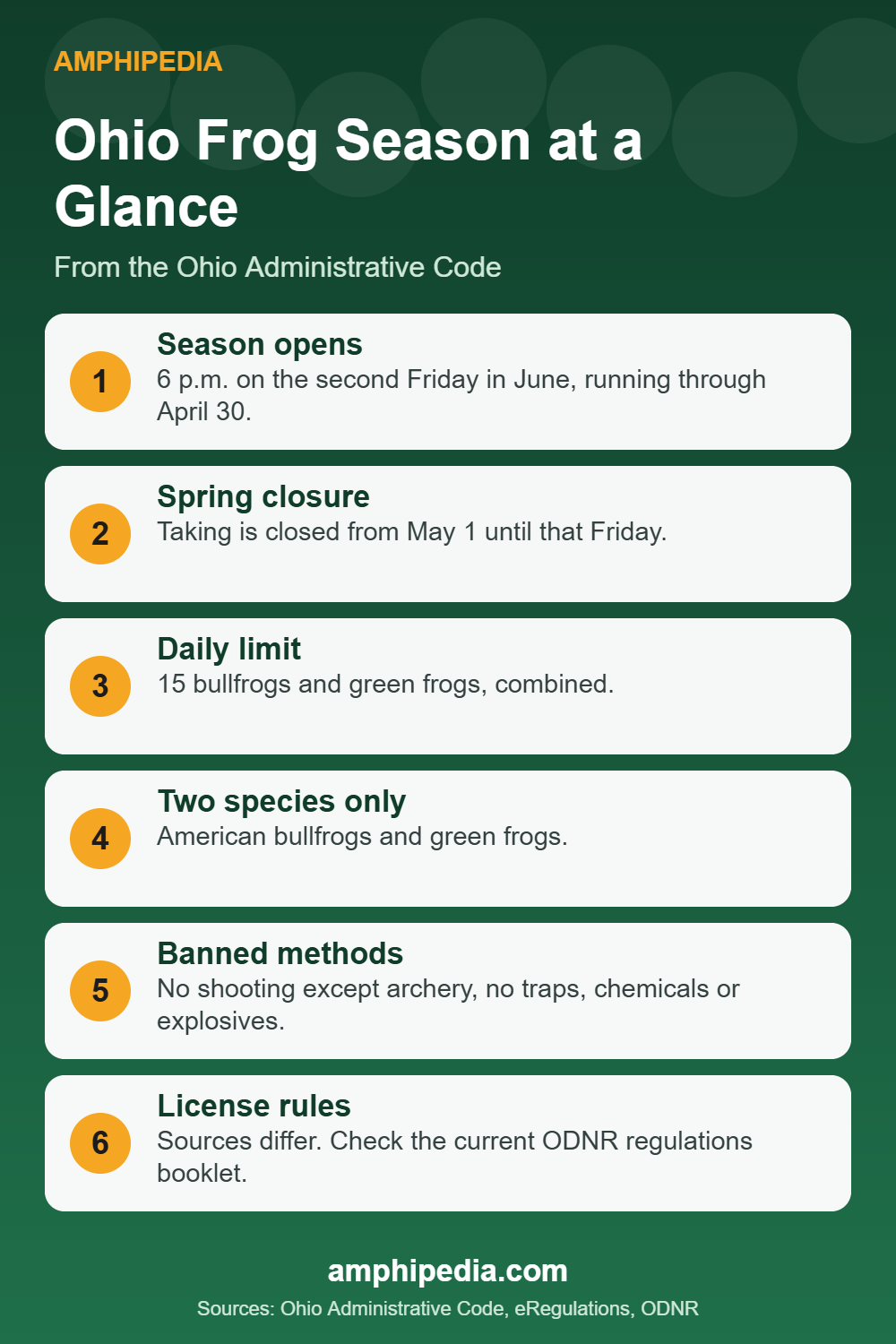
In Ohio, the season for bullfrogs and green frogs opens at 6 p.m. on the second Friday in June and runs through April 30. Taking is closed from May 1 until that Friday. The daily limit is 15 frogs, bullfrogs and green frogs combined. Only those two species may be taken. The older claim of a June to October season is wrong. Check the current ODNR regulations before you go.
Some older pages say Ohio frog gigging runs from June to October. The official rule says otherwise. The season is long and closes only for a short spring window.
This page uses the Ohio Administrative Code, the eRegulations summary of the 2025-26 rules and an older Farm and Dairy column. Where they differ, this page says so. Compare with our Missouri frog gigging season and the general frog gigging guide.
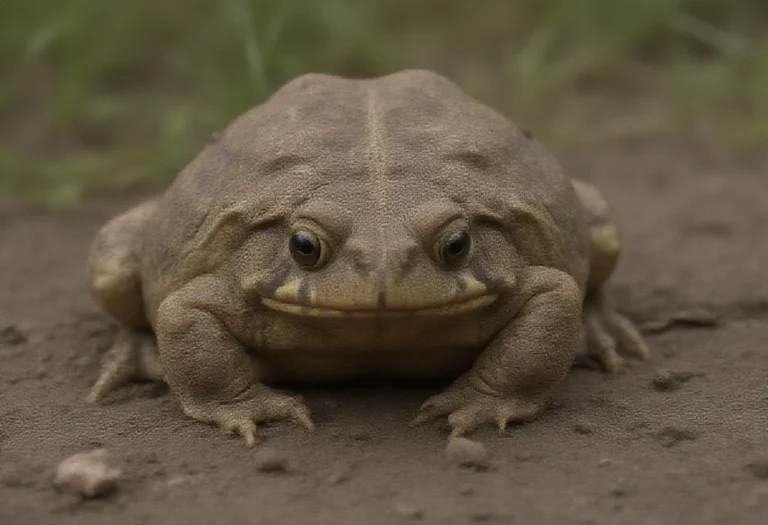
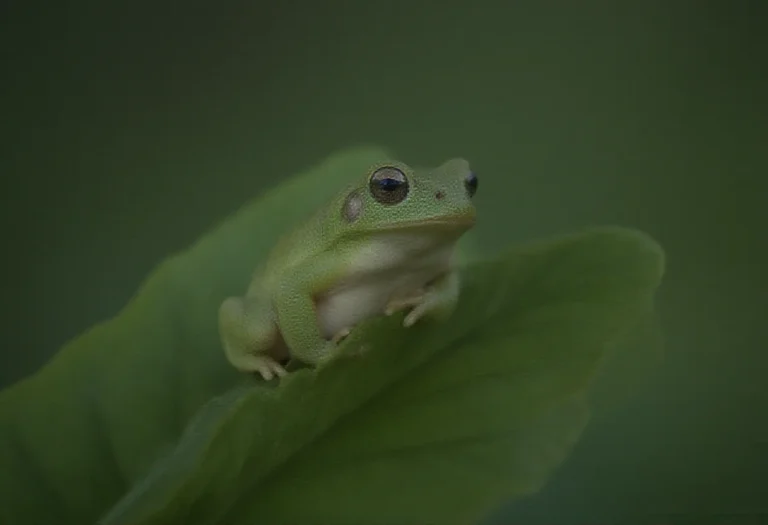
How this was made: prepared with AI assistance and checked against the sources listed at the end. Images are AI-generated illustrations, not photographs of real animals or products.
Key Takeaways
- Season opens at 6 p.m. on the second Friday in June and closes after April 30.
- Taking is closed from May 1 until 6 p.m. on the second Friday in June.
- Daily limit is 15 bullfrogs and green frogs combined.
- Only American bullfrogs and green frogs may be taken.
- Shooting is banned except with archery equipment, and traps and chemicals are banned.
- License advice differs between sources, so check the current ODNR booklet.
Pin this infographicShare on Facebook
Ohio frog season dates
Ohio Administrative Code rule 1501:31-25-04 closes the taking of bullfrogs and green frogs from May 1 through 6 p.m. on the second Friday of June each year. Outside that closure, taking is allowed under the rule. The version reviewed for this page took effect January 1, 2026.
The eRegulations summary for 2025-26 lists the same pattern for that year: opening at 6 p.m. on June 13, 2025 and running through April 30, 2026.
By calendar arithmetic, the second Friday in June was June 12 in 2026 and will be June 11 in 2027. Confirm in the current booklet.
| Source | Season statement |
|---|---|
| Ohio Administrative Code 1501:31-25-04 (effective Jan 1, 2026) | Closed May 1 through 6 p.m. on the second Friday of June |
| eRegulations (2025-26) | Opens 6 p.m. June 13, 2025; runs through April 30, 2026 |
| Farm and Dairy column (July 2021) | Open from 6 p.m. June 11 to April 30, 2022, for that year only |
Daily limit and species
The rule allows no more than 15 bullfrogs or green frogs, combined, in any one day. The same limit applies to possession between the place of capture and your home or lodging. eRegulations lists no minimum size.
Only American bullfrogs and green frogs may be taken. ODNR describes the bullfrog as the largest frog in North America, with adults roughly 3.5 to 6 inches long.
Methods: what is and is not allowed
The rule says bullfrogs and green frogs may be taken with a longbow or crossbow and arrow. Shooting is otherwise prohibited for reptiles and amphibians. Foothold and body-gripping traps are prohibited, as are chemicals, explosives and similar devices.
eRegulations says frogs may be taken by any method except shooting (except with archery equipment), traps, deleterious or stupefying substances, chemicals, smoke and explosives.
Gigging is not named in either source. The Farm and Dairy column calls gigging, archery and hand capture popular methods. Neither source names gigging explicitly, so confirm with ODNR.
- Pymatuning Lake has its own rule: frogs may be taken only as provided in rule 1501:31-13-07.
- Traps, where allowed for other animals, must be tagged and checked every 24 hours.
Do you need a license?
Sources disagree. The Administrative Code says the rule does not require a hunting or fishing license for frogs. It does mention a propagating license under section 1533.71 for people 18 or older who possess a reptile or amphibian after taking it, with exemptions for some frogs bought out of state or sold as food.
A 2021 Farm and Dairy column said hunters ages 16 to 65 need a resident fishing license. That article is older and its author advised checking current rules.
Because the licensing language is unclear to a layperson, call ODNR or read the current booklet before you go. ODNR points to the 2026-27 Ohio Fishing Regulations as the place to check frog rules.
When frogs are most active
ODNR says the bullfrog’s peak breeding season is May through July, and the male call can be heard from late April through late summer. The legal closure from May 1 to the second Friday in June covers part of that period. The sources do not say why, so this page does not claim a reason.
Farm and Dairy describes hunting frogs throughout the night as a summer activity.
Why check the rules every year
Dates shift with the calendar, and rules can change. The 2021 column listed a June 11 opening for that year only. Use the current Ohio fishing regulations booklet and the Ohio Revised Code, not an old article, for the final word.
Which frogs you may take, and which you may not
Only American bullfrogs and green frogs may be taken. Ohio has other true frogs in the same family (Ranidae), including the northern and southern leopard frogs, the pickerel frog and the wood frog. ODNR lists them as relatives of the bullfrog, and the season rule does not cover them.
Identify the frog before you take it. A mistake with a look-alike is a rules problem, not just a bad guess.
| Frog | ODNR description | May be taken? |
|---|---|---|
| American bullfrog | 3.5 to 6 inches; tongue attached at the front of the mouth | Yes, in season |
| Green frog | Two ridges (lateral folds) down the back; smaller than a bullfrog | Yes, in season |
| Northern leopard frog | 2 to 3.5 inches; black leopard spots on back, sides and legs | No |
| Pickerel, southern leopard and wood frogs | Other Ohio true frogs named by ODNR | No |
ODNR says the two ridges and smaller size separate the green frog from the bullfrog. It also notes that bullfrog tadpoles closely resemble green frog tadpoles, though green frog tadpoles are smaller.
What ODNR says about bullfrogs
ODNR describes the bullfrog as a pond, marsh and slow-stream animal that prefers warm, still, shallow water. It eats crayfish, insects, mice and other frogs. That diet is why bullfrogs sit where food comes to them, close to the water.
Females lay thousands of eggs in a foamy film in protected water in spring. Tadpoles hatch about four days after fertilisation. ODNR says they usually spend one winter as tadpoles and become frogs the following summer, but it can take several years.
The deep “jug-o-rum” call carries up to a mile and can be heard from late April through late summer.
What ODNR says about green frogs
The green frog is very aquatic and stays near water season after season. ODNR gives peak breeding as April through August, and says the song sounds like plucking a bass banjo string at well-spaced intervals.
The page adds that green frog tadpoles do not change into frogs until their second summer. When disturbed, the frog gives a short, high-pitched cry and dives into the water.
Knowing the sound helps with identification at night, but the call alone is not enough to confirm a species. Check the ridges and size when you can see the frog.
Ohio amphibians with state protection
ODNR Publication 5356 lists the amphibians with a state status. Five are Endangered: the blue-spotted salamander, cave salamander, eastern hellbender, eastern spadefoot and green salamander. One, the midland mud salamander, is Threatened.
Two more are Species of Concern: Blanchard’s cricket frog and the four-toed salamander. ODNR defines Endangered as a native species at risk of disappearing from Ohio from causes such as habitat loss, pollution, predation, competition or disease. Threatened means a species is not in immediate danger of disappearing but faces a threat that could make it endangered if stress continues or increases. Species of Concern covers animals that could become threatened, or where there is not enough information to assess status.
A night trip along a pond or stream may put you near some of these animals. Leave them alone, and check ODNR’s current list before you go.
A practical plan for a night trip
Season dates are only part of the picture. The trip plan below keeps the rules, the identification and the paperwork in one place. Save the rule number and the booklet page on your phone, so you can show them to a landowner or an officer if asked.
- Read the current Ohio fishing regulations booklet and the Administrative Code rule on frogs.
- Ask the landowner for permission and agree on where you may walk.
- Learn the bullfrog and the green frog on photos before you go.
- Keep a running count so you stay within 15 per day, including frogs you carry.
- Use only methods the rule allows, and carry nothing banned, such as chemicals or traps.
- Wash your hands with soap and running water after contact with frogs.
Health note for families
The CDC says even healthy reptiles and amphibians can carry Salmonella. It says children younger than 5 years old should not handle or touch reptiles or amphibians or their environments, and that they aren’t recommended for households with young children, people with weakened immune systems, or adults 65 and older.
The CDC also advises never using food preparation areas to clean reptile and amphibian habitats or equipment. Treat wild frogs and any containers they have been in the same way.
Frequently Asked Questions
When is frog gigging season in Ohio?
It opens at 6 p.m. on the second Friday in June and runs through April 30. It is closed from May 1 until that Friday.
What is the daily limit for frogs in Ohio?
Fifteen bullfrogs and green frogs, combined, per day.
Which frogs can you take in Ohio?
Only American bullfrogs and green frogs.
Is a fishing license required for frog gigging in Ohio?
The Administrative Code says no hunting or fishing license is required for frogs, but a 2021 column said a fishing license applies. Check the current ODNR booklet.
Is frog gigging season June to October?
No. Some older pages say so, but the rule allows taking from the second Friday in June through April 30.
Can you shoot frogs in Ohio?
Shooting is prohibited except with archery equipment, under the rule.
Bottom Line
Ohio’s frog season is long, with a short closure in spring. The main points are two species, 15 per day and a ban on shooting, traps and chemicals.
Because license language differs between sources, treat the current ODNR regulations as the final authority.
Sources
- Ohio Administrative Code rule 1501:31-25-04 (Reptiles and amphibians), used for season closure, limit, methods, licensing
- eRegulations: Ohio frog and turtle regulations, accessed 2025-26 dates, limit, methods
- Farm and Dairy: How to hunt for frogs in Ohio (July 2021), used for older license advice, popular methods
- ODNR: American bullfrog, used for bullfrog size, breeding, call
- ODNR: Fishing regulations, used for points to the 2026-27 regulations booklet
- Green frog (ODNR Division of Wildlife), used for identification and breeding, accessed 12 November 2026
- Northern leopard frog (ODNR Division of Wildlife), used for look-alike description, accessed 12 November 2026
- Ohio Listed Species, Publication 5356 (ODNR), used for amphibians with state status, accessed 12 November 2026
- Reptiles and amphibians (CDC), used for Salmonella and young-child advice, accessed 12 November 2026
One Comment