Pacman Frog vs African Bullfrog: Key Differences
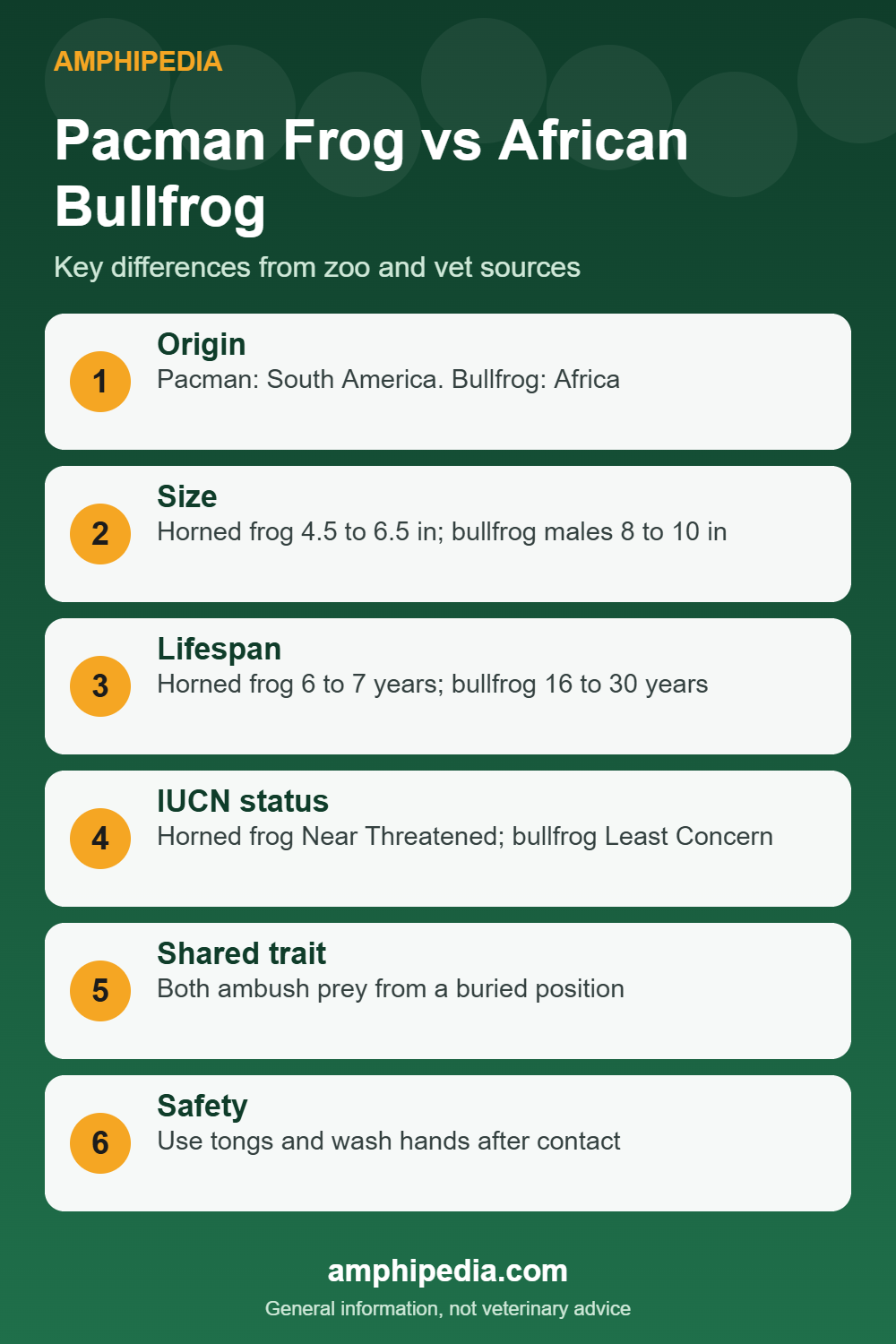
The Pacman frog is a South American horned frog (genus Ceratophrys) that reaches about 4.5 to 6.5 inches. The African bullfrog (Pyxicephalus adspersus) lives in southern and central Africa and is far bigger, with males of 8 to 10 inches and over 2 kg. The bullfrog also lives longer in captivity. Both are ambush predators with huge mouths, and both can bite.
Pacman frog and African bullfrog are often confused. Both are round, wide-mouthed ambush hunters that sit still and eat almost anything that fits.
They are not close relatives, though. This guide compares them using zoo, university and vet sources, and it notes where those sources disagree.
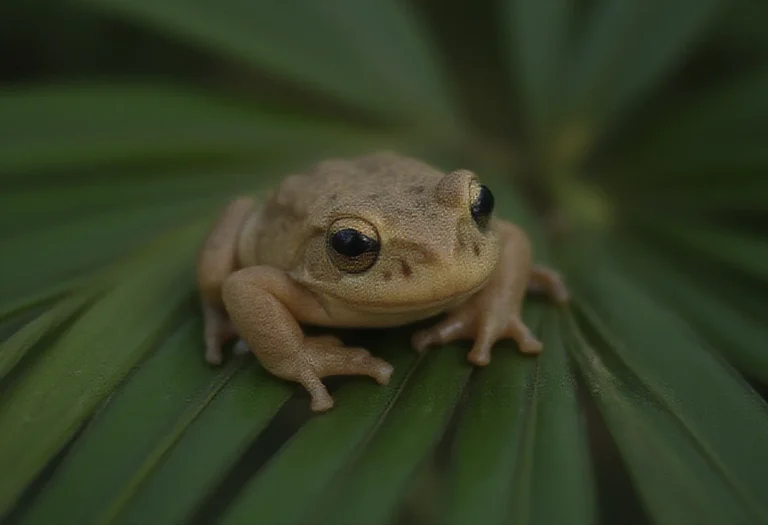
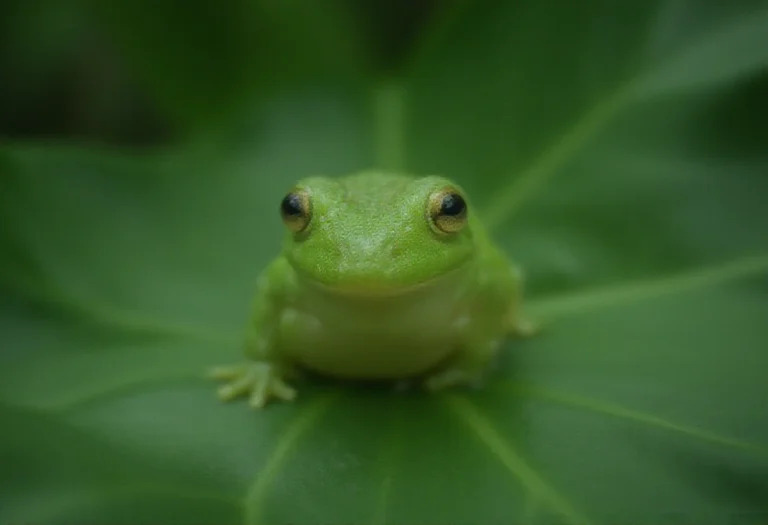
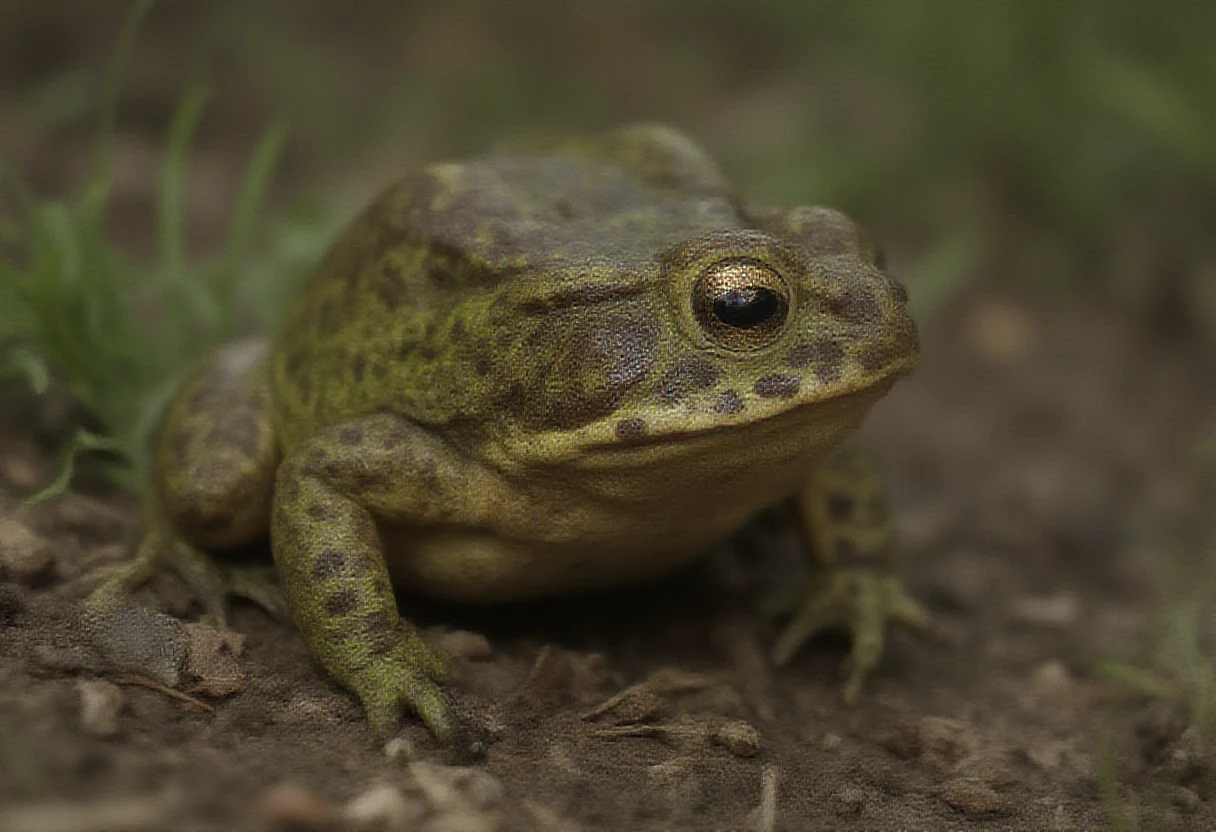
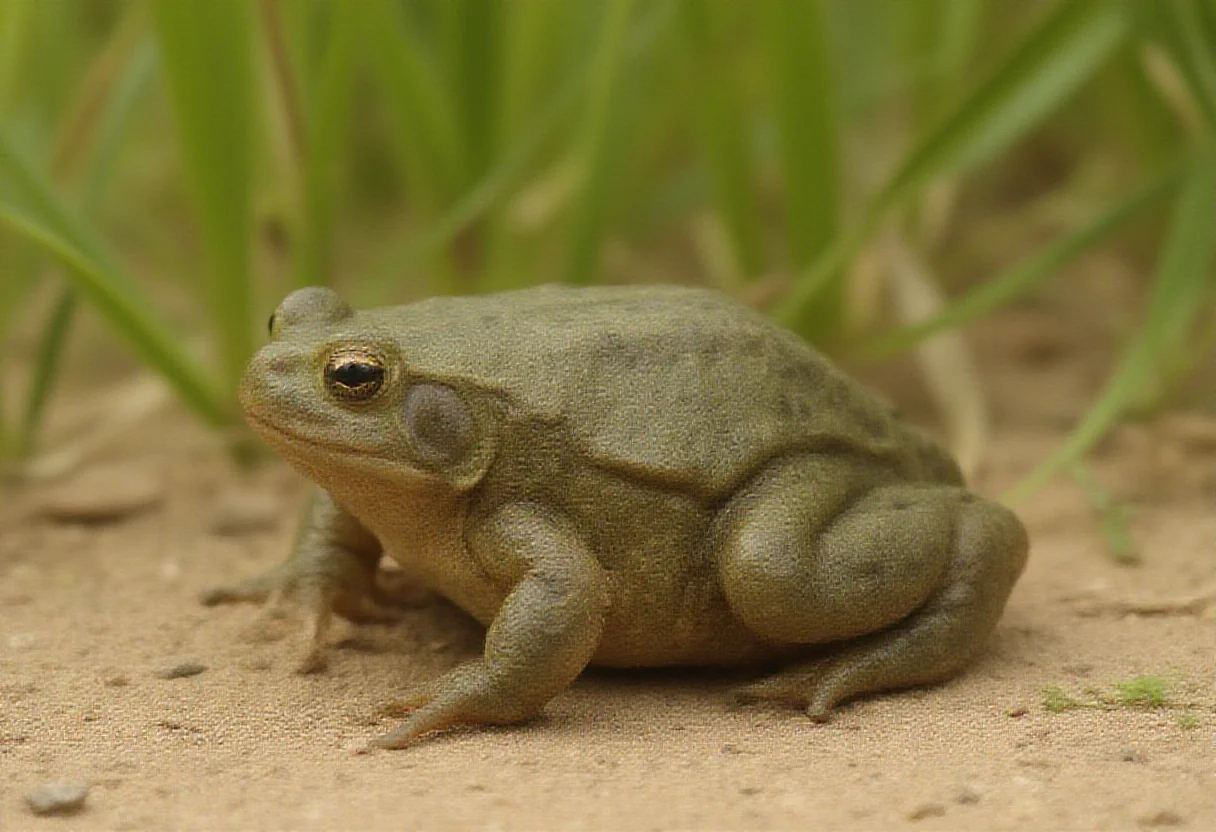
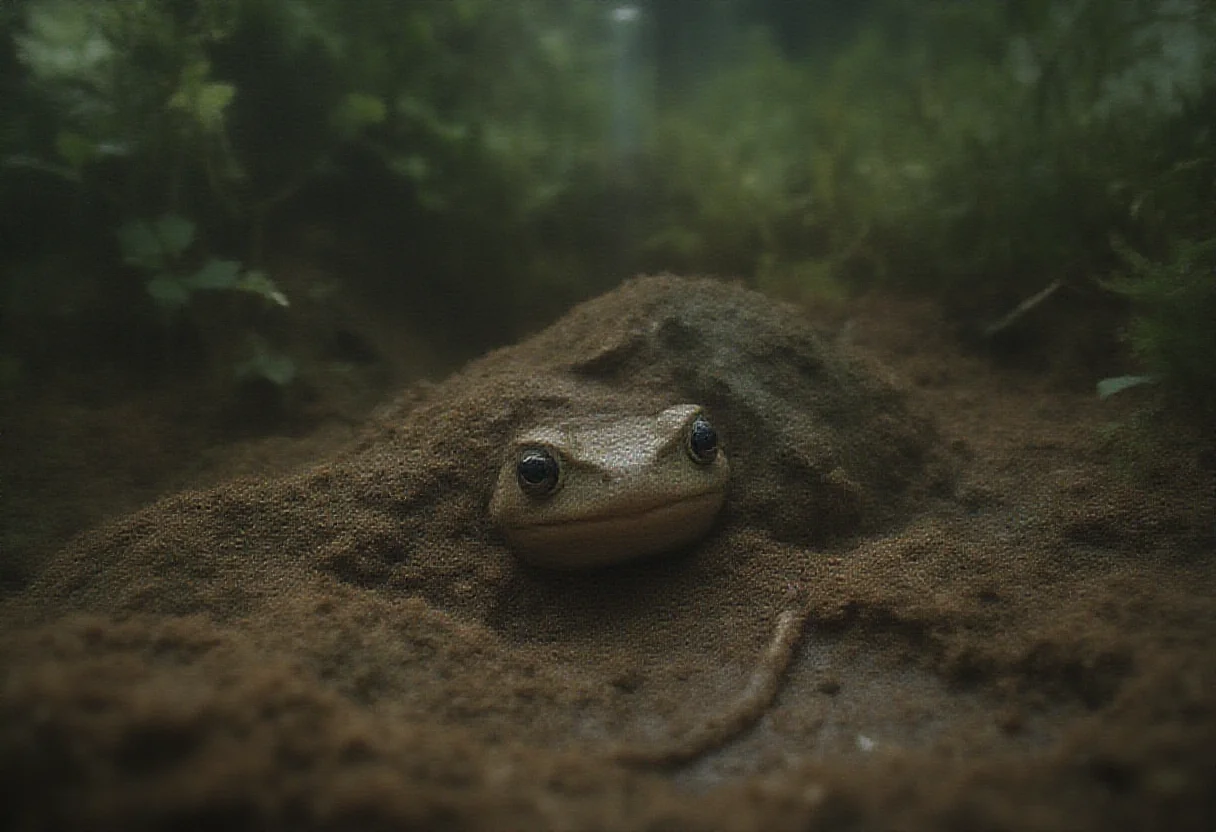
How this was made: prepared with AI assistance and checked against the sources listed at the end. Images are AI-generated illustrations, not photographs of real animals or products.
Key Takeaways
- Pacman frogs are South American; African bullfrogs are African.
- Bullfrog males are much bigger than Pacman frogs.
- African bullfrogs live longer in captivity.
- Both sit buried and ambush prey.
- Both can bite, so use tongs for feeding.
- Sources give different lifespans, so ranges are shown.
Pin this infographicShare on Facebook
Where each frog lives
Adventure Aquarium says the ornate horned frog, a common Pacman frog, lives in Argentina, Brazil and Uruguay. It adds that the IUCN lists it as Near Threatened. “Pacman frog” is a pet-trade name that covers several horned frog species.
The African bullfrog lives in central and southern Africa, in arid and semi-arid habitats, says Lafeber Veterinary. Animal Diversity Web lists the IUCN status as Least Concern.
Size and lifespan
The bullfrog is the larger frog by a wide margin. Lafeber says males reach 20 to 25 cm and often weigh over 2 kg, while females are about half the male size. Adventure Aquarium gives 4.5 to 6.5 inches and up to 1 lb for the ornate horned frog.
Lifespan figures vary. Adventure Aquarium gives 6 to 7 years for the horned frog. For the bullfrog, Animal Diversity Web cites 16.2 years in captivity, VetVerified says 20 to 30 years, and Lafeber says up to 20 years is common.
Side-by-side comparison
The table uses the figures named in each source.
| Trait | Pacman frog (ornate horned frog) | African bullfrog |
|---|---|---|
| Continent | South America | Africa |
| Adult size | 4.5 to 6.5 in, up to 1 lb | Males 8 to 10 in, over 2 kg |
| Captive lifespan | 6 to 7 years | 16.2 to 30 years, by source |
| IUCN status | Near Threatened | Least Concern |
| Hunting style | Buries in leaf litter and waits | Sits partly buried and ambushes |
| Adult housing | 15 to 20 gallon tank | 20 to 30 gallon tank, by source |
Hunting and diet
Both frogs are ambush predators. Adventure Aquarium says the horned frog buries itself in leaf litter and waits. Oregon Zoo says the bullfrog sits for hours, partly buried with only its nose showing.
Diets overlap. The horned frog eats large insects, lizards, mice and other horned frogs. The bullfrog eats insects, other frogs, reptiles, small mammals and birds. Cannibalism is documented in bullfrogs by Animal Diversity Web.
Care differences in brief
Housing needs differ because of size. Reptiles Magazine says one adult horned frog or a pair fits in a 15 to 20 gallon horizontal tank. Lafeber says one adult bullfrog can live in a 20 gallon long tank, and VetVerified recommends at least 30 gallons.
Feeding rates differ too. Reptiles Magazine says adult horned frogs eat about once every two weeks, while VetVerified feeds adult bullfrogs every 3 to 4 days. For care steps, see the guides to Pacman frog care and pixie frog care.
Which one is more dangerous?
Lafeber says adult bullfrogs can inflict a painful bite. Reptiles Magazine marks the horned frog as not dangerous, but the sources used for this comparison give no bite measurements for the African bullfrog.
Treat both with caution. Use tongs, avoid handling and wash your hands afterward. Read more about the Pacman frog and the African bullfrog’s aggression.
Names that cause confusion
Both common names cover more than one animal. The sources use these labels:
- Adventure Aquarium describes the ornate horned frog, Ceratophrys ornata, and notes that its big mouth earned it the nickname Pac-Man frog.
- Reptiles Magazine lists the Argentine horned frog under Ceratophrys ornata, while the 2017 bite study used Ceratophrys cranwelli.
- Lafeber calls the African species the giant African bullfrog. Animal Diversity Web uses Pyxicephalus adspersus and notes a closely related species, P. edulis, with a smaller range in southern Africa.
Because Pacman frog is a pet-trade name, a care sheet may describe one horned frog species while a study describes another. Read the scientific name before comparing numbers. For the pet-trade name of the African species, see the pet pixie frog guide.
Range and habitat in more detail
Animal Diversity Web gives the African bullfrog a wide range across sub-Saharan Africa, extending to Somalia in the north and east, Nigeria in the west and the Cape in South Africa. Lafeber says central and southern Africa, and Oregon Zoo says South Africa north to Tanzania. The sources do not agree on the edges, so treat the range as broad and patchy.
It is very adaptable. Animal Diversity Web says it lives in deserts such as the Kalahari and in highveld areas 4,000 to 5,000 feet up, where surface temperatures can exceed 100 F and winters can freeze.
Reptiles Magazine places the horned frog in grasslands, croplands and areas near temporary bodies of water, and gives Argentina as part of its range. Adventure Aquarium adds Brazil and Uruguay. Both frogs, then, live in places with seasonal water.
Surviving dry seasons
Seasonal water explains a shared habit. Animal Diversity Web says the African bullfrog spends most of its life underground in estivation, shedding layers of skin to form a tough cocoon while its body functions slow greatly. Dormancy can last a year or more. Oregon Zoo says the species hibernates in the dry season for about ten months.
Adults dig burrows with a spade-like metatarsal tubercle, while juveniles lack it and must use existing burrows. Frogs that estivate wait for rain and then breed.
For Pacman frogs, Petco’s care sheet says low humidity can cause dehydration and dormancy, and that skin may thicken and the frog may appear dead until humidity rises. The two sources describe different situations, but both show how burrowing frogs cope with dryness.
Teeth and bite: what the sources say
The two frogs have different mouth structures. Reptiles Magazine says horned frogs have teeth only on the upper jaw. Animal Diversity Web and Oregon Zoo say the African bullfrog has three large tooth-like projections on the front of the lower jaw, which restrain struggling prey.
Only the horned frog has published bite-force numbers in these sources. A 2017 study reported by ScienceDaily measured about 30 newtons in small C. cranwelli. Lafeber describes the African bullfrog’s bite as painful, but gives no number.
The sources also disagree on risk. Reptiles Magazine marks the Argentine horned frog as not dangerous, while Petco’s Pacman frog sheet calls the bite painful. The safe reading is that both frogs can hurt a person, and tongs are the standard answer.
Breeding and parental care
The African bullfrog’s breeding is unusually well described. Animal Diversity Web says males gather in large groups, and a large male claims a central area and calls. Pairs mate in shallow water and up to 4,000 eggs may be released. Oregon Zoo gives 3,000 to 4,000 eggs.
Males guard the eggs, which hatch in about two days, and tadpoles metamorphose in about three weeks. When a pool starts to dry, the male digs a channel to deeper water for his offspring. Animal Diversity Web adds that guarding males eat many of their own tadpoles.
The horned-frog sources used here do not describe breeding, so no comparison is made.
Cannibalism and living alone
Animal Diversity Web says cannibalism is common in the African bullfrog from metamorphosis, with newly metamorphosed frogs often eating their egg-mates first. Large males push, bite and sometimes consume smaller males during breeding aggregations.
For horned frogs, Petco says they may be cannibalistic when housed together. Lafeber says to house adult bullfrogs separately. VetVerified does not recommend frogs and other amphibians as bullfrog food because of disease risk.
The practical rule from every source: one adult per enclosure.
Temperature and humidity: sources differ
Published ranges are close but not identical. Use them as a starting point and confirm with an exotics vet.
| Source | Species | Temperature | Humidity |
|---|---|---|---|
| Petco | Pacman frog | Day 75 to 83 F; night 70 to 75 F | 70 to 80% |
| Lafeber | African bullfrog | 77 to 82 F gradient | Mist regularly; damp substrate |
| VetVerified | African bullfrog | Day 75 to 82 F; night 70 F | 50 to 80% |
Lafeber advises avoiding radiant heat sources for bullfrogs, and Petco says an under-tank heater must be regulated by a thermostat to prevent burns. VetVerified says UVB is not required for bullfrogs, while Petco recommends low-level UVB for Pacman frogs, another place where the species differ.
Which one is the better fit?
Use the figures above to compare commitment, not to pick a favorite:
- Space. Reptiles Magazine says a 15 to 20 gallon horizontal tank suits one adult horned frog or a pair, while bullfrog sources say 20 to at least 30 gallons for one adult.
- Time. Adventure Aquarium gives 6 to 7 years for the horned frog. Bullfrog sources range from 16.2 years (Animal Diversity Web) to 20 to 30 years (VetVerified), and Lafeber and Oregon Zoo mention some living 45 years or more.
- Feeding. Adult bullfrogs eat every 3 to 4 days per VetVerified, while adult horned frogs eat about every two weeks per Reptiles Magazine and once or twice a week per Petco.
- Handling. Neither frog is a good handling animal. Lafeber says bullfrog handling should be infrequent and brief.
Rules on owning exotic frogs vary by place, so check with your local wildlife agency before buying either animal.
Frequently Asked Questions
Is a Pacman frog the same as an African bullfrog?
No. Pacman frog is a name for South American horned frogs. The African bullfrog is a different family from Africa.
Which is bigger, a Pacman frog or an African bullfrog?
The African bullfrog. Males reach 20 to 25 cm and over 2 kg, per Lafeber. The ornate horned frog reaches 4.5 to 6.5 inches.
Which frog lives longer?
The African bullfrog. Sources give 16 to 30 years in captivity, while Adventure Aquarium gives 6 to 7 years for the horned frog.
Do both frogs bite?
Lafeber says adult bullfrogs can bite painfully. No source used here measures the bullfrog’s bite, and horned-frog sources disagree on how dangerous the bite is, so be careful with both.
Which is easier for a beginner?
Reptiles Magazine lists the horned frog at beginner level. The bullfrog is larger, longer lived and a bigger commitment.
Can they live together?
No source reviewed supports housing them together. Lafeber says to house adult bullfrogs separately, and both species eat other frogs.
Bottom Line
The two frogs look alike at a glance, but they differ in origin, size and lifespan. The bullfrog is the bigger commitment.
Check the numbers above before you choose, and read a care guide first.
Sources
- Adventure Aquarium: Argentine Horned Frog, accessed 13 November 2026
- Reptiles Magazine: Argentine Horned Frog, accessed 13 November 2026
- Lafeber Veterinary: Giant African Bullfrog, accessed 13 November 2026
- Animal Diversity Web: Pyxicephalus adspersus, accessed 13 November 2026
- Oregon Zoo: African bullfrog, accessed 13 November 2026
- VetVerified: Keeping African Bullfrogs, accessed 13 November 2026
- CDC: Reptiles and amphibians, accessed 13 November 2026
- Petco: Pacman Frog Care Sheet, accessed 13 November 2026
- ScienceDaily (2017). Giant extinct frog bite force research summary, accessed 13 November 2026
- Reptiles Magazine (2017). Ancestor of Pac-Man frog had bite force similar to wolves, accessed 13 November 2026