Can a Squirrel Tree Frog Be Cream Colored?
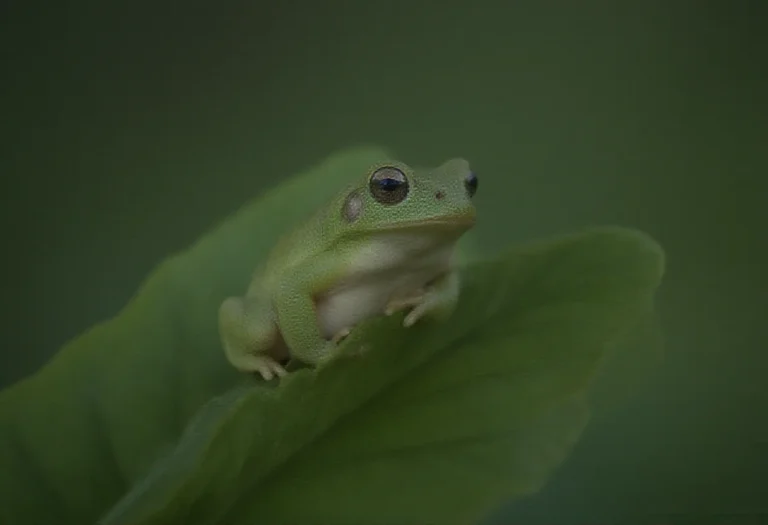
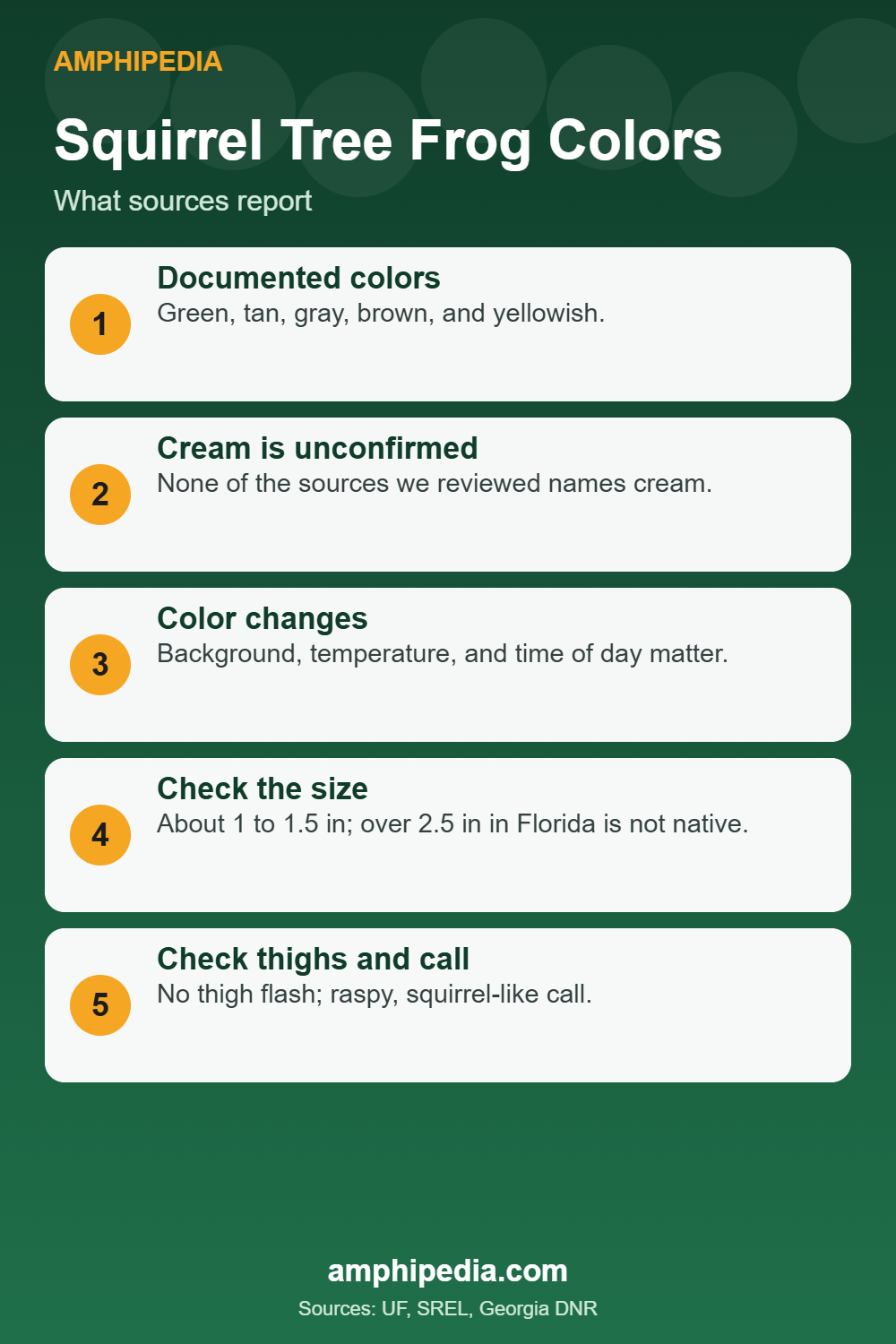
Possibly, but no source we found names cream as a squirrel tree frog color. Documented colors are green, tan, gray, brown, and yellowish shades, and individual frogs can change color. A pale tan or yellowish frog fits the species. A truly cream or whitish frog may be a pale phase, or a different species such as a young Cuban tree frog, so check size, skin, and call.
You found a pale frog on your porch and it does not look green. Can it still be a squirrel tree frog? The honest answer is maybe, and the details matter.
Sources describe this species as highly variable. Here is what they say about color, why the color shifts, and which other frogs can look cream or whitish.
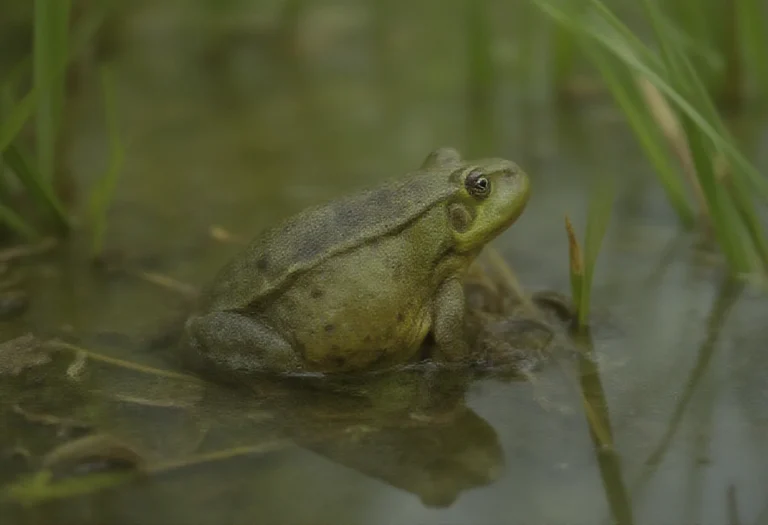
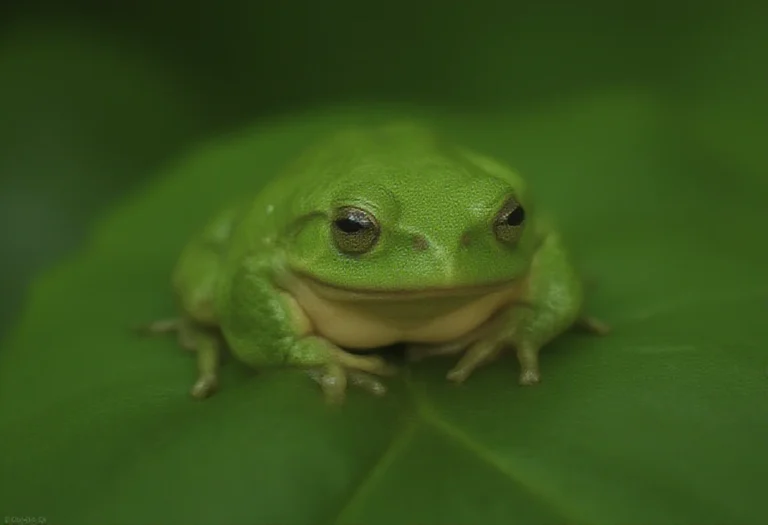
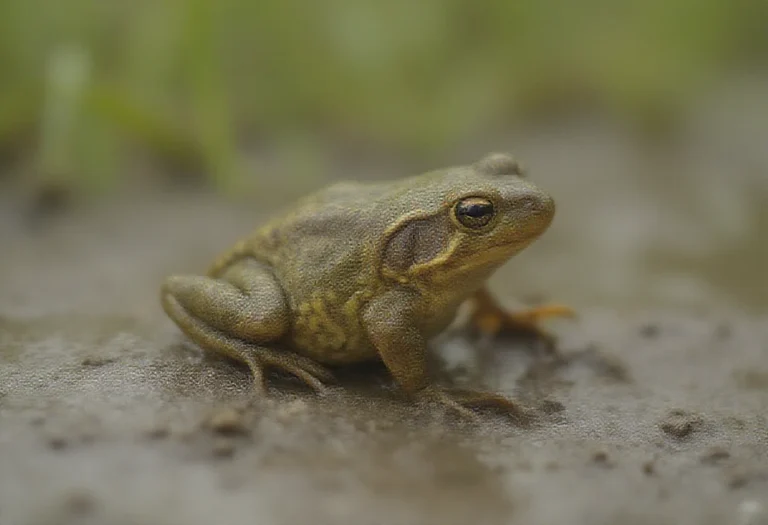
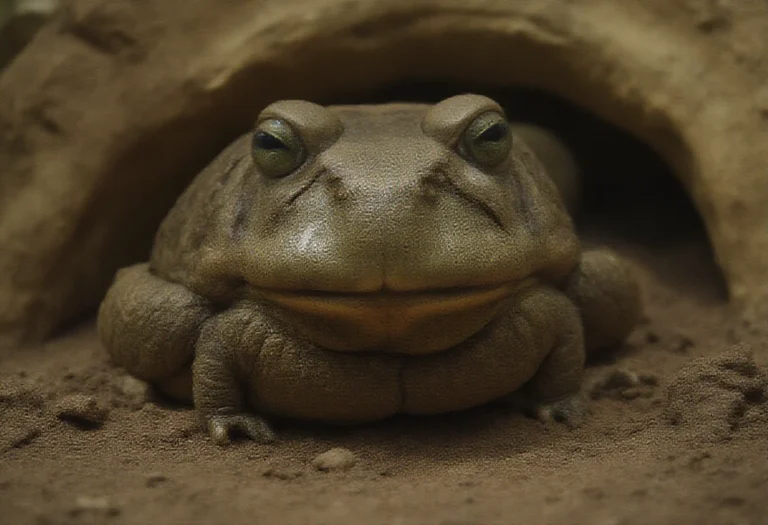
How this was made: prepared with AI assistance and checked against the sources listed at the end. Images are AI-generated illustrations, not photographs of real animals or products.
Key Takeaways
- Sources document green, tan, gray, brown, and yellowish squirrel tree frogs.
- None of the sources we reviewed uses the word cream.
- Squirrel tree frogs can change color, so a pale frog may be in a light phase.
- The Cuban tree frog is described as sometimes whitish, so size and skin texture help rule it out.
- Use several clues, not color alone.
Pin this infographicShare on Facebook
What colors do sources report?
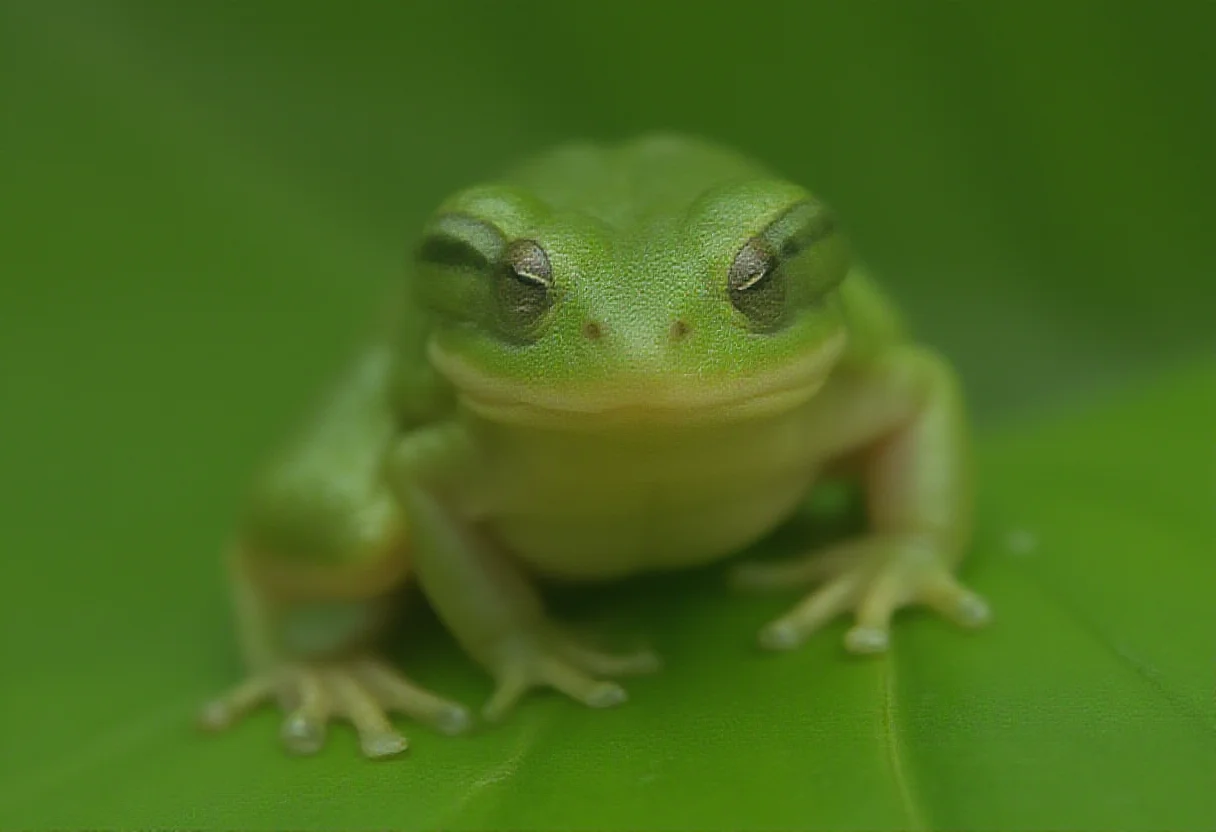
Sources agree that color varies a lot. The University of Florida describes the frog as highly variable in color and pattern, and says it may be green, brown, or both, spotted or plain.
The Florida Museum and UF Wildlife list tan, green, gray, and brown, sometimes with splotches. The Savannah River Ecology Laboratory says individuals can shift from green to yellowish or brown.
Animal Diversity Web, run by the University of Michigan, describes solid green to brown frogs and notes that an upper-jaw stripe is typically bright yellow. The Georgia Department of Natural Resources guide says they can be green or brown or both. Alabama lists light green, gray, or brown.
So, is cream possible?
No source we reviewed lists cream. The closest terms are tan, gray, and yellowish. A frog in a pale tan phase can look cream in photos, especially under porch lights, which wash out color.
We cannot confirm a true cream squirrel tree frog from sources alone. If you have a photo of a pale frog, treat it as a squirrel tree frog only when other clues fit, as described below.
Why the color changes
The Virginia Herpetological Society says adults can change color to match their background. The Georgia guide calls the species a chameleon for its quick color change. Animal Diversity Web says color shifts between lighter and darker green or brown depending on temperature, time of day, and other environmental factors.
That means the same frog may look green at dusk and tan or pale at midday. Outdoor Alabama adds that the ability to change color helps small frogs avoid visual predators.
Clues that confirm a squirrel tree frog
Check size first. Adults are about 1 to 1.5 inches, per the Florida Museum and the Savannah River Ecology Laboratory. The Georgia guide gives 7/8 to 1 5/8 inches.
Look for a dark bar or spot between the eyes, which the Georgia guide says is often present but not always. A light stripe may run along the side. Eyes may be bright orange-yellow or bronze, per the Georgia guide.
Listen as well. The call is raspy and squirrel-like, per UF extension. Finally, smooth skin and sticky toe pads fit the species.
| Clue | Squirrel tree frog | Source |
|---|---|---|
| Size | About 1 to 1.5 inches | Florida Museum, SREL |
| Skin | Smooth | UF Wildlife |
| Head marks | Dark bar between eyes, often | Georgia DNR guide |
| Thigh flash | None; no yellow or orange spots | Virginia Herpetological Society |
| Call | Raspy, squirrel-like | UF/IFAS |
Pale frogs that are not squirrel tree frogs
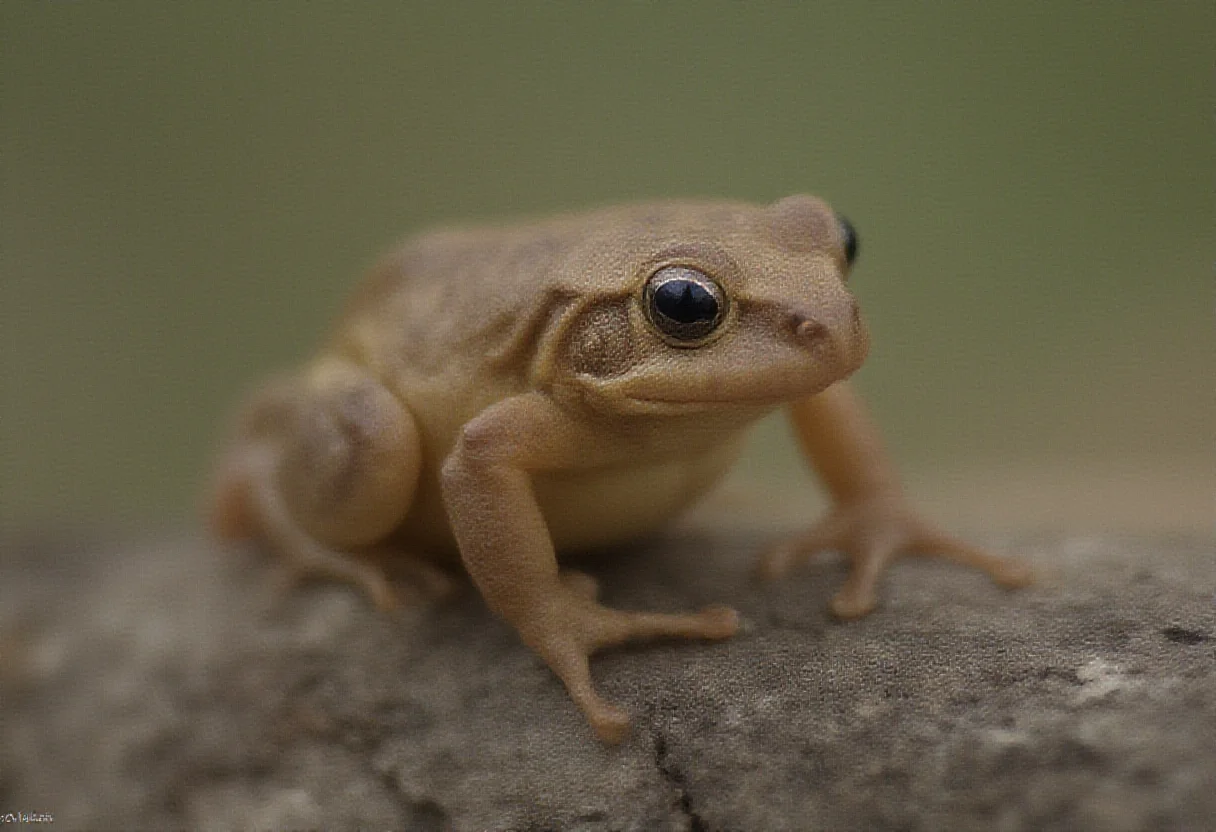
Several look-alikes can look pale. The Cuban tree frog, an invasive species in Florida, varies in color from whitish to gray, green, or brown, according to UF Wildlife. Its skin is warty, and any treefrog in Florida larger than 2.5 inches is definitely not native, per UF. Juveniles are olive-brown with light side stripes.
Gray and Cope’s tree frogs, and the pine woods tree frog, show yellow or orange thigh flashes, per the Savannah River Ecology Laboratory. A squirrel tree frog lacks them. Our guides compare the squirrel tree frog with the Cuban tree frog, the pinewoods tree frog, and the green tree frog.
What if your frog looks unwell?
Color alone does not signal illness in a tree frog. If a pale frog is sluggish, swollen, or injured, a wildlife rehabilitator can advise. For a pet, see an exotics vet. Read our main profile of the squirrel tree frog for general facts.
Frequently Asked Questions
Can a squirrel tree frog be cream colored?
Sources do not name cream. They list green, tan, gray, brown, and yellowish shades, and the frogs change color, so a very pale frog is possible but unconfirmed.
Why is my tree frog pale?
It may be in a light color phase. Squirrel tree frogs can change color with background, temperature, and time of day, per Animal Diversity Web.
Can squirrel tree frogs turn brown?
Yes. Brown, tan, and gray are all documented.
Is a whitish frog in Florida a Cuban tree frog?
It could be. UF Wildlife says Cuban tree frogs vary from whitish to brown, have warty skin, and any Florida treefrog over 2.5 inches is not native.
How big is a squirrel tree frog?
About 1 to 1.5 inches, with a range of roughly 0.9 to 1.6 inches in one Virginia source.
How do I confirm what I found?
Check size, skin, thigh color, head marks, and call. Photos help local experts.
Bottom Line
Color is the least reliable clue for a squirrel tree frog. A pale frog may still be one, but combine size, skin, and voice before deciding.
Where sources do not say, we say so. Cream is not documented, so treat it as a maybe.
Sources
- UF/IFAS Wildlife Extension: Squirrel Treefrog, accessed Highly variable color and pattern; call
- UF Wildlife: Squirrel Treefrog, accessed Colors, size, smooth skin
- UF Wildlife: Cuban Treefrog, accessed Color range, warty skin, size over 2.5 inches
- Savannah River Ecology Laboratory: Squirrel Treefrog, accessed Color shifts, thigh flash look-alikes
- Animal Diversity Web: Hyla squirella, accessed Color change and jaw stripe
- Georgia DNR: Treefrog identification guide, accessed Size, eye color, head marks
- Virginia Herpetological Society: Squirrel Treefrog, accessed Background color matching
- Outdoor Alabama: Squirrel Treefrog, accessed Color options and camouflage