How Fast Do Pacman Frogs Grow? Growth Stages Explained
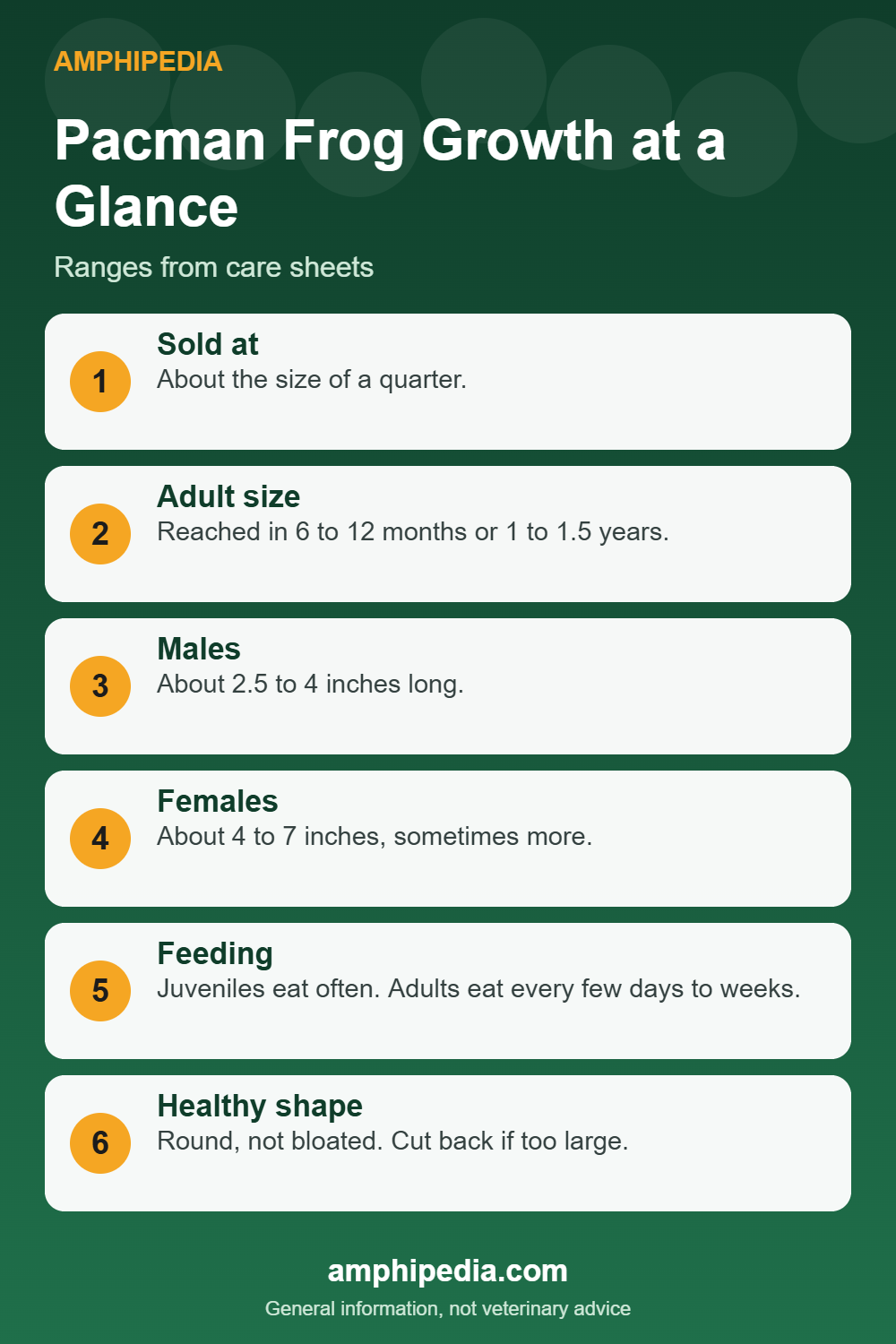
Pacman frogs (Ceratophrys species) grow fast. Petco says they reach adult size in 6 to 12 months under ideal conditions, while Reptiles Magazine says one to one and a half years. Sexual maturity often comes later, at roughly 12 to 18 months for males and up to 2.5 years for females, according to one breeding guide. Growth depends on species, food and temperature, so a steady, not maximal, feeding plan is safest.
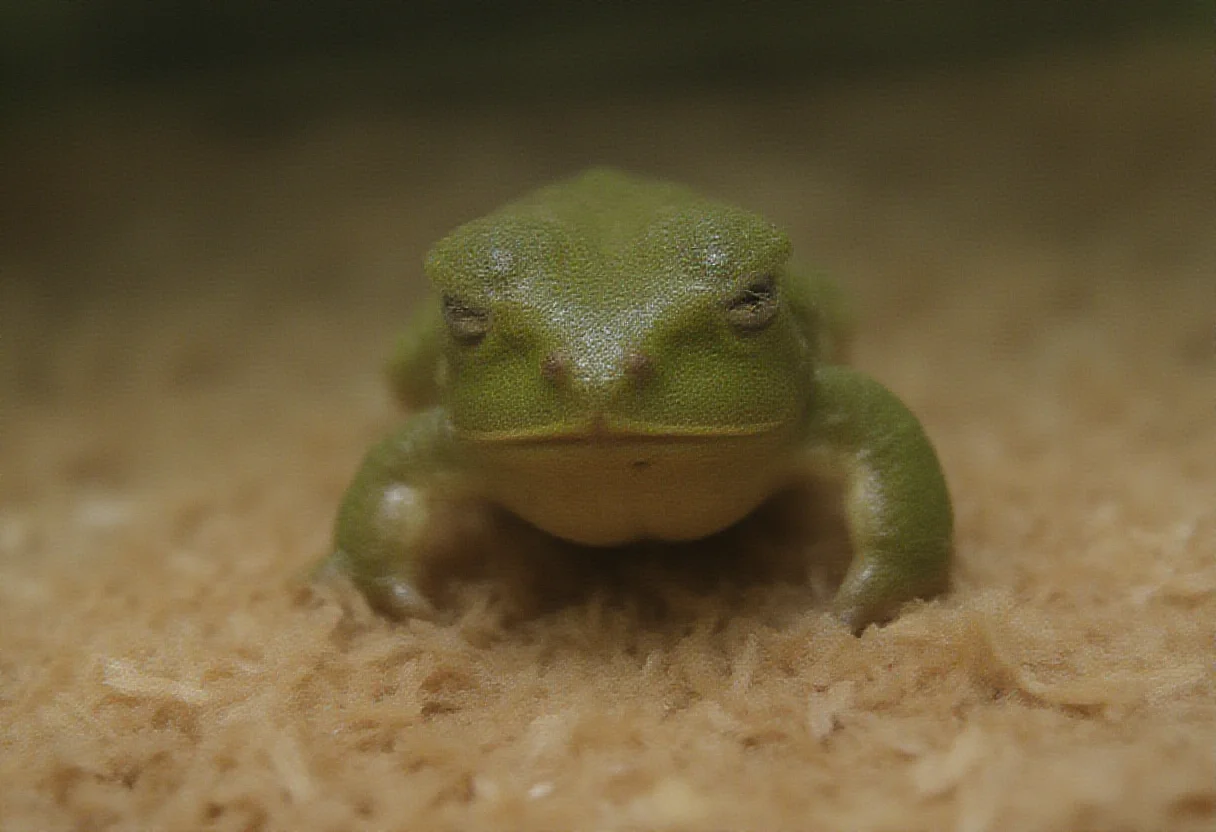
A Pacman frog is sold at about the size of a quarter. It can become a palm-sized adult within a year or two.
Sources do not agree on a single timeline. This guide shows the ranges, explains why they differ and covers how to feed without causing obesity.
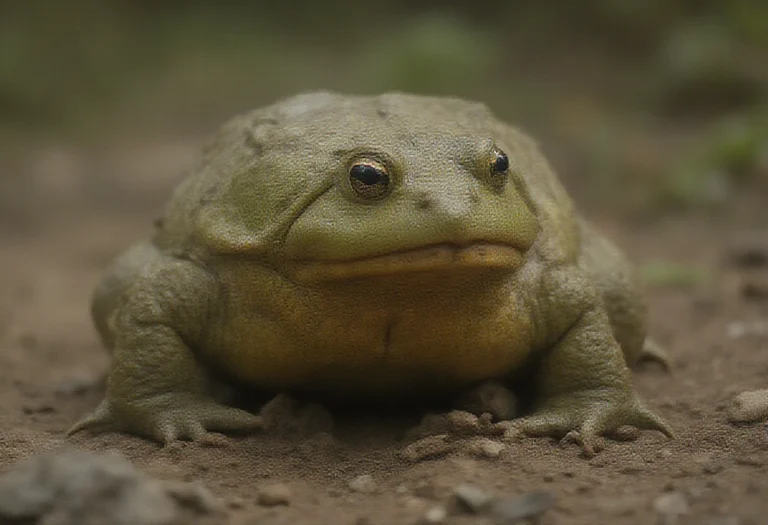
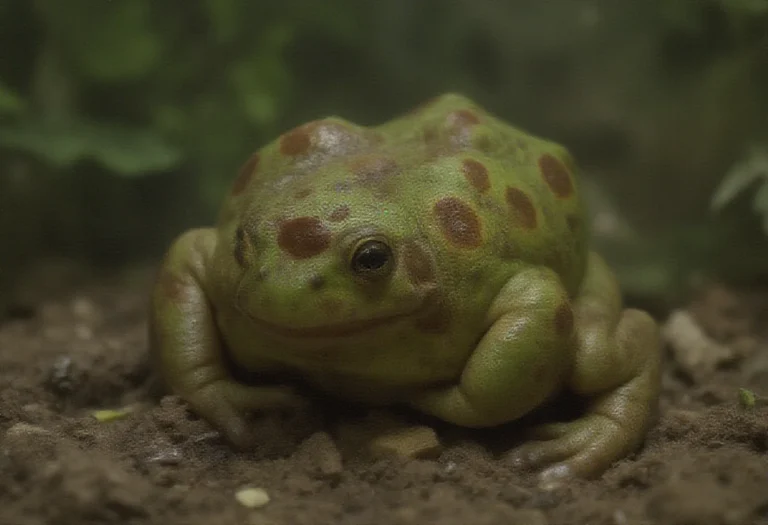
How this was made: prepared with AI assistance and checked against the sources listed at the end. Images are AI-generated illustrations, not photographs of real animals or products.
Key Takeaways
- Juveniles are sold at about quarter size.
- Adult size takes 6 months to 1.5 years, depending on the source.
- Females grow larger than males and mature later.
- Juveniles eat more often than adults.
- A healthy Pacman frog looks round, not bloated.
- Overfeeding is a recognized health risk.
Pin this infographicShare on Facebook
Growth timeline: what sources say
Reptiles Magazine says captive-bred babies are sold at about the size of a quarter and can reach adult size in one to one and a half years. Josh’s Frogs, a frog retailer, gives the same range.
Petco says horned frogs reach adult size in 6 to 12 months under ideal conditions. The sources do not explain the gap, and the care sheets cover different species and keeping conditions. None of the sources give a week-by-week growth chart, so be wary of sites that do.
| Question | Range | Source |
|---|---|---|
| Time to adult size | 6 to 12 months | Petco |
| Time to adult size | 1 to 1.5 years | Reptiles Magazine, Josh’s Frogs |
| Male maturity | About 12 to 18 months | FurryCritter breeding guide |
| Female maturity | About 18 months to 2.5 years | FurryCritter breeding guide |
| Typical captive lifespan | 5 to 15 years | Sands Exotic, Wilmette Pet Center, Petco, Reptiles Magazine |
How big do they get?
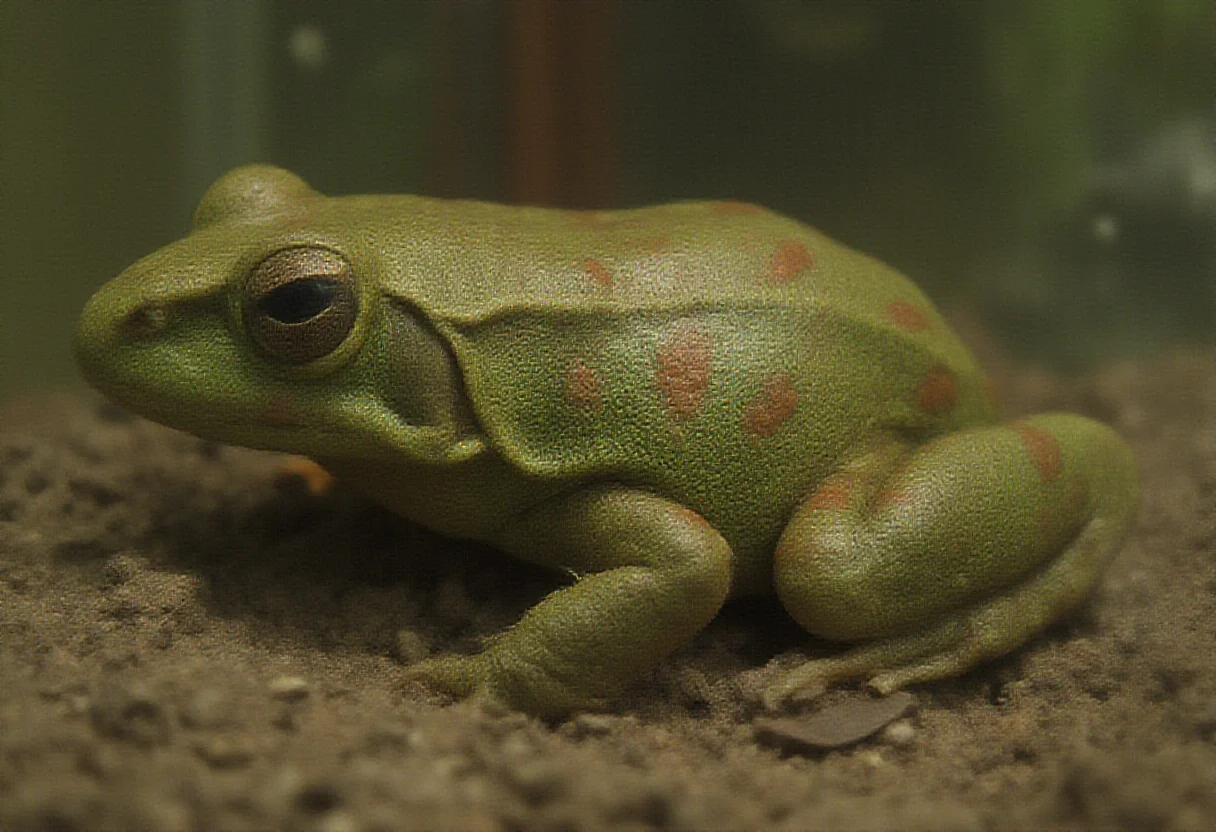
Males reach about 2.5 to 4 inches and females 4 to 7 inches, according to Reptiles Magazine. Petco lists 3 to 4 inches for males and 4 to 8 inches for females, and an adult weight of roughly half a pound to a pound. Wilmette Pet Center gives larger numbers, up to about 9 inches for females.
These differences exist because “Pacman frog” covers several species and hybrids. Adult size depends on which species you have.
Feeding by age
Frogs grow on food. The sources agree on the pattern, with no agreed schedule: juveniles eat more often, and adults eat less.
Petco says juveniles eat daily and adults one to two times a week. Sands Exotic Animals says juveniles eat daily and adults every two to three days. Wilmette Pet Center says juveniles eat two to three times a week and adults every one to two weeks.
Reptiles Magazine suggests feeding crickets or roaches as a staple, and says the amount depends on the frog’s size and temperature.
| Life stage | Frequency range | Source |
|---|---|---|
| Juvenile | Daily to 2 to 3 times a week | Petco, Sands Exotic, Wilmette Pet Center |
| Adult | Every 2 days to every 2 weeks | Petco, Sands Exotic, Wilmette Pet Center |
Size matters more than age
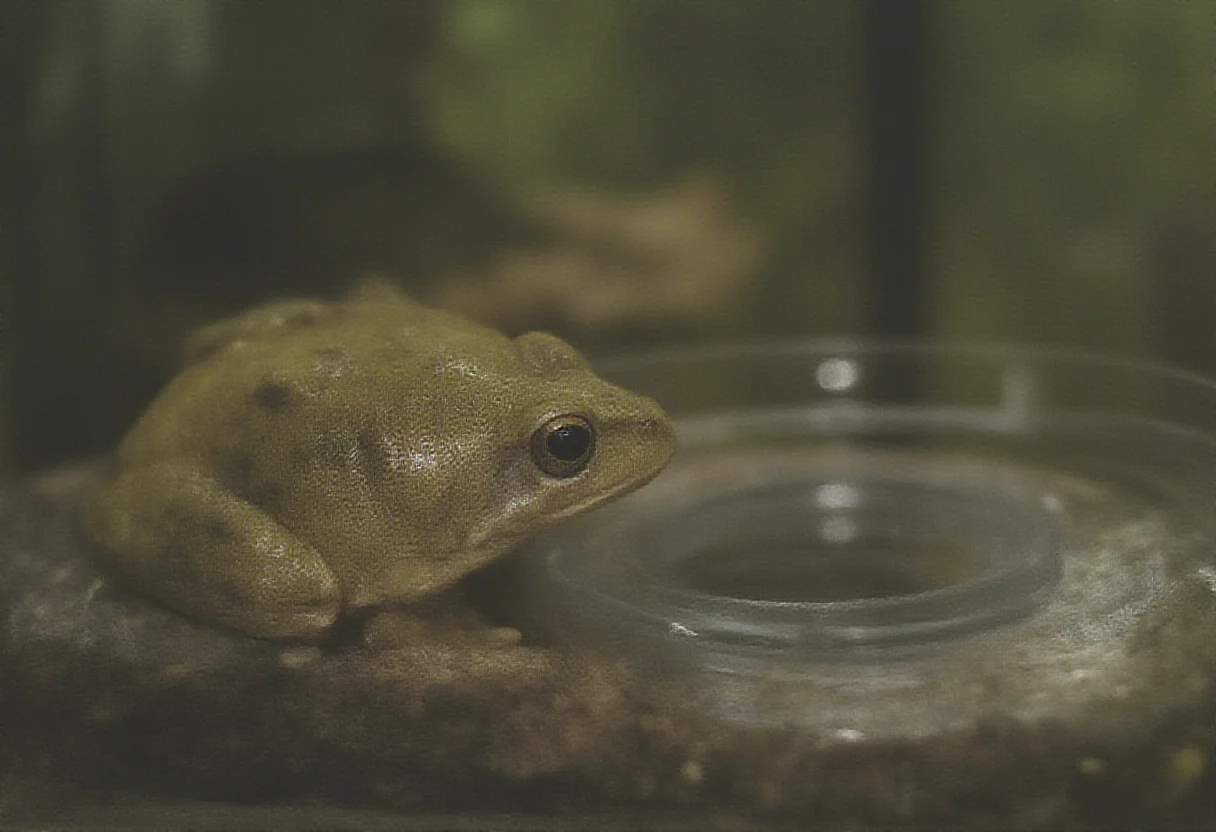
A breeding guide on FurryCritter says size is a more reliable guide to maturity than age alone. It puts males at roughly 12 to 18 months old and at least 3.5 inches long, and females at roughly 18 months to 2.5 years and at least 4.5 inches.
The same guide warns that breeding undersized females risks egg binding, nutritional depletion and death. If you are not breeding frogs, this is a good reason to let a young female finish growing and not push her with extra food.
Growth in the wild versus in a tank
The Honolulu Zoo describes the ornate horned frog as an “extreme carnivore” that eats nearly any prey small enough to fit in its mouth. It lives in grasslands near temporary water in Argentina, Brazil and Uruguay.
Wild frogs depend on irregular meals and rain-driven seasons. A pet frog can eat on a fixed schedule, which is why captive frogs can grow fast and why obesity is a pet-keeping problem.
Lifespan and long-term size
Captive lifespan figures vary widely. Sands Exotic Animals says 5 to 10 years, Wilmette Pet Center says about 6 years and up to 12, Petco says 10 to 15 years, and Reptiles Magazine says about 15 years under optimal conditions.
After the first one to two years, growth slows. Plan the enclosure for the adult size of your species, and upgrade it as the frog grows, as Petco advises.
Signs of healthy growth
Reptiles Magazine says a healthy Pacman frog looks “round”. If it looks unnaturally large, cut back on feeding. Petco lists a bloated abdomen and weight loss as red flags to bring to a vet, and says a healthy frog maintains its weight.
Sands Exotic Animals lists obesity from overfeeding, especially with pinky mice, as a common health issue.
Why growth can slow or stall
Sources point to temperature and food as the main drivers, because Reptiles Magazine ties feeding to both. A cold or underfed frog eats and grows less.
If your frog stops eating, stops growing or looks swollen, talk to an exotics vet. Do not try to treat it at home.
Related reading
For sexes and size, read male vs female Pacman frog size. For full care, see Pacman frog care, and for sound see do Pacman frogs croak.
What research on a wild horned frog shows about early growth
Care sheets rarely explain why two frogs of the same age end up different sizes. A 2020 study in BMC Ecology by Székely and colleagues offers a clue. It studied a close relative, the Pacific horned frog (Ceratophrys stolzmanni), in the Arenillas Ecological Reserve in southern Ecuador. It is a different species from the usual pet, so treat the numbers as a pattern, not a pet growth chart.
The researchers collected 92 freshly metamorphosed froglets and compared the 20 largest with the 20 smallest over 62 days.
| Measure | Small froglets | Large froglets |
|---|---|---|
| Size at metamorphosis | 28.21 mm snout to vent, 2.1 g | 41.1 mm snout to vent, 6.7 g |
| Survival over 62 days | 60% (12 of 20) | 95% (19 of 20) |
| Daily growth | 0.08 mm per day | 0.06 mm per day |
Small froglets grew faster and narrowed the size gap from 39% to 27%, but did not close it. They also had shorter hind limbs and narrower heads, which limits the size of prey they can swallow. Large froglets jumped farther, about 100 mm against 59 mm, which the authors link to better prey capture and predator escape.
The same paper notes that tadpoles of this group have some of the most intense growth rates reported for frogs and can leave the water as little as 2 weeks after eggs are laid. The lesson for a keeper is that early size matters, and a slow start can leave a frog behind for months.
Adult size and lifespan: veterinary and conservation views
LafeberVet, a veterinary education site, describes the ornate horned frog as 3 to 6 inches (8 to 15 cm) long and often just as wide. It says large females can reach 480 g (1 lb) and females are usually larger than males. It gives sexual maturity at 18 to 24 months.
The World Wildlife Fund responsible pet guide gives a similar size, 3 to 6 inches and up to 1 lb. Lifespan figures differ sharply. WWF says about 6 years, and LafeberVet says 16 or more. The retailer sheets above give figures from 5 to 15 years. Treat any lifespan as a range and plan for the long end.
Heat, humidity and growth
Growth needs warmth, and sources do not agree on one number.
| Source | Daytime temperature | Humidity |
|---|---|---|
| LafeberVet | 75 to 82 F (24 to 27 C), down to 65 F (18 C) at night | About 80% |
| World Wildlife Fund guide | 75 to 85 F (24 to 29 C); nights 65 to 75 F (18 to 24 C) | 50 to 80% |
LafeberVet adds that radiant heat sources dry out amphibian enclosures and that the substrate should be damp but not waterlogged. Use the overlap of the two ranges as a starting point, and check with an exotics vet for your species.
Food quality, not only quantity
A fast-growing frog needs the right food. LafeberVet suggests gut-loaded insects such as crickets, superworms and earthworms, plus appropriately sized fish and mice for larger animals. It dusts invertebrate prey with a vitamin and mineral supplement. It lists these problems linked to diet or husbandry:
- obesity, linked to a rodent-based diet
- corneal lipidosis, also linked to a rodent-based diet
- nutritional secondary hyperparathyroidism, often called metabolic bone disease
- foreign body ingestion
This explains why a plump frog is not always a healthy one. If your frog looks swollen, stops growing, or has bone or eye changes, book an exotics vet. This site gives no supplement schedule.
Choosing a juvenile and buying responsibly
The WWF guide says the Pacman frog (Ceratophrys ornata), found in Argentina, Uruguay and southern Brazil, is near threatened in the wild with declining populations. It also says demand is high and some frogs are illegally collected from the wild. It advises buying only from a reputable seller or rescue that follows best practices.
Pet shops often sell hybrids or look-alikes under one name, as the existing size section explains. Ask for the species name, the age and the feeding history so you can judge whether growth is normal.
Handling and hygiene as the frog grows
LafeberVet says to handle these frogs as little as possible, because amphibian skin is sensitive, and that they readily bite. Their teeth can cause a painful bite.
CDC says children younger than 5 years old should not handle or touch reptiles or amphibians or their environments, and that these animals are not recommended for households with young children, people with weakened immune systems, or adults 65 and older. Wash your hands with soap and running water after touching the frog, its food or its tank.
Frequently Asked Questions
How big is a Pacman frog when you buy it?
About the size of a quarter, according to Reptiles Magazine.
How long until a Pacman frog is full grown?
Petco says 6 to 12 months, and Reptiles Magazine says 1 to 1.5 years.
Do females grow larger than males?
Yes. Females reach roughly 4 to 7 inches or more, and males about 2.5 to 4 inches.
How often should a juvenile eat?
Sources range from daily to 2 to 3 times a week.
Can a Pacman frog be overfed?
Yes. Obesity from overfeeding is listed as a common health issue.
How long do they live?
Sources give a wide range, from about 5 to 15 years in captivity.
Bottom Line
Pacman frogs grow quickly in their first year, then level off. Exact timing varies with species, food and warmth.
Feed for a round, healthy shape rather than the fastest growth, and check with an exotics vet when something seems off.
Sources
- Pac Man Frog Care Sheet, Reptiles Magazine, used for size, timeline and lifespan
- Pacman Frog Care Sheet, Petco, used for growth, feeding and warning signs
- Pacman Frog Care Sheet, Sands Exotic Animals, used for feeding and obesity
- Pacman Frog Care, Wilmette Pet Center, used for feeding and size
- Pacman Frog Care Sheet, Josh’s Frogs, used for growth and size
- Sexual maturity and breeding readiness, FurryCritter, used for maturity ages
- CDC: Reptiles and amphibians, accessed 31 October 2026
- Ornate horned frog, Honolulu Zoo, used for wild range and diet
- Szekely et al. (2020). How to recover from a bad start: size at metamorphosis affects growth and survival in a tropical amphibian. BMC Ecology, accessed 12 November 2026
- LafeberVet: Basic Information Sheet, Ornate Horned Frog, accessed 12 November 2026
- World Wildlife Fund: Responsible pet guide, Pacman frog / South American horned frog, accessed 12 November 2026
One Comment