Mudpuppy Facts: Size, Gills, Habitat and Life Cycle
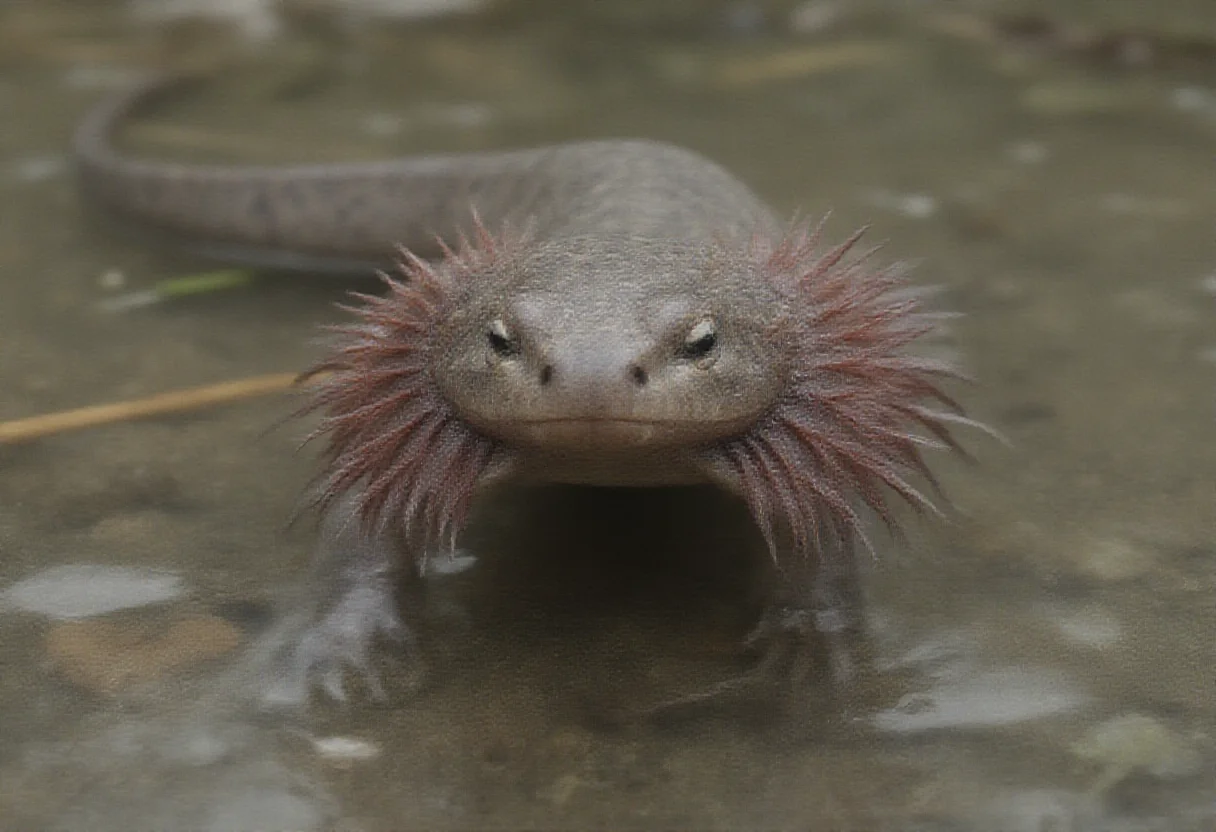
The mudpuppy (Necturus maculosus) is a fully aquatic North American salamander. It keeps bushy red external gills for life, grows 8 to 17 inches long, and hunts at night for fish, crayfish and insects. Females lay roughly 50 to over 100 eggs under rocks or logs and guard them until they hatch. It is a salamander, not a fish, and some states protect it, so check local rules before collecting or keeping one.
The mudpuppy is one of the largest salamanders in North America, yet few people see it. It lives in rivers and lakes, hides by day and walks along the bottom at night.
This guide covers size, gills, habitat, diet, breeding, lifespan and status. It uses state wildlife agency sources. For the nickname and look-alikes, see our water dog salamander guide.
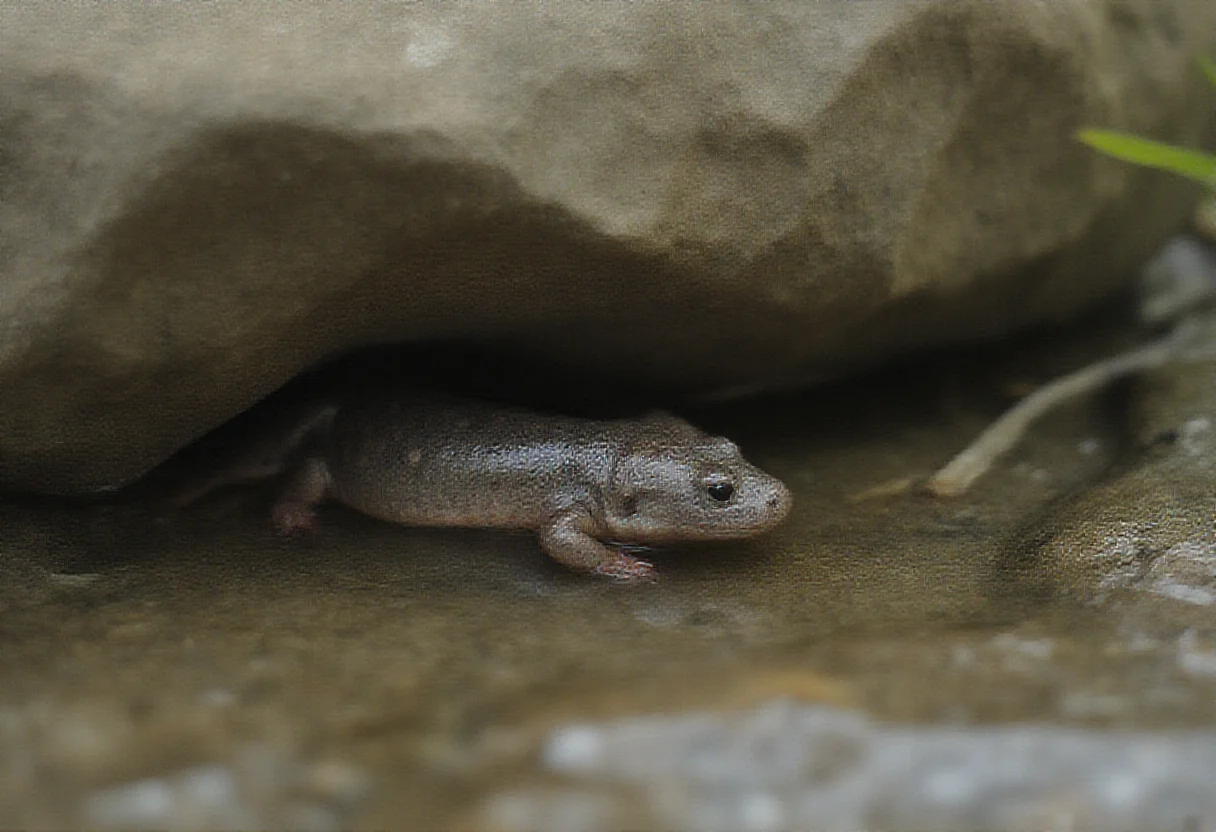
How this was made: prepared with AI assistance and checked against the sources listed at the end. Images are AI-generated illustrations, not photographs of real animals or products.
Key Takeaways
- Adults are about 8 to 17 inches long.
- Bushy red to maroon gills stay for life.
- Mudpuppies are mostly nocturnal and stay active in winter.
- Females lay 50 to over 100 eggs and guard the nest.
- Wild lifespan averages about 11 years in Connecticut; captives reach 30.
- Status ranges from special concern to threatened by state.
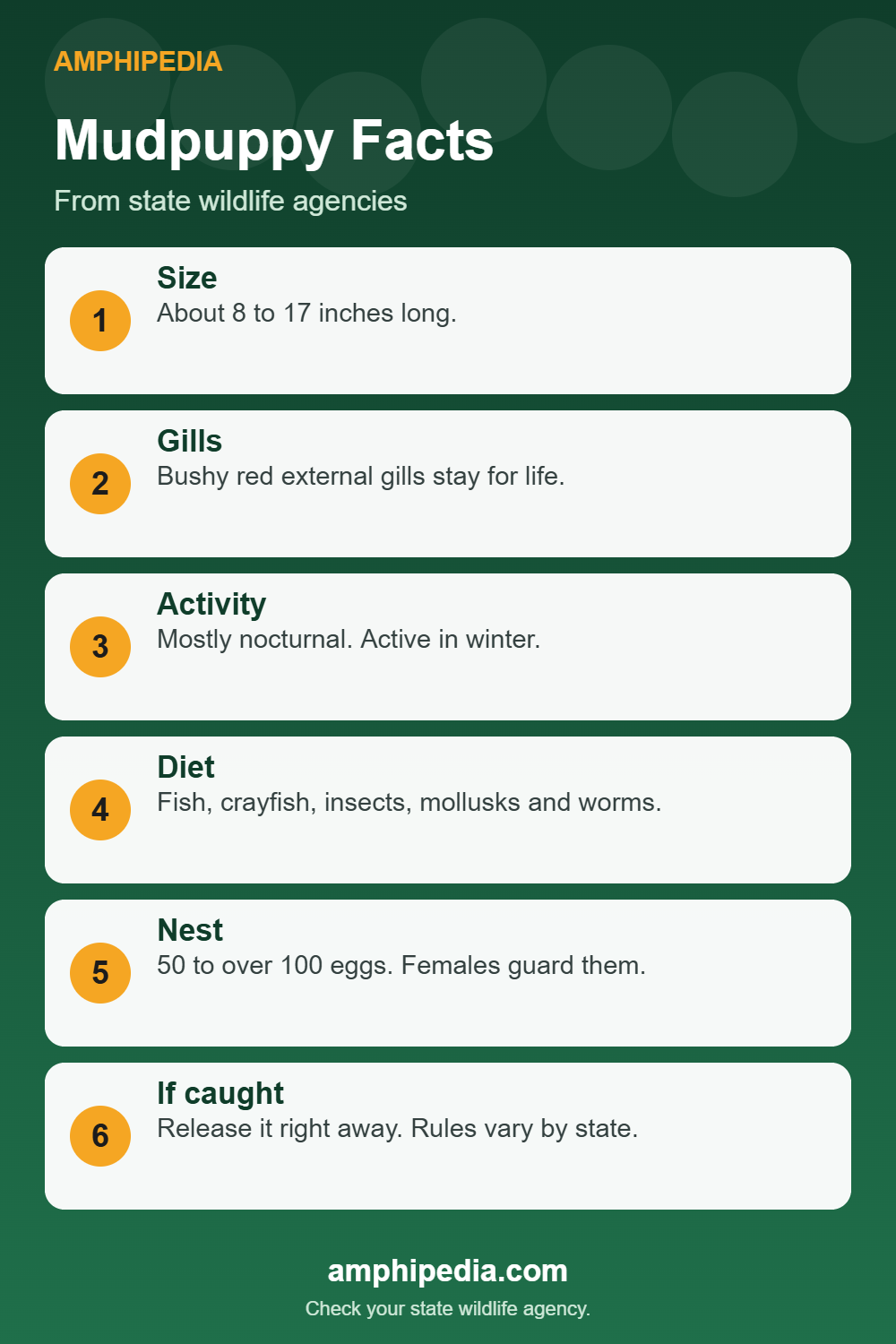
Pin this infographicShare on Facebook
What is a mudpuppy?
The mudpuppy is a salamander, not a fish. It is the only fully aquatic salamander in Connecticut, according to that state’s wildlife agency, and it never leaves the water as an adult. Our post on whether salamanders are fish explains why they are amphibians.
The gills stay for life and the body stays aquatic, so the mudpuppy never takes up a life on land.
Size and appearance
Connecticut gives a length of 8 to 17 inches. Illinois says 8 to 13 inches on average, and Virginia reports up to 19 inches. Sources differ because they describe different populations and measure different samples.
The back is gray to rust-brown with blue-black spots, and the belly is gray. A dark stripe runs through the eye. The head is broad and flat, the snout is squarish, the eyes are tiny and the tail is fin-like.
Mudpuppies have four toes on each foot. Most salamanders have five toes on each hind foot, according to Illinois.
| State agency | Length reported |
|---|---|
| Connecticut DEEP | 8 to 17 in |
| Illinois DNR | 8 to 13 in on average |
| Virginia DWR | Up to 19 in |
Gills and breathing
Adults keep red to maroon, bushy external gills for life. Connecticut notes that mudpuppies in low-oxygen water have longer, larger gills than those in clear, oxygen-rich water.
They breathe mainly through the gills. The agency says the lungs help the animal adjust its buoyancy.
Where mudpuppies live
Mudpuppies live in rivers, lakes, large creeks and even drainage ditches. Connecticut finds them mainly in deeper water of the Connecticut and Housatonic Rivers. Virginia has them only in far southwestern rivers such as the Clinch and Powell.
They are mostly nocturnal, though they may move by day in dark or murky water. They walk along the bottom and swim in quick, short bursts.
They stay active through winter in deep water and are sometimes caught by ice fishers.
What mudpuppies eat
Connecticut lists fish and fish eggs, crayfish, aquatic insect larvae, mollusks, snails, worms, spiders, plant material and occasionally another salamander. Illinois and Virginia list similar prey.
They are eaten in turn by fish, turtles, herons and water snakes.
How mudpuppies breed
Males find and mate with females in fall. Virginia reports mating from fall through spring.
By the following spring or summer, a female lays about 50 to over 100 eggs singly under large logs or rocks, says Connecticut. Illinois gives about 100 eggs per clutch, and Virginia gives 20 to 200.
Females often stay with the eggs until they hatch. Illinois says hatching takes about two months. Connecticut says larvae stay near the nest site for 6 to 8 weeks.
Larvae have a dark mid-back stripe bordered by yellow bands, which lasts up to three years. Maturity comes in the sixth year at about 8 inches.
Lifespan
Connecticut says mudpuppies can live up to 30 years in captivity, but an average of 11 years is more common in the wild. Illinois and Virginia do not give lifespan.
Status and protection
Protection varies by state. Connecticut listed the mudpuppy as a species of special concern in 2015. Illinois lists it as state threatened. Virginia lists it as a Species of Greatest Conservation Need in Tier 3a.
Connecticut says the animal cannot be collected or removed from the wild. If you catch one while fishing, release it immediately back into the same water system. Rules differ elsewhere, so check your state wildlife agency.
Connecticut’s page names siltation and pollution as concerns. Its distribution and whether it is native in New England are still debated there.
Why is it called a mudpuppy?
Illinois says the name comes from a mistaken belief that the animal barks. Connecticut notes that the animal does make a grunting sound. The name stuck and the animal is also called a water dog.
A mussel that depends on the mudpuppy
The US Fish and Wildlife Service describes a small freshwater mussel, the salamander mussel (Simpsonaias ambigua), that needs the mudpuppy to reproduce. Its larvae, called glochidia, attach to the mudpuppy and develop on its gills before dropping to the streambed.
The agency says this makes the salamander mussel the only freshwater mussel in North America known to use a non-fish host. The two animals share habitat, and the overlap is strongest in summer and fall, when females guard nests under large flat rocks.
The link matters for conservation. If a river loses its mudpuppies, a mussel that relies on them can lose its only host too.
Lampricide and other threats
The state pages are brief on threats. Connecticut names siltation and pollution as concerns for its water resources. Virginia lists only natural predators: fish, otters and larger mudpuppies. A peer-reviewed study adds one human-made pressure that applies in the Great Lakes region.
The study, published in the journal Copeia, compared two Ohio waterways. The Grand River is treated from time to time with TFM, a lampricide used since 1958 to control invasive sea lamprey. Alum Creek has never been treated.
- After a 1986 TFM treatment, the Grand River mudpuppy population showed an estimated 29% decline.
- Mudpuppy deaths were seen after a 2022 treatment, yet the authors’ population and survival estimates showed no decline from that single event.
- Grand River mudpuppies appeared to mature younger and stay smaller, a pattern the authors call consistent with an exploited population.
The authors warn that habitat and survey differences prevent a direct comparison between the two rivers. They call for more studies of treated and untreated tributaries. In short, the long-term effect of lampricide is still an open question.
What you can do to help
Mudpuppies are hard to see, so most help comes from protecting the water they live in.
- Keep sediment and pollution out of local streams and rivers. Connecticut asks residents to keep water resources free of siltation and pollution.
- Share what you know. Connecticut notes that awareness supports salamander conservation.
- Report sightings to your state wildlife agency if it asks for them. Connecticut says the animal’s distribution is poorly understood in the state.
- Never move a mudpuppy to a new water body. Move nothing from the place where you found it.
If you catch a mudpuppy while fishing
Anglers and ice fishers sometimes hook mudpuppies by accident. Connecticut gives clear steps.
- Release the animal immediately into the water you caught it in.
- Do not carry it to a different location.
- Do not keep it. In a state where it is listed, it cannot be collected or removed from the wild.
- Wash your hands with soap and running water afterward.
Other states may have different rules, so check your state wildlife agency. Do not assume that a species abundant in one river is unprotected in the next state.
Hygiene and handling
Wild mudpuppies should not be handled more than needed to free a hook, and cleaning gear matters as well. CDC says amphibians can carry Salmonella even when they look healthy.
- Wash with soap and running water after touching an amphibian, its water or its equipment, and before eating or drinking.
- Use hand sanitizer with at least 60% alcohol only when soap and water are not available.
- Clean tanks and equipment outside the home when possible, away from gardens and food or drinking water.
- Never clean amphibian habitats or equipment in a kitchen sink or food preparation area.
Children younger than 5 years old should not handle or touch amphibians, according to CDC.
Common mix-ups
- Fish. Mudpuppies are salamanders with gills, lungs and four-toed feet.
- Larvae. Connecticut says adults keep their gills for life, so they look like large larvae. They are fully grown adults.
- Barking. Illinois says the name comes from a mistaken belief that the animal barks. Connecticut notes a grunting sound.
- Rare everywhere. Status differs by state, from special concern in Connecticut to threatened in Illinois.
Frequently Asked Questions
Is a mudpuppy a fish?
No. It is a salamander, an amphibian.
How big do mudpuppies get?
Agencies report 8 to 17 inches in Connecticut and up to 19 inches in Virginia.
Why does a mudpuppy have gills as an adult?
It stays aquatic for life and keeps bushy external gills. Connecticut says gill size varies with oxygen in the water.
What do mudpuppies eat?
Fish, fish eggs, crayfish, insects, mollusks, worms and sometimes another salamander.
How long do mudpuppies live?
Up to 30 years in captivity and about 11 years on average in the wild, per Connecticut.
What should I do if I catch one while fishing?
Release it right away back into the same water, as Connecticut asks.
Are mudpuppies endangered?
Not federally, but several states protect them. Illinois lists it as threatened.
Bottom Line
The mudpuppy is a quiet river animal with a remarkable life. It keeps its gills, guards its nest and stays active under the winter ice.
To compare with a land salamander, see our guide to the fire salamander or the tiger salamander.
Sources
- Connecticut DEEP: Mudpuppy fact sheet, accessed 12 Nov 2026 (size, gills, diet, breeding, lifespan, status, larvae, conservation)
- Illinois DNR: Wild About Salamanders, Mudpuppy, accessed 12 Nov 2026 (size, breeding, name, status)
- Virginia DWR: Common Mudpuppy, accessed 12 Nov 2026 (size, range, breeding, status, predators)
- CDC: Reptiles and Amphibians, Healthy Pets, Healthy People, accessed 12 Nov 2026 (Salmonella, handwashing, cleaning, who should avoid handling)
- US Fish and Wildlife Service: Salamander mussel (Simpsonaias ambigua), accessed 12 Nov 2026 (mudpuppy as host)
- Copeia 113(2): Lampricide Exposure in Mudpuppies (Necturus maculosus): Comparing Demographic Responses, accessed 12 Nov 2026

2 Comments