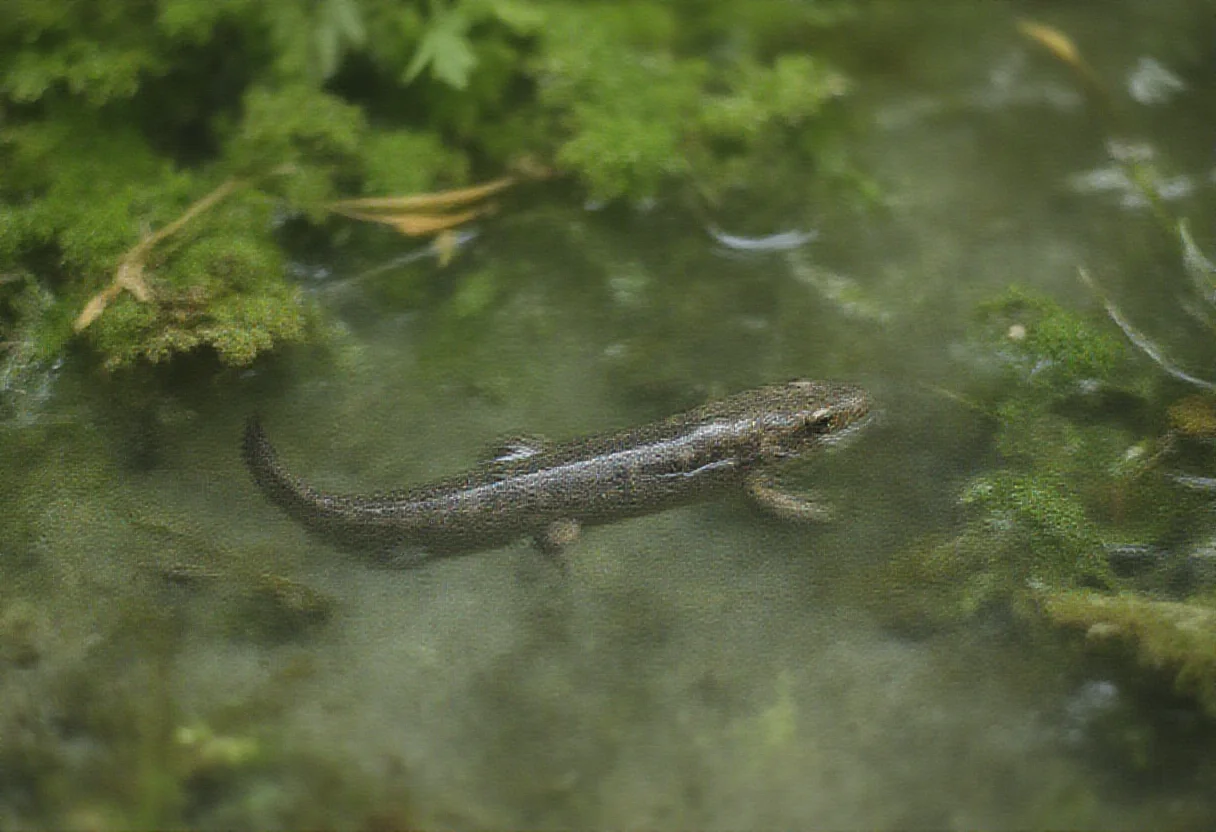
Can Newts Live With Fish? Risks and Rules
Usually not. In ponds, fish eat newt eggs, larvae and sometimes adults, and conservation groups call fish in newt breeding ponds almost always catastrophic. In an aquarium, newts also carry skin toxins, and care sheets list small fish such as guppies as newt food. No vet-college or zoo source cited here recommends a fish and newt pairing, so a species-only tank is the safest choice.
People often want one tank with fish and newts. It looks natural, but the two animals do not make easy partners.
This guide covers what wildlife groups say about fish and newts in ponds, why tank sharing is risky, and what to do instead.
How this was made: prepared with AI assistance and checked against the sources listed at the end. Images are AI-generated illustrations, not photographs of real animals or products.
Key Takeaways
- Fish eat newt eggs and larvae. NatureScot calls fish in breeding ponds almost always catastrophic for newts.
- Larger fish can eat adult newts too, according to the Wild London Garden Forum guide (wlgf.org).
- Newts can eat small fish. A care sheet lists guppies as food for fire-bellied newts.
- Newt skin toxins have harmed every vertebrate species in a classic study of Taricha toxin.
- No reputable source cited here recommends a mixed tank, so a newt-only setup is the safer choice.
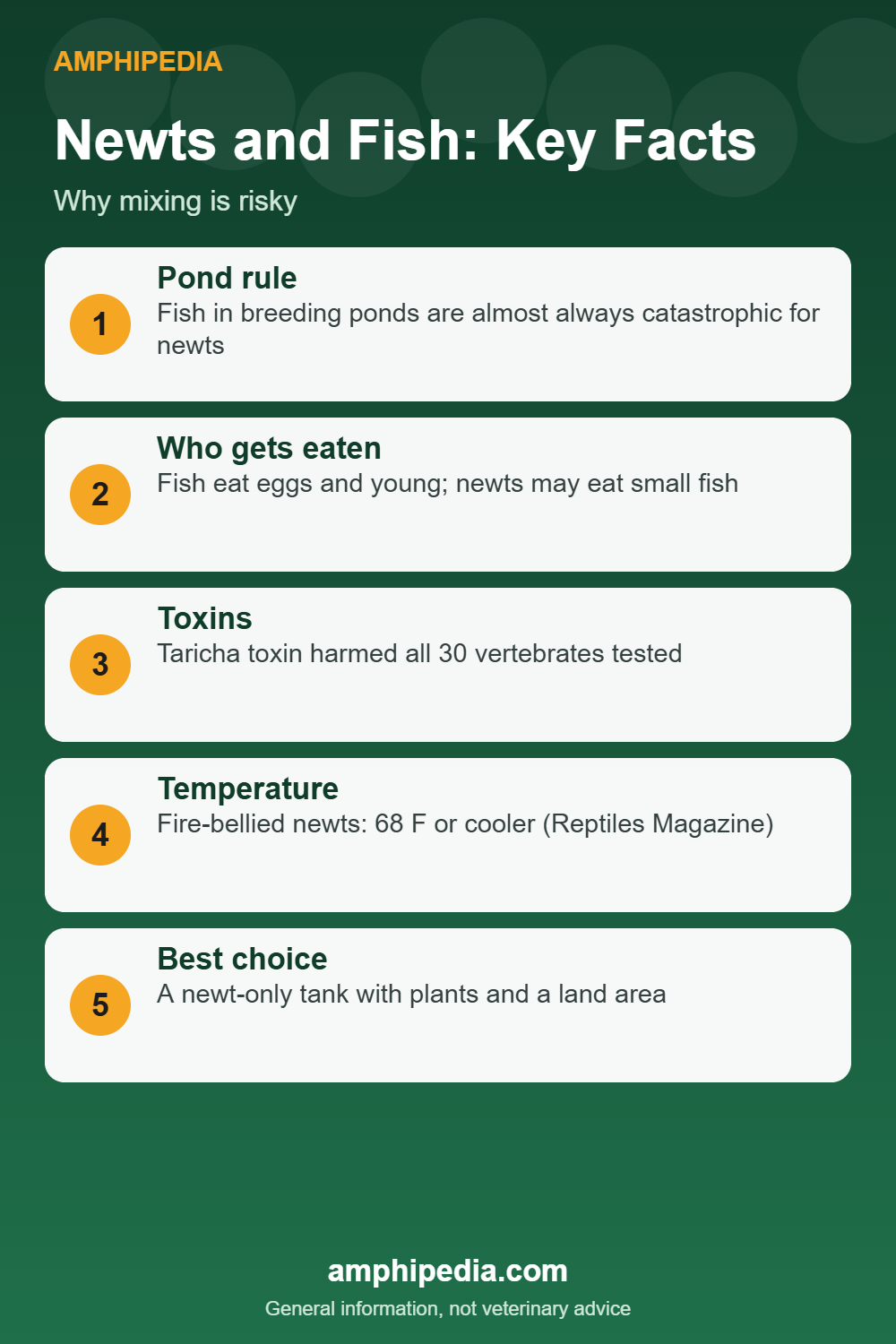
Pin this infographicShare on Facebook
In a pond, fish are a threat
Wildlife groups agree on this. NatureScot says introducing fish to breeding ponds is almost always catastrophic, because fish eat newt eggs and juveniles, as well as those of other amphibians.
The Game & Wildlife Conservation Trust lists fish and large insect larvae as egg predators. The Wild London Garden Forum says larger fish prey on newt spawn and larvae, and that fish are generally considered harmful to ponds meant to support great crested newts.
If you want newts in a garden pond, keep it fishless. Also see [how many eggs newts lay](https://www.amphipedia.com/how-many-eggs-do-newts-lay/) to understand why egg survival matters.
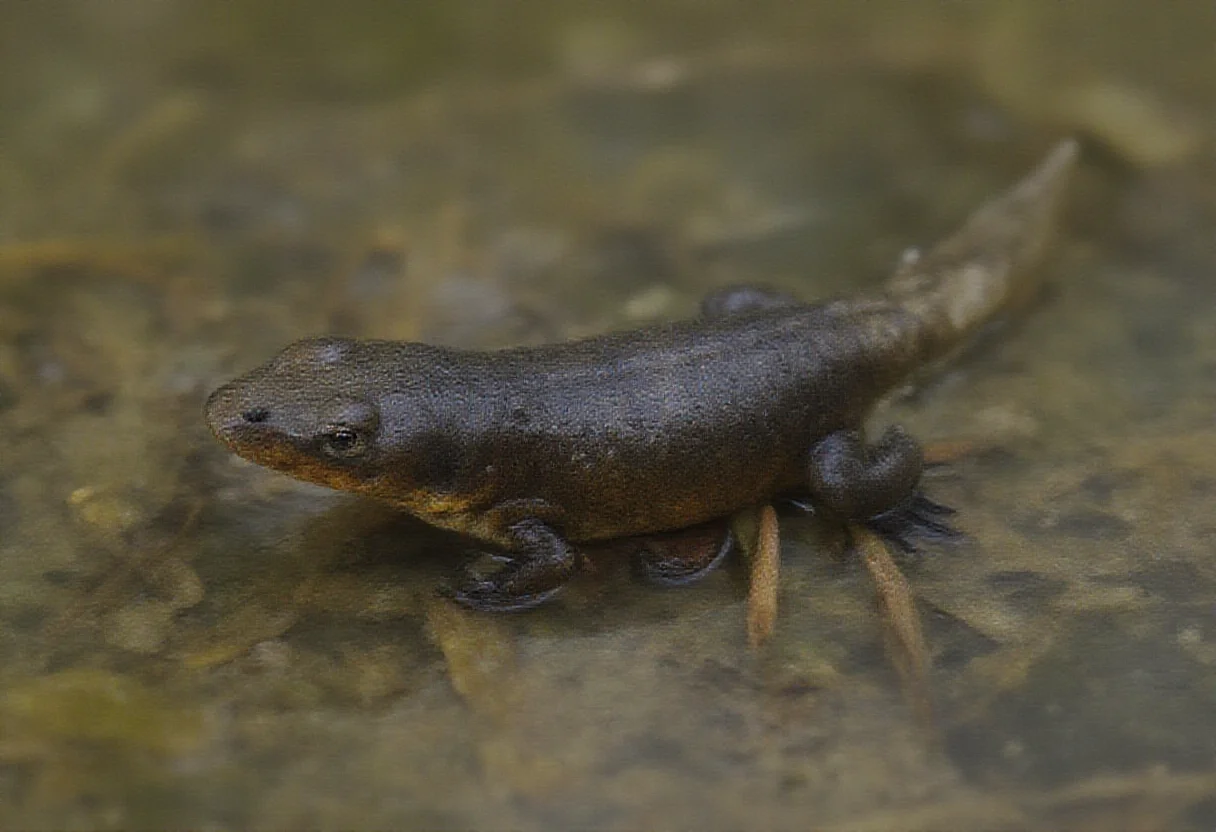
In a tank, the risks change but remain
Three problems stand out in an aquarium.
- Newts eat small fish. The Reptiles Magazine care sheet for Chinese fire-bellied newts lists guppies among foods they accept.
- Fish can eat newt eggs and young. Wildlife groups document fish eating newt eggs, larvae and juveniles.
- Toxins matter. The caudata.org summary says skin toxin from Taricha granulosa harmed all 30 vertebrate species tested, and many died. Newts of the genus Cynops, tested as C. pyrrhogaster, were reported at about ten times the toxicity of adult eastern newts.
Water needs may not match
The Reptiles Magazine care sheet says fire-bellied newts do best at 68 degrees F or slightly cooler, and that higher temperatures stress them and can lead to bacterial infection. If a fish species needs warmer water than a newt can take, they cannot share a tank.
Both animals also add waste. A newt tank needs a land area and an easy way out of the water, which a fish tank often lacks.
| Question | What sources say |
|---|---|
| Do fish eat newt eggs and larvae? | Yes (NatureScot, GWCT, Wild London Garden Forum) |
| Can newts eat fish? | Yes, care sheets list small fish such as guppies as food (Reptiles Magazine) |
| Are newts toxic to fish? | Taricha skin toxin harmed all 30 vertebrates tested (caudata.org summary) |
| Is there an expert-endorsed pairing? | None found in the sources cited here |
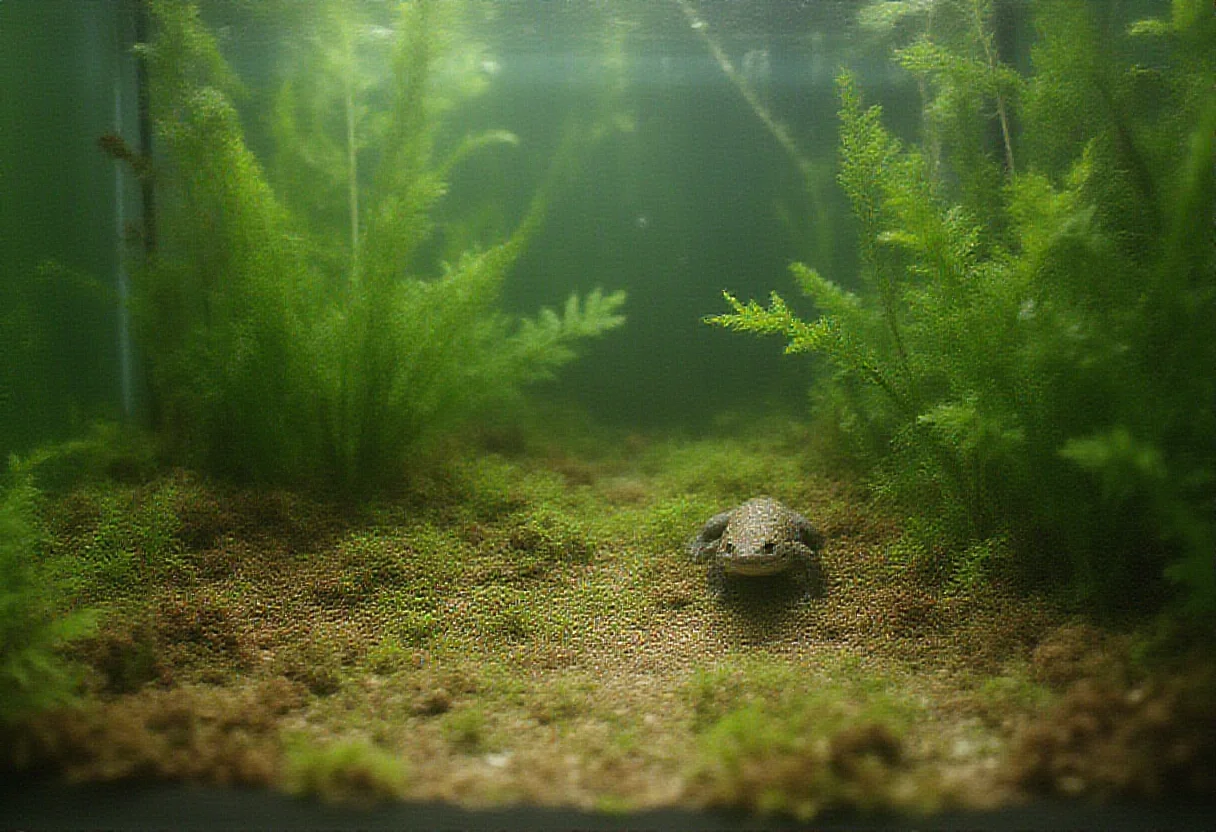
Which newt species are you keeping?
Advice online often mixes up species. Species differ in size, toxicity and temperature needs. Rough-skinned newts (Taricha) are the most toxic group tested, while Triturus were the least toxic. Always name the species before you plan a tank.
If you keep native or wild-caught newts, check local law first. Rules vary by country and state, and some species are protected. Check your wildlife agency. Imports of many salamanders and newts into the United States are restricted, as the US Fish and Wildlife Service explains.
What to do instead
Keep newts in a newt-only aquarium. Add live plants, a filter, hiding places and a land area. Feed newts foods from reputable care sheets, such as bloodworms, earthworms or brine shrimp, three times a week for fire-bellied newts, per Reptiles Magazine.
If you want fish, give them their own tank. For more setup help read [are newts good pets](https://www.amphipedia.com/are-newts-good-pets/).
When to call a vet
If a newt is hurt, floating oddly or covered in white patches, call an exotics vet. The Association of Reptile and Amphibian Veterinarians keeps a directory at arav.org/professionals. This page gives no treatment steps.
Why the pond life cycle makes fish so damaging
A newt spends a long time in the water, and each stage is exposed. The Game & Wildlife Conservation Trust (GWCT) says adults return to ponds to breed from about February to July and spend roughly a third of their lives in water.
- Eggs. GWCT says females lay single eggs on thin leaves such as water mint and speedwell, then fold the leaf over the egg with their back legs. A newt may wrap 200 to 400 eggs in a season.
- Larvae. NatureScot says great crested newt larvae usually spend about three months in the pond. GWCT says larvae can breathe air at about ten weeks and are then called efts.
- Leaving the pond. Most efts leave by late summer to find land shelters.
Fish, large insect larvae and sometimes other amphibians eat the eggs, according to GWCT. A fish in the pond is present for every stage above. That is why NatureScot calls introduced fish almost always fatal to newt eggs and young.
Which fish do the most harm in a pond
The Wild London Garden Forum recommends no fish as the safest choice for a wildlife pond. It also explains that not all fish cause equal damage.
| Fish group | Effect on a wildlife pond (Wild London Garden Forum) |
|---|---|
| Bottom-feeders (carp family, including goldfish, bream, tench) | Stir up sediment, block light, uproot and eat plants |
| Surface and water-column feeders (roach, rudd) | Less damaging; may suit a garden pond at low densities |
| Sticklebacks (three-spined or nine-spined) | Native; rarely exceed 8 cm; little impact in large ponds but can matter more in small ones |
The page adds that fish eat amphibian eggs, larvae and adults, and that fish compete with tadpoles for food. It also says fish are generally considered harmful to great crested newts, which need fish-free water to breed.
If a pond already has fish
The Wild London Garden Forum has no dedicated section on removing fish. Its advice for managing existing fish is still useful for anyone who wants to help amphibians.
- Grow dense, complex vegetation in part of the pond so prey has somewhere to hide.
- Create a fish-free zone with fine mesh sized to your fish.
- Keep areas at least 1 m deep all year if you keep fish.
- Avoid feeding. The page says that if you have to feed, the stock is probably too high for a wildlife pond.
- Watch the effect on invertebrates and amphibians.
These steps reduce harm but do not make a fish pond equal to a fishless one. NatureScot still describes introduced fish as almost always catastrophic for breeding newts.
Newt toxins in more detail
The Caudata.org article on newt toxicity summarizes the research. In 1968, Brodie tested skin toxin from adult rough-skinned newts (Taricha granulosa) on 30 vertebrate species, including fish. Every animal exposed was affected, many died, and only those given very small doses recovered. The author suspected tetrodotoxin.
A 1974 study tested four newt species and found that all carried toxin. The genus ranking was clear: Taricha was the most toxic and Triturus the least. Cynops and Paramesotriton were each about ten times as toxic as adult eastern newts (Notophthalmus viridescens).
The article says stressed newts, or those resisting being held, are most likely to release toxin. Signs include a sour smell and a sticky skin feel. It advises weighing the toxicity facts when choosing animals that share a setup with newts.
A newt-only tank: what the care sheet says
Reptiles Magazine describes housing for the Chinese fire-bellied newt (Cynops orientalis). A 20-gallon aquarium can house up to four newts, and the newts need land as well as water.
- Water. Use spring water or dechlorinated tap water, with a filter.
- Cover. Add aquatic plants such as Java moss and Java fern.
- Temperature. Keep water at 68 F (20 C) or slightly cooler. Warmer water stresses newts and can cause bacterial infections.
- Health signs. A newt that spends an unusually large share of its time on land may be sick, or the water may be too warm or too dirty.
- Feeding. The sheet suggests feeding three times a week.
The sheet does not give tankmate advice. Ask an exotics vet before adding any other animal.
Wild newts and the law
NatureScot says the great crested newt is a European protected species. GWCT says it has strict legal protection in the UK. Do not move or collect wild newts, spawn or pond water. Rules differ by country and by species, so ask your national wildlife agency first.
NatureScot adds that great crested newts spend most of their lives on land, usually within about 250 m of a pond, and thrive when several ponds are linked by suitable habitat. A fishless pond works best as part of a connected landscape, not as a lone feature.
The CDC states: “Children younger than 5 years old should not handle or touch reptiles or amphibians or their environments.” The CDC says reptiles and amphibians aren’t recommended for households with young children, people with weakened immune systems, or adults 65 and older.
Common mistakes with newts and fish
- Adding goldfish to a newt pond. Bottom-feeders cause the most habitat damage.
- Assuming a big pond is safe. Large ponds help, but NatureScot still warns against fish in breeding ponds.
- Feeding fish in a wildlife pond. It suggests the stock is too high.
- Putting small fish in with newts. A care sheet lists guppies as newt food.
- Using one water temperature for both. Fire-bellied newts do best at 68 F or cooler.
- Handling stressed newts. They are the most likely to release toxin.
Frequently Asked Questions
Can newts live with goldfish?
No reputable source cited here backs this. Goldfish and newts need different conditions, and fish may eat eggs and young.
Do fish eat newts?
Larger fish can eat newt eggs, larvae and sometimes adults, according to wildlife groups.
Can newts eat fish?
Care sheets list small fish such as guppies as newt food, so small fish may be eaten.
Can I put newts in a fish pond?
Wildlife groups advise against it. NatureScot says fish in breeding ponds are almost always catastrophic for newts.
What can live with newts?
Live aquatic plants are the safest companions. No vet-endorsed animal tankmate list is cited here.
Bottom Line
Fish and newts rarely mix well, in ponds or in tanks. Wildlife groups document the harm in ponds, and tank sharing adds predation, toxin and temperature problems.
If you are planning a setup, start with [how many types of newts there are](https://www.amphipedia.com/how-many-different-types-of-newts-are-there/) and pick one species.
Sources
- NatureScot: Newts, accessed 13 November 2026
- Game & Wildlife Conservation Trust: Newts, accessed 13 November 2026
- Wild London Garden Forum: To have fish or not, accessed 31 October 2026
- Reptiles Magazine: Chinese fire-bellied newt, accessed 13 November 2026
- Caudata.org: The Toxicity of Newts, accessed 13 November 2026
- CDC: Reptiles and amphibians, accessed 31 October 2026
- US Fish and Wildlife Service: List of salamanders designated as injurious, accessed 31 October 2026
- ARAV: Find a veterinarian, accessed 31 October 2026
2 Comments