African Bullfrog as a Pet: Is It Right for You?
This post contains affiliate links. As an Amazon Associate I earn from qualifying purchases. Prices and availability are shown by Amazon and can change.
An African bullfrog can be a rewarding pet for an experienced keeper, but it is a long commitment and not a beginner frog. Adults reach 20 to 25 cm, live 16 to 30 years or more, can bite painfully and must live alone. They need a 20 to 30 gallon tank, 25 to 28 C, damp substrate, clean water and supplemented insects.
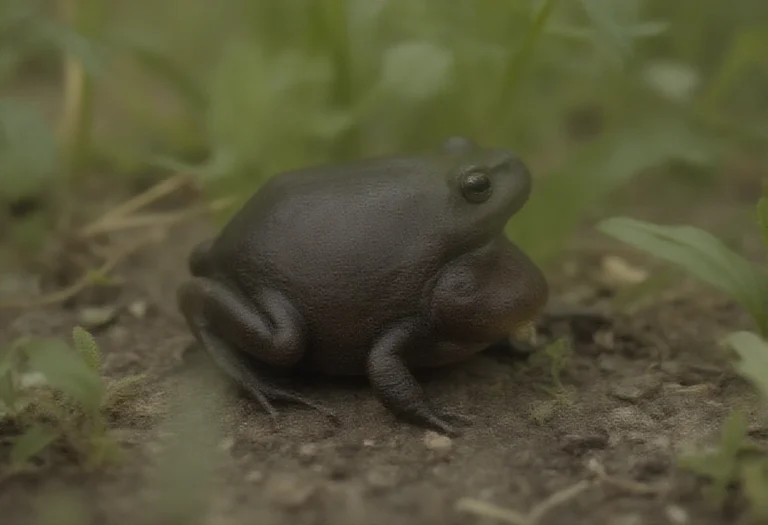
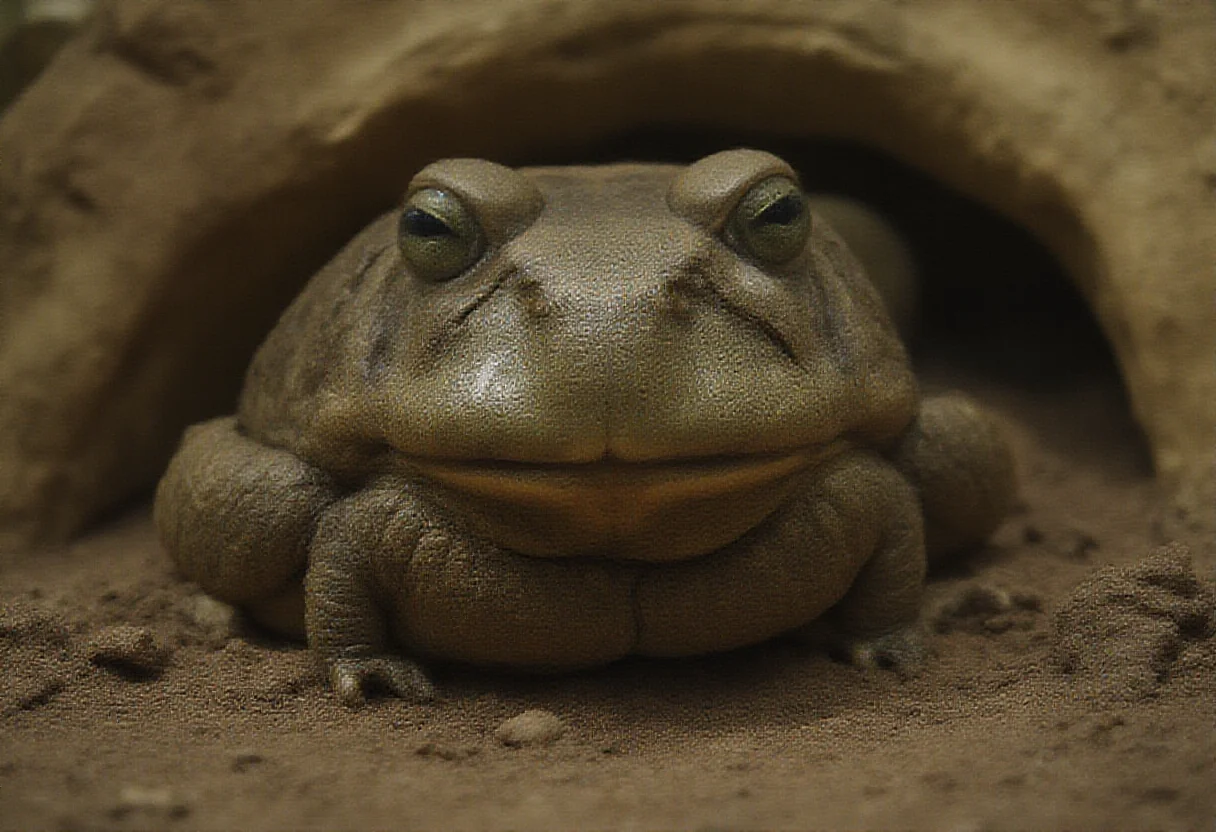
African bullfrogs are bold, round and hungry. They sit buried and wait for food, which makes them fun to watch.
This guide covers the key facts for a new owner: size, lifespan, housing, feeding and safety. Rules on keeping them vary by place, so check your local wildlife agency.
How this was made: prepared with AI assistance and checked against the sources listed at the end. Images are AI-generated illustrations, not photographs of real animals or products.
Key Takeaways
- Adults need a tank of 20 to 30 gallons for one frog.
- Keep the temperature at 25 to 28 C (77 to 82 F).
- House adults alone; they are aggressive and cannibalistic.
- Feed with tongs and dust prey with vitamins and calcium.
- Handle rarely, if at all.
- Expect to care for the frog for 16 to 30 years or more.
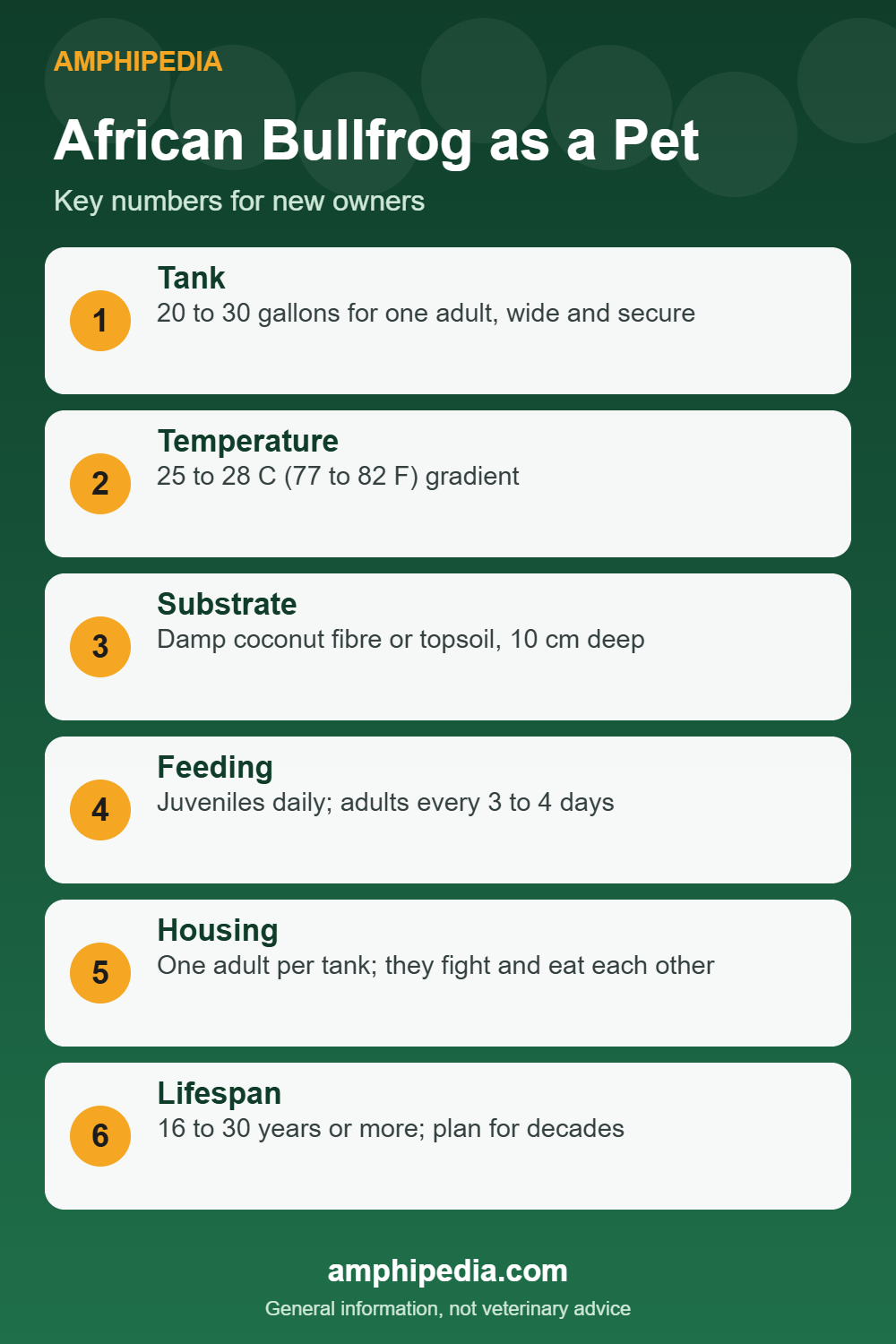
Pin this infographicShare on Facebook
Gear for an African Bullfrog Setup
These product types match the setup points above. Check size and material before you buy.


Product titles, prices and ratings are provided by Amazon and are accurate only at the time they are displayed.
Is an African bullfrog a good pet?
It depends on your experience. Adults are big, strong and can inflict a painful bite, per Lafeber Veterinary. They also produce a lot of waste and need frequent cleaning.
Lifespan is long. Animal Diversity Web cites 16.2 years in captivity, and VetVerified says 20 to 30 years with proper care. Plan for decades.
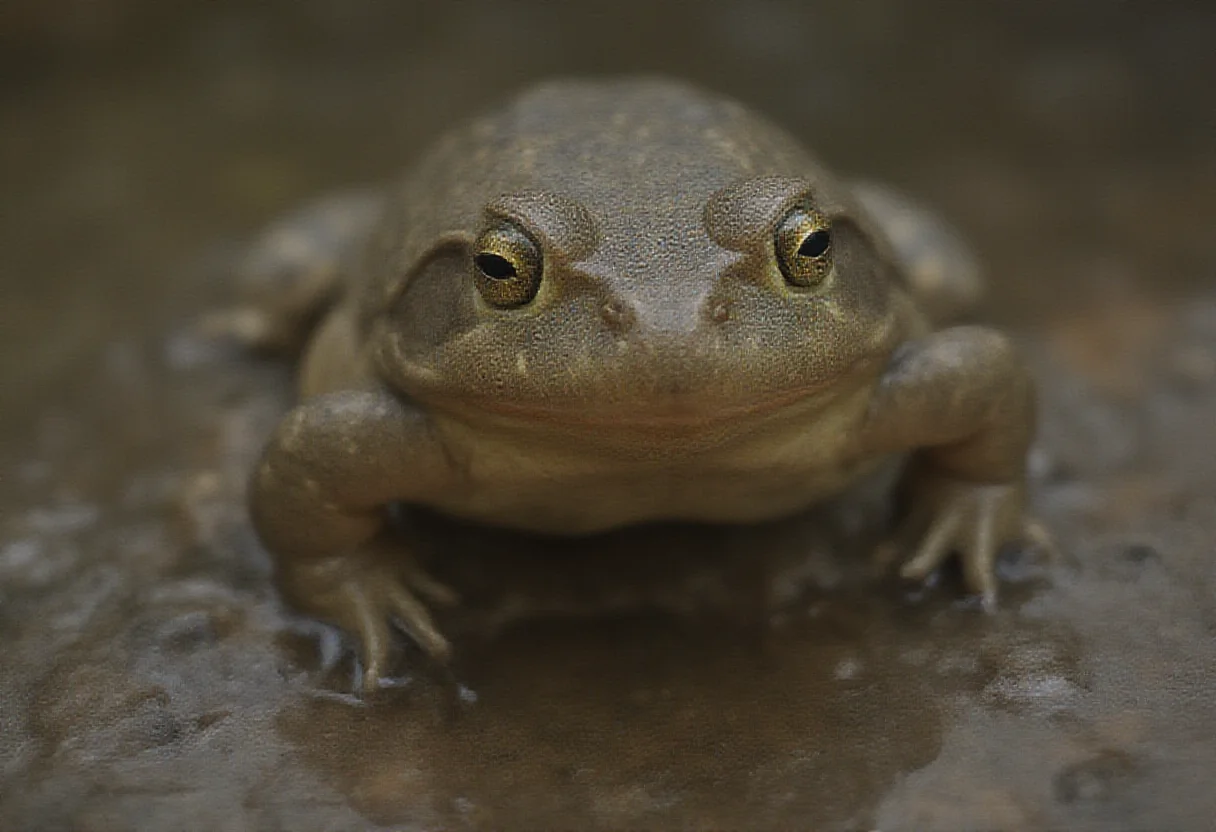
Tank size and setup
Lafeber says one adult can live in a 20 gallon long terrarium. VetVerified recommends at least 30 gallons (110 litres) and a wide, shallow, secure enclosure. A larger tank is easier to keep clean.
Use 10 cm (4 in) or more of moisture-retaining substrate, such as coconut fibre or organic topsoil, says VetVerified. Avoid gravel. Add a hide at each end and a large shallow water dish. Lafeber also lists a bare tank with 1 to 2 in of water and a haul-out platform as an option.
| Need | Figure | Source |
|---|---|---|
| Tank, one adult | 20 gallons long (Lafeber); at least 30 gallons (VetVerified) | Lafeber, VetVerified |
| Temperature | 25 to 28 C (77 to 82 F) gradient | Lafeber |
| Night drop | To about 21 C is acceptable | VetVerified |
| Humidity | 50 to 80 percent; above 70 percent per Exotics Keeper | VetVerified, Exotics Keeper |
| Substrate depth | At least 10 cm (4 in) | VetVerified |
| Lighting | Low-intensity full-spectrum; UVB not required | Lafeber, VetVerified |
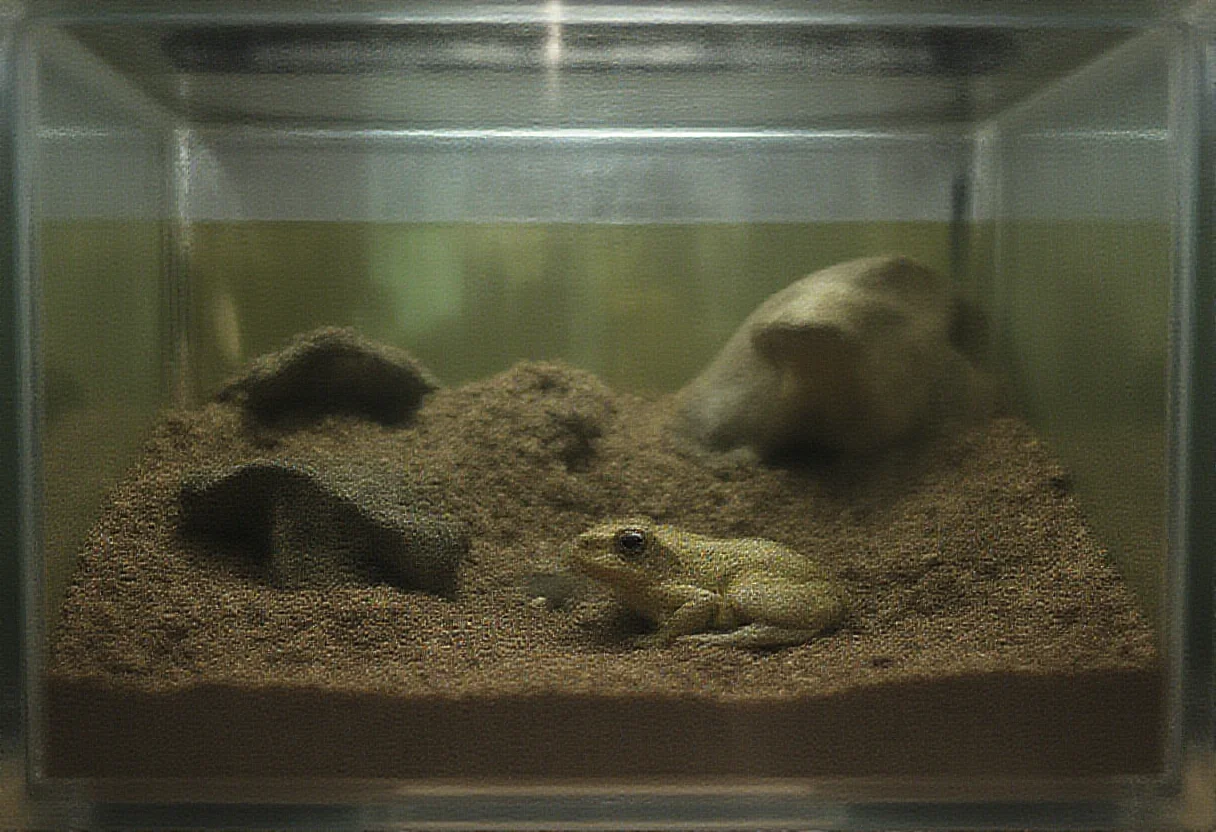
Temperature, water and humidity
Lafeber advises avoiding radiant heat sources because they dry out the enclosure. Mist regularly and keep the substrate damp, not waterlogged.
Use dechlorinated water. Lafeber says to let tap water sit open for 24 to 48 hours, or use bottled spring water or filtered tap water. Change the water dish daily, says VetVerified.
What and how often to feed
Adults eat insects, fish, earthworms and an occasional mouse, says Lafeber. Dust insects regularly with a vitamin and mineral supplement. Feed with tongs, since the frog may mistake fingers for food.
VetVerified suggests juveniles eat daily, sub-adults every other day and adults every 3 to 4 days. It lists obesity as a risk and says to feed pinky mice rarely.
Handling and safety
Lafeber says handle infrequently and briefly, with clean wet hands or moistened surgical gloves. VetVerified does not recommend handling. We advise watching the frog instead.
Keep adults separate. Lafeber says to house them separately, and Exotics Keeper notes that males can fight to the death. For why they bite, see our guide to African bullfrog aggression and the bite risk.
Common mistakes
New owners often make a few errors that sources warn about.
- Using a tank that is too small or too tall.
- Using gravel or bark that can cause impaction.
- Skipping calcium and vitamin dusting.
- Overfeeding, which leads to obesity.
- Housing two adults together.
- Using tap water without dechlorinating it.
Common health problems
Lafeber lists foreign body ingestion, metabolic bone disease and obesity. VetVerified also lists bloating, skin infections and impaction.
Do not treat these at home. See an exotics vet through the ARAV directory. Read about the African bullfrog lifespan to plan long term.
Frequently Asked Questions
Are African bullfrogs good pets for beginners?
Not usually. They are strong, can bite painfully and live for decades. VetVerified says they are not ideal for handling.
How big a tank does an African bullfrog need?
Lafeber says 20 gallons long for one adult. VetVerified recommends at least 30 gallons. Bigger is easier to keep clean.
What temperature do African bullfrogs need?
Lafeber gives a gradient of 25 to 28 C (77 to 82 F). VetVerified allows a night drop to about 21 C.
What do pet African bullfrogs eat?
Insects, earthworms, fish and an occasional mouse, per Lafeber. Dust insects with a vitamin and mineral supplement.
Can I keep two African bullfrogs together?
No. Lafeber says to house adults separately. Males can fight and the species is cannibalistic.
Can I hold my African bullfrog?
Lafeber allows brief, infrequent handling with wet gloves. VetVerified does not recommend it. A bite can be painful.
Bottom Line
An African bullfrog can be a long-lived, fascinating pet for a prepared keeper. It needs a roomy tank, steady warmth and safe feeding habits.
If you are not ready for a 20-year commitment, consider a smaller species first.
Sources
- Lafeber Veterinary: Giant African Bullfrog, accessed Housing, diet and handling
- VetVerified: Keeping African Bullfrogs, accessed Housing, feeding and health
- Exotics Keeper Magazine: Captive Husbandry of Giant African Bullfrogs, accessed Marriott, 2025
- Animal Diversity Web: Pyxicephalus adspersus, accessed Lifespan and biology
- CDC: Reptiles and amphibians, accessed Salmonella advice
- ARAV: Find a professional, accessed Exotics vet directory