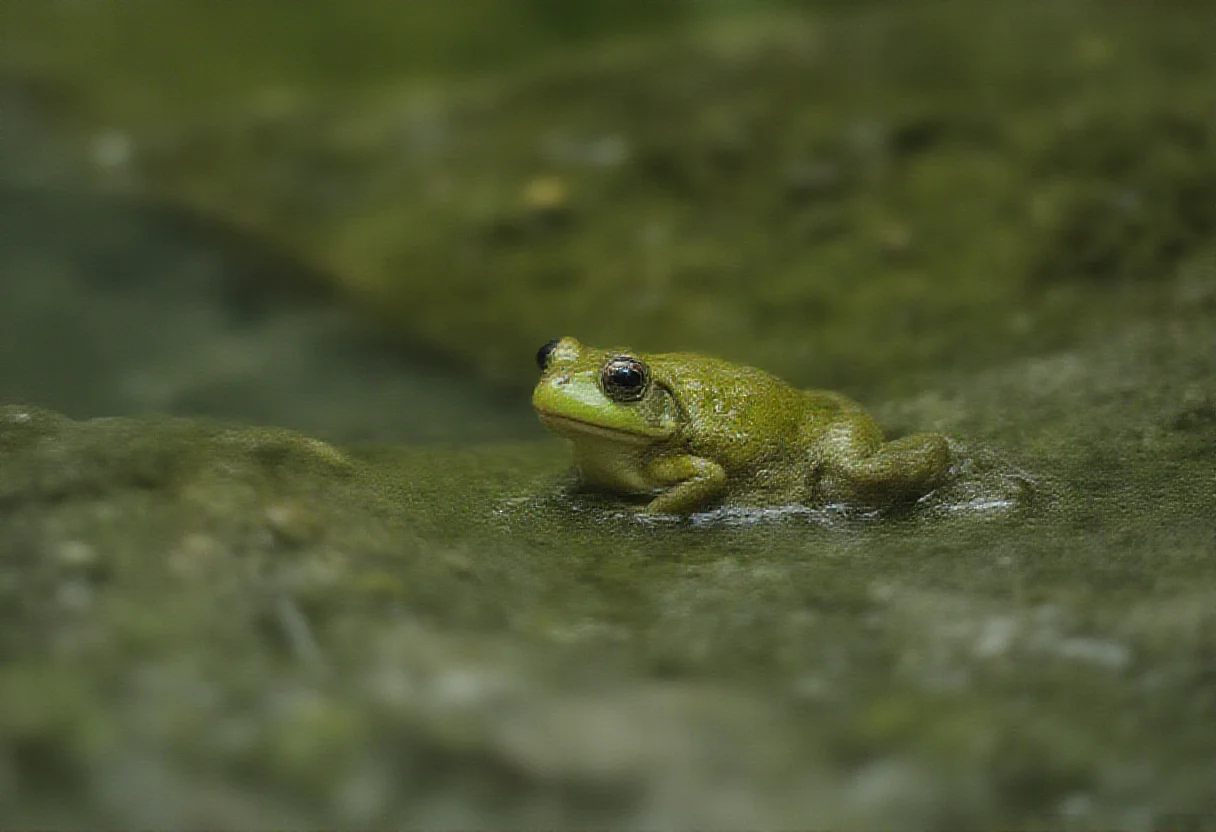
Why Is a Frog an Amphibian? 6 Traits That Qualify It
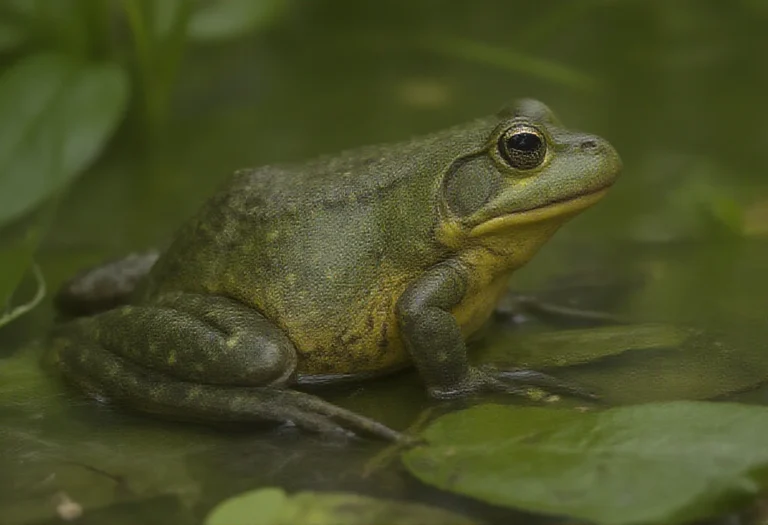
A frog is an amphibian because it shares the traits that define the group. Its skin is moist and lets water pass through. Its eggs need moisture. Its young usually start in water with gills and later breathe with lungs. Its body temperature follows its surroundings. Frogs and toads form the order Anura, one of three amphibian orders.
Amphibian comes from a Greek phrase meaning living a double life, according to Britannica. Frogs fit that idea well, but the definition is about more than water and land.
This page lists the traits that put frogs in the group, and the exceptions that show the rule has limits.
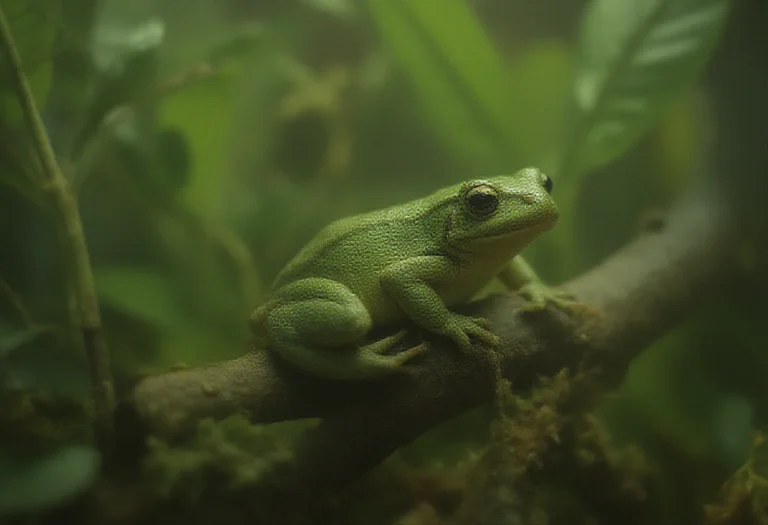
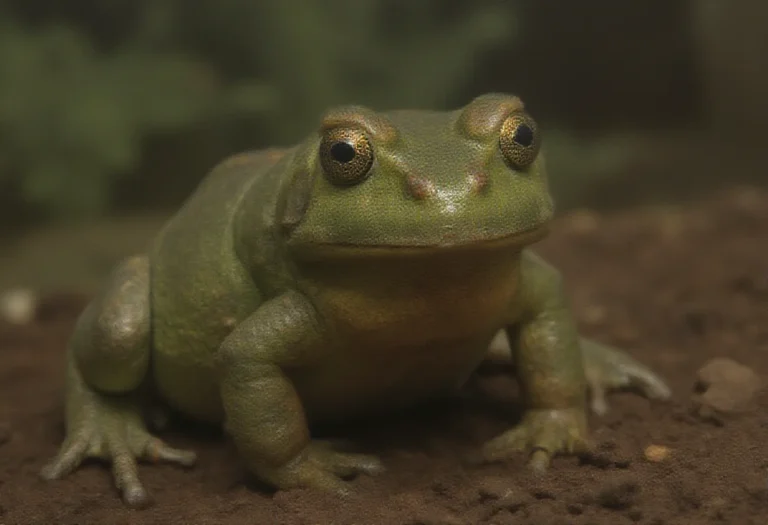
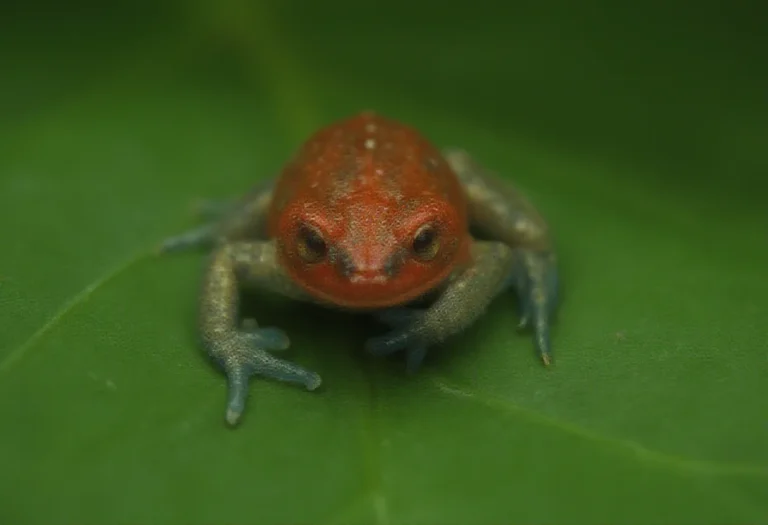
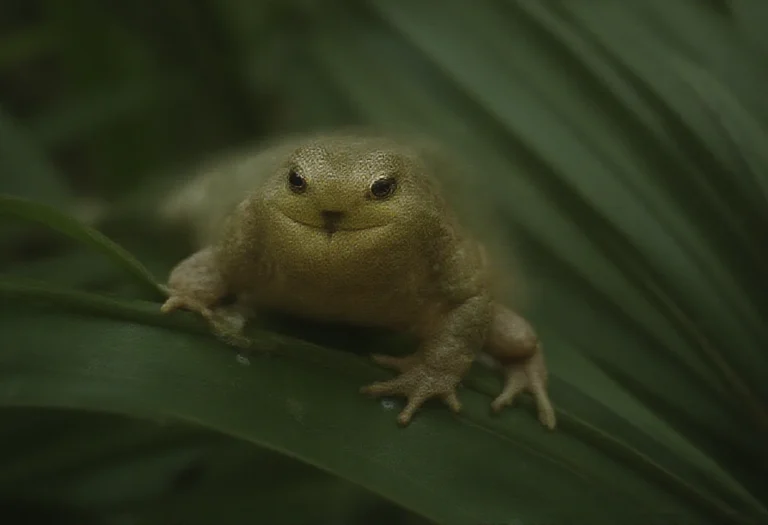
How this was made: prepared with AI assistance and checked against the sources listed at the end. Images are AI-generated illustrations, not photographs of real animals or products.
Key Takeaways
- Frogs and toads are the order Anura, one of three amphibian orders.
- Amphibian skin is scaleless and lets water pass through.
- Eggs need moisture, unlike the hard-shelled eggs of reptiles and birds.
- Most amphibians change from gill-breathing larvae to lung-breathing adults.
- Amphibians are ectotherms: body temperature follows the environment.
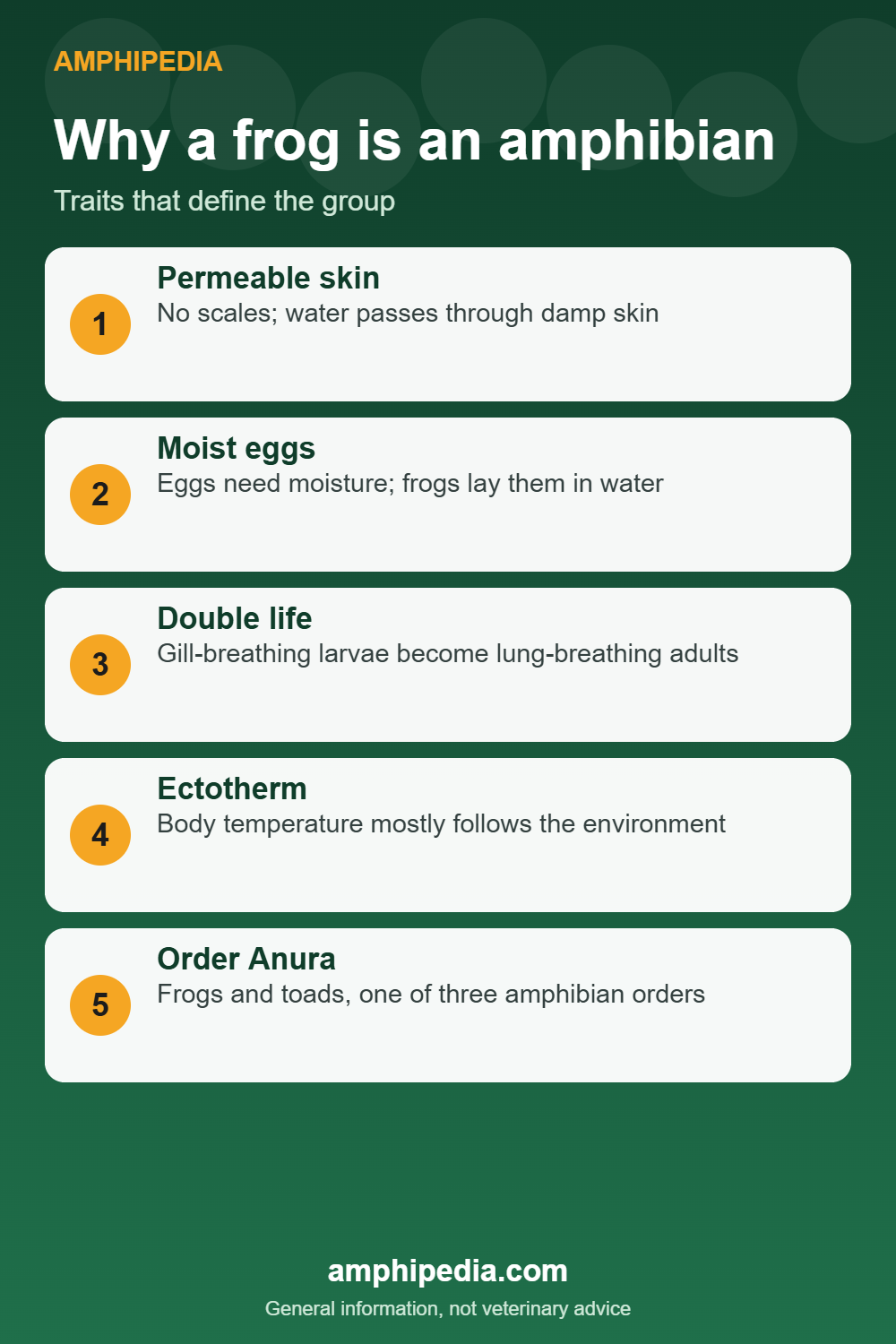
Pin this infographicShare on Facebook
What counts as an amphibian
Britannica defines amphibians as vertebrates that can exploit both aquatic and terrestrial habitats. It notes that some species live entirely on land or entirely in water.
There are three living orders: Anura (frogs and toads), Caudata (newts and salamanders) and Gymnophiona (caecilians). Britannica says more than 6,500 living species are known, and the group first appeared about 340 million years ago.
Six traits frogs share with other amphibians
The Pennsylvania Fish and Boat Commission and Britannica give a consistent picture. The table links each trait to what frogs show.
| Trait | What it means | Source |
|---|---|---|
| Permeable skin | No scales; water passes through the skin | PA Fish and Boat |
| Skin breathing | Many depend heavily on breathing through damp skin | Britannica |
| Moist eggs | Eggs need moisture; frogs lay them in water | PA Fish and Boat |
| Metamorphosis | Gill-breathing larvae become lung-breathing adults | PA Fish and Boat |
| Ectothermy | Body temperature mostly follows the environment | PA Fish and Boat |
| Clawless feet | Feet are covered in skin and have no claws | PA Fish and Boat |
Skin and breathing
Amphibian skin has no scales and lets water pass through, according to the Pennsylvania Fish and Boat Commission. Britannica adds that amphibians typically have damp skin and depend heavily on breathing through it.
Frogs are described by Britannica as having smooth, mucus-covered skin, while toads have rough skin. Both belong to the order Anura.
Eggs that need water
Amphibian eggs need moisture to survive, unlike the hard-shelled eggs of reptiles and birds. Frogs and toads lay their eggs in water, according to the Pennsylvania Fish and Boat Commission.
You can see how this looks in a pond in the guide to what frog eggs look like.
The double life: tadpole to frog
Most amphibians start life with gills. Larvae breathe with gills, and most lose them as adults and switch to lungs, according to the Pennsylvania Fish and Boat Commission.
Britannica describes the larvae as essentially free-living embryos that must feed and avoid predators before developing an adult body plan and moving to land. For the full sequence, read how a frog reproduces.
Cold-blooded, in a precise sense
Amphibians are ectotherms, so their body temperature mostly follows the environment. Mammals and birds, by contrast, are endotherms that make their own heat, according to the Pennsylvania Fish and Boat Commission.
Where the rule bends
Not every amphibian follows the standard pattern. Britannica says reproductive modes are highly varied, from aquatic eggs and larvae to eggs carried in the skin of the female’s back, and even live young.
Among salamanders, mudpuppies keep gills for life and some axolotls keep larval features and never leave the water, according to the Pennsylvania Fish and Boat Commission. Many frog species also skip the tadpole stage; see how a frog reproduces.
Frogs, tree frogs and toads
All frogs are amphibians, including tree frogs. For one subgroup in detail, read what a tree frog is.
Frequently Asked Questions
Why is a frog an amphibian?
Because it has the traits of the group: permeable skin, moist eggs, a larval stage with gills and body heat that follows the environment.
What does amphibian mean?
Britannica says the name comes from a Greek phrase meaning living a double life.
Are toads amphibians too?
Yes. Frogs and toads are both in the order Anura.
How many amphibian species are there?
Britannica says more than 6,500 living species are known.
Are amphibians cold-blooded?
They are ectotherms, so body temperature mostly follows the environment.
Do all amphibians live in water?
No. Britannica notes some live entirely on land and some entirely in water.
Bottom Line
A frog is an amphibian because of a bundle of traits, not just because it swims. Skin, eggs, larvae and temperature all point the same way.
For what happens after the eggs, read how a frog reproduces. To spot eggs in the wild, see what frog eggs look like.
Sources
- Britannica: Amphibian, accessed 31 October 2026
- Pennsylvania Fish and Boat Commission: What is an amphibian, accessed 31 October 2026
- Britannica: Anura (frogs and toads), accessed 31 October 2026
- Britannica: Anura, natural history, accessed 31 October 2026
7 Comments