What to Feed a Frog You Caught (and Whether to Keep It)
Offer small live insects such as crickets, earthworms or fruit flies, sized to the frog, and never human food. Adult frogs usually eat two to three times a week. But a wild frog is usually better off released where you found it. Wild frogs can carry disease, local rules may limit keeping them, and a stressed frog may refuse food.
Catching a frog is easy. Keeping one healthy is not. A wild frog already knows how to hunt its own food, and it is built for one specific habitat.
If you have one in a container right now, this guide covers what it can safely eat for a short stay. It also explains how to decide whether to keep it, check your local rules, and release it well.
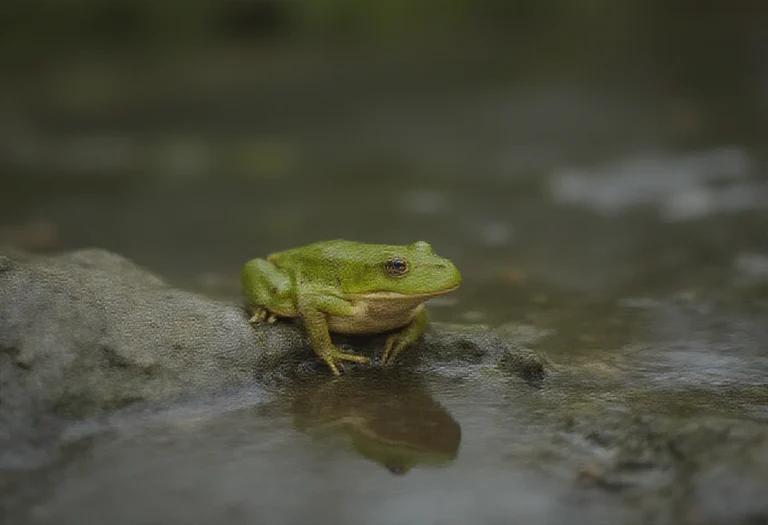
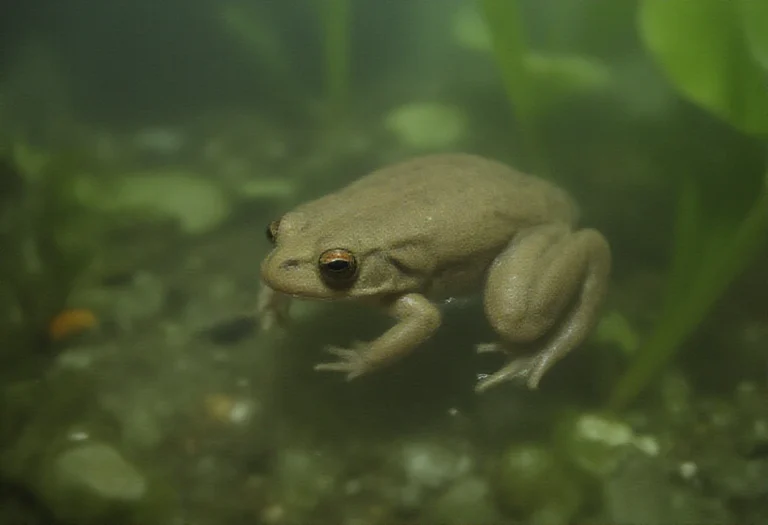
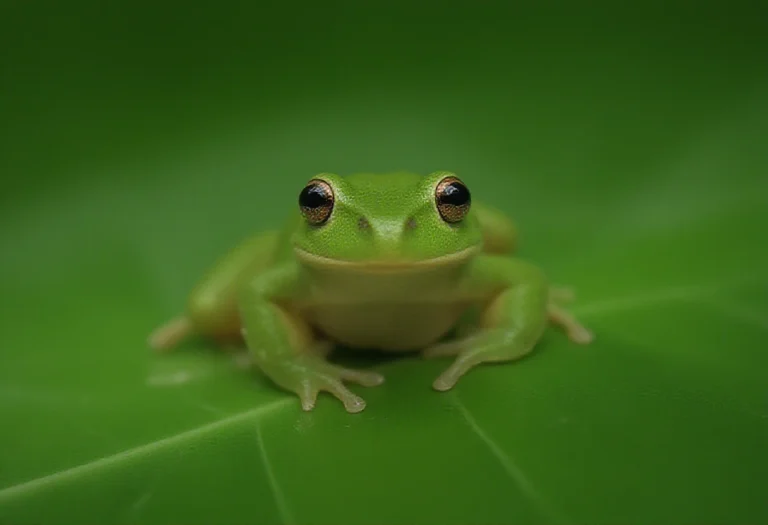
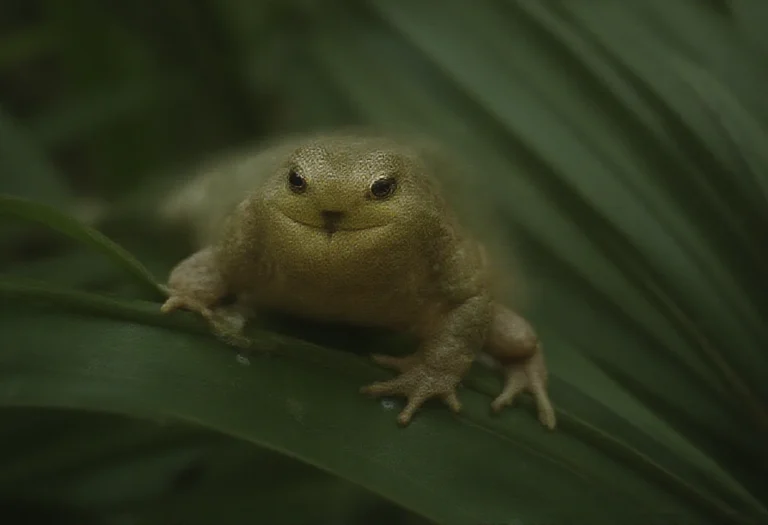
How this was made: prepared with AI assistance and checked against the sources listed at the end. Images are AI-generated illustrations, not photographs of real animals or products.
Key Takeaways
- Release is usually best. Check your state wildlife agency before keeping any wild frog.
- Offer small live insects that suit the frog. Do not feed human food.
- Adults eat about two to three times a week; juveniles every two to three days (PetMD).
- Use dechlorinated water and remove uneaten insects.
- Wash hands with soap after any contact. Children under 5 should not handle amphibians.
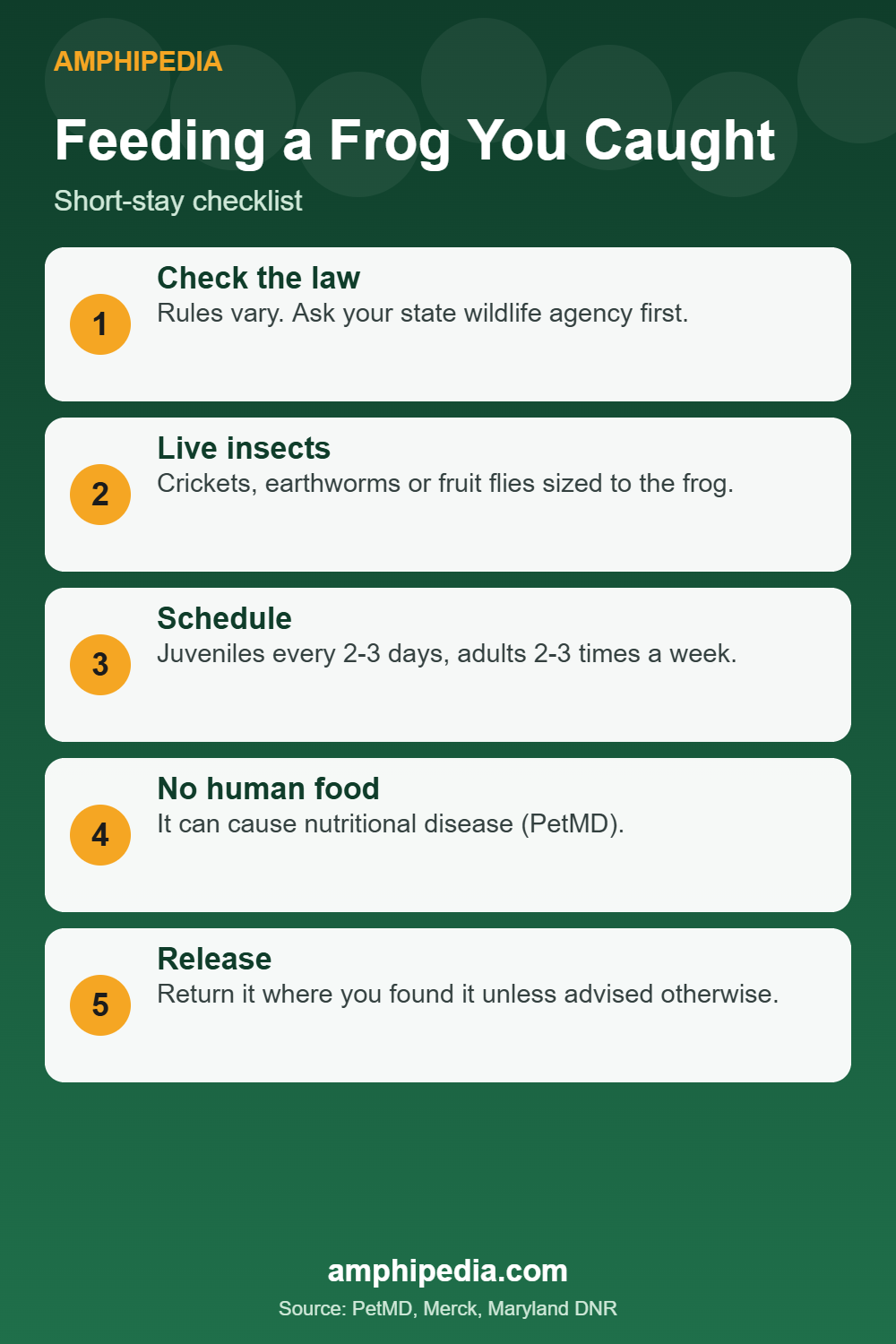
Pin this infographicShare on Facebook
Step 1: Decide whether to keep it
Frogs differ widely in their needs. PetMD notes that care varies across more than 7,500 species, so a frog you cannot name is a frog you cannot feed with confidence.
Wild frogs may also carry disease. The Maryland Department of Natural Resources warns that chytrid fungus has caused major amphibian declines and ranavirus has killed wood frog larvae and salamanders. A caught frog that sits in a tank with other pets can pass disease along.
For these reasons, most wildlife guidance favours leaving frogs outdoors. If you keep one, treat it as a short visit.
Step 2: Check your local rules
Rules vary by state and by species. Some places limit how many animals you may collect, and some protect certain species. Check with your state wildlife agency before you keep any wild frog.
As one example, the Maryland DNR says a person may collect and keep up to 25 tadpoles of one species at a time. Another state may differ.
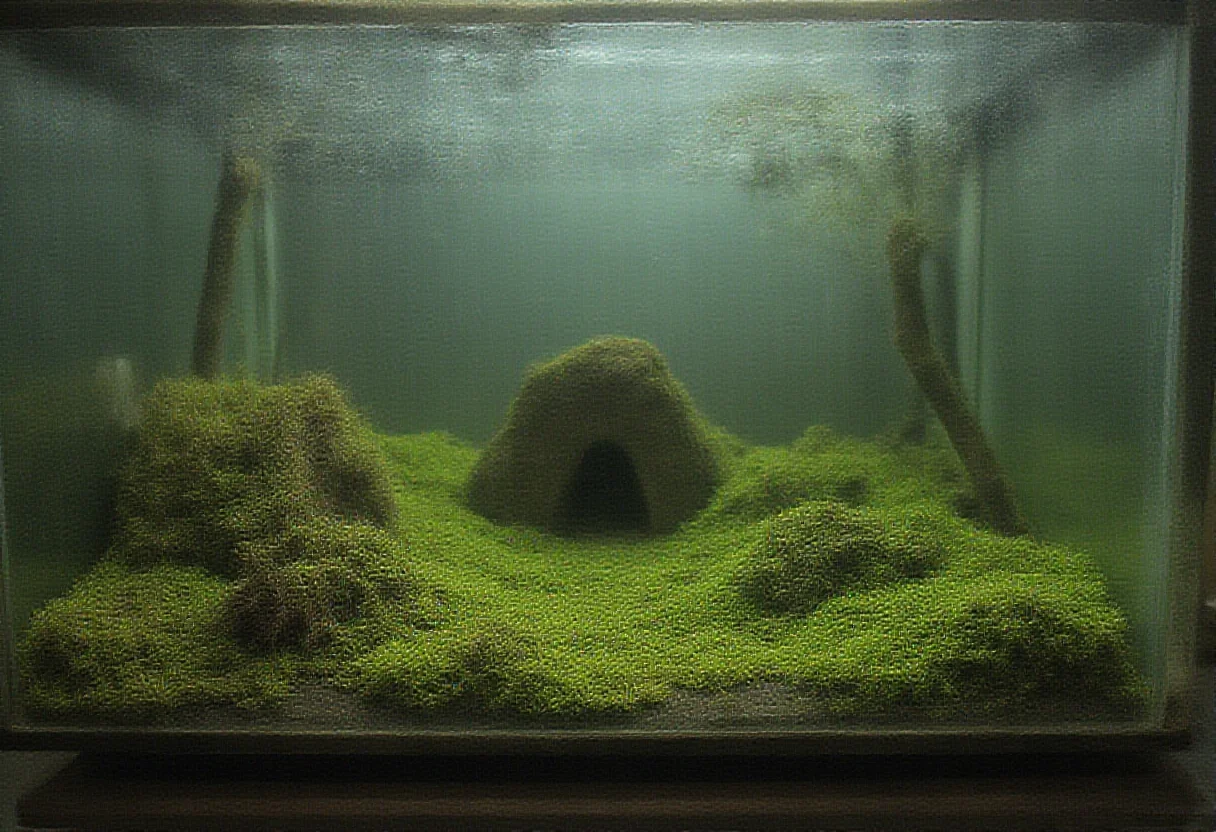
Step 3: Set up a simple, short-stay container
Use a clean, escape-proof container with air holes. PetMD suggests substrates such as paper towels, topsoil, coconut husk or sphagnum moss, and advises avoiding gravel and rocks that a frog can swallow.
Add a hide and a shallow water dish. PetMD says to use dechlorinated water. The Merck Veterinary Manual adds that water should be free of chlorine, ammonia, nitrite, pesticides and heavy metals, and that distilled water should not be used.
Skip the heat lamp. PetMD notes that most frogs do not need one and can overheat easily.
Step 4: Choose the right food
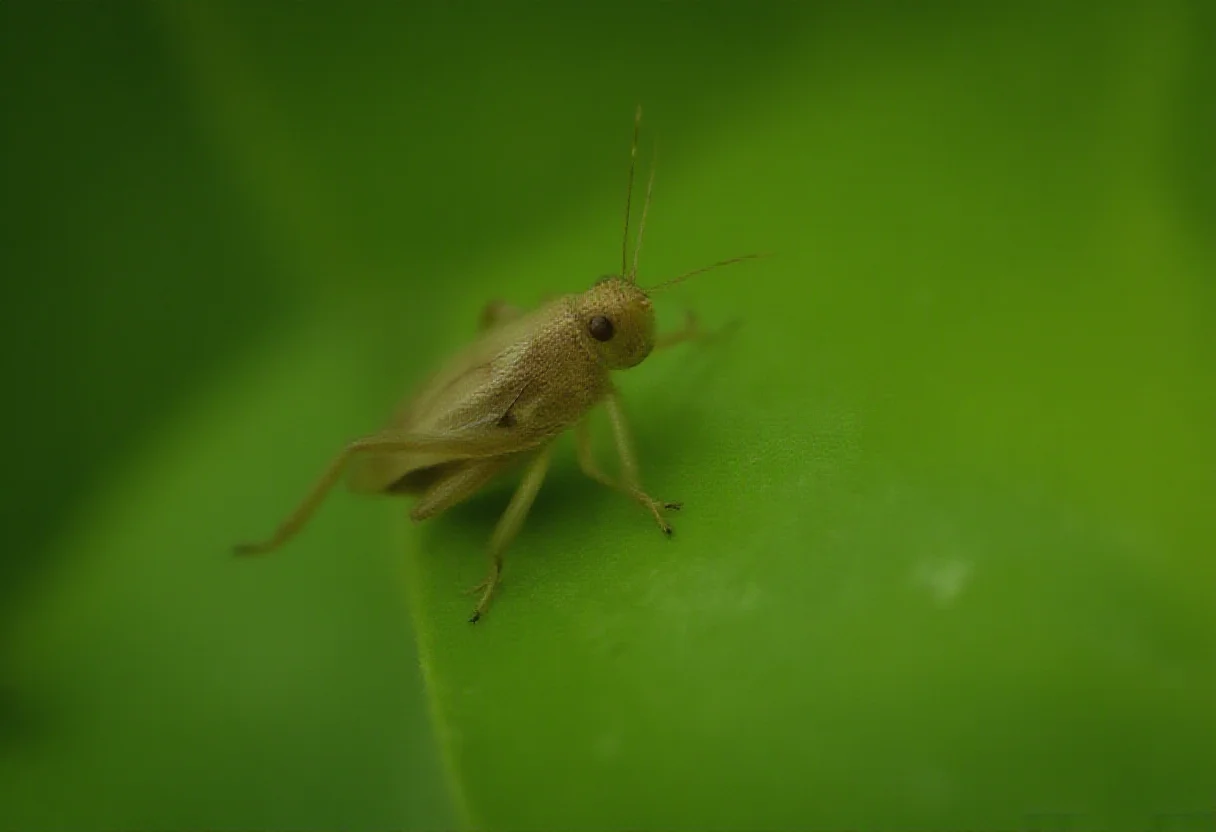
Frogs are insectivores. PetMD lists crickets, dubia roaches, black soldier fly larvae, earthworms and redworms, and fruit flies for small species.
Match the prey to the frog. PetMD says fruit flies are too small for a White’s tree frog, and even the biggest dart frogs cannot handle a frozen mouse. A tiny frog needs tiny prey.
- Crickets, gut-loaded with a high-calcium diet
- Earthworms or redworms for larger frogs
- Black soldier fly larvae, which are higher in calcium than most insects
- Fruit flies for very small frogs
Step 5: Feed on a simple schedule
PetMD says juvenile frogs eat every two to three days, and adults two to three times a week. Remove uneaten prey, because live insects can injure frogs.
The Merck Veterinary Manual says food and water should be replaced daily and uneaten food and waste removed.
If you cannot tell whether your frog is a juvenile or an adult, ask a local wildlife rehabilitator or an exotics vet.
Gut-loading, dusting and water
Captive-raised insects often lack calcium and vitamins. PetMD says to feed insects a nutrient-rich, calcium-containing diet for 6 to 72 hours before offering them. Right before feeding, shake them in a bag or cup with calcium or multivitamin powder and offer them promptly.
Water matters as much as food. PetMD advises a water bowl or misting, and cleaning water bowls daily. VCA Animal Hospitals says food and water bowls should be cleaned daily with soap and water.
Do not use a bowl from the kitchen. Keep a dedicated set of dishes and tools for the frog.
What not to feed a caught frog
PetMD is clear: frogs should not eat any human food, because it can lead to nutritional disease. That rules out meat scraps, bread and pet food.
PetMD also advises limiting wild insects to reduce disease transmission. Mealworms and superworms have a high chitin content and can cause constipation if fed heavily. Waxworms are treats only because of their fat content.
If the frog will not eat
A stressed wild frog may refuse food for days. Temperature can matter too. The Merck Veterinary Manual says amphibians outside their preferred range may not absorb nutrients properly.
PetMD lists warning signs: lack of appetite, red skin, inability to jump and cloacal prolapse. If you see them, contact a vet with amphibian experience. The Association of Reptile and Amphibian Veterinarians keeps a directory at arav.org.
Keep a log of what the frog eats and when. Notes on appetite and behaviour help a vet or wildlife rehabilitator if you need to call.
Watch for escape attempts and signs of stress, such as constant jumping against the walls. These tell you the stay should end soon.
What about caught tadpoles?
Tadpoles eat differently from frogs. Animal Diversity Web says bullfrog tadpoles mostly graze on aquatic plants and algae, and wood frog tadpoles eat algae, decaying matter and sometimes eggs or larvae of other amphibians.
The Maryland DNR suggests collecting tadpoles from local sources, noting where you found them, and releasing them at the same site after metamorphosis. For dart frog tadpoles, see our guide to dart frog tadpole food.
Do and do not
This table sums up the safe approach.
| Do | Do not |
|---|---|
| Check state rules first | Keep a protected species |
| Use dechlorinated water | Use tap water straight from the faucet |
| Offer small live insects | Feed human food |
| Remove uneaten prey | Leave live insects with the frog |
| Wash hands and equipment | Clean the container in a kitchen sink |
How to release it well
Return the frog to the place where you found it. Releasing an animal that was housed with other pets can spread disease, which is why the Maryland DNR says to keep captive animals separate from other amphibians and to confirm they are healthy before release.
Virginia’s Department of Wildlife Resources says releasing animals from your home into the outdoors is unlawful in that state and that released frogs can bring disease. Rules differ, so ask your local agency, especially if the frog has been indoors for a long time.
The Maryland DNR recommends soaking nets and aquaria in a 10% bleach solution for at least 10 minutes, then rinsing with clean water, to prevent disease spread.
Common mistakes
Most problems come from good intentions.
- Feeding table scraps because the frog looks hungry
- Offering prey that is too large
- Using tap water without dechlorinating it
- Keeping the frog with other pets
- Releasing a long-term captive frog far from where it was found
First, work out what you caught
Identification changes everything, from diet to the rules that apply. The University of Florida IFAS Extension sorts frogs by habit. Ground-dwelling frogs and toads usually have dry, bumpy skin. Climbing frogs have enlarged, sticky toe pads. Water-dwelling frogs have webbing between their toes.
Those clues narrow the group but do not name the species. The same extension article stresses confirming an identification before you act, so you do not harm a similar-looking native animal. Take a clear photo and send it to your local extension office or state wildlife agency.
Invasive species are a special case. The Florida article describes the Cuban treefrog and the cane toad as invasive species in Florida. If your frog might be one of them, ask the agency what to do. Do not simply release it.
Why a wild frog may seem to ignore its food
Many frogs hunt by waiting. Animal Diversity Web describes the American bullfrog as a sit-and-wait predator. It stays still for long periods, then strikes with a quick flick of the tongue when prey comes near.
A frog that sits motionless in a container is therefore not always refusing food. It may simply be waiting, or too stressed to hunt. Offer a few small, live, moving insects, keep the room quiet, and remove any that are left over.
Adult bullfrogs eat a very wide range of animals, including worms, insects, crustaceans, other frogs and tadpoles, and they are cannibalistic. That is one more reason never to put a caught frog in with other amphibians, even briefly.
Do you need to move it at all?
Often the best answer is no. The UK charity Froglife advises that unless an animal is in danger, you do not need to move it or do anything for it. That advice is from Britain, but the reasoning applies anywhere: a frog in a safe spot is already home.
- Safe where it is: leave it alone and give it space.
- In danger, for example on a road or in a work area: move it a short distance to cover such as dense plants or a compost heap, as Froglife suggests.
- Away from its habitat for a long time: call your state wildlife agency before releasing it anywhere.
- Never move frogs, toads or spawn from one pond to another. Froglife warns this can spread disease and invasive plants.
A sensible plan for the first day
- Photograph the frog and note exactly where you found it, so it can go back to the same spot.
- Put it in the short-stay container described above, with a hide and clean, dechlorinated water.
- Identify it with the help of your extension office or wildlife agency.
- Offer a small amount of suitably sized live prey once, then leave the frog undisturbed.
- Release it promptly where it was found, unless an agency tells you otherwise.
This plan treats the stay as hours, not weeks. The longer a wild frog is held, the greater the stress and the disease risk described earlier on this page.
Frequently Asked Questions
What do I feed a frog I caught?
Small live insects that fit the frog, such as crickets, earthworms or fruit flies. Do not feed human food.
How often should I feed a wild frog?
PetMD says juveniles eat every two to three days and adults two to three times a week.
Can I keep a wild frog as a pet?
It depends on local law and the species. Many agencies favour leaving frogs in the wild. Check with your state wildlife agency.
Can I use tap water?
PetMD says to use dechlorinated water. Merck adds that distilled water is not recommended.
Should I release it?
Usually yes, at the place you found it. Ask your local agency if the frog has been with other pets.
What if it will not eat?
Stress and temperature can both cause this. Contact an exotics vet if it persists or you see red skin or weakness.
Is it safe to handle a wild frog?
Frogs can carry Salmonella. Handle as little as possible, wash your hands and keep children under 5 away.
Bottom Line
The kindest feeding plan for a caught frog is a short stay and a prompt return to the pond.
If you want a pet frog, buy a captive-bred one and learn its needs first. Start with homemade frog food: what is safe and what frogs eat in the wild.
Sources
- PetMD: What Do Frogs Eat?, accessed 31 October 2026
- PetMD: Frog Care 101, accessed 31 October 2026
- Maryland DNR: Frogs and tadpoles from catalogues, pet stores and online, accessed 31 October 2026
- Virginia DWR: Frog Friday, are you habitat aware?, accessed 31 October 2026
- Merck Veterinary Manual: Housing for Amphibians, accessed 31 October 2026
- Animal Diversity Web: Lithobates sylvaticus (wood frog), accessed 31 October 2026
- CDC: Reptiles and Amphibians, accessed 31 October 2026
- VCA Animal Hospitals: Frogs as Pets, accessed 31 October 2026
- University of Florida IFAS Extension: What Kind of Frog Is This?, accessed 12 November 2026
- Animal Diversity Web: Lithobates catesbeianus (American bullfrog), accessed 12 November 2026
- Froglife: I found a frog or toad, what shall I do?, accessed 12 November 2026