Best Amphibian Tank Divider With Vent Holes: What to Check
This post contains affiliate links. As an Amazon Associate I earn from qualifying purchases. Prices and availability are shown by Amazon and can change.
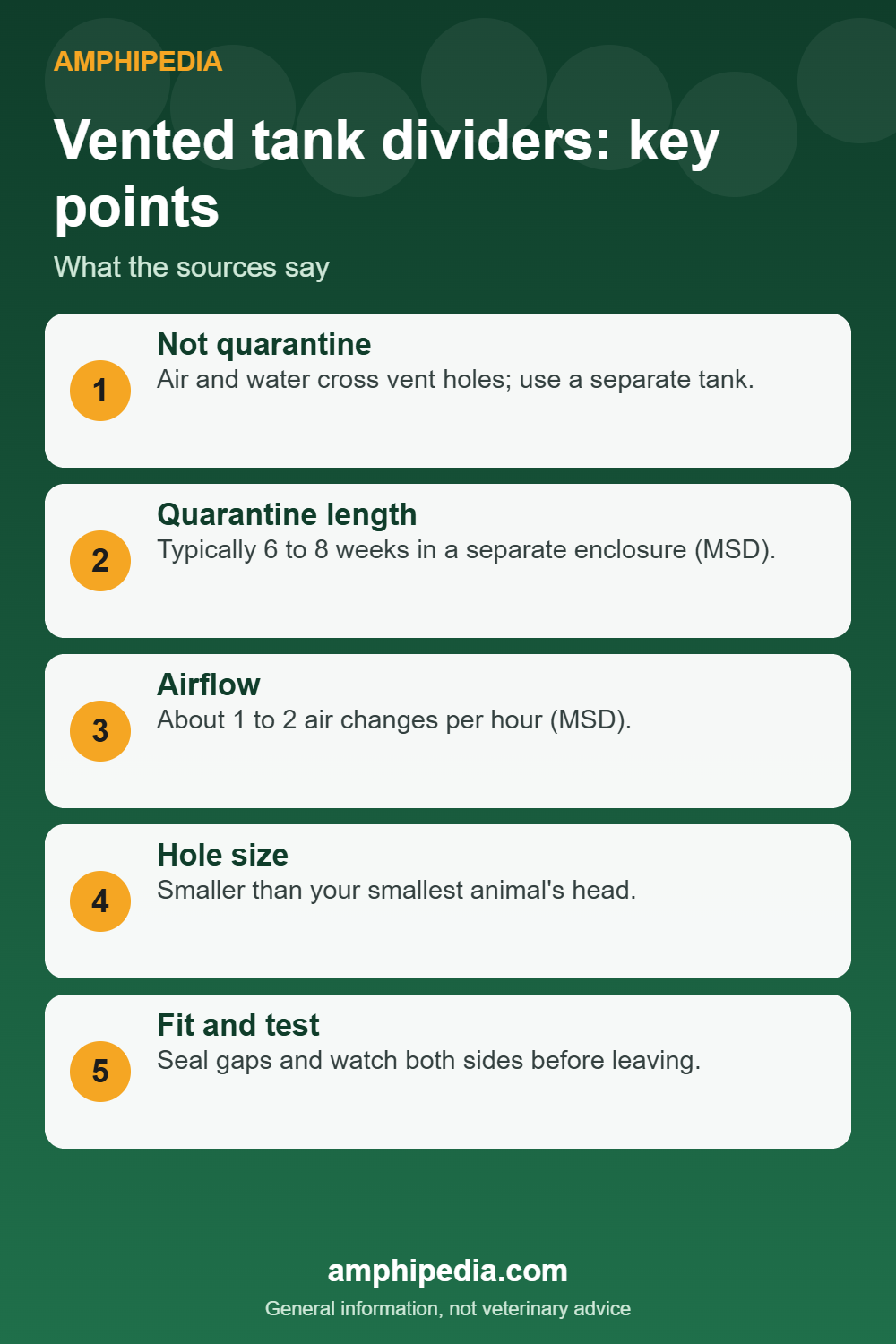
A vented tank divider splits one enclosure into two spaces while letting air pass, but it does not isolate animals. Air and any shared water still move through the holes, so it is not quarantine. The MSD Veterinary Manual recommends 1 to 2 air changes per hour and 6 to 8 weeks of quarantine in a separate, easy-to-clean enclosure. Check hole size, edges and fit before use.
Dividers are tempting when you have one tank and two animals, or a tank you want to split into zones. A solid wall is simple. A wall with vent holes adds airflow, but it also adds risks.
This guide explains what a vented divider can and cannot do, what to check before buying, and when to use a separate tank instead. For the screen type, see our divider screen guide.
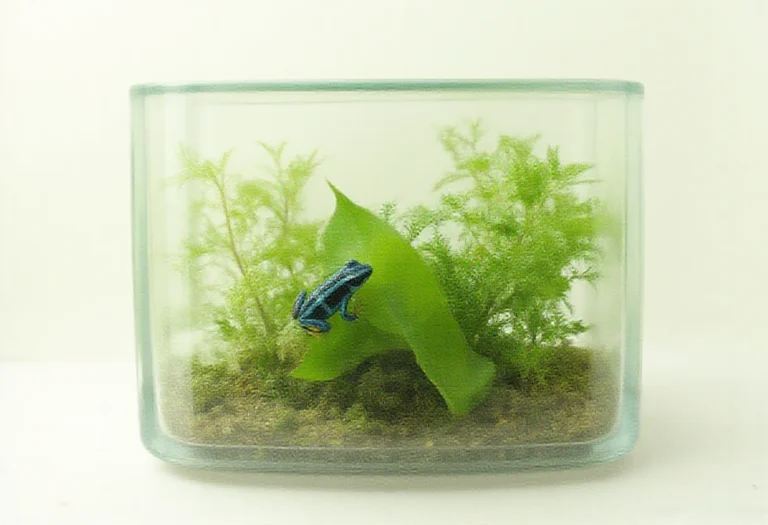
How this was made: prepared with AI assistance and checked against the sources listed at the end. Images are AI-generated illustrations, not photographs of real animals or products.
Key Takeaways
- A vented divider shares air, and often water, between sides, so it is not quarantine.
- The MSD Veterinary Manual describes quarantine as 6 to 8 weeks in a separate, easy-to-clean enclosure with moist paper towel.
- Enclosures need about 1 to 2 air changes per hour (MSD).
- Check that no animal can fit through, or catch a limb in, a hole.
- Seal gaps at the edges and test the fit before animals go in.
Pin this infographicShare on Facebook
Tank dividers to compare
These listings are tank dividers and partitions. Check the hole size against your smallest animal, the fit for your tank and the edges before you buy.


Product titles, prices and ratings are provided by Amazon and are accurate only at the time they are displayed.
What a vented divider does
A divider splits space. A solid panel stops contact. Vent holes let air, and in a water tank, water, move between sides. That helps ventilation, but it also lets scent, waste and germs spread.
The MSD Veterinary Manual says enclosures need good ventilation, about 1 to 2 air changes per hour, to prevent disease. Vent holes can help a sealed split space meet that need.
Why a divider is not quarantine
The manual describes quarantine as typically 6 to 8 weeks, based on risk. Enclosures should be easy to clean, use moist paper towel as substrate for most species, and have separate cleaning tools.
Sharing a tank with a vented divider breaks those rules. For a new or sick animal, use a separate container. See our quarantine tank guide and isolation box guide.
When a divider can make sense
Sources I opened do not rate dividers, so treat these as practical uses, not recommendations.
- Creating visual barriers inside a tank. Lafeber suggests visual barriers for dart frogs.
- Splitting a large tank into two zones of the same species and health status.
- Separating a feeding area from a resting area.
- Keeping plants or equipment away from an animal.
- Short-term separation while you set up a proper second tank.
What to check before buying
A divider has to fit the tank and the animal. Measure first, then check the details.
- Hole diameter is smaller than the head of your smallest animal, including juveniles.
- Edges are smooth, with no burrs that could scratch moist skin.
- The material is plain acrylic, glass or mesh, with no coating.
- The panel fits the tank width and height with no gaps.
- The panel is rigid enough that an animal cannot push it over.
- Holes are not so large that insects or tank-mates can cross.
- You can remove and clean it easily.
How to fit a divider
Fit the divider before you add the animals, and test it empty.
- Measure the inside length, width and height of the tank.
- Dry-fit the divider and look for gaps at the glass and lid.
- Seal gaps with aquarium-safe silicone and let it cure fully before adding animals.
- Add substrate and decor to both sides, keeping branches away from the top of the panel.
- Watch both sides for a few hours before leaving animals unattended.
Watch for escapes and injuries
Amphibians climb, squeeze and push. The MSD Veterinary Manual advises secure, ventilated tops for aquariums. Keep decor below the top of the divider so frogs cannot use it as a ladder.
Check holes for stuck limbs and skin damage. If an animal is injured, see an exotics vet.
If one animal gets sick
Move the sick animal to a separate enclosure, not the other side of a divider. The MSD Veterinary Manual says quarantine enclosures should use moist paper towel, minimise disturbance and have separate cleaning tools.
It also suggests considering a change of clothes between quarantined and collection animals, and regular veterinary visits, including an entrance and exit examination. Disinfect any divider that was in the shared tank before reuse.
Common mistakes
Divider problems are mostly about trust in the barrier.
- Treating a vented divider as quarantine.
- Choosing holes that are too large.
- Leaving gaps at the base.
- Placing climbing decor near the top.
- Mixing animals that differ in species or health.
- Skipping the daily check.
Divider or second tank: how to decide
The choice comes down to what the divider is supposed to do. If the goal is a visual break or a feeding zone for animals that are already housed together, a divider can work. If the goal is protection from disease, it cannot.
- Use a divider to break sight lines, create two zones for animals of the same species and health status, or keep decor and equipment apart.
- Use a second tank for any new arrival, any animal that looks unwell, and any pair that cannot share water or air.
- Use a second tank when you want to track one animal’s droppings, appetite or shedding without the other side interfering.
If you are unsure which group your situation falls into, treat it as the second group. A spare plastic tub with moist paper towel costs little and matches the quarantine setup the MSD Veterinary Manual describes.
Airflow, humidity and dead zones
Vent holes are there for air, but a panel in the middle of a tank still changes how air and moisture move. The MSD Veterinary Manual says amphibians need moisture to prevent desiccation and that enclosures need 1 to 2 fresh air changes per hour.
Those two needs pull against each other. Too little airflow lets stale, wet air sit in one corner. Too much airflow dries the substrate. A divider can leave one side wetter and the other drier than you planned.
- Check substrate moisture on both sides, not just the side you spray most.
- Keep a shallow water dish on each side for terrestrial species, as the manual suggests.
- Look for condensation or mould on the divider itself. Heavy build-up on one face points to poor airflow on that side.
- If you add a heat source, remember a solid panel can block the gradient. The manual says a thermal gradient within a species’ preferred range lets most amphibians regulate their own temperature.
Salamanders and newts usually prefer cooler temperatures than frogs and toads, according to the manual, so a divider is a poor way to house different groups side by side.
Cleaning and disinfecting a divider
A divider has seams, holes and edges where grime collects. Clean it on a schedule instead of waiting for visible dirt.
- Take the divider out of the tank and move the animals to a safe, covered holding container first.
- Scrub off waste and film with a brush that you use only for amphibian gear.
- Disinfect. The MSD Veterinary Manual gives household bleach at 30 mL per litre of water for tools and housing materials, with at least 30 minutes of contact time.
- Rinse well with fresh water and let the panel dry fully before it goes back.
- Wash your hands with soap and running water when you finish.
The same manual says humidifiers and spray bottles should be disinfected weekly, so add the misting equipment to the same cleaning day. The manual says to rinse tools with fresh water and preferably dry them, so do not skip that step.
Where to clean it safely
CDC advises cleaning tanks and equipment outside the home when possible, away from gardens and from anything used for food or drinking water. If you must clean indoors, use a laundry sink or bathtub, then clean and disinfect that area afterward. Never use a kitchen or food preparation area.
CDC also says to pour tank water and other wastewater from amphibian habitats down the toilet, not into sinks or drains. Do not reuse a habitat after a pet becomes sick or dies until it has been properly cleaned and disinfected.
A simple routine for a divided tank
A short routine catches most problems before they become emergencies. Adjust the timing to your species and your setup.
- Daily: check that the divider has not shifted, that no gaps have opened and that no animal is stuck or trying to climb. Spot-check temperature, as the MSD Veterinary Manual advises.
- Weekly: disinfect misting bottles or humidifiers, remove waste, and wipe the divider if film has built up.
- Monthly: remove the divider for a full clean and dry, and inspect holes and edges for cracks or rough spots.
- Any time an animal looks unwell: separate it into its own container and contact an exotics vet.
Note the date of each deep clean somewhere you will see it. Divided tanks tend to be forgotten because they look tidy from the front.
Hygiene for the household
Amphibians can carry Salmonella without looking sick. CDC says children younger than 5 years old should not handle or touch reptiles or amphibians or their environments, and that reptiles and amphibians aren’t recommended for households with young children, people with weakened immune systems, or adults 65 and older.
Wash with soap and running water after touching the tank, the divider, decor or tank water. If soap and water are not available, CDC suggests a hand sanitizer with at least 60% alcohol, and young children should be supervised so they do not swallow it.
Frequently Asked Questions
Can I quarantine in a divided tank?
No. The MSD Veterinary Manual describes quarantine in a separate enclosure, with separate tools.
Do vent holes matter?
Ventilation of 1 to 2 air changes per hour is recommended (MSD). A solid divider can reduce airflow in a closed tank.
What size holes are safe?
No source gives a size. Choose holes smaller than your smallest animal’s head.
Can I divide a tank for two species?
The sources I opened do not cover this. Ask an exotics vet before housing different species together.
What material is best?
Plain acrylic, glass or mesh with no coating. Avoid anything with a treatment or sharp edges.
Can I use a fish divider?
Only if the holes are small enough, the edges are smooth and the material is plain. Check before you use it.
Bottom Line
A vented divider is a useful way to split space, but it is not a barrier against disease. Match hole size to your smallest animal and fit it carefully.
Use a separate tank for any new or sick animal. If you are unsure, an exotics vet can help. The ARAV directory lists them.
Sources
- MSD Veterinary Manual: Environment and Husbandry for Amphibians, used for ventilation, quarantine, enclosure design, disinfection and humidity
- MSD Veterinary Manual: Housing for Amphibians (pet owner version), used for ventilation and aquarium lids
- Lafeber Veterinary: Basic Information Sheet, Poison Dart Frog, used for visual barriers in dart frog terrariums
- CDC: Reptiles and Amphibians, used for Salmonella, cleaning location, tank water disposal and hygiene

2 Comments