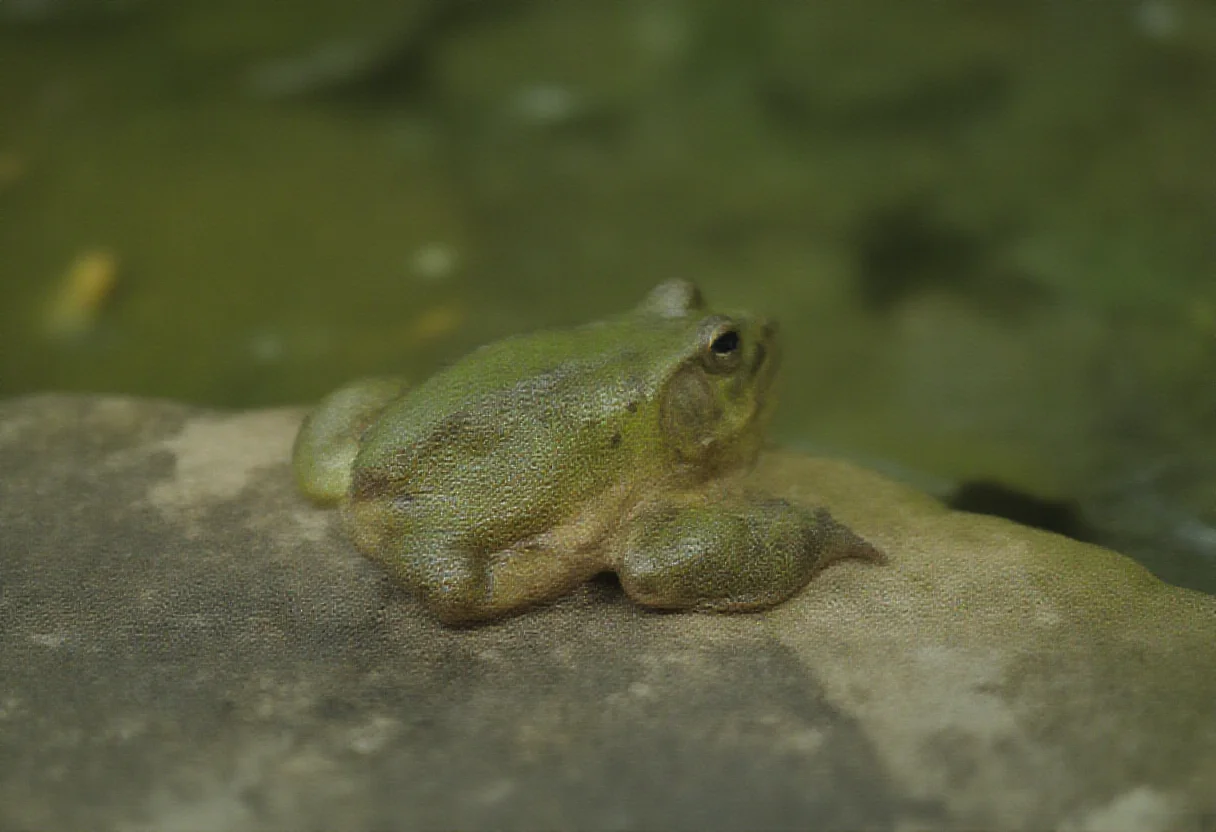
Best Outdoor Frog Pond Net Cover: Safer Ways to Cover a Pond
This post contains affiliate links. As an Amazon Associate I earn from qualifying purchases. Prices and availability are shown by Amazon and can change.
The best frog pond cover is often a rigid one, not loose netting. The Amphibian and Reptile Conservation Trust says fine, loosely fixed plastic netting is the most problematic type because frogs, toads and snakes can get caught. It suggests a rigid grille or grating, or wide-meshed, braided or cord netting. Froglife also advises avoiding pond netting and removing leaves by hand.
Many pond owners reach for a net to stop leaves and predators. For a frog pond, that instinct can backfire. Wildlife charities warn that netting can kill the animals you want to protect.
This guide explains the risks, when a cover is worth using and what to look for if you choose one.
How this was made: prepared with AI assistance and checked against the sources listed at the end. Images are AI-generated illustrations, not photographs of real animals or products.
Key Takeaways
- Loose, fine plastic netting is the highest-risk type for frogs, toads and snakes.
- Rigid grilles or gratings are the safer cover, per the Amphibian and Reptile Conservation Trust.
- Froglife advises netting out leaves by hand instead of covering a wildlife pond.
- Take autumn netting down once leaf fall ends and store it indoors.
- Always leave a sloping edge so frogs can get in and out.
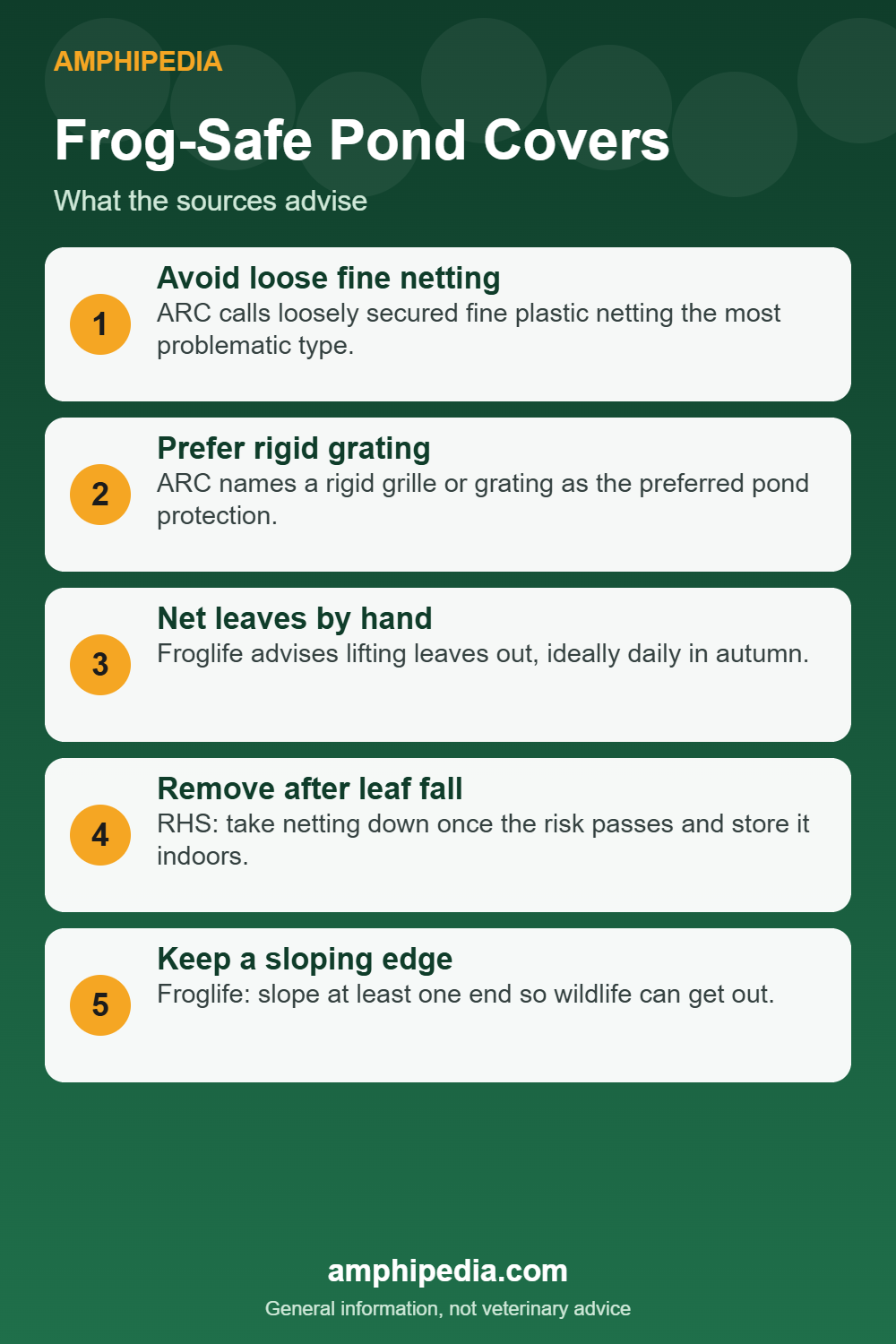
Pin this infographicShare on Facebook
Pond covers to compare
These pond covers match the search terms. Check the mesh opening and how the cover is fixed. A rigid grating avoids the tangling risk of loose, fine netting.


Product titles, prices and ratings are provided by Amazon and are accurate only at the time they are displayed.
Why netting is risky for frogs
The Amphibian and Reptile Conservation Trust (ARC) says garden netting can be fatal to amphibians and reptiles. Frogs and toads can get caught, and grass snakes are especially at risk.
ARC singles out loosely secured plastic netting with very fine strands. Its advice is to avoid netting where possible.
Froglife agrees. Its pond guide says to avoid pond netting because animals such as grass snakes and hedgehogs can become trapped and die.
Do you need a cover at all?
Think about the problem first. Leaves, herons, cats and raccoons call for different answers.
For leaves, Froglife suggests lifting them out by hand, ideally daily in autumn, or cutting back overhanging trees. The Royal Horticultural Society says to remove netting placed over a pond to stop leaves once the risk has passed.
For predators, evidence on the best frog-safe cover is thin. Cover choice also depends on which animals visit your area, so ask a local wildlife agency or pond society.
Safer cover options
ARC names rigid grille or grating as the preferred pond protection. It also lists wide-meshed, braided or cord-type netting as other options.
A rigid panel does not tangle. It can also stop leaves and large animals without a loose strand to catch a toe or a neck.
- Rigid grille or grating that sits above the water.
- Wide-meshed, braided or cord netting if you must use a net.
- Partial cover, so part of the pond stays open for entry and exit.
- Marginal plants and floating leaves that give shelter without a barrier.
What to check before you buy
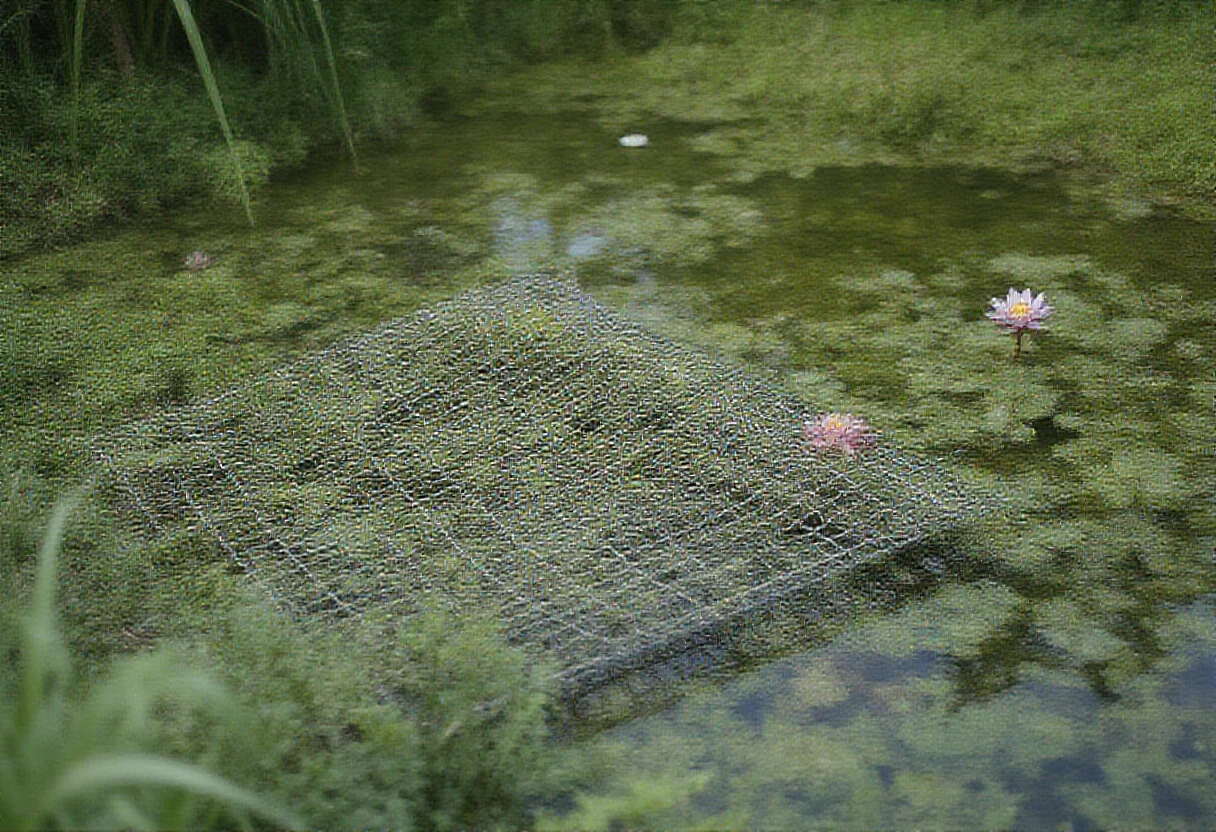
Read the product description for the mesh opening and the material. Avoid thin, fine strands.
Check that the cover can be fixed tight with no slack edge. ARC highlights loosely secured netting as the worst case.
Make sure the cover will not block the sloping edge. Froglife says at least one end of the pond should slope so wildlife can get in and out.
Look at the materials. Rigid covers should have smooth edges and no gaps where a limb could catch. This is a general safety check, not advice from the sources below.
How to use a cover safely
Fit the cover firmly. Any gap at the edge can become a trap.
Check the pond daily when a net is in place. Look along the edges and underneath for tangled animals.
Remove netting as soon as leaf fall ends. The RHS advises storing it indoors, since netting left by the pond edge is a risk. ARC adds that netting left on the ground attracts snakes as hiding places.
Pond basics that matter more than the cover
A good frog pond depends on its shape. Froglife recommends a section at least 60 cm deep to protect animals from winter extremes, plus a sloping edge and shallow shelves.
Skip fish. Froglife says the best wildlife ponds have no fish, because fish can eat other wildlife. Use treated tap water and add large volumes gradually.
Common mistakes
These errors cause most netting accidents.
- Leaving slack netting over the pond for weeks.
- Storing a rolled net on the ground near the pond.
- Covering the whole surface and blocking the exit slope.
- Using fine mesh because it looks tidy.
- Never checking underneath the net.
Where to put the pond so leaves are less of a problem
Most netting is bought to stop autumn leaves. Siting the pond well can remove the need. Froglife’s guide Just Add Water advises plenty of sun, especially in early spring. Partial shade is fine, but it says to avoid sites under big trees, where leaves can clog the pond.
Size matters too. Froglife says amphibians prefer ponds over 1 to 2 m in diameter, though smaller ponds still help other wildlife. Note that Froglife and ARC are UK charities. Species differ elsewhere, so check local advice for your region.
If you are building or relining, Froglife also advises removing sharp stones and laying sand, geotextile or old carpet under the liner to prevent punctures. It suggests leaving a 30 cm border of liner, digging a trench for its edge and checking the pond is level with a spirit level. A level, well-edged pond leaves no awkward gaps where a cover or net could sag.
A seasonal calendar for pond jobs and covers
Timing decides whether a cover helps or harms. This calendar combines Froglife and RHS advice.
- Spring: remove any leaf netting (RHS). Lift duckweed off the surface and pull blanketweed out with a cane, then leave it beside the pond for a day or two so animals can crawl back (Froglife). RHS gives 48 hours for cut marginal plants.
- Summer: keep paving near the pond damp with a towel, logs or plants so emerging amphibians do not dry out. Walk the lawn before mowing or strimming (Froglife).
- Autumn: Froglife calls this the best time to clear a pond, because the fewest species are affected. It advises removing leaves daily with a hand net instead of using pond netting.
- Winter: clear snow from the ice so light reaches plants. Melt a hole with a pan of hot water, or float a ball overnight and remove it once the pond freezes. Never use salt, antifreeze or chemicals, and do not smash the ice (Froglife).
Plants as shelter instead of a cover
Froglife says dense planting at one end of the pond gives tadpoles and frogs cover from predators. It recommends native plants only and names floating pennywort, parrot’s feather and New Zealand pygmyweed as non-native species to avoid.
Its examples include common water-crowfoot and curled pondweed for deeper oxygenating plants, and marsh-marigold, brooklime and water forget-me-not at the margins. Plant in baskets or hessian, in soil free of pesticides and fertiliser.
Planting is not a guarantee against herons or cats. The sources here do not test it against any particular predator, so treat it as a way to add hiding places, not as proof of protection.
If children visit the garden
A cover can double as a safety measure, but only if it is rigid. Froglife says a pond grille that supports a child’s weight and sits above the water is one option. Loose netting offers no such protection and adds a tangling hazard.
Its other option is a fence at least 1.1 m high, with railings no more than 100 mm apart and a small gap at the bottom for animals. Gently sloping sides help both wildlife and anyone who falls in. Check local rules for your area, because the sources do not cover them.
Clearing a pond without harming its residents
Froglife describes a gentle routine for a heavily silted pond. Clear it in autumn. Bucket out water until only a thin layer remains, keep the top silt layer because it holds eggs and larvae, and return it when refilling.
- Move any frogs you find to a covered spot nearby, such as under a bush or log pile.
- Clean out a pond about every three years. If you remove leaves regularly, every five to ten years may be enough.
- Skip filters and pumps. Froglife says their suction can kill plankton that wildlife relies on.
- Treat tap water to remove chloramines, which are harmful to amphibians, and add large volumes gradually.
- Do not move frogspawn between ponds. RHS says this can spread amphibian diseases or invasive pond weeds, and Froglife advises against donating or collecting spawn.
Regular leaf removal and sensible siting often do more for water quality than any cover, and neither can trap an animal.
Frequently Asked Questions
Is pond netting safe for frogs?
Not always. ARC says loosely secured fine plastic netting is the most problematic type, and frogs and toads can get caught.
What is the safest pond cover?
ARC names a rigid grille or grating as the preferred option, with wide-meshed, braided or cord netting as alternatives.
How do I keep leaves out without netting?
Froglife suggests netting leaves out by hand, ideally daily in autumn, or cutting back overhanging trees.
When should I remove pond netting?
The RHS advises removing it once the leaf-fall risk has passed and storing it indoors.
Should a frog pond have fish?
Froglife says the best wildlife ponds generally have no fish.
Will a cover stop herons or raccoons?
Evidence for frog-safe predator protection is thin in the sources used here. Ask a local wildlife agency about your area.
Bottom Line
A pond cover is a trade-off. It can protect the water, but the wrong one can trap the animals it is meant to help.
Choose rigid or wide-meshed options, fit them firmly and check them often. Remove them when the job is done.
Sources
- Amphibian and Reptile Conservation Trust: Risks of garden netting, accessed 12 November 2026. Used for: netting hazards for amphibians, reptiles and other wildlife, and safer alternatives.
- Monthly gardening tips & advice – March – ponds, RHS, accessed 12 November 2026. Used for: advice on removing pond netting, clearing debris and not moving spawn.
- Froglife: Just Add Water (7th edition), accessed 12 November 2026. Used for: wildlife pond guide from the UK amphibian charity; siting, planting, seasonal care, clearing, child safety.
- CDC MMWR: Reptile-Associated Salmonellosis, Selected States, 1998-2002. Used for: Salmonella risk from reptiles and amphibians.

5 Comments