Best Mesh Cover for an Outdoor Frog Pond: Safe Choices
This post contains affiliate links. As an Amazon Associate I earn from qualifying purchases. Prices and availability are shown by Amazon and can change.
The safest cover for an outdoor frog pond is a rigid grille or grating, or a wide-meshed, braided or cord-type net fitted tight and clear of the water. The Amphibian and Reptile Conservation Trust warns that loosely secured plastic netting with very fine strands is the most problematic, and that frogs, toads, birds and hedgehogs can all get caught. If you use netting, keep it taut and take it down when you do not need it.
A pond cover keeps leaves out and herons away, but it can also trap the animals you want to protect. Frogs and toads climb, jump and squeeze, and fine netting can wrap around their limbs.
This guide explains the risks, the safer cover types and how to fit one. It replaces an older version that described nets as simply protective. For a related list, see our outdoor frog pond net cover guide.
How this was made: prepared with AI assistance and checked against the sources listed at the end. Images are AI-generated illustrations, not photographs of real animals or products.
Key Takeaways
- Loose, fine plastic netting is the biggest entanglement risk.
- Rigid grilles or gratings are safer than nets, per the Amphibian and Reptile Conservation Trust.
- If you use net, choose wide-meshed, braided or cord-type styles and keep it taut.
- Never leave netting stored on the ground, where animals hide in it.
- Leave an easy exit so frogs can climb in and out.
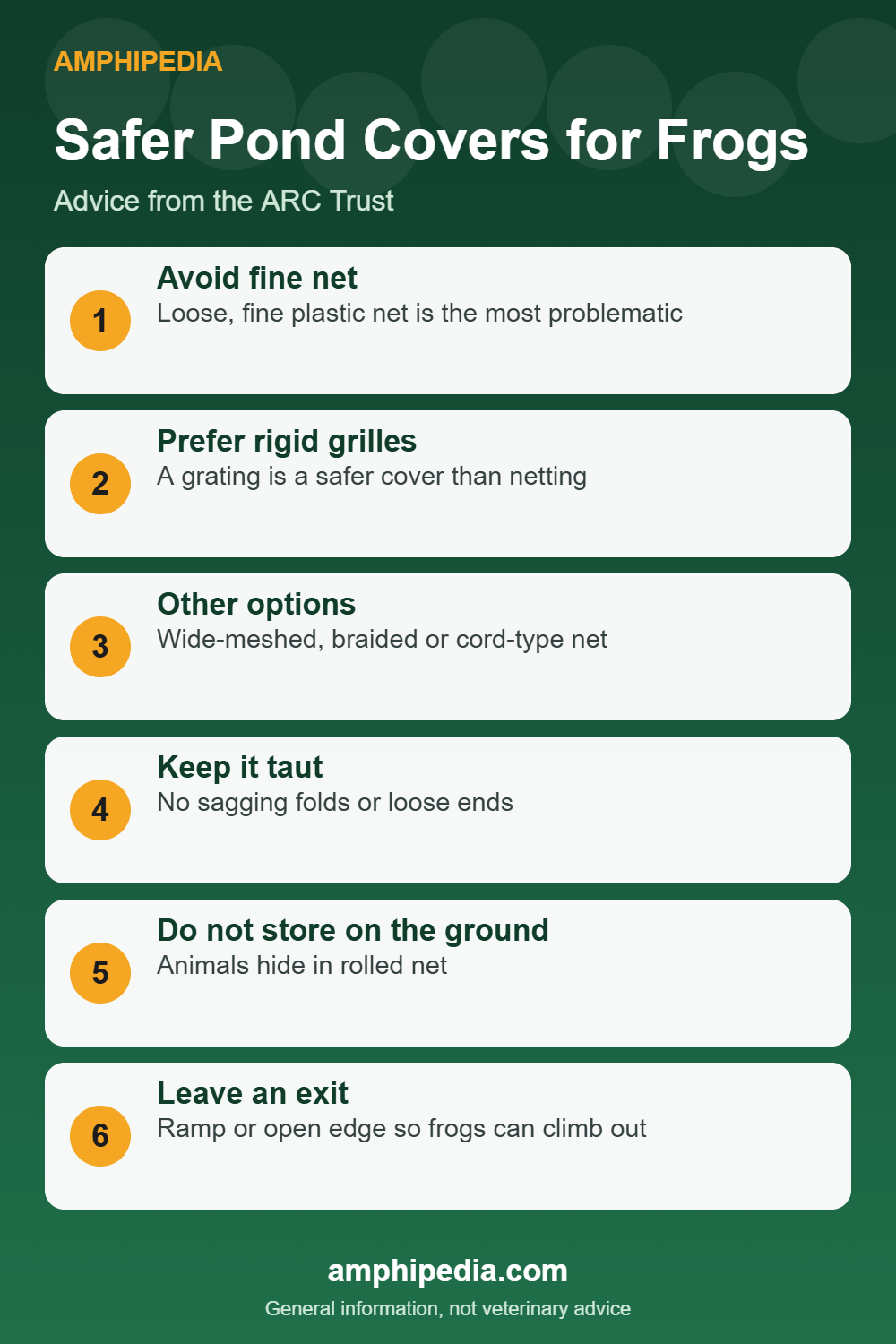
Pin this infographicShare on Facebook
Pond covers and netting
These covers are drawn from live Amazon listings. Choose firm, wide-meshed styles, fit them tight and leave an exit for frogs.


Product titles, prices and ratings are provided by Amazon and are accurate only at the time they are displayed.
What a pond cover should do
A good cover keeps out falling leaves, blocks predators and keeps children and pets from falling in. A frog pond has one extra job: it must let frogs and toads come and go safely.
That makes frog ponds different from fish ponds. A tight cover that works for a koi pond can block frogs from the water or trap them underneath.
The entanglement risk
The Amphibian and Reptile Conservation Trust says grass snakes can become entangled in netting over ponds. It adds that frogs, toads, birds and hedgehogs can also get caught, and that loosely secured plastic netting with very fine strands is the most problematic.
The page does not give mesh sizes. Netting left or stored on the ground is also a hazard, because animals hide in it and can die slowly from injuries, exposure or predators.
Safer cover options
The Trust’s advice is to avoid netting where possible. For pond protection it suggests a rigid grille or grating, and lists wide-meshed, braided or cord-type netting as other options.
A frame with a firm mesh top, raised above the water, protects from leaves while letting you see inside. Whatever you choose, test it by looking for gaps at the edges where an animal could push in and get stuck.
| Cover type | Frog safety | Note |
|---|---|---|
| Rigid grille or grating | Safest option named by the Trust | Raise above water, leave an exit |
| Wide-meshed or braided net | Safer than fine net | Keep taut and check daily |
| Fine plastic net | Most problematic when loose | Avoid, especially unsecured |
| No cover | Open to leaves and predators | Use plants and ledges for shelter |
How to choose a mesh cover
Choose strong, firm material that does not sag when wet. Soft, thin netting stretches and gathers, which creates the loops that trap animals.
Measure the pond and add overlap on every side so the edges can be pinned flat. A frame or pegs help keep the cover tight.
- Firm material that holds its shape.
- Wide mesh or rigid grating rather than fine thread.
- Size that overlaps the pond edge.
- UV-resistant material for outdoor use.
- Easy to remove for cleaning and for autumn leaf season.
How to fit a cover step by step
Fit the cover so no part touches the water and no loose ends hang. Peg or weigh the edges evenly, and avoid piling folds on the ground.
Check the pond each morning for the first week, then weekly. Remove the cover during the main frog season if you can protect the pond another way.
- Measure the pond and cut or choose a cover with overlap.
- Build or place a frame to hold it above the water.
- Pull the cover taut over the frame.
- Pin or weigh the edges flat to the ground.
- Leave a clear gap or ramp so frogs can enter.
- Check daily for trapped animals.
Give frogs a way in and out
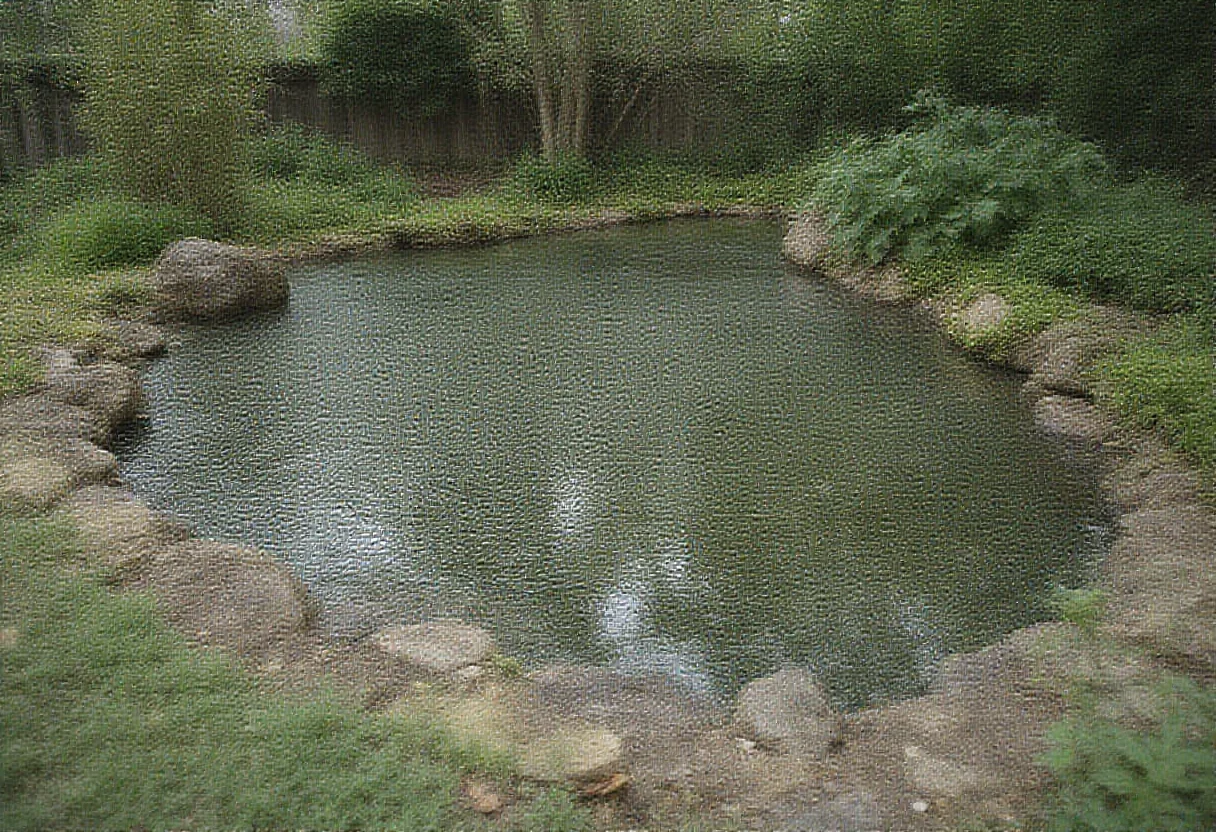
Frogs and newts need to climb out of the water. Add a shallow ramp, stones or a sloping edge with plants. A fully covered pond with no exit can drown animals that fall in.
Leave part of the pond edge open and shaded. Native plants around the pond offer cover and keep the area natural.
Choosing between a frame, a grille and a pond with no cover
A raised frame with a firm top is the easiest to inspect and the least likely to snag. A rigid grille laid across the pond works well for small round ponds.
If your pond is shaded, shallow and surrounded by plants, you may not need a cover at all. Dense marginal plants hide frogs from birds, and a gentle slope lets animals leave the water. Weigh the cost of a cover against the risk that it traps wildlife, and check the cover daily.
- Frame: easy to lift and check, good for medium ponds.
- Grille: firm and snag-free, best for small ponds.
- No cover: use plants and a gentle slope for shelter.
Other ways to keep leaves out
You do not always need a cover. Skim leaves with a soft net, trim overhanging branches and remove fallen leaves before they sink. Autumn is the busiest time.
For filtering and water quality, see our eco-safe pond filter guide.
Common mistakes
The biggest mistake is choosing fine netting because it blocks more leaves. The next is leaving it loose, or storing a roll in the garden.
Also avoid covering the pond all year without checking.
- Using fine net that sags.
- Leaving ends loose on the ground.
- Storing netting outdoors where animals can hide in it.
- Covering the pond with no exit for frogs.
- Forgetting daily checks.
Hygiene and safety
If you find a trapped animal, wear clean gloves or wet hands and free it gently. Wash your hands with soap and water afterwards. The CDC says amphibians can carry Salmonella.
For injured wildlife, contact a local wildlife rescue or your state wildlife agency.
Winter, ice and leaf fall: how the season changes the cover decision
The Amphibian and Reptile Conservation Trust says amphibians in Britain mostly hibernate on land, although some adult male common frogs may lie dormant at the bottom of ponds. So a pond is not the only winter home you are protecting.
During icy spells, gases from rotting leaves cannot escape a frozen pond, and some frogs may die. The Trust calls this natural and says it affects only a small share of a local population. A cover that keeps leaves out may reduce that load, but only if it is fitted safely.
The Freshwater Habitats Trust adds that good water quality and plenty of submerged plants are the best help for pond wildlife in winter. It also says some frogs tolerate low oxygen but survive only a few days if the pond becomes completely de-oxygenated.
- Clear snow off the ice so light reaches submerged plants, which keep making oxygen.
- Make an ice hole by leaving a ball or floating object in the pond and removing it once the surface freezes.
- Do not pour hot water on the ice, use salt or chemicals, or smash it, which can damage liners and plants.
The Trust notes that a hole in the ice may not add much oxygen. It still lets air-breathing animals such as smooth newts reach the surface, and gives wildlife a place to drink.
Build a winter refuge on land instead of relying on the water
Because many amphibians overwinter out of the water, a cover over the pond does nothing for them. They need damp, frost-free hiding places nearby. The Freshwater Habitats Trust describes spots that are damp but not soaking wet, such as log piles, rubble, stone walls and compost heaps.
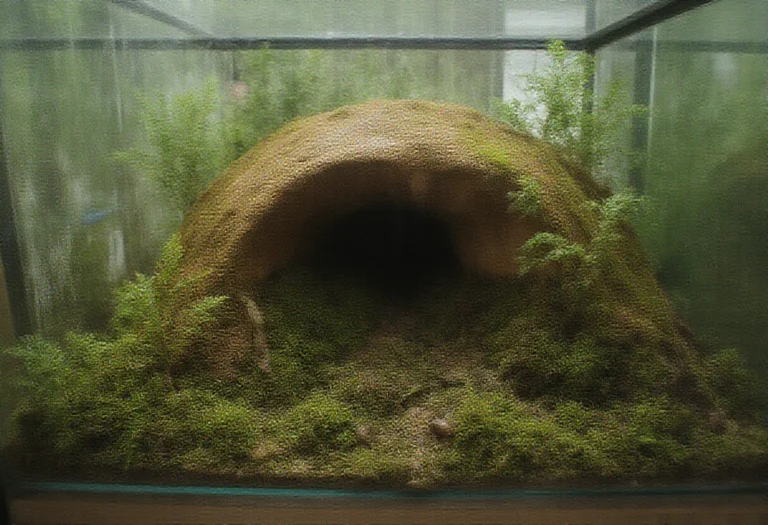
It also describes a hibernaculum: a pile of wood or rubble covered with turf and packed with loose soil or wood chippings. Place one in a sheltered corner near the pond.
- Leave longer grass and overgrown corners beside the pond.
- Check leaf and wood piles for animals before autumn bonfires.
- Take care when lifting paving slabs or turning compost in winter.
A simple routine for checking a cover
The Trust says netting left or stored on the ground can become a hiding place, and that trapped animals may die slowly from injuries, exposure or predators. A regular check is the practical answer. Walk the whole edge of the pond, not just the part you can see from the path.
| What to check | What you are looking for | What to do |
|---|---|---|
| Edges and pegs | Gaps between cover and ground, or lifted corners | Re-pin flat |
| Sagging points | Dips or folds where material meets the water | Re-tension or add a support |
| Ground around the pond | Loose offcuts, ends or folded material | Cut off or remove loose ends |
| After wind or heavy rain | Shifted frames or displaced pegs | Reset and recheck |
If you find an animal caught, the Trust points to its leaflet on garden netting for freeing tangled snakes and further advice. For a frog or toad, contact a local wildlife rescue if it is injured. Do not pull hard at the net yourself if the animal looks badly hurt.
When removing the cover is the better choice
The Trust says the best solution is to avoid netting when possible. That means a cover should be a temporary tool rather than a permanent fixture. Take it off once the leaf drop is over, or when herons are not a problem in your area.
Store the cover indoors or in a closed shed, never in a heap on the lawn. Roll it tight and tie it off, so no loops hang free.
Frequently Asked Questions
Is pond netting safe for frogs?
Not always. The Amphibian and Reptile Conservation Trust says frogs and toads can get caught, and loose fine plastic net is the most problematic.
What is a safer option than netting?
A rigid grille or grating, according to the Trust. Wide-meshed, braided or cord-type net are other options.
Should I leave the cover on all year?
Check it often and consider removing it when you do not need it, since loose net is the main hazard.
How do I keep leaves out without a cover?
Skim with a soft net, trim branches and remove fallen leaves early.
Can frogs get under the cover?
Yes. Make sure edges are tight and leave a ramp or gap so frogs can leave safely.
What mesh size is best?
The Trust page gives no size. Choose wide mesh and firm material, and watch for entanglement.
Bottom Line
The best mesh cover for a frog pond is a rigid, raised grille or a taut, wide-meshed net with an exit for frogs. Avoid fine, loose plastic net.
Fit it carefully, check it daily and never store netting outdoors.
Sources
- Amphibian and Reptile Conservation Trust: Risks of garden netting, accessed Entanglement risks and alternatives
- CDC: Reptiles and Amphibians, accessed Salmonella and handwashing
- Amphibian and Reptile Conservation Trust: Amphibians in icy weather, accessed 12 November 2026. Hibernation, ice and leaf gases
- Freshwater Habitats Trust: Helping pond wildlife over winter, accessed 12 November 2026. Refuges and low oxygen
2 Comments