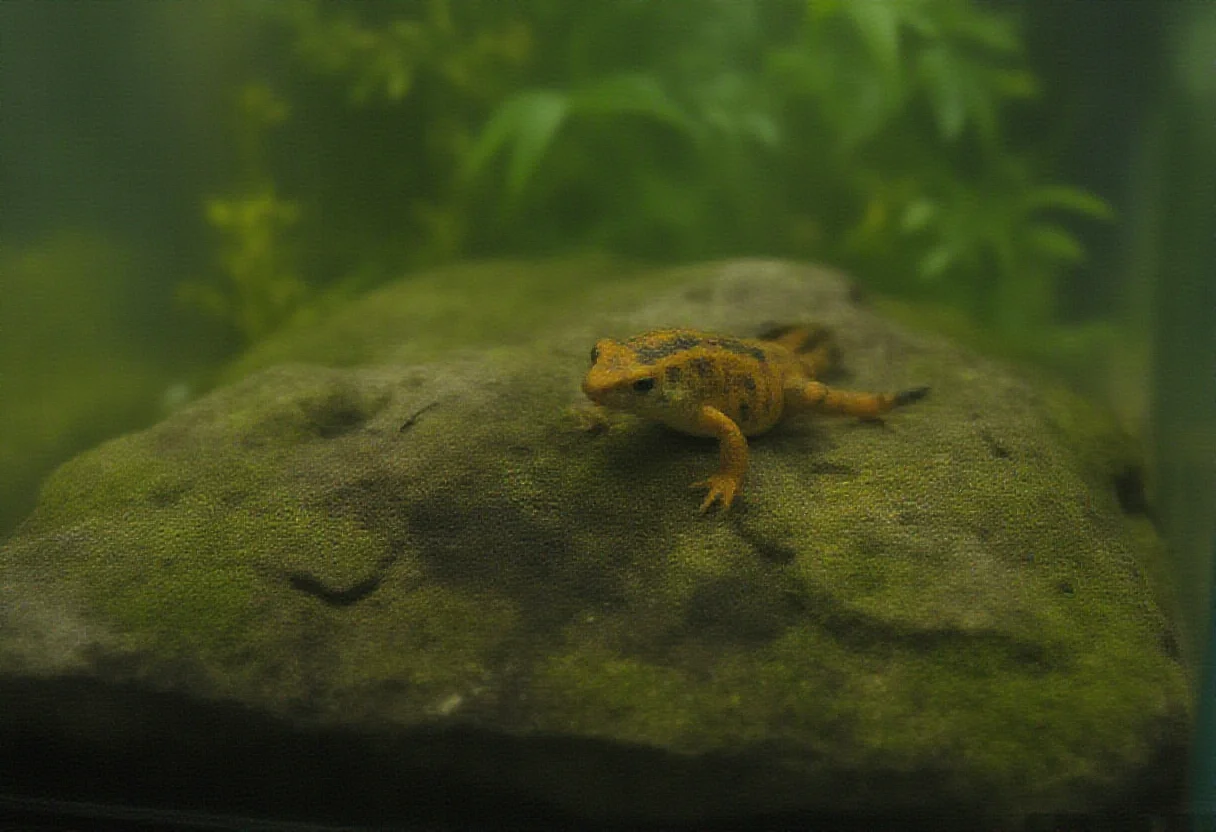
Best Aquarium Heater for Newts: Do They Even Need One?
This post contains affiliate links. As an Amazon Associate I earn from qualifying purchases. Prices and availability are shown by Amazon and can change.
Most newts do not need an aquarium heater. PetMD says most newts need no extra heat if the habitat stays above 60°F, and warns that the enclosure should not pass 78°F. VetVerified says Japanese fire-bellied newts do not need a heater unless the home gets very cold, with water at 16 to 22°C. If your room drops below the safe range, choose a small, adjustable, guarded heater and a reliable thermometer.
Many keepers assume a warm tank is a healthy tank. For newts the opposite is often true. They are cool-water animals, and heat is a bigger danger than cold in most homes.
This guide explains the temperature ranges, when a heater is worth buying and what to look for if you need one. It also covers cooling tips for summer. To check your tank, see our aquarium thermometer guide.
How this was made: prepared with AI assistance and checked against the sources listed at the end. Images are AI-generated illustrations, not photographs of real animals or products.
Key Takeaways
- Most newts need no heater if the habitat stays above 60°F.
- Do not let the enclosure pass 78°F, according to PetMD.
- Japanese fire-bellied newt water: 16 to 22°C, and a heater only if the home is very cold.
- If you use a heater, pick a low-wattage, adjustable and guarded unit.
- Measure the water daily, because heat is the greater risk.

Pin this infographicShare on Facebook
Small aquarium heaters (only if your room is cold)
These heaters are drawn from live Amazon listings. Most newt tanks do not need one, so choose a low-wattage, guarded unit only if the room runs cold.


Product titles, prices and ratings are provided by Amazon and are accurate only at the time they are displayed.
Do newts need a heater?
Usually no. PetMD gives a tank range of 60 to 75°F and says most newts will not need a supplemental heat source if the habitat stays above 60°F. VetVerified makes the same point for the Japanese fire-bellied newt.
The answer changes for warm-water aquatic frogs. Petco lists 72 to 82°F and a submersible heater for African dwarf frogs. Do not copy the settings of a tropical tank to a newt tank.
Safe temperature ranges
Ranges come from species care sheets and differ slightly. Both Japanese and eastern newts sit in the lower end of the range.
VetVerified gives 16 to 22°C for Japanese fire-bellied newt water and 18 to 22°C (64 to 72°F) for the eastern newt. PetMD recommends 60 to 75°F for tanks and warns against going above 78°F. Check the exact species you keep.
| Animal | Range | Source |
|---|---|---|
| Fire-bellied newts | 60 to 75°F; keep below 78°F | PetMD |
| Japanese fire-bellied newt (water) | 16 to 22°C | VetVerified |
| Eastern newt (water) | 18 to 22°C (64 to 72°F) | VetVerified |
| African dwarf frog (water) | 72 to 82°F, with heater | Petco |
When a heater can help
A heater only makes sense if the room falls below your newt’s range for long periods. This may happen in an unheated garage, a cold basement or a winter room with a night-time drop.
Even then, a room heater or moving the tank may be simpler. A heater in a small tank can overshoot quickly. Test with a thermometer for several days before adding animals.
- The room stays below 60°F for long periods.
- Night-time temperatures drop sharply.
- You keep a warmer species that needs 72°F or more.
- You cannot move the tank to a milder room.
How to choose a heater if you need one
Choose a low-wattage model sized for the volume of water. A strong heater in a small tank can overheat it. Pick one with an adjustable thermostat so you can set a limit just above the cool end of the range.
A guard around the heater stops newts from resting against the hot glass or element. Check that the heater is rated to run fully submerged in freshwater and has a cord long enough for a drip loop.
- Low wattage for the tank size.
- Adjustable thermostat.
- Protective guard or cage.
- Shatter-resistant or sealed design.
- Cord long enough for a drip loop.
- Used with a reliable thermometer.
Install it safely
Fit the heater at a back corner, away from places where newts rest. Let it adjust to room temperature in the tank before plugging it in, and set it low.
Check the reading after a few hours, then each day for a week. PetMD advises both an air and a submersible thermometer in semi-aquatic habitats.
- Mount the heater at the back, fully covered by water.
- Set the thermostat to the low end of your range.
- Plug in and wait a few hours.
- Check the water with a thermometer.
- Adjust by small steps and recheck.
- Use a lid to keep newts from escaping.
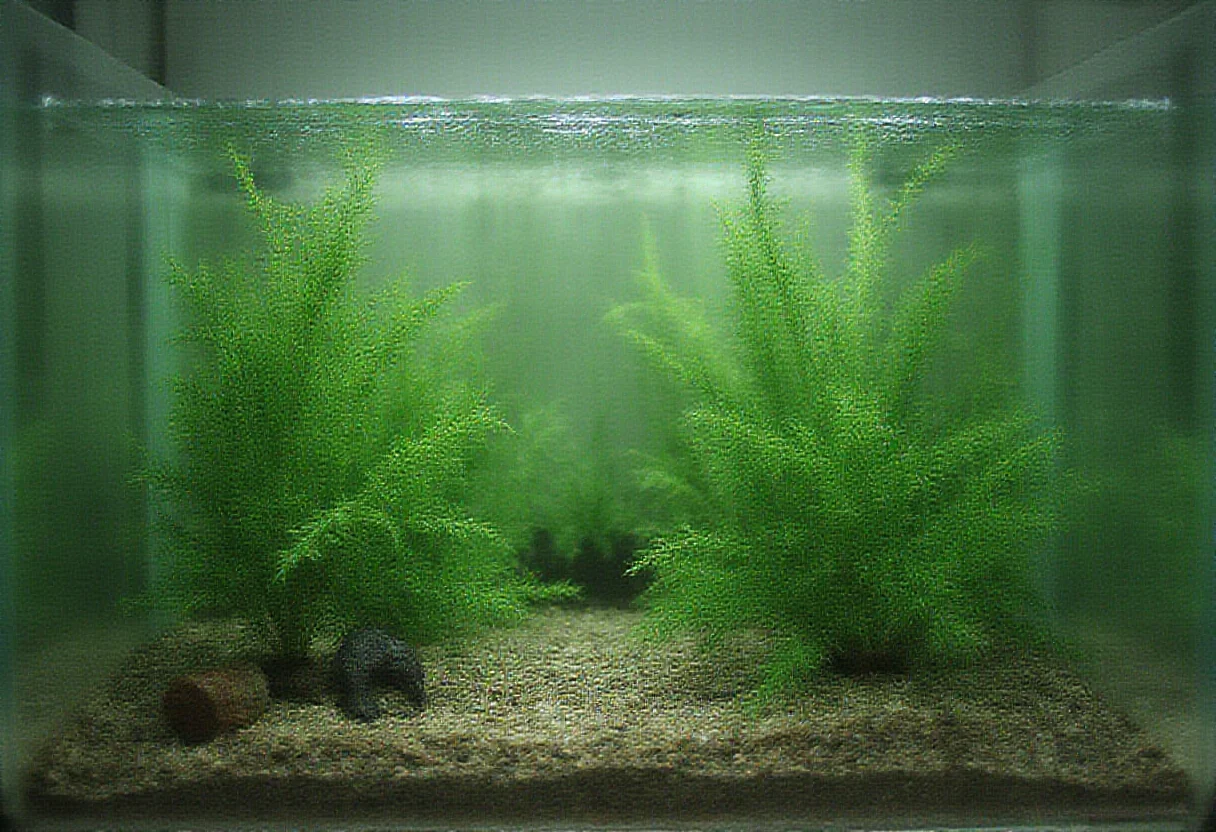
Keeping a newt tank cool
For most keepers, summer heat is the real challenge. Keep the tank away from windows, heaters and radiators, and out of direct sun.
Use a fan across the water surface, a room with air conditioning, or a shaded corner. Our low profile water heater guide and heat mat guide explain when heat is useful for other species.
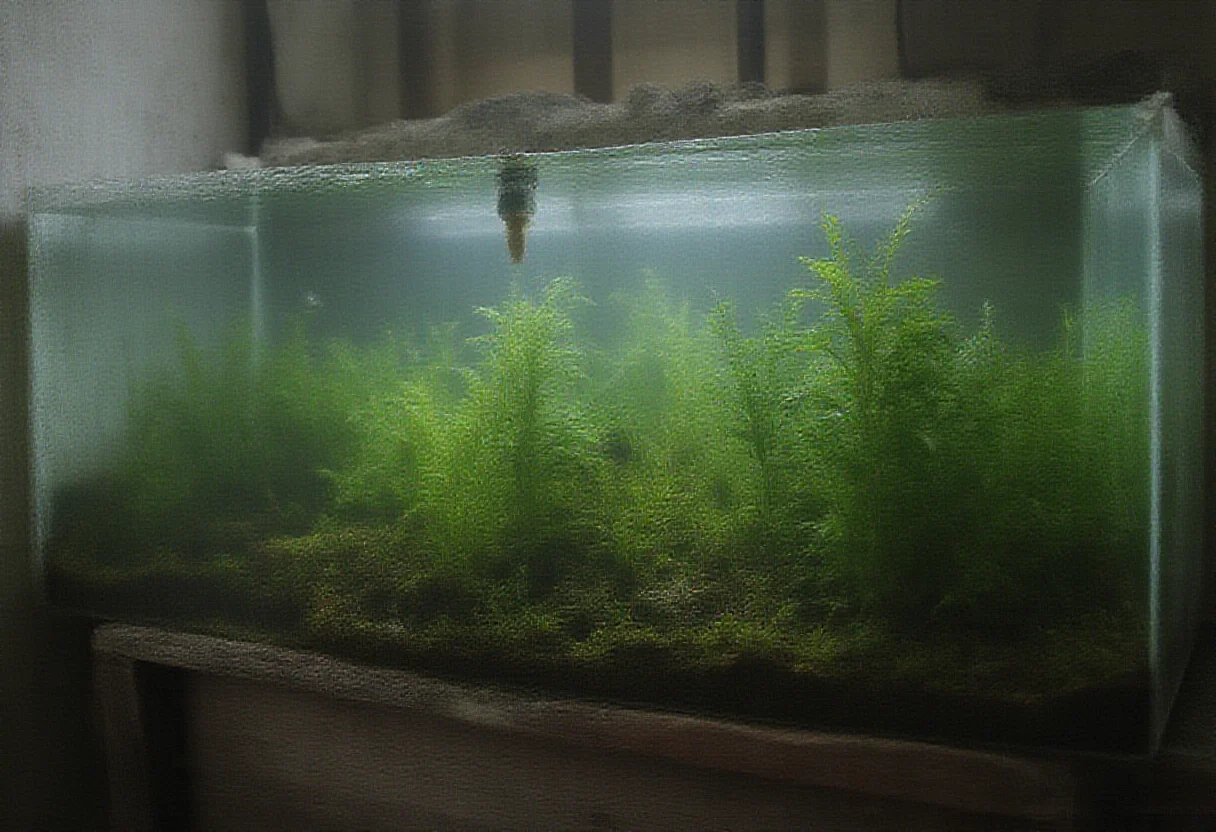
Flow, filters and water changes
PetMD advises slow to moderate circulation, since newts cannot swim well in turbulent water, and a water change of 10 to 25% every two to four weeks. Our small tank filter guide covers gentle filters.
Use dechlorinated water for every change.
Cold snaps and power cuts
If the room turns very cold, a short dip is less dangerous than a long spell of heat. Move the tank to the warmest, most stable room, away from drafts and outside walls, and keep the lid on.
Do not use a hot water bottle or a hair dryer near the tank. Warm the room, not the water, and check the thermometer often. If your newt stops eating or becomes sluggish for several days, ask an exotics vet for advice.
- Move the tank away from drafts and outside walls.
- Warm the room gently instead of the water.
- Check the thermometer several times a day during cold snaps.
- Call a vet if the newt stops eating or hides constantly.
Common mistakes
The most common mistake is buying a heater because the tank looks cold. The second is skipping the thermometer.
Another is using a heater with no guard, which can burn a newt that rests on it.
- Heating a tank that needs no heat.
- Using a high-wattage unit in a small tank.
- Skipping a thermometer.
- Leaving the heater unguarded.
- Placing the tank near a window or radiator.
Hygiene and safety
The CDC says amphibians can carry Salmonella, and tank water and equipment can be contaminated. Wash your hands with soap and water after maintenance.
Unplug the heater before you reach into the water, and keep plugs above the tank.
Air temperature and water temperature are not the same number
Care sheets mix two measurements. Petco and PetMD give a habitat range of 60 to 75°F, which describes the enclosure as a whole. VetVerified gives 16 to 22°C for the water of a Japanese fire-bellied newt. In a small tank the two usually sit close together, but a lamp, a sunny window or a warm shelf can push one higher than the other.
Read both. A stick-on strip on the glass shows neither value well. Put one probe in the water and one at land level, then compare them at the warmest and coolest times of day.
- Water reading: the number to check against the 16 to 22°C species range.
- Land-side reading: the number to check against the 60 to 75°F habitat range.
- A gap of several degrees between the two points to a heat source you did not plan for.
What research on a fire-bellied newt says about warmth
A 2016 study in Acta Herpetologica by Lu and colleagues tested the Chinese fire-bellied newt (Cynops orientalis). The newts were acclimated to 16°C or 24°C for four weeks. The authors note that mating and egg laying happen when water is between 15 and 23°C.
The same paper reports a critical thermal maximum of 36.2 to 38.3°C, an endpoint found by heating lab animals steadily. It is not a comfortable ceiling, and nobody should aim near it.
The useful lesson is that newts adjust to the temperature they live at. Warm-acclimated animals tolerated more heat, and cold-acclimated animals tolerated more cold. A tank that drifts slowly is less risky than one that jumps several degrees in an afternoon.
Lighting can act as a hidden heater
Petco advises a 10 to 12 hour day cycle for newts, using a low-wattage incandescent day bulb that does not give off much heat. It also recommends low-level UVB from a full-spectrum bulb, and warns that higher UVB levels may damage the eyes and skin.
That matters for heat. A bulb sitting close to a lid on a small tank can warm the water more than any heater would. If the thermometer climbs after the light comes on, raise the lamp, shorten the hours or switch to a cooler light before you blame the room.
- Measure the water at the end of the light period, not only in the morning.
- Keep lights on a timer so the cycle stays steady.
- Leave shaded areas and plants so the newt can get away from the lit end.
Signs a newt may be too warm or stressed
Petco links higher temperatures to stress and health problems, and lists lethargy, weak movements, dull reactions and distressed breathing among its red flags. These signs are not specific to heat. Water quality, crowding and illness can look the same.
If you see them, check the thermometer first, then ammonia, nitrite and nitrate. If the readings are fine and the newt does not recover, contact an exotics vet and do not try home treatments.
A simple weekly routine
- Note the water reading in the morning and evening for one day each week.
- Check that the heater, if you use one, is still set where you left it.
- Look at the lamp position and the timer.
- Do the usual partial water change with dechlorinated water at room temperature.
- Write the numbers down so a slow trend is easy to spot.
Five minutes of checking is cheaper than a replacement heater or a sick animal.
Frequently Asked Questions
Do fire-bellied newts need a heater?
Usually not. VetVerified says they do not require a heater unless the home gets very cold, and PetMD says most newts need no extra heat above 60°F.
What is the best temperature for newts?
PetMD gives 60 to 75°F for fire-bellied newts, and VetVerified gives 16 to 22°C for Japanese fire-bellied newt water.
How hot is too hot?
PetMD warns not to let the enclosure go above 78°F.
What size heater do I need?
Pick a low-wattage unit sized to your water volume and use a thermometer to confirm the result.
Can I use a reptile heat mat?
Not as a rule. Most newts prefer cool water, and a mat can overheat a small tank.
How do I cool a newt tank?
Move it away from sun and heat, add airflow across the surface and use a cooler room.
Bottom Line
Most newts need no heater, only a cool, stable tank and a thermometer. If your room is very cold, choose a low-wattage, guarded heater.
Check the temperature daily and keep the water in your species range.
Sources
- PetMD: Fire-Bellied Newt Care Sheet, accessed Temperature range, heater advice, circulation and water changes
- VetVerified: Japanese Fire-Bellied Newt, accessed Water temperature and heater advice
- VetVerified: Keeping the Eastern Newt, accessed Eastern newt water temperature
- Petco: How to Set Up an African Dwarf Frog Tank, accessed Warm-water frog comparison
- CDC: Reptiles and Amphibians, accessed Salmonella and hygiene
- Acta Herpetologica: Swimming performance and thermal resistance of juvenile and adult newts acclimated to different temperatures (Lu et al., 2016), Cynops orientalis acclimation and thermal limits
- Petco: Salamanders and Newts Care Sheet, Habitat range, lighting and stress signs



5 Comments