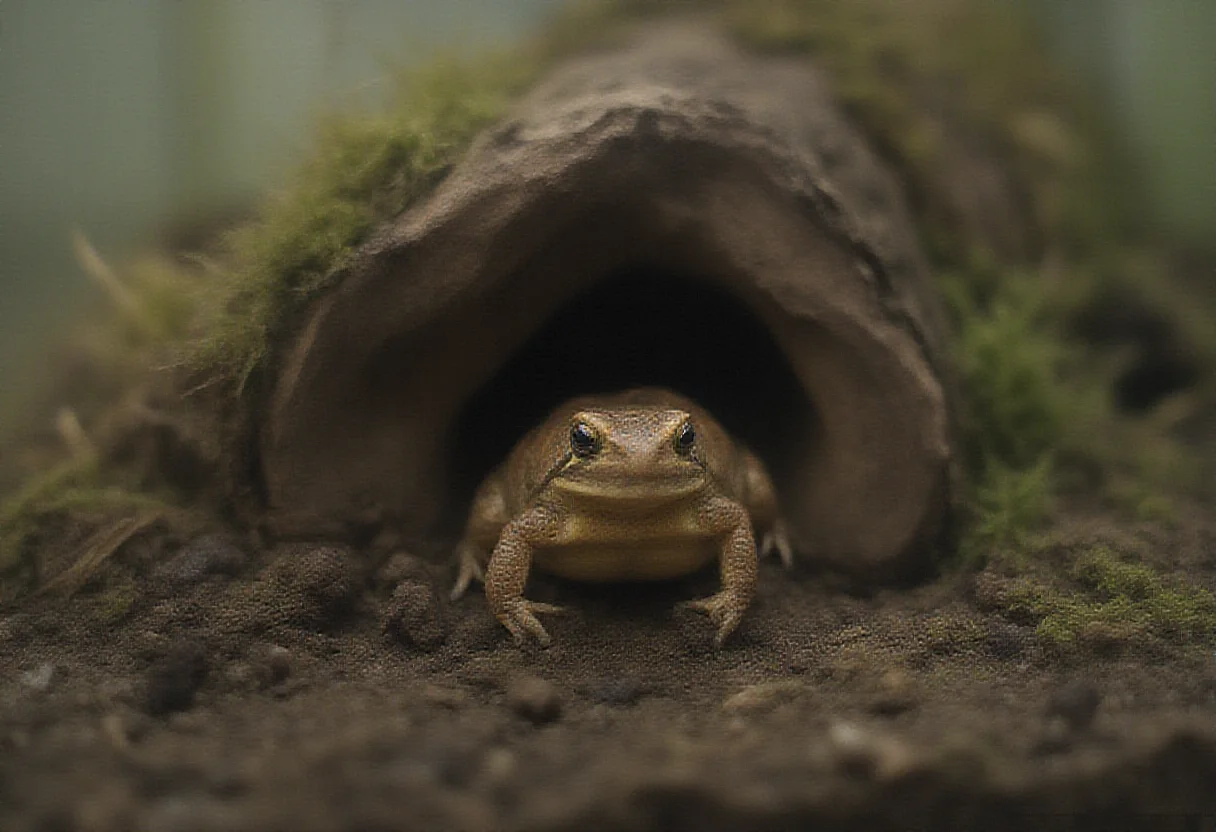
Best Natural Log Hideout for Toads: How to Choose One
This post contains affiliate links. As an Amazon Associate I earn from qualifying purchases. Prices and availability are shown by Amazon and can change.
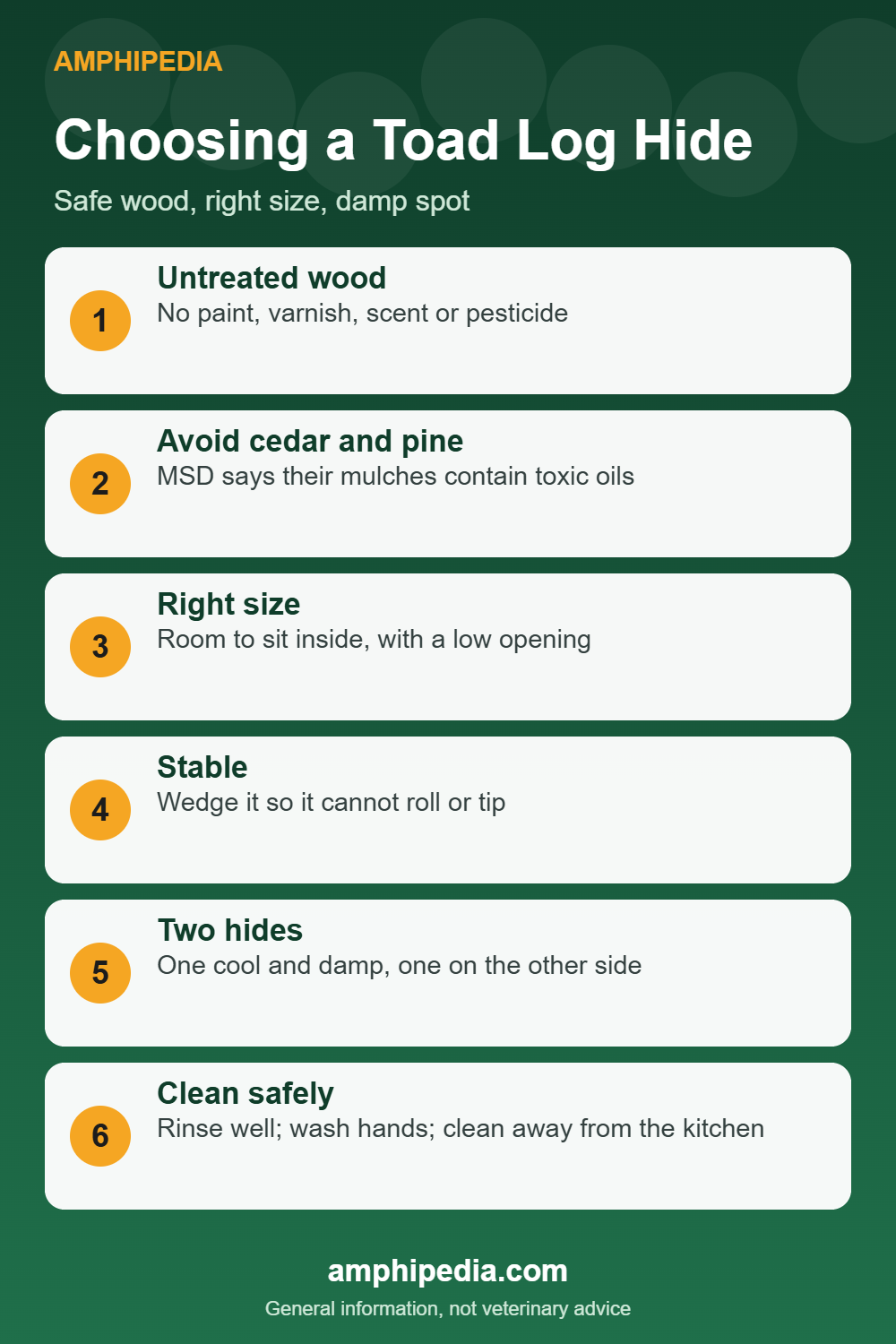
A good log hideout for toads is untreated, smooth inside, big enough for the toad to sit in comfortably, and heavy or wedged so it cannot tip. Use wood sold for terrariums or known to be free of pesticides and treatments, and avoid cedar and pine. Place it on a damp part of the floor, add a second hide on the cooler side, and clean it on a regular schedule.
Toads spend much of the day hidden. A good hide lowers stress, keeps the skin moist and gives the animal a safe place to rest.
This guide explains what makes a log hideout suitable for toads, which woods to avoid, how to place it and how to keep it clean. It covers buying criteria only.
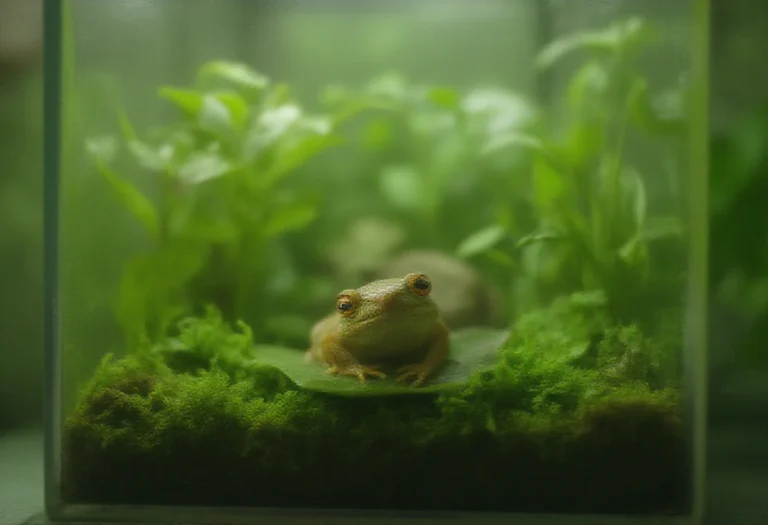
How this was made: prepared with AI assistance and checked against the sources listed at the end. Images are AI-generated illustrations, not photographs of real animals or products.
Key Takeaways
- Nocturnal and photophobic species need dim light and plenty of hiding places, according to the MSD Veterinary Manual.
- Choose untreated wood that is free of pesticides and additives.
- Avoid cedar and pine, which the MSD manual says contain toxic oils in mulch form.
- Pick an opening large enough for the toad but small enough to feel secure.
- Provide at least two hides so the toad can choose warm or cool, damp or drier.
Pin this infographicShare on Facebook
Log and wood hide options for toads
The table is ordered from the highest price to the lowest. Prices, images and buy buttons come straight from Amazon and are not edited by us.


Product titles, prices and ratings are provided by Amazon and are accurate only at the time they are displayed.
Why toads need a hide
Toads are shy by day. A hide gives cover from light, noise and movement, and it lets the animal keep its skin moist.
The MSD Veterinary Manual says nocturnal and photophobic species need dim light and plenty of hiding places. It also says refuges that limit water loss help hold microhabitat humidity.
A tank with no cover keeps a toad on alert. Hiding often is normal, so an empty-looking tank by day is not a sign of a problem by itself.
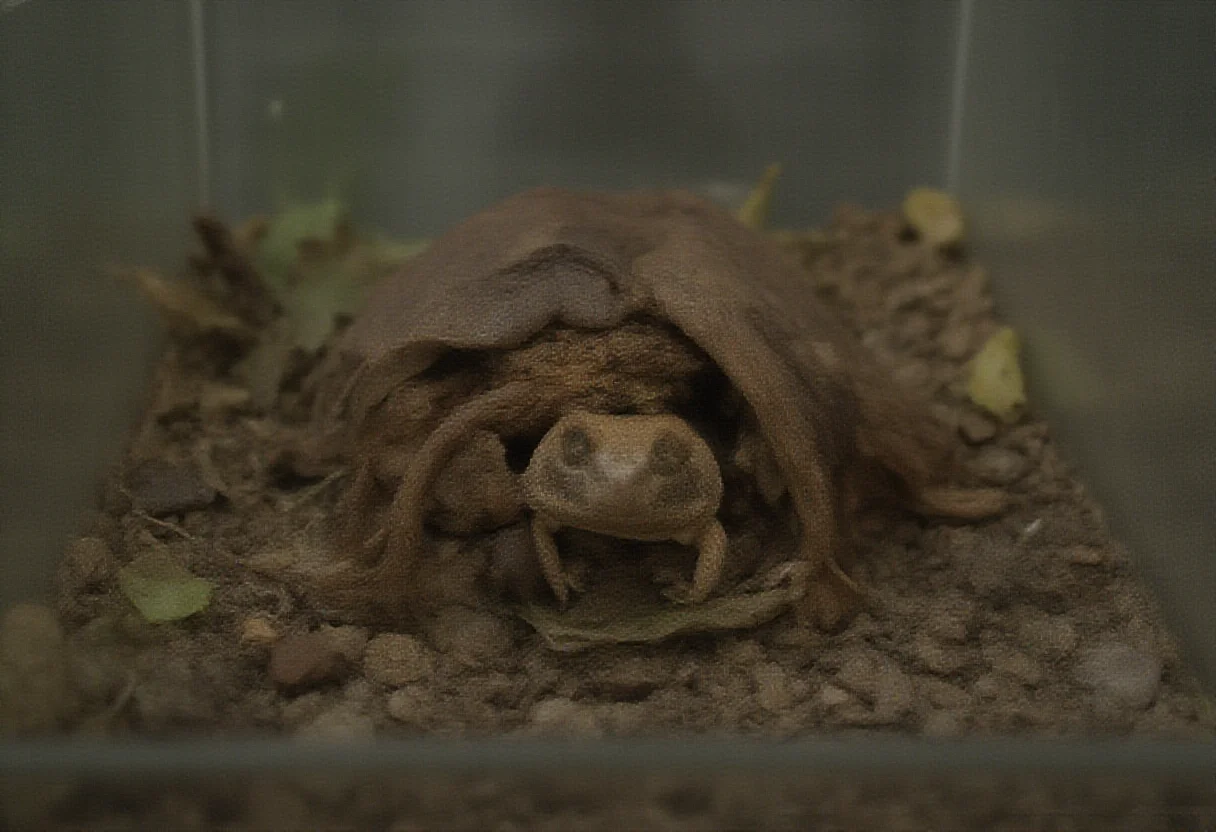
Different toads use hides differently. Some wedge themselves into a tight space, while others dig beneath a log and rest under it. Offering a log on soft, damp substrate lets the toad choose, and it makes a more natural set-up than a bare tank with a single plastic cave.
Hide materials compared
Several materials make good hides. A natural log has the benefit of a rough, organic look that blends into the tank.
| Material | Good for | Watch for |
|---|---|---|
| Natural wood log | Natural look and rough texture | Untreated wood only; check for rot and splinters |
| Cork bark tube or round | Light weight, easy to place | Check for sharp edges and stability |
| Ceramic or resin hide | Easy to clean | Smooth surface can trap heat or hold less moisture |
| Plastic pipe | Cheap, quarantine use | The MSD manual mentions PVC tubing for quarantine hides |
Which wood is safe?
Use wood that is untreated and free of chemicals. The MSD manual says untreated hardwood mulch and leaf litter are acceptable, and that cedar and pine mulches contain toxic oils and should be avoided. Treat whole logs of those woods with the same caution.
Wood from the garden or woods carries unknown risks, such as pesticides, parasites or pests. The MSD manual says soil must not contain additives such as fungicides, and describes heating or freezing substrate to kill pests. Wood sold for terrariums is a safer choice if you do not know the history.
Avoid painted, varnished or scented wood, and anything with glue residue.
If you are not sure about a piece of wood, leave it out. A tank looks fine with a simple, known hide, and a risky log is not worth the saving.
What to look for before you buy
- Size: the toad should fit inside with a little room, not squeeze in or sit with its body outside.
- Opening: choose a low opening that keeps the toad off bare glass and lets it turn around.
- Stability: heavy or wedged logs will not tip when the toad pushes in.
- Surface: smooth inside, with no splinters or sharp points.
- Dryness: wood that is rotten or soft will crumble and grow mould.
- Origin: choose wood described as free of pesticides and treatments.
- Cleaning: avoid very porous wood if you want to disinfect it often.
How to place a log hideout
MSD says terrestrial species need a shallow water dish. Keep the dish clean and shallow enough that the toad can climb out easily.
Check the hide every week. Lift it, look underneath for waste, mould and trapped insects, and put it back so it sits level and firm.
- Rinse the log in clean water and let it dry before use.
- Set it on the substrate and press it in so it cannot roll.
- Place one hide on the cooler, damper side and a second on the other side.
- Add leaf litter and a shallow water dish nearby.
- Check that the toad can get in and out without scraping its skin.
- Watch for a few days and move the hide if the toad never uses it.
Common mistakes
- Using cedar or pine logs, or any wood with a strong smell.
- Collecting wood outdoors without checking for pesticides or pests.
- Choosing a hide too big, so the toad never feels enclosed.
- Placing one hide only, which gives no choice of temperature or moisture.
- Leaving a rotting log in the tank.
- Using household cleaners on wood, which can soak in.
Cleaning and care
Remove waste daily. The MSD owner page says to replace food and water daily and remove uneaten food and waste.
For deeper cleaning, the MSD manual advises household bleach at 30 mL per litre of water for at least 30 minutes, then a fresh-water rinse and full drying. Porous wood can hold chemicals, so rinse thoroughly or replace the log if it smells or breaks down.
Never clean habitat items in the kitchen. The CDC advises cleaning them outdoors if possible, or in a tub you disinfect afterwards.
Related guides
See our guides to a bamboo hide, an amphibian care starter kit and a corner water dish.
How wild toads use cover
A hide works best when it copies what toads already do outdoors. Animal Diversity Web says American toads (Anaxyrus americanus) hide under rocks or logs during the day, and that they are mainly nocturnal. They are most active when the weather is warm and humid.
The same page says these toads dig by backing into soil and pushing dirt out with their back legs. In cold climates they dig deeper to hibernate. A toad that wedges itself under a log is therefore using a natural habit, not asking for a bigger cave.
Animal Diversity Web also notes that toads do not drink but take in water through the skin. That is why the ground under a hide matters. Damp, loose substrate gives a toad something to absorb moisture from and something to dig into.
Other toad species differ in size and habits. If you keep a species other than the American toad, check a species account before you pick a hide.
What the veterinary sources do and do not cover
The MSD Veterinary Manual pages we used say nothing about logs or branches. The professional page says dim light and plenty of hiding places should be provided for nocturnal species, and that organic substrates and refugia that limit water loss help hold humidity. The owner page mentions live plants as hiding spots.
So the advice in this guide on log choice, size and placement is practical reasoning built on those principles. It is not a tested protocol. The manual’s warning against cedar and pine and its approval of untreated hardwood mulch and leaf litter concern substrates. We apply the same caution to whole logs, because we found no source that says otherwise.
The owner page says most amphibians do well at 60 to 70 F (16 to 21 C) and 75 to 80 percent humidity, with tropical species needing more heat and humidity. Check your own toad’s species before you set targets.
Troubleshooting: the toad ignores the hide
A toad that stays hidden by day is normal. A toad that never uses the hide, or sits in the open all day, is worth a closer look.
- The toad sits pressed against the glass: the opening may be too high or too bare. Lower the entrance and add leaf litter around it.
- The toad digs beside the log but not under it: the ground may be too hard. Loosen the substrate so it can back in, as wild toads do.
- The toad avoids the hide completely: check for a strong smell, mould or a damp, sour odour inside the wood, and replace the log if you find any.
- The toad sits exposed and its skin looks dry: check humidity and the water dish, and make the substrate under the hide damper.
- The toad looks thin, swollen or has red skin, sores or a cotton-like growth: stop adjusting the decor and contact an exotics vet.
Change one thing at a time and watch for several nights before you change the next. Toads are active after dark, so a quiet look with a dim torch late in the evening tells you more than a daytime check.
Building the layout around the log
Think of the log as one part of a small landscape. Put the hide on the damper side, with leaf litter around its entrance and a shallow water dish a short crawl away. The MSD manual says terrestrial species need a shallow water container, which also adds humidity.
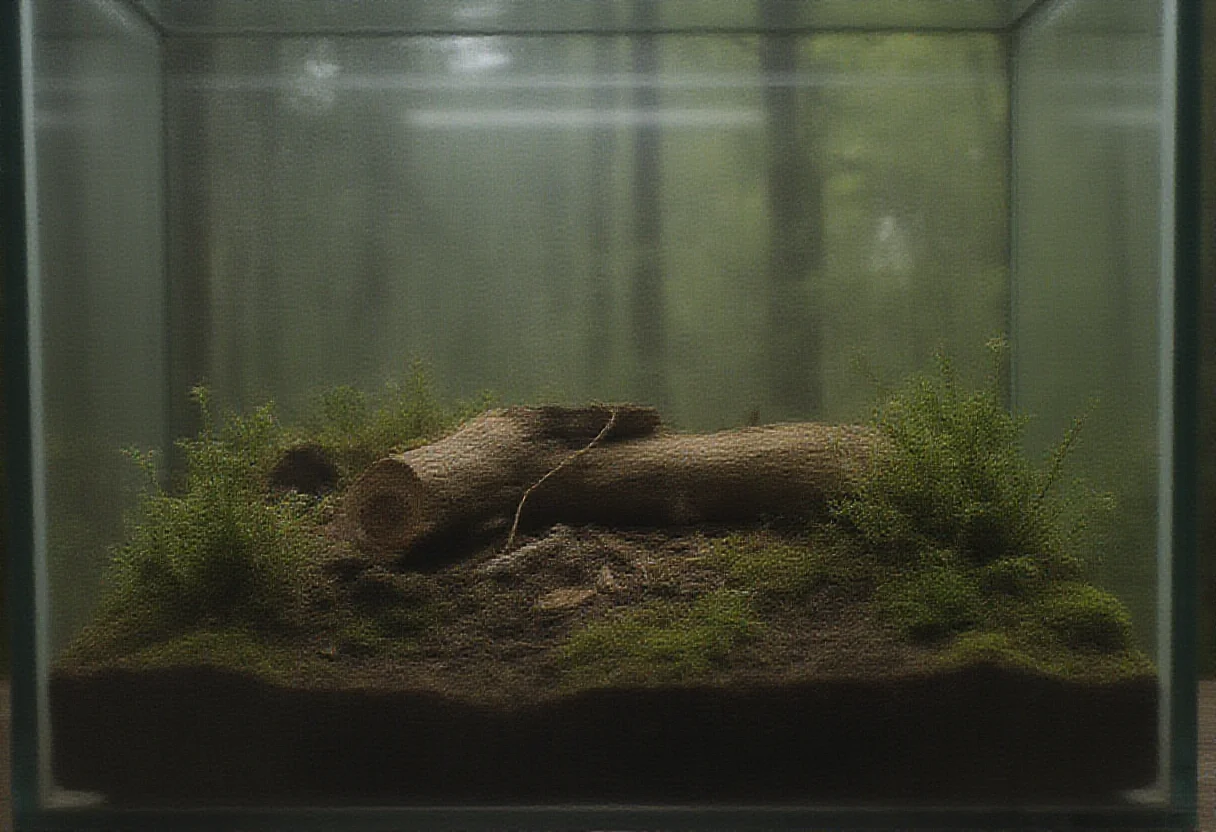
Keep a drier patch on the far side, with a second hide. That gives the toad a choice between damp and drier cover without leaving the tank. Leave open floor space too, because a crowded tank leaves the toad nowhere to hunt.
Frequently Asked Questions
Do toads need a hide?
Yes. A hide lowers stress and helps keep the skin moist. Nocturnal species especially need cover.
Is driftwood safe for toads?
Untreated driftwood sold for pets is commonly used. Rinse it and avoid wood of unknown origin.
Can I use a log from my garden?
It may carry pesticides, parasites or pests, so it is a risk. Use terrarium wood if you cannot be sure.
How big should the hide be?
Big enough for the toad to sit inside with some room, but not so big that it feels exposed.
Should I wash the log?
Rinse before use. For disinfection, the MSD manual gives a bleach dilution and a long rinse.
How many hides do I need?
At least two, one cool and damp, one on the other side, so the toad can choose.
Bottom Line
A natural log hide suits toads when the wood is untreated, stable and the right size. Check the origin, avoid cedar and pine, and keep the hide on damp ground.
Give the toad more than one hide and clean on a schedule.
Sources
- MSD Veterinary Manual: Environment and Husbandry for Amphibians, accessed 12 November 2026
- MSD Veterinary Manual: Housing for Amphibians (pet owner version), accessed 12 November 2026
- CDC: Reptiles and Amphibians (healthy pets), accessed 12 November 2026
- Animal Diversity Web: Anaxyrus americanus (American Toad), accessed 12 November 2026


4 Comments