Best Aquarium Thermometer for Amphibians: How to Choose
This post contains affiliate links. As an Amazon Associate I earn from qualifying purchases. Prices and availability are shown by Amazon and can change.
The best aquarium thermometer for amphibians is a clear, digital or glass submersible model that reads water temperature within a degree or two, with a second thermometer for the air. Safe ranges vary by species: care sheets give 72 to 82°F for African dwarf frogs, 60 to 75°F for fire-bellied newts, and a daytime limit of 80°F for dart frogs. Check your species first, then choose a thermometer that covers that range.
Amphibians depend on their surroundings to manage body temperature. Water or air that drifts too warm can stress or kill them, and one reading on a thermometer is the early warning.
This guide explains the thermometer types, where to place them and what temperatures care sheets give for common frogs and newts. For a magnet-mounted option, see our magnetic thermometer guide.
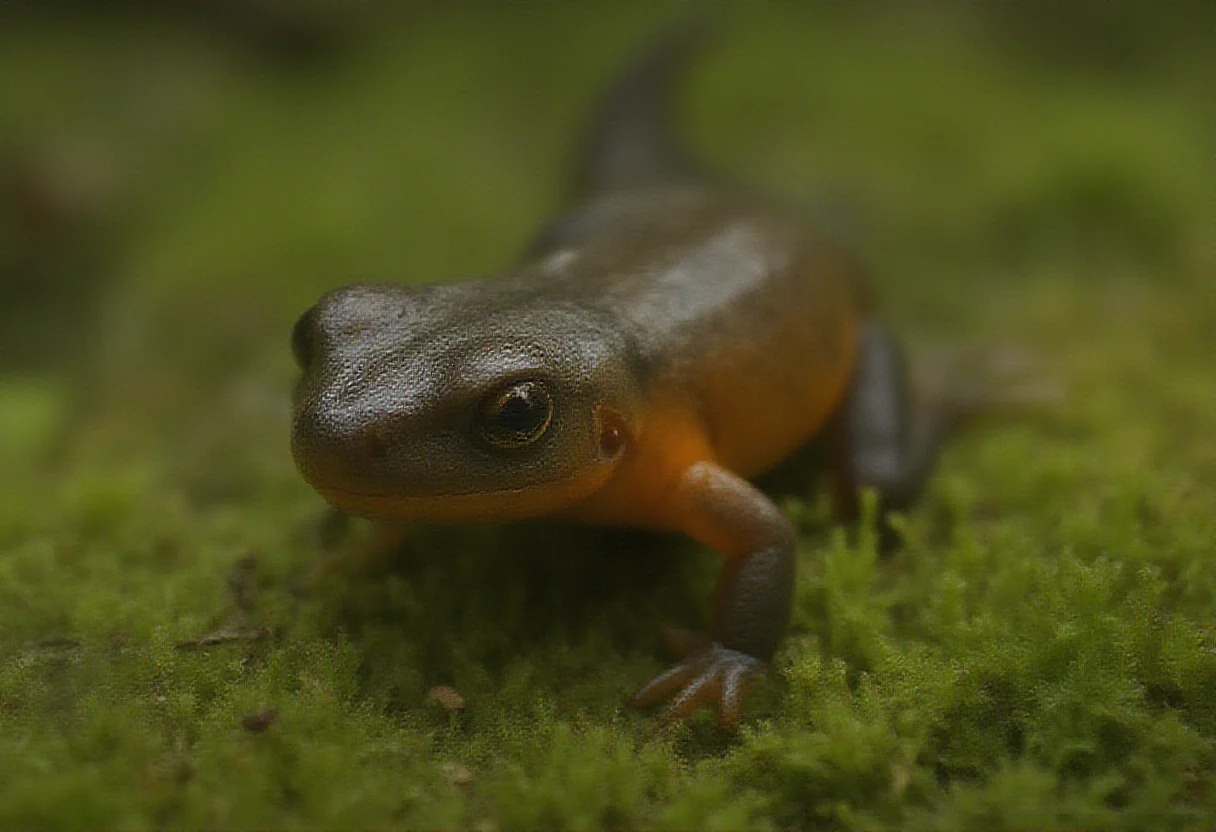
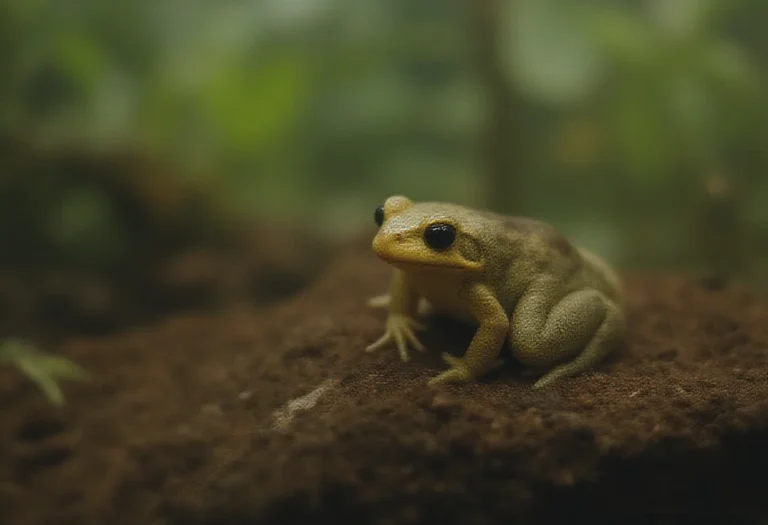
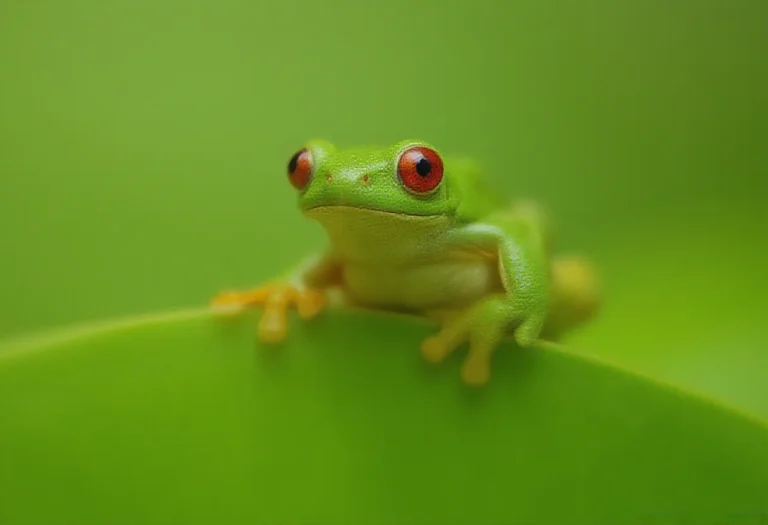
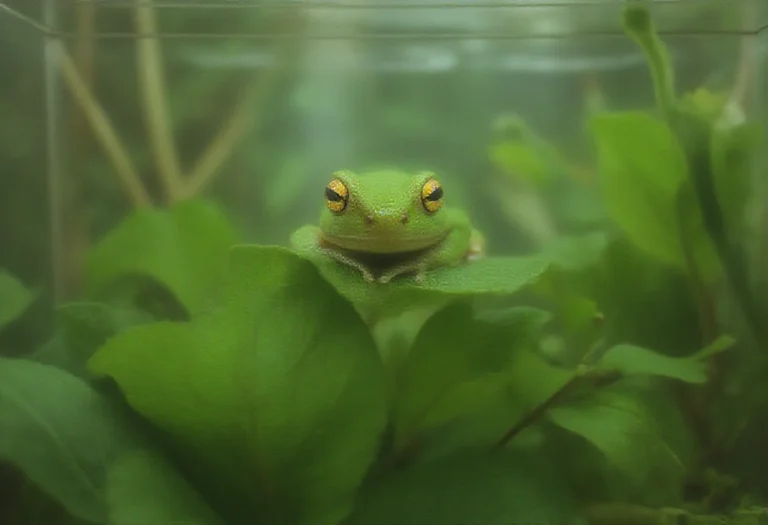
How this was made: prepared with AI assistance and checked against the sources listed at the end. Images are AI-generated illustrations, not photographs of real animals or products.
Key Takeaways
- Find your species’ range first; frogs and newts need very different temperatures.
- Use one thermometer for the water and one for the air in semi-aquatic setups.
- Digital probes and glass submersibles are the usual choices; check any model against a second one.
- Place the sensor away from heaters, filters and direct light.
- Read it daily and act before the water crosses the limit.
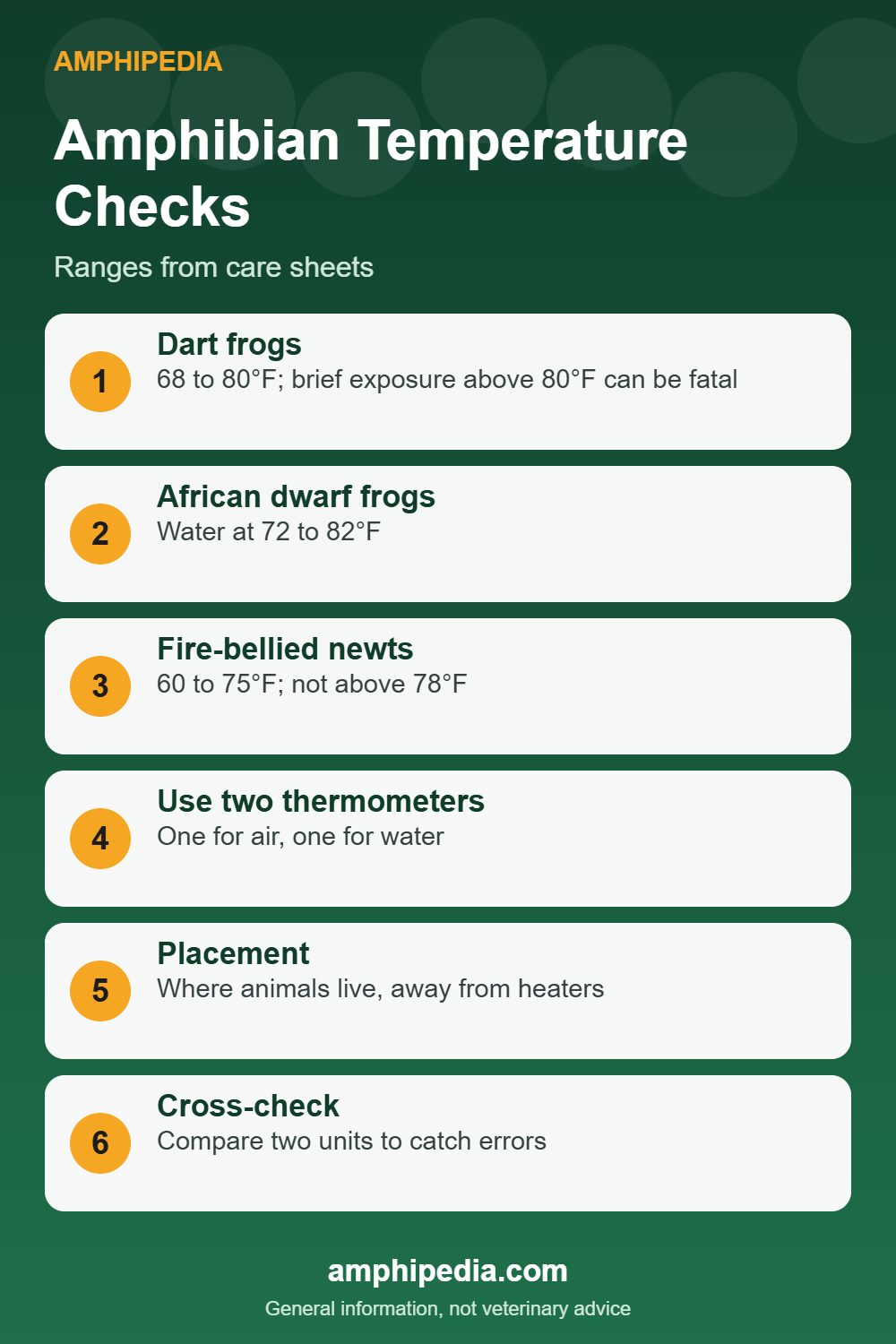
Pin this infographicShare on Facebook
Thermometers for amphibian tanks
These thermometers are drawn from live Amazon listings. Check the range matches your species before you buy.

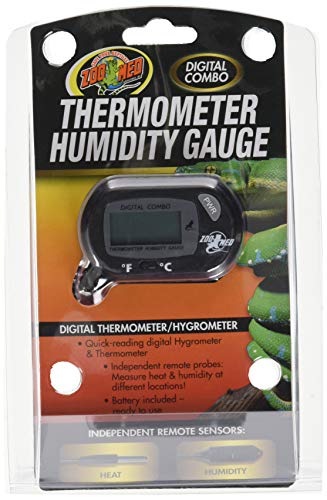


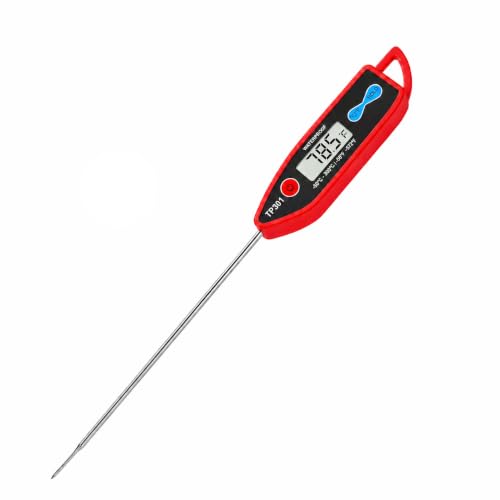

Product titles, prices and ratings are provided by Amazon and are accurate only at the time they are displayed.
Temperatures by species
No single number fits every amphibian. Petco’s arrow frog sheet gives a gradient from 68°F in the cool zone to no more than 80°F in the warm zone, and warns that brief exposure above 80°F can be fatal. Its African dwarf frog setup guide lists water at 72 to 82°F.
PetMD says fire-bellied newts do well at 60 to 75°F and must not go above 78°F. VetVerified gives 16 to 22°C for Japanese fire-bellied newt water and 18 to 22°C (64 to 72°F) for the eastern newt. These ranges overlap in places but differ widely at the top.
| Animal | Range from source | Source |
|---|---|---|
| Dart (arrow) frogs | 68 to 80°F; avoid above 80°F | Petco |
| African dwarf frogs (water) | 72 to 82°F | Petco |
| Fire-bellied newts | 60 to 75°F; not above 78°F | PetMD |
| Japanese fire-bellied newt (water) | 16 to 22°C | VetVerified |
| Eastern newt (water) | 18 to 22°C (64 to 72°F) | VetVerified |
Types of aquarium thermometer
Glass submersible, stick-on strip, floating and digital probe models are all sold. Each reads in a different way, and the best one is the one you can read quickly and trust.
Reptile Supply recommends a digital probe thermometer with the probe in the middle of the enclosure for dart frogs. The same idea works in a water tank: a probe on a thin cable can sit where the animals live.
- Digital probe: easy to read, the sensor goes where you need it.
- Glass submersible: simple and cheap, but fragile and needs a good suction cup.
- Floating models: move around and can be pushed against glass or pumps.
- Stick-on strips: read the outside of the glass, which can differ from the water inside.
How to choose
Look for a scale that includes your species’ range. A thermometer that only shows 70 to 90°F will not help a newt keeper who must stay near 64 to 72°F.
Check the numbers are large and the display is easy to see from across the room. A min and max memory is a bonus because it shows the highest point reached overnight.
- Range that covers your target temperatures with room to spare.
- Clear display or readable scale.
- Waterproof probe or sealed glass.
- Secure mount that will not fall onto an animal.
- Optional min and max memory.
- Fahrenheit and Celsius if your care sheet uses both.
Where to put it
PetMD advises both an air thermometer and a submersible aquatic thermometer for semi-aquatic habitats. Petco suggests at least two thermometers for dart frogs.
Keep the sensor away from heaters, filters and the lamp. Place it at a depth where animals actually sit. Check a second location, such as the far end of the tank, to find hot or cold spots.
- Pick the spot where the animals spend most of their time.
- Mount the sensor mid-water or mid-enclosure, not at the surface.
- Keep it away from heater elements and outflow.
- Add a second thermometer at the other end of the tank.
- Record a reading each day for the first week.
Check accuracy
Do not trust a single reading. Place two thermometers side by side in the same tank and compare them. If they differ by more than a degree or two, replace the one you trust least.
This is a simple home check, not a lab test, and we have not tested individual models. If you keep a species with a narrow limit, such as a dart frog at 80°F, buy two thermometers from different brands.
Heater, chiller or neither?
Many amphibians need cool rooms, not heaters. VetVerified says Japanese fire-bellied newts do not need a heater unless the home gets very cold, and PetMD says most newts need no supplemental heat above 60°F.
If the thermometer shows warm water in summer, shade the tank, move it away from windows, and add airflow. Our newt heater guide explains when heating helps.
Common mistakes
The most common error is relying on room temperature. A tank under a lamp can run warmer than the room, so measure the tank itself.
Another is using a thermometer scale for tropical fish, which may sit far above what a newt or salamander can take.
- Trusting one cheap strip without a check.
- Placing the sensor beside the heater.
- Ignoring the night-time low.
- Reading in direct light, where the tank warms fast.
- Forgetting to replace batteries in digital units.
Thermometers for outdoor ponds and travel
If you move animals to a new home or hold them briefly in a tub, a small thermometer in the tub helps you avoid heat spikes in a car or a sunny window. Keep the container shaded and out of direct light.
For outdoor ponds, place the thermometer in the shaded part of the water and check it at different times of day, since sun exposure changes water temperature.
Dart frog temperatures: how the sources differ
Dart frogs show why you should read more than one care sheet. The published ranges overlap, but the top end is not the same.
- Petco (arrow frog sheet): a gradient from 68°F in the cool zone and at night to no higher than 80°F in the warm zone. It says exposure above 80°F, even briefly, can be deadly.
- Reptile Supply: 72 to 80°F ambient by day, dropping as low as 65°F at night.
- LafeberVet (poison dart frogs): a daytime gradient of 72 to 80°F (22 to 27°C), with nights of 65 to 70°F (18 to 21°C).
- BGSU Herpetarium: room temperature is acceptable if it stays at or above 70°F, with a preferred range of 75 to 84°F.
BGSU’s preferred range runs higher than Petco’s deadly threshold. These are different documents written for different species and settings, so the numbers do not have to agree. But they do show that no single figure fits every dart frog.
If you are unsure which species you have, or the sheet is silent, the lower ceiling is the safer one to set your alarm on. A thermometer that you check against 80°F will catch a problem earlier than one set against 84°F.
What the thermometer is measuring: depth and zones
A reading is only useful if it is taken where the animal is. Several sources give details that decide where the sensor goes.
- PetMD says newt water should be at least 1.5 times the body length of the longest newt, and that semi-aquatic habitats need both an air thermometer and a submersible aquatic thermometer.
- VetVerified says Japanese fire-bellied newt water should be at least 20 cm (8 inches) deep.
- Petco says the water in an African dwarf frog tank should be no more than 12 inches deep, with a submersible heater placed near the filter.
Use these figures to decide where to mount the sensor. In deep water, check once near the surface and once near the bottom. In a planted tank, check at frog height among the leaves, not just above the substrate.
Cool-water species versus warm-water species
Not every amphibian wants the same kind of warmth. Merck notes that salamanders and newts (caudatans) prefer substantially lower temperatures than frogs and toads (anurans). It also says that each species has a preferred optimal temperature zone and that enclosures need a gradient so animals can choose.
For most amphibians, Merck says 16 to 21°C (60 to 70°F) is comfortable, with tropical species needing about 24 to 27°C (75 to 80°F). It advises spot-checking enclosures daily and mentions water chillers or air conditioning when cooling is needed.
That fits the newt figures in the table above: 64 to 72°F for the eastern newt, and 16 to 22°C for the Japanese fire-bellied newt. It also fits why VetVerified says the Japanese newt needs no heater unless the home gets very cold.
Logging readings for a week
The first week with a new thermometer is the best time to learn how your tank behaves. Petco says to connect heat sources to thermostats, and PetMD says lighting should not push newt temperatures outside the range. Readings show whether those things are working.
- Note the morning reading before lights come on.
- Note the reading in the afternoon, once lights and the room have warmed.
- Note the evening reading, and the night low if your thermometer stores it.
- Compare the highest and lowest values with the range for your species.
- Move the sensor, shade the tank or change the equipment if the swing is wider than expected.
Reptile Supply adds that a heat pad, if you need one, should go on the side or rear and not the bottom when you use live plants, and should run on a thermostat.
What to do when the reading is wrong
A reading outside the range is a prompt to check the equipment first, then the animal. Do not make big changes quickly.
- Confirm the reading with a second thermometer.
- Look for the cause: direct sun, a lamp, a heater stuck on, or a warm room.
- Make gradual changes. Shade the tank or turn off a lamp before you do anything drastic.
- Watch the animal for changes in behaviour or breathing.
- If the animal looks unwell, call an exotics vet. The CDC notes that most veterinarians do not treat reptiles or amphibians, so find one early. The ARAV directory at arav.org/professionals can help.
Frequently Asked Questions
What temperature should an amphibian tank be?
It depends on the species. Care sheets give 72 to 82°F for African dwarf frogs and 60 to 75°F for fire-bellied newts.
How many thermometers do I need?
Two is a safe rule. Petco recommends at least two for dart frogs, and PetMD suggests both air and water thermometers for semi-aquatic tanks.
Is a digital or glass thermometer better?
Either can work. Digital probes are easier to read, and glass models are simple. Compare any model against a second one.
Do newts need an aquarium heater?
Usually not. PetMD says most newts need no extra heat if the habitat stays above 60°F.
Where should the thermometer go?
At the depth where animals live, away from heaters, filters and lamps.
Can a thermometer fail?
Yes. Replace batteries on digital units and cross-check readings regularly.
Bottom Line
A good amphibian thermometer is easy to read, covers your species’ range and sits where the animals live. Use two, and compare them.
Check the temperature every day and act early if it creeps toward the limit.
Sources
- Petco: Arrow Frog Care Sheet, accessed 12 November 2026. Used for: dart frog temperature limits, two thermometers
- Petco: How to Set Up an African Dwarf Frog Tank, accessed 12 November 2026. Used for: African dwarf frog water temperature, tank and lid notes
- PetMD: Fire-Bellied Newt Care Sheet, accessed 12 November 2026. Used for: newt temperatures, air and water thermometers, water depth
- VetVerified: Japanese Fire-Bellied Newt, accessed 12 November 2026 (published 21 March 2025). Used for: water temperature, heater advice, water depth
- VetVerified: Keeping the Eastern Newt, accessed 12 November 2026 (published 21 September 2025). Used for: eastern newt water temperature
- Reptile Supply: How to Care for Poison Dart Frogs, accessed 12 November 2026. Used for: digital probe placement, dart frog day and night temperatures
- Merck Veterinary Manual: Environment and Husbandry for Amphibians (professional version), accessed 12 November 2026. Used for: preferred temperature zones, gradients, chillers
- Merck Veterinary Manual: Housing for Amphibians (pet owner version), accessed 12 November 2026. Used for: general temperature ranges
- LafeberVet: Basic Information Sheet, Poison Dart Frogs, accessed 12 November 2026. Used for: dart frog temperature gradient
- BGSU Herpetarium: Poison Dart Frogs (Dendrobates species, family Dendrobatidae), accessed 12 November 2026. Used for: dart frog preferred temperature range
- CDC: Reptiles and Amphibians, accessed 12 November 2026. Used for: finding an exotics vet

9 Comments