
Best Portable Habitat Box for Field Herping: Safe Use
This post contains affiliate links. As an Amazon Associate I earn from qualifying purchases. Prices and availability are shown by Amazon and can change.
A portable habitat box is a short-term viewing container, not a home. Pick a clear, ventilated, escape-proof box with a secure lid and smooth inside walls, and keep it shaded and slightly damp. USGS advises that animals in clear containers can injure their snouts and should be checked after an hour. Keep time in the box brief, wash your hands afterwards, disinfect gear between sites, and release the animal where you found it.
Field herpers sometimes want a brief close look or a photo. A small box makes that easier than holding an animal in wet hands, but it also adds risk if used badly.
This guide explains what a safe temporary container looks like, how to use it, how to limit disease spread, and why the best habitat box is often no box at all. It does not describe keeping wild amphibians as pets.
How this was made: prepared with AI assistance and checked against the sources listed at the end. Images are AI-generated illustrations, not photographs of real animals or products.
Key Takeaways
- A habitat box is for brief observation, not housing.
- Clear containers can cause snout injuries; USGS advises checking skin after an hour.
- Keep the box shaded, ventilated, clean and slightly damp.
- Wet your hands before handling and wash them afterwards (Maryland DNR).
- Disinfect gear between sites to limit disease spread.
- Collecting rules vary; check your state or national wildlife agency first.
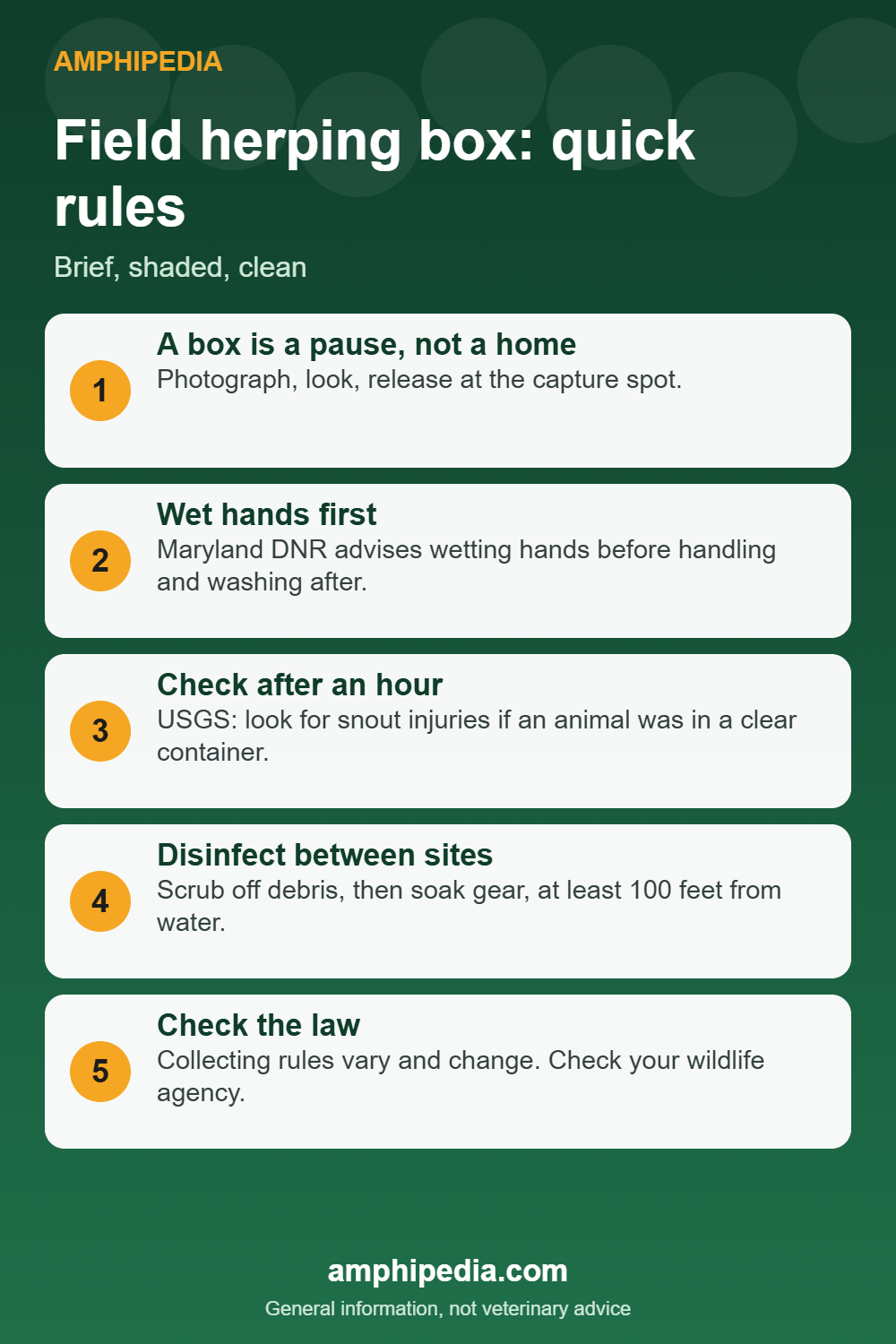
Pin this infographicShare on Facebook
Temporary viewing containers to consider
These are small clear containers sold for reptiles, insects and small animals. They are for brief viewing only. Check ventilation and smooth walls as described on this page.


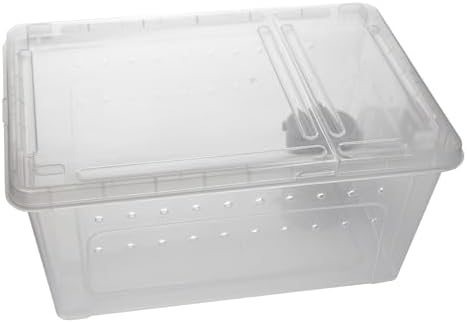
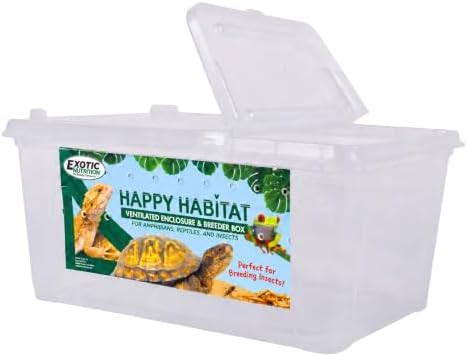

Product titles, prices and ratings are provided by Amazon and are accurate only at the time they are displayed.
When a box is the wrong tool
Many sightings need no container at all. You can photograph an animal where it sits, then leave. This avoids stress, skin damage and disease risk.
Maryland DNR advises that when you lift cover, you return it to its original position and let the animal find its own way home. It also warns against placing an animal under cover and then replacing the cover, which can cause injury.
If you do use a box, treat it as a pause, not a stop. Do not carry animals home to keep them. Released amphibians can also spread disease to native species, as Agriculture Victoria notes.
If you want a closer look, crouch low and use a phone camera zoom. A calm animal on its own ground gives better photos and is less likely to be hurt than one in a box.

What makes a safe temporary box
Think about stress, skin and escape. Smooth walls, air and a secure lid matter most.
- Secure lid with fine air holes, none large enough for the animal to push through.
- Smooth inside walls, with no rough seams or sharp plastic burrs.
- Clear walls for viewing, but with a shaded or covered area so the animal can hide.
- Enough height for the species, with a lid that does not pinch.
- A wipe-clean material that you can wash and disinfect between sites.
- No glass if you can avoid it; USGS notes animals in glass or clear containers may injure their snouts.
Size, material and ventilation
Choose the box to fit the animal and the outing. A tall, narrow container suits a tree frog; a wide, low one suits a toad or salamander. The box should let the animal stand or sit naturally without pressing against the lid.
Plastic is lighter and safer in a pack than glass. Look for tough, smooth plastic that you can wash. Avoid boxes with rough moulded seams on the inside, because skin is delicate.
Ventilation is crucial. Fine holes in the lid or sides let air in without letting the animal out. Check each hole with your finger for sharp edges before use.
No source we found tests individual field boxes on amphibians. Use your own inspection, keep the time short, and favour simple designs that are easy to clean.
How to use one with care
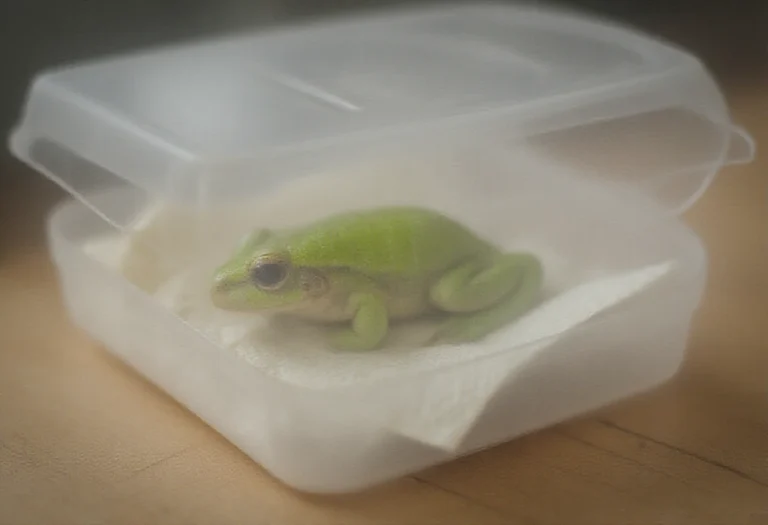
Bring the box in a cool bag or shade. Put a small amount of damp leaf litter or a damp paper towel inside. Do not add standing water or chemicals.
A cool, damp lining is enough. Skip soil, sand and moss clumps that can hide the animal or carry organisms from site to site. Replace the lining at each new site.
- Wet your hands with clean water before handling any amphibian, as Maryland DNR advises.
- Place the animal gently in the box and close the lid.
- Keep the box in shade, out of sun and away from hot cars.
- Look and photograph, then release as soon as possible.
- If the animal has been in a clear container for more than an hour, check its skin for injuries, especially the snout, before release (USGS).
- Release it on land at the capture spot, under the cover you lifted.
Hygiene and disease control
Amphibians can carry Salmonella, and field gear can carry pathogens from one site to the next. Wash your hands after handling, and wash them between species, because one species skin toxins may harm another (Maryland DNR).
Keep insect repellent, sunscreen and hand sanitiser away from amphibians, because these products can injure or kill them.
For gear, a US Fish and Wildlife Service decontamination protocol advises scrubbing off debris, then soaking for five minutes in either a quat disinfectant or fresh diluted bleach, at least 100 feet from water. Our guide to disinfectants for amphibian gear explains the options.
Related posts: amphibian transport container and handling gloves.
Check the law first
Collecting rules differ widely. Maryland DNR notes that regulations state which species may be collected, ban commercial trade in wild-caught animals and require permits for some methods. Agriculture Victoria says frogs are protected there and cannot be taken as pets.
Rules change, so check your current state, provincial or national wildlife agency before handling or holding any wild amphibian. When in doubt, observe and leave.
Mistakes to avoid
These errors cause most injuries.
- Leaving the box in sun, where it heats quickly.
- Keeping the animal for hours to take photos.
- Adding standing water, soil or chemicals to the box.
- Handling with dry or sunscreen-covered hands.
- Reusing the same box at a new site without cleaning and disinfecting it.
- Assuming a reptile or pet label means a box is safe for wild amphibians.
Why gear hygiene matters in the field
Boots, nets and boxes can carry disease from one wetland to the next. Two pathogens get most attention. Chytrid fungus (Batrachochytrium dendrobatidis, or Bd) infects amphibian skin. Ranavirus infects amphibians, fish and insects, and the National Park Service says it is not known to infect warm-blooded animals.
The Park Service describes ranavirus outbreaks as large numbers of sick and dead amphibians, especially larvae, with small skin ulcers and reddened, swollen skin on the belly and limb bases. A USGS fact sheet on iridoviruses lists lethargy, swimming in circles and an inability to stay upright.
That USGS sheet is old and says scientists did not know how chytrid moves between areas. The cautious approach is to treat every box, net and boot as a possible carrier.
A simple site-to-site cleaning routine
The US Fish and Wildlife Service protocol cited above sets out these steps for gear that touched water or sediment.
- Remove mud, plants and algae at the water, scrub with a stiff brush and rinse with clean water.
- Move at least 100 feet from any water before disinfecting.
- Submerge the gear for 5 minutes in the disinfectant, or spray items too large to submerge.
- Dispose of leftover solution at least 100 feet from water, wearing disposable gloves.
- Rinse gear well at the next site, away from water, before it touches any animal.
The protocol names a quaternary ammonium disinfectant as its preferred choice and fresh household bleach as the alternative. Sources differ on bleach strength. The USFWS protocol uses a 5 percent solution, about 1 part bleach to 20 parts water, while the National Park Service article says more than 10 percent. Follow the protocol your own agency or permit gives you.
The USFWS protocol also notes that if the next site is in the same immediate drainage, rinsing off organic debris is enough. Keep this routine for each new pond or stream, and wash the box itself too, not only the boots.
If you find sick or dead amphibians
Do not collect them to take home, and never move live animals from one pond to another. The National Park Service advises reporting disease outbreaks or die-offs to the USGS National Wildlife Health Center or your local wildlife department.
The USGS fact sheet describes die-offs as sudden deaths of dozens or thousands of amphibians, sometimes alongside dead small fish. Note the place, date, rough numbers and what you saw, and take photos from a distance.
- Use clean boots and a clean box when you leave, and disinfect before your next site.
- Wash your hands with soap and water, and keep gear away from food.
- Ask the agency before handling or sending any specimen, because they give the handling instructions.
Frequently Asked Questions
Can I keep a wild frog in a habitat box?
No. A box is for brief viewing. Collecting and keeping rules vary, and released animals can spread disease.
How long can an amphibian stay in a clear box?
USGS advises checking skin after more than an hour. Shorter is better.
Should I wet my hands?
Yes. Maryland DNR advises wetting hands before handling and washing afterwards.
Is glass safe?
USGS notes animals in glass or clear containers may injure their snouts. Use smooth, ventilated containers and keep time short.
How do I clean the box?
Scrub off debris, then disinfect. A US Fish and Wildlife protocol uses a five-minute soak at least 100 feet from water.
Is a reptile box safe for amphibians?
Not automatically. A reptile label is not an amphibian test.
Bottom Line
The safest habitat box is the one you rarely use. When you do, keep it shaded, smooth, ventilated and brief, and always release at the capture site.
Check local rules, wash your hands, and disinfect gear between sites.
Sources
- Maryland DNR: Herp survey techniques, collecting ethics, safety and the law, accessed Wet hands, release at the cover, hygiene and repellent warning.
- USGS National Wildlife Health Center: Restraint and handling of live amphibians, accessed Snout injury risk in clear containers; check after an hour.
- US Fish and Wildlife Service: Field decontamination protocol, accessed Cleaning and disinfecting field gear.
- Agriculture Victoria: Caring for your pet amphibian, accessed Wild collecting and disease spread by released amphibians.
- CDC: Reptiles and amphibians, accessed Salmonella and hygiene.
- National Park Service: Amphibian disease risk in the National Capital Region, accessed 12 Nov 2026. Chytrid and ranavirus signs; reporting outbreaks and disinfecting equipment.
- USGS National Wildlife Health Center: Amphibian diseases fact sheet (archived), accessed 12 Nov 2026. Disease signs, die-offs and reporting.



One Comment