Magnetic Feeding Dish for Dart Frogs: What to Check Before Buying
This post contains affiliate links. As an Amazon Associate I earn from qualifying purchases. Prices and availability are shown by Amazon and can change.
A magnetic feeding dish is a small ledge or cup that sticks to the inside of the glass with a magnet on the outside. It gives dart frogs a fixed place to eat and makes cleanup easier. Check that the magnet is sealed, the dish is shallow so frogs cannot drown, and the surface is easy to wash. Clean it before every feeding, as DartFrog.pet advises.
Dart frogs eat tiny live prey, such as fruit flies. A fixed feeding spot keeps leftover food off the substrate and lets you see how much your frogs eat.
A feeding dish is optional, but it is a useful habit. This guide explains how magnetic dishes work, what to check, and how to keep them clean and safe.
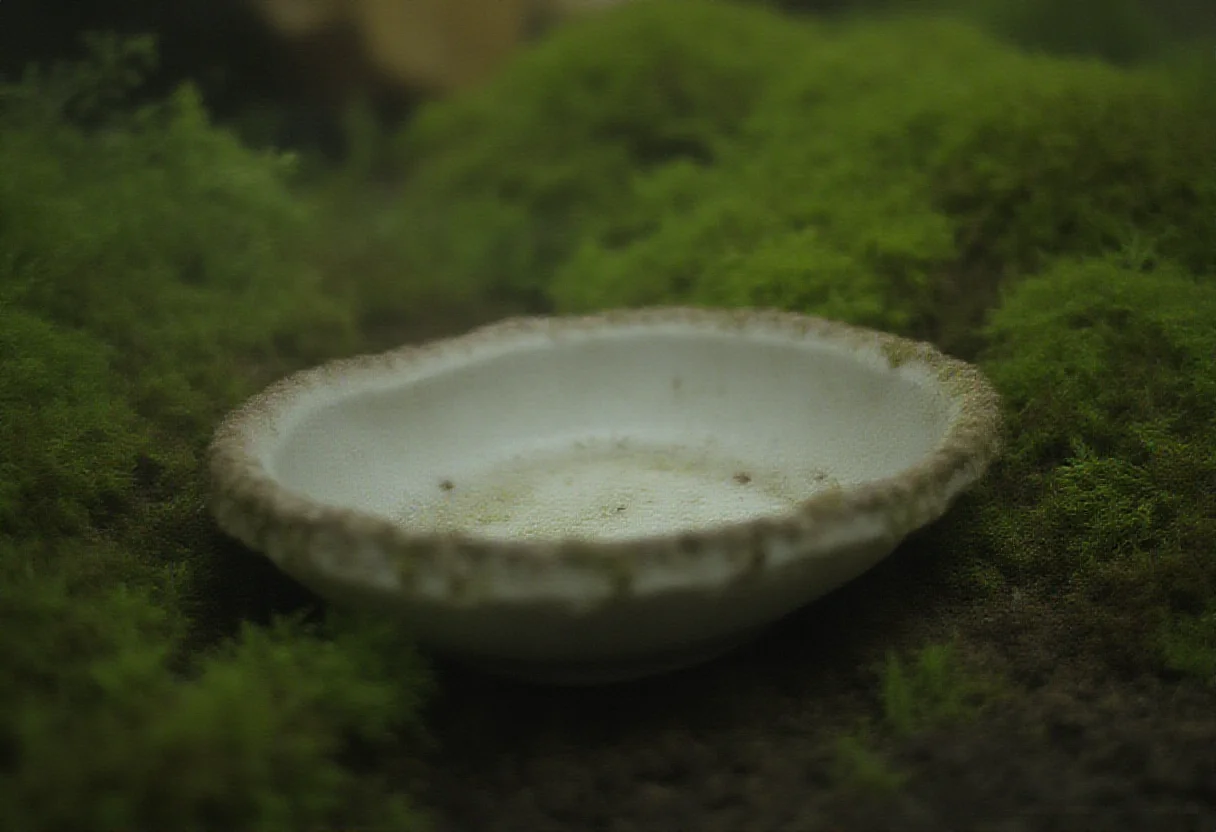
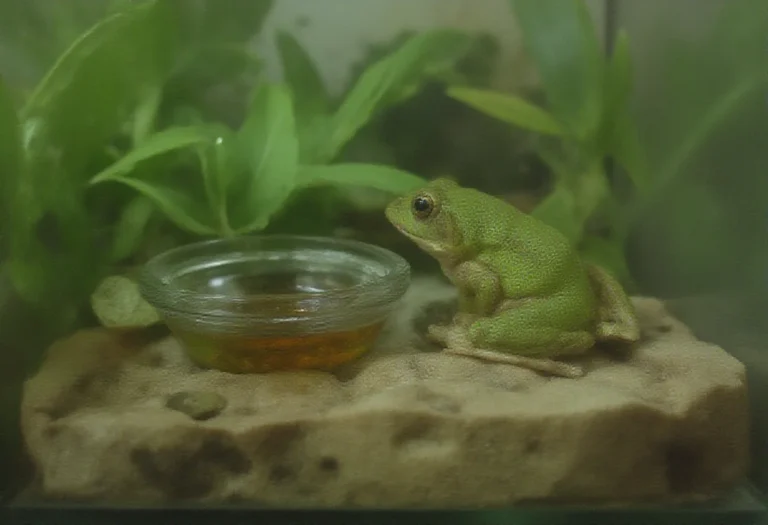
How this was made: prepared with AI assistance and checked against the sources listed at the end. Images are AI-generated illustrations, not photographs of real animals or products.
Key Takeaways
- A feeding dish is optional, but it makes it easier to see what is eaten.
- Choose a shallow dish that frogs cannot drown in or get trapped by.
- Magnets must be sealed and strong enough for your glass.
- Clean the dish before every feeding.
- Place the dish where frogs already walk, not in a corner they avoid.
- Remove uneaten food daily to stop mould and pests.
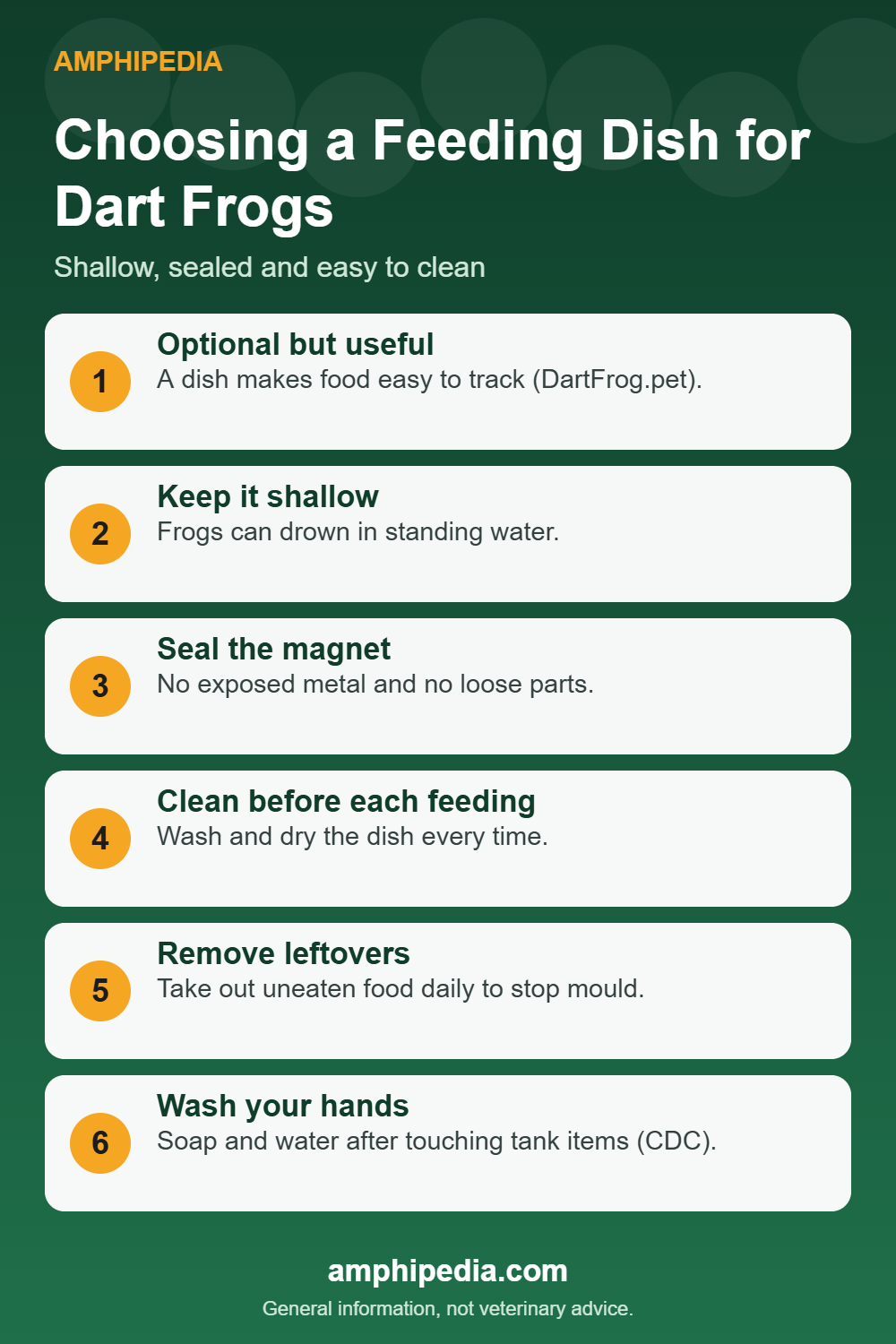
Pin this infographicShare on Facebook
Magnetic feeding ledges to compare
These magnetic feeding ledges are sold for geckos and other reptiles. Check that the dish is shallow and the magnet is sealed before using one for dart frogs.


Product titles, prices and ratings are provided by Amazon and are accurate only at the time they are displayed.
Why use a feeding dish
Dart frogs hunt moving prey on the substrate and leaves. Food that drops into soil or leaf litter can get lost, rot or attract pests.
DartFrog.pet says a feeding dish is optional, and advises cleaning it before every feeding. A dish gives you one place to check, refill and wash.
How a magnetic dish works
The dish carries a magnet inside. A second magnet on the outside of the glass holds it up at the height you choose. You can move it as plants grow.
Strength must match the glass. Check the stated glass thickness before you buy. A weak magnet slips; a strong one is hard to reposition. Test it with the enclosure empty.
Safety checks
A dish in a damp enclosure faces water, food and constant use. Check each of these before you buy.
- Fully sealed magnet, with no exposed metal.
- Shallow, smooth interior so frogs can climb out.
- No narrow gaps where a toe or leg could catch.
- No small loose parts.
- A non-toxic plastic or glass body that does not crack when damp.
- Edges that are smooth and not sharp.
Drowning and water dishes
DartFrog.pet generally does not recommend water dishes, because frogs can drown in standing water and should get water from misting. The same logic applies to a feeding dish.
Keep a feeding dish dry and shallow. Do not fill it with water. If a dish collects condensation or mist, tip out the excess when you clean it.
Placement
Place the dish where your frogs already move. Watch them for a day or two before you decide.
- Pick a spot at or just above the substrate, near plants.
- Keep it away from water-heavy areas such as drains.
- Fix it firmly and check the magnet hold.
- Add a small amount of food so frogs learn the spot.
- Watch for several days and move the dish if frogs avoid it.
Cleaning and hygiene
Remove uneaten food each day. Wash the dish with clean, warm water and let it dry before reuse. Avoid soap and strong chemicals unless you can rinse them off completely.
Hygiene matters for people too. The CDC advises cleaning habitat items outside the kitchen and washing hands with soap and water afterwards.
Choosing the size and shape
Dart frogs are small, so the dish should be small too. A wide, shallow dish is easier for a frog to reach than a deep cup.
Pick a size that fits your tank wall and leaves room for plants. A tiny dish fills fast and needs more frequent refills. A large dish takes up too much space.
If frogs ignore the dish
Frogs may take a few days to use a new spot. Keep it in the same place and add food at the same time each day.
If they still ignore it, move the dish nearer to where they hunt. Watch for a few days and adjust. Never force a frog toward the dish.
Dish materials
Glass and glazed ceramic are smooth, non-porous and easy to wash. Many plastic dishes also work if they are smooth and food-safe, but scratched surfaces are harder to wash thoroughly, so replace a damaged dish.
Avoid painted or decorated dishes where the paint could flake. Avoid anything with rough edges. Pick a plain light-coloured dish so you can see leftover food and dirt.
One dish or two
In a small tank, one dish is enough. In a larger tank, or if your frogs seem to compete, add a second dish at the other end.
Place them apart so each frog has a clear route. Watch for a few days to see whether both dishes are used, and remove one if it sits empty and dirty.
Alternatives
A flat piece of cork bark or a small, shallow ceramic lid can work as a feeding spot. A bioactive cleanup crew deals with leftovers in a planted tank.
Compare dishes with a corner dish for other species, and see how background choices affect layout in our guide to dart frog tank backgrounds.
What goes in a feeding dish, and what the sources say
The MSD Veterinary Manual says most captive amphibians need live food long term. For terrestrial species it lists invertebrates such as earthworms, springtails, fruit flies, mealworms and crickets. DartFrog.pet, the dart frog setup guide used here, names no feeder insects at all and lists the dish only as optional. So the choice of prey is up to you and your vet, and the dish only changes where it is offered.
Think about what the prey does. A dish suits prey that stays near the dish and cannot easily escape. Fast, flying prey may leave it at once. Match the dish to the prey you use, rather than the other way around.
Supplement powders and dish hygiene
MSD says vitamin and mineral supplements prevent nutritional disease. Methods include gut-loading insects, offering high-calcium commercial diets, and dusting insects with powdered multivitamins that contain vitamin D3 and calcium. It also says amphibians cannot make carotenoids, so they need a vitamin A source. Neither source gives dusting amounts or schedules, so ask your vet for them.
Dusted prey leaves powder on a dish. Wash the dish before each feeding, as DartFrog.pet advises, so old powder and damp food do not build up. Rinse thoroughly with clean water, since residue left in a small dish is a direct exposure for a small frog.
Dish or no dish for water? The sources differ
DartFrog.pet says water dishes are generally not recommended because frogs can drown in them, and that frogs need misting several times a day. It recommends distilled or reverse osmosis water and says to avoid tap, well, rain and roof runoff water. It also says to avoid standing water.
MSD takes a wider view of captive amphibians. It says terrestrial species need a shallow water container, and lists misting, small streams, waterfalls and ultrasonic humidifiers as other moisture sources. These are general statements for all species, not dart frog rules. If you are unsure, follow the care sheet for your own species and keep any feeding dish dry.
MSD also lists chlorine, chloramines, ammonia, nitrite, pesticides and heavy metals as water contaminants. Use treated or purified water for misting and for rinsing the dish.
Humidity, temperature and the dish
DartFrog.pet gives typical humidity of 80 to 90 percent depending on the frog species, with temperatures held in the 70s F. A feeding ledge sits in that damp air all day. MSD adds that ventilation of one to two fresh air changes per hour helps prevent disease and that poor ventilation, or unsuitable temperature and moisture, make infectious and nutritional diseases more likely.
The practical point is that condensation will collect on any dish, so wipe it dry when you clean the glass.
Leaf litter and cleanup crews around the dish
DartFrog.pet describes leaf litter placed on top of the soil to hold moisture and feed the cleanup crew. It names live oak and magnolia leaves as sturdy options, and says they can be bought sterilized or sterilized at home. Dwarf white isopods feed on frog waste and leaf litter, and tropical springtails eat decomposing matter. The source calls both essential for a bioactive vivarium.
A cleanup crew may reduce leftovers on the substrate, but it does not replace removing uneaten food and washing the dish.
How many frogs, how much space
DartFrog.pet gives a minimum starter size of 10 gallons, with about 5 gallons per frog, and a 29-gallon long tank for a pair or trio. It suggests the longest side should be 24 to 36 inches. More room means more routes to a dish, and a single dish in a crowded tank is more likely to cause competition.
Troubleshooting a dish that is not working
- The dish slides: the magnet may be too weak for your glass thickness. Test with the enclosure empty.
- Frogs ignore it: move it nearer the places they already hunt and feed at the same time each day.
- Mold or smell: remove uneaten food daily and wash the dish. If the problem returns, switch to a smaller portion.
- Dish stays wet: wipe it dry. A wet dish becomes a small pool, and DartFrog.pet warns against standing water.
- A frog looks unwell: stop adding new items and contact an exotics vet. The ARAV directory is at arav.org/professionals.
Common mistakes
- Treating the dish as required. DartFrog.pet lists it as optional.
- Using tap water to rinse or mist without treatment.
- Putting cedar or pine in the same tank. MSD lists cedar and pine mulches as toxic.
- Skipping the vet. The sources do not give dusting amounts, so they cannot replace advice for your species.
Frequently Asked Questions
Do dart frogs need a feeding dish?
No. DartFrog.pet lists a feeding dish as optional. It helps you track food and keep the substrate clean.
How often should I clean the dish?
Before every feeding, as DartFrog.pet advises. Remove uneaten food each day.
Is a magnetic dish safe?
It can be, if the magnet is sealed, the dish is shallow and no gaps can trap a frog. Check each product.
Can I put water in the dish?
No. DartFrog.pet generally advises against water dishes because frogs can drown. Provide water through misting.
Where should I place it?
Where frogs already walk, near the substrate and plants, and away from drains and wet spots.
Can a reptile dish work for dart frogs?
Only if it is shallow, smooth and easy to clean. Reptile labels do not mean amphibian-tested, so judge the safety yourself.
Bottom Line
A magnetic feeding dish is a small convenience, not a requirement. The best choice is shallow, sealed and easy to clean.
Check your frogs’ habits, place the dish where they already hunt, and wash it before every feeding.
Sources
- DartFrog.pet: Dart Frog Vivarium Setup, accessed 12 November 2026
- CDC: Reptiles and Amphibians, accessed 12 November 2026
- MSD Veterinary Manual: Environment and Husbandry for Amphibians, accessed 12 November 2026


3 Comments