Dechlorinators for Amphibian Water: How to Choose
This post contains affiliate links. As an Amazon Associate I earn from qualifying purchases. Prices and availability are shown by Amazon and can change.
The best dechlorinator for amphibian water removes both chlorine and chloramine, has no added dyes or perfumes, and is used exactly as the label says. Amphibians absorb water through their skin, so untreated tap water can harm them. Standing water lets chlorine evaporate, but it may not remove chloramine, so check what your water supplier uses and use a conditioner that states it removes chloramine.
Frogs, salamanders and tadpoles take in water and dissolved substances through their skin. Tap water that is safe for people can still irritate or harm them if it contains chlorine or chloramine.
This guide explains the difference, how to age or treat tap water, what to check on a label, where to use treated water and the mistakes to avoid.
How this was made: prepared with AI assistance and checked against the sources listed at the end. Images are AI-generated illustrations, not photographs of real animals or products.
Key Takeaways
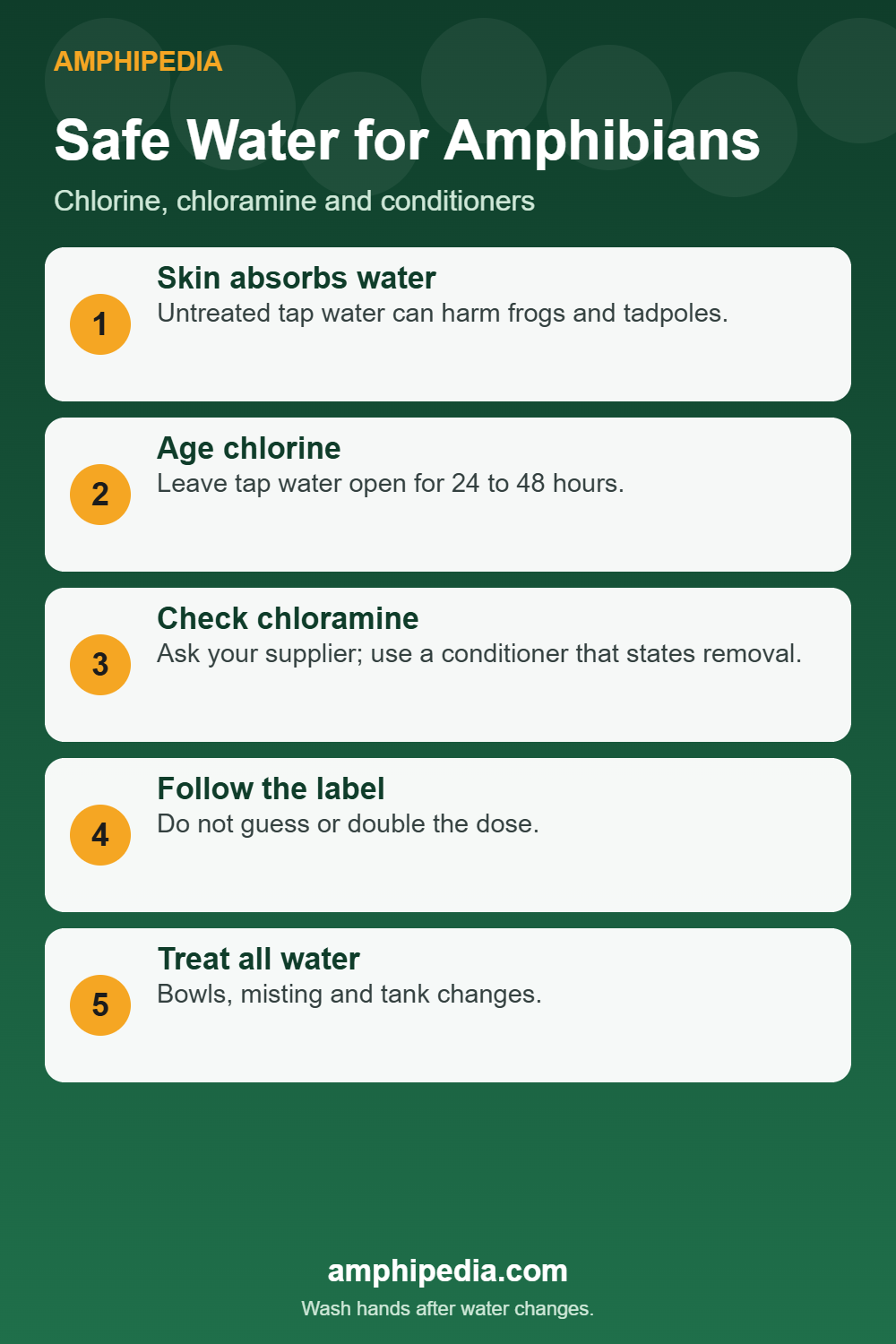
- Amphibians absorb water through the skin, so water quality matters.
- Standing tap water lets chlorine evaporate; chloramine may need a conditioner.
- Look for a product that says it removes chlorine and chloramine.
- Follow the label for use; do not guess amounts.
- Treat water for drinking dishes, soaking dishes, misting and tadpole tanks.
- Wash your hands after water changes and tank work.
Pin this infographicShare on Facebook
Conditioner picks
These conditioners are sorted by price from high to low. Check that each label states it removes chlorine and chloramine.


Product titles, prices and ratings are provided by Amazon and are accurate only at the time they are displayed.
Why untreated tap water is a problem
PetMD says frogs should be given dechlorinated water. The Victorian Frog Group notes that chlorine and chloramines can harm tadpoles, and that fresh tap water can hold excess air that makes tadpoles float and lose control.
Adult frogs and salamanders also drink and soak. Mist water, water bowls and aquatic tanks should all be treated.
Chlorine versus chloramine
Many water suppliers add chlorine. Some use chloramine, a more stable compound. LafeberVet says aged tap water, left open for 24 to 48 hours, lets chlorine dissipate. The Victorian Frog Group says the same about chlorine, but does not say chloramine evaporates.
Your water supplier can tell you which one they use. If it is chloramine, use a conditioner that states it removes chloramine.
| Method | Removes chlorine | Removes chloramine |
|---|---|---|
| Standing water for 24 to 48 hours | Yes | Not stated; do not rely on it |
| Water conditioner that states chloramine removal | Yes | Yes, per the label |
| Bottled spring water | Not needed | Not needed |
| Filtering through sediment and activated charcoal | Listed by LafeberVet as an option | Check the filter specification |
Options you can use
LafeberVet lists aged tap water, bottled spring water, or tap water filtered through sediment and activated charcoal for dart frogs. For many keepers, a liquid conditioner is the easiest option because it works at once.
Seachem markets its axolotl conditioner for axolotl tanks and states it removes chlorine and chloramine. The page makes no claims for other amphibians, so check the label of any product you plan to use for frogs.
What to look for on the label
Read the front and the back. The wording matters more than the design.
- States that it removes chlorine and chloramine.
- Safe for aquariums, reptiles or amphibians, as stated.
- Free of added dyes, perfumes or aloe, unless you have checked they are safe.
- Clear instructions for dose per volume.
- A bottle size that fits your needs.
- A reasonable shelf life after opening.
What to look for when you buy
This page does not include hands-on tests. The checklist below reflects label claims and published care advice.
- Chloramine removal stated clearly.
- A formula marketed for aquariums or amphibians.
- No unnecessary additives.
- Reviews from keepers of frogs, newts or axolotls.
- A dropper or measuring cap.
- A trusted maker with contact details on the label.
How to treat water
Make this part of your routine. Keep a labelled container of treated water ready.
- Find out whether your supplier uses chlorine or chloramine.
- Fill a clean container with tap water.
- Add the conditioner exactly as the label directs.
- Mix and let it sit for the time on the label.
- Use it for water bowls, misting and water changes.
- Wash your hands and rinse the container.
Where to use treated water
Use it for water dishes, soaking spots, misting reservoirs, tadpole and aquatic tanks and rinsing equipment. Pour the old water down the toilet, as the CDC advises for tank wastewater.
See our terrarium water conditioner guide and our hand mist sprayer guide for misting.
Tadpoles and delicate species
Tadpoles are especially sensitive. The Victorian Frog Group says to change water regularly and to change at least half immediately if it turns cloudy or milky. It also warns against fish in tadpole tanks.
If you raise tadpoles, treat every change of water and keep sprays, deodorants and cleaning products away from the tank.
Common mistakes
Avoid these problems.
- Using untreated tap water for bowls or misting.
- Assuming standing water removes chloramine.
- Using human products such as supplements or cleaning agents.
- Overdosing because more seems safer.
- Changing all the water at once in an established aquatic tank.
- Forgetting to treat water used to rinse equipment.
Related care
See also our reptile-safe sanitizer guide for keeping gear clean.
What chloramine is and why standing water may not fix it
Pinellas County, a Florida water utility, explains that chloramine is a disinfectant made by combining chlorine with ammonia. It says chlorine evaporates from aquarium water on its own, but chloramines do not. It adds that chloramines are toxic to fish, reptiles, turtles and amphibians.
That is why the two methods in this guide are not equal. Aging tap water for 24 to 48 hours can work for chlorine, per LafeberVet. For chloramine, Pinellas says removal needs a water conditioner made for the job or a granular activated carbon filter.
The ammonia question
Chloramine contains ammonia, so removing it can release some. Pinellas notes that ammonia can be toxic to fish and that commercial products, biological filters, zeolites and pH control can reduce its effects. The Merck Veterinary Manual says chloramine bonds should be split with specific dechlorinating agents first, then the water filtered to remove chlorine and ammonia.
The University of Kentucky axolotl guide also lists chlorine, chloramines and ammonia as things to remove from tap water. Seachem’s axolotl page claims its product detoxifies ammonia and heavy metals. That is a manufacturer claim, not independent testing.
For an aquatic tank, this is one more reason to keep a biological filter and watch ammonia readings. Water chemistry in a bowl, a mister reservoir and a cycled tank are different problems.
Water types compared
The sources give different answers for different animals. Read the notes before you copy any single recommendation.
| Water type | What the sources say |
|---|---|
| Aged tap water | LafeberVet: sit in an open container for 24 to 48 hours so chlorine can dissipate. Not a chloramine fix, per Pinellas. |
| Carbon-filtered tap | Merck: circulate through a carbon filter for at least 24 hours to remove chlorine. LafeberVet lists a sediment and activated charcoal filter as an option. |
| Bottled spring water | LafeberVet lists it as an option for dart frogs. |
| Distilled or RO water | DartFrog.pet says dart frog keepers choose distilled or RO. Merck says distilled water should not be used in amphibian enclosures. The University of Kentucky says never to house axolotls in extremely soft or distilled water. |
| Rainwater | Aqualog prefers rainwater or bottled water over chlorinated tap for chubby frogs. DartFrog.pet does not recommend rainwater because of pollution risks. |
Merck, DartFrog.pet and Kentucky do not agree, and the disagreement matters for misting reservoirs. Ask an exotics vet which water suits your species before you switch.
Finding out what your supplier uses
The Pinellas page names its own supplier and directs readers to customer service for more information. It does not give a general lookup method. The practical step is to contact your own water supplier and ask whether it uses chlorine or chloramine, and whether it changes the disinfectant at any time of year.
Pinellas also says pet suppliers can advise on removal products. Treat that as a starting point and still read the label for the word chloramine.
Tadpole water details
The Victorian Frog Group says to let tap water stand for 24 hours in a clean bucket so excess air can escape. It says room temperature is enough, and that warmer water becomes dirty more quickly. It also advises leaving some waste on the tank bottom, since tadpoles feed on it.
The same page warns that excess food quickly goes off and suggests frozen endive or lettuce rather than boiled food, which releases nutrients into the water. It adds that tadpoles may die from polluted water before people notice it, so change at least half the water at the first sign of cloudiness.
When water trouble looks like illness
Poor water can show up as poor health. The University of Kentucky guide says stressed axolotls are vulnerable to bacterial infections, with loss of appetite and gill deterioration among the early signs. Petco lists cloudy eyes, open sores, labored breathing, weight loss and bloating as signs for a vet.
If you see these signs, do not just add more conditioner. Check the water source, the dechlorinator used and any recent changes, and call an exotics vet. Our terrarium water conditioner guide covers related products.
Frequently Asked Questions
Do frogs need dechlorinated water?
Yes. PetMD says frogs should be provided dechlorinated water, and tadpoles are especially sensitive to chlorine and chloramine.
Does standing water remove chlorine?
Chlorine dissipates when tap water is left open for 24 to 48 hours, according to LafeberVet. Chloramine may not.
What is chloramine?
It is a disinfectant some suppliers use in place of chlorine. Ask your supplier which one they use.
Can I use bottled water?
LafeberVet lists bottled spring water as an option for dart frogs. Check the label and your species’ needs.
Is a conditioner safe for all amphibians?
Check the product label. Some are marketed for axolotls, and not all state they are for frogs.
How much conditioner should I use?
Follow the label. Do not guess or double the dose.
Bottom Line
Clean water is basic care for amphibians. Treat tap water before it touches the animal, and know which disinfectant your supplier uses.
Follow the label, avoid additives and wash up after every water change.
Sources
- PetMD: Frog Care 101. Used for: dechlorinated water, hides, plants, substrate and cleaning.
- LafeberVet: Basic Information Sheet, Poison Dart Frogs, accessed 12 November 2026. Used for: aged tap water, bottled spring water and filtered tap water options for dart frogs.
- Victorian Frog Group: Tadpoles, accessed 12 November 2026. Used for: chlorine and chloramines, standing tap water, tadpole water changes and feeding.
- Seachem: Axolotl Conditioner, accessed 12 November 2026. Used for: manufacturer claims on chlorine, chloramine and ammonia; axolotl marketing.
- Pinellas County: Facts About Chloramines, accessed 12 November 2026. Used for: what chloramine is, evaporation, removal methods, ammonia
- Merck Veterinary Manual: Housing for Amphibians (pet owner version), accessed 12 November 2026. Used for: carbon filter, chloramine, distilled water statement
- DartFrog.pet: Dart Frog Vivarium Setup, accessed 12 November 2026. Used for: distilled and RO water, rainwater
- University of Kentucky Ambystoma Genetic Stock Center: guide to axolotl husbandry, accessed 12 November 2026. Used for: water type, chloramine, health signs
- Aqualog: Focus on Kaloula pulchra, accessed 12 November 2026. Used for: rainwater and bottled water preference
- Petco: Axolotl care sheet, accessed 12 November 2026. Used for: vet signs
- CDC: Reptiles and Amphibians (Healthy Pets, Healthy People). Used for: hand washing, cleaning habitats away from kitchens, and high-risk groups.



23 Comments