Best Micro Heater Thermostat Combo for Amphibian Setups
This post contains affiliate links. As an Amazon Associate I earn from qualifying purchases. Prices and availability are shown by Amazon and can change.
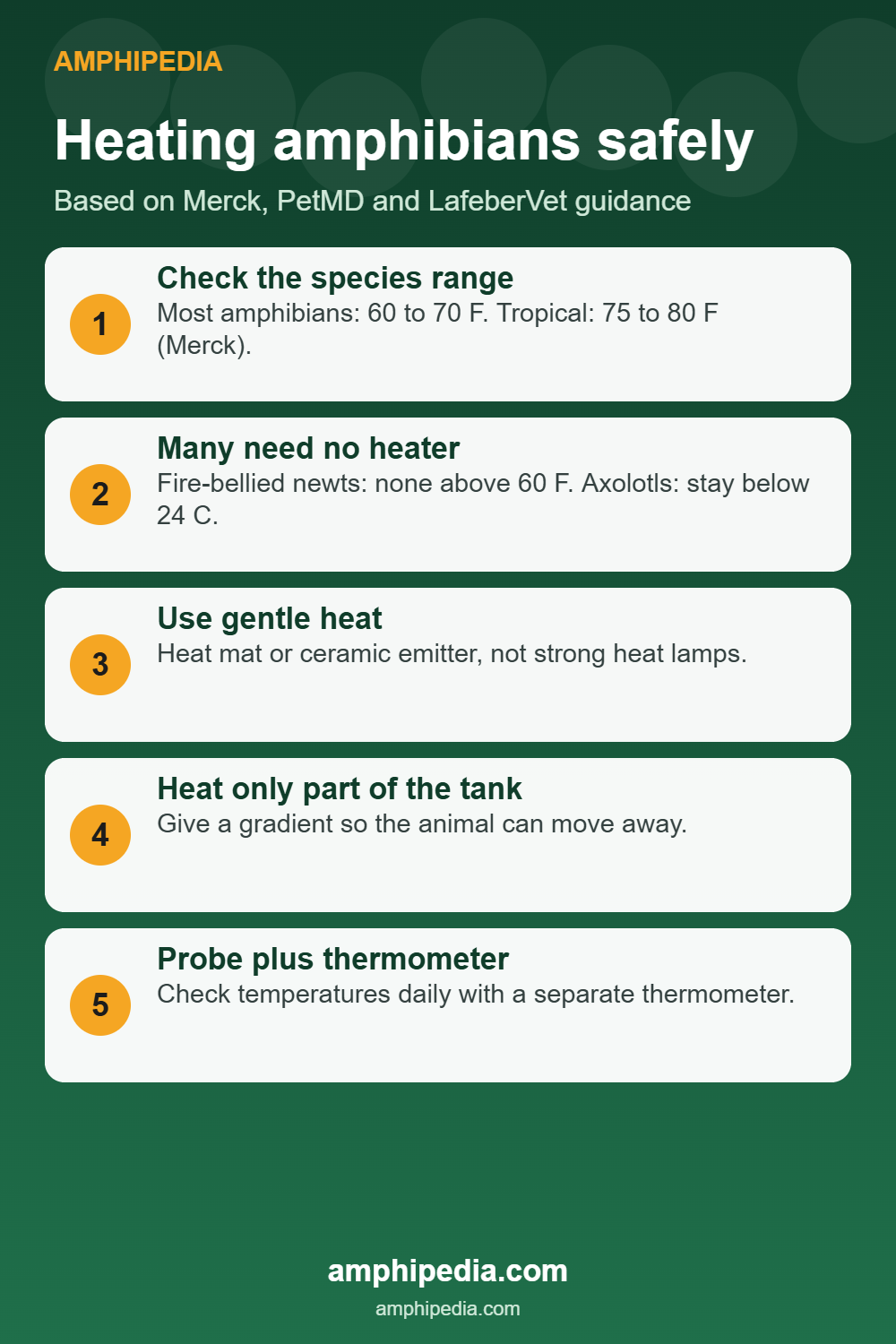
A micro heater thermostat combo pairs a small heat source with a controller that switches it off at a set temperature. Many amphibians need no heater at all. Merck says most do well at 60 to 70 F (16 to 21 C), while tropical species may need 75 to 80 F. If your species needs warmth, a thermostat with a probe at animal level is the safer way to provide it.
Heat is easy to get wrong with amphibians. Too little slows metabolism, and too much can kill. PetMD warns that it is easy for frogs to overheat, leading to heat stress and death.
This guide explains when a heater is needed, why a thermostat matters, what to check in a combo kit, and where to place the probe. It does not rank individual products or claim tests.
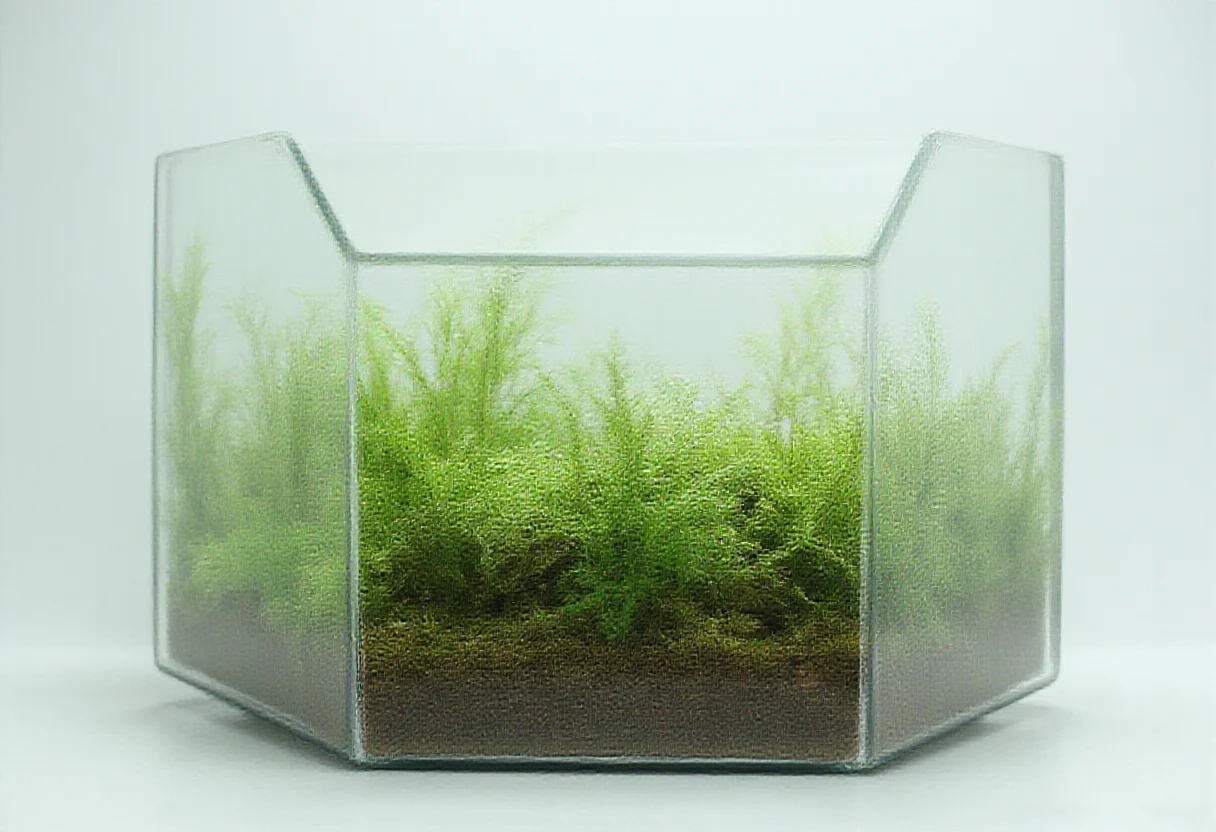
How this was made: prepared with AI assistance and checked against the sources listed at the end. Images are AI-generated illustrations, not photographs of real animals or products.
Key Takeaways
- Check your species first. Many amphibians, including most newts, need no supplemental heat in a normal room.
- Merck gives 60 to 70 F (16 to 21 C) as a good range for most amphibians and 75 to 80 F (24 to 27 C) for tropical species.
- A thermostat limits the maximum, but it does not replace a thermometer.
- Use gentle heat sources such as a heat mat or ceramic emitter, not strong heat lamps that dry the air (VetVerified).
- Cool-water species such as axolotls need cooling, not heating.
Pin this infographicShare on Facebook
Small heat mats and thermostats to compare
These are reptile-labelled heat mats and thermostat controllers, not tested on amphibians. Confirm that your species needs added warmth before you buy.



Product titles, prices and ratings are provided by Amazon and are accurate only at the time they are displayed.
Does your amphibian need a heater?
Often the answer is no. PetMD says most fire-bellied newts do not need supplemental heat if the habitat stays above 60 F, and advises keeping the enclosure below 78 F.
Merck says the range an amphibian needs varies by species and is generally lower than for reptiles. Caudates (salamanders and newts) prefer much cooler temperatures than anurans (frogs and toads).
Axolotls are cool-water animals. LafeberVet gives 15.6 to 17.8 C (60 to 64 F) as the preferred range and warns that water above 24 C (75 F) carries a high risk of illness.
When gentle heat may help
Tropical frogs and some aquatic species can need warmth in a cool house. VCA lists 72 to 80 F for African dwarf frogs and 75 to 85 F for White’s tree frogs, and Petco gives 72 to 82 F for African dwarf frogs.
These ranges differ between sources, so confirm the range for your exact species with a vet or a trusted care sheet before setting a thermostat.
Why a thermostat matters
A heater without control can overheat a small enclosure. A thermostat reads a probe and cuts power when the set temperature is reached.
A thermostat is a safety layer, not a guarantee. Probes can drift or sit in the wrong place, so also use a separate thermometer. Merck advises at least one thermometer in every enclosure and daily checks.
What to check in a micro heater thermostat combo
Kits sold as combos vary a lot. Read the listing for these basics, and do not rely on claims you cannot verify.
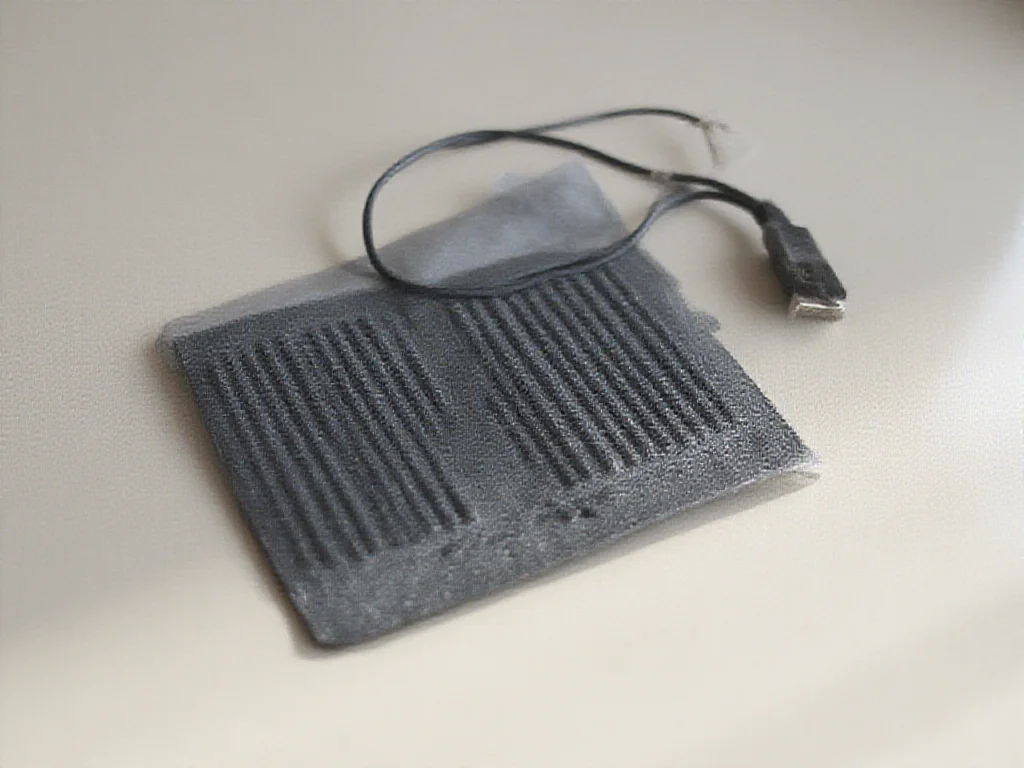
- A heat source suited to your species: a mat or cable under part of the floor, or a low-wattage emitter above a mesh top.
- A thermostat that lets you set a maximum and shows the reading.
- A probe cable long enough to reach animal level.
- Power rating that matches the heater, with room to spare.
- Safety certification marks that apply where you live.
- A mounting method that keeps the controller dry and away from mist.
Heat sources that suit amphibians
VetVerified advises avoiding heat lamps because they dry out the air, and suggests a heat mat or ceramic heat emitter for warmth. PetMD says heat lamps are often unnecessary for frogs.
Always heat only part of the enclosure so the animal can move to a cooler spot. Merck advises a thermal gradient within the preferred temperature zone.
Setting the target temperature
Set the thermostat below the top of your species range, not at it. Room temperature and sunlight change through the day, and a controller that holds the upper limit leaves no margin.
Raise or lower the setting in small steps and watch the thermometer for a day before changing it again. If the enclosure stays warm without the heater running, you may not need it.
Plan for failures
Controllers can fail. A stuck switch can keep a heater on, and a power cut can leave an enclosure cold. Merck notes that temperatures outside the preferred range can cause immunosuppression and nutritional problems.
Check the setup after any power cut. Keep the heater, cable and controller away from plants, water and bedding that could trap heat, and unplug the kit when you clean the enclosure.
Where to put the probe
- Place the thermostat probe at the height where the animal spends its time, not on the heater itself.
- Keep the probe off the substrate surface directly above a heat mat, which reads hotter than the air.
- Put a separate thermometer in the cooler end of the enclosure.
- Check both readings daily for the first week and after any change.
- Move the probe if readings swing widely.
Water heaters are a different product
This guide covers small heat mats and emitters for terrestrial enclosures. Submersible heaters for aquatic species are a separate kit. See our guides to the low-profile water heater for a terrarium and the aquarium heater for newts.
For controllers on their own, read our guides to the heat mat thermostat controller and the temperature regulator for terrarium heaters.
Common mistakes
- Heating a species that does not need it.
- Placing the probe on the heat source.
- Using a heat lamp that dries the enclosure.
- Skipping a separate thermometer.
- Heating the whole floor so the animal cannot escape the warmth.
- Forgetting that a power cut can leave the enclosure cold or the controller reset.
Heat and humidity change each other
Adding warmth changes moisture. Warm air dries faster, and many amphibians lose water through the skin. A heater that fixes one number can break another.
The Merck Veterinary Manual (pet owner version) says most amphibians do well at 75 to 80 percent humidity, while tropical species may need 85 to 90 percent. It advises a humidity gauge in every enclosure, as well as a thermometer. Lafeber Veterinary gives 80 to 100 percent for dart frogs and warns against radiant heat sources because they dry the habitat.
- Read both gauges at the same time of day.
- If humidity falls after the heater starts, mist more or add moisture sources before raising the heat further.
- Merck lists streams, waterfalls, ultrasonic humidifiers and frequent misting as ways to add moisture.
- Keep the heater on one side so a cooler, damper zone remains.
Night temperatures: what sources say
Many keepers let tanks cool at night. The sources do not fully agree on how far.
| Source | Species | Temperature advice |
|---|---|---|
| Lafeber Veterinary | Poison dart frogs | Day 72 to 80 F (22 to 27 C); night may fall to 65 to 70 F (18 to 21 C) |
| BGSU Herpetarium | Poison dart frogs | Preferred 75 to 84 F; room temperature is acceptable if it does not drop below 70 F |
| Merck (pet owner) | Most amphibians | 60 to 70 F (16 to 21 C); tropical species 75 to 80 F (24 to 27 C) |
Because the ranges overlap but differ, pick your species first, then ask a breeder or exotics vet which night low they use. Set the thermostat so it does not push the whole enclosure toward the top of the daytime range.
A daily and weekly monitoring routine
Merck advises daily checks of enclosure temperature. A heater and thermostat help only if somebody reads the numbers. Use this simple routine.
- Daily: read the thermometer at animal level and in the cool end. Note the humidity reading.
- Daily: replace food and water, as Merck advises for amphibian enclosures.
- Daily to weekly: spot-clean the floor covering.
- Weekly: disinfect spray bottles and humidifiers (Merck).
- After a power cut or a thermostat setting change: recheck both temperatures within the hour.
Write the readings in a notebook or phone note. A short log makes a drift easy to spot and gives your vet something useful if an animal looks unwell. Merck says temperatures outside the preferred range can cause immune suppression, secondary infections and poor nutrient absorption.
Cleaning around heaters and cables
Merck advises disinfecting cleaning tools and dishes with a bleach solution of 30 mL per litre of water, left for at least 30 minutes, then rinsed and dried. That applies to dishes and tools. Do not soak controllers, plugs or heat mats. Follow the maker for any electrical part, and unplug first.
Wear disposable gloves when cleaning, as Merck suggests, and keep the controller dry and off the floor of the room where mist or spills collect.
Frequently Asked Questions
Do frogs need a heater?
Some tropical frogs do in a cool room, but many do not. PetMD says heat lamps are often unnecessary and that frogs overheat easily. Check your species range first.
Do newts need a heater?
Most do not. PetMD says fire-bellied newts need no supplemental heat if the habitat stays above 60 F, and should stay below 78 F.
Is a thermostat enough to make a heater safe?
No. It limits the maximum, but probes can drift or be misplaced. Use a separate thermometer too.
Can I heat an axolotl tank?
Usually no. LafeberVet says axolotls prefer 15.6 to 17.8 C and risk illness above 24 C. They may need cooling instead.
What heat source is best for terrariums?
VetVerified suggests a heat mat or ceramic heat emitter instead of heat lamps, which dry the air. Heat only part of the enclosure.
How often should I check the temperature?
Merck advises checking enclosures daily. Check more often when you change heater settings.
Bottom Line
A micro heater thermostat combo is useful only when your species needs warmth. Confirm the temperature range, heat part of the enclosure, and place the probe where the animal lives.
Add a separate thermometer, check it daily, and ask an exotics vet if readings or behaviour worry you. Keep notes of the settings that work through the seasons.
Sources
- Merck Veterinary Manual: Housing for Amphibians, accessed Temperature ranges, thermometers
- Merck Veterinary Manual: Environment and Husbandry for Amphibians, accessed Thermal gradient, preferred temperature zone
- PetMD: Frog Care 101, accessed Overheating, heat lamps
- PetMD: Fire Bellied Newt Care Sheet, accessed No supplemental heat above 60 F
- VetVerified: Terrestrial juvenile amphibians, accessed Heat mat or ceramic emitter
- LafeberVet: Care of the Axolotl, accessed Axolotl temperature range
- VCA: Frogs as Pets, accessed Species temperature ranges
- Petco: African Dwarf Frog Care Sheet, accessed Water temperature 72 to 82 F
- CDC: Reptiles and Amphibians, accessed Salmonella and hygiene
- BGSU Herpetarium: Poison dart frogs, general care, accessed 12 November 2026
- Lafeber Veterinary: Basic information sheet, poison dart frog, accessed 12 November 2026
One Comment