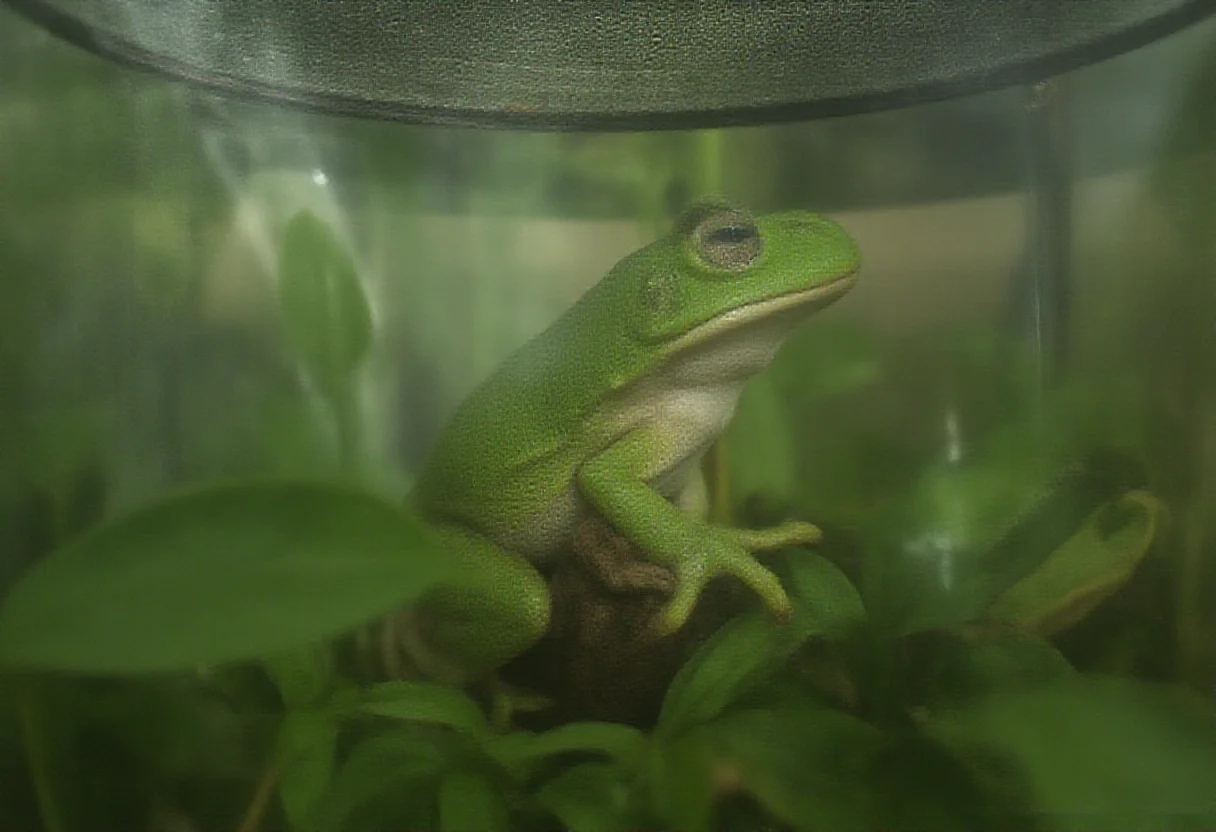
Screen Lid for a Terrarium: Escape-Proof and Frog Safe
This post contains affiliate links. As an Amazon Associate I earn from qualifying purchases. Prices and availability are shown by Amazon and can change.
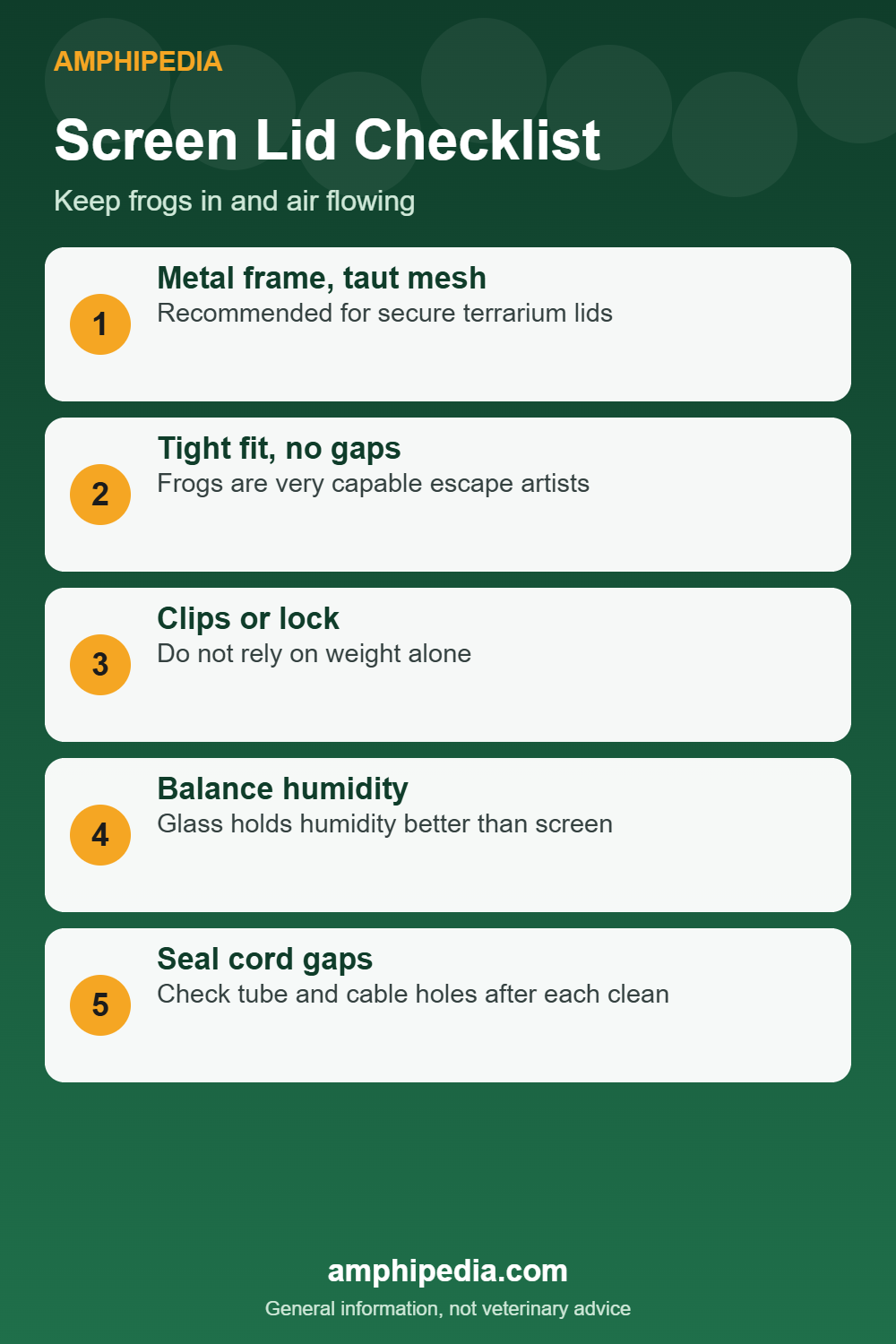
A screen lid for a terrarium should fit tightly, lock or clip down and give ventilation while keeping frogs in. Frogs are very capable escape artists, so choose a metal frame with mesh and check for gaps at the corners and around cords. A screen also lets humidity escape, so for tropical frogs cover part of it or choose a glass top with controlled vents.
A lid is the one part of a terrarium that keeps your animal inside. It also controls airflow and humidity, so a poor choice can cause an escape or a dry tank.
This guide explains what to look for in a screen lid, how to balance ventilation and humidity and how to fit and secure one. It focuses on frogs, but the same checks suit many terrarium animals.
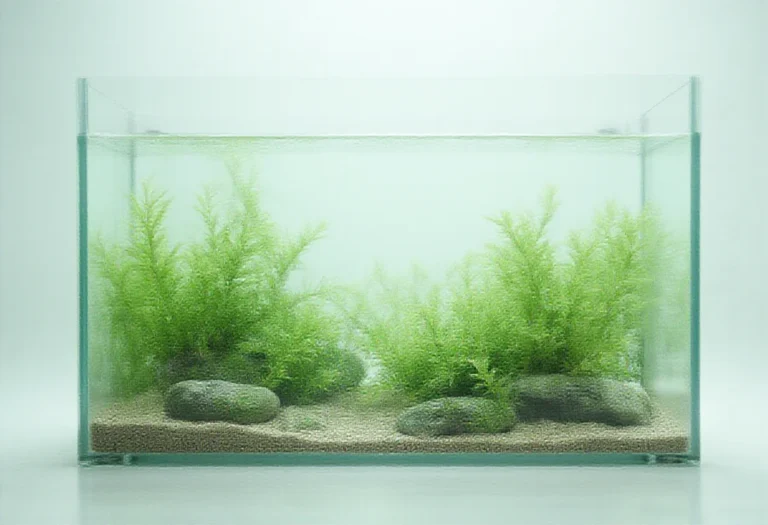
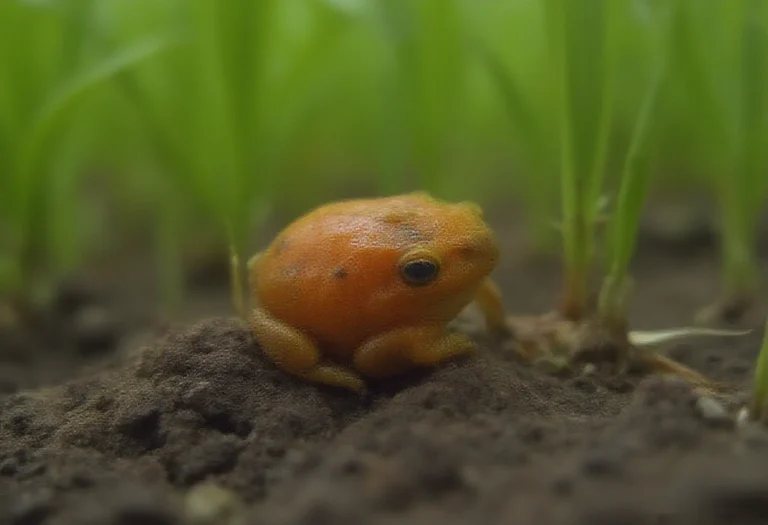
How this was made: prepared with AI assistance and checked against the sources listed at the end. Images are AI-generated illustrations, not photographs of real animals or products.
Key Takeaways
- Frogs are extremely capable of escaping, according to NSW Education.
- Metal frames with mesh are recommended for secure lids.
- Screen gives ventilation, but glass holds humidity in better, says DartFrog.pet.
- Measure your tank before you buy, because lids are sold for set sizes.
- Use clips or a lock, and close gaps around cords and tubes.
- Check mesh edges for sharp wires, and avoid lids that melt near heat lamps.
Pin this infographicShare on Facebook
Terrarium Screen Lids Worth Considering
Lids are sold for set tank sizes, so match your exact length and width. Listed from highest to lowest price.
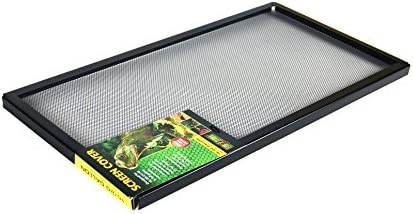


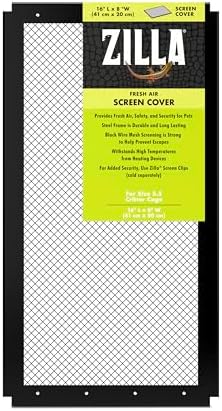

Product titles, prices and ratings are provided by Amazon and are accurate only at the time they are displayed.
Why the lid matters
A NSW Education page on green tree frogs says frogs are extremely capable of escaping enclosures, so enclosures must be very secure. It recommends a lid built from a metal framework with mesh attached, and says green tree frogs need good ventilation, which a mesh lid provides.
A Petco care sheet for red-eyed tree frogs also calls for a securely fitting screen top to prevent escape and allow adequate ventilation.
A lid failure can mean a lost animal, a frog on the floor or contact with other pets. It is worth spending time on fit.
Ventilation versus humidity
Screen lets air move, which helps prevent stale air and mould. It also lets moisture out. DartFrog.pet says a glass top, not a screen, is what holds humidity in for dart frogs, which need 80 to 90 percent humidity in many cases.
Many keepers cover part of a screen top with glass or acrylic to find a balance. Others use a glass top with built-in vents. Either way, watch with a hygrometer at frog level.
Species differ. A tree frog from a drier area may need more airflow than a dart frog. Check a care sheet for your own species.
| Lid type | Good for | Trade-off |
|---|---|---|
| Full screen lid | Strong ventilation, easy access | Humidity drops quickly in dry rooms |
| Screen with partial cover | Balanced airflow and humidity | Needs adjusting by season |
| Glass top with vents | Holds humidity for tropical frogs | Less airflow and needs vent design |
| Hinged or sliding panel | Easy feeding and cleaning | Gaps if the hinge or runner is loose |
Features that matter
Look past the photo and check these points. Lids are sold for fixed tank sizes, so match the exact length and width.
- A metal frame with a tight, taut mesh
- A snug fit with no gaps along any side
- Clips, a latch or a lock to keep the lid down
- Mesh that is fine enough to stop your feeder insects
- A hinge or access door that closes fully
- Smooth edges with no loose wire ends
- Cut-outs for cords and tubes that can be sealed
- A heat-safe design if you use lamps nearby
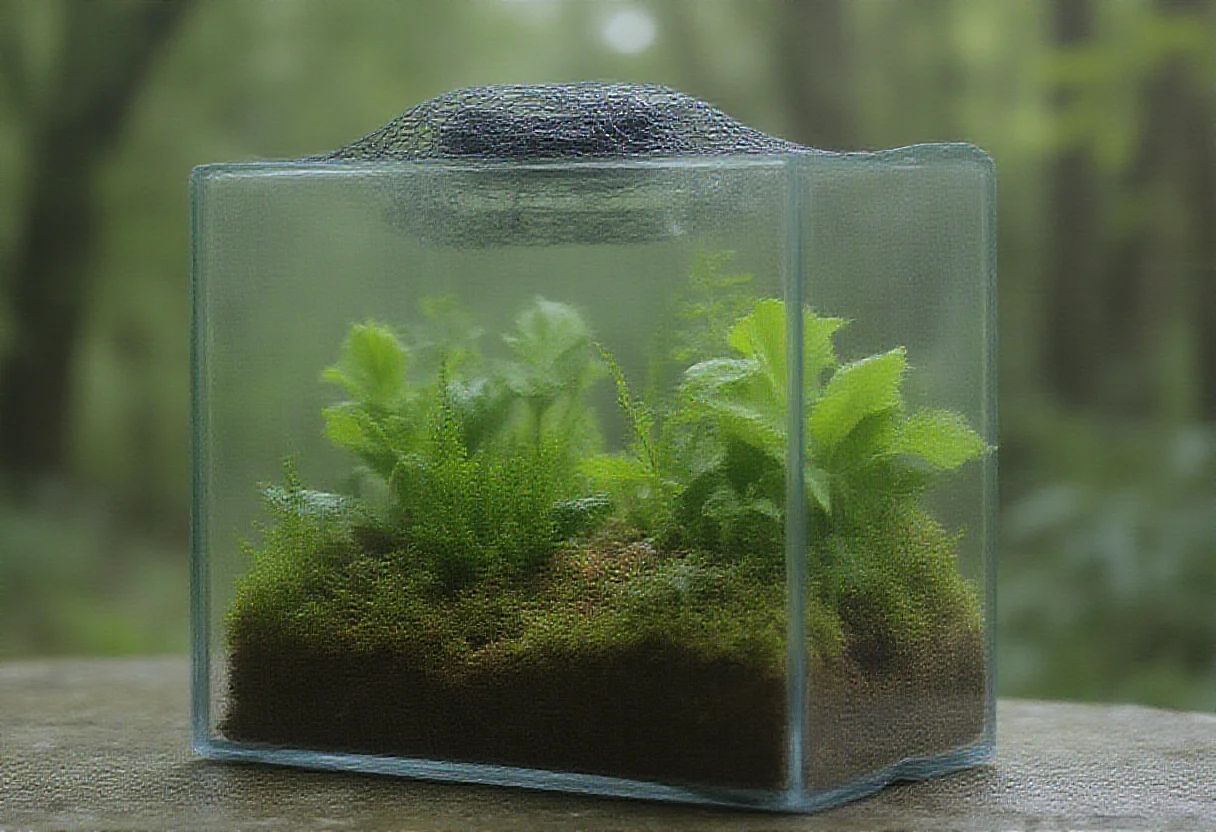
Measure and fit
Measure the outer rim of your tank at both ends and in the middle, since some tanks are not perfectly square. Note any trim, braces or lips that sit on top of the rim.
A lid must sit evenly on the rim. Lay a sheet of paper along each edge. If the paper slides under the lid, there is a gap a small frog can use.
If you build a custom top, DartFrog.pet describes a glass top with a plastic back strip that can have holes cut for wires, pipes and vents. That is a common DIY approach for glass tanks.
Secure it against escapes
Add clips or a latch even if the lid seems heavy. Frogs are good at finding a small gap, and a pet or child can knock a loose lid aside.
Seal the gaps where cords and tubes pass through with a safe, aquarium-grade material. Check them after every maintenance session. Our guide to a terrarium divider screen mesh covers fine mesh options.
Cats and dogs can push a lid. Place the terrarium on a stable stand in a room you can close, and keep the lid weighted or clipped.
Heat, lamps and materials
Lamps can get hot. Plastic parts may warp near hot fixtures, so follow the lid maker’s guidance. If you use a heat or light fixture, choose a lid made for it and keep a safe gap.
Metal frames can rust in a wet terrarium. Check for rust and flaking each month. Replace a frame that is rusting or bent.
Check the mesh for sharp points. Frogs climb on the lid, and a rough edge can scratch delicate skin.
Pair the lid with humidity gear
A lid is one part of a humidity plan. Pair it with a hygrometer and a way to add moisture. See our guides on the frog tank humidity stabilizer and the automatic rainmaker.
If you also need a spare enclosure, read about the quarantine tank for amphibians. Every enclosure needs its own secure lid.
Common mistakes
The usual mistakes are buying the wrong size and trusting the weight of a lid. Another is covering the whole screen and then finding mould.
- Do not buy a lid without measuring the tank rim.
- Do not leave gaps around tubes and cords.
- Do not rely on weight alone to hold a lid down.
- Do not use a plastic lid under a hot lamp.
- Do not ignore rust or loose mesh.
Cleaning
Wipe lids with plain water and a soft cloth. Keep scented sprays away from the tank. If you disinfect a lid, rinse it thoroughly and let it dry fully before it goes back on.
The CDC says reptiles and amphibians can carry Salmonella even when healthy. Wash your hands after touching the lid, tank or animal, and clean parts outdoors or in a laundry sink, not the kitchen sink.
What the care sheets say about lids for different frogs
Lid advice depends on the frog. The sources below describe three very different set-ups, so there is no single best top.
- Green tree frog (Australian species): NSW Education recommends a lid with a metal frame and mesh, which gives airflow and holds frogs in.
- Red-eyed tree frog: Petco asks for a securely fitting screen top and a humidity range of 60 to 90 percent.
- Dart frogs: DartFrog.pet suggests replacing the stock screen top with glass, with vents added, and targets 80 to 90 percent humidity.
Notice the split. Some sheets call for a mesh top, while the dart frog advice favours a mostly closed top with controlled vents, because the humidity target is higher. Check the care sheet for your exact species before you pick a lid style.
Lamps and heat: where the lid fits in
Many lids double as the support for a light or heater. That is where a lid choice can turn dangerous.
NSW Education says to mount heat lamps outside the enclosure to prevent contact burns, and to use a thermostat to avoid overheating. It also asks for a temperature gradient, with the heat source at one end so frogs can move away from it. For green tree frogs it gives an air temperature of 20 to 25 C.
Petco advises at least two thermometers for red-eyed tree frogs. Its heating options include an under-tank pad covering half the tank, run with a thermostat. A pad needs no lid support at all.
- Fix lamps so they cannot slide or fall onto the mesh.
- Keep the fixture outside the mesh so a frog cannot touch the bulb.
- Check the mesh above a lamp for warping or discoloration each week.
- Stabilise the temperature before the frog goes in, as NSW Education advises.
How much airflow does a lid need?
Ventilation is hard to judge by eye. The Merck Veterinary Manual gives a figure of about 1 to 2 air changes per hour for amphibian enclosures. You cannot measure that at home without equipment, so use results instead.
Two signs may help, although they are rules of thumb rather than sourced limits. Constant condensation on every surface, or a musty smell, suggests too little airflow. A hygrometer reading that never reaches your species range, even with regular misting, suggests too much.
DartFrog.pet builds vents from egg crate with screen door mesh set into a plastic strip at the back of a glass top. It also describes cutting holes for small fans. The point is that airflow can be designed and adjusted, rather than left to a full screen.
Access panels and feeding without escapes
Most escapes happen when the lid is open, not when it is shut. Plan for access before you buy.
DartFrog.pet describes a glass top cut into two pieces, with a handle on the front piece to make a lift-up panel. It also says many reptile enclosures open at the front, which makes maintenance easier than reaching in from above.
- Open only the smallest part of the lid you need.
- Keep one hand over the opening while you place food or plants.
- Count the animals if you keep more than one, and look before you close.
- Never leave a lid propped open for a minute “while you fetch something”.
Troubleshooting a lid that does not work
- The tank is always dry: cover part of the screen, or switch to a glass top with vents, and re-check the hygrometer.
- Mould or a stale smell: open more of the lid, or add a vent, and reduce standing water.
- A small frog gets out: find the gap with the paper test, then seal it or fit a finer mesh.
- The lid rattles or lifts: add clips, and check that the tank rim is not chipped or uneven.
- A feeder insect escapes: check mesh size, and check the cord cut-outs first.
Change one thing at a time and give it a few days. Changing several parts at once makes it hard to see which fix worked.
Frequently Asked Questions
Do frogs need a screen lid?
Most terrarium frogs need a secure lid with ventilation. A mesh lid supplies airflow, and glass tops or partial covers help hold humidity.
Can a screen lid hold humidity?
Not well. DartFrog.pet says a glass top, not a screen, holds humidity in, so many keepers cover part of the screen.
How do I stop frogs escaping?
Use a snug lid, clips or a lock and seal gaps around cords and tubes. Check after every cleaning.
What mesh size should I choose?
Choose mesh that stops your feeder insects and that the frog cannot push through. Smaller feeders need finer mesh.
Is a plastic lid safe near lamps?
Only if it is made for the lamp. Keep a gap and check for warping.
Can I use a screen lid on an aquarium?
Yes, if it fits the rim and has access for feeding and cords. Aquatic tanks may also need a cover for evaporation.
Bottom Line
A good screen lid is tight, locked and sized to your tank. It keeps your animal in and lets air in, and it lets you adjust humidity.
Measure first, secure second and check regularly.
Sources
- NSW Education: Green tree frog environment, accessed 12 November 2026. Used for: escape risk, mesh lids, lamp placement
- Petco: Red-eyed tree frog care sheet, accessed 12 November 2026. Used for: screen top, humidity range, thermometers
- DartFrog.pet: Vivarium, accessed 12 November 2026. Used for: glass top, vents, access panel
- CDC: Reptiles and Amphibians, accessed 12 November 2026. Used for: Salmonella, where to clean equipment
- Merck Veterinary Manual: Housing for Amphibians (pet owner version), accessed 12 November 2026. Used for: ventilation figure, humidity gauge


4 Comments