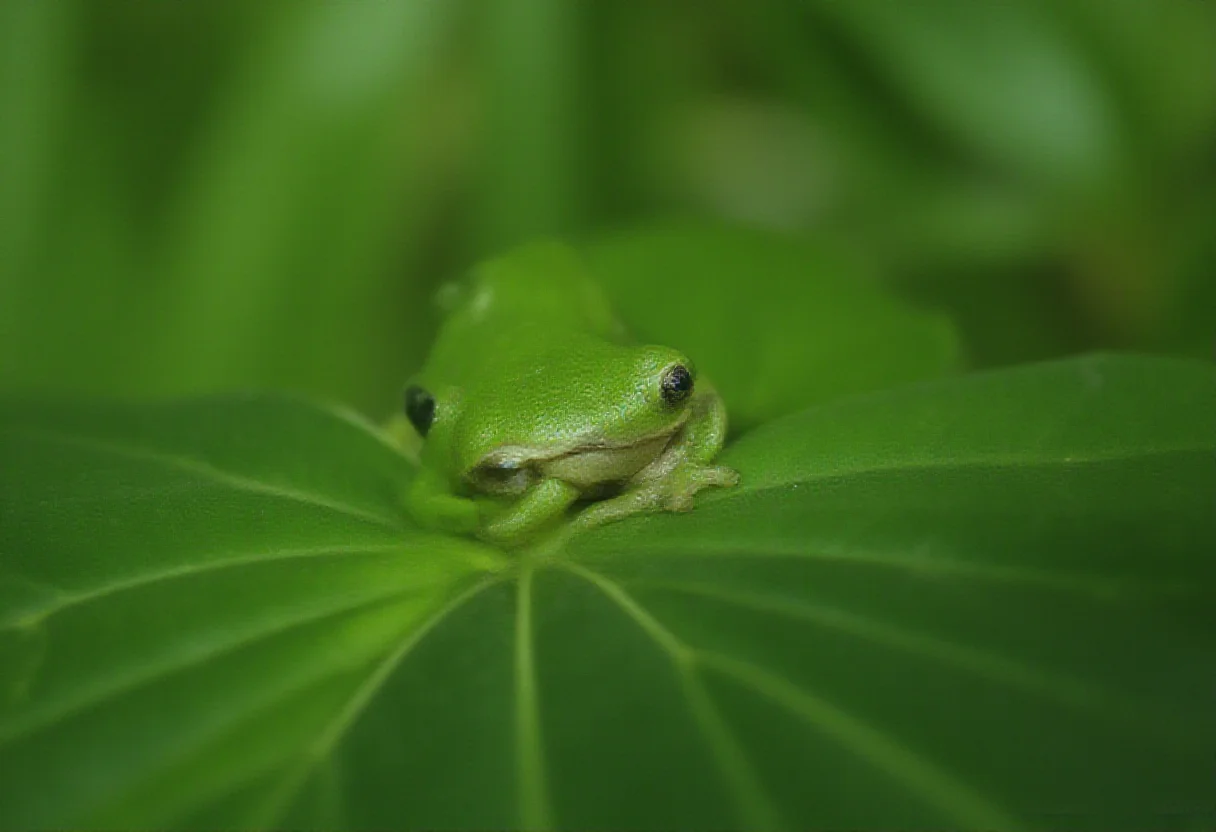
Best Terrarium Thermometer With Probe for Amphibians
This post contains affiliate links. As an Amazon Associate I earn from qualifying purchases. Prices and availability are shown by Amazon and can change.
A terrarium thermometer with a probe lets you read the temperature at the spot where your amphibian actually sits, not just at the glass. Pick a unit with a thin wired sensor, a clear display outside the tank and, ideally, two probes for a warm end and a cool end. The MSD Veterinary Manual says every amphibian enclosure should hold at least one thermometer, and most amphibians do well at 60 to 70°F (16 to 21°C), while tropical species may need 75 to 80°F (24 to 27°C).
Stick-on dials read the air next to the glass. That can be several degrees away from the leaf litter, the water or the hide where your animal spends the day. A probe on a thin wire solves this, because you can put the sensor exactly where the animal lives.
This guide explains how probe thermometers work, how to choose one, where to put the sensor, and which mistakes cause bad readings. It covers frogs, toads, newts and salamanders, and aquatic species such as axolotls.
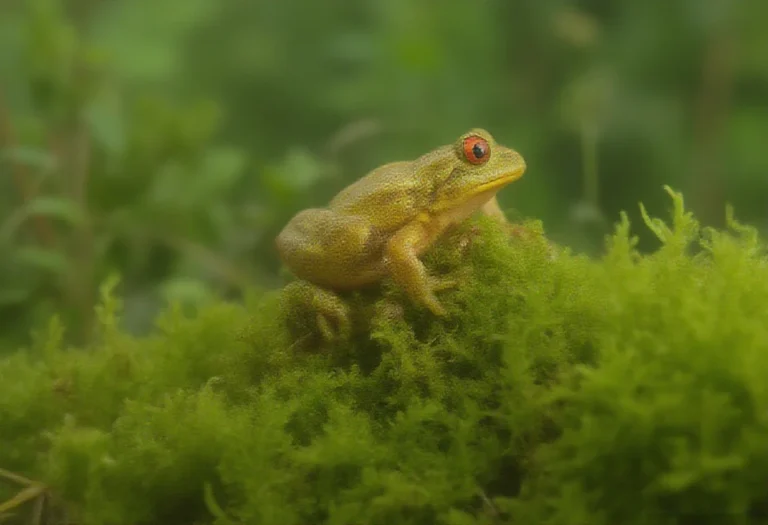
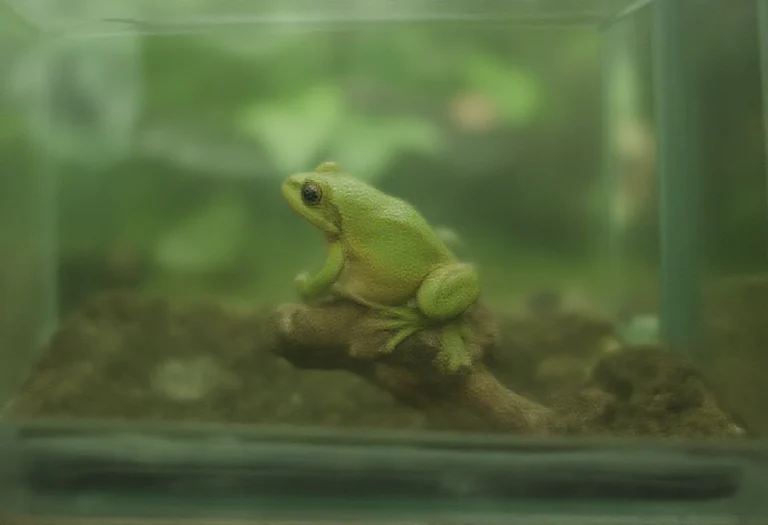
How this was made: prepared with AI assistance and checked against the sources listed at the end. Images are AI-generated illustrations, not photographs of real animals or products.
Key Takeaways
- Amphibians are ectotherms, so they need a warm zone and a cool zone in the same enclosure.
- Most amphibians do well at 60 to 70°F (16 to 21°C); tropical species may need 75 to 80°F (24 to 27°C) (MSD Veterinary Manual).
- A probe reads the micro-climate where the animal sits; a stick-on dial only reads the glass.
- Use two probes if you can, one at each end, and check them daily.
- Axolotls should stay at 16 to 18°C and never above 24°C (Royal Veterinary College).
- Keep sensor wires tucked away and the lid secure so nothing can escape or chew the cable.
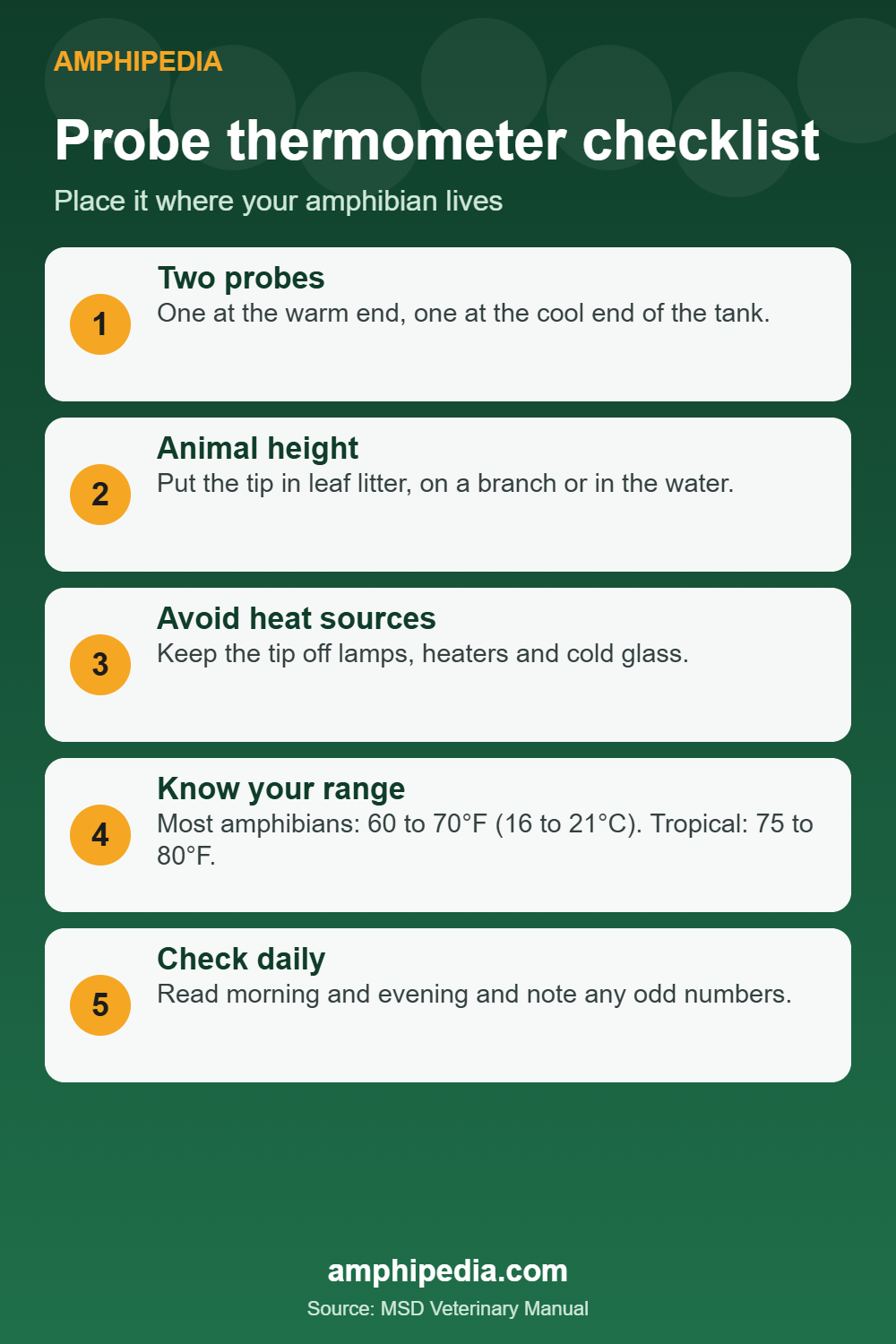
Pin this infographicShare on Facebook
Terrarium thermometers to compare
These digital thermometers are sold for reptile or terrarium use. Check that the sensor, cable and display suit your tank before you decide.

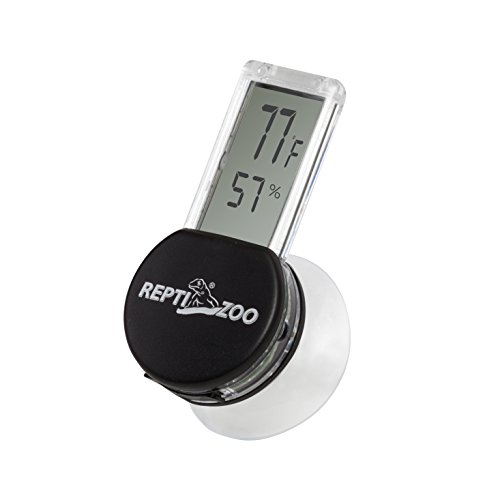


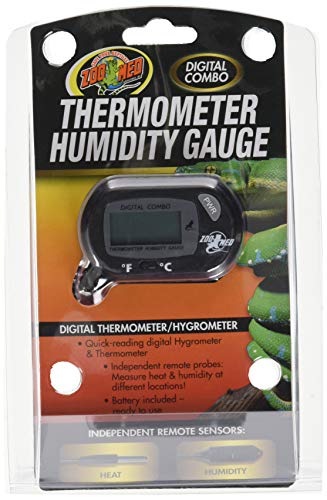
Product titles, prices and ratings are provided by Amazon and are accurate only at the time they are displayed.
Why a probe beats a stick-on dial
Amphibians cannot make their own body heat. They regulate temperature by moving between warmer and cooler spots, according to the MSD Veterinary Manual. That means a single average number for the tank is not enough. You need to know what the warm end and the cool end are doing.
A stick-on dial sits on the glass at one height. Warm air rises, cold water pools low, and a basking lamp or heat source can skew the glass reading. A probe lets you place the sensor in the leaf litter, near a hide, or in the water.
The MSD professional guide also suggests spot-checking enclosures daily with a laser temperature probe. A fixed wired probe gives you the same kind of daily check without opening the lid.
What to look for when you choose one
Probe thermometers vary a lot in build quality. A few simple checks will help you avoid frustration.
- Sensor type: a thin wired probe on a cable at least as long as the tank is deep, so it can reach the substrate.
- Water resistance: if you keep newts, axolotls or a pond area, the probe tip must be rated for water. Many dry-air sensors are not.
- Display: a readable screen that you can see without opening the tank, with a choice of °C or °F.
- Two sensors: one probe for the warm end and one for the cool end gives you the gradient at a glance.
- Min and max memory: this shows you the overnight low and the daytime peak, which is when problems usually happen.
- Safe materials: smooth cable, no loose parts a frog could grab, and no glass or mercury inside the tank.
Where to place the probe
Put the tip where the animal lives. For a ground-dwelling species, tuck it under leaf litter near the cool hide. For a tree frog, clip it to a branch or leaf at perching height.
Keep the tip away from direct contact with heat sources, bulbs and the glass wall. A sensor pressed against a lamp reads far too high. A sensor touching cold glass reads too low.
For a gradient, use two probes. Place one at the warm end and one at the cool end. If the difference between them is very small, the animal has nowhere to adjust.
- Decide where the warm end and cool end are.
- Fix the first probe at animal height in the warm end.
- Fix the second probe at animal height in the cool end.
- Run the cables out through a gap that you can seal, away from the water line.
- Read both numbers morning and evening for a week and write them down.
Target temperatures to compare against
A thermometer only helps if you know what number you want. Sources give different ranges for different animals, so always check your own species first.
General guidance from the MSD Veterinary Manual is 60 to 70°F (16 to 21°C) for most amphibians and 75 to 80°F (24 to 27°C) for tropical species.
A dart frog care guide from CB Reptile suggests daytime temperatures in the mid 70s °F (about 72 to 78°F), with nights in the upper 60s to low 70s. These sources differ, so treat them as starting points and confirm with a breeder or exotics vet.
| Animal | Sourced guidance | Source |
|---|---|---|
| Most amphibians | 60 to 70°F (16 to 21°C) | MSD Veterinary Manual |
| Tropical species | 75 to 80°F (24 to 27°C) | MSD Veterinary Manual |
| Dart frogs (day) | About 72 to 78°F | CB Reptile |
| Axolotl | 16 to 18°C, never above 24°C | Royal Veterinary College |
Common mistakes with probe thermometers
Most bad readings come from placement, not from the device.
- Pressing the probe against a heat source or lamp.
- Hanging the tip in mid-air where no animal ever sits.
- Trusting one reading without a second thermometer to compare against.
- Forgetting to check the battery, which can make the display drift or freeze.
- Leaving a long cable loose, which small animals can climb or tangle in.
- Putting a dry-air probe in water and letting moisture destroy it.
Cleaning and checking your probe
Probes live in warm, damp, dirty places. Wipe the cable and tip when you service the tank and keep them free of film and algae.
The CDC advises cleaning habitat equipment outside the home when possible, away from kitchens and food areas. Wash your hands with soap and water afterwards.
Compare your probe against a second thermometer every few months. If the two disagree by more than a degree or so, replace the one you trust least.
Related guides on Amphipedia
If you want a stick-on option as a backup, read the guide to the magnetic thermometer for amphibian tanks. To control a heat source from the same readings, see the digital timer and thermostat combo guide. For cooler species, the guide on keeping an axolotl tank cool explains safe limits and fixes.
How target temperatures differ between species
Merck says each species has a preferred optimal temperature zone, that amphibian zones are generally lower than reptile zones, and that salamanders prefer substantially lower temperatures than frogs and toads.
Even for one species, sources differ. For White’s tree frogs, RVC gives a basking spot of about 30 C, a cool end of about 25 C and nights not below about 21 C. The Arizona Exotic Animal Hospital gives 24 to 29 C by day, a basking area no higher than 32 C and nights not below 18 C.
CB Reptile says sustained heat in the high 70s to low 80s F can stress amphibians. Compare probe readings with one named source for the exact species, and ask an exotics vet when sources disagree.
Heat sources, lights and thermostats
RVC says heat sources need a thermostat and a digital max/min thermometer, and must be guarded against burns. A probe shows what a heat source is doing, but it does not replace a thermostat.
Warm water and axolotl tanks
Dr R. Loh, in a WSAVA 2015 proceedings paper, says sustained water above 24 C causes inappetence, ascites and uncontrollable floating, and that heat raises the share of toxic ammonia and nitrite while lowering dissolved oxygen.
RVC says never to exceed 24 C. The University of Kentucky axolotl stock center says never above about 22 C (72 F). Use a probe rated for water and read it daily in summer.
Frequently Asked Questions
Do amphibians need a thermometer at all?
Yes. The MSD Veterinary Manual says every amphibian enclosure should contain at least one thermometer. Temperature affects appetite, activity and health.
Is a probe more accurate than a stick-on dial?
A probe is not automatically more accurate, but it reads the place you choose. A dial reads only the glass it is stuck to.
Can a fish tank thermometer be used in a terrarium?
A waterproof probe made for aquariums can work in a water area. For air and substrate, check that the sensor is rated for air readings and has a safe, smooth cable.
How many probes are needed?
Two is ideal: one at the warm end and one at the cool end. One probe is still better than none.
What temperature is too hot?
It depends on the species. Axolotls should never exceed 24°C according to the Royal Veterinary College. Check your own species with a vet or reliable care sheet.
Should a glass or mercury thermometer be used?
No. Glass can break in the tank, and mercury is toxic. A sealed digital probe is a safer choice.
How often should the readings be checked?
Daily. The MSD professional guide recommends daily spot checks of enclosure temperature.
Bottom Line
A good terrarium thermometer with a probe is a small purchase that protects your animal every day. The key is not the brand but the placement: put the sensor where the animal lives, check both ends of the enclosure, and compare against a second reading now and then.
Pair the thermometer with a simple routine. Read it in the morning and evening, write down odd numbers, and act early if the cool end warms up or the warm end drops. When in doubt about a species, ask an exotics vet.
Sources
- MSD Veterinary Manual: Housing for Amphibians (pet owner version), accessed 13 November 2026. Used for temperature, humidity, UVB, water quality and filtration basics.
- MSD Veterinary Manual: Environment and Husbandry for Amphibians (professional version), accessed 13 November 2026. Used for thermal gradients, lighting timers, UVB distance, weekly humidifier disinfection.
- Royal Veterinary College: Axolotl care sheet, accessed 13 November 2026. Used for axolotl temperature, filtration, water flow and lighting.
- CB Reptile: Dart frog care guide, accessed 13 November 2026. Used for dart frog temperature, humidity, photoperiod and misting.
- CDC: Reptiles and Amphibians (Healthy Pets, Healthy People), accessed 13 November 2026. Used for salmonella risk, handwashing and where to clean habitat equipment.
- Loh R. Water Quality Explained: How It Can Affect Your Axolotl’s Health (WSAVA 2015, VIN), accessed 13 November 2026. Used for axolotl temperature, ammonia and oxygen effects.
- University of Kentucky Ambystoma Genetic Stock Center: Guide to Axolotl Husbandry, accessed 13 November 2026. Used for axolotl temperature ceiling.
- Royal Veterinary College: White’s Tree Frog care sheet (2024), accessed 13 November 2026. Used for heat source and temperature guidance.
- Arizona Exotic Animal Hospital: Basic Care, White’s Tree Frog, accessed 13 November 2026. Used for temperature ranges.

2 Comments