What Is Toad Venom Good For? Uses, Research and Risks
For the toad, venom is defence. Its skin secretions deter predators. For people, the picture is mixed. Processed toad venom (Chansu) is used in traditional Chinese medicine, and its bufadienolide compounds are studied for heart and cancer effects. A 2018 review says clinical studies are still very limited, and the compounds resemble digoxin, so overdose can cause cardiac arrest. Toad toxin is not a safe home remedy, and 5-MeO-DMT from the Sonoran Desert toad is a US Schedule I drug.
Toad secretions fascinate both scientists and traditional healers. They are also dangerous. This page separates what is documented from what is hype.
It draws on a 2018 review in Toxins, a 2022 review in Frontiers in Pharmacology and a US National Park Service warning. It is general information. Do not use toad toxin on yourself or others.
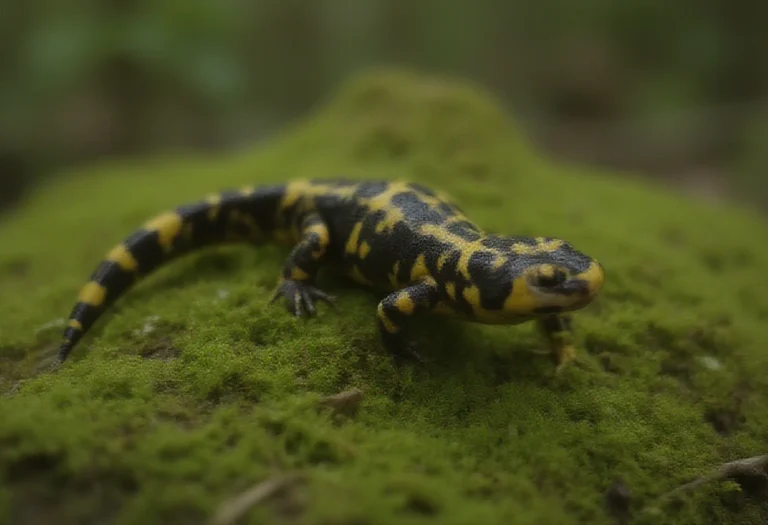
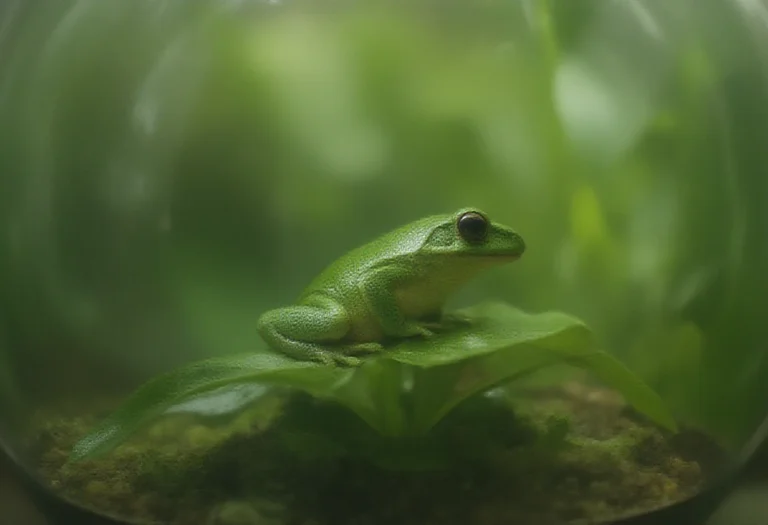
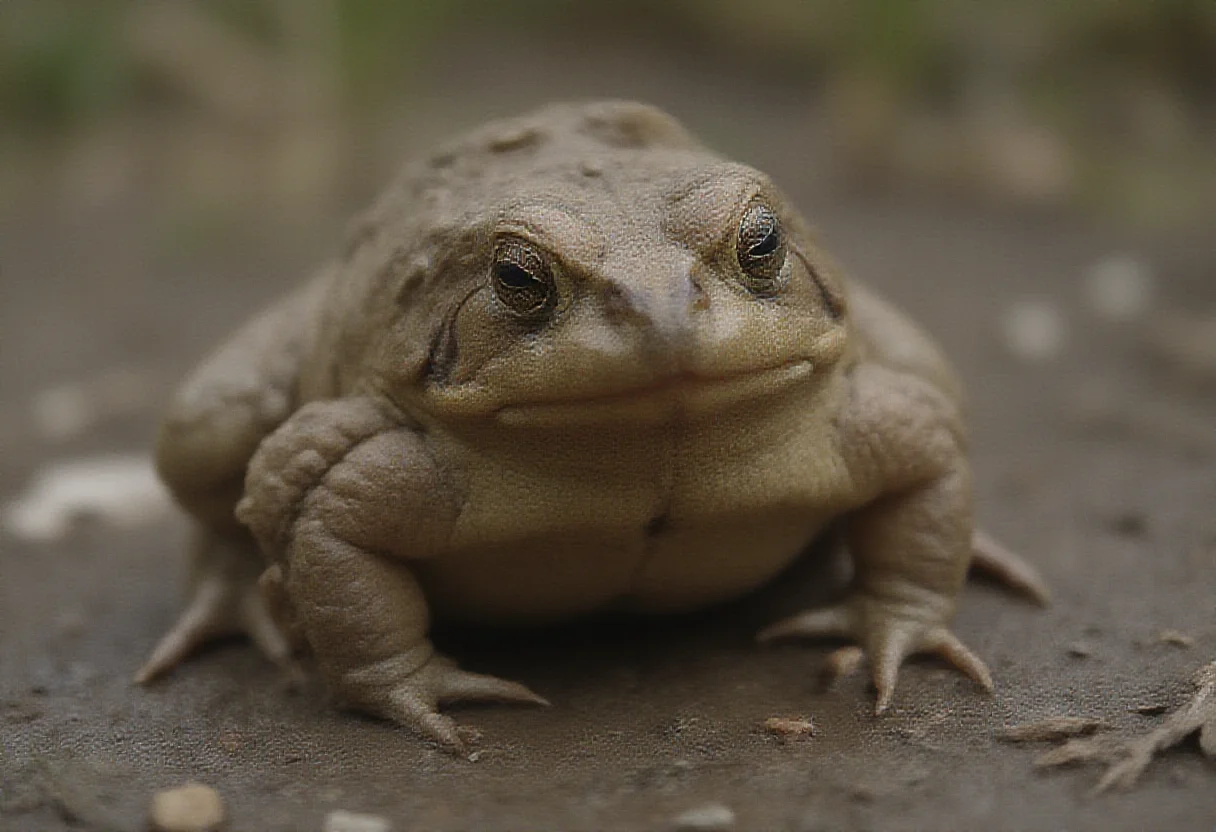
How this was made: prepared with AI assistance and checked against the sources listed at the end. Images are AI-generated illustrations, not photographs of real animals or products.
Key Takeaways
- For toads, the secretions are a last line of defence against predators.
- Chansu, dried toad venom, is used in traditional Chinese medicine.
- Bufadienolides are studied for heart, inflammation and cancer effects, mostly in cells and animals.
- Reviews say clinical evidence is very limited and the safety margin is narrow.
- The compounds resemble digoxin, and overdose can cause cardiac arrest.
- 5-MeO-DMT from the Sonoran Desert toad is a Schedule I drug in the United States.
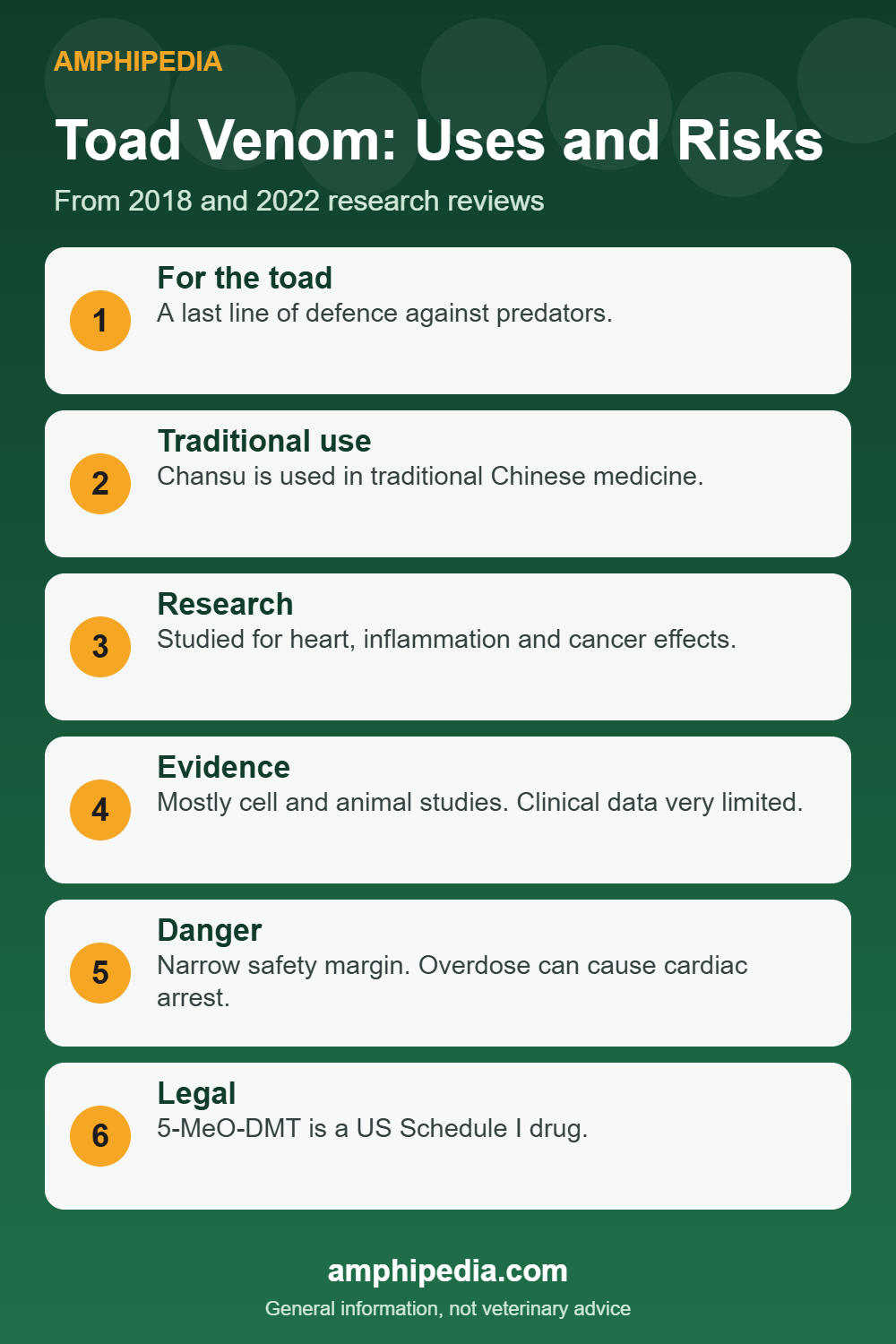
Pin this infographicShare on Facebook
What toad venom is for
Toads carry toxic secretions in skin and glands. A Macquarie University study on cane toads found that using toxin is costly to the animal, which may explain why toads keep it as a last line of defence. Toxin stores take several months to replenish after being squeezed out.
UF/IFAS says cane toads cannot shoot toxin. It squirts out when the glands are squeezed, for example when a predator bites. Eggs and tadpoles are also toxic and taste bad to many predators, according to UF/IFAS.
Traditional medicine
A 2018 review in Toxins reports that processed toad venom, called Chansu, has been used in traditional Chinese medicine for pain and inflammatory conditions. A skin-derived extract called Huachansu has been used in cancer treatment.
The 2022 Frontiers in Pharmacology review calls Chansu one of the richest sources of bufadienolides, a group of steroid compounds. It lists toad species such as Bufo gargarizans and Rhinella marina (the cane toad) as sources. The review does not give detail on specific traditional uses.
What research shows
Bufadienolides strongly inhibit an enzyme called Na+/K+ ATPase, according to the Frontiers review. This raises sodium and calcium inside heart cells and strengthens contraction. These compounds resemble digoxin, the Toxins review notes, and were historically studied as heart medicines.
Researchers also study them in cancer and inflammation. The Frontiers review describes antitumor activity in lab work on breast cancer, lung carcinoma, leukemia, gastrointestinal cancers and liver cancer, and anti-inflammatory effects in cell lines and animal models.
The key limit is the stage of the evidence. The Toxins authors state that in vivo and clinical studies are still very limited. The Frontiers review reports mostly preclinical results from cell and animal studies and no clinical trials. None of this means toad venom treats any disease in people.

Why it is dangerous
The same enzyme found in the heart is found in nearly all body cells. The Frontiers review says blocking it can cause cardiac dysfunction, conduction block and arrhythmia, and that the therapeutic dose can reach 60 percent of the toxic dose, a narrow safety window. The Toxins review says overdose may cause cardiac arrest.
Use is further limited by high toxicity, low bioavailability and poor water solubility, according to the Frontiers authors. Chemical composition also varies with geography and environment, so quality control is a problem.
Do not try to collect, prepare or take toad secretions. If a pet or person is exposed to a toad, call a vet or poison control. For pets, see what to do if your dog eats a toad.
The Sonoran Desert toad and 5-MeO-DMT
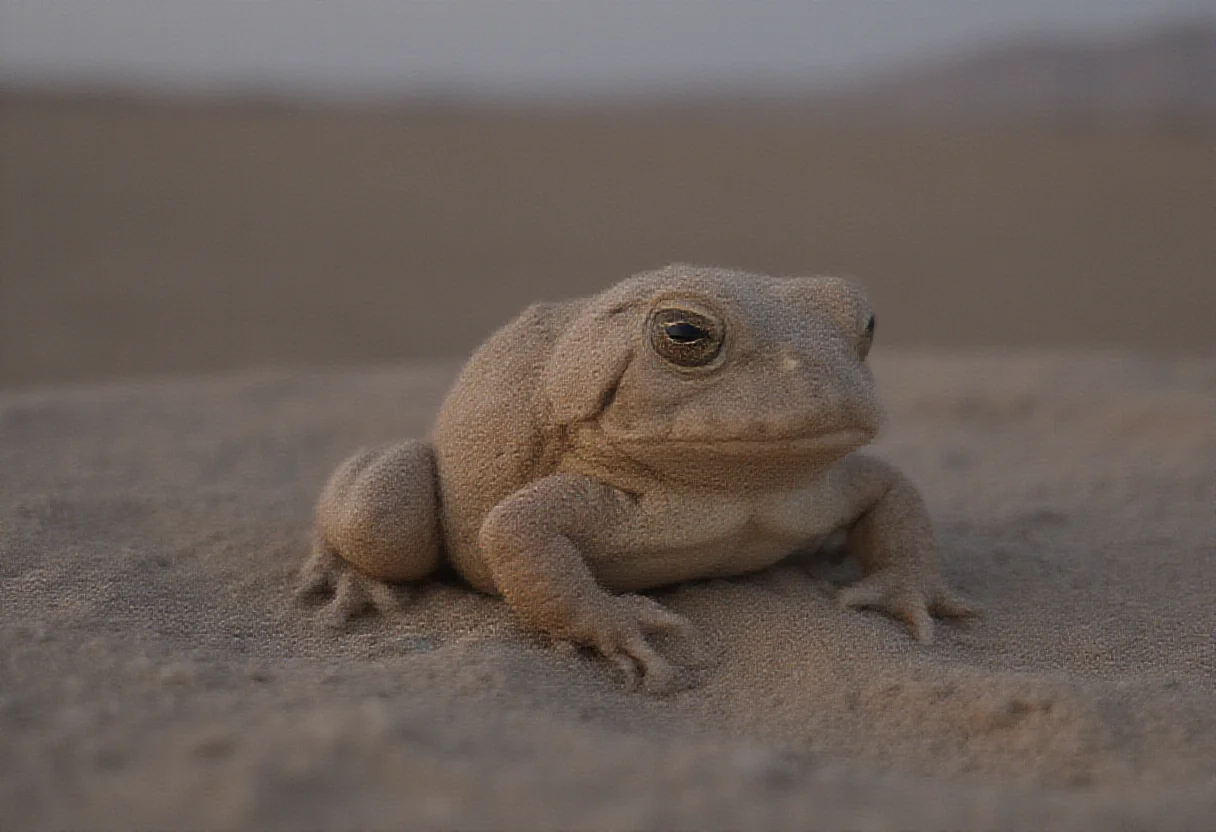
The Sonoran Desert toad (Incilius alvarius) has attracted attention because its secretion contains 5-MeO-DMT, a psychoactive compound. The US National Park Service has asked people not to lick these toads.
It says the toad’s glands secrete a potent toxin, and that handling it or getting the secretion in your mouth can make you sick. The secretion is strong enough to kill an adult dog.
5-MeO-DMT is a Schedule I drug under the DEA, meaning no currently accepted medical use and a high potential for abuse, so it is illegal to use in the United States.
Scientists warn that demand could cause local toad populations to collapse. The toads are considered threatened in New Mexico because of habitat loss, road deaths and overcollection. Leave wild toads alone.
Other chemicals in toad secretions
The Toxins review notes that indolealkylamines such as bufotenine have hallucinogenic effects and are being investigated for neuropsychiatric disorders. This is early research, not an approved use.
Our guide to how poisonous a cane toad is covers the animal side of toxicity in more detail.
Chansu, Huachansu and the chemistry behind them
The Toxins review describes Chansu as processed, dried venom from the parotoid glands of the Asiatic toad, Bufo bufo gargarizans. It says use is recorded since the Tang Dynasty, and that Japan calls it Senso. Huachansu is different: a water extract of the toad skin, developed in China about 20 years ago.
The Frontiers review describes bufadienolides as C-24 steroids with a six-membered lactone ring at one end. The first known example, scillaren A, came from Egyptian squill in 1933, not from a toad. Named toad compounds include bufalin, cinobufagin and resibufogenin.
Toad secretions hold more than one chemical family. The Toxins authors name two main groups with therapeutic interest:
- Bufadienolides, which act like cardiac glycosides such as digoxin. The Frontiers review counts at least 55 arginine-conjugated forms in Chansu alone.
- Indolealkylamines, which are derived from serotonin. The Toxins review says at least 14 have been characterized, including bufotenine.
Marinobufagin is named as the main bufadienolide in cane toad toxin. Cane toad toxin therefore belongs to the same chemical family that drug researchers study.
How these compounds may affect inflammation
The Frontiers authors link the anti-inflammatory results to the same step that harms the heart: inhibition of Na+/K+-ATPase, which changes calcium handling inside cells. Most mechanism studies used white blood cells in a dish.
Reported results in those studies include lower secretion of inflammatory signalling proteins and less activity of the NF-kB pathway. Bufalin blocked NF-kB movement into the nucleus in one cell study. In another, its effect on nitric oxide was biphasic: low concentrations raised it and high concentrations lowered it.
That last detail shows why simple claims fail. The same compound can push a pathway in opposite directions depending on concentration, and nothing here was tested as a home remedy.
Why drug developers change the molecule first
According to the Frontiers review, high toxicity, low bioavailability and poor water solubility hold these compounds back. Its conclusion is that toxicity drove work on structural modification to reduce side effects.
- Sulfonated forms dissolve better in water than the free forms, and the review suggests their toxicity may be lower.
- Glycosylation, mostly at one position on the steroid ring, is presented as the most promising route.
- One study reported glycosylated bufadienolides were less toxic than the unmodified forms in a zebrafish embryo assay.
Chemical synthesis is also hard. The review reports waste, extra protection steps and low yields, and plant-cell conversion gave only about 2 percent for cinobufagin. A purified, modified drug candidate is a very different thing from raw secretion.
How to read a toad venom claim
Online claims often skip the details above. Four questions help:
- Was it done in people? The Toxins review says in vivo and clinical studies are very limited, and the Frontiers review reports mostly preclinical work.
- Which compound was tested? A purified bufalin result says nothing about a dried secretion.
- What dose? The Frontiers review puts the therapeutic dose at up to 60 percent of the toxic dose.
- Is the material consistent? The Toxins authors say composition varies with geography and weather and call for quality control.
A claim that fails any of these is marketing, not medicine. The Toxins authors do list toxicity and maximum tolerated dose among the studies still needed.
Wild toads under collection pressure
Demand reaches wild populations in two ways. The Toxins review notes a shortage of toad resources in China and suggests drawing on other sources, such as Australian cane toads. Separately, Smithsonian Magazine reports that scientists warn demand for Sonoran Desert toad secretion could collapse populations.
That toad (Incilius alvarius) reaches nearly eight inches and can live roughly 10 to 20 years, so losses recover slowly. It lives mainly in the Sonoran Desert of Arizona and Mexico, with ranges into New Mexico and California. The IUCN lists it as Least Concern, yet it is considered threatened in New Mexico.
Habitat loss, road deaths and overcollection all add up. If you see one, leave it alone and keep dogs away. Our guide to removing Sonoran Desert toads from a yard covers what to do around homes.
Frequently Asked Questions
What is toad venom used for?
Toads use it as a defence against predators. In traditional Chinese medicine, processed toad venom (Chansu) has been used for pain and inflammatory conditions.
Is toad venom a proven medicine?
No. The 2018 Toxins review says in vivo and clinical studies are still very limited. The 2022 Frontiers review reports preclinical evidence.
Can toad venom treat cancer?
Lab and animal studies suggest antitumor activity, but there are no proven treatments from raw toad venom. Talk to your doctor.
Why is toad venom dangerous?
The compounds block an enzyme in nearly all cells, which can cause arrhythmia and cardiac arrest. The therapeutic dose can reach 60 percent of the toxic dose.
Is licking a toad safe?
No. The National Park Service warns that handling Sonoran Desert toads or getting the secretion in your mouth can make you sick.
Is 5-MeO-DMT legal?
In the United States it is a Schedule I drug, according to the DEA as reported by the Smithsonian.
Are toads dangerous to pets?
Yes. Cane toads and Sonoran Desert toads can sicken or kill pets. See our guide on what to do if your dog eats a toad.
Bottom Line
Toad venom exists to protect the toad. Traditional medicine and lab research have found active compounds, but proven medical uses are limited and the safety margin is narrow.
Keep pets away from toads, never use toad secretions on yourself and leave wild toads alone.
Sources
- The development of toad toxins as potential therapeutic agents, Toxins (2018), accessed 31 October 2026
- Bufadienolides originated from toad source and their anti-inflammatory activity, Frontiers in Pharmacology (2022), accessed 31 October 2026
- The cost of chemical defence: toxin depletion in cane toads, Macquarie University, accessed 31 October 2026
- Cane toad, UF/IFAS Extension (UW432), accessed 31 October 2026
- Don’t lick this toad, National Park Service says, Smithsonian Magazine, accessed 31 October 2026