Axolotl Facts: Size, Lifespan, Diet, Habitat and Status
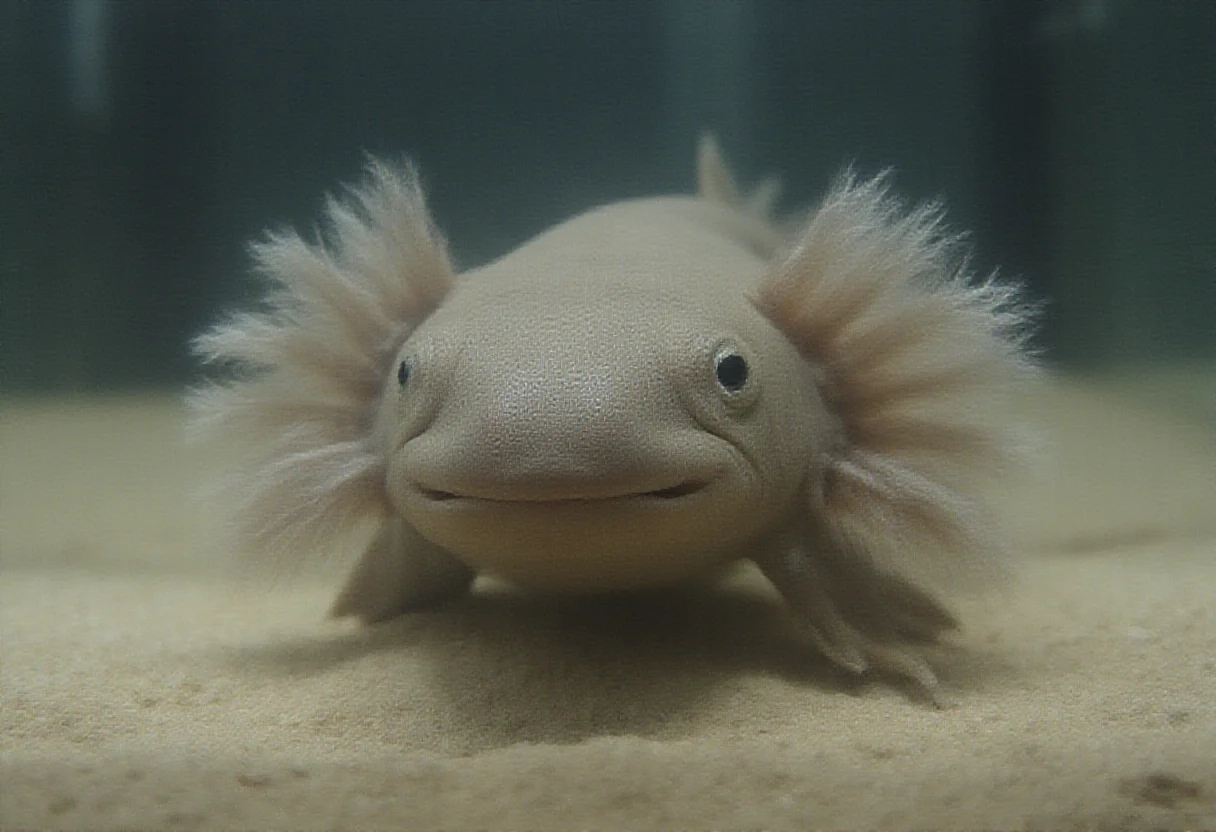
The axolotl (Ambystoma mexicanum) is a salamander from lakes near Mexico City that keeps its feathery external gills and aquatic life as an adult. Adults are about 23 to 30 cm long, eat live prey and are listed as Critically Endangered on the IUCN Red List, with very few left in the wild. In good care, many live 10 to 12 years.
The axolotl is a salamander, not a fish. It is famous as a pet, a lab animal and a symbol of Mexico City, yet it is nearly gone from its home waters.
This page collects the core facts with sources: where it lives, how big it grows, what it eats, how long it lives and how threatened it is. For lighter trivia, see our fun facts about axolotls.
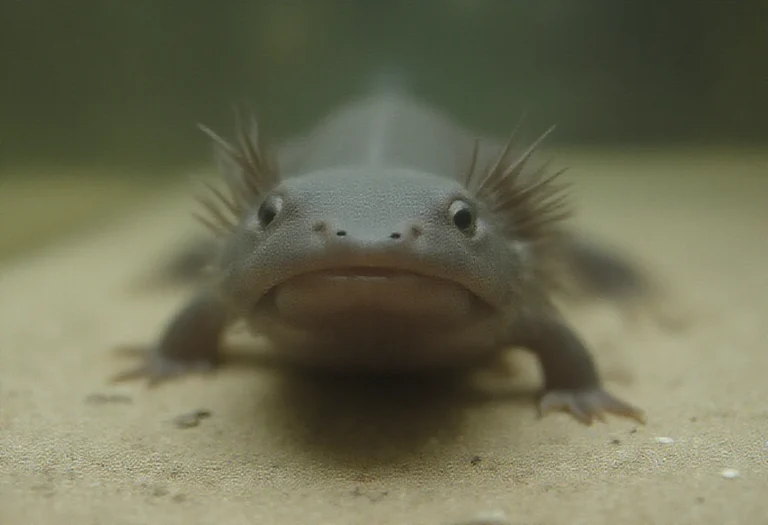
How this was made: prepared with AI assistance and checked against the sources listed at the end. Images are AI-generated illustrations, not photographs of real animals or products.
Key Takeaways
- The axolotl is an amphibian, a salamander that stays in water for life.
- Adults are 23 to 30 cm long and weigh about 60 to 110 g.
- They are carnivores and find prey by sight, smell and electrical fields.
- Lifespan is 10 to 12 years in good care, and 5 to 6 in many labs.
- The IUCN lists the species as Critically Endangered, and CITES lists it in Appendix II.
Pin this infographicShare on Facebook
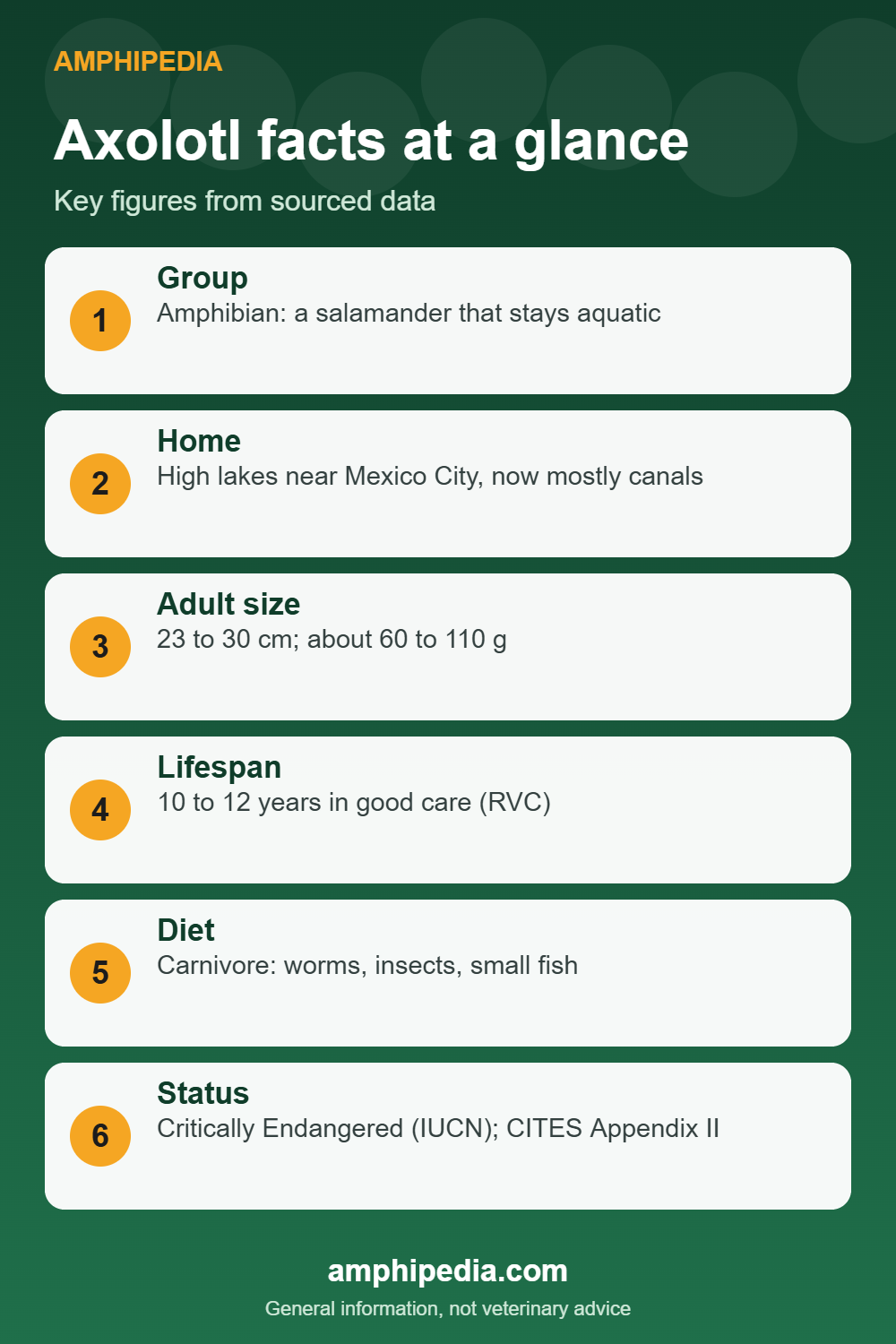
Axolotl quick facts
This table lists the figures used in the rest of the article. Where sources differ, both values are shown.
| Fact | Detail |
|---|---|
| Scientific name | Ambystoma mexicanum |
| Group | Amphibian (salamander) |
| Native range | Lakes near Mexico City, including Xochimilco |
| Adult length | 23 cm average (ADW); 25 to 30 cm (RVC) |
| Weight | About 60 to 110 g |
| Lifespan | 10 to 12 years commonly (RVC); 5 to 6 in labs (ADW) |
| Diet | Carnivore |
| Conservation | Critically Endangered (IUCN); CITES Appendix II |

Where axolotls live
Animal Diversity Web (ADW) says axolotls historically lived in large, long-lasting, high-altitude freshwater lakes near Mexico City. Lake Xochimilco sits at about 2,274 metres.
Lake Chalco has been drained completely, and Xochimilco is now mostly canals and swamps. Introduced predatory fish and habitat loss have left the species nearly extinct in the wild.
Body and life cycle
Axolotls are neotenic, meaning they keep larval traits such as feathery external gills as adults. ADW says metamorphosis can be induced in the lab with thyroid hormone, that it rarely if ever happens in the wild, and that most lab animals die shortly after it.
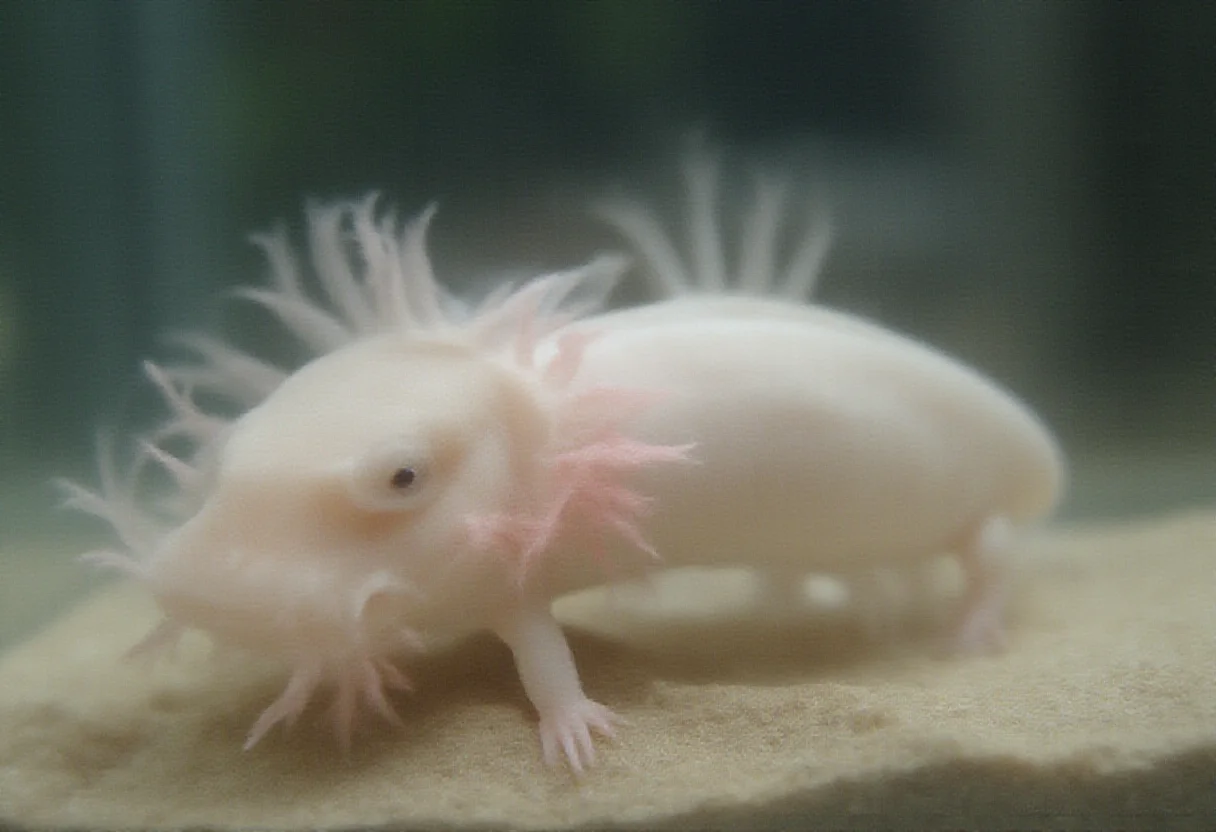
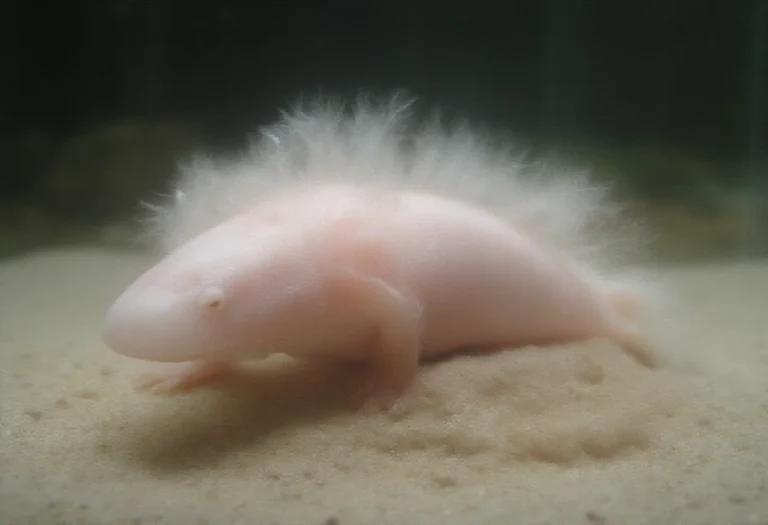
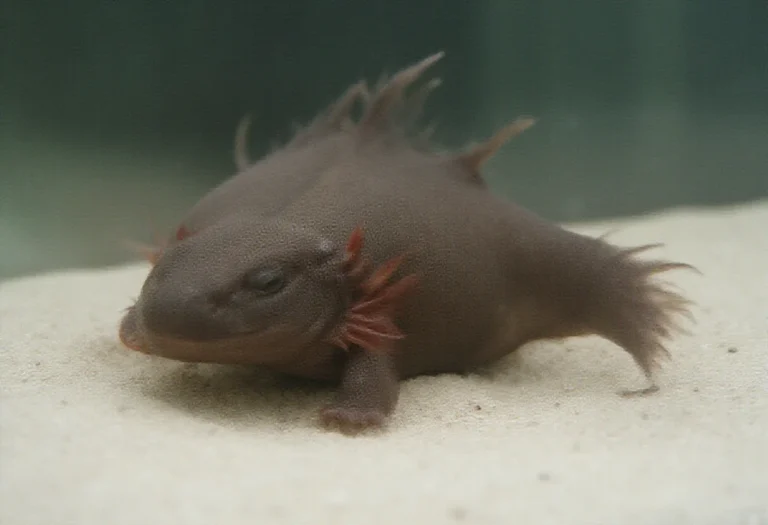
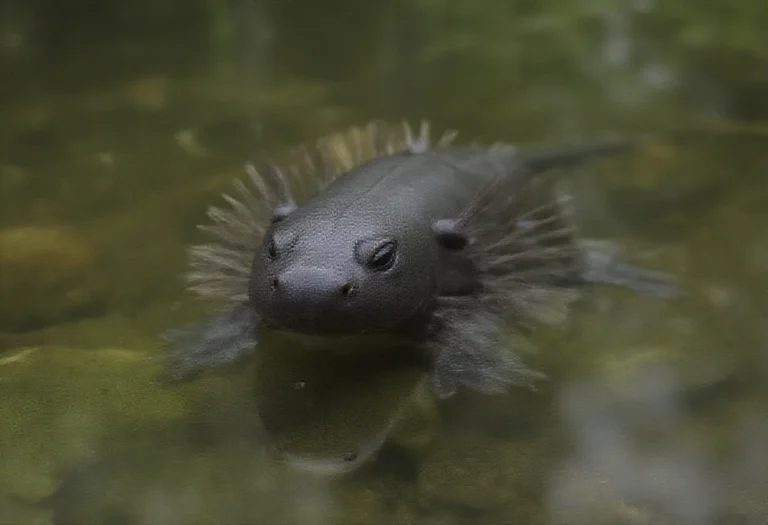
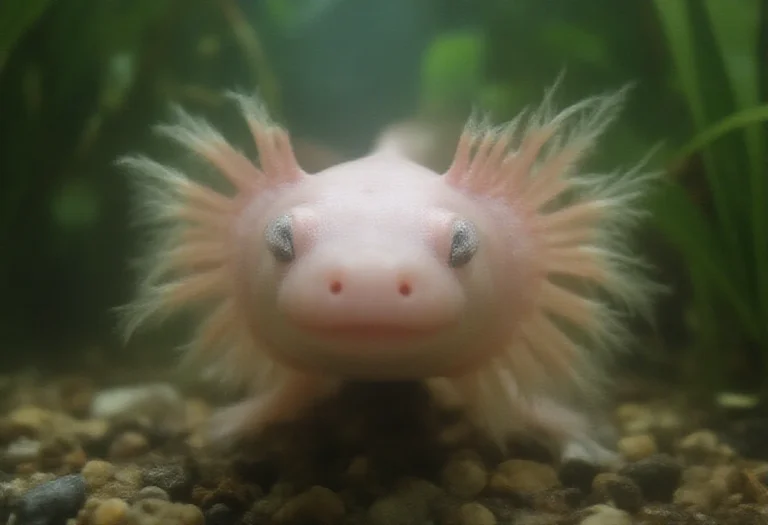
The wild type is dark and mottled brownish-green. Lab and pet animals come in several colors, up to albino. Read our guide to axolotl colors for the main morphs.
Both sexes mature at about one year. Wild breeding runs from March to June. A female lays 100 to 300 eggs one at a time, and they hatch in 10 to 14 days.
What axolotls eat
ADW calls axolotls carnivores that eat anything they can catch, including their own species. Prey includes insects, mollusks, worms, zooplankton, fish and other amphibians.
They find prey by vision, chemical cues and electrical fields. For pet feeding, see our guide to feeding an axolotl.
Size and lifespan
ADW gives an average length of 23 cm, and the Royal Veterinary College (RVC) gives 25 to 30 cm, with a planning size of up to 35 cm. Read how big an axolotl gets for the growth stages.
RVC says 10 to 12 years is common and some animals pass 20. ADW lists 5 to 6 years as the expected lab lifespan, with some reports of 10 to 15. Our lifespan guide compares these figures.
Regeneration
Axolotls are known for regrowing lost limbs. Smithsonian Magazine reports that they can also regenerate parts of the spinal cord and brain, and lung and ovary tissue. A mass of cells called the blastema forms at the wound and builds the new part.
Conservation status
The IUCN Red List lists the axolotl as Critically Endangered, and it is in CITES Appendix II, per ADW. A news report on a UNAM census cites about 6,000 animals per square kilometre in 1998 and about 36 in 2014.
Urbanization, poor water quality and introduced species are the stated threats. See are axolotls endangered and how many are left for details.
Axolotls as pets
RVC gives the best water temperature as 16 to 18 degrees Celsius and says it must never exceed 24. Adults should be housed alone, and handling should be kept to a minimum.
Frequently Asked Questions
Is an axolotl a fish?
No. It is an amphibian, a salamander. The nickname “Mexican walking fish” is misleading.
Where do axolotls come from?
They are native to high-altitude lakes near Mexico City, including Xochimilco, per Animal Diversity Web.
How long do axolotls live?
RVC says commonly 10 to 12 years, with some beyond 20. ADW gives 5 to 6 years for labs.
What do axolotls eat?
They are carnivores. In the wild they eat worms, insects, mollusks, zooplankton and small fish or amphibians, per ADW.
Are axolotls endangered?
Yes. The IUCN Red List lists them as Critically Endangered.
Do axolotls turn into salamanders?
They are already salamanders. Metamorphosis rarely if ever happens in the wild, and most lab animals die soon after it, per ADW. See axolotl transformation.
Bottom Line
The axolotl is a neotenic salamander from the high lakes near Mexico City. It grows to about 9 to 12 inches, eats live prey and can live a decade in good care.
It is common in tanks but Critically Endangered in the wild. Knowing the facts helps you judge claims online and care for a pet properly.
Sources
- Animal Diversity Web: Ambystoma mexicanum, accessed Range, size, diet, status, reproduction
- Royal Veterinary College: Axolotl care and advice (2022), accessed Size, lifespan, temperature, housing
- Smithsonian Magazine: Some salamanders can regrow lost body parts, accessed Regeneration
- Riviera Maya News: Mexican biologists conduct first axolotl census in a decade, accessed Wild density figures reported for UNAM census
- CDC: Reptiles and amphibians, accessed Salmonella hygiene
3 Comments