Fried Axolotl: History, Facts and Why We Skip the Recipe
We do not give a fried axolotl recipe. Axolotls were eaten in pre-Hispanic Mexico, and a few traditional dishes exist, but the species is Critically Endangered in the wild. A 2026 study concludes that eating axolotls does not justify exploiting them, and finds the meat of little nutritional value. This page explains the history and the risks.
People search for fried axolotl out of curiosity, often after seeing the animal online. The honest answer is that this is not a normal food, and the species is in trouble.
Below you will find what sources say about axolotls as food, how traditional dishes worked, and why we do not publish a recipe. For related questions, see can you eat axolotls and what does axolotl taste like.
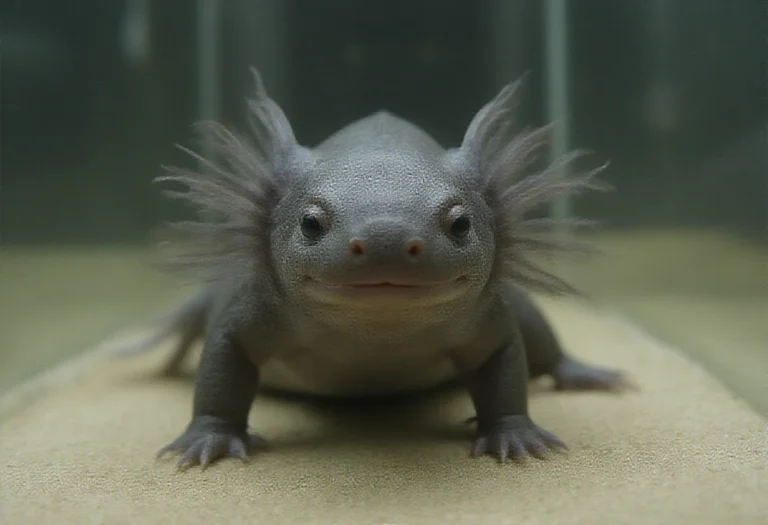
How this was made: prepared with AI assistance and checked against the sources listed at the end. Images are AI-generated illustrations, not photographs of real animals or products.
Key Takeaways
- Axolotls were eaten in pre-Hispanic Mexico. Frying is not among the traditional preparations listed in the sources here.
- A 2026 study calls current culinary use questionable and says it has declined.
- Wild axolotls are Critically Endangered, and the species is in CITES Appendix II.
- The same study says the meat has an inadequate essential amino acid profile.
- The CDC says healthy amphibians can carry Salmonella.
- Legal rules differ by place. Check the wildlife authority before you buy or keep one.
Pin this infographicShare on Facebook
Why we do not give a recipe
A recipe would suggest axolotls are a normal ingredient. They are not. Animal Diversity Web lists the species as Critically Endangered on the IUCN Red List and in CITES Appendix II. It says axolotls are almost extinct in their native habitat.
Pet axolotls are a different matter. Vet sources describe them as fully aquatic animals that need cold, clean, gently filtered water and careful care. The axolotl tank guide shows what that involves.
- The wild species is Critically Endangered.
- A 2026 study finds culinary use hard to justify.
- The sources report little nutritional value.
- Amphibians can carry Salmonella (CDC).
- Laws on keeping and trade vary by location.
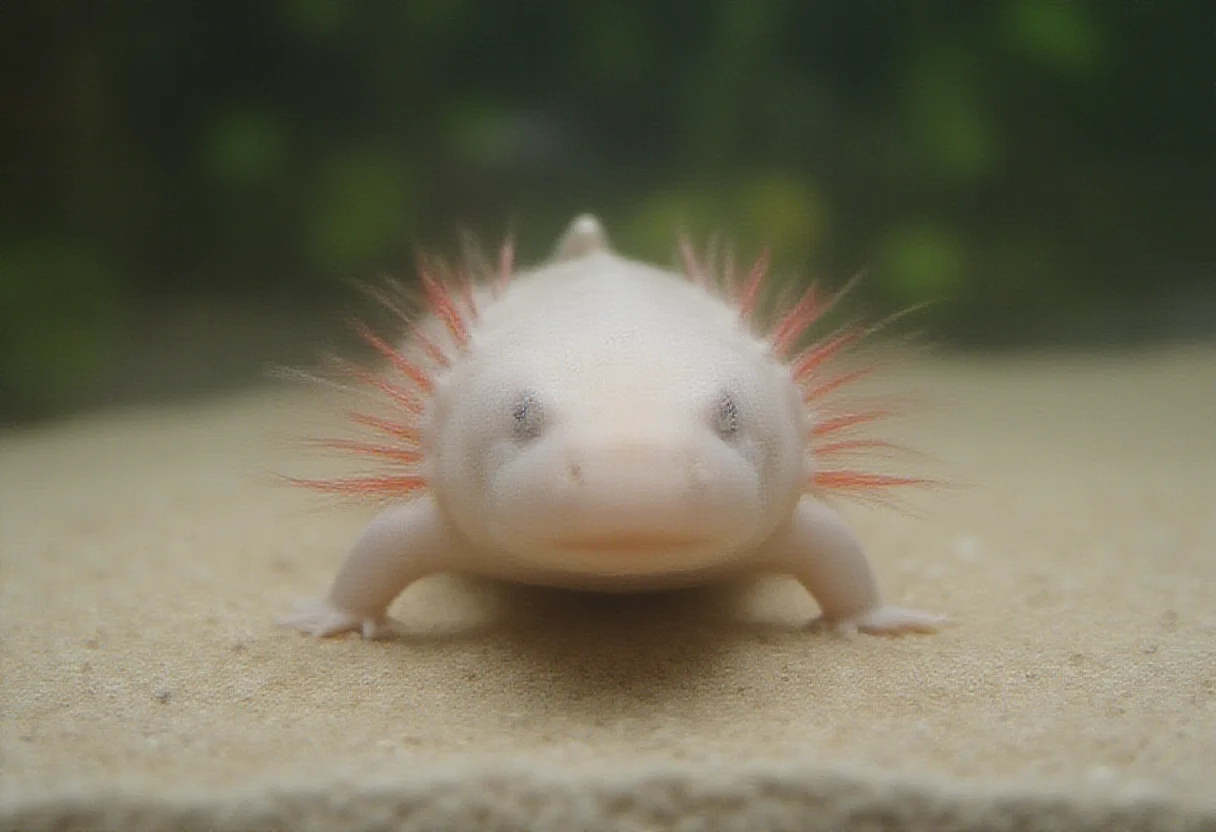
How axolotls were eaten in Mexico
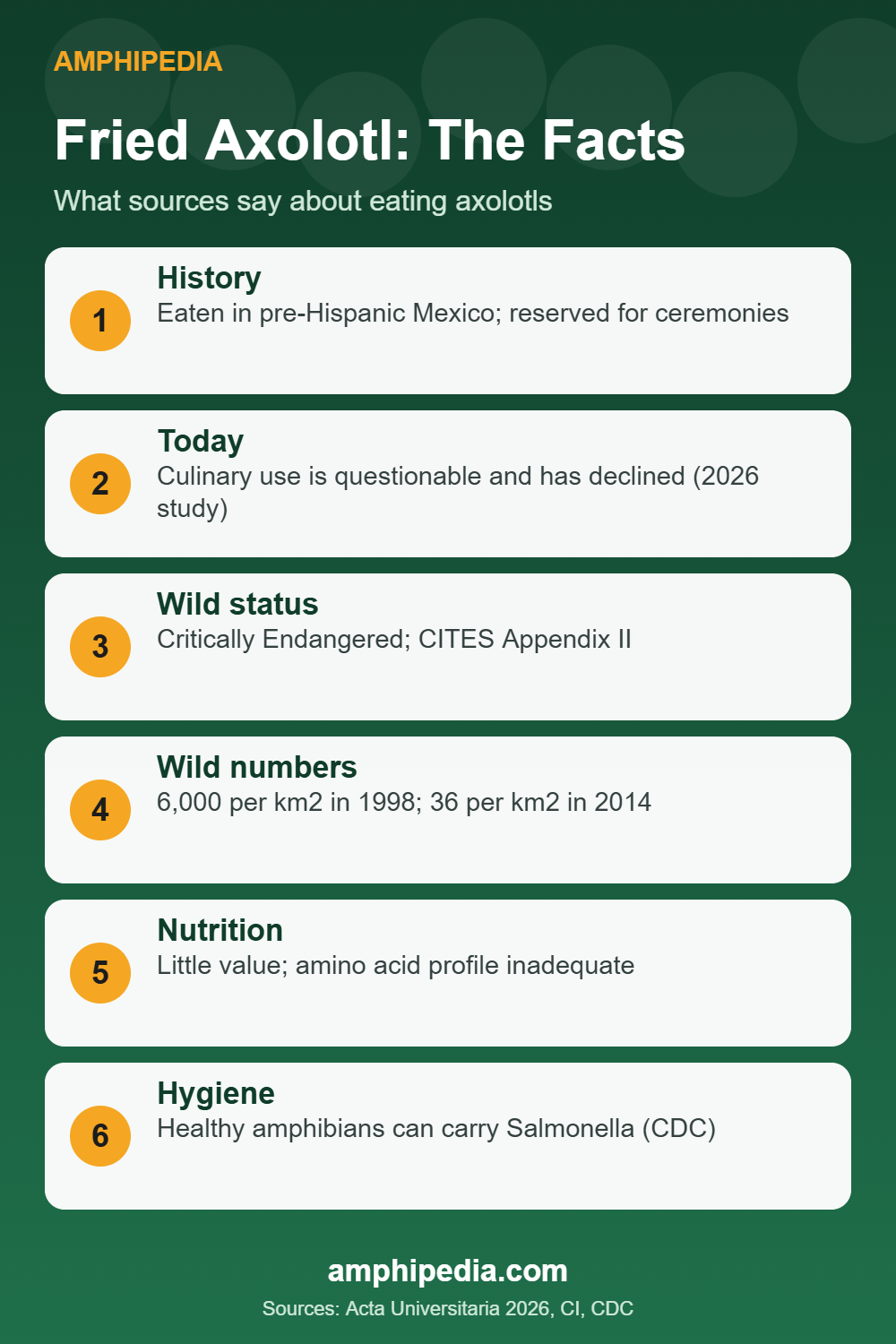
A 2026 paper in Acta Universitaria reviews the cultural history. The axolotl was eaten in pre-Hispanic Mexico, and it was also a sacred symbol linked to the god Xólotl. The paper says it was reserved for ceremonies.
From about 1245 until the mid-20th century, people in the Basin of Mexico used it as a protein source. The authors say it was eaten only when necessary. Traditional preparations listed are green chile stew, grilled, boiled and tamales.
Animal Diversity Web adds that axolotls were occasionally eaten as a fish substitute, roasted or boiled, with the tail eaten with vinegar or cayenne pepper. Neither source lists frying as a traditional method.
Is it eaten today?
The Acta Universitaria authors describe current gastronomic use as questionable and say direct culinary use has declined. Britannica notes that people around the lakes near Mexico City consider the animal edible.
That does not make it a safe or sensible choice. Read can you eat axolotls: history, law and health risks for a fuller look at the rules and risks.
What the numbers say about the wild population
Conservation International reports an estimated 6,000 axolotls per square kilometre in 1998 and 36 per square kilometre in 2014, a drop of 99%. A later survey at 115 sites in the Xochimilco Protected Area caught none in nets, though eDNA showed they remain.
The causes it names are habitat loss, pollution from pesticides, and invasive fish such as carp and tilapia. The Acta Universitaria paper adds urbanisation and climate change. None of this removes the concern about taking more animals.
For the full picture, read are axolotls endangered.

Food value and food safety
The 2026 study concludes the meat offers little nutritional value because its essential amino acid profile is inadequate. So the flavour is the main reason anyone would eat it, and that does not justify the cost to the species.
The CDC says healthy amphibians can carry Salmonella and that people can get sick from contaminated food, water, equipment or habitats. Amphibians and their equipment should stay out of kitchens and any area where food is prepared.
What to do instead
If you love axolotls, you can help them. Conservation International describes chinampa-refuges, traditional farm islands with biofilters that clean water and block invasive fish. There are 21 so far, with more planned.
If you want a pet, learn the care first. Start with axolotl lifespan to understand the long commitment, then see what do axolotl eat.
Frequently Asked Questions
Can you fry an axolotl?
The sources listed here do not describe frying as a traditional method. We do not recommend eating axolotls because the species is Critically Endangered.
Did the Aztecs eat axolotls?
The 2026 Acta Universitaria paper says the axolotl was eaten in pre-Hispanic Mexico and reserved for ceremonies.
Is axolotl meat nutritious?
The same study says the essential amino acid profile is inadequate, so the meat has little nutritional value.
Is it legal to eat axolotls?
Rules vary. Check your local wildlife authority. We do not have a single official source for every place.
Do pet axolotls make safe food?
The CDC says healthy amphibians can carry Salmonella. Keep them away from kitchens and food areas.
How many axolotls are left?
Conservation International reports 36 per square kilometre in 2014 and no net captures in a later survey. See how many axolotls are left.
Bottom Line
Fried axolotl is a curiosity, not a cuisine. The history is real, but the animal is critically endangered, and the evidence for eating it is weak.
If you enjoy learning about axolotls, try axolotl facts or fun facts about axolotls.
Sources
- Huerta Ávila et al. 2026, Acta Universitaria: Evaluación cultural y alimenticia del ajolote mexicano, used for food history, nutrition, threats
- Animal Diversity Web: Ambystoma mexicanum, used for status, human use
- Britannica: Axolotl, used for edible use near Mexico City
- Conservation International: Axolotls are on the brink, used for wild numbers, threats and refuges
- CDC: Reptiles and amphibians, used for salmonella and kitchen hygiene