How Big Do African Bullfrogs Get? Size and Weight Facts
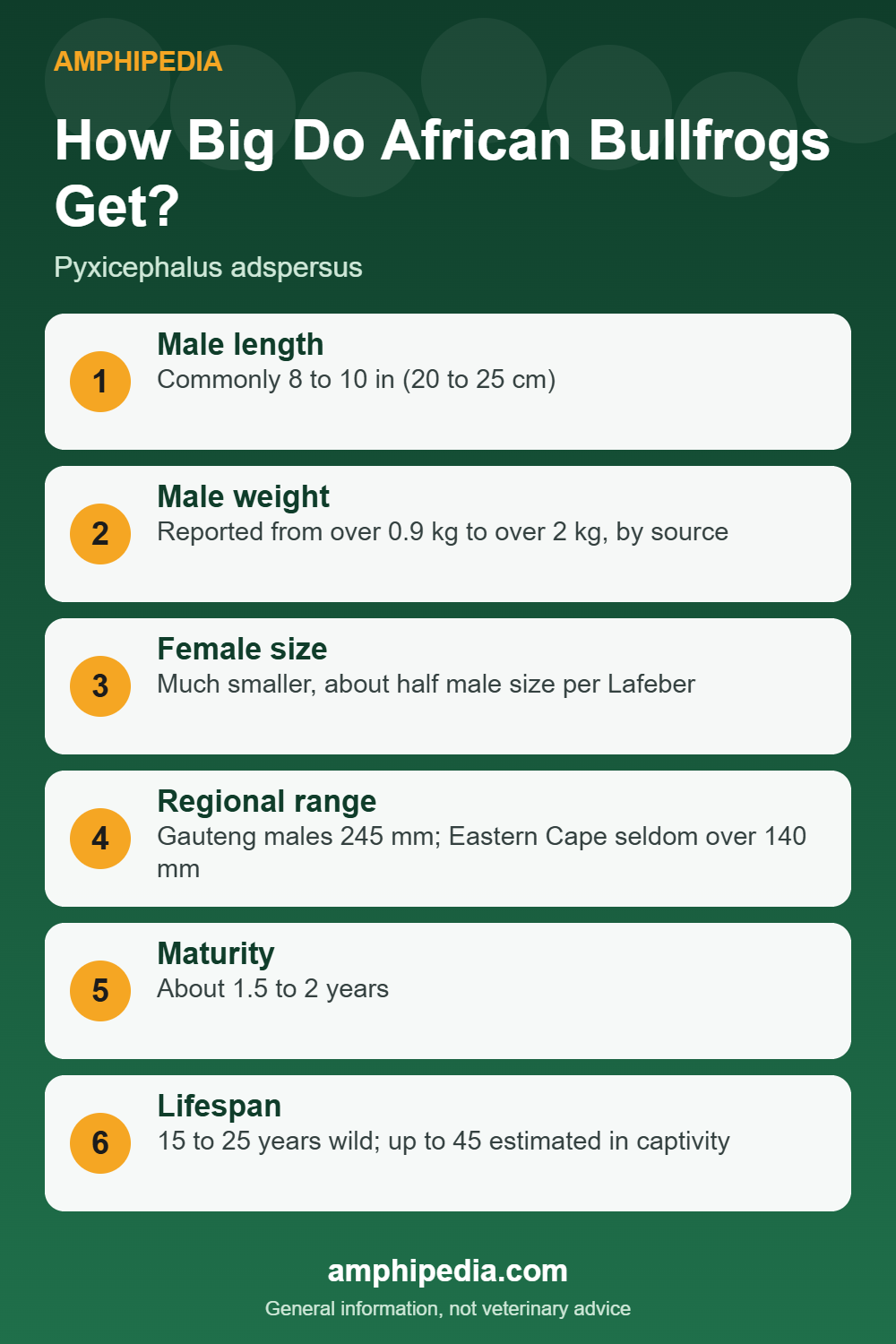
Adult male African bullfrogs commonly reach 8 to 10 inches (20 to 25 cm) in length and can weigh well over 2 pounds (0.9 kg). Females are much smaller, about half the male size by most accounts. Published weights vary by source and region, and wild males in some areas stay far smaller than the largest recorded animals.
The African bullfrog (Pyxicephalus adspersus) is among the largest frogs in southern Africa. Males are the bigger sex, which is unusual for frogs.
Sources report different maximum sizes. This guide shows each figure with its source, so you can see the range instead of one number.
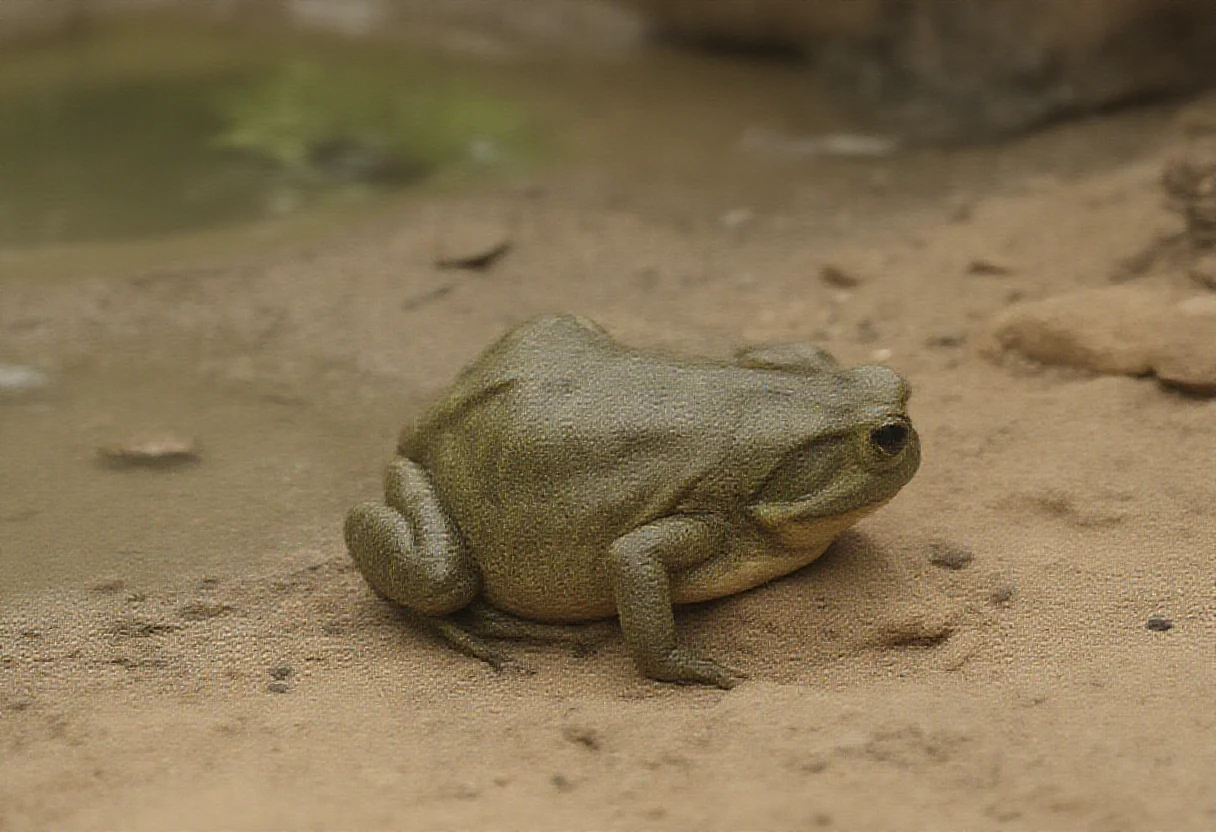
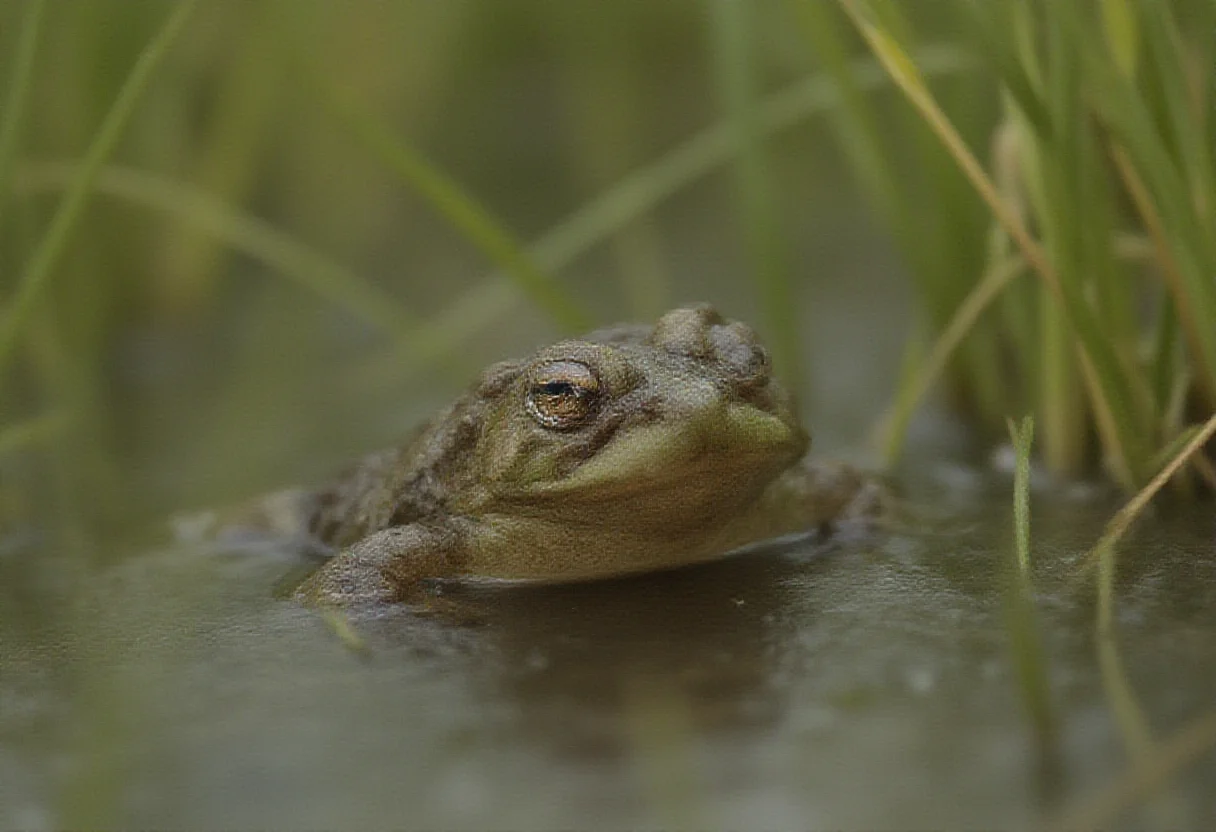
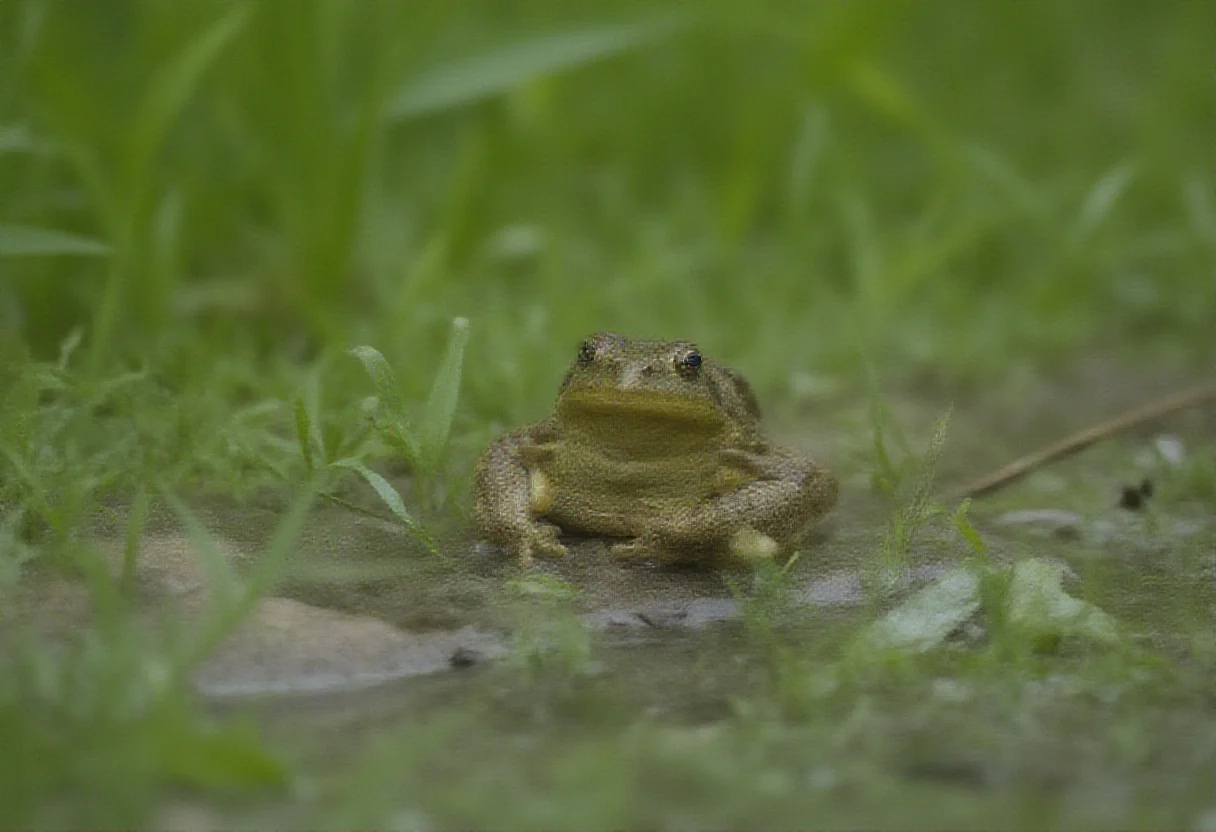
How this was made: prepared with AI assistance and checked against the sources listed at the end. Images are AI-generated illustrations, not photographs of real animals or products.
Key Takeaways
- Adult males commonly reach 8 to 10 inches (20 to 25 cm).
- Females are much smaller than males, roughly half the size in most accounts.
- Reported male weights range from about 0.9 kg to over 2 kg, depending on source.
- Local conditions matter: males in some regions seldom exceed 140 mm.
- Males mature at around 1.5 to 2 years, according to Lafeber Veterinary.
Pin this infographicShare on Facebook
Adult size: males versus females
Males are the larger sex. Animal Diversity Web (University of Michigan) reports that males can exceed 9 inches (about 23 cm) and weigh over 2 pounds (about 0.9 kg), while females are much smaller.
Lafeber Veterinary gives 20 to 25 cm (8 to 10 in) for males, often above 2 kg (4.4 lb). It says females are typically about half the male size.
A University of Pretoria study of breeding frogs describes males as often over 1 kg and females as under 200 g.
Size figures by source
The table puts the published figures side by side. They differ because sources measure different populations and use different terms, such as length and snout-to-vent length.
| Source | Male size | Male weight | Female size or weight |
|---|---|---|---|
| Animal Diversity Web | Over 9 in (23 cm) | Over 2 lb (0.9 kg) | Much smaller |
| Lafeber Veterinary | 20 to 25 cm (8 to 10 in) | Often over 2 kg (4.4 lb) | About half male size |
| University of Pretoria | Not stated | Often over 1 kg | Under 200 g |
| Potawatomi Zoo | Up to 10 in | About 4 lb | About 6 in and 2 lb |
| Biodiversity Development Institute | 245 mm snout-vent (Gauteng) | 1.4 kg (Gauteng) | Not stated |
Why the numbers differ
Weights range from about 0.9 kg to over 2 kg for large males. The sources do not agree on a single maximum, so treat any one figure as a rough guide.
Place matters too. The Biodiversity Development Institute reports males reaching 245 mm snout-vent length and 1.4 kg in Gauteng, South Africa. In the Eastern Cape and Free State, males seldom exceed 140 mm.
Diet and age also change body weight, so one frog can vary over time. The sources reviewed do not say how each figure was measured.
How fast do they grow?
Growth starts fast. The BDI notes tadpoles finish metamorphosis 18 to 33 days after hatching, while Animal Diversity Web says within about 3 weeks.
Lafeber Veterinary reports sexual maturity at roughly 1.5 to 2 years. The sources reviewed give no exact growth rates per month, so none are quoted here.
Young frogs start as small froglets and add size over several years. Males end up much heavier than females.
Why are males so much bigger?
In most frogs females are larger. African bullfrogs reverse that pattern. The Pretoria study describes territorial males as the largest and most aggressive, and these males guard eggs and tadpoles.
Large males can drive off rivals and defend nursery pools. Animal Diversity Web says the species eats nearly any animal it can overpower and fit in its mouth.
Lifespan and size over time
Lifespan figures also vary. Lafeber says up to 20 years is common, with some individuals living past 45. The BDI estimates maximum captive longevity at 45 years, and Potawatomi Zoo gives 15 to 25 years in the wild.
In the wild, much of their life is spent estivating underground, according to Animal Diversity Web. That can last a year or more.
Why size sorts males into three types
Size is not just a number for this species. The University of Pretoria study and the Biodiversity Development Institute (BDI) describe three male mating strategies based on size.
- Territorial males are the largest and most aggressive. They defend fixed sites, and the BDI says they sometimes fight for more than 40 minutes and suffer injuries.
- Non-territorial males gather in groups called leks. The BDI recorded up to 20 males in about 4 square metres. They try to displace males already in amplexus.
- Satellite males are the smallest. They stay silent and non-aggressive near territorial males and try to intercept females.
Only territorial males stayed to guard tadpoles in the Pretoria study, and their presence improved tadpole survival. For a male, being big pays off in fights and in fatherhood.
From egg to froglet: how the early weeks look
The BDI says a female lays 3,000 to 4,000 eggs, each 1.1 to 1.3 mm across. Tadpoles hatch about 36 hours later and form schools that merge into one large school.
Metamorphosis takes different times in different sources. The BDI gives 18 to 33 days after hatching. The Pretoria study gives 32 to 37 days for guarded tadpoles. Animal Diversity Web says about three weeks.
The Pretoria abstract explains one reason. Offspring come in two morphs suited to short-lived pools. A large carnivorous morph develops in 19 to 21 days, while a slower omnivorous morph takes 31 to 35 days. Tadpoles tolerate water up to 39 C in shallow temporary ponds.
Size at metamorphosis therefore depends on the morph, the pool and the food. That is another reason a single “growth rate” does not exist.
Where the giants live, and where they are shrinking
The BDI describes a species of grassland, savanna, Nama Karoo and thicket biomes. It breeds in seasonal, shallow, grassy pans on flat, open ground and prefers sandy soil. Males in Gauteng reach about 245 mm, while males in the Eastern Cape and Free State seldom exceed 140 mm.
Globally the species is not considered threatened, but it is Near Threatened regionally. The BDI reports declines of over 50 percent in the past century and says it has been declared extinct in Eswatini. Potawatomi Zoo lists it as Least Concern.
- Habitat loss from crop farming and urban development.
- Road deaths of migrating adults and dispersing juveniles.
- Possible harm from insecticides and herbicides, which needs more study.
- Illegal collection for the pet trade, and commercial harvesting for food in Limpopo.
What fuels a big frog: wild diet and predators
The BDI lists a wide diet for adults: small birds, rats, snakes, lizards, insects, scorpions, crabs, slugs and other frogs. They also eat their own kind at every life stage, and one record describes two adults eating 17 newborn Rinkhals. Tadpoles graze on algae.
Size has costs as well as benefits. The BDI says birds, including raptors, marsh owls, storks, pelicans and egrets, are the main predators of adults. Tadpoles are eaten by terrapins, Nile monitors, Rinkhals and fish such as barbel and tilapia.
Animal Diversity Web notes that adults spend most of their lives dormant underground until rain returns, so feeding is concentrated in the wet season.
Dry-season dormancy: sources compared
A big frog spends much of its life out of sight. The sources describe dormancy differently.
| Source | What it reports |
|---|---|
| Animal Diversity Web | Dormant underground for a year or more |
| BDI | Dry periods underground, typically 0.5 to 1 m deep, sometimes in old crab holes |
| Oregon Zoo | About 10 months buried in the dry season |
| Potawatomi Zoo | Can hibernate for up to two years |
The BDI adds that adults shed skin layers to form a cocoon before burrowing. These differences are partly a matter of wording, and partly of region. Treat them as a range, not one fact.
How to read a size claim
- Check the measurement. Total length, snout-vent length and “size” are not the same.
- Check the sex. Males can be twice as long as females.
- Check the region. Gauteng males and Eastern Cape males differ by about 100 mm.
- Check wild versus zoo. Zoo figures such as Potawatomi’s “up to 4 pounds” are from managed animals.
- Check the date and method. Sources rarely say how each weight was taken.
Applied together, these checks turn contradictory numbers into a consistent picture.
Size and safety around large frogs
The large jaw projections and strong feeding response of adults make hand-feeding risky, and size increases the harm of a bite. Animal Diversity Web notes the species eats almost any animal it can overpower and fit in its mouth.
The CDC states: “Children younger than 5 years old should not handle or touch reptiles or amphibians or their environments.” The CDC also says these animals aren’t recommended for households with young children, people with weakened immune systems, or adults 65 and older.
Common mistakes about bullfrog size
- Quoting a record as typical. A 245 mm Gauteng male is not an average frog.
- Mixing up the North American bullfrog. This guide is about Pyxicephalus adspersus.
- Using one figure for both sexes. Females are far smaller.
- Expecting a fixed growth rate. Morph, pool and food change it.
- Assuming a big frog is a calm frog. Territorial males are the most aggressive.
Frequently Asked Questions
How big is a full-grown African bullfrog?
Adult males commonly reach 8 to 10 inches (20 to 25 cm). Females are much smaller, about half that size by most accounts.
How much does an African bullfrog weigh?
Sources vary. Males often exceed 0.9 to 1 kg, and Lafeber reports often over 2 kg. Females are far lighter, with one study reporting under 200 g.
Are male or female bullfrogs bigger?
Males. This is unusual among frogs, where females are normally larger.
How long does it take to reach adult size?
Lafeber gives maturity at about 1.5 to 2 years. Exact growth rates were not found in the sources reviewed.
Are wild bullfrogs smaller than captive ones?
Not necessarily, but region matters. Males in Gauteng reach 245 mm, while males in the Eastern Cape and Free State seldom exceed 140 mm.
How long do African bullfrogs live?
Reports range from 15 to 25 years in the wild to estimates of 45 years in captivity.
Bottom Line
African bullfrogs are giants, but the exact figures depend on the source, sex and region. Use the ranges above rather than a single number.
For housing and feeding a frog this size, see the guide to pixie frog care.
Sources
- Animal Diversity Web: Pyxicephalus adspersus (University of Michigan), accessed 13 November 2026
- Lafeber Vet: Basic Information Sheet, Giant African Bullfrog, accessed 13 November 2026
- University of Pretoria: Ecology and breeding biology of the African bullfrog, accessed 13 November 2026
- Biodiversity Development Institute: Giant Bullfrog, accessed 13 November 2026
- Potawatomi Zoo: African Bullfrog, accessed 13 November 2026
- CDC: Reptiles and Amphibians, accessed 13 November 2026
- Oregon Zoo: African bullfrog, accessed 13 November 2026

3 Comments