Best Gloves for Handling Frogs: Safe Types and Rules
This post contains affiliate links. As an Amazon Associate I earn from qualifying purchases. Prices and availability are shown by Amazon and can change.
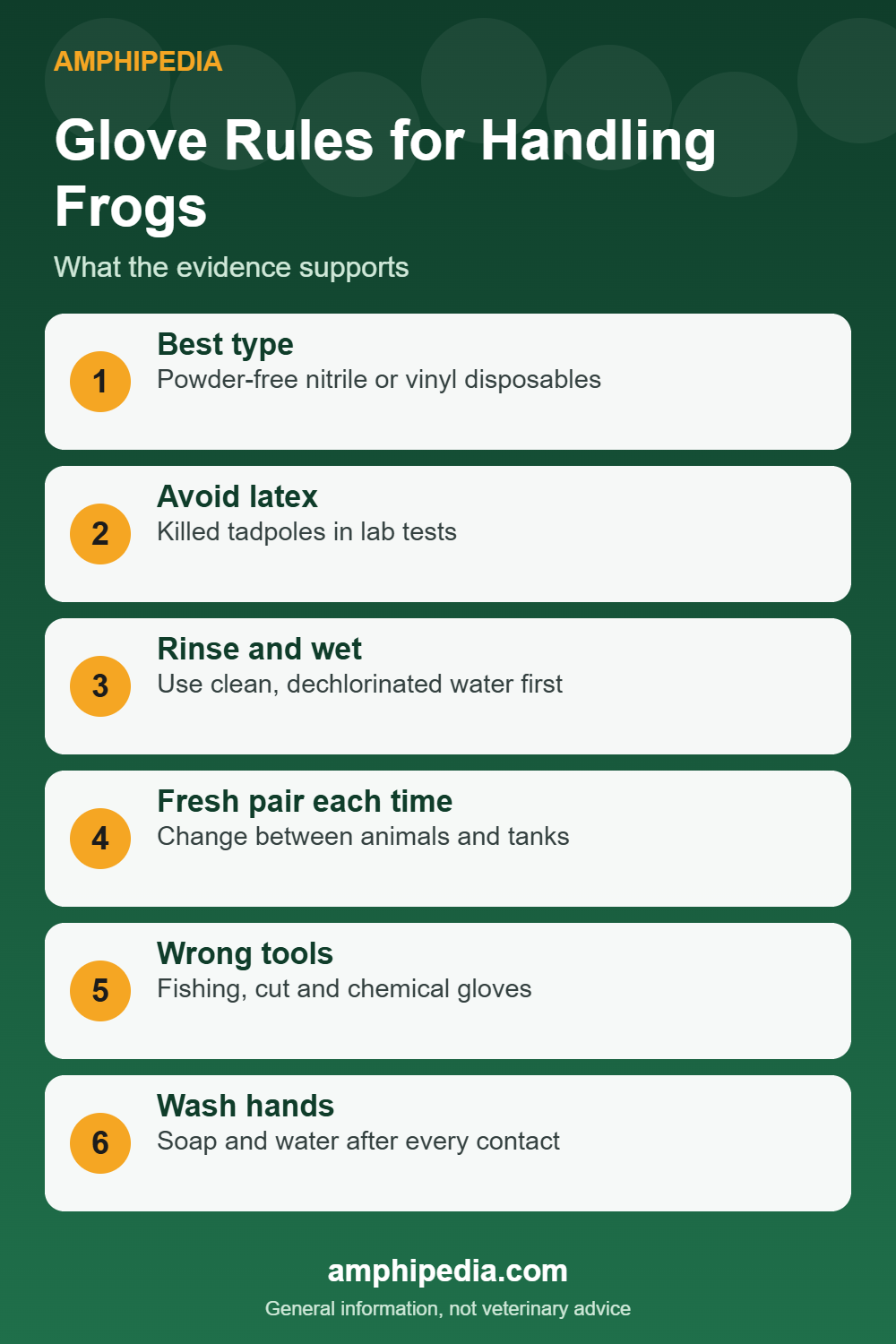
The best gloves for handling frogs are fresh, powder-free nitrile or vinyl disposable gloves, rinsed well and wetted with clean dechlorinated water before touching the animal. Avoid latex, which killed tadpoles in lab tests. Gloves made for fishing, cut protection or chemicals are the wrong tool. Handle frogs as little as possible, and wash your hands with soap and water afterwards.
Frog skin is thin, moist and absorbs substances easily. Dry hands, soap, lotion and some glove materials can all harm it. That is why keepers reach for gloves, but not every glove is safe.
This page replaces an older mix-up that treated frog gloves like fishing gloves. Fishing grips, cut-resistant liners and heavy work gloves are built for a different job. Here is what the evidence says about disposable gloves for frogs.
How this was made: prepared with AI assistance and checked against the sources listed at the end. Images are AI-generated illustrations, not photographs of real animals or products.
Key Takeaways
- Choose powder-free disposable nitrile or vinyl, not latex.
- Rinse new gloves and wet them with clean, dechlorinated water before contact.
- Change gloves between animals and tanks.
- Skip fishing, cut-proof and chemical-resistant gloves, which are made for other work.
- Handle only when needed, then wash your hands with soap and water.
Pin this infographicShare on Facebook
Disposable gloves for frog care
These powder-free disposable gloves come from live Amazon listings. Choose nitrile or vinyl, and rinse before use.


Product titles, prices and ratings are provided by Amazon and are accurate only at the time they are displayed.
Why frogs need special handling
Adult amphibian skin is delicate. A USGS National Wildlife Health Center handling procedure warns that rough handling can cause abrasions, small tears and ulcers, and that tadpoles and larvae should not be touched directly.
A pet-trade article on amphibian health also advises handling with wet hands and says a stiff net can strip the protective mucous coat. Both point the same way: touch less, and touch gently.
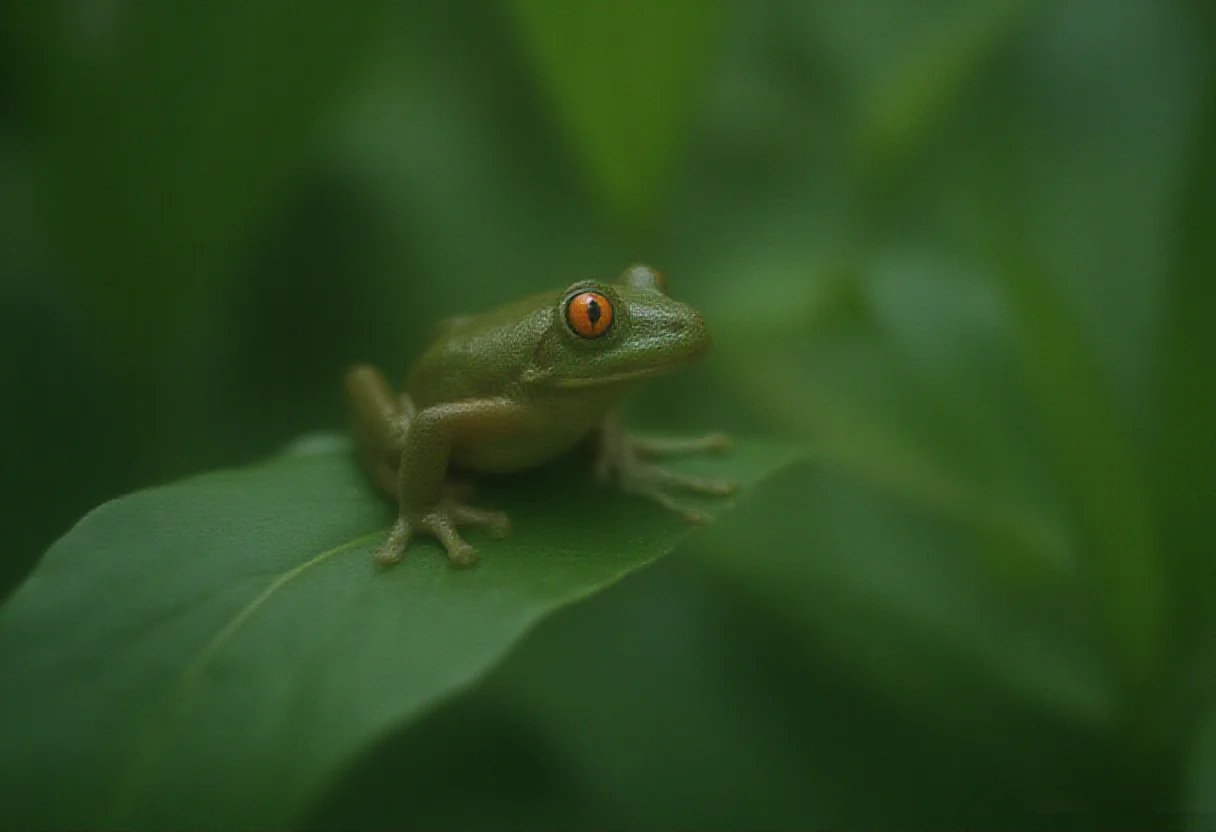
Do gloves help? What the evidence says
The Conservation Evidence summary on gloves rates their effectiveness as unknown, because none of its four studies tested disease transmission. They only tested whether gloves harm amphibians.
Results were mixed. Powder-free latex killed African clawed frog tadpoles within 24 hours in one study. Rinsed vinyl showed no effect in most tests, while unrinsed nitrile caused deaths in cane toad tadpoles. A review of 22 species found no adverse effects from disposable gloves. Small tests, different species and different rinsing may explain the gap.
Nitrile or vinyl: how to choose
Both can work when used correctly. Sources point to rinsing as the key step, since the study of rinsed vinyl found its harmful effects went away.
Pick a powder-free, unscented glove in the smallest size that fits well, so you can feel what you are holding. Avoid gloves with lotions or coatings, and do not reuse a pair between animals.
- Powder-free and free of added lotion.
- Snug fit for a gentle, controlled hold.
- Nitrile or vinyl, never latex.
- Boxes of single-use gloves rather than thick reusable ones.
- Allergy-friendly options if you react to rubber.
Why not fishing, cut-resistant or chemical gloves?
Fishing gloves are textured to grip scaly, slippery fish and often have coatings. Cut-resistant and chemical-resistant gloves are thick, so you lose feel and may squeeze too hard.
Unknown coatings and dyes also raise the chance of leaching. If you need to catch a frog, use a soft net or a clean container instead, and keep contact brief.
- Fishing grips are built for fish scales, not frog skin.
- Thick work gloves reduce feel and raise the risk of crushing.
- Coatings may leach into moisture on the skin.
- A soft net or container often replaces direct handling.
How to use gloves step by step
Prepare before you reach into the tank. Rinse the gloves with clean water if you plan to use them, and wet them with dechlorinated water so they do not stick to the skin.
Work calmly and keep your hold low over a soft surface in case the frog jumps.
- Wash your hands with soap and water, then dry them.
- Put on a fresh pair of powder-free gloves.
- Rinse the gloves in clean, dechlorinated water.
- Lift the frog briefly with a gentle, low hold.
- Return the frog to its tank and remove the gloves without touching the outside.
- Throw the gloves away and wash your hands again.
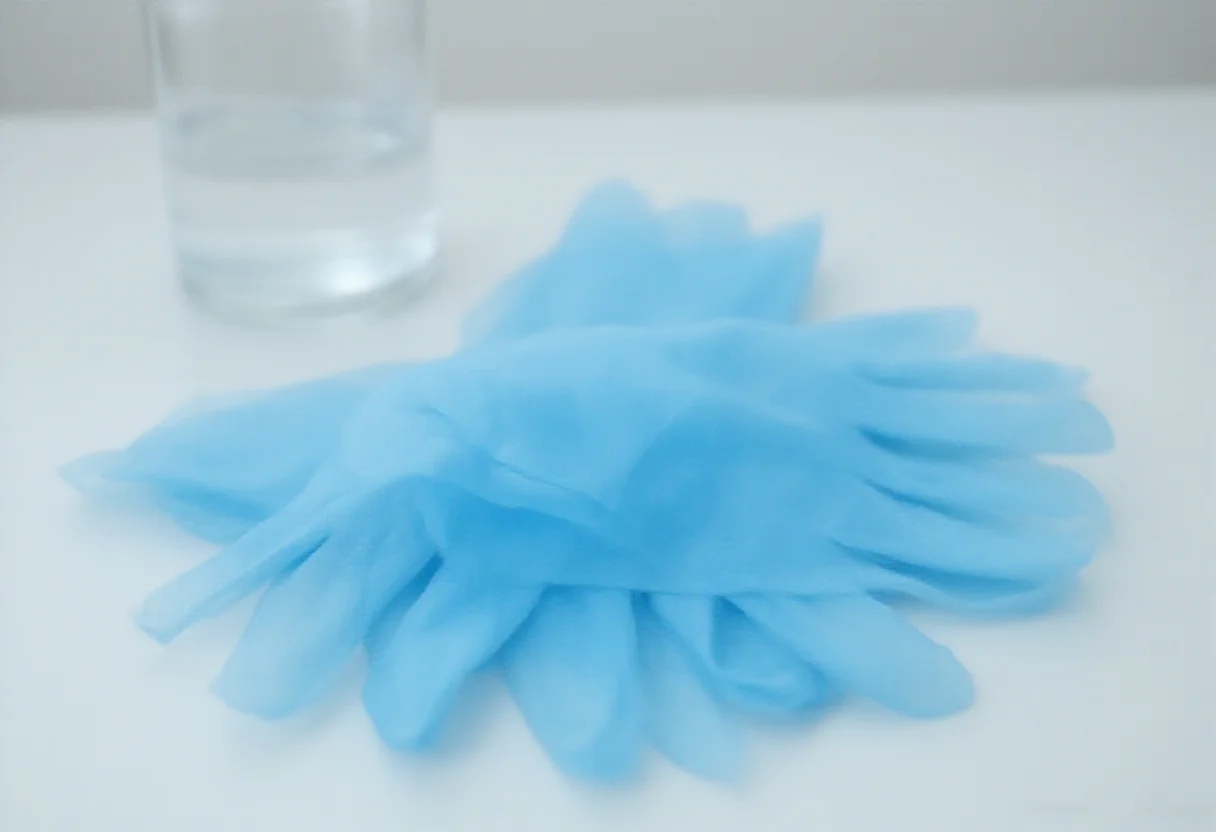
When to skip gloves
For a very short move, a clean container is often safer than any glove. Scoop the frog into a small tub with a little water, then release it into the new space.
Never handle sick frogs for fun. If a frog has red patches, sores or cottony growth, call an exotics vet. You can learn what to use in our first aid spray guide.
Buying tips: size, thickness and storage
Buy a size that fits snugly. Loose gloves slip and tempt you to grip harder, while very tight gloves tear. Thinner disposable gloves give better feel, which helps you keep a light hold on a small frog.
Store the box in a cool, dry place away from sunlight and heat, because aged rubber can split. Keep gloves in a clean cupboard, not next to cleaning sprays or the tank lamp. Never wash and reuse disposable gloves, since residue from soap or cleaner can stay on the surface and reach the frog.
- Check the box for a powder-free label.
- Choose the thinnest option that does not tear.
- Keep a separate box for tank work and for pet care.
- Throw out gloves with cracks, stickiness or an odd smell.
Gloves for general amphibian care
The same rules apply to salamanders, newts and toads. Our amphibian handling gloves guide covers the wider group, while this page focuses on frogs and clears up the fishing-glove mix-up.
For cleaning tools and tank hygiene, see the sanitizer guide.
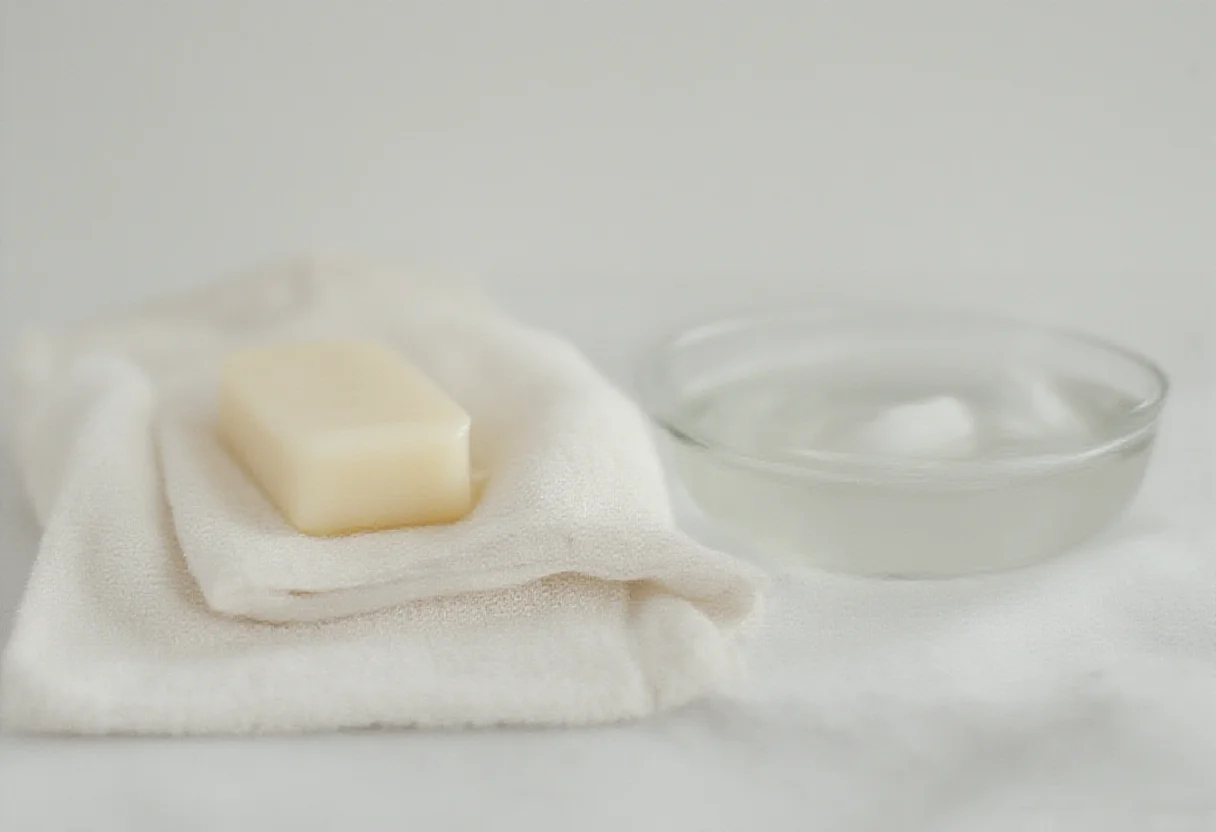
Hygiene and household safety
The CDC says Salmonella is the most common germ carried by reptiles and amphibians, and healthy animals can carry it. People can get sick from tank water, equipment and the habitat as well as the animal.
Wash your hands with soap and running water after handling frogs, food, droppings or equipment. Use hand sanitiser with at least 60% alcohol only if soap is not available. Children under 5 should not handle amphibians or their environments.
How to hold a frog when gloved
Gloves reduce feel, so a secure hold matters more. The USGS National Wildlife Health Center handling guide says medium and large frogs and toads, about 5 grams and up, should be grasped around the waist with the hindlimbs fully extended. Bent hips and knees let the animal kick, which can cause dislocations or fractures.
- Hold over a soft surface and keep the animal low.
- Support the body, and do not squeeze. A snug glove helps you feel your grip.
- Keep the legs extended rather than folded.
- Never grab a salamander by the tail. The USGS guide says under no circumstances should salamanders be grasped by the tail.
If an amphibian is kept in a clear container for more than an hour, the same guide says to check it for snout and head abrasions before release.
Protecting yourself from skin secretions
Gloves are often seen as protection for the frog, but some animals protect themselves with secretions that can hurt people. The USGS guide says the toxin of the giant toad, Bufo marinus, is not absorbed through intact skin but is readily absorbed through the eyes and mouth. It advises against rubbing your eyes or putting fingers in your mouth after handling one.
It also says that newts of the genus Taricha are presumed to secrete irritating toxins from the whole body, and that temporary blindness lasting about 24 hours has been reported after handling. If secretions reach your eyes or mouth, flush with clean water and seek care if stinging, numbness or blurred vision develops.
So gloves are only part of the answer. Keep your hands away from your face, wash up straight after, and learn the species before you pick it up.
What a field hygiene protocol asks for
The Queensland Government publishes a hygiene protocol for people handling frogs in the wild, to limit the spread of disease. It is written for fieldwork, not pet care, but its rules show what careful handling looks like.
- Vinyl and nitrile gloves are preferred, because latex is toxic to frog embryos and tadpoles.
- Use non-powdered, talc-free gloves or rinse them in warm water first. Gloves containing talc should not be worn.
- Ideally, wear new gloves for each animal. Use new gloves or bags for each sick or dead frog.
- Where water is not available between animals, use unused gloves or a plastic bag, or wipe hands with an alcohol-based disinfectant.
- Avoid unnecessary handling and release the animal as soon as possible. Swabbing involves no more than 30 seconds of handling.
- Disinfecting solutions must not touch frogs, and used gloves and bags go in a waste container.
The protocol also allows bare hands wiped with disinfectant before each capture, and it gives no rule on wet hands. It is a field rule for disease control, not advice for pet keeping. Keep sanitiser and wipes away from the animal, and ask your vet what suits your own pet.
How long is too long?
No source we found gives a safe handling time for pet frogs. Research handling gives some context. In the review by Greer and colleagues, animals were handled for up to three minutes weekly in the laboratory and up to two minutes in the field, with no adverse effects from disposable gloves.
That shows what was tested, not what is safe for every species. Keep handling brief and purposeful, such as a health check or a move to a clean tank, and put the animal back as soon as you can.
Tadpoles are a different case
The USGS guide says direct contact handling of tadpoles and larvae is to be avoided and that larvae should not be grasped with bare hands. It recommends nets or scoops, and examining larvae in a clear bag with a little water.
That advice applies to gloved hands too. A small clear container works better than any glove, and it lets you look at the animal without touching it.
Frequently Asked Questions
Are gloves better than bare hands for frogs?
The evidence does not show that gloves prevent disease transmission. Wet, clean hands are acceptable for brief handling, and gloves are useful to protect you and reduce skin contact.
Which glove type is safest?
Fresh, rinsed, powder-free nitrile or vinyl is the common choice. Avoid latex, which was toxic to tadpoles in lab tests.
Should I wet the gloves?
Yes. Rinse them and wet them with clean dechlorinated water so they do not stick to or dry the skin.
Can I use fishing gloves for frogs?
No. They are built for fish and may carry coatings that could harm frog skin.
Can I handle tadpoles?
USGS advises avoiding direct contact with tadpoles and larvae. Use a clear container or bag instead.
Do I still need to wash my hands?
Yes. Always wash with soap and water after gloves come off.
Bottom Line
Choose powder-free nitrile or vinyl, rinse them, wet them, and use a fresh pair for each animal. Skip latex and any glove built for fish, cuts or chemicals.
Handle frogs only when needed, keep it brief, and wash your hands every time.
Sources
- Conservation Evidence: Use gloves to handle amphibians, accessed Studies on glove materials and amphibians
- USGS NWHC: Restraint and Handling of Live Amphibians, accessed Skin damage and handling
- That Pet Place: Keeping Captive Amphibians Healthy, accessed Wet hands and mucous coat
- CDC: Reptiles and Amphibians, accessed Salmonella and handwashing
- USGS National Wildlife Health Center: Restraint and Handling of Live Amphibians (archived copy), accessed 12 November 2026
- Queensland Government: Hygiene protocol for the control of disease in frogs, accessed 12 November 2026
- Conservation Evidence: Greer et al. (2009), Guidelines for the safe use of disposable gloves with amphibian larvae, accessed 12 November 2026