
Mesh Substrate Barrier for a Terrarium: Which Material Works
This post contains affiliate links. As an Amazon Associate I earn from qualifying purchases. Prices and availability are shown by Amazon and can change.
A mesh substrate barrier is a thin sheet that sits between the drainage layer and the soil. It lets water drain down while keeping soil from clogging the gravel or clay balls. DartFrog.pet advises fiberglass screen, not metal, or weed liner. Test that water passes through easily, because a blocked barrier keeps the soil soggy.
Bioactive frog terrariums use a drainage layer under the soil. Without a barrier, soil sifts into the layer and fills it. The result is a blocked, smelly base.
A barrier is cheap, but the wrong material can rust, tear or block water. This guide explains what to use, how to fit it, and which mistakes to avoid.
How this was made: prepared with AI assistance and checked against the sources listed at the end. Images are AI-generated illustrations, not photographs of real animals or products.
Key Takeaways
- A barrier keeps soil out of the drainage layer.
- Use fiberglass screen or weed liner, not metal screen.
- Test that water passes through quickly before adding soil.
- Cut it to fit the whole base, and overlap the edges.
- Add a thin charcoal layer above the barrier, as DartFrog.pet advises.
- Check the drainage layer regularly and empty it if water rises too high.
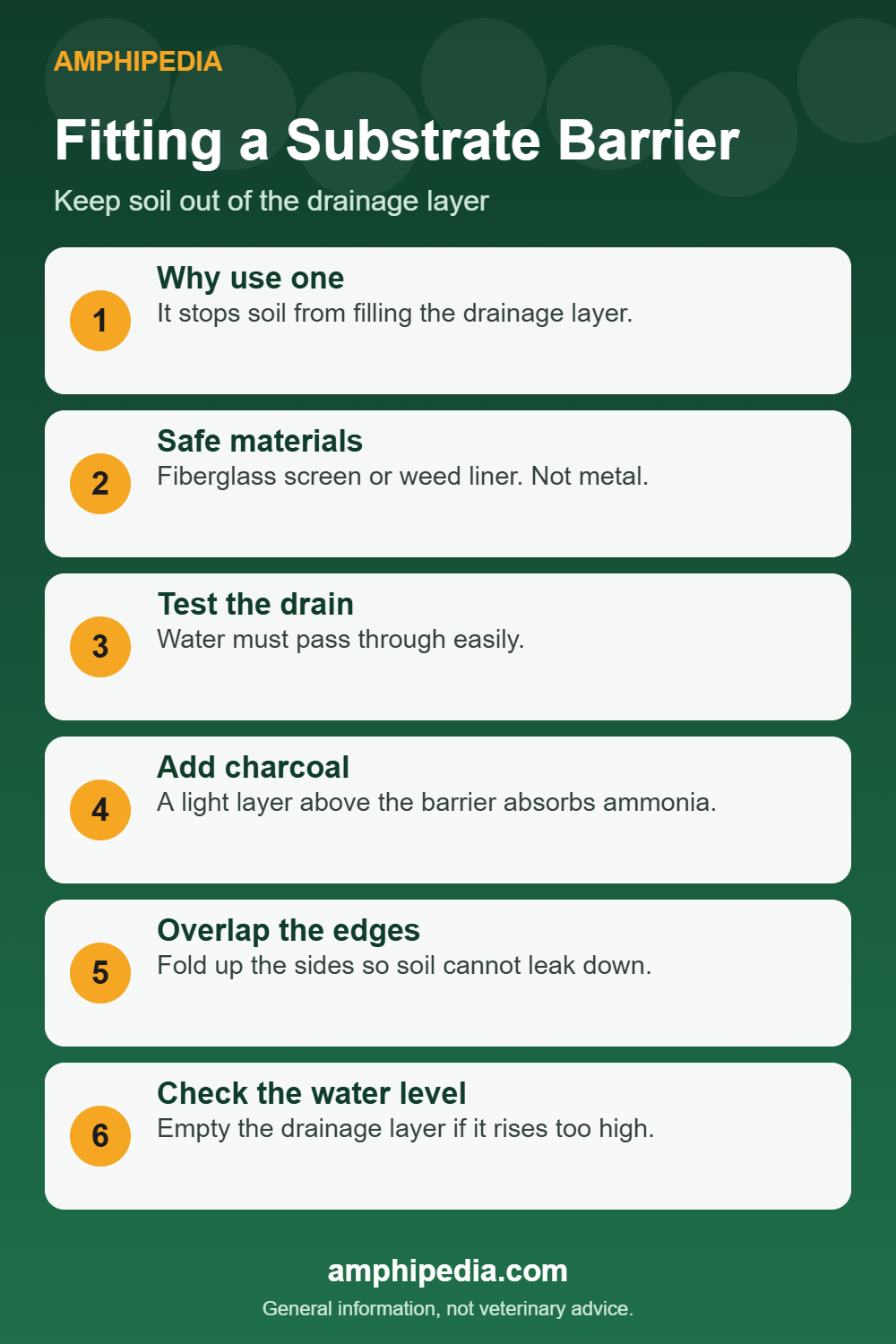
Pin this infographicShare on Facebook
Fiberglass screen to compare
Fiberglass window screen is sold in large rolls, and one roll covers many tanks. Cut a piece to fit the tank base.
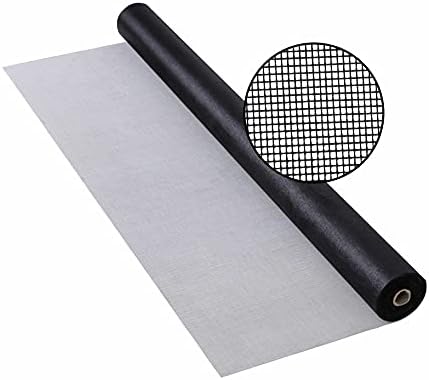

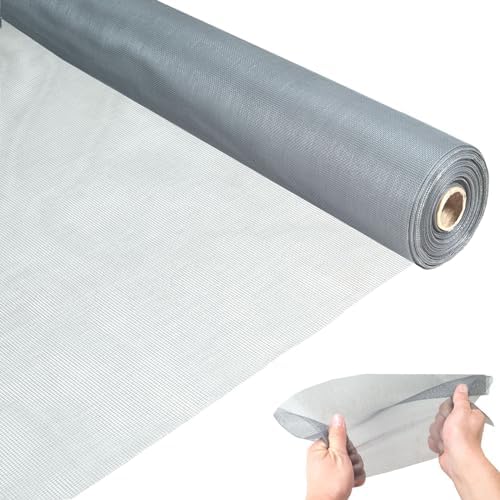

Product titles, prices and ratings are provided by Amazon and are accurate only at the time they are displayed.
What the barrier does
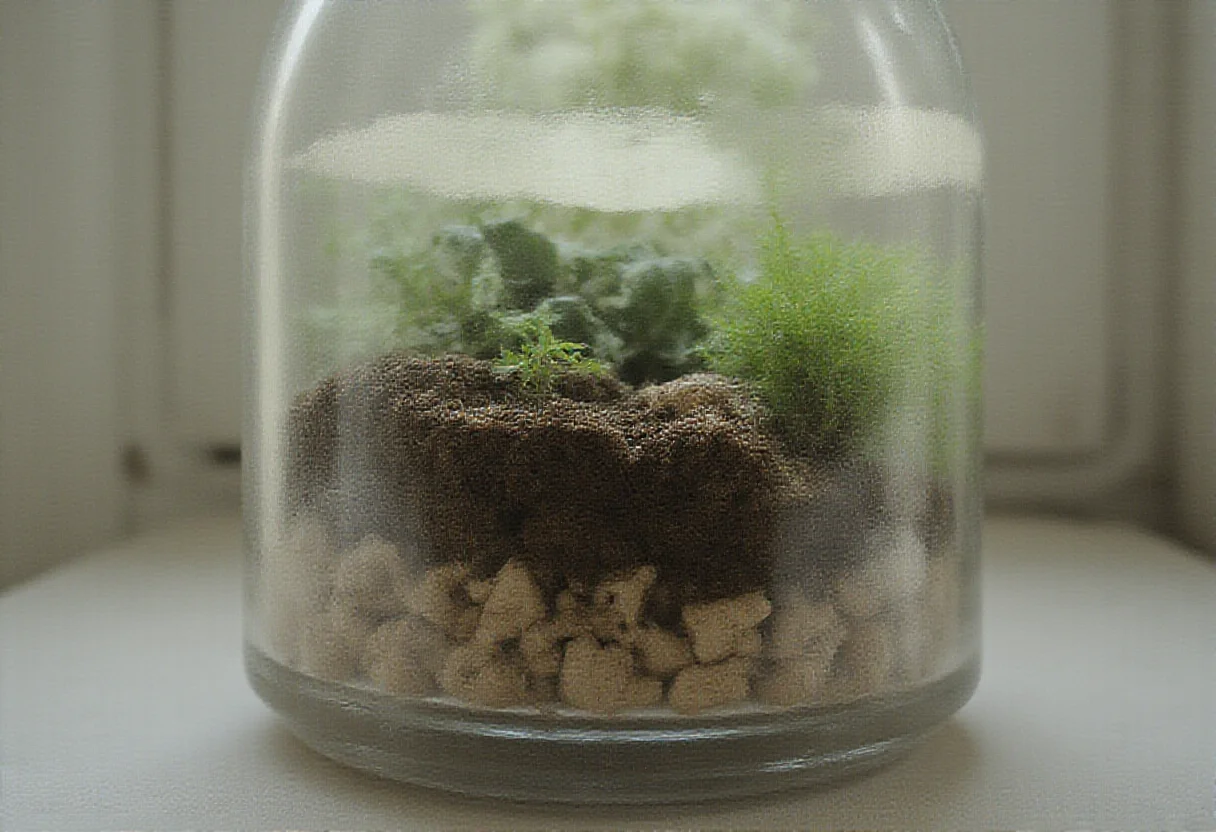
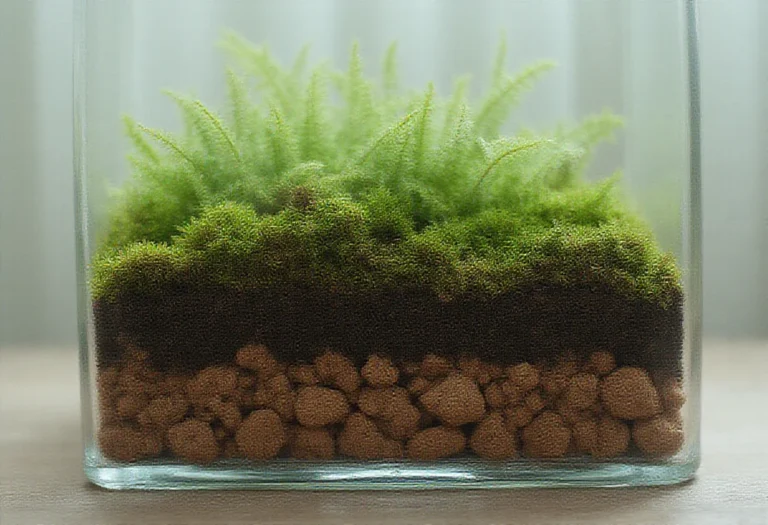
A normal bioactive build has layers. A drainage layer such as clay balls sits at the bottom. The barrier sits above it. Soil and leaf litter sit on top.
The barrier lets excess water move down and stops soil from falling through. That keeps the water below the soil, so roots and animals stay out of standing water.
Which materials are safe
DartFrog.pet advises fiberglass screen, not metal, or weed liner. Metal screens can rust in a damp enclosure, which is the likely reason for that advice, though the page does not say why.
Choose a fine mesh that holds soil but lets water pass. If it is too coarse, soil falls through. If it is too fine or too tight, water cannot drain.
- Fiberglass window screen: widely used and easy to cut.
- Weed liner (landscape fabric): cut to fit, drains well.
- Avoid metal screen, which can rust.
- Avoid coated or treated fabrics with unknown chemicals.
How to fit it
Fit it before adding soil. Cut the sheet slightly larger than the base.
- Build the drainage layer, such as clay balls, to an even depth.
- Cut the mesh to the footprint, with extra for the edges.
- Lay it flat over the drainage layer. Fold the edges up the sides.
- Pour a little water on top and check that it passes through quickly.
- Add a thin charcoal layer above the barrier.
- Add soil, then leaf litter and plants.
Drain test and charcoal
A simple pour test, which is our suggestion and not a quoted instruction, shows whether water passes through the barrier easily. If it does not, the soil stays soggy. Fix the barrier before you add the animals.
The same source suggests a light layer of aquarium-grade charcoal above the barrier to absorb ammonia. Rinse the charcoal first.
Water level and maintenance
Check the drainage layer from time to time. DartFrog.pet advises adding a drain pipe or siphoning water out, so the water level never reaches the soil.
If water rises into the soil layer, remove the excess at once. A soggy base can harm roots and make the tank smell.
Common mistakes
Most problems appear after weeks, not on day one.
- Using metal screen that rusts.
- Leaving gaps at the edges, so soil leaks down.
- Using fabric that blocks water.
- Skipping the water test.
- Letting the drainage layer fill without emptying it.
- Adding soil with fertilizers or pesticides.
Sizing the barrier for your tank
Measure the inside length and width of the tank base. Cut the barrier about 2 cm larger on each side so it can fold up the walls.
Wide overlaps stop soil from sneaking down the edges. If you join two pieces, overlap them by several centimetres so there is no open seam.
Layers at a glance
A bioactive base has a clear order. DartFrog.pet describes it from the bottom up.
- Drainage layer, such as clay balls.
- Barrier of fiberglass screen or weed liner.
- Thin layer of aquarium-grade charcoal.
- Soil mix without fertilizers or pesticides.
- Leaf litter and moss on top.
If the base stays soggy
A soggy base usually means water cannot drain. Check the barrier for blocked mesh, and check the drainage layer for standing water.
Remove excess water with a siphon, and lift an edge of the barrier to look. If the mesh is clogged, replace it with a coarser one.
Cutting and handling
Cut the sheet with sharp scissors on a clean surface. Fiberglass screen can shed fine fibers, so wear gloves while you cut it and wash your hands afterwards.
Check the cut edges for loose strands. Trim or fold them under so nothing frays into the tank. Weed liner is softer to handle but also needs a clean edge.
When to replace the barrier
A barrier lasts as long as it stays intact. Inspect it whenever you rebuild or deep-clean the tank.
Replace it if it is torn, if the weave is clogged with soil that will not rinse out, or if water no longer drains. A fresh sheet is cheap compared with a failed base.
Related guides
For the layer under the barrier, read our guides on a drainage layer and a drainage mat.
If you want a divider screen inside the tank, see divider screen mesh. For the soil mix, see bioactive terrarium substrate.
What DartFrog.pet says about separator materials
The DartFrog.pet setup page says you can use fiberglass screen of the kind sold for screen doors as a barrier, or a weed liner material. Its parts list specifies a screen mesh separator that is plastic or fiberglass, not metal. The page does not explain the reason for avoiding metal, and it does not describe a drain test or mesh sizes.
Anything beyond those materials in this guide, such as overlap widths and the pour test, is our practical suggestion and not a quoted instruction.
A gardening library’s layer order for terrariums
The New York Botanical Garden (NYBG) Mertz Library describes a plant terrarium that starts with about an inch of 1/8-inch crushed gravel from a fish store. It then adds charcoal sprinkled over the gravel to keep the soil sweet, followed by a couple of inches of soil.
That answer is about plants, not amphibians, and it is a different design from a clay-ball drainage layer. It does show that the gravel-then-charcoal-then-soil order is long-established, and it matches DartFrog.pet’s charcoal above the screen. Use it as background, not as an amphibian standard.
False bottoms and egg crate
DartFrog.pet describes a “false bottom” as a way to make a taller drainage layer. It says egg crate reduces the amount of clay balls or substrate you need and lets the vivarium hold more water.
A barrier laid over a false bottom has to bridge the gaps. Support it fully, because mesh that sags under soil creates low spots where water collects. This is our inference from how the layers stack, not a quoted step. Test the finished base with a slow pour before adding animals.
Soil mix: where sources conflict
DartFrog.pet lists a recipe of 2 parts tree fern fiber, 2 parts orchid bark, 1 part peat moss, 1 part crushed horticultural charcoal and 1 part milled sphagnum moss. It warns against potting soils and raised-bed soils, organic or not, and says coco fiber holds bacteria and contributes to skin infections. That claim is the page’s own, and we did not find a second source for it.
The MSD Veterinary Manual says some amphibians cannot tolerate low pH, and that peat and sphagnum moss may cause skin irritation. It also says cedar and pine mulches contain toxic oils and should not be used. A keeper using a peat-containing mix should watch skin closely and ask an exotics vet about the species. The soil sits above the barrier, so the barrier does not change this risk.
Preparing soil and leaf litter before they go on the barrier
Leaf litter holds moisture, according to DartFrog.pet, which advises washing it and then baking at about 220 F for an hour. The MSD manual gives a different figure for soil: heating to 93 C (about 199 F) for 30 minutes kills arthropods and helminth parasites, and freezing substrate below 0 C removes many infectious organisms.
The sources differ on time and temperature, and neither tests leaf from your garden. If you collect leaves, take them from places that have not been treated with chemicals. MSD also says soil must be free of chemical additives such as fungicides.
Let heated material cool fully before it touches the barrier or animals.
Checking the base after a month
A barrier is invisible once the tank is planted, so use the drain pipe or siphon access DartFrog.pet describes. It says to add a drain pipe to empty water routinely, to siphon water out if the level is too high, and to avoid standing water.
Check the water level in the drainage layer on a fixed day each week at first. Note the level in a simple log, and compare it after misting. A level that keeps rising points to a blocked barrier or too much water, and you can then lift an edge to look.
Frequently Asked Questions
Do I need a barrier in a terrarium?
In a bioactive build with a drainage layer, yes. Without one, soil fills the drainage layer over time.
Can I use metal screen?
DartFrog.pet advises against it. Use fiberglass screen or weed liner.
How do I know the barrier works?
Pour water on it and watch. This pour test is our suggestion, not a quoted instruction.
Where does the charcoal go?
A light layer above the barrier, per DartFrog.pet, to absorb ammonia.
How often should I check the drainage layer?
Regularly. DartFrog.pet advises emptying it if the water rises too high.
Is a mesh barrier the same as a divider?
No. A barrier sits flat between layers. A divider stands upright inside the tank. See our divider mesh guide.
Bottom Line
A mesh substrate barrier is a small part that does an important job. Choose fiberglass screen or weed liner, fit it with overlap, and test the drainage.
A tank that drains well is easier to keep clean and healthier for roots and animals.
Sources
- DartFrog.pet: Dart Frog Vivarium Setup, accessed 12 November 2026. Used for: drainage layer, barrier and charcoal
- MSD Veterinary Manual: Environment and Husbandry for Amphibians, accessed 12 November 2026. Used for: substrate safety
- CDC: Reptiles and Amphibians. Used for: Salmonella and hygiene
- How do I make a moss terrarium? NYBG Mertz Library Reference, accessed 12 November 2026. Used for: gravel, charcoal and soil layer order for plant terrariums




4 Comments