Multivitamin Supplement for Frogs: How to Choose Safely
This post contains affiliate links. As an Amazon Associate I earn from qualifying purchases. Prices and availability are shown by Amazon and can change.
Most pet frogs eat feeder insects that lack key vitamins and have a poor calcium to phosphorus ratio, so vets advise dusting prey with calcium and, at times, a multivitamin. Choose a product made for amphibians, check that it supplies preformed vitamin A, store it cold and never exceed the label. Too much vitamin A or D3 can poison a frog, so ask your vet for a plan.
A frog that eats crickets or fruit flies every day can still be short on nutrients. Feeder insects are not wild prey, and their bodies often lack the vitamins a frog needs.
This guide explains what a multivitamin does, why vitamin A needs extra care in amphibians, and what to check on the label. It does not give a dosing plan, because needs vary by species and age.
How this was made: prepared with AI assistance and checked against the sources listed at the end. Images are AI-generated illustrations, not photographs of real animals or products.
Key Takeaways
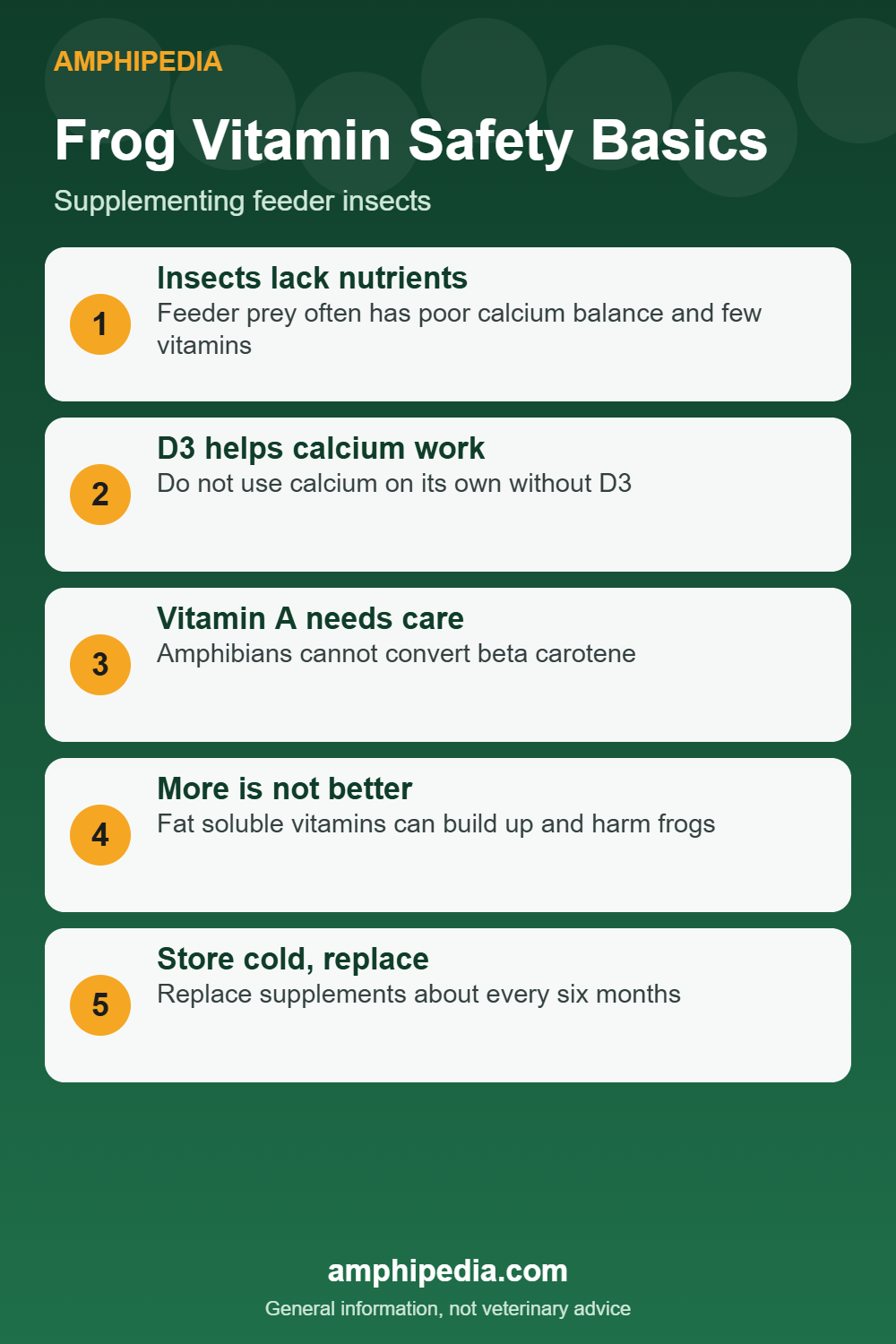
- Most feeder insects do not have the right calcium to phosphorus ratio and often lack vitamins, says the Merck Vet Manual.
- Vitamin D3 is needed so a frog can use calcium, according to DartFrog.pet.
- Amphibians cannot make vitamin A from beta carotene, so reptile vitamins may not suit them.
- Vitamin A is fat soluble and can build up, so over-supplementing is a real risk.
- Store supplements cold and replace them about every six months, as DartFrog.pet advises.
- Ask an exotics vet for a schedule that fits your species.
Pin this infographicShare on Facebook
Frog-Friendly Supplements Worth Considering
Check that any product is made for amphibians or suits them, and follow the label and your vet. Listed from highest to lowest price.


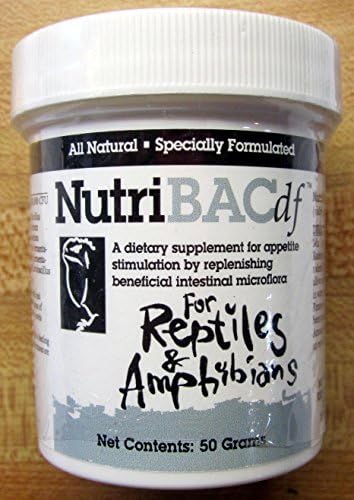


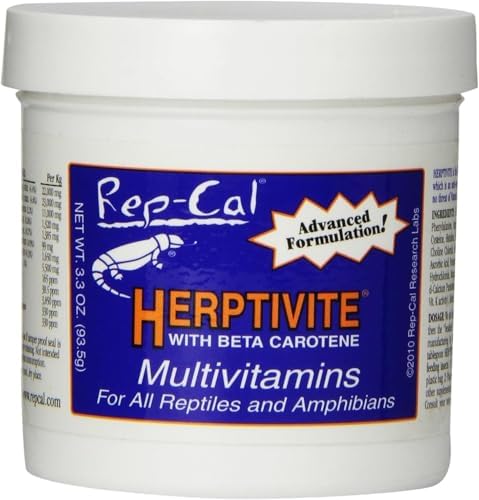
Product titles, prices and ratings are provided by Amazon and are accurate only at the time they are displayed.
Do frogs need a multivitamin?
Most amphibians eat live prey. The Merck Vet Manual says most invertebrates do not have the right calcium to phosphorus ratio to support healthy bone growth, and that they often lack key vitamins. It states that supplements should be added to the diet to prevent nutritional disease.
Two methods are described. Gut-loading means feeding prey a calcium-rich diet for 48 hours before feeding it to the frog. Dusting means coating prey in powdered calcium or in a powdered multivitamin that contains vitamin D3 and calcium.
The manual also tells owners to consult a vet for supplementation guidelines for their pet. That advice matters, because species, age and diet all change the answer.
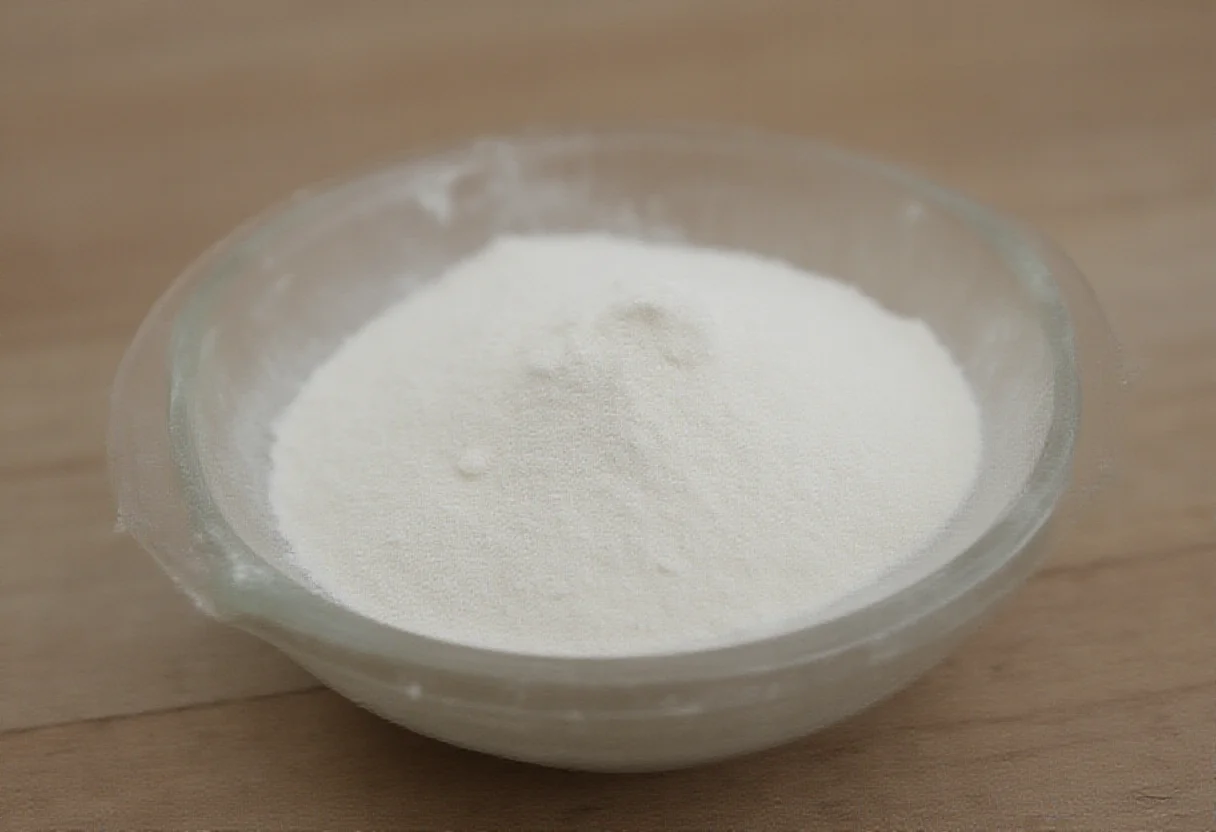
Calcium, D3 and multivitamin: what each does
Calcium and vitamin D3 work together. DartFrog.pet says fruit flies are low in calcium, that D3 is needed for calcium absorption, and that metabolic bone disorder is one problem calcium helps prevent.
A multivitamin adds other vitamins, including vitamin A. A Chewy care article says vets suggest dusting feeder insects with a multivitamin about once a week to help meet a frog’s vitamin A needs. It also advises confirming any plan with a vet.
Our guide to a calcium supplement for amphibians covers the calcium side in more depth.
| Supplement | Main job | Watch out for |
|---|---|---|
| Calcium powder with D3 | Supports bones and calcium use | Do not use calcium alone without D3 on a mixed plan |
| Amphibian multivitamin | Fills vitamin gaps, including vitamin A | High dose, so use only as the label and vet direct |
| Gut-load diet for prey | Feeds the insects before the frog eats them | Needs 1 to 3 days before feeding, per Chewy |
| Vitamin A only product | Targets one vitamin | Easy to overdose, so use only on vet advice |
Vitamin A needs extra care
DartFrog.pet says amphibians cannot metabolize needed vitamin A from beta carotene, so reptile vitamins that rely on beta carotene are not a good match. Amphibian products use retinol, which is stored in fat and can accumulate in the body.
The same page warns that it is possible to give too much of a vitamin, and that extra can poison your frogs. Standalone multivitamins are usually high dose and meant for periodic use, not daily use.
If you keep more than one frog or use more than one product, record every dusting. Doubling up by accident is easy.
How to read a supplement label
Labels differ widely. Use this checklist before you buy, and ask the seller or a vet if anything is unclear.
- Says it is made for amphibians or for frogs, not only for reptiles
- Lists preformed vitamin A such as retinol, not only beta carotene
- States the amount of vitamin D3 so you can see what a pinch provides
- Shows a batch or expiry date
- Comes in a small jar you will finish within months
- Is sold as a fine powder that sticks to small insects
- Gives clear instructions from the maker
Gut-loading and dusting basics
A multivitamin does not replace a good insect diet. Feed crickets or flies a nutrient-rich feed for one to three days before offering them, according to Chewy.
To dust, place a few insects in a small cup, add a light pinch of powder and shake gently. The aim is a thin coat, like frost, not a thick crust. Offer the insects at once, since powder drops off with time.
Avoid dusting every insect from a tub that will sit for hours. Extra powder can build up in the dish and the substrate.

Storage and shelf life
DartFrog.pet says air, moisture and heat degrade vitamins. It advises refrigerating supplements and replacing them about every six months.
Keep each jar closed tight and label the open date. Use a clean scoop each time, and never dip a wet spoon into the jar.
Do not keep the jar near the terrarium, where heat and humidity are highest.
Common mistakes
The usual errors are small but add up over months. The most common is using a reptile vitamin that depends on beta carotene.
The next is using the multivitamin every day. The third is leaving an old jar open for a year. The fourth is skipping the vet check altogether, even though the Merck Vet Manual urges owners to ask a vet.
- Do not use reptile-only vitamins without checking the vitamin A source.
- Do not dust daily with a high-dose multivitamin.
- Do not mix several products without a plan.
- Do not keep supplements warm or open for months.
- Do not treat a sick or thin frog with powder instead of seeing a vet.
Related feeding gear
Good nutrition also depends on how you feed. Read our guides to fruit fly culture kits and the insect breeding cup for live feeder supply.
If your frog stops eating, see our tips on getting a frog to eat and ask a vet before you adjust supplements.
What a poor diet can look like
The MSD Veterinary Manual (professional version) describes the main nutritional problems vets see in captive amphibians. This list is to help you recognise a problem and book a vet visit. It is not a way to diagnose or treat at home.
- Metabolic bone disease: MSD links it to low dietary calcium and vitamin D3, inadequate UVB light and an inverse calcium to phosphorus ratio in prey. Signs include a deformed lower jaw, fractures of long bones, a bent spine, muscle spasms and bloating.
- Low vitamin A: signs include lethargy, wasting and trouble catching prey because the tongue cannot be used properly, sometimes called short tongue syndrome. The tongue may also darken.
- Thiamine deficiency: MSD says this occurs in amphibians fed frozen fish, with tremors and seizures as signs.
MSD notes that a vitamin A problem is usually judged mainly by reviewing the diet, because confirming it needs a liver biopsy that is rarely practical. That is another reason to bring your vet a full list of what you feed.
Both too little and too much vitamin A cause trouble
MSD explains that amphibians cannot make carotenoids, including vitamin A, so they must get them from food. It also says excess vitamin A may interfere with vitamin D metabolism and contribute to metabolic bone disease. DartFrog.pet adds that retinol is fat soluble and accumulates in the body.
Put together, the sources point to a narrow target. Too little leaves a frog short, and a heavy hand with a high-dose product can push the balance the other way. This is why the label, the log and the vet matter more than a favourite brand.
Variety in the food bowl
MSD says most invertebrate prey have an inverse calcium to phosphorus ratio, and that earthworms are the exception. DartFrog.pet says fruit flies are low in calcium and other nutrients, and that feeding fruit flies alone, or with the few commercial insects available, does not meet nutritional needs.
- Rotate feeder species where your frog’s size and species allow it.
- Treat earthworms as a useful part of the mix only if your species and size suit them.
- Do not rely on powder to fix a diet of a single insect.
- Ask a vet which feeders suit your species before changing the diet.
Light, water and supplements work together
Supplements cannot replace the other parts of husbandry. MSD lists inadequate UVB as a cause of metabolic bone disease and recommends full-spectrum lighting with biologically active UVB. It also notes that glass blocks UVB, and that UVB bulbs should be replaced every 6 to 8 months or as the maker directs.
MSD also says fluoride in a water source can cause bone lesions that resemble metabolic bone disease. If a frog has bone problems and the diet looks sound, mention your water source and lighting to the vet.
Fish-fed amphibians and thiamine
The FAQ below mentions axolotls and aquatic frogs. MSD says amphibians fed frozen fish can develop thiamine deficiency, because freezing oxidises fat-soluble vitamins, vitamin B9 and vitamin C. If your animal eats fish rather than insects, ask your vet whether the diet needs adjusting.
Overfeeding is a separate risk. MSD calls obesity a disease caused mainly by overfeeding, because many species eat whenever prey is available. More powder does not fix a frog that is already getting too much food.
Frequently Asked Questions
Do pet frogs need a multivitamin?
Most frogs that eat feeder insects benefit from supplements, according to the Merck Vet Manual. The right product and schedule depend on the species, so ask a vet.
Can I use a reptile multivitamin on frogs?
Be careful. DartFrog.pet says amphibians cannot get vitamin A from beta carotene, so check that the product supplies a usable form and is meant for amphibians.
How often should I use a multivitamin?
A Chewy care article says vets suggest about weekly, but your vet should confirm the schedule for your frog.
Is more vitamin better?
No. Fat soluble vitamins such as A can build up, and too much can poison frogs.
How long does a supplement last?
DartFrog.pet suggests refrigerating and replacing them about every six months.
Do axolotls and aquatic frogs need dusted food?
Needs differ for species that eat pellets or worms. Ask an exotics vet about their diet.
Bottom Line
A multivitamin is a small tool that does a big job when it matches the animal. Choose an amphibian product, store it well and keep a written log.
Let your vet set the schedule, and let the label set the upper limit.
Sources
- Merck Veterinary Manual (pet owner): Diet for Amphibians, accessed 12 November 2026, for why supplements are needed, gut-loading and dusting
- DartFrog.pet: Supplementing, accessed 12 November 2026, for D3, vitamin A, fruit flies and storage
- Chewy: What Do Frogs Eat?, accessed 12 November 2026, for gut loading and multivitamin timing
- CDC: Reptiles and Amphibians, accessed 12 November 2026, for Salmonella and hygiene
- MSD Veterinary Manual (professional): Nutritional Diseases of Amphibians, accessed 12 November 2026, for deficiency signs, vitamin A, UVB, thiamine and obesity



2 Comments