Best Bioactive Drainage Mat and False Bottom for Frog Tanks
This post contains affiliate links. As an Amazon Associate I earn from qualifying purchases. Prices and availability are shown by Amazon and can change.
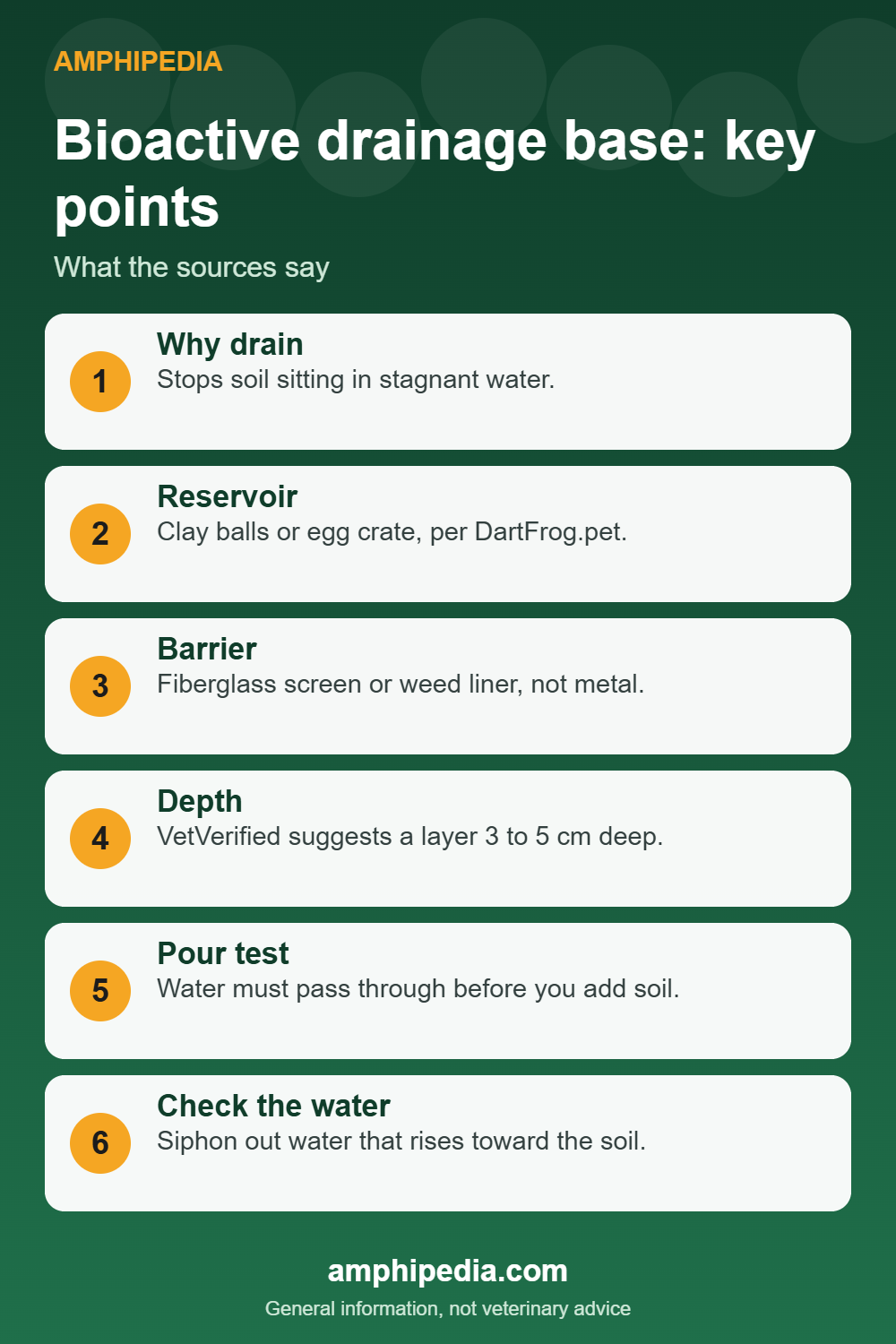
A bioactive drainage mat is the false bottom and barrier that keeps soil above a reservoir of excess water. DartFrog.pet builds it with clay balls or egg crate for the reservoir, and fiberglass screen or weed liner as the barrier, not metal. VetVerified suggests a drainage layer 3 to 5 cm deep under mesh or weed membrane. Test that water passes through, and check the reservoir regularly so it never reaches the soil.
Garden drainage mats are made for plant beds, not animal tanks. A bioactive terrarium needs a different set-up: a space for excess water, a barrier above it, and soil on top.
This guide explains the parts, how to choose safe materials and how to build and check the base. It focuses on the mat and barrier. Our drainage layer guide covers the clay balls and other materials that sit beneath it.
How this was made: prepared with AI assistance and checked against the sources listed at the end. Images are AI-generated illustrations, not photographs of real animals or products.
Key Takeaways
- The drainage base keeps soil from sitting in water, which can turn soggy and stagnant.
- DartFrog.pet uses clay balls or egg crate for the reservoir and fiberglass screen or weed liner for the barrier.
- Do not use metal screen. Test that water drains through before you add soil.
- VetVerified suggests a drainage layer 3 to 5 cm deep.
- Check the reservoir regularly and siphon out water that rises toward the soil.
Pin this infographicShare on Facebook
Barrier meshes and false-bottom panels to compare
These listings include terrarium barrier mesh, egg crate grids and fiberglass screen, the materials named in frog vivarium guides. Choose plain, uncoated products and test drainage before adding soil.


Product titles, prices and ratings are provided by Amazon and are accurate only at the time they are displayed.
What a drainage mat does in a bioactive tank
A bioactive tank holds living plants and soil. Misting and watering add moisture, and it has to go somewhere. Without a base for excess water, soil can become waterlogged.
DartFrog.pet says water drains through the layers to prevent soil saturation and stagnation. Without a separator, soil can wash into the drainage water and create a soggy, stagnant mess. It adds that this can lead to bacterial and fungal problems that affect frogs.
The three parts of the base
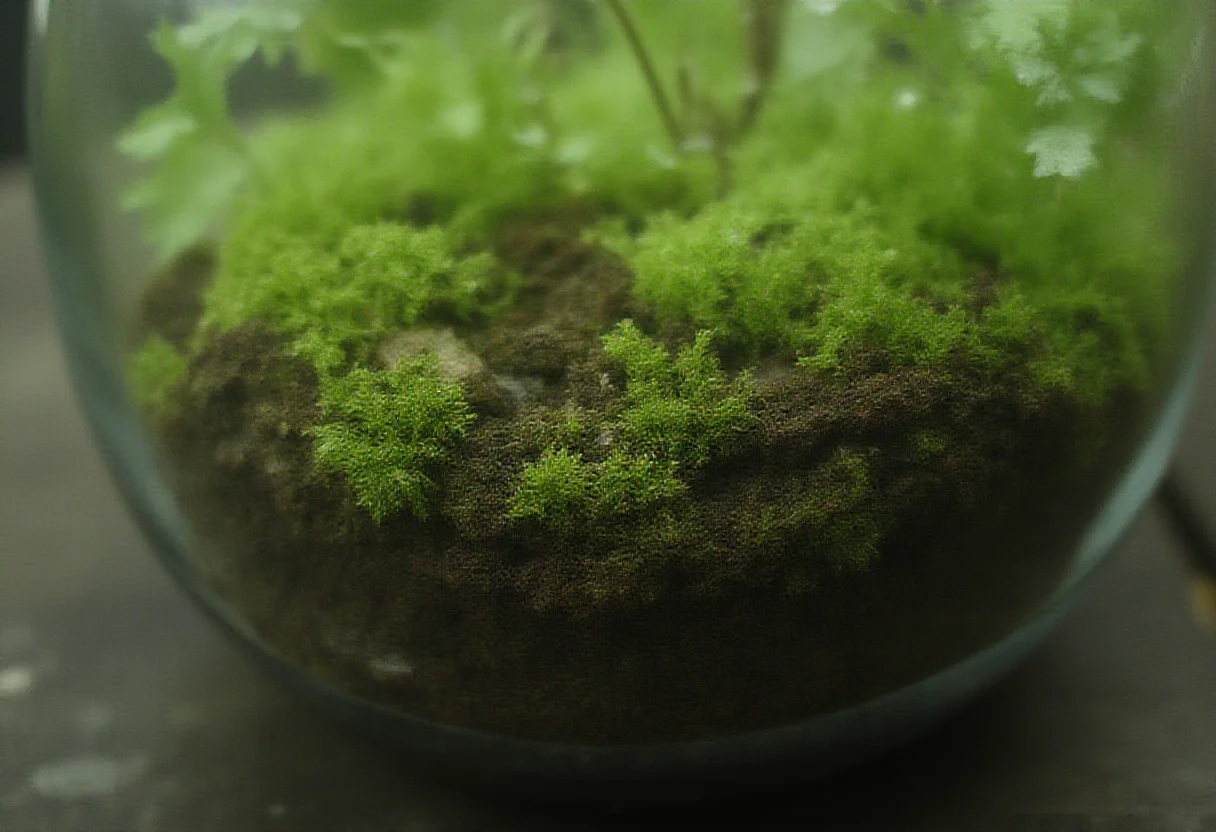
Most builds use the same basic stack. The names vary from shop to shop, but the jobs stay the same.
| Part | Job | Materials named by sources |
|---|---|---|
| Reservoir | Holds excess water below the soil | Clay balls such as Hydroton, or an egg crate frame (DartFrog.pet) |
| Barrier or mat | Keeps soil out of the reservoir while letting water pass | Fiberglass screen or weed liner; plastic or fiberglass mesh, not metal (DartFrog.pet) |
| Charcoal layer | Helps absorb ammonia | A light layer of aquarium-grade charcoal above the barrier (DartFrog.pet) |
| Substrate | Supports plants and animals | Coconut fibre, fertiliser-free topsoil, orchid bark mixes, leaf litter (VetVerified) |
Choosing a safe mat or barrier
Look for a sheet that lets water through and holds soil back. Fine mesh does both.
Avoid metal. DartFrog.pet specifies fiberglass screen or weed liner instead. Avoid fabrics with unknown coatings or treatments, because they sit in a damp tank for months.
- A fine mesh or fabric that holds soil but passes water.
- No metal parts that can rust.
- No coating, dye or chemical treatment.
- Large enough to cover the base and fold up the walls.
- Cuts cleanly with scissors and does not fray into loose threads.
- Easy to test with a jug of water before you build.
Why garden drainage mats are a poor fit
Garden and roof drainage mats are often thick plastic dimples with a fabric face. They can work in principle, but the maker may not say whether they are safe for animals. Rubber, foam and coated products add extra unknowns.
If you use one, choose the plain, uncoated type and wash it. Prefer the materials named in the care guides above. Never assume that a product is amphibian-safe because it is sold for plants.
How to build the base step by step
Build the base before you add soil. Follow your tank manual if it has a false bottom.
- Clean the tank with plain water. Do not use household cleaners that leave residue.
- Add the reservoir layer. Use clay balls or an egg crate frame, keeping it level.
- VetVerified suggests a layer 3 to 5 cm deep. Adjust to the height of your tank.
- Cut the barrier to cover the whole base, with edges that overlap the walls.
- Pour water through the barrier. It should pass quickly. If it does not, fix the barrier first.
- Add a light charcoal layer, then the substrate, then leaf litter and plants.
- Plan an access point for checking the water, such as a drain pipe with a cap or a siphon tube.
Checking and emptying the water
The reservoir is not self-cleaning. DartFrog.pet advises inspecting it regularly and siphoning out water that rises too high and reaches the soil. It lists a capped PVC pipe, a drain in the glass, or a tube in a corner as ways to reach it.
A bioactive tank also recycles waste with cleaner bugs. Our springtail and isopod guide explains that part.
Match the soil to the base
A good base only works with the right soil above it. Choose plain products without fertiliser or pesticide. Our guides to bioactive substrate and organic soil blends cover the options.
Top the soil with leaf litter for cover. See our leaf litter guide. For a simpler mesh-only approach, read the mesh substrate barrier guide.
Common mistakes
Most drainage problems show up after a few weeks.
- Using metal screen that can rust.
- Leaving gaps at the edges so soil slips through.
- Choosing a fabric that blocks water.
- Skipping the pour test before adding soil.
- Never checking the reservoir.
- Adding soil that contains fertiliser or pesticide.
- Making the reservoir so deep that it leaves little room for roots.
Building a taller false bottom with egg crate
DartFrog.pet describes an optional taller reservoir. You build a false bottom from egg crate, the plastic square sheets sold in home improvement stores, usually for lighting. Cut the sheets and zip-tie them into a box that supports the weight above.
The page says this reduces the clay balls or substrate you need and lets the vivarium hold more water. The fiberglass screen then sits on top of the egg crate, separating it from the soil. The page gives no height or volume for the false bottom, so size it to your tank and check that it holds the weight before adding soil.
What sits above the barrier
DartFrog.pet lays out the layers in order. First comes a light layer of aquarium-grade charcoal above the screen, which it says absorbs ammonia. It gives no quantity or depth.
Next is the substrate. The page gives a mix of 2 parts tree fern fiber, 2 parts orchid bark, 1 part peat moss, 1 part horticultural crushed charcoal and 1 part milled sphagnum moss. If you buy from a garden center, it says to confirm there are no preservatives, fertilizers or pesticides.
On top goes leaf litter, which holds moisture without leaving frogs on wet substrate and feeds cleanup crew animals. DartFrog.pet suggests live oak or magnolia leaves. It describes washing them and baking at 220 F for an hour, or boiling for about 30 minutes, though boiling loses tannins to the water. Pre-sterilized bags are another option.
The MSD Veterinary Manual pet-owner page adds two points about the soil itself. It must be free of additives, and heating it to 93 C (200 F) for 30 minutes, or freezing it below 0 C, reduces pests. When you clean, it suggests keeping small portions of the moss, hardwood mulch and soil in place to support helpful microorganisms.
Where the sources disagree
Not every guide agrees with DartFrog.pet, and the differences matter when you choose materials.
- Coconut fibre: DartFrog.pet says coco fiber acts like a sponge, holds bacteria, rots and contributes to skin infections. VetVerified lists coconut fibre among suitable substrates for arboreal species.
- Humidity: DartFrog.pet aims for the upper 80 to 90 percent range. VetVerified says most species need 60 to 80 percent, with some tropical species higher. The MSD Veterinary Manual pet-owner page gives 75 to 80 percent for most amphibians and 85 to 90 percent for tropical species.
- Water: DartFrog.pet says to use only distilled or reverse osmosis water. The MSD manual says distilled water should not be used in amphibian enclosures. It describes carbon-filtered or dechlorinated tap water instead.
Rather than picking a winner, check your own species’ care sheet, and ask an exotics vet if you are unsure. The water point is the biggest split, so settle it before you fill the reservoir.
Three ways to drain the reservoir
- A PVC pipe from the soil down to the drainage layer, with a cover you unscrew to drain.
- A drain pipe fitted through the bottom glass.
- A tube run into a corner and siphoned out, as you would drain an aquarium.
DartFrog.pet says to inspect the layer regularly but gives no interval, so set your own routine and write it down. It also warns that water features can leach water into the soil and that standing water can drown frogs.
Planting and cycling the finished base
Use live plants, according to DartFrog.pet. They aid air exchange, take up waste and provide shelter. It notes that bromeliads hold water in cups that many frogs use to rear their young. VetVerified lists pothos, philodendron, ficus, bromeliads, ferns and dracaena, and says to use pesticide-free plants and wash the leaves thoroughly.
DartFrog.pet says to let the vivarium cycle for several weeks to a month before adding frogs, while you monitor temperature and humidity and adjust them. Do not rush this step. A base that drains badly shows up as soggy soil long before an animal is inside.
Frequently Asked Questions
What is a bioactive drainage mat?
It is the barrier and false bottom that keeps soil above a reservoir of excess water.
Can I use a garden drainage mat?
Only a plain, uncoated type, and only after washing. Prefer the fiberglass screen or weed liner named by DartFrog.pet.
How deep should the drainage layer be?
VetVerified suggests 3 to 5 cm under mesh or weed membrane.
Why not use metal screen?
DartFrog.pet specifies fiberglass screen or weed liner and says not to use metal screen.
How do I empty the reservoir?
Use a drain pipe, a drain in the glass or a siphon tube in a corner, as DartFrog.pet describes.
Does every frog tank need one?
No. It suits planted, humid tanks. Simple tanks can use shallow, replaceable substrate.
Bottom Line
A good base is simple: a reservoir, a safe barrier and a way to check the water. Test the barrier before you add soil.
If your animals show skin changes or stop eating, see an exotics vet. The ARAV directory can help you find one.
Sources
- DartFrog.pet: Dart Frog Vivarium Setup, accessed 12 November 2026
- VetVerified: How to set up a terrarium for arboreal species, accessed 12 November 2026
- MSD Veterinary Manual: Environment and Husbandry for Amphibians, accessed 12 November 2026
- CDC: Reptiles and Amphibians, accessed 12 November 2026


6 Comments