Motion Sensor Light for a Frog Terrarium: Why a Timer Is Better
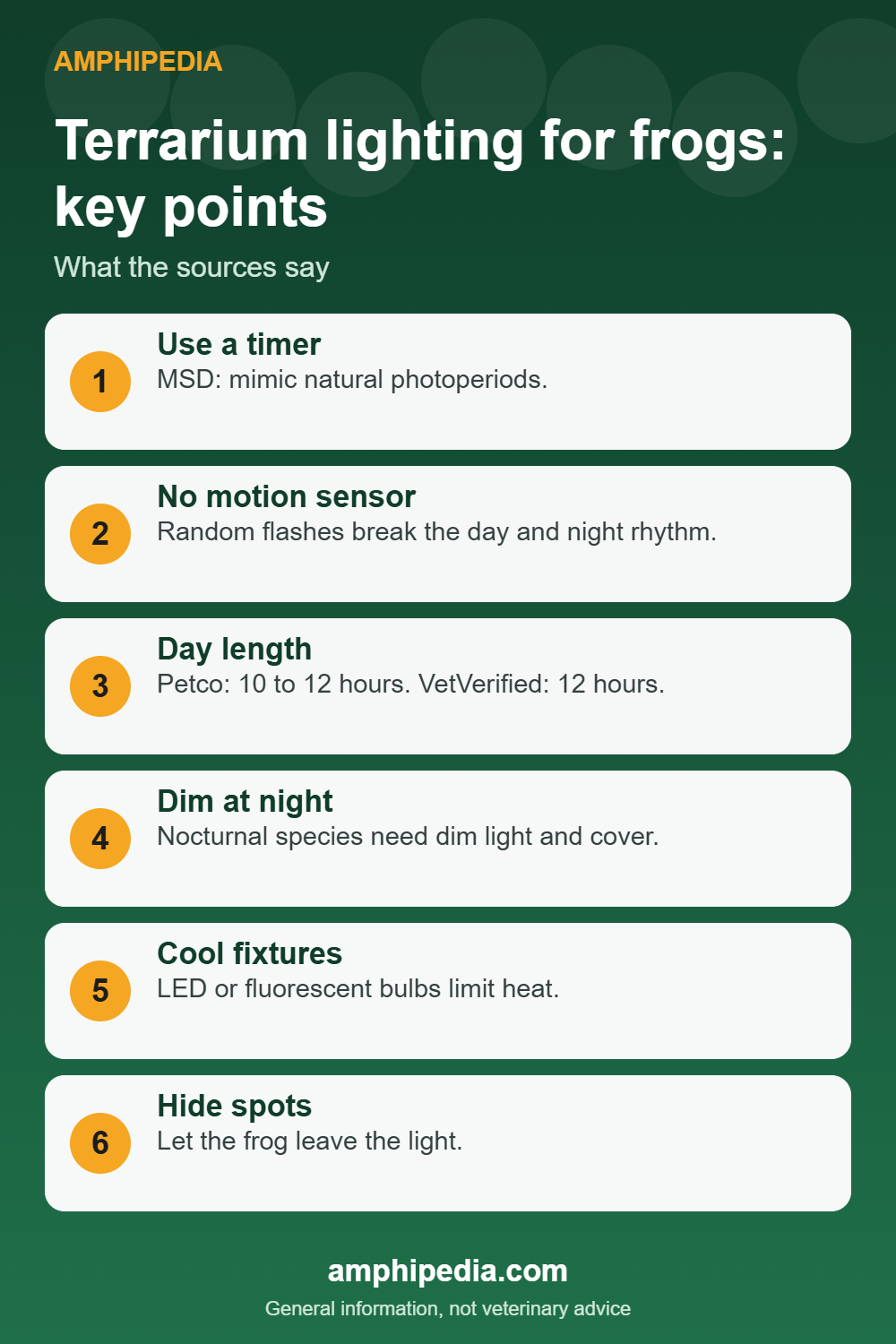
A motion sensor light is a poor fit for a frog terrarium, and none of the sources I opened recommend one. The MSD Veterinary Manual says to put lights on a timer to mimic natural photoperiods, and to give nocturnal or light-sensitive species dim light and plenty of hiding places. Sudden flashes every time someone walks past break that steady day and night pattern. Use a timer, a cool LED or fluorescent fixture and hiding spots instead.
It sounds handy: a light that comes on when you walk up to the tank. For frogs, the idea works against what the care sources recommend.
This guide explains why steady light cycles matter, what to use instead, and where a motion sensor can safely help, such as lighting the room around the tank rather than the tank itself.
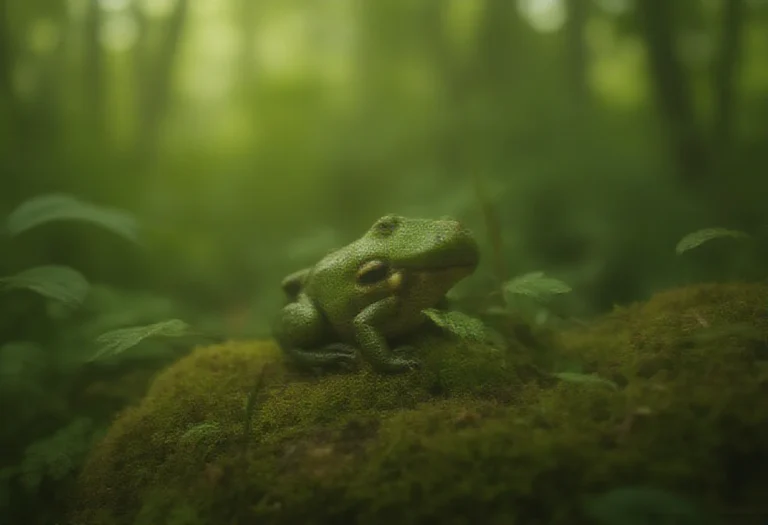
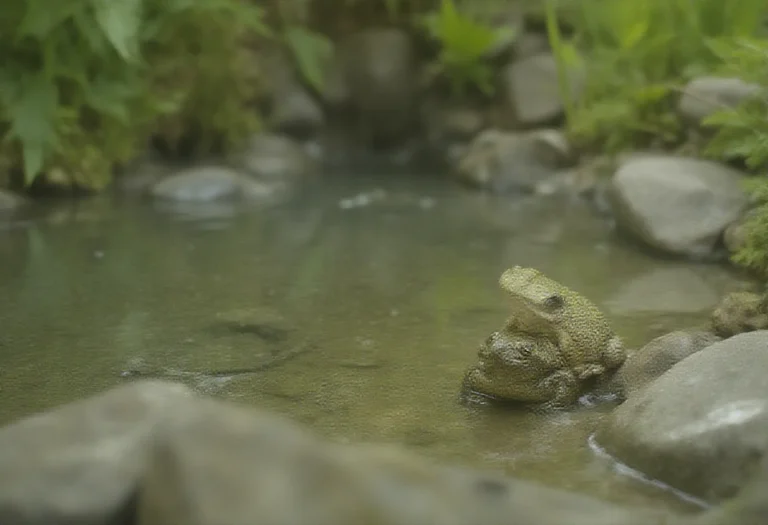
How this was made: prepared with AI assistance and checked against the sources listed at the end. Images are AI-generated illustrations, not photographs of real animals or products.
Key Takeaways
- The MSD Veterinary Manual says to use a timer to mimic natural photoperiods.
- Nocturnal and light-sensitive species need dim light and many hiding places.
- Petco advises a 10 to 12 hour day for newts and salamanders; VetVerified suggests 12 hours for arboreal frogs.
- Choose LED or fluorescent fixtures to limit heat, and as MSD advises.
- Never use a motion sensor to switch UVB lamps or heaters.
Pin this infographicShare on Facebook
Why a motion sensor is the wrong tool
A motion sensor switches a light on when it detects movement and off after a short delay. That creates random bursts of light at any hour. Frogs rely on a regular rhythm of day and night.
The MSD Veterinary Manual says lights should be placed on a timer to mimic natural photoperiods. A timer repeats the same pattern every day. A motion sensor does the opposite. If someone walks by at night, the tank is suddenly lit for no reason.
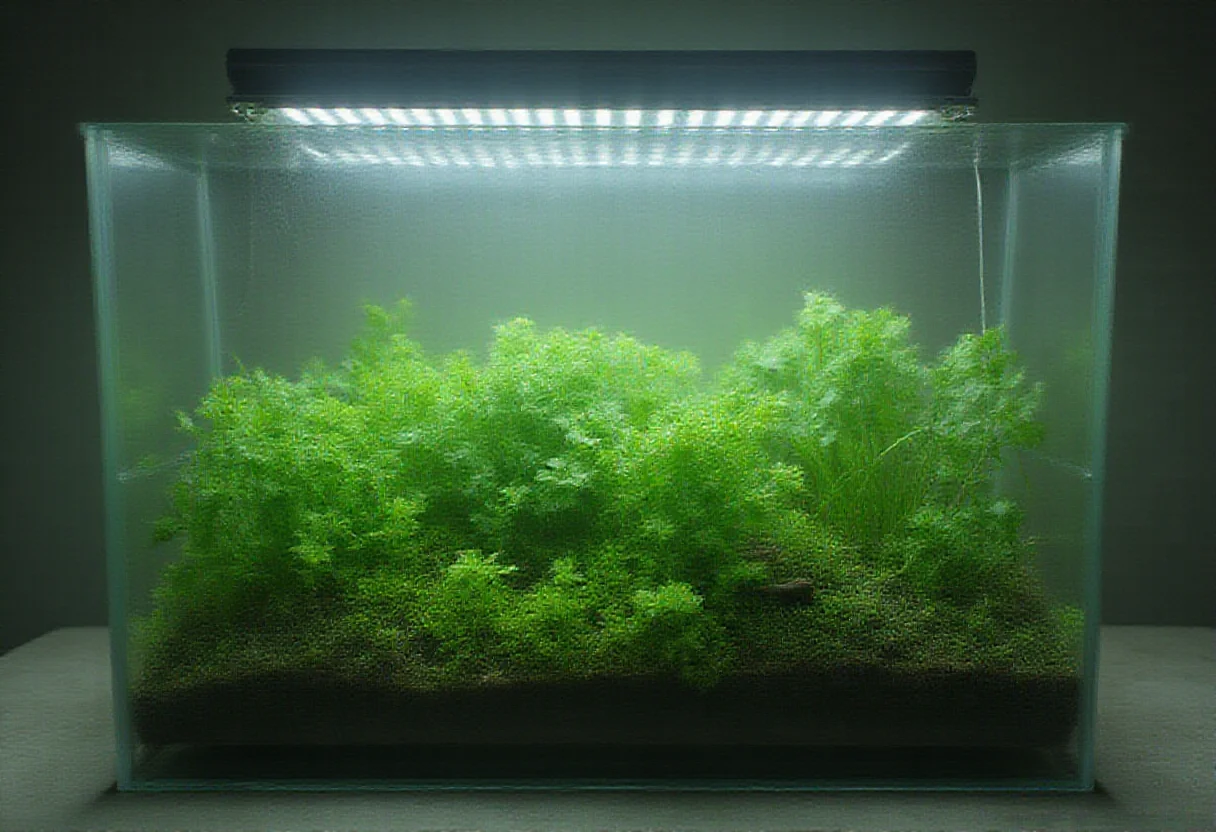
How long should the light be on?
The answer depends on the species, so check a sourced care sheet for yours. Two examples show the range.
Petco advises a 10 to 12 hour daylight cycle for newts and salamanders. VetVerified suggests a 12 hour day and night cycle for arboreal frogs and similar species.
| Source | Animal group | Light schedule |
|---|---|---|
| Petco care sheet | Newts and salamanders | 10 to 12 hour daylight cycle |
| VetVerified | Arboreal frogs, geckos and anoles | 12 hour day and night cycle |
| MSD Veterinary Manual | Amphibians in general | Timer to mimic natural photoperiods |
Nocturnal frogs and dim light
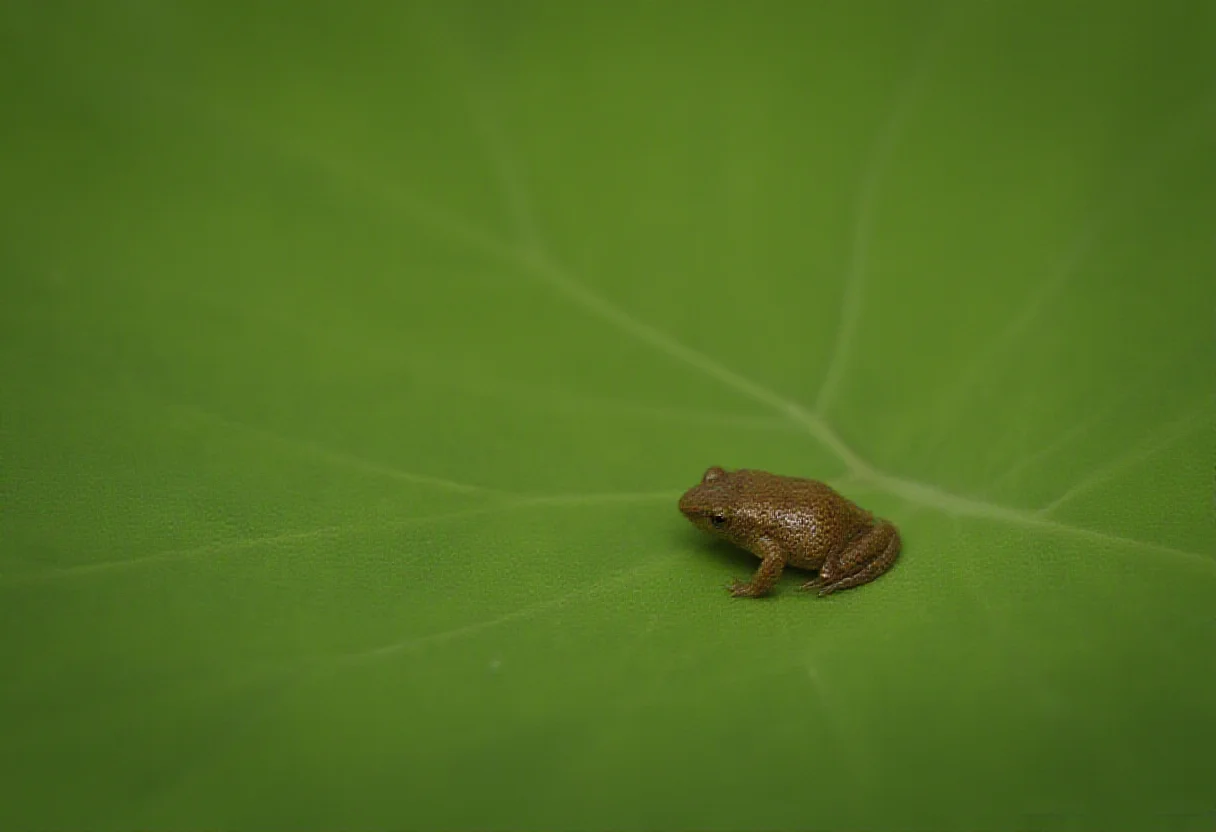
Many frogs are active at night. The MSD manual says nocturnal or photophobic species need dim light and plenty of hiding places. Bright, sudden light can drive them under cover.
Give them cover and keep the room dim at night. Our guide to frog-safe LED night lights explains how to see the tank in the dark without a harsh flash.
What to use instead
A simple timer does the job. Plug the fixture into a timer and set the hours to match your species. Our light cycle timer guide covers the options.
For more advanced control, see our guides to automatic lighting systems and extension cords with timers. Use only equipment made for damp areas.
- A fixture made for humid enclosures.
- A mechanical or digital timer set to a fixed schedule.
- LED or fluorescent bulbs to limit heat, as the MSD manual says.
- Hiding spots so the frog can leave the light.
- A dimmer or low-output setting for shy species.
Choosing the fixture
The fixture matters more than any sensor. Look for a cool-running unit that suits your plants and species. Our guides to the LED plant light and bioactive vivarium light fixture explain what to check.
The MSD manual says to place lights within 18 inches of the animals when UVB is needed, and to remember that glass blocks UVB. Check what your species needs before buying a UVB lamp.
How to set a lighting schedule
Set the schedule once, then leave it alone. Frogs adjust to a fixed routine, and small changes are easier for them than sudden ones.
- Find a care sheet for your exact species and note the day length.
- Plug the fixture into a timer and set the on and off times.
- Choose hours that suit you, so the tank is lit when you are home to enjoy it.
- Check the first few days that the timer switches on and off at the right times.
- Review the schedule each season, but change it by small steps only.
Signs the lighting needs a rethink
Watch behaviour for a week or two after any change. A frog that hides all day, avoids the lit area or stops feeding may be reacting to the light, the heat or something else entirely.
Keep notes. If the signs continue, ask an exotics vet. Light is only one of several possible causes, and you should not guess at medical problems yourself.
Where a motion sensor can help
A motion sensor can safely light the room, a stairway or the floor beside the tank so you can walk at night without switching on the main lights. Keep it out of the tank itself.
Do not use one to control a heater, UVB lamp or fogger. Equipment that heats or emits UV should follow a planned schedule and a thermostat. See our UVB light guide for more.
Common mistakes
These errors disrupt a frog’s routine.
- Using a motion sensor on the tank light.
- Leaving the light on all night.
- Changing the schedule often without a reason.
- Using a hot bulb that warms the tank.
- Giving no hiding places for nocturnal species.
- Putting a lamp where it can fall into the tank.
UVB: what the sources say, and where they disagree
A motion sensor should never control a UVB lamp, but whether you need one at all is not settled. The sources disagree, and this is a question for an exotics vet who knows your species.
| Source | What it says about UVB |
|---|---|
| MSD Veterinary Manual | Diurnal species likely use UVB (280 to 320 nm), but benefits are not well understood in amphibians. Replace bulbs every 6 to 8 months. Glass reduces UVB. |
| Merck Veterinary Manual (pet owner page) | UVB lighting is required to prevent metabolic bone disease in amphibians. |
| Petco care sheet (newts and salamanders) | Low-level UVB from full spectrum bulbs for 10 to 12 hours a day. Higher levels may cause eye and skin damage. |
| VetVerified (arboreal species) | Low-level output of 2 to 5 percent for many species, mounted above mesh and not glass. Replace bulbs every 6 to 12 months. |
| DartFrog.pet (dart frogs) | UVB not recommended; vitamin D3 supplementation replaces it. |
| LafeberVet (poison dart frogs) | Low-intensity full-spectrum lighting for calcium absorption; UVB is not mentioned by name. |
Even the replacement interval varies, from 6 to 8 months at MSD to 6 to 12 months at VetVerified. Follow the maker’s instructions for your lamp and ask your vet about your species.
Matching the light to the animal
The right light depends on the group you keep. The table collects the details that the sources give.
| Group | Source | Light and temperature notes |
|---|---|---|
| Newts and salamanders | Petco | Low-wattage day bulb for 10 to 12 hours; tank 60 to 75 F and not above 78 F |
| Arboreal frogs | VetVerified | 12-hour day and night cycle; about 24 to 28 C by day and 20 to 22 C at night |
| Poison dart frogs | LafeberVet | Described as diurnal; 72 to 80 F by day, 65 to 70 F at night; no radiant heat sources |
LafeberVet describes dart frogs as active in the day, so a lit period suits them. Nocturnal species are the opposite. MSD says they need dim light and plenty of hiding places. A random flash from a sensor helps neither group.
Heat from lights
A lamp can warm the tank as well as light it. MSD advises fluorescent or LED bulbs to limit heat output. Petco says the day bulb for newts and salamanders should give off little heat. LafeberVet warns that radiant heat sources tend to dry amphibian environments.
DartFrog.pet suggests a 6500K LED fixture sized to the vivarium, and reminds readers that dart frogs are heat sensitive. VetVerified says to always use thermostats and digital thermometers. MSD advises spot-checking enclosures daily with a laser temperature probe.
Hiding places that give a frog a choice
Petco says to provide hiding places so amphibians can get away from light when they need to. It notes that salamanders burrow under cork bark or driftwood and hide under moss or plants, and that substrate 3 to 4 inches deep allows burrowing.
LafeberVet advises plants and other visual barriers, plus one or two tree limbs arranged diagonally, for dart frogs. MSD lists live plants, organic substrates and refugia as ways to give cover. Any light pattern works better when the animal can step out of it.
Lights for plants and lights for frogs
DartFrog.pet says frogs do not need lights, but plants do. VetVerified recommends LED or fluorescent lighting for plants and visibility. MSD notes that live plants filter light, add humidity and provide hiding and perching sites.
That means a fixture serves two jobs, and a motion sensor serves neither. Plants need a steady period of light to grow, and a frog needs a steady rhythm of light and dark.
Lights, drying and humidity
Humidity targets differ by group. Petco gives 70 percent for newts and salamanders, with daily misting using dechlorinated water. LafeberVet gives 80 to 100 percent for poison dart frogs, with the substrate damp but not waterlogged between mistings. VetVerified says most arboreal species need 60 to 80 percent.
Strong lights and heat sources can dry the air. LafeberVet specifically warns that radiant heat tends to dry amphibian environments. If readings fall after you change a fixture, check both the bulb and the misting schedule. Our UVB light guide covers related equipment.
Questions to ask a vet about lighting
- Does my species need UVB, and at what distance and schedule?
- What day length suits my species through the seasons?
- How warm can the tank get under this fixture?
- Which plants and decor are safe under this light and in this humidity?
- What behavior should make me change the schedule?
Write down the fixture name, the bulb type and the hours it runs before the appointment. That helps the vet judge your setup. You can find a vet through the ARAV directory.
Frequently Asked Questions
Can I use a motion sensor light on my frog tank?
The sources recommend a timer instead. A motion sensor creates random bursts of light.
How many hours of light do frogs need?
It depends on the species. Petco gives 10 to 12 hours for newts and salamanders, and VetVerified gives 12 hours for arboreal frogs.
Do frogs need darkness at night?
Yes. The MSD manual says nocturnal species need dim light and hiding places.
What is better than a motion sensor?
A timer on a cool LED or fluorescent fixture.
Can I use a motion sensor for the room?
Yes. Keep it outside the tank and away from the heat and UV equipment.
Do all frogs need UVB?
No single answer exists. Check your species with a vet or a sourced care sheet.
Bottom Line
Frogs do best with a steady daily rhythm. A timer gives it. A motion sensor does not.
If your frog hides all day or stops eating, see an exotics vet. The ARAV directory can help you find one.
Sources
- MSD Veterinary Manual: Environment and Husbandry for Amphibians, accessed 12 November 2026. Used for: timers, photoperiods, dim light, UVB, heat, hiding places
- Petco: Salamanders and Newts Care Sheet, accessed 12 November 2026. Used for: 10 to 12 hour light cycle, UVB, temperature, humidity, hiding places
- VetVerified: How to set up a terrarium for arboreal species, accessed 12 November 2026. Used for: 12 hour cycle, UVB position, temperature, humidity
- LafeberVet: Basic Information Sheet, Poison Dart Frog, accessed 12 November 2026. Used for: diurnal activity, temperature, humidity, radiant heat, visual barriers
- DartFrog.pet: Dart Frog Vivarium Setup, accessed 12 November 2026. Used for: UVB and LED lighting advice, heat sensitivity
- Merck Veterinary Manual: Housing for Amphibians (pet owner version), accessed 12 November 2026. Used for: UVB statement
- CDC: Reptiles and Amphibians. Used for: Salmonella and hygiene