Moss Starter Culture for Frog Tanks: What to Know First
This post contains affiliate links. As an Amazon Associate I earn from qualifying purchases. Prices and availability are shown by Amazon and can change.
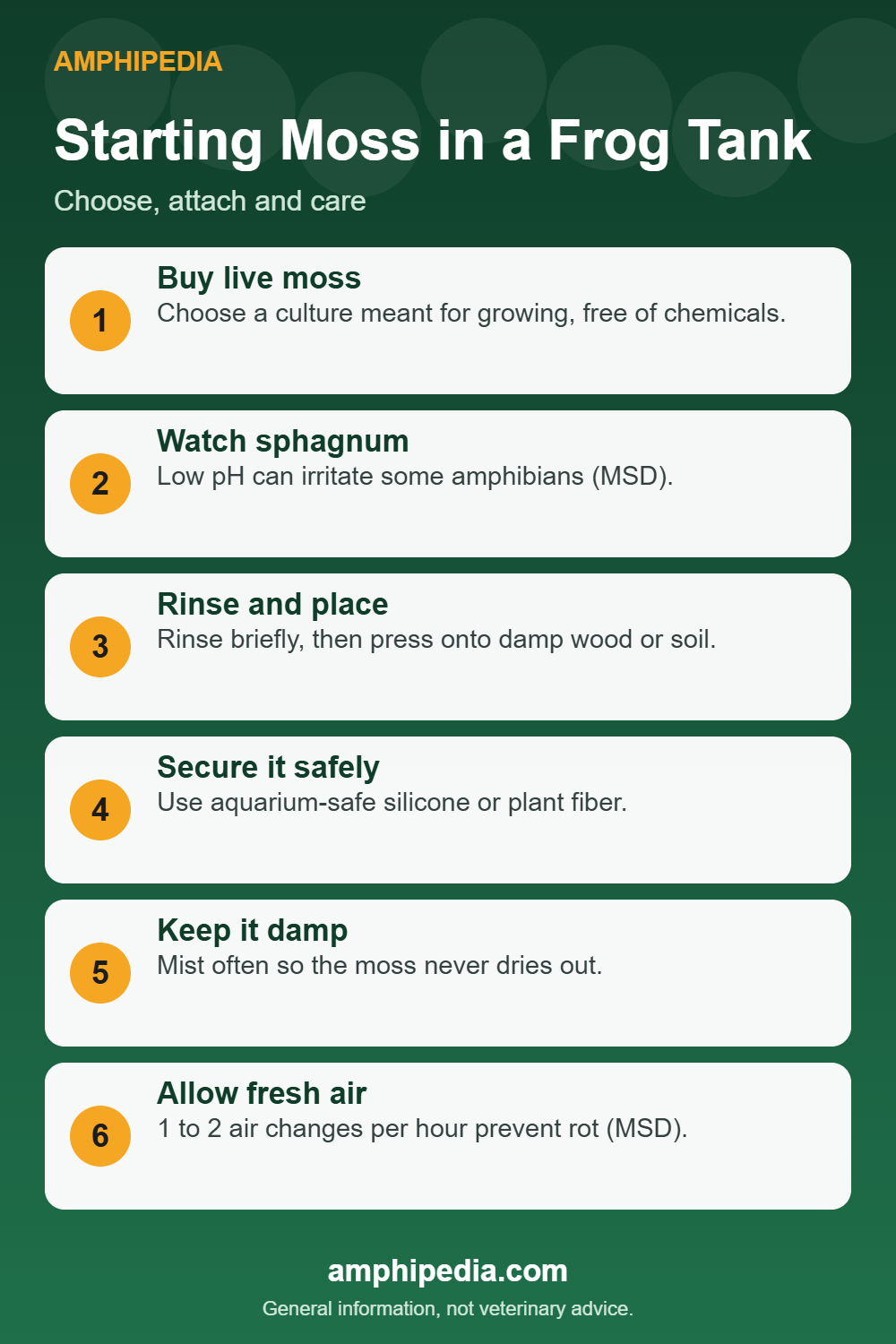
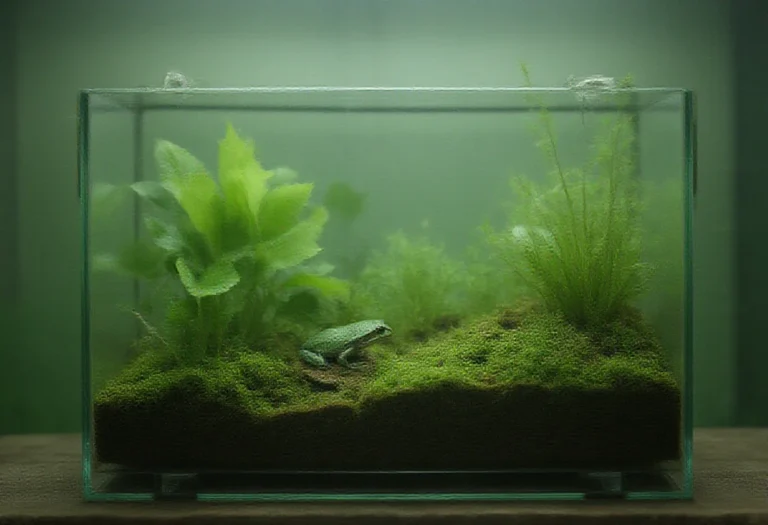
A moss starter culture is a small live sample of moss that you grow into a carpet inside a terrarium. Moss adds cover, a natural look and local humidity for frogs. Choose a culture free of pesticides and fertilisers, rinse it, and attach it to damp wood or soil. Be careful with sphagnum, because the MSD Veterinary Manual warns that some amphibians can get skin irritation from its low pH.
Live moss is a classic finishing touch in a frog terrarium. DartFrog.pet suggests attaching living moss to wood decor for a natural look. It also holds water, which helps small areas stay damp.
Starter cultures are slower than ready-made carpets, but they can be cheaper and easier to place. This guide explains how to choose one, start it and keep it safe for your frogs.
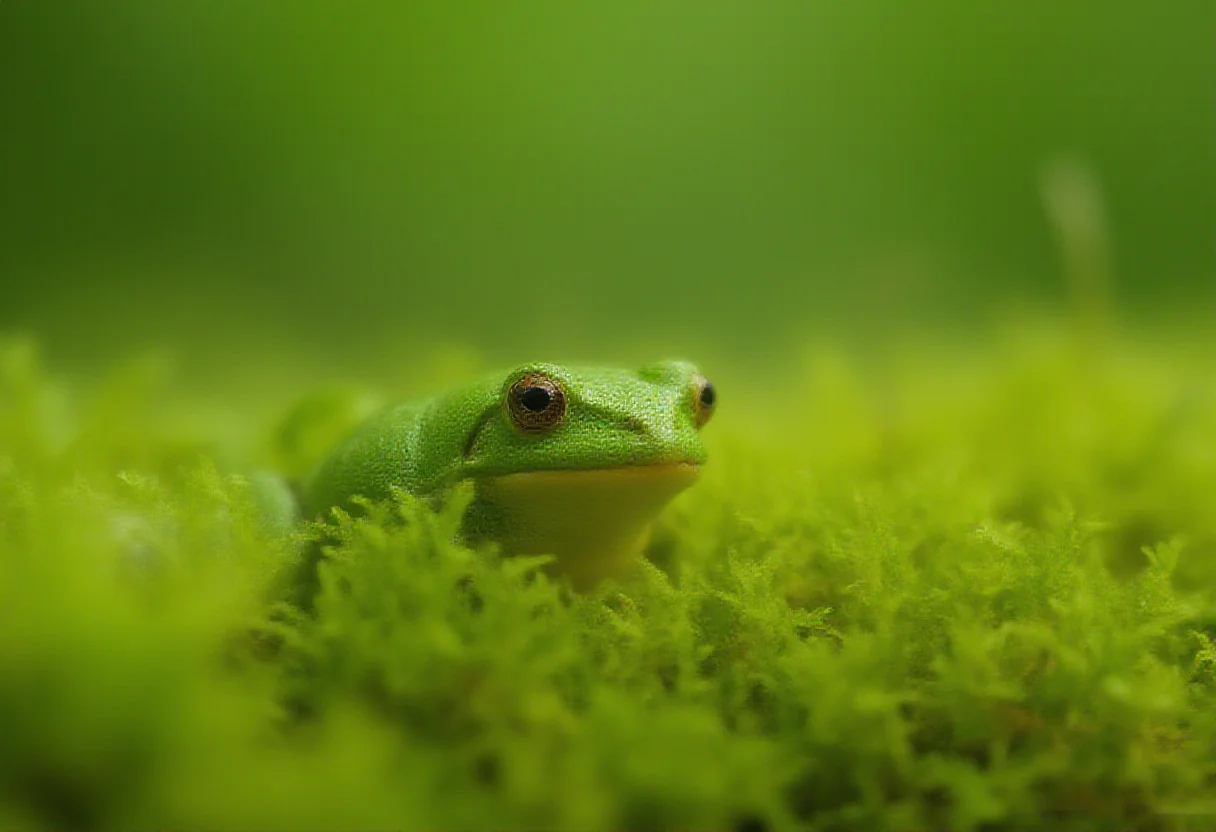
How this was made: prepared with AI assistance and checked against the sources listed at the end. Images are AI-generated illustrations, not photographs of real animals or products.
Key Takeaways
- Moss gives cover and a natural look, and helps hold local moisture.
- Choose a culture free of pesticides and fertilisers.
- Be careful with sphagnum, which can irritate some amphibians (MSD Veterinary Manual).
- Attach moss to damp wood or soil with a safe, aquarium-safe adhesive.
- Moss can take weeks to spread, so be patient.
- Remove any moss that rots or smells and replace it.
Pin this infographicShare on Facebook
Moss to compare
These moss products are sold for terrariums. Check each listing to confirm the moss is live and fresh, not dried, before you buy.


Product titles, prices and ratings are provided by Amazon and are accurate only at the time they are displayed.
What a moss starter culture is
A starter culture is a small portion of living moss, often a pad or a jar of fragments. You place it in the tank, keep it moist and wait for it to grow.
It is not the same as dried sphagnum sold as a soil additive. Dried moss is a different product with a different use. Read the listing to see whether the moss is alive and meant for growing.
Is moss safe for frogs?
Live moss is widely used in frog terrariums. DartFrog.pet suggests attaching it to wood decor, and the MSD Veterinary Manual notes that live plants help with humidity and shelter.
The MSD manual also warns that some amphibians cannot tolerate low pH and may develop skin irritation from peat or sphagnum moss. If you use sphagnum, watch your animals and ask an exotics vet if skin looks red or sore.
How to choose a culture
Not all moss sold for terrariums is the same. Read the description closely, and avoid anything with unknown chemicals.
- Sold as live, growing moss, not dried decor.
- Free of pesticides, fertilisers and added colour.
- Grown in clean conditions, with a clear description of the species.
- Free of visible pests, slugs or mould.
- Packaged damp, not dried or rotted.
- Clear care notes from the seller.
Starting the culture
Wash your hands first. Moss is delicate, and clean handling lowers the chance of contamination.
- Rinse the culture briefly in clean water to remove loose debris.
- Dechlorinate any water you use, as chlorine can harm amphibians.
- Place the moss on damp soil or press it onto damp wood.
- Secure it with aquarium-safe silicone or plant fiber, as DartFrog.pet describes.
- Mist lightly and often so the moss never dries out.
- Wait several weeks before judging growth.
Where to place it
Moss does best where moisture is steady and light is gentle. Wet wood, the back wall and the base of plants work well.
Avoid places where water pools or the substrate stays soaked. Keep moss away from drains and from spots where the frog rests, so it is not crushed.
Care and troubleshooting
Brown or dry moss usually needs more moisture. Slimy or black moss usually has too much water or too little airflow. Trim the bad areas and adjust your misting.
The MSD manual recommends 1 to 2 fresh air changes per hour. Fresh air helps prevent rot, so do not seal the tank completely.
Trim moss gently with clean scissors if it grows over plants or vents. Never pull it from wood in large clumps, since the roots hold it in place and tearing it harms the colony.
Common mistakes
These errors cause most failures.
- Using dried moss and expecting it to grow.
- Skipping the rinse.
- Leaving the culture to dry between mistings.
- Over-wetting until it turns slimy.
- Adding moss that came from a treated or unknown source.
- Gluing with a product not rated for aquarium use.
Moss and humidity
Moss holds water in its leaves, and it releases some of it slowly. That helps keep a damp patch around wood and plants.
It does not replace misting. Keep up your regular misting schedule, and check humidity with a hygrometer. Species differ, so use a sourced range for your frog.
Pests and hitchhikers
Live moss can carry small hitchhikers, such as slugs, mites or fungus gnats. Check it before it goes in, and quarantine new moss in a clean container for a few days if you can.
Do not use pest sprays in or near the tank. The MSD manual says water and soil must be free of pesticides.
Related guides
Moss pairs well with live plants and good soil. See our guides to live plants for a frog terrarium, bioactive substrate and dart frog tank backgrounds.
Light for moss, and what that means for frogs
The New York Botanical Garden (NYBG) Mertz Library says moss terrariums need bright light but not direct sun, from strong natural light or regular LED or fluorescent grow lights. Science Friday gives a similar rule: a spot with indirect sunlight, not direct sun.
DartFrog.pet recommends a 6500K LED fixture sized to the vivarium, and says the lighting is for the plants, not the frogs. It notes that LEDs use low wattage and produce less heat than incandescent bulbs, which matters because dart frogs are heat sensitive. Species differ, so check your own animal’s light needs.
Press the moss into wet soil
NYBG says moss does not do well with air space between it and the soil, and advises pressing clumps firmly into wet soil. Science Friday describes pressing the moss down so its rhizoids touch the soil.
This applies to a starter culture too. Break a pad into pieces, press each piece flat, and check after a few days that the edges have not lifted. Moss on wood needs the same firm contact, which is why the silicone or fibre method matters.
Soil acidity: two sources pull in opposite directions
NYBG says mosses prefer firmly packed acidic soil with a pH of about 5.0 to 5.5. The MSD Veterinary Manual says some amphibians cannot tolerate low pH and may develop skin irritation from peat or sphagnum moss.
Both can be true. A moss grown on wood or rock does not need acidic soil under it, and keeping moss off the areas where a frog sits and burrows lowers contact. If you add moss to soil, avoid peat-heavy mixes, and watch your frogs after any change.
We could not find a source that measures how much acid moss actually releases in a frog tank. Treat the risk as unquantified, not as proven or ruled out.
Cultivated moss or collected moss?
NYBG says moss from a moss farm, nursery-grown and propagated, is the best moss for successful growing. Science Friday, writing for a classroom activity, suggests collecting moss from sidewalk cracks, trees and park rocks, or buying it from a florist or supply store.
For a frog tank, collected moss is harder to trust. The MSD Veterinary Manual says soils must be free of chemical additives such as fungicides, and says water must be free of pesticides. Moss from lawns, roadsides or treated gardens could carry residues you cannot see. Check local rules before taking moss from public land or parks.
Air exchange versus humidity
NYBG says a covered container works for moss, but air exchange is needed too. It suggests removing the cover occasionally or leaving a gap between lid and container. The MSD manual says amphibian enclosures need about 1 to 2 air changes per hour.
DartFrog.pet describes keeping humidity with a glass top instead of a screen, then adding vents or computer-type fans for circulation, including egg-crate vents with screen-door mesh. It is one keeper’s design, not a standard. Whatever you choose, moss that stays slimy or smells sour is a signal to add airflow.
Dead patches and cleanup crews
Moss that dies back leaves decaying matter. DartFrog.pet describes tropical springtails as part of a cleanup crew that eats decomposing matter and helps convert waste into soil nutrients plants can use. That page is a keeper’s setup guide, so treat it as practical experience, not research.
Whether to add springtails depends on your species and setup. Remove large dead patches by hand either way, and replace them with a fresh piece.
Keep a simple log for the first month
Science Friday suggests logging how many times a day you water and tracking light exposure, and says growth shows over the next few weeks. A short note each day on misting, light and what the moss looks like makes problems easier to trace.
Remember that moss does not supply drinking water. The MSD manual says even terrestrial species need a shallow water dish.
Frequently Asked Questions
Is moss good for frog tanks?
Yes, live moss is widely used. DartFrog.pet suggests attaching it to wood decor, and the MSD Veterinary Manual says live plants help with humidity and shelter.
Is sphagnum moss safe for frogs?
Watch it. The MSD manual says some amphibians can get skin irritation from peat or sphagnum moss because of its low pH.
How do I attach moss to wood?
DartFrog.pet suggests aquarium-safe silicone to attach moss or plant fiber.
How long does moss take to grow?
It varies, and it can take weeks. Keep it moist and be patient.
Why is my moss turning brown?
Usually it is too dry. Mist more often and check that it is not in strong direct light.
Can I use moss from my garden?
Only if you are sure it is free of chemicals and pests. A clean, labelled culture is safer.
Bottom Line
A moss starter culture is an affordable way to add living green to a frog terrarium. Choose a clean culture, attach it to damp wood or soil and be patient.
If you use sphagnum, keep an eye on your frogs’ skin and talk to an exotics vet if anything looks wrong.
Sources
- DartFrog.pet: Dart Frog Vivarium Setup, accessed 12 November 2026. Used for: attaching living moss, ventilation design, springtails
- MSD Veterinary Manual: Environment and Husbandry for Amphibians, accessed 12 November 2026. Used for: live plants, sphagnum and ventilation
- CDC: Reptiles and Amphibians. Used for: Salmonella and hygiene
- Housing for Amphibians, MSD Veterinary Manual, accessed 12 November 2026. Used for: shallow water dish for terrestrial species
- How do I make a moss terrarium? NYBG Mertz Library Reference, accessed 12 November 2026. Used for: light, soil contact, soil pH, nursery-grown moss, air exchange
- Learn how to cultivate moss in a terrarium, Science Friday, accessed 12 November 2026. Used for: light, planting, sourcing and logging
5 Comments