Best Acrylic Enclosure for Dart Frogs: Size, Air and Care
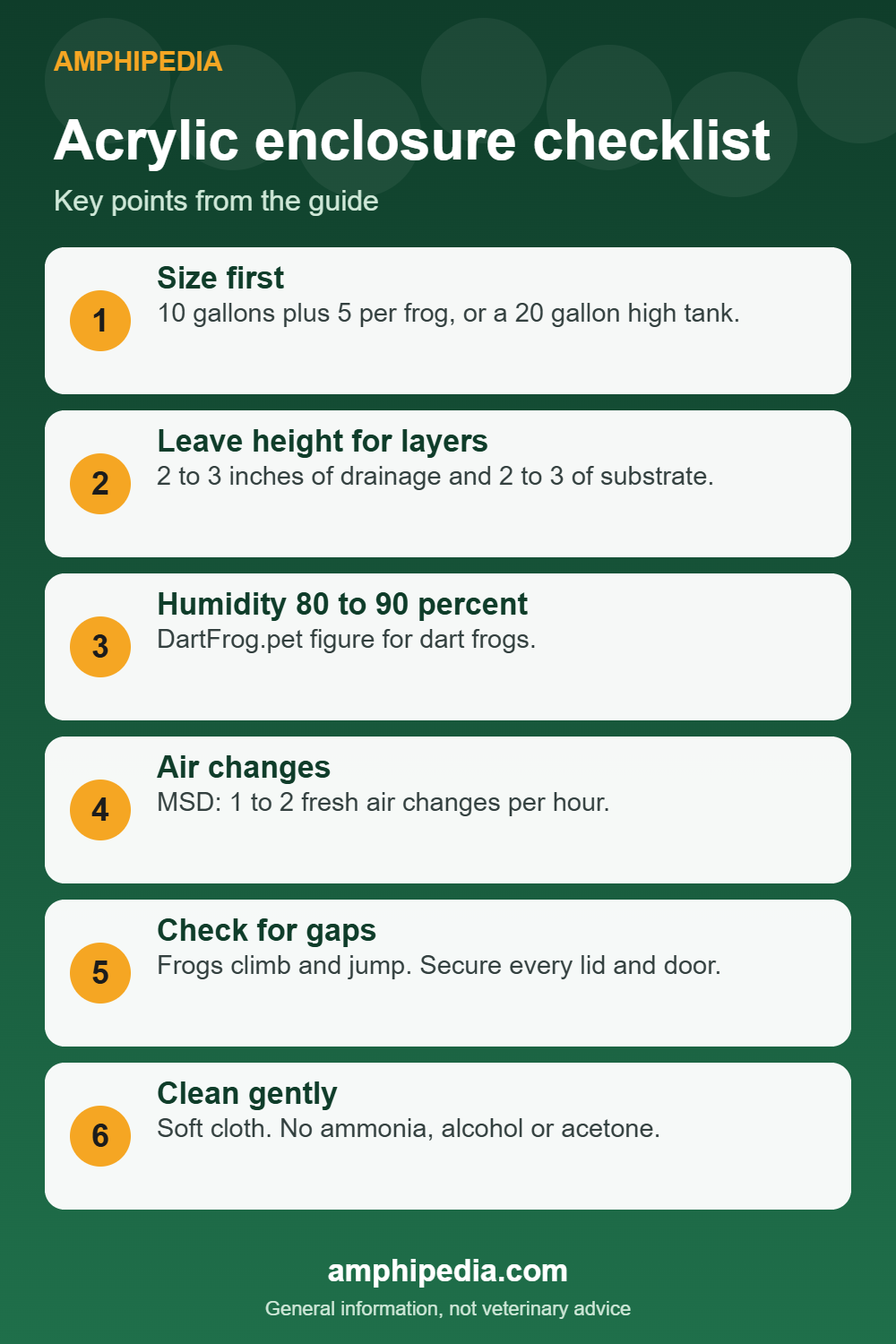
The best acrylic enclosure for dart frogs is large enough for the group, has controlled ventilation, a secure lid or door and enough height for drainage and substrate layers. Sources suggest starting at 10 gallons plus 5 gallons per frog, or a 20 gallon high tank for beginners. Acrylic scratches and can be damaged by ammonia and alcohol, so clean it with a soft cloth and a neutral cleaner.
Acrylic is light and clear, so it appeals to keepers who move tanks or want a wide view. Many small acrylic boxes are sold for reptiles and spiders, though, and they are too small for a frog group.
This guide covers size first, then air flow, escape-proofing, layers and the care that acrylic needs.
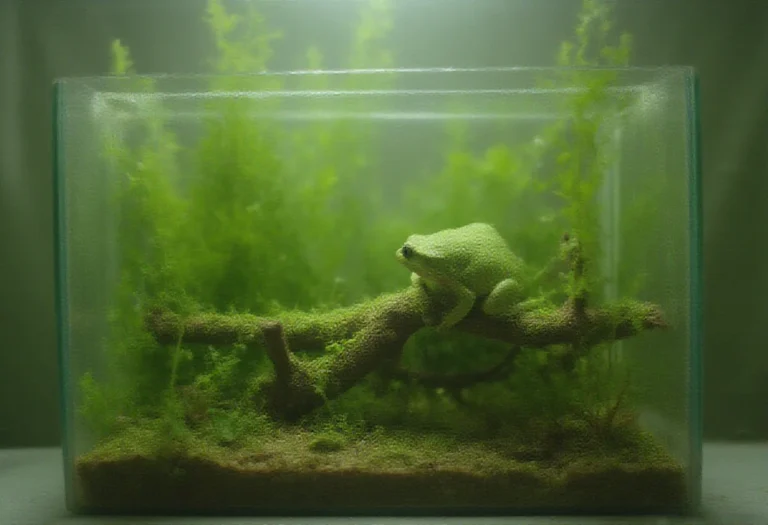
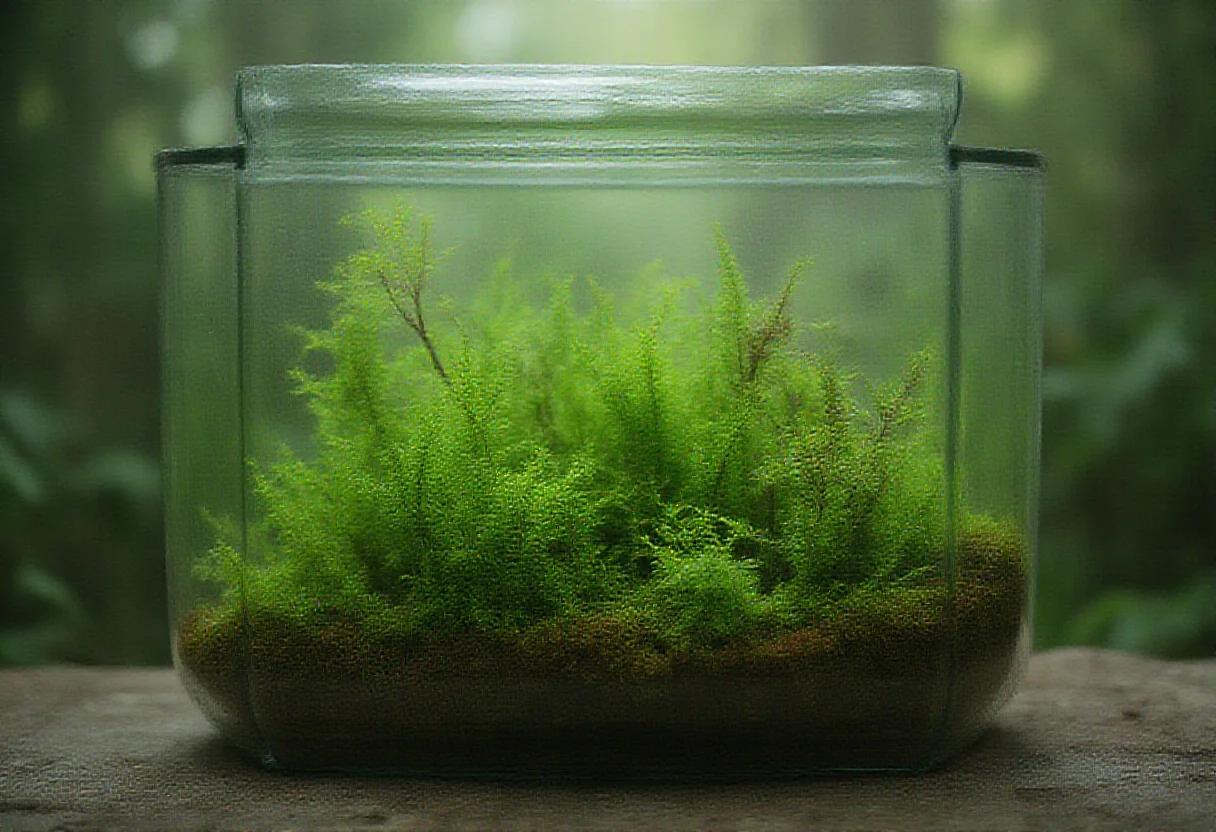
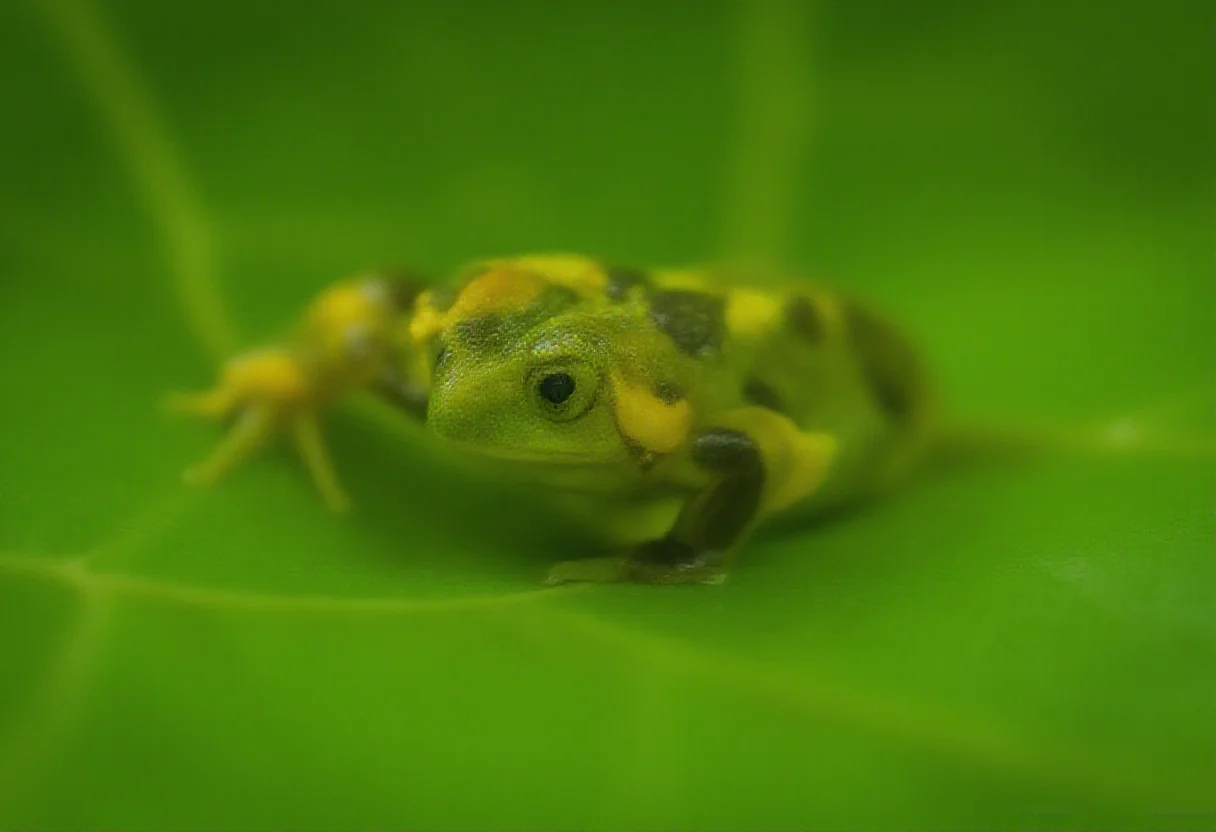
How this was made: prepared with AI assistance and checked against the sources listed at the end. Images are AI-generated illustrations, not photographs of real animals or products.
Key Takeaways
- Choose size before material. Sources suggest 10 gallons plus 5 per frog, or a 20 gallon high tank.
- Dart frog tanks need ventilation and humidity together. MSD says to aim for 1 to 2 air changes per hour.
- Frogs escape through small gaps, so check doors, vents and lids.
- Do not use ammonia, alcohol or acetone cleaners on acrylic.
- Leave room for 2 to 3 inches of drainage layer and 2 to 3 inches of substrate.
Pin this infographicShare on Facebook
Acrylic or glass: what the sources say
The dart frog care sources we checked do not compare acrylic with glass. They focus on size, humidity, ventilation and layout. That means the material is your choice, and the rest of the tank matters more.
What is known is how acrylic behaves in cleaning. A care and use guide from Vollrath, written for Plexiglas and other acrylic, says chemicals such as ammonia, alcohol and acetone can damage acrylic, and that abrasive pads scratch it. Plan your routine around that.
Start with size
Sources differ, so here are both. DartFrog.pet says to start with a 10 gallon tank and allow 5 gallons per frog, and that the ideal tank is 24 to 36 inches on its longest side.
Reptiles Magazine says a 10 gallon tank can house a pair of many species but limits landscaping. It recommends a 20 gallon high tank or larger for beginners, holding 2 to 6 adult frogs depending on species and layout.
Many compact acrylic habitats are sold for spiders, geckos and similar animals and are well under these sizes. Check the stated internal dimensions, not the product name.
Height for drainage and substrate
Reptiles Magazine suggests 2 to 3 inches of LECA drainage layer and 2 to 3 inches of substrate. That is up to 6 inches of the tank height before you add plants or leaf litter.
A short acrylic box leaves little room for plants and climbing wood. Choose a tank with enough height for the layers and for the frogs to use branches.
Ventilation and humidity
DartFrog.pet says to keep humidity at 80 to 90 percent for dart frogs, depending on species, with temperature in the 70s Fahrenheit. The MSD Veterinary Manual says adequate ventilation of 1 to 2 fresh air changes per hour is needed to prevent disease.
Look at how the vents are made. Mesh vents let air through and keep small frogs and feeder insects in. Always measure with a hygrometer and a thermometer, as MSD advises.
Doors, lids and escape-proofing
The NSW Department of Education says frogs are extremely capable of escaping because they climb and jump, and recommends secure mesh lids on tanks. It describes a lid made from a metal frame with mesh attached.
A front-opening door can leave a gap along the edge. Press on every edge and hinge, and check that nothing small can slip through. Our screen lid guide explains lid options.
Cleaning and caring for acrylic
The Vollrath guide advises a soft, lint-free or microfiber cloth with warm water and a little dish detergent, or a product made for acrylic. Paper towels are not recommended.
It lists ammonia, alcohol and acetone as chemicals to avoid, and warns against scratching cleansers, steel wool and scouring pads. Many glass cleaners contain ammonia, so read the label before you spray. See our glass cleaner guide for amphibian-safe options.
Lighting and plants
Reptiles Magazine lists epiphytes such as dwarf bromeliads, Peperomia and creeping fig for dart frog tanks. Plants need light, and the light must reach them through the tank lid or glass.
MSD says glass attenuates the benefits of UVB light, so light sources need to be placed with that in mind. The manual covers glass, not acrylic, so check the tank maker for any data on how much UV an acrylic panel lets through before you rely on UVB through it.
Disinfecting between setups
MSD says household bleach at 30 mL per litre of water can disinfect tools and housing materials, with at least 30 minutes of contact and a thorough rinse. Check the acrylic maker guidance before you use bleach on an acrylic tank.
Wear gloves and clean outside the kitchen, as the CDC advises.
Checklist before you buy
Use this list to compare any acrylic enclosure.
Write the answers down for each model you consider. A short table of size, height, vents and door gaps makes the comparison easy.
- Read the internal size and compare it with the sources above.
- Check the height for drainage, substrate and plants.
- Look at the vents, and confirm that they are fine mesh.
- Press every door edge and lid for gaps.
- Check that the maker lists cleaning advice for acrylic.
- Plan for the weight of water and substrate on the stand.
Common mistakes
Avoid these.
- Buying on looks with no size check.
- Using a glass cleaner with ammonia.
- Scrubbing with a pad that scratches.
- Choosing a tank with no room for layers.
- Leaving gaps at doors.
- Sealing the tank so air cannot change.
- Ignoring the weight of water, substrate and plants on the stand.
Related guides
See our guide to an acrylic terrarium for dart frogs, which covers small acrylic habitats, and our glass terrarium guide. For setup basics, read dart frog care.
How much space? Six sources, three answers
Size is the point where care sources disagree most. Each one below is about dart frogs, but they give different totals for the same group.
- DartFrog.pet: start at 10 gallons and add 5 gallons per frog.
- Reptiles Magazine: a 10 gallon tank suits a pair; a 20 gallon high tank holds 2 to 6 adults depending on species and layout.
- Petco (arrow frog sheet): 10 gallons is adequate for two frogs, plus 5 to 10 gallons per extra frog. Its own table says 10 gallons per frog, so the sheet contradicts itself.
- Reptile Supply: adults need at least 10 gallons per frog.
- LafeberVet: one to four frogs in a heavily planted 20 gallon (75 L) terrarium.
- BGSU Herpetarium: a 10 gallon aquarium for 3 to 4 frogs, with a 20 gallon long preferred.
For three frogs, the formulas give different totals: 25 gallons from DartFrog.pet, 15 to 20 gallons from the text of the Petco sheet, and 30 gallons from Reptile Supply. The sources do not say who is right, and species matter.
The practical way to use this is to find the care sheet for your exact species, then take the larger of the figures that apply. Check the internal volume of any acrylic box, because outer dimensions can mislead.
Lids and vents: glass panel, screen or acrylic?
Reptiles Magazine prefers hinged glass covers for dart frogs. It says screen tops give too much ventilation and that aquarium hoods have gaps that let frogs escape. It gives 70 to 100 percent humidity, held by daily misting and restricted ventilation.
The MSD manual asks for good ventilation of about 1 to 2 air changes per hour. BGSU describes one workable solution: a hinged glass lid with a 1.5 to 2 inch plastic strip at the back, drilled with about six small holes for air exchange.
These sources do not discuss acrylic lids. They do show what the lid has to do: keep frogs in, hold moisture and still let air change. Judge any acrylic enclosure by those three jobs.
- Is there a solid top panel, or only screen?
- Where do the vents sit, and can small frogs or feeders pass through them?
- Does the door close flat against the frame with no gap?
Temperature and lighting for an acrylic tank
Reptiles Magazine gives daytime peaks near 80°F and nights around 70°F or slightly cooler. LafeberVet gives a daytime gradient of 72 to 80°F. BGSU gives a preferred range of 75 to 84°F, which is higher, so check which species the sheet covers.
For lights, Reptiles Magazine suggests at least two standard fluorescent tubes on a timer for 10 to 12 hours a day, with bulbs replaced annually. LafeberVet suggests low-intensity, full-spectrum lighting to support calcium absorption.
The Vollrath guide does not cover heat limits for acrylic. Ask the maker how close a lamp or heater may sit to the panel, and use a thermometer at frog height.
Scratches and acrylic care
The Vollrath guide separates fine scratches from deep ones. Fine scratches can be reduced with a mild abrasive polish. Scratches you can feel with a fingernail need sanding in a series of grits and buffing, which is a workshop job rather than a quick fix.
Inside a frog tank, keep to the cloth and warm water method. Keep polishes and cleaners off any surface the frogs touch, and rinse thoroughly. Merck says to rinse disinfected items thoroughly and dry them before they go back.
- Never use paper towels, steel wool or scouring pads on acrylic.
- Do not use razor blades or brushes on the panel.
Layout, plants and keeping groups
Reptiles Magazine advises housing only one colour morph of one species per terrarium, to avoid hybrids and mixed-up morphs. That affects tank size, since each species group needs its own enclosure.
It describes backgrounds of cork bark tiles, tree-fern panels or coco-fibre sheets attached with aquarium-safe silicone and dried for at least four days. It also leaves one corner bare of LECA to make a small drainable pond.
Check that an acrylic tank allows these features. Ask the tank maker before you glue anything inside an acrylic tank.
Frequently Asked Questions
What size tank do dart frogs need?
DartFrog.pet says to start at 10 gallons and allow 5 gallons per frog. Reptiles Magazine recommends a 20 gallon high tank for beginners.
Is acrylic better than glass for frogs?
The sources we checked do not compare them. Choose on size, ventilation and security, and care for acrylic as directed.
How do I clean an acrylic tank?
Use a soft cloth with warm water and a little dish detergent, and avoid ammonia, alcohol and acetone.
What humidity do dart frogs need?
DartFrog.pet says 80 to 90 percent, depending on the species.
Do frogs escape from tanks?
Yes. The NSW Department of Education says frogs climb and jump well, so lids and doors must be secure.
How much ventilation is needed?
MSD says 1 to 2 fresh air changes per hour.
Bottom Line
Pick the size and layer height first, then check air flow and escape-proofing. Acrylic suits you if you are willing to clean it gently.
If your amphibian looks unwell, see an exotics vet. The ARAV directory lists vets who treat amphibians.
Sources
- DartFrog.pet: Dart Frog Vivarium Setup, accessed 12 November 2026. Used for: size, humidity, temperature, vents, lid panel
- Reptiles Magazine: How to Build a Poison Frog Terrarium, accessed 12 November 2026 (Devin Edmonds, published 28 February 2014, modified 3 June 2020). Used for: tank size, layer depth, lids, lighting, plants
- MSD Veterinary Manual: Environment and Husbandry for Amphibians, accessed 12 November 2026. Used for: ventilation, UVB through glass, disinfection
- NSW Department of Education: Green tree frog environment, accessed 12 November 2026. Used for: mesh lids and escape risk
- Vollrath: Care and Use Instructions (for Plexiglas and acrylic, part no. 2350158-1), accessed 12 November 2026. Used for: cleaning acrylic safely, chemicals to avoid, scratches
- CDC: Reptiles and Amphibians, accessed 12 November 2026. Used for: Salmonella and hygiene
- Petco: Arrow Frog Care Sheet, accessed 12 November 2026. Used for: tank size
- Reptile Supply: How to Care for Poison Dart Frogs, accessed 12 November 2026. Used for: tank size per frog
- LafeberVet: Basic Information Sheet, Poison Dart Frogs, accessed 12 November 2026. Used for: tank size, temperature, lighting
- BGSU Herpetarium: Poison Dart Frogs (Dendrobates species, family Dendrobatidae), accessed 12 November 2026. Used for: tank size, lid, temperature