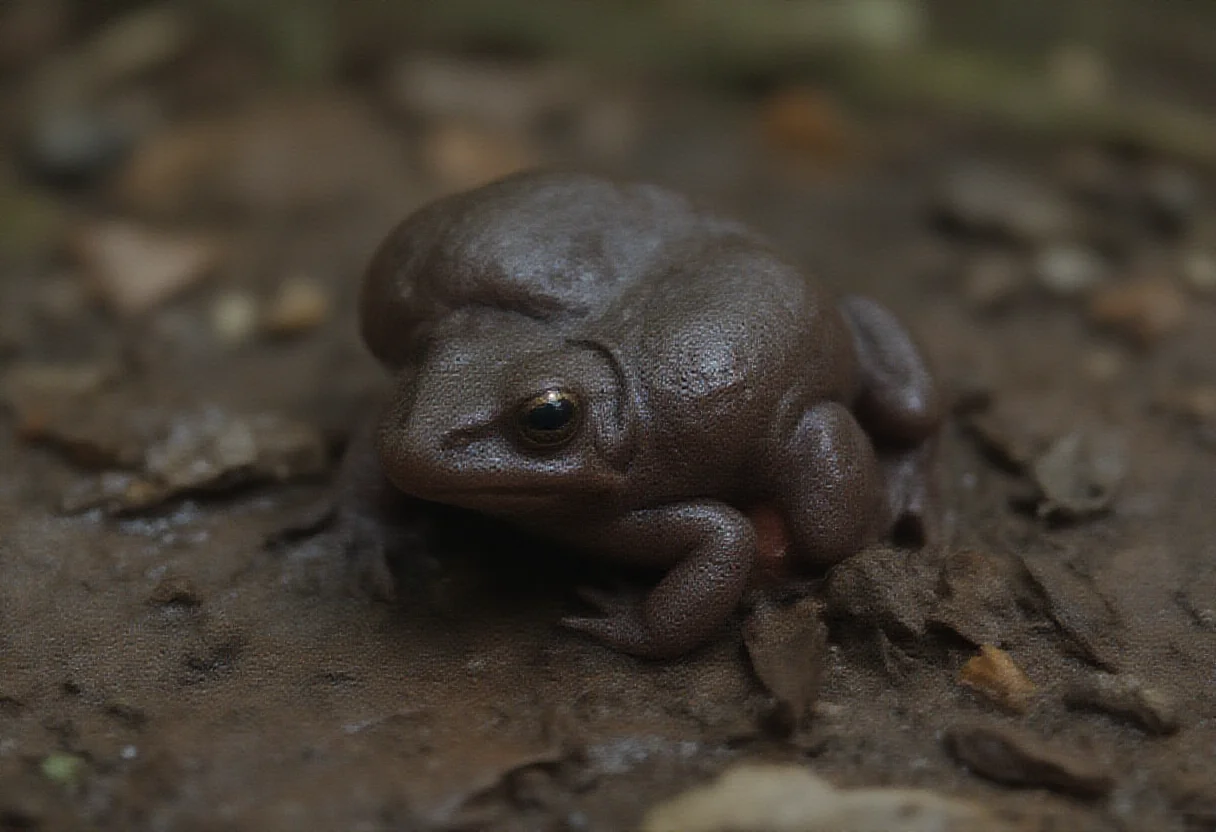
How Do Purple Frogs Reproduce? The Monsoon Breeding Cycle
Purple frogs (Nasikabatrachus sahyadrensis) breed in a short burst at the start of the monsoon in the Western Ghats of India. Males call from just below the soil surface. Eggs are laid in small rock pools in torrential streams, and the sucker-mouthed tadpoles cling to rocks and finish metamorphosis in about 100 days. Adults spend the rest of the year underground.
The purple frog is one of the strangest breeders among frogs. It lives underground for most of the year and surfaces only when the first heavy rains arrive. Then it has very little time to find a mate and lay eggs.
Researchers have described the calling, the egg sites and the tadpoles, but some basics are still missing. This guide separates what the sources show from what is still unknown.
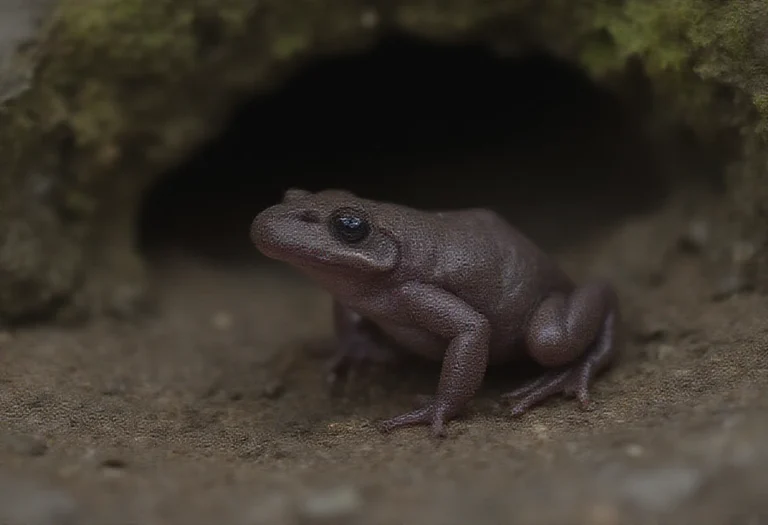
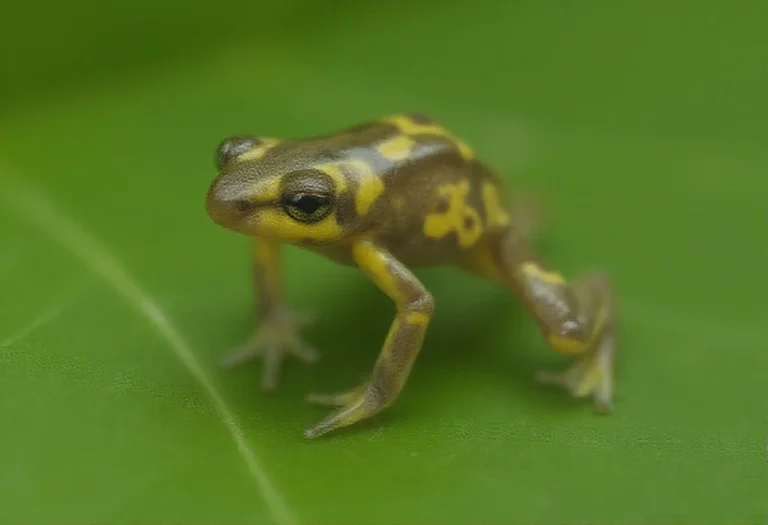
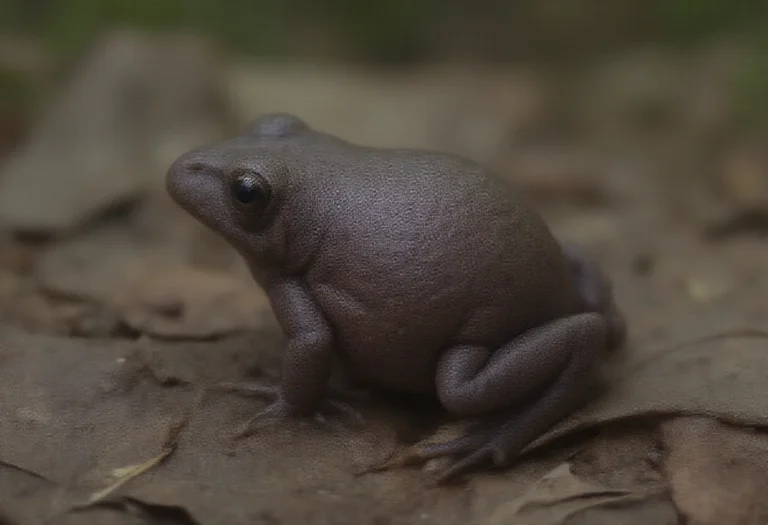
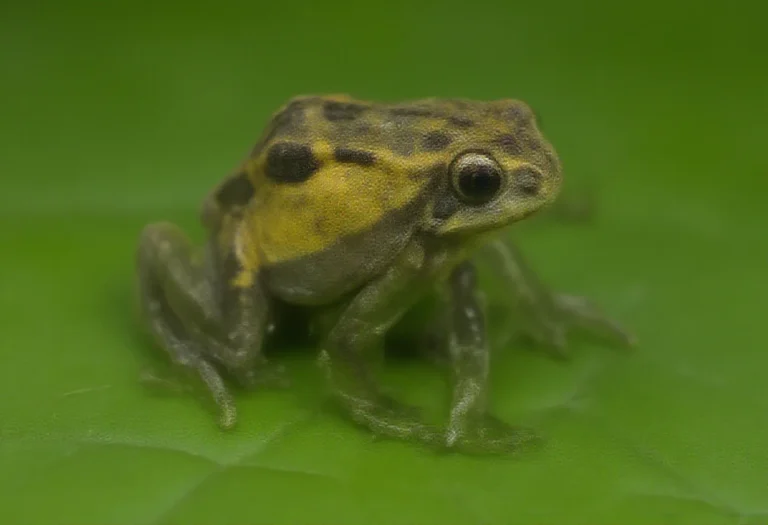
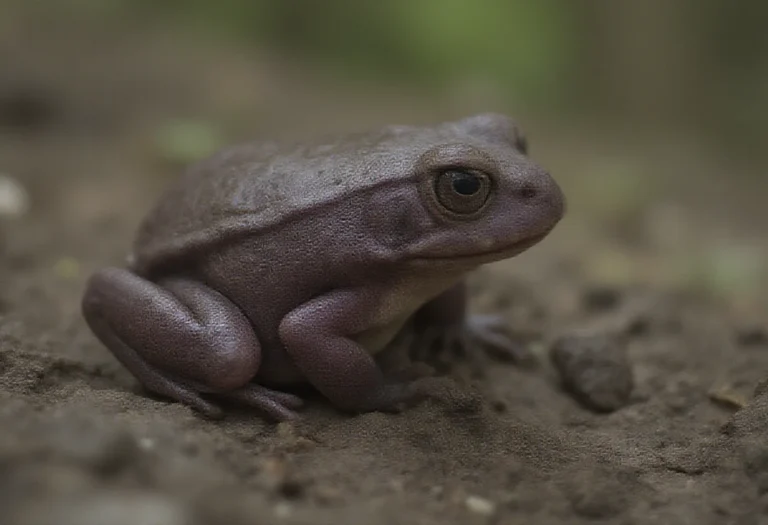
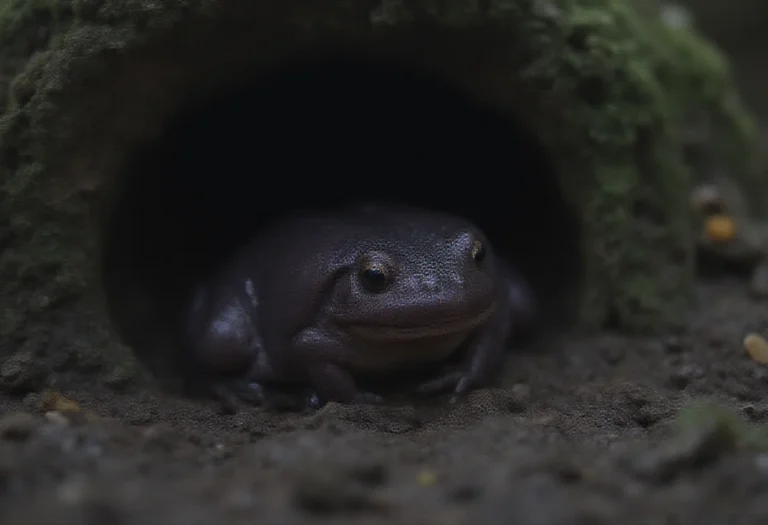
How this was made: prepared with AI assistance and checked against the sources listed at the end. Images are AI-generated illustrations, not photographs of real animals or products.
Key Takeaways
- Adults surface for a very short window at the start of the monsoon.
- Males call from just under loose soil, often at the mouth of small tunnels.
- Unpigmented eggs are laid in clumps in small rock pools in torrential streams.
- Tadpoles have a sucker mouth and take about 100 days to metamorphose.
- Clutch size and mating position are not firmly documented in the sources checked.
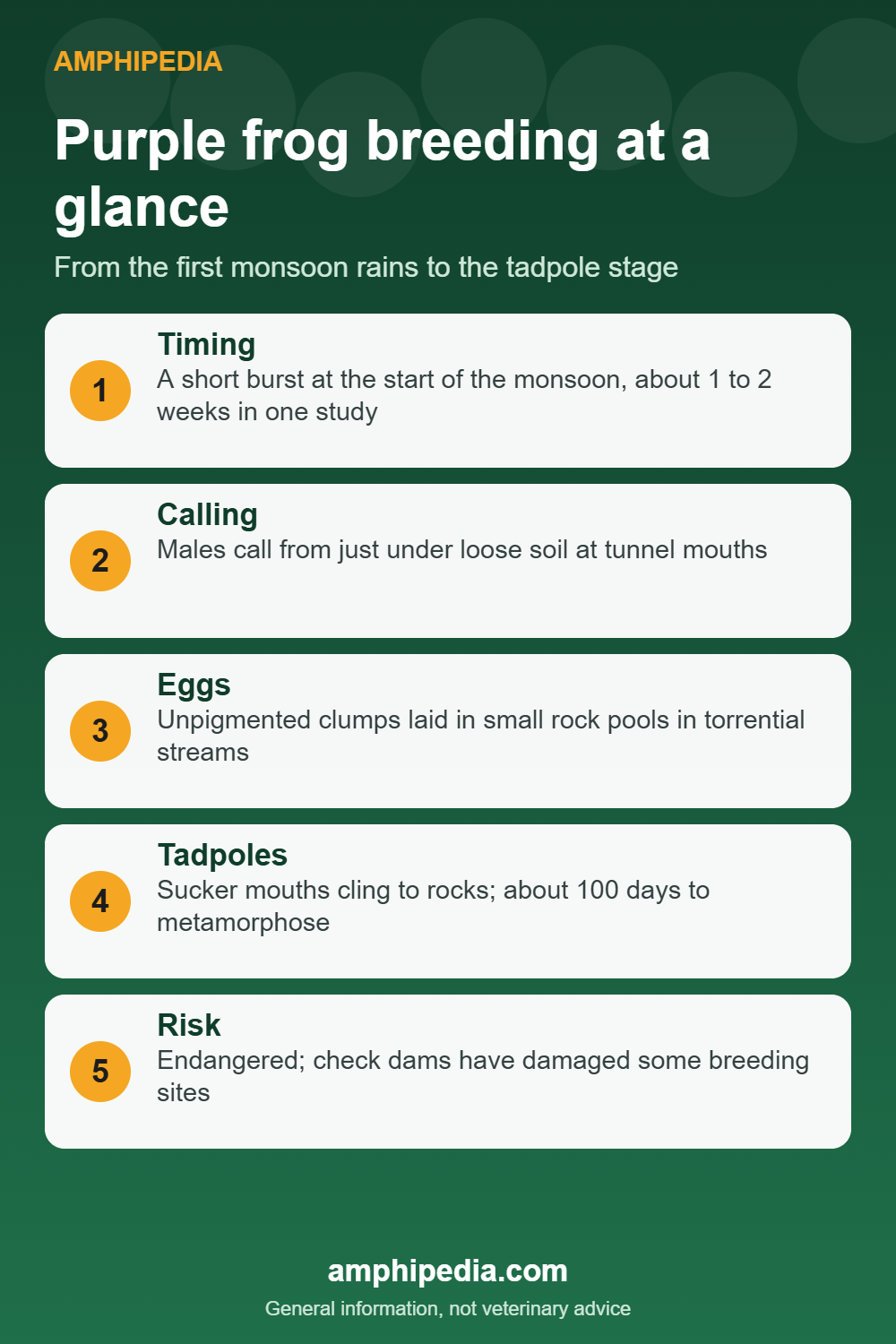
Pin this infographicShare on Facebook
When do purple frogs breed?
The purple frog breeds only once the monsoon begins. EDGE of Existence, the Zoological Society of London conservation programme, says the species emerges for a few days each year at the start of the monsoon to breed.
A 2014 field study recorded males after heavy rain in late April 2012, during pre-monsoon showers. Its authors describe explosive breeding that lasts roughly one to two weeks a year. The exact dates shift with local rainfall.
The rest of the year the frogs stay in loose, damp soil under forest cover. They are found at low elevations, below about 1,000 metres, in Kerala and Tamil Nadu.
How do males attract females?
Males give one type of call, an advertisement call. In the PLOS ONE study, calls averaged about 59 milliseconds and had about five to seven pulses, with a dominant frequency near 1,230 hertz. Our guide to purple frog sounds covers the call in more detail.
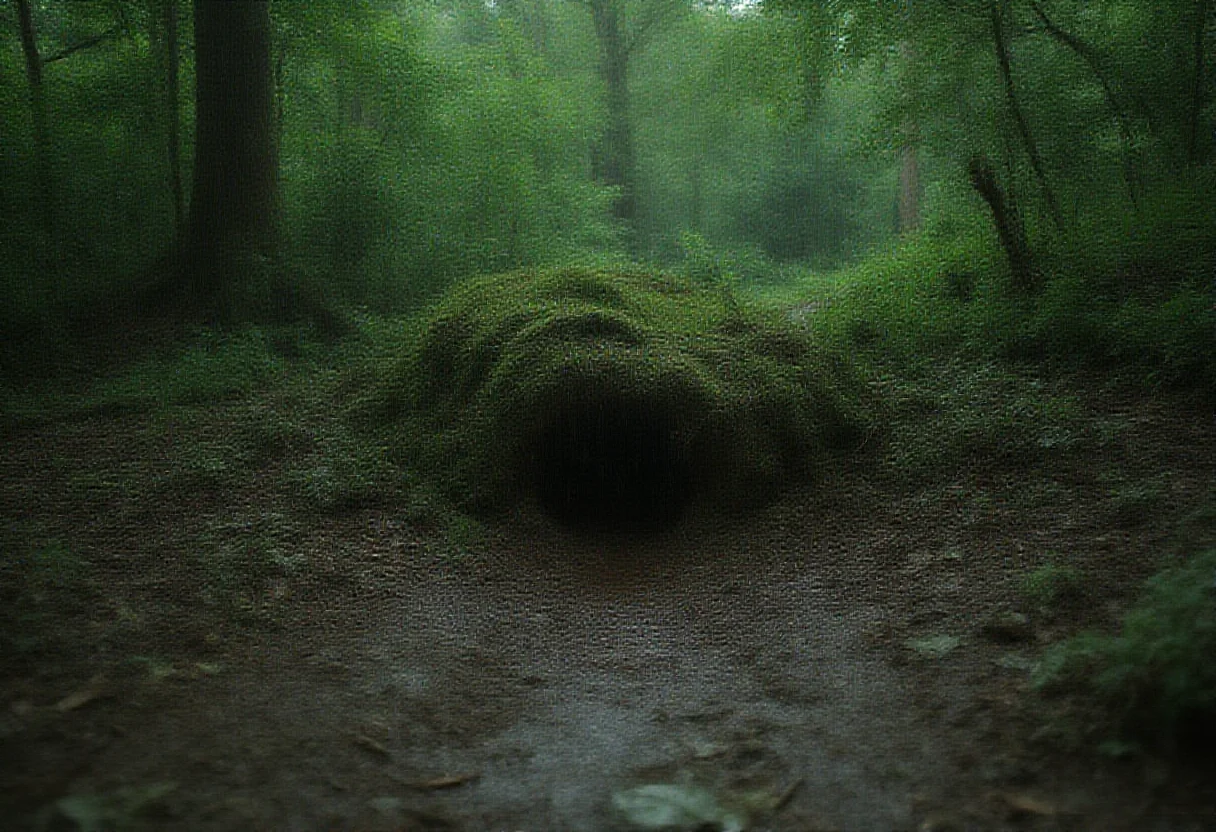
Males usually call from just below the soil surface, under a thin layer of loose soil and humus at the mouth of small tunnels. They retreat deeper at the slightest disturbance. Captured males were found roughly 15 to 50 centimetres down.
Calling peaked in the evening and night, often just after heavy rain. The study could not confirm how females respond, because the team did not see females approach calling males.
Where are the eggs laid?
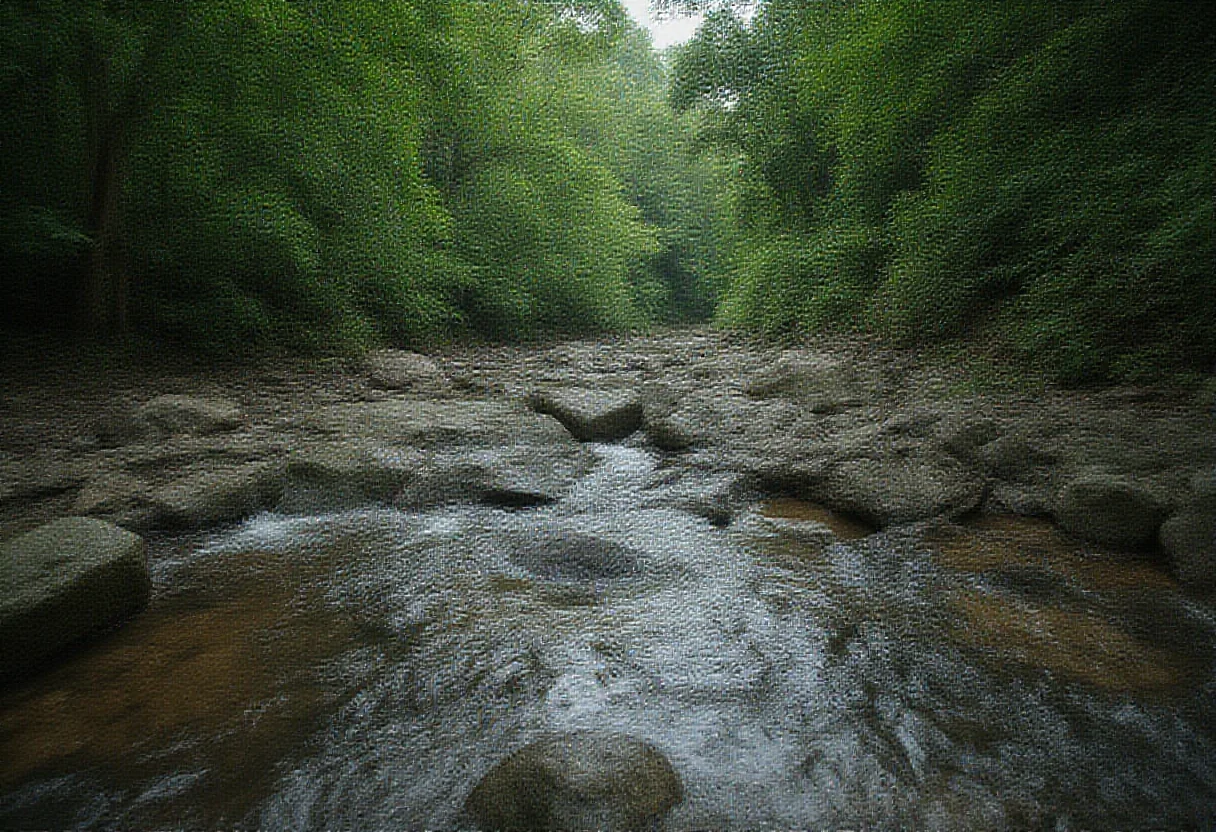
A detailed 2012 study in Zootaxa reports that the eggs lack pigment and are laid in arrays or clumps. They go into small, shaded rock pools in the bedrock of torrential streams. These pools fill when the early monsoon rains arrive.
This is a narrow breeding niche. The pools sit in fast, seasonal streams that run for only part of the year, so the timing of rain matters a great deal for the frogs.
- Site: small shaded pools in stream bedrock
- Eggs: unpigmented, in clumps or arrays
- Trigger: early monsoon rain filling the pools
What are the tadpoles like?
Purple frog tadpoles are built for fast water. The Zootaxa authors describe a strongly flattened body, dorsally placed eyes and a sucker-like mouth. EDGE of Existence notes that the mouthparts let them cling to algae-covered rocks while they feed.
The same study reports that tadpoles complete metamorphosis in about 100 days. A skeletal study in PLOS ONE found that young frogs burrow into soil near stream banks, and that digging begins while the tail is still being absorbed.
What about the sister species?
In 2017 scientists described a second species, Bhupathi’s purple frog (Nasikabatrachus bhupathi), from the eastern slopes of the Western Ghats. National Geographic reported that its tadpoles cling to rocks for about 120 days.
That figure belongs to the new species. Do not treat it as a correction to the 100-day figure for the original purple frog.
What is still unknown?
Several common questions have no reliable answer in the sources checked. No clutch size appeared in the abstracts and articles we could open. Mating position was also not stated.
Older web pages give exact egg counts and dates without citing a study. If a number has no source, treat it with caution.
Why breeding sites matter for conservation
Because the frog depends on a few seasonal stream pools, changes to streams can harm breeding. EDGE of Existence lists check dams that have damaged some breeding sites, along with deforestation and harvesting by local communities.
The species is listed as Endangered. Read are purple frogs endangered for the full status and threats.
Frequently Asked Questions
When do purple frogs breed?
At the start of the monsoon in the Western Ghats. One field study describes explosive breeding for about one to two weeks a year, and EDGE of Existence says adults surface for a few days.
How many eggs do purple frogs lay?
We did not find a reliable clutch size in the sources we could open. Treat unsourced egg counts online with caution.
Where do purple frog tadpoles live?
In fast, rocky mountain streams. They have a sucker mouth that lets them cling to rocks and graze algae.
How long do tadpoles take to become frogs?
About 100 days, according to the 2012 Zootaxa study and EDGE of Existence.
Is there more than one purple frog species?
Yes. Nasikabatrachus bhupathi was described in 2017 from the eastern slopes of the Western Ghats.
How big do adults get?
EDGE of Existence gives 6 to 9 cm body length. See how big purple frogs get.
Bottom Line
Purple frog reproduction is a race against the monsoon. Males call, eggs go into rock pools, and tadpoles must grow before the streams change.
Much remains unknown, so careful sourcing matters. If you spot a claim with no study behind it, check the sources below.
Sources
- EDGE of Existence: Purple frog, accessed Size, habitat, breeding window, threats and IUCN status.
- Zachariah et al. 2012, Zootaxa 3510: reproductive strategy and developmental stages, accessed Abstract on eggs, pools and tadpole development.
- Vocal behavior of the elusive purple frog of India, PLOS ONE 2014, accessed Call structure, calling sites and breeding window.
- From clinging to digging: skeletal ontogeny of the Indian purple frog, PLOS ONE 2016, accessed Tadpole and metamorph burrowing.
- National Geographic: New purple pig-nose frog found in remote mountains, accessed Sister species Nasikabatrachus bhupathi.
One Comment