Dart Frog Tank Backgrounds: What Works and What to Buy
This post contains affiliate links. As an Amazon Associate I earn from qualifying purchases. Prices and availability are shown by Amazon and can change.
The best dart frog tank background is a moisture-proof, non-toxic surface that frogs can climb and plants can root in. Cork bark flats, sealed foam sculpted into rock or wood, and ready-made 3D panels all work. Pick materials that are untreated and fully cured, seal the edges so water and fruit flies cannot hide behind the panel, and keep a few bare patches of glass for viewing.
A dart frog background does more than hide the back of the glass. It gives frogs a climbing wall, gives moss and bromeliads a place to grow, and helps hold humidity near the tank wall.
This guide explains the main background types, what to check before you buy, how to install one without trapping insects or moisture, and the mistakes that cause trouble later.
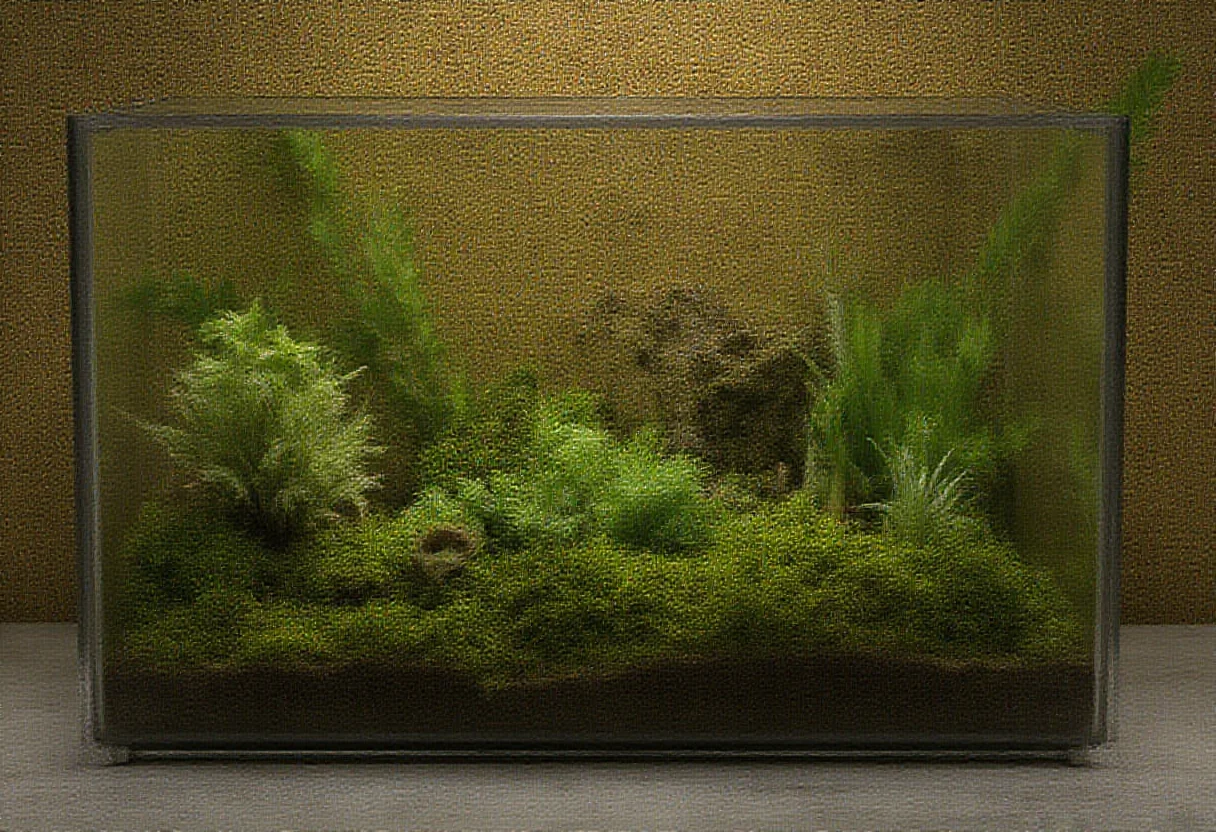
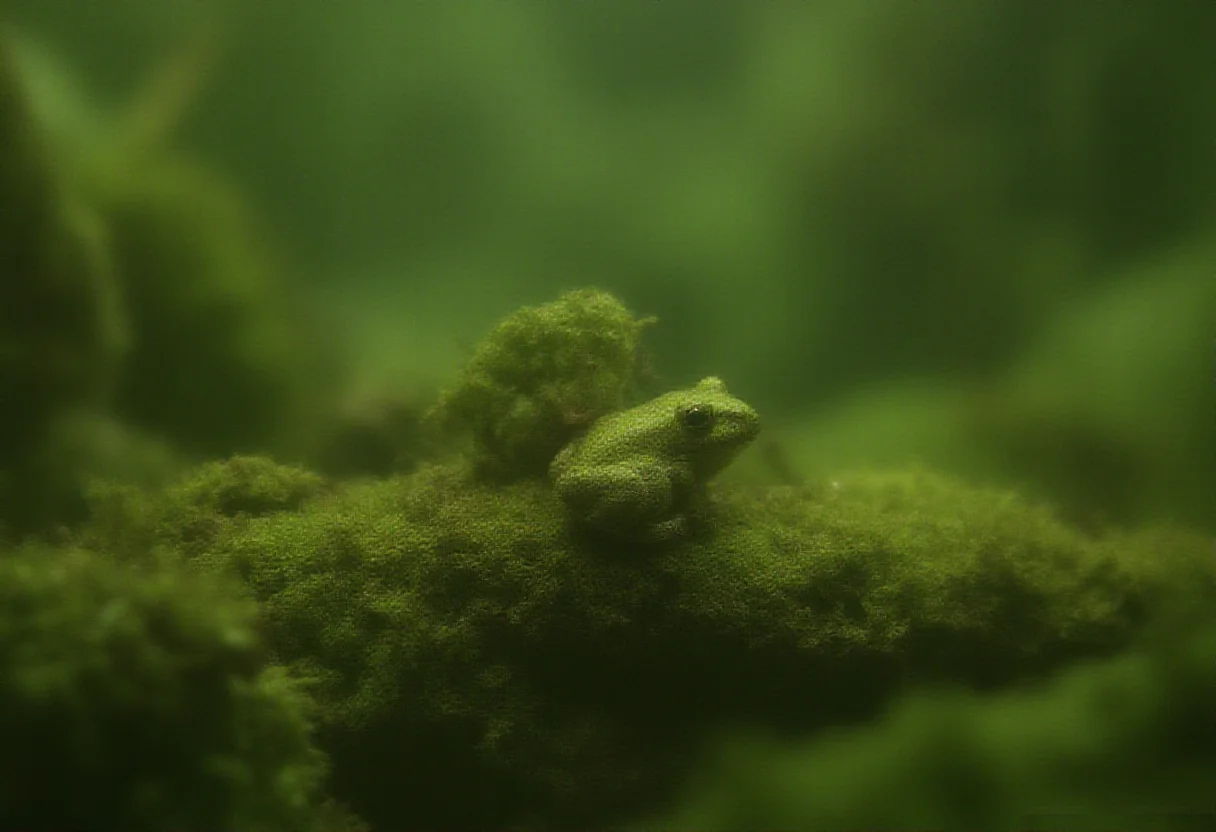
How this was made: prepared with AI assistance and checked against the sources listed at the end. Images are AI-generated illustrations, not photographs of real animals or products.
Key Takeaways
- Cork bark, sealed foam and 3D panels are the three common background types.
- Use only untreated, fully cured materials; frogs absorb substances through their skin.
- Seal every edge so water, fruit flies and springtails cannot get behind the panel.
- Rough, textured surfaces hold moss and let plants root.
- Leave part of the glass clear so you can see your frogs.
- Wash your hands after any tank work, because amphibians can carry Salmonella.
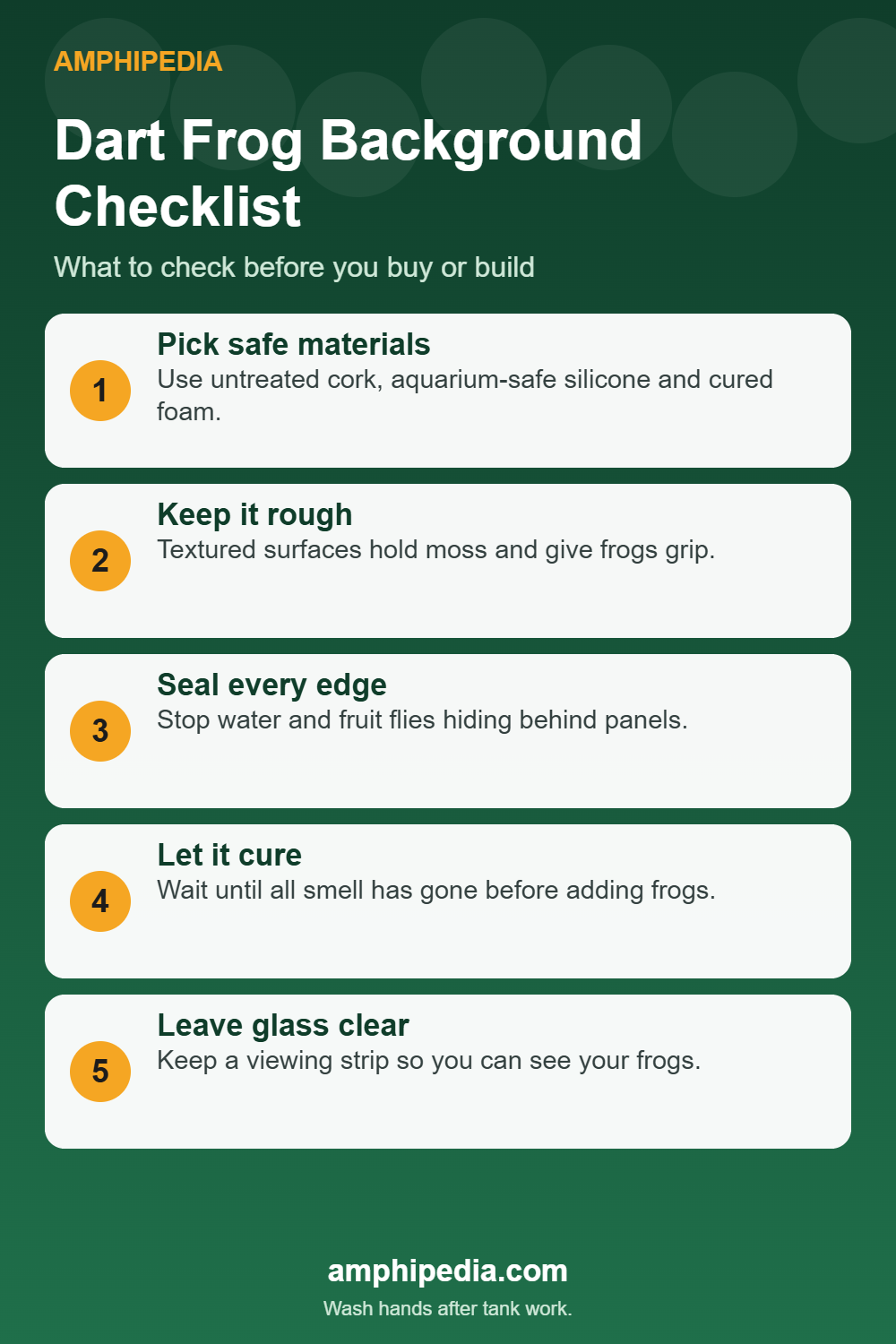
Pin this infographicShare on Facebook
Background picks
These background products are sorted by price from high to low. Check size, material and sealing needs before you buy.

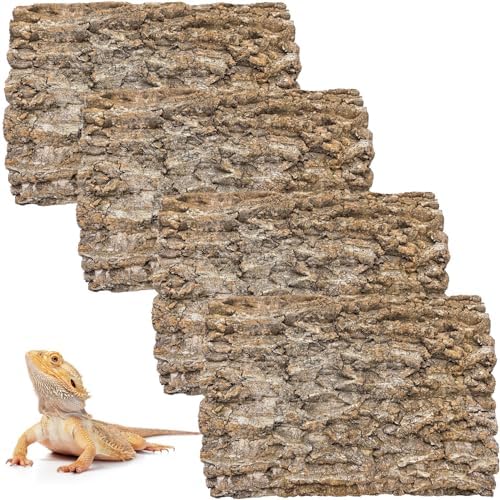


Product titles, prices and ratings are provided by Amazon and are accurate only at the time they are displayed.
What a dart frog background needs to do
Dart frogs are small, climb well and live in very humid terrariums. LafeberVet suggests a heavily planted tank at 80 to 100 percent humidity, with a daytime temperature gradient of 72 to 80 F (22 to 27 C). The BGSU herpetarium lists a preferred range of 75 to 84 F and humidity near 95 percent. Check the needs of your own species.
A good background therefore has to handle constant moisture. It should not rot, shed flakes or leach anything into the water. It should also give grip, because smooth plastic or bare glass offers frogs little to climb.
Main background types compared
Most keepers choose one of three styles. Each has trade-offs in cost, effort and looks.
| Type | Strengths | Watch out for |
|---|---|---|
| Cork bark flats | Natural look, light, rough surface that holds moss | Gaps at the edges; untreated cork only |
| Sculpted foam with sealed surface | Fully custom shape; hides pipes and wiring | Needs time to cure; surface must be rough, not shiny |
| Ready-made 3D panels | Quick to fit, uniform look, easy to cut | Must be aquarium-safe and sealed at the edges |
| Coconut fibre or bark panels | Plants root easily; holds moisture | Can stay wet and grow mould if not ventilated |
Cork bark flats
Cork flats are the simplest natural option. Large flat pieces can be attached to the back and sides with aquarium-safe silicone, then overlapped to hide seams. Plants such as bromeliads and ferns can be tucked into the gaps.
Buy untreated cork sold for terrariums. Rinse it, let it dry fully and check for loose crumbs. If you use a glue or silicone, read our guide to aquarium-safe silicone first.
Foam and textured backgrounds
A foam background is shaped from expanding foam, trimmed to a rock or tree-trunk form, then coated. A Josh’s Frogs build guide describes foaming cork and driftwood to the glass, trimming the foam, and making the surface rough rather than smooth and shiny so that silicone and planting material stick.
The same guide notes that planting materials such as coconut fibre and sphagnum moss must be bone dry when applied, and that the finished surface needs time to cure. No cure time is given, so follow the label on your products and wait until all smell has gone.
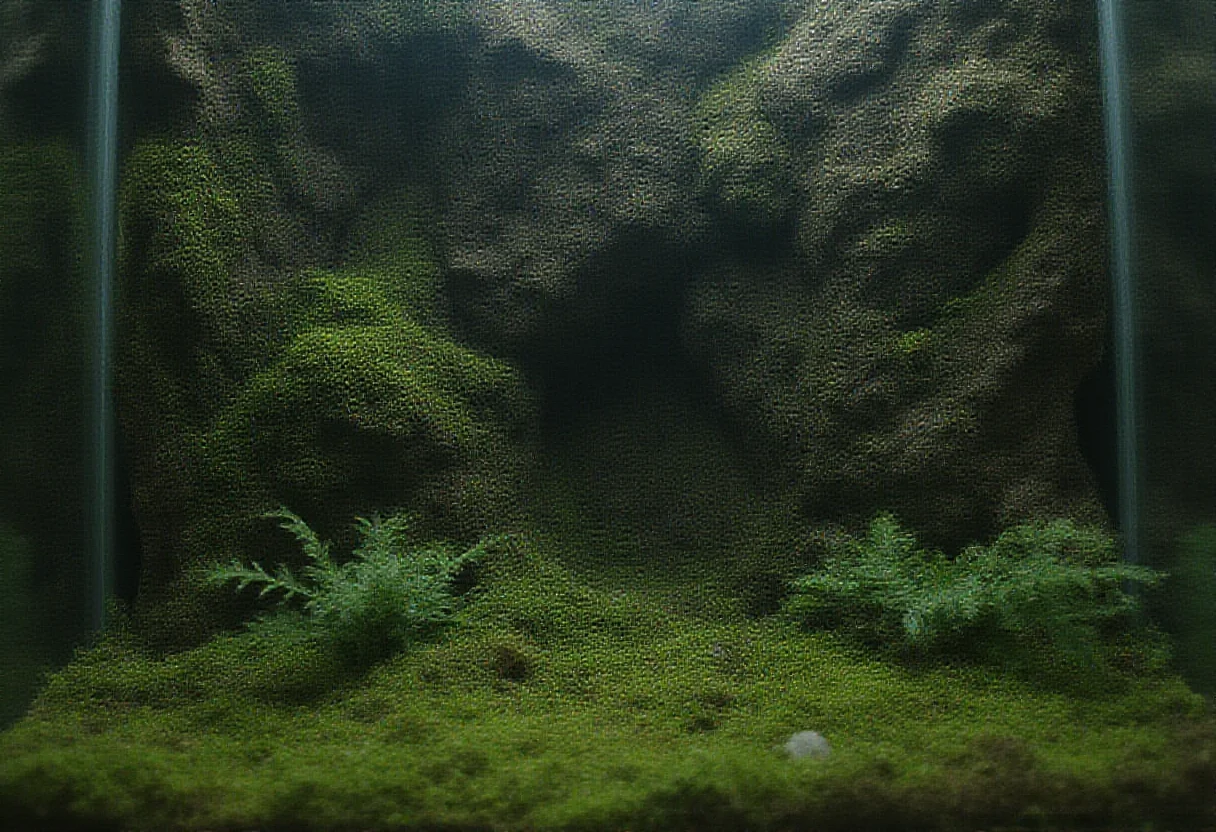
Ready-made 3D panels
Pre-formed panels save time. Look for products sold for aquariums or terrariums, with a surface texture frogs can grip. Measure the inside of the tank first, because most panels need trimming.
Leave a small gap for water to drain if the panel sits above a drainage layer, and seal the top and side edges. Do not use panels with paint that flakes when wet.
How we chose what to look for
This page does not include hands-on tests. The checklist below comes from published care sheets and from the way terrarium products are normally made.
- Non-toxic, untreated or aquarium-safe materials.
- A rough, climbable texture rather than a glossy one.
- A shape that fits your tank size without large gaps.
- Edges that can be sealed against water and insects.
- Reviews that mention durability in wet conditions.
- A colour that is dark and natural so frogs feel secure.
How to install a background safely
Start with an empty, clean tank. Plan where the glass will stay visible, then dry-fit every piece before using any adhesive.
- Wipe the glass with plain water, not household cleaner.
- Dry-fit the panels or cork and trim them with a sharp blade.
- Apply 100 percent silicone to the back and sides and press the pieces in.
- Seal all edges so nothing can slip behind the panel.
- Let everything cure fully and air the tank until no smell remains.
- Add substrate, drainage and plants, then run the tank for a week or two before the frogs arrive.
Planting the background
A background works best when it grows. Press moss, small ferns and bromeliad pups into crevices once the surface is dry. Misting keeps them alive and raises humidity along the wall.
For plant ideas see our guides to live plants for frog terrariums and natural moss.
Lighting and the background
Dark backgrounds can make a tank look dim. Low-heat plant lighting is usually enough; LafeberVet advises avoiding radiant heat sources because they dry out amphibian enclosures. See our LED lighting picks for low-heat options.
Common mistakes
These errors cause most background problems.
- Using treated wood, painted panels or scented products.
- Leaving gaps where fruit flies, springtails or water collect.
- Choosing a very smooth surface that plants cannot root in.
- Skipping the curing time before adding frogs.
- Covering the whole viewing glass with background.
- Adding a waterfall too early; the Josh’s Frogs author advises beginners to skip it.
Cleaning and long-term care
Mist the background rather than scrubbing it. Remove dead plant matter and wipe only the clear glass. If you see mould on a panel, spot-remove it and improve airflow.
Replace sections that crumble or stay slimy. A background that is falling apart is a sign it was not suited to constant moisture.
Which materials veterinary sources warn about
The Merck Veterinary Manual does not review tank backgrounds, but its amphibian husbandry page names materials that cause harm. These warnings are a good filter for anything you put against the glass.
- Cedar and pine mulches contain toxic oils and should not be used.
- Soil must be free of chemical additives such as fungicides.
- Gravel must be too large to swallow or small enough to pass in feces.
- Peat and sphagnum moss may irritate the skin of some species that cannot tolerate low pH.
Apply the same thinking to the background. Avoid anything scented, painted, treated or sold for another purpose without a clear statement of what it contains. When a maker will not say, choose another product.
Preparing materials before they go in
Merck advises disinfecting tools and housing materials with household bleach at 30 mL per litre of water. Allow at least 30 minutes of contact, rinse thoroughly with fresh water, and preferably dry before use. A commercial animal disinfectant can be used instead.
That advice suits hard items such as stones, branches and tools. Not every background can be soaked, so follow the maker for panels, and never bleach a piece you have already planted. Whatever you use, rinse until no smell remains.
- Rinse new pieces in plain water and let them dry.
- Disinfect only items the maker says can take it, using the Merck ratio above.
- Rinse again and dry fully.
- Air the empty tank before adding substrate.
- Keep the cleaning tools for this tank separate from any used on a sick animal.
Moisture, airflow and mould behind the panel
Merck says amphibians need moisture to prevent drying out, and that organic substrates and refugia help hold humidity in small pockets. A background does the same job along the wall. The risk is that stale, wet air collects behind it.
Merck recommends one to two fresh air changes per hour to help prevent disease. A tank with a mostly closed top and a thick background can fall short of that, so check that your vents are open and unblocked. If you see mould forming, increase airflow and remove the affected section.
Lafeber Veterinary says the substrate should stay damp between mistings but not waterlogged. Let the base layer drain behind the background rather than sit in water.
When to replace or rebuild a background
Rebuilding is disruptive, so plan it. Merck recommends thoroughly decontaminating all substrate and furniture before disposal. Move the frogs to a clean, temporary container first, and keep that container warm and humid within the range for your species.
- Replace panels that crumble, flake or stay slimy.
- Rebuild if a gap lets insects or water collect behind the material.
- Do not return frogs until the new surface has cured and smells neutral.
- Keep a record of what products you used, in case a frog shows signs of illness and the vet asks.
Frequently Asked Questions
What is the best material for a dart frog background?
Untreated cork bark, sealed foam with a rough finish, and aquarium-safe 3D panels all work. The best choice depends on your budget, tank size and how much building you want to do.
Do dart frogs need a background?
They do not strictly need one, but a textured background gives climbing surfaces, plant roots and a feeling of cover. It also hides the back of the glass.
Can I use regular silicone?
Use silicone labeled 100 percent silicone and aquarium safe. Avoid mould-resistant types with fungicides. Let it cure fully before frogs go in.
How do I stop fruit flies hiding behind the background?
Seal the edges and seams with silicone and leave no gaps larger than a few millimeters. Dry-fit before gluing.
Should the whole back and sides be covered?
Many builders cover the back and most of the sides but leave a clear strip for viewing.
How long should I wait before adding frogs?
Wait until the materials are fully cured and any smell has gone, then let the planted tank settle for one to two weeks.
Bottom Line
A good background is one that stays safe, dry at the seams and green on the surface. Choose untreated materials, seal the edges and give the tank time to settle.
Pair it with correct humidity, low-heat lighting and a clean routine, and the background will look better as the plants grow in.
Sources
- LafeberVet: Basic Information Sheet, Poison Dart Frogs, accessed Enclosure size, temperature and humidity ranges for dart frogs.
- BGSU Herpetarium: Poison Dart Frogs, general care, accessed University herpetarium care notes: substrate layers, temperature and humidity.
- Josh’s Frogs: Vivarium construction step-by-step guide, accessed Foam, cork, silicone and planting-surface build notes.
- CDC: Reptiles and Amphibians (Healthy Pets, Healthy People), accessed Hand washing, cleaning habitats away from kitchens, and high-risk groups.
- Merck Veterinary Manual: Environment and husbandry for amphibians, accessed 12 November 2026


5 Comments