
Best Hand Mist Sprayer for Amphibians: What to Look For
This post contains affiliate links. As an Amazon Associate I earn from qualifying purchases. Prices and availability are shown by Amazon and can change.
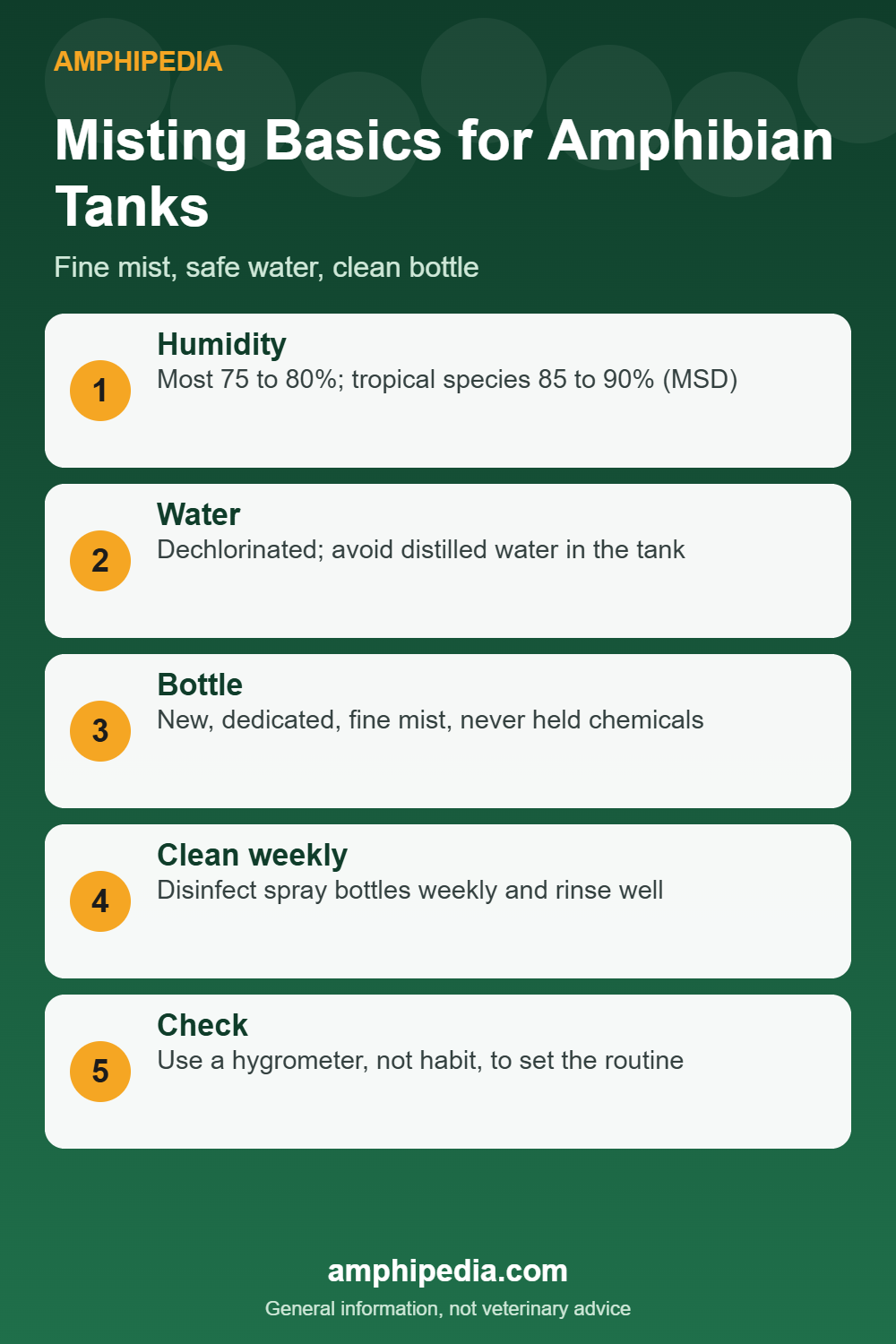
The best hand mist sprayer for amphibians is a new, dedicated bottle or pump sprayer that makes a fine, even mist, is easy to clean and has never held chemicals. Fill it with dechlorinated water. Most amphibians do well at 75 to 80% humidity, and tropical species need 85 to 90%, per the MSD Veterinary Manual. Disinfect the bottle weekly and mist lightly, one to a few times a day, depending on species.
A hand sprayer is the simplest way to raise humidity in a terrarium. It costs little, works in any tank, and lets you see exactly how the enclosure responds. Many keepers use one even when they also have a timer system.
This guide explains what makes a sprayer suitable for amphibians, which water to use, how much to mist and how to keep the bottle clean. It avoids product claims and focuses on the choices that protect your animal.
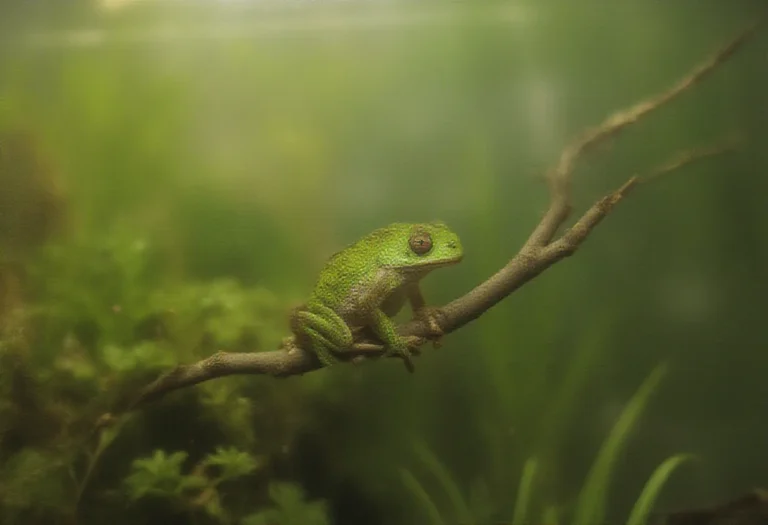
How this was made: prepared with AI assistance and checked against the sources listed at the end. Images are AI-generated illustrations, not photographs of real animals or products.
Key Takeaways
- Choose a new sprayer used only for amphibian water. Never reuse a bottle that held cleaner, pesticide or plant food.
- Look for a fine, even mist and a comfortable pump or trigger for daily use.
- Fill with dechlorinated water. The MSD Veterinary Manual says distilled water should not be used in enclosures or when handling amphibians.
- Mist to reach the target humidity for your species, not by habit. Many dart frogs need 80% or more.
- Disinfect sprayers weekly and rinse them well.
Pin this infographicShare on Facebook
Hand mist sprayers worth a look
The table is ordered from the highest price to the lowest. Prices, images and buy buttons come straight from Amazon and are not edited by us.


Product titles, prices and ratings are provided by Amazon and are accurate only at the time they are displayed.
Why misting matters for amphibians
Adult amphibians absorb water and breathe through their skin. Dry air can quickly dehydrate them. Josh’s Frogs notes that dart frogs take in most of their water through the skin, so low humidity can become dangerous fast.
Misting also refreshes damp substrate and drips water onto leaves, which many frogs drink from. A hand sprayer gives you control, and it makes you look at your animals every day.
How much humidity do you need?
Targets vary by species. The MSD Veterinary Manual says most amphibians do well at 75 to 80% humidity and tropical species at 85 to 90%. Petco suggests about 70% for newts and salamanders. Josh’s Frogs advises dart frogs to spend most of their time at 80% or higher.
VetVerified, writing about young terrestrial amphibians, suggests 70 to 90% depending on species with light misting once or twice a day. Use a hygrometer to check, and adjust the routine to match your species.
| Group | Reported humidity | Source |
|---|---|---|
| Most amphibians | 75 to 80% | MSD Veterinary Manual |
| Tropical species | 85 to 90% | MSD Veterinary Manual |
| Newts and salamanders | About 70% | Petco |
| Dart frogs | 80% or higher most of the time | Josh’s Frogs |
| Young terrestrial amphibians | 70 to 90%, by species | VetVerified |
What to look for in a sprayer
Pick a plain, sturdy sprayer. The right one is a simple tool.
- Fine mist nozzle that sprays droplets, not a jet or a stream
- Brand new bottle made for plants or terrariums, never one that held chemicals
- Clear or marked body, so you can see the water level
- Wide mouth that you can rinse and dry
- Comfortable trigger or pump for several mists a day
- Pressure pump option for larger enclosures, which gives longer, softer mist
- Seals that do not leak into your hands or onto electrical gear

Which water to use
Use dechlorinated water. The MSD Veterinary Manual says the water must be free of chlorine, ammonia, nitrite, pesticides and heavy metals. For chloramines, use a dechlorinating agent first. See our dechlorinator guide.
The same manual says distilled water should not be used in enclosures. Ask your vet about water for your species, especially if your tap water is unusual or you have a well.
A simple misting routine
Start with the species needs, then adjust to what your hygrometer shows.
- Fill the sprayer with dechlorinated water at room temperature.
- Mist leaves, walls and substrate, not the animal directly.
- Check humidity 10 to 15 minutes later.
- Repeat until the target is reached, then keep a regular schedule.
- Leave the tank to dry a little between mistings, so the substrate does not stay soaked.
- Write down what worked, such as times and counts.
Cleaning and care of the sprayer
The MSD Veterinary Manual advises disinfecting humidifiers and spray bottles weekly. Rinse the bottle until no residue remains, and let it dry before refilling. Do not clean it in the kitchen sink. The CDC advises keeping amphibian equipment away from food areas.
Replace the sprayer if the nozzle clogs, leaks or leaves a smell. Keep one bottle per tank, or disinfect it between tanks, to avoid spreading germs.
Misting different species
Rainforest frogs and dart frogs need frequent mists. Desert or temperate species need far less, and standing damp can harm them. Match the routine to your species instead of copying another keeper.
Newts and salamanders like cool, damp conditions, so use room-temperature water and avoid warm spray. Always give a dish of clean water for soaking as well.
Common mistakes
Misting is easy to get wrong when you do it by habit.
- Using an old bottle that held cleaner or fertiliser
- Spraying water straight onto a resting animal
- Misting without a hygrometer to check results
- Keeping the substrate wet all day, which can cause mould and bacteria
- Forgetting to clean the nozzle
- Using hot or cold water that shocks the animal
When to automate
A hand sprayer is great for small or low-humidity tanks. Large frog tanks may need more. See our guides to an automatic rainmaker and a humidity stabilizer.
Let ventilation set your misting frequency
Two enclosures with the same animals can need very different routines. Josh’s Frogs says misting may be needed one or two times a day, or as little as one or two times a week, depending on ventilation.
The MSD Veterinary Manual recommends one to two fresh air changes per hour to help prevent disease. More airflow dries the tank faster, so you trade fresh air against humidity.
Josh’s Frogs advises misting whenever humidity threatens to fall below 75 percent. That is a vivarium keeper’s rule, not a vet standard, so set your own threshold for your species.
- Check the hygrometer before you pick up the sprayer, not after.
- If you must mist several times a day to hold humidity, review ventilation and substrate before adding more mists.
- If the glass stays fogged for hours, you are likely misting too much for that airflow.
Light daily mists versus an occasional heavy one
Not every mist has the same job. Josh’s Frogs says a heavy misting at least once a week pushes frog waste down into the substrate of a bioactive tank, where springtails can eat it.
A heavy session also reaches epiphytes and other plants that a light spritz misses. The same page notes that these hard-to-reach plants need watering too.
A heavy mist adds a lot of water, so check the drainage layer afterwards. Josh’s Frogs says not to let water in the false bottom rise above the drainage layer, because it can flood the soil. Drain it when water comes within about an inch of the top of the false bottom.
What the manuals say about misting water
Both Merck and MSD state that water must be free of chlorine, ammonia, nitrite, pesticides and heavy metals. The table lists what each source covers, so you can see the gaps.
| Water | What the source says |
|---|---|
| Tap water with chlorine | Merck: circulate it through a carbon filter in a container for at least 24 hours before use |
| Tap water with chloramine | Merck: break the bond with a dechlorinating agent such as sodium thiosulfate, then filter with carbon |
| Distilled water | MSD: should not be used in amphibian enclosures or when handling amphibians |
| Reverse osmosis or well water | Not addressed in the Merck or MSD pages used here. Ask an exotics vet |
Your local water supplier can tell you whether it uses chlorine or chloramine. That decides which method applies to you.
Troubleshooting a hand-misted tank
Use this list when humidity will not hold. Merck names organic substrates and refugia that limit water loss as ways to keep microhabitat humidity up, and lists streams, waterfalls and ultrasonic humidifiers as alternatives to frequent misting.
- Humidity falls fast after misting: look at ventilation and substrate cover. Moist organic substrate and hides slow water loss.
- Humidity never reaches target: add a water feature or ask whether a humidifier suits the tank.
- Water pools at the bottom: check the false bottom level and drain it if it is near the top.
- Glass is smeared with waste or algae: wipe it with a terrarium sponge. Josh’s Frogs warns this can startle frogs, so they may hide for a day or two.
- Spray feels weak: clean the nozzle and replace the bottle if it will not clear.
Pair every misting routine with a daily check
A sprayer only adjusts humidity. It does not tell you whether the tank is right. Merck recommends spot-checking enclosures daily, and the manual notes that each species has a preferred optimal temperature zone.
Merck adds that amphibian temperature zones are generally lower than those of reptiles, and that salamanders and newts prefer cooler conditions than frogs and toads. A warm room can undo a good misting routine.
Note the humidity and temperature at the same time each day, and look at the animals while you do. If anything about their behavior or appearance changes and stays changed, ask an exotics vet.
Frequently Asked Questions
How often should I mist a frog tank?
It depends on species and humidity. VetVerified suggests once or twice daily for young terrestrial amphibians. Dart frogs often need several light mists. Use a hygrometer.
Can I use tap water to mist?
Only if it has been treated. The MSD Veterinary Manual says water must be free of chlorine and chloramine. Use a conditioner.
Is a pump sprayer better than a trigger bottle?
A pump sprayer gives a longer, softer mist for bigger tanks. A trigger bottle suits small tanks and quick use.
Can I use a spray bottle that held cleaner?
No. Residue can harm amphibians. Buy a new bottle and use it only for water.
How often should I clean the bottle?
The MSD Veterinary Manual advises weekly disinfecting of humidifiers and spray bottles, with careful rinsing.
Bottom Line
The best sprayer is a clean, new, fine-mist bottle that you use with dechlorinated water. Pair it with a hygrometer so you mist for a reason.
Wash and rinse it weekly. A small habit like that protects the skin of an animal that absorbs everything it touches.
Sources
- MSD Veterinary Manual: Housing for Amphibians, accessed 31 October 2026
- Petco: Salamanders and Newts Care Sheet, accessed 31 October 2026
- Josh’s Frogs: Low Dart Frog Humidity, accessed 31 October 2026
- VetVerified: Setting Up an Environment for Terrestrial Juvenile Amphibians, accessed 31 October 2026
- CDC: Reptiles and Amphibians, Healthy Pets, accessed 31 October 2026
- Merck Veterinary Manual: Environment and Husbandry for Amphibians, accessed 12 November 2026
- Josh’s Frogs: Maintaining Your Vivarium, accessed 12 November 2026



2 Comments