Aquarium Tubing for a Misting System: What to Buy
This post contains affiliate links. As an Amazon Associate I earn from qualifying purchases. Prices and availability are shown by Amazon and can change.
For a pressurized frog misting system, use tubing rated for the pump pressure, usually 1/4 inch black polyethylene or reinforced nylon, with push-fit fittings that match its diameter. Use soft silicone airline tubing only for low-pressure fogger or air lines. Pick food-grade or aquarium-safe material, avoid clear tubing that grows algae, and flush new tubing before it feeds a live enclosure.
Tubing looks like the simplest part of a misting system, yet it causes many failures. Weak tubing can burst, clear tubing can grow algae, and a mismatched fitting can leak onto your floor.
This guide explains which tubing types suit which job, how pressure and fittings affect the choice, and how to prepare new tubing before frogs get misted with it.
How this was made: prepared with AI assistance and checked against the sources listed at the end. Images are AI-generated illustrations, not photographs of real animals or products.
Key Takeaways
- Match tubing to the pressure of your pump, not just the size.
- Black polyethylene is a common choice for pump-driven misting lines.
- Clear tubing lets light in and can grow algae that clogs nozzles.
- Use food-grade or aquarium-safe tubing where water reaches the animal.
- Push-fit fittings are size specific, so check the outer diameter.
- Flush new tubing with clean water before connecting it to a live tank.
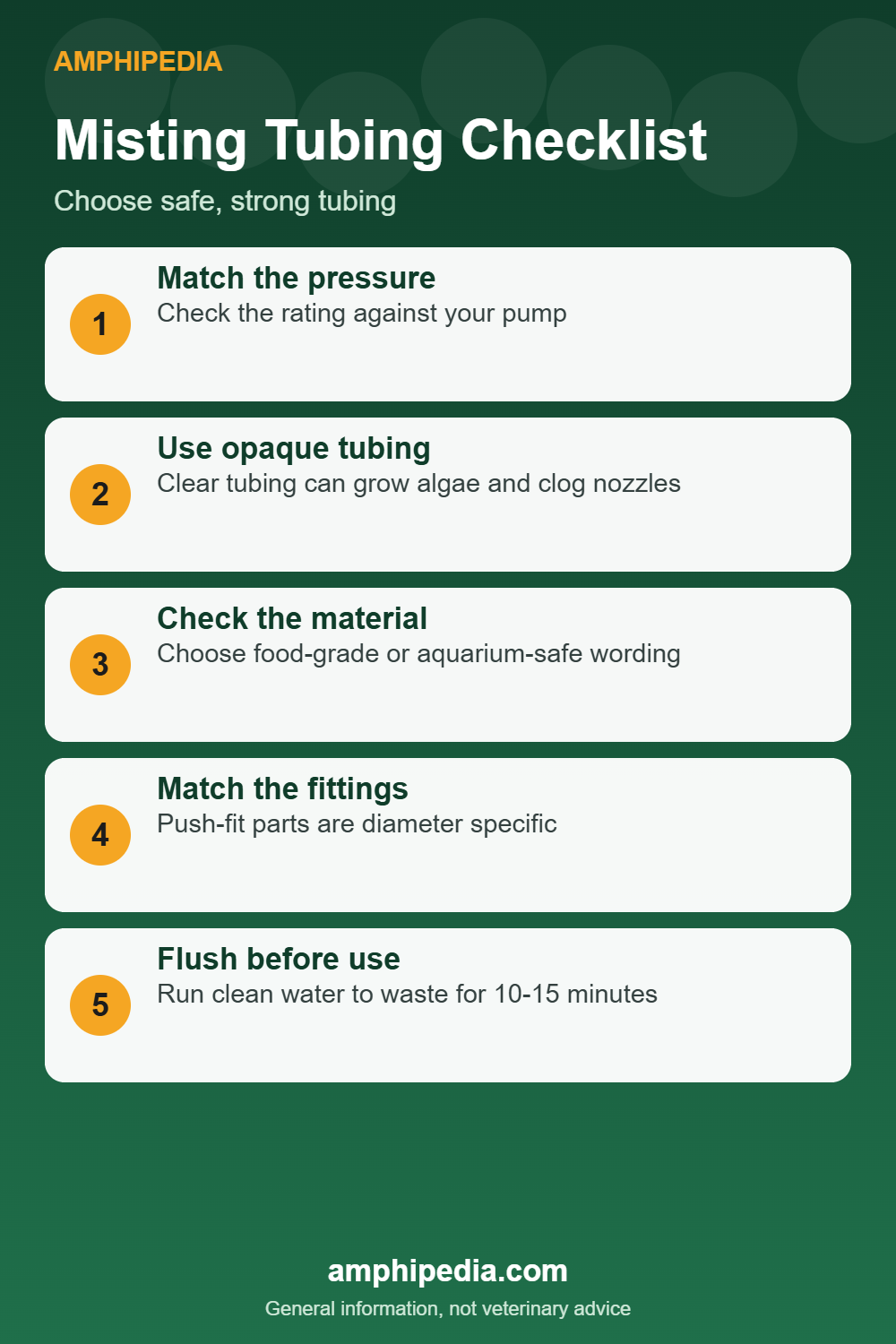
Pin this infographicShare on Facebook
Aquarium and Misting Tubing Worth Considering
These options are listed from highest to lowest price. Check material, size and pressure rating against your pump before you buy.


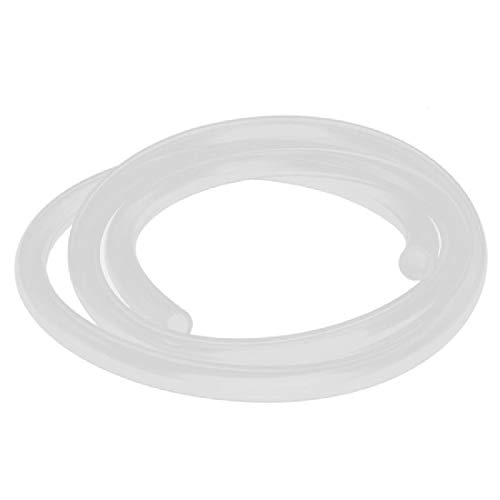
Product titles, prices and ratings are provided by Amazon and are accurate only at the time they are displayed.
Which tubing does what
A misting setup can use more than one kind of tubing. The high-pressure line from the pump to the nozzles needs strong tubing. A drain line or an airline for a fogger needs flexible tubing.
A retailer page for one well-known misting kit describes its tubing as 1/4 inch polyethylene, black and opaque so it does not let light through and prevents algae growth, and rated up to 250 psi. That is one maker’s spec, not a rule, but it shows what to look for.
Your pump and nozzle kit will list a tubing size. Follow it. Our guide to the automatic rainmaker for frog terrariums covers the whole system.
| Job | Typical tubing | Why |
|---|---|---|
| Pump to nozzles | Black polyethylene or reinforced nylon, 1/4 inch | Handles pump pressure and blocks light |
| Fogger or air line | Soft silicone airline | Flexible at low pressure |
| Drain line | Clear food-grade vinyl or similar | Gravity fed, easy to inspect |
| Near heat sources | Silicone | Polyethylene softens in strong heat |
Pressure and size
Pump pressure decides what tubing can survive. An independent hobbyist guide says standard 1/4 inch outer diameter polyethylene drip tubing is rated 50 to 100 psi, which it says covers typical low-pressure misting pumps, and that systems above 100 psi need reinforced tubing. Treat those numbers as a starting point and check the product datasheet.
Aquacadabra explains that larger and taller enclosures need more powerful, pressurized systems with several nozzles. Higher pressure means tubing and fittings take more stress.
If a listing gives no pressure rating, ask the seller or choose another product.
Food-grade and safe materials
Water from a misting line lands on frog skin, and amphibian skin is permeable. The same hobbyist guide notes that some vinyl contains phthalate plasticizers that can leach into water, especially warm water, and advises food-grade or NSF-51 certified tubing for lines that touch animal water or mist an enclosure.
You cannot confirm that from a photo, so look for stated food-grade, aquarium-safe or drinking-water-safe wording on the listing. Avoid tubing sold for fuel, gas, hydraulic or industrial use.
Silicone tubing is flexible and widely used for air lines. Cheap silicone can kink easily, so avoid tight bends in the run.

Algae and clogging
Clear tubing lets light through, and algae can bloom inside it within weeks, according to the hobbyist guide. Algae can clog fine nozzles. Opaque or black tubing avoids the problem.
Water quality adds to clogging. DartFrog.pet recommends distilled or reverse osmosis water in frog tanks and says other water can leave calcification that causes problems with automated misting systems.
If you do use clear tubing for a short visible run, shield it from light or replace it on a schedule.
Fittings that match the tubing
Fittings should match the outer diameter of your tubing. Push-to-connect types are common in misting systems. They are diameter specific, so a mismatched size may leak slowly or pop off under pressure, according to the hobbyist guide.
Barbed fittings can need clamps and may leak slowly over time. Use thread tape on threaded joints.
Buy a few spare connectors, a tubing cutter and a small kit of end caps when you buy tubing.
Prepare new tubing before use
New tubing can carry dust or manufacturing residue. The hobbyist guide suggests flushing new tubing with clean water for 10 to 15 minutes before connecting it to a live enclosure. Run the water to waste, not into the tank.
Check every joint while the pump runs. Wipe the line with a dry paper towel and look for beads of water.
Mount the line so it hangs in a gentle curve, with no sharp kinks. Use clips, not tape.
Plan the route and length
Measure before you order. Run a string from the pump or reservoir to each nozzle position, going around corners the way the tubing will. Add extra length for a service loop, so you can lift the lid or move the pump without pulling on a fitting.
Keep tubing away from sharp glass edges and hot lamp housings. The hobbyist guide notes that standard polyethylene softens at roughly 140 degrees Fahrenheit, so use silicone for sections near basking lamps or heat tape.
Label each line with a small tag if you run several. A clear plan saves time when you need to trace a leak at night.
Common mistakes
The most common mistake is buying tubing by price per foot and ignoring pressure. The second is using clear tubing for the main pump line.
A third mistake is mixing sizes. A tube that is slightly too small or large looks fine, then fails at night.
- Do not use tubing with no stated material or pressure rating.
- Do not put clear tubing in bright light.
- Do not use garden hose or irrigation parts without checking material safety.
- Do not skip the flush.
- Do not leave tubing running over hot lamps.
Cleaning and replacement
Flush lines with clean water on a regular schedule and replace tubing that turns cloudy, sticky or stiff. Follow your maker for descaling steps.
Hygiene matters. The CDC says reptiles and amphibians can carry Salmonella even when healthy, so wash your hands after touching tank water or equipment and clean parts outdoors or in a laundry sink.
For airline details, see our guide to the mini air pump for an amphibian tank.
What water should go through the line
Tubing only carries what you put in the reservoir, and sources do not agree on the best water. DartFrog.pet recommends distilled or reverse osmosis water for frog tanks, to avoid mineral build-up in automated systems.
The Merck Veterinary Manual (pet owner version) says not to use distilled water. The professional version says water must be free of chlorine, ammonia, nitrite, pesticides and heavy metals, and describes removing chlorine with a carbon filter for at least 24 hours, plus a dechlorinating agent when chloramines are present.
- Ask an exotics vet or the breeder of your species which water they use.
- Whatever you choose, remove chlorine and chloramine first.
- Keep the reservoir covered and refill it with fresh water rather than topping up old water.
- Expect mineral scale if you use hard tap water, and plan to descale as the maker directs.
How much mist do you actually need?
A misting system is a means to an end. The target is a humidity range that suits your species. Merck (pet owner version) says most amphibians do well at 75 to 80 percent humidity, and tropical species may need 85 to 90 percent. Lafeber Veterinary gives 80 to 100 percent for poison dart frogs.
Lafeber says the substrate should stay damp between mistings but not waterlogged. Merck recommends a humidity gauge in every enclosure and 1 to 2 fresh air changes per hour. Check the gauge before you set a timer, then adjust in small steps.
Keeping the system clean
Merck advises disinfecting humidifiers and spray bottles weekly to remove potentially harmful bacteria. A pump-driven line has the same risk, because standing water in tubing and a reservoir can grow a film.
Merck gives a bleach solution of 30 mL per litre of water, for at least 30 minutes, then a thorough rinse and drying, for tools and dishes. Whether that suits your pump, tubing and nozzles depends on the maker. Check the manual first, then rinse until no smell remains and flush the line to waste before reconnecting it to the tank.
Troubleshooting a misting line
| Problem | Check first |
|---|---|
| Weak or uneven mist | Kinks, clogged nozzles, or a loose fitting |
| Slow drip at a joint | Tubing diameter does not match the fitting, or the tube end is not cut square |
| Cloudy or slimy water | Reservoir needs cleaning and fresh water |
| White crust on nozzles | Mineral scale from hard water; descale as the maker directs |
| Substrate soggy | Mist time too long; shorten it and check drainage |
| Humidity too low | Check ventilation, gauge reading and whether nozzles are blocked |
Change one thing at a time and watch the gauge for a day. If a frog looks unwell after a change to the system, contact an exotics vet.
Frequently Asked Questions
What tubing is used for frog misting systems?
Many pump-driven systems use 1/4 inch black polyethylene tubing, and some use reinforced nylon. Your kit should list its size and rating.
Can I use silicone airline tubing for misting?
Use it for low-pressure fogger or air lines. For pump-driven nozzles check the pressure rating, since airline silicone is not built for high pressure.
Why does my misting tubing turn green?
Clear tubing lets light in and algae can grow inside it. Use opaque tubing and clean water.
Is vinyl tubing safe for frogs?
Some vinyl can leach plasticizers. Look for food-grade or aquarium-safe wording and avoid tubing meant for fuel or industry.
How long should I flush new tubing?
A hobbyist guide suggests 10 to 15 minutes with clean water to waste. Follow your maker if it gives instructions.
Do fittings need to match tubing size?
Yes. Push-fit fittings are diameter specific and may leak or pop off if sizes do not match.
Bottom Line
Good tubing is boring and reliable. Choose it by pressure rating, material safety and size match, and flush it before it touches your frog tank.
Buy a few spare fittings so one failure does not mean a dry tank.
Sources
- Josh’s Frogs: 1/4 inch tubing for misting systems, accessed Example maker spec: polyethylene, opaque, pressure rating
- Basking Nook: DIY reptile tubing (independent hobby guide), accessed Pressure, fittings, flushing, leaching; unverified by manufacturer data
- Aquacadabra: A full guide to vivarium misting systems, accessed Nozzles and pressure
- DartFrog.pet: Vivarium, accessed RO water and calcification
- CDC: Reptiles and Amphibians, accessed Salmonella and hygiene
- Merck Veterinary Manual: Housing for amphibians (pet owner version), accessed 12 November 2026
- Merck Veterinary Manual: Environment and husbandry for amphibians, accessed 12 November 2026
- Lafeber Veterinary: Basic information sheet, poison dart frog, accessed 12 November 2026

2 Comments