Best Wildlife Camera for Frogs: A Buyer Guide
This post contains affiliate links. As an Amazon Associate I earn from qualifying purchases. Prices and availability are shown by Amazon and can change.
The best wildlife camera for frogs is a weatherproof trail camera with infrared night vision, a fast trigger, a short close-focus distance and a time-lapse mode. Motion sensors often miss frogs, because most sense body heat and frogs are cool. A test cited by CSIRO found frog detection depended on the temperature difference between the frog and its surroundings. Mount the camera low, near water, on your own land.
Frogs are small, still and active at night. A normal trail camera is built for deer, and it often records empty frames or misses a frog sitting right in front of it. A little planning gets much better footage.
This guide explains why frogs are hard to detect, which camera features help, where to place a camera and how to keep animals undisturbed. It covers backyard ponds and gardens, not research surveys.
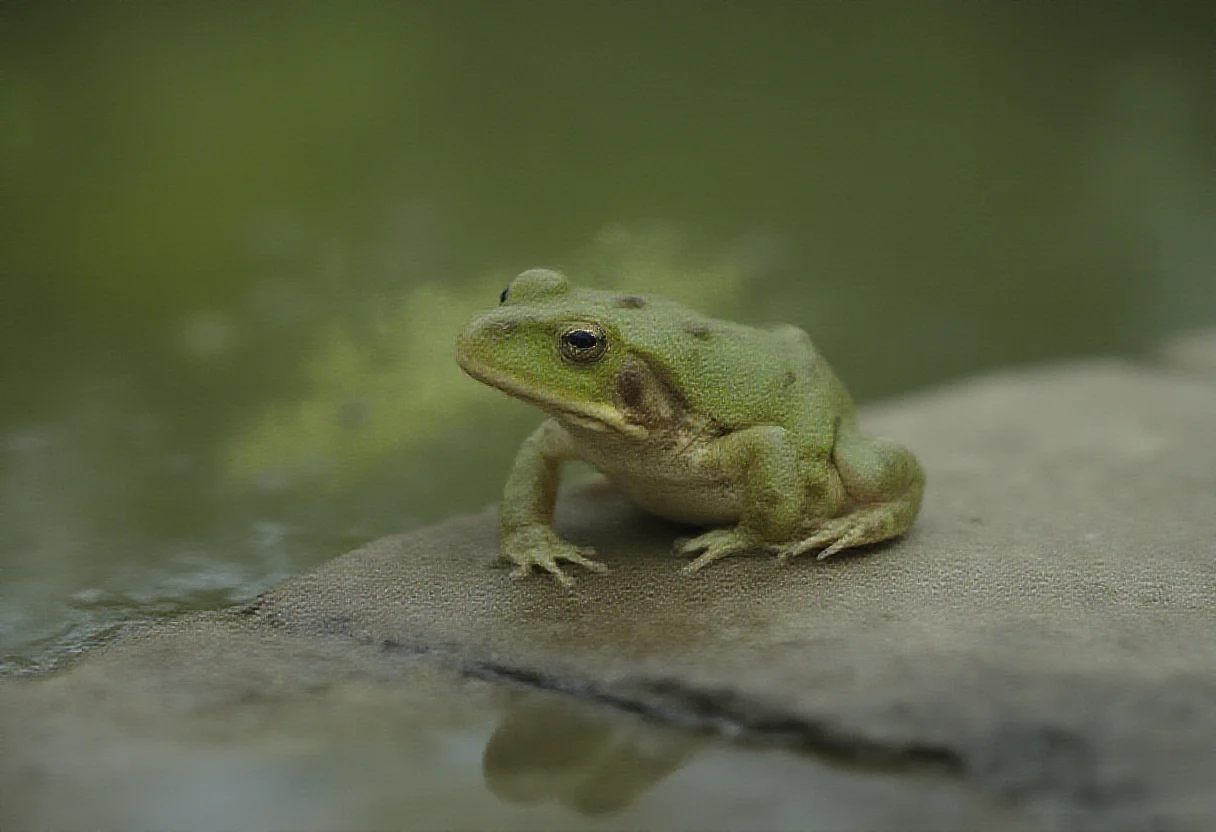
How this was made: prepared with AI assistance and checked against the sources listed at the end. Images are AI-generated illustrations, not photographs of real animals or products.
Key Takeaways
- Most trail cameras use passive infrared sensors that react to heat. Frogs are cool-bodied, so detection can be poor.
- A test cited by CSIRO, with one camera and six frogs, found detection depended on the temperature difference between frog and substrate.
- Look for close focus, fast trigger speed, infrared night vision and a time-lapse mode.
- Place the camera low and close to the target spot, angled so water does not reflect the flash.
- Place cameras only where you have permission, and do not disturb nesting or breeding sites.
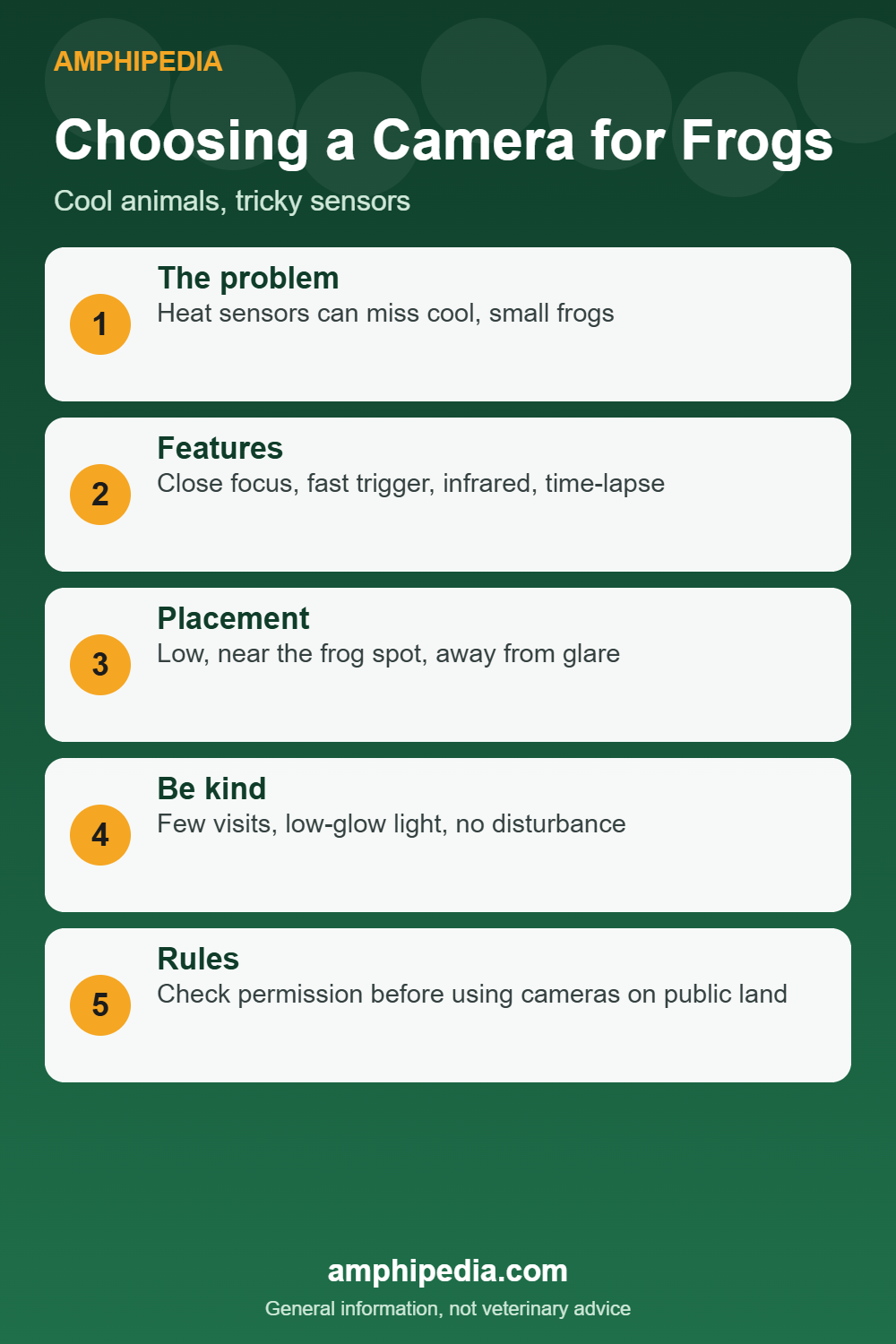
Pin this infographicShare on Facebook
Trail cameras worth a look
The table is ordered from the highest price to the lowest. Prices, images and buy buttons come straight from Amazon and are not edited by us.


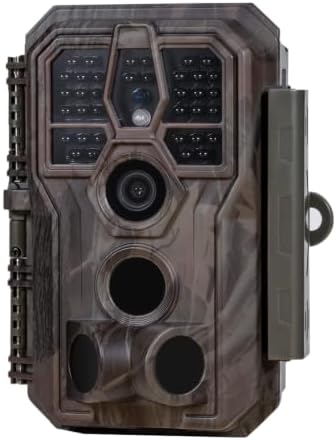
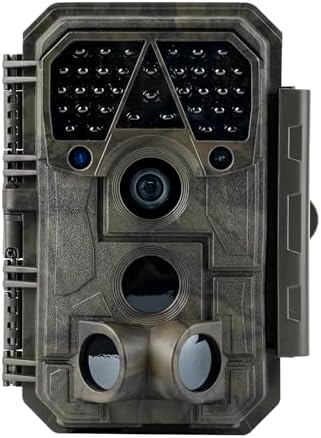

Product titles, prices and ratings are provided by Amazon and are accurate only at the time they are displayed.
Why frogs are hard to detect
Most trail cameras use a passive infrared sensor that triggers when a warm body moves in front of a cooler background. Frogs are small and close to the air temperature, so the sensor may not see them.
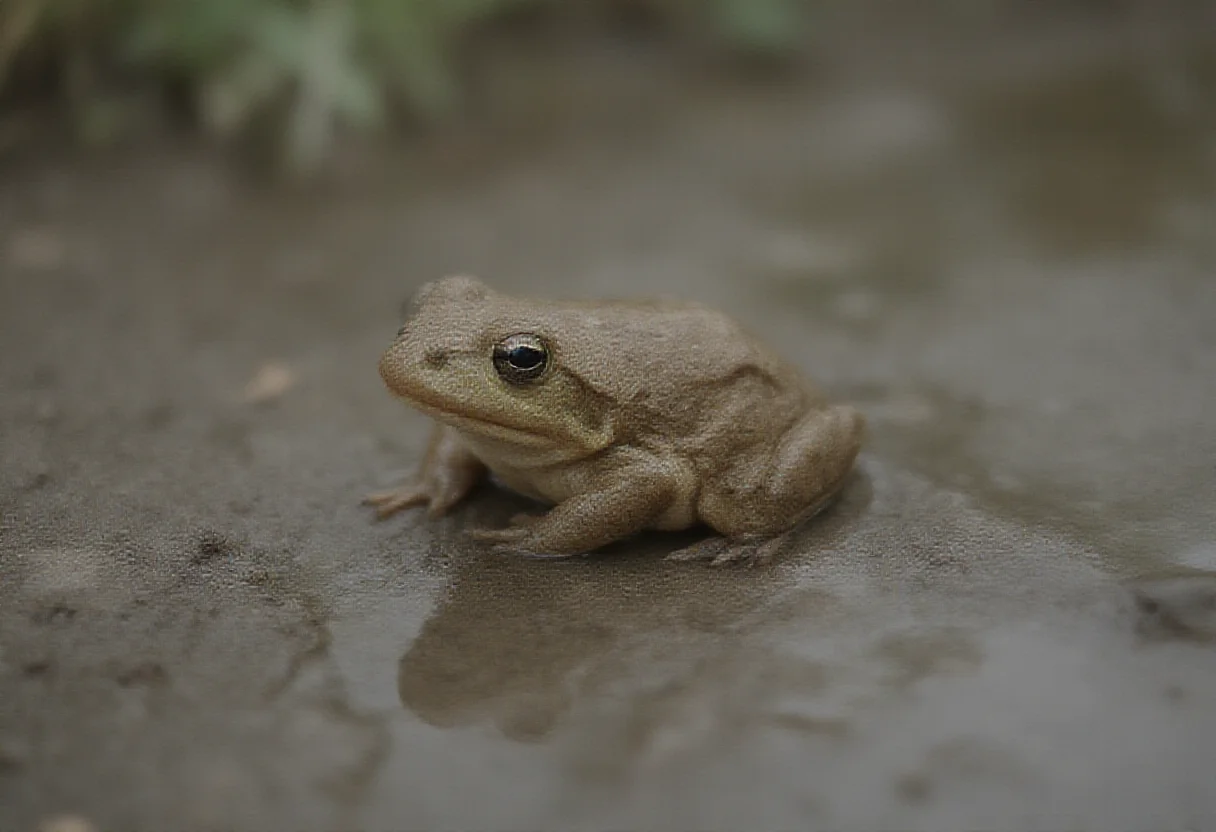
A paper cited by CSIRO tested one camera on six frogs and found detection depended only on the absolute temperature difference between the frog and the substrate. On a cool night, a frog on cool mud may not trigger a camera at all.
What research suggests
A 2017 PLoS ONE paper by Hobbs and Brehme, summarised by the USGS, says standard camera traps struggle to sample small animals such as amphibians and reptiles. Their improved system used an active trigger to detect small animals better and cut false triggers.
A Georgia study (Brown, Hannon and Maerz) compared drift-fence cameras with visual-encounter surveys for reptiles and amphibians and found about five times as many observations from cameras. The highest detection was for snakes, so do not assume similar results for frogs.
Features that matter
Prioritise features that help with small, cool, nocturnal animals.
- Close-focus distance, ideally a short range for sharp images at 1 to 2 metres
- Fast trigger speed, so the frog is still in the frame
- Infrared night vision with low-glow or no-glow LEDs
- Time-lapse mode, which records at set intervals without needing a trigger
- Adjustable sensitivity and detection zone
- Weatherproof body rated for rain and splashes
- SD card support and long battery life
- Adjustable mounting strap or a small stake for low placement
Where and how to place it
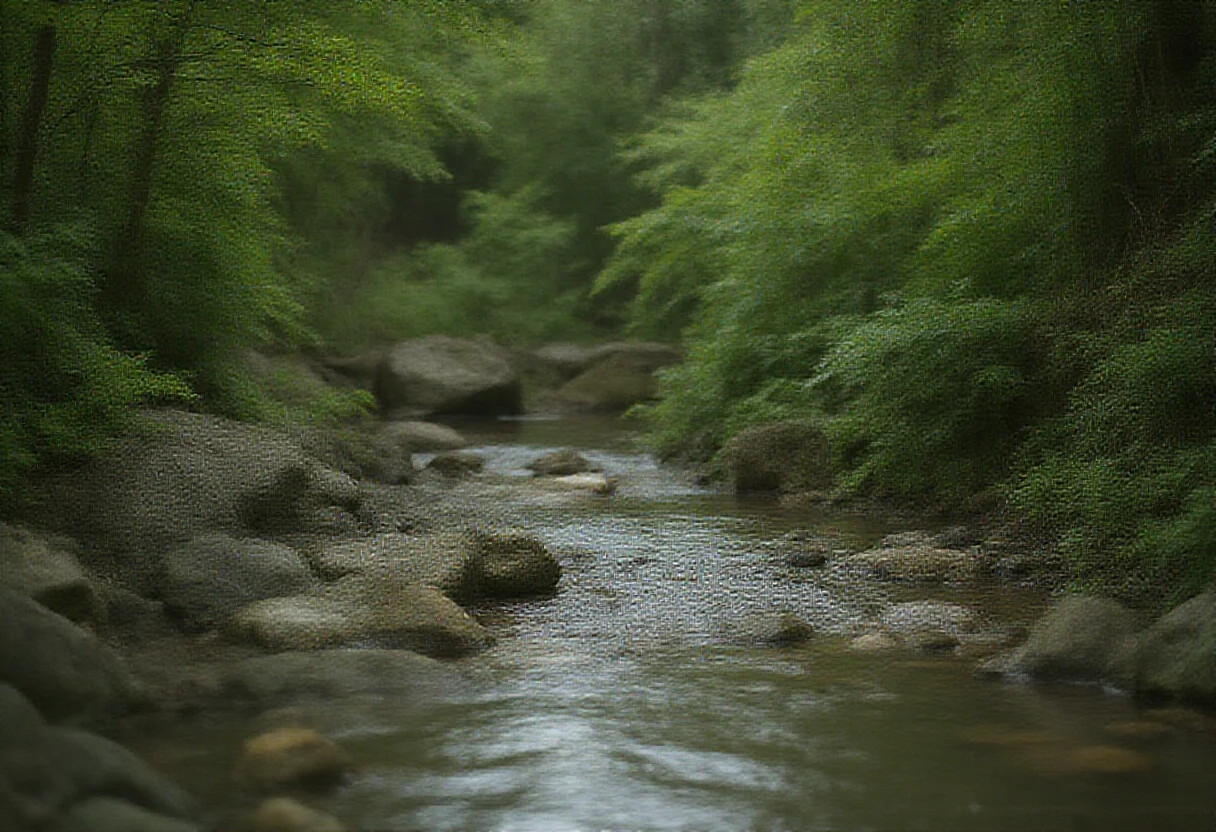
Point the lens at the place frogs use: a pond edge, wet stone, drain outlet or log. Mount the camera 30 to 60 cm above the ground and angle it slightly down.
Avoid pointing directly at open water, where glare and ripples create false shots. Test the view at dusk. Check the card only when you need to, because repeated visits disturb animals.
| Setup | Why it works | Watch out for |
|---|---|---|
| Low mount at a pond edge | Close to the frog, clean frame | Splashes and condensation |
| Time-lapse on a wet stone | No need for a heat trigger | Large file sizes |
| Wide shot of the whole garden | Shows what visits the area | Frogs may be too small to see |
Be kind to wildlife
Do not use bright white flash, touch frogs or move eggs. Keep the camera away from nesting and spawning sites, and remove it if animals avoid it. Rules vary for public land and protected sites, so check with your local land manager before placing equipment. Keep visits short and quiet, and wash your hands after touching pond water, soil or wet equipment.
Respect privacy too. Do not aim cameras at neighbours’ property. If you want a one-camera guide, see our post on the outdoor wildlife camera for frogs.
Using a camera with indoor frogs
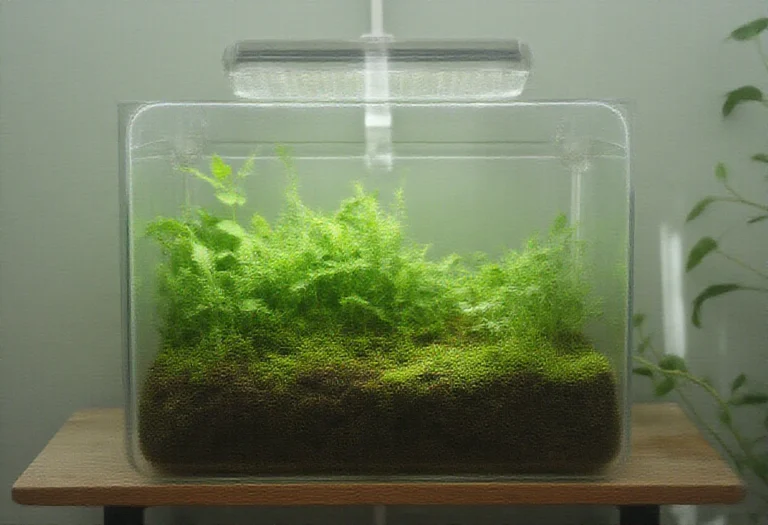
A small camera can also help you watch pet frogs without opening the terrarium. Nocturnal species are active when you are asleep, and a camera shows normal behaviour without stress.
Mount cameras outside the glass, away from humidity, and use red or low-glow light. See our guide to a frog-safe LED night light.
Storing and reviewing your footage
Time-lapse and night modes produce many frames. Use a large memory card, label cards by date and keep a spare. Scroll through photos quickly, then note which nights showed frogs and what the weather was.
After a few weeks you will see patterns, such as frogs appearing after rain or on warm nights. That helps you choose the best place and time for the next session without extra visits.
Phone apps and other options
A cheap option is an old phone in a weatherproof case on a tripod, recording in time-lapse. It does not need a heat sensor, but it needs power and shelter from rain. A pond-edge macro lens can add detail.
For long monitoring, a trail camera is simpler and cheaper to leave out overnight. Whatever you choose, mount it securely, keep wiring away from water and check it after storms.
Common mistakes
Most poor footage has a simple cause. Fix these habits first, and your hit rate improves quickly. Check the lens and housing seals after every storm, since fogged glass ruins a whole night of recording.
- Relying on the motion sensor alone for frogs
- Mounting too high, where frogs look tiny
- Pointing at open water and capturing glare
- Setting long delays between photos
- Leaving condensation on the lens
- Visiting too often and disturbing the site
Listening as a second method
A camera is only one way to learn which frogs use a site. Many species are far easier to hear than to photograph. The U.S. Geological Survey ran the North American Amphibian Monitoring Program, a volunteer calling-survey effort that started in 1997. The national program closed after the 2015 season.
Its routes used set listening stops. Observers started at least 30 minutes after sunset, finished by 1 a.m. and listened for 5 minutes at each stop, recording which species called. Light rain was acceptable, heavy rain was not.
Minnesota’s statewide FrogWatch uses a lighter version. Volunteers register one wetland, visit every 2 to 4 weeks from about March or April to August, and start at least 30 minutes after sunset. They note air temperature, cloud cover and the species heard. A visit takes about 10 minutes plus travel. Check your own state or local program for its rules.
A short evening listening session next to your camera shows which nights frogs were calling and whether the camera caught them.
Match the method to your question
| Your question | Better first choice | Why |
|---|---|---|
| Which species call at my pond? | Listening visits | Calling surveys record the species heard, as in the USGS program. |
| Do frogs use one log, drain or stone? | A low, close camera in time-lapse | The distance is short and you control the frame. |
| Are small animals moving along a wall or fence line? | An active trigger designed for small animals | Hobbs and Brehme (2017) built one for tunnels, narrow trails and drift fences because standard cameras miss small animals. |
| Are there frogs here at all? | Both methods over several weeks | Neither one is complete on its own. |
A careful first week with a new camera
Set the camera up gently and change one thing at a time. That way you know which change fixed a problem.
- Test it in the garden first. Walk past at the height you plan to use and check that close objects are sharp.
- Choose time-lapse as the main mode and keep motion triggering as a back-up.
- Place it at the frog spot near dusk, then check the frame on the screen or phone before you leave.
- Leave it for three or four nights, then collect the card once.
- Note which nights showed frogs, then compare them with rain and temperature.
- Move or re-angle the camera only if the footage shows a clear problem such as glare or a blurred foreground.
What your photos can and cannot tell you
Infrared night images are usually grey and low in detail. A green frog and a brown frog can look alike, so note body shape, relative size and pattern instead of colour.
Do not name a species from one blurry frame. Compare it with a regional field guide or your state wildlife agency’s species list, and log doubtful frames as “unidentified frog”. A call heard on the same night can settle the question.
Brown, Hannon and Maerz concluded that wildlife cameras may work best for larger, daytime animals and worst for smaller, nocturnal ones. A quiet pond on camera therefore does not prove that no frogs are present.
Keep a simple field log
Footage means more when you record the conditions around it. A paper notebook or phone note is enough, as long as you fill in the same fields on every visit.
| Field | What to write | Why it helps |
|---|---|---|
| Date and time | When you set up and when you collected the card | Lets you match frames to the right night. |
| Weather | Rain in the last day, cloud, rough air temperature | Frogs often respond to rain and mild nights, so this explains busy and empty nights. |
| Camera settings | Mode, height, angle and lens position | Shows what changed if results improve or drop. |
| Frogs seen or heard | Count, rough size, calls heard | Gives you a record to compare across weeks and seasons. |
| Problems | Fogged lens, glare, flat battery, blocked view | Turns a failed night into a fix for the next one. |
After a month, the log shows whether your camera is picking up real activity or only empty frames.
Frequently Asked Questions
Why does my trail camera miss frogs?
Many cameras sense body heat. Frogs are cool and small, and a CSIRO-cited test found detection depended on the temperature difference.
Is time-lapse better than motion?
Often yes for frogs, because it does not depend on a heat trigger. It uses more storage.
Does infrared light harm frogs?
We did not find a source on this. Use low-glow settings and avoid bright white flash near breeding sites.
Can I put a camera at a public pond?
Rules vary. Ask the land manager or local wildlife agency first.
What is the best height for a frog camera?
Low, at roughly 30 to 60 cm above the ground, angled slightly down toward the frog spot.
Bottom Line
The best wildlife camera for frogs is one you can place low, focus close and run in time-lapse. Do not trust a motion sensor alone.
Choose weatherproof gear, keep visits few and leave the site as you found it. A clear, well-aimed frame teaches you more about your local frogs than any number of random clips.
Sources
- USGS: An improved camera trap for amphibians, reptiles, small mammals and large invertebrates, accessed 31 October 2026
- CSIRO Wildlife Research: Estimating the effectiveness of using wildlife cameras versus visual-encounter surveys to detect herpetofauna (Brown, Hannon and Maerz), accessed 12 November 2026
- U.S. Geological Survey: North American Amphibian Monitoring Program, accessed 12 November 2026
- Minnesota DNR: Minnesota Statewide FrogWatch, accessed 12 November 2026
One Comment