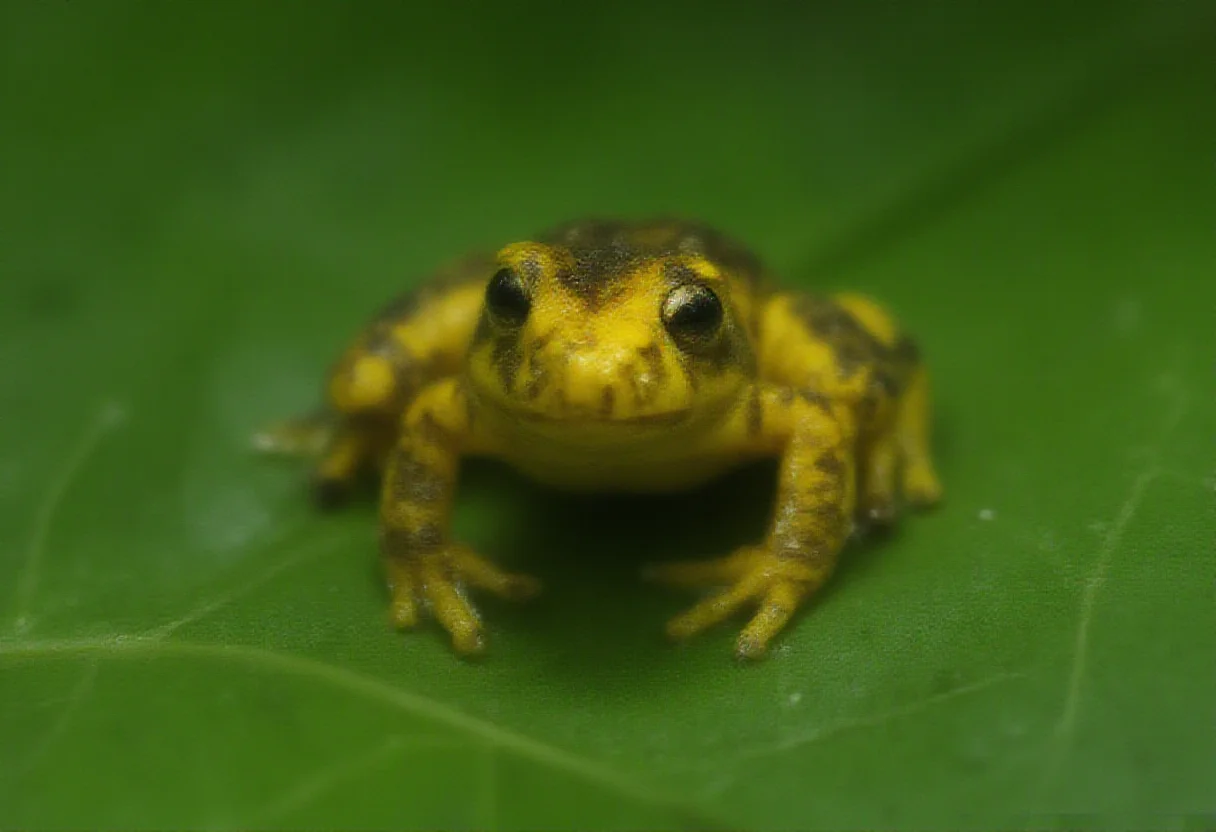
Best Remote Temp and Humidity Sensor for Frogs: What to Look For
This post contains affiliate links. As an Amazon Associate I earn from qualifying purchases. Prices and availability are shown by Amazon and can change.
A remote temperature and humidity sensor lets you check a frog tank without opening it. Choose one with a small, damp-rated sensor, a clear display and min-max memory, and place it at frog level. Check readings against a second device. For poison dart frogs, Lafeber gives 72 to 80°F by day and 80 to 100 percent humidity; the MSD Veterinary Manual gives 75 to 80 percent for most amphibians.
Frogs lose water through their skin and cannot warm themselves from inside. A tank that drifts too hot, cold or dry can cause trouble before you notice. A remote sensor shows what the glass hides.
This guide covers what the numbers should be, where to put a sensor, why a log of past readings helps, and what to check in a listing. For a sensor-and-display pair, see our wireless humidity monitor guide.
How this was made: prepared with AI assistance and checked against the sources listed at the end. Images are AI-generated illustrations, not photographs of real animals or products.
Key Takeaways
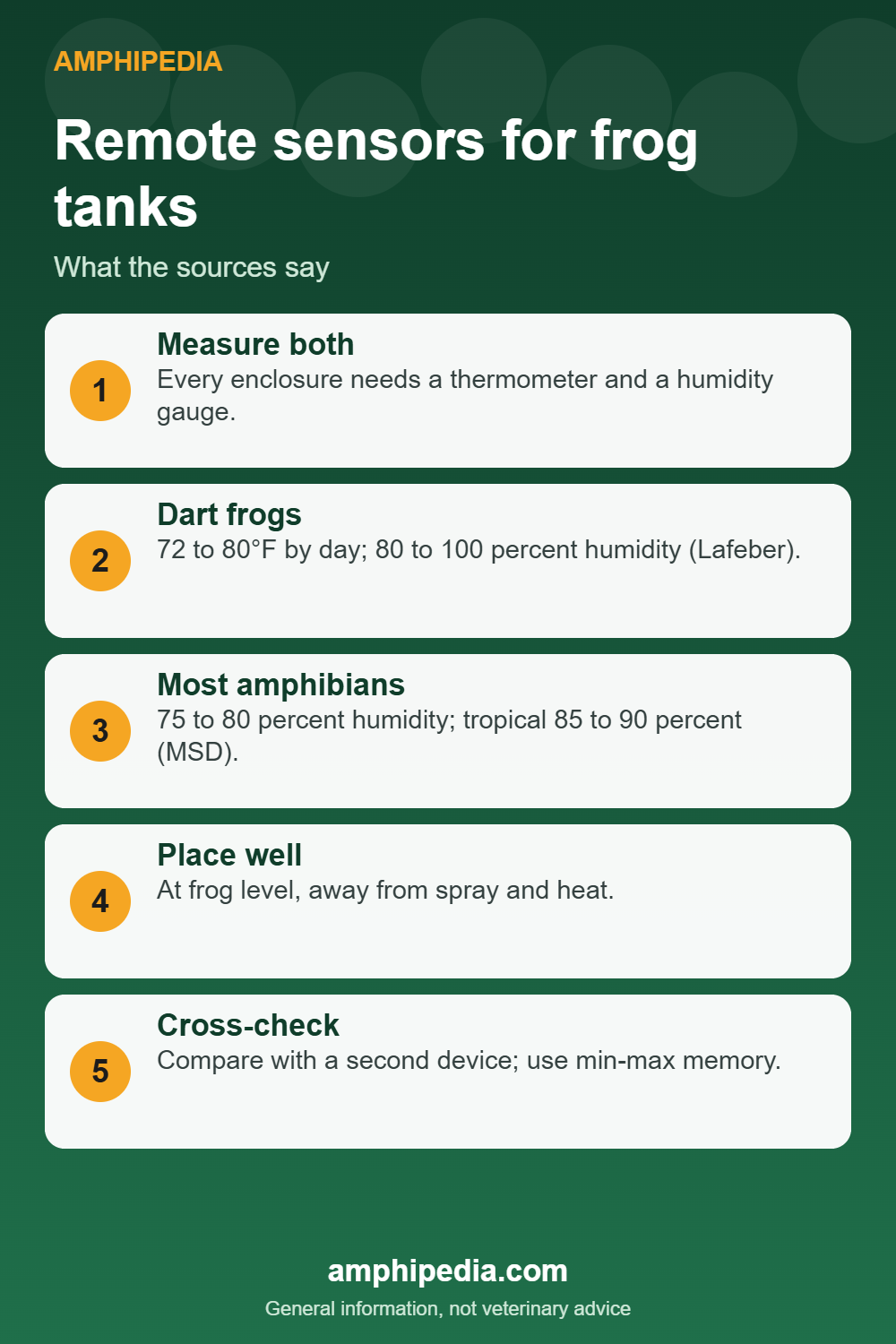
- The MSD Veterinary Manual says every enclosure should have a thermometer and a humidity gauge.
- Dart frogs: 72 to 80°F by day and 80 to 100 percent humidity (Lafeber).
- Most amphibians do well at 75 to 80 percent humidity; tropical species 85 to 90 percent (MSD).
- Place the sensor at frog level, away from spray and heat.
- Min-max memory shows overnight swings you would otherwise miss.
Pin this infographicShare on Facebook
Remote temperature and humidity sensors to compare
These listings are remote and wireless sensors that read temperature and humidity. Check sensor size, damp rating, alerts and logging, and compare readings with a second device.

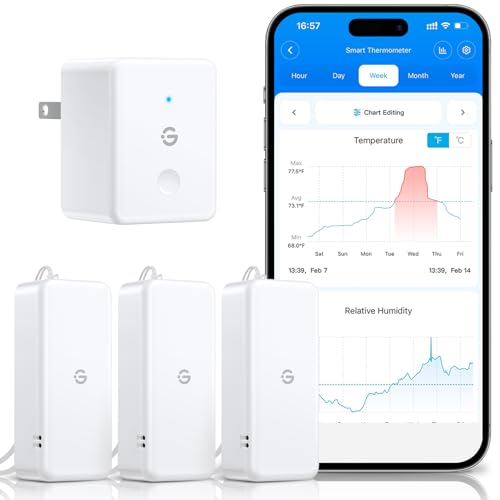

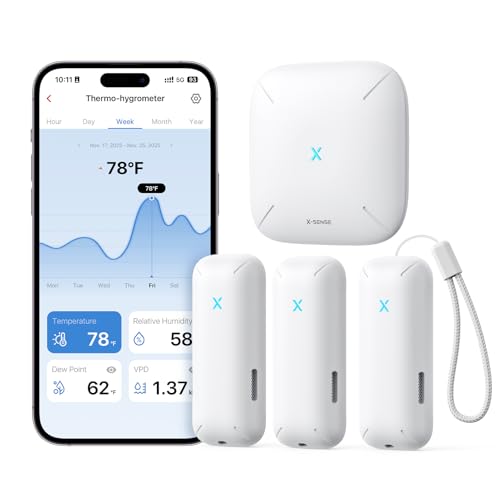


Product titles, prices and ratings are provided by Amazon and are accurate only at the time they are displayed.
Why a remote sensor helps
The MSD Veterinary Manual says amphibian metabolism and immune function are uniquely reliant on a stable environment, and that infectious and nutritional diseases are common in tropical amphibians kept in suboptimal conditions.
Opening the lid to check also lets humidity escape. A remote display lets you read the tank from outside, and some units keep a record of past readings.

Frog temperature and humidity ranges
Ranges depend on the species. Use the source nearest to your frog.
| Frog type | Temperature | Humidity | Source |
|---|---|---|---|
| Most amphibians | 60 to 70°F (16 to 21°C) | 75 to 80 percent | MSD Veterinary Manual |
| Tropical species | 75 to 80°F (24 to 27°C) | 85 to 90 percent | MSD Veterinary Manual |
| Poison dart frogs | 72 to 80°F (22 to 27°C) by day; 65 to 70°F at night | 80 to 100 percent | Lafeber Veterinary |
| Dart frogs (second source) | 64 to 78°F target | 80 to 95 percent | DartFrog.pet |
Features that matter
No source rates individual sensors for frogs. Judge each unit by how you will use it.
- A small sensor head that sits at frog level.
- A damp-rated sensor; ask the maker if the listing is unclear.
- Min and max memory for overnight readings.
- A display that updates often enough to see changes.
- Alerts for high and low limits you can set yourself.
- Battery life and signal range that suit your distance.
- A separate probe if you need water or substrate readings.
Where to place it
Put the sensor where the frogs live, not at the top of the tank where warm air collects. Keep it clear of misters, lamps and heaters.
The manual says amphibians use a gradient, so a second sensor in a cool corner shows whether it exists.
Using logs and alerts
A log shows trends. If humidity falls every afternoon, that tells you when to adjust misting or ventilation. Set alert limits from your species range.
Test the alert once, and do not rely on it alone. See also our wifi monitor guide and humidity alarm guide.
Checking accuracy
Compare the sensor with a second device for a day. If they differ widely, test a third before changing the tank.
Spot-checking with a laser temperature probe, as the manual mentions, gives a surface reading you can compare.
Reading day and night values
Lafeber gives a daytime gradient of 72 to 80°F for dart frogs and accepts night drops to 65 to 70°F. A night reading below your day limit is not always a fault.
Set separate alert limits for day and night if your sensor allows it. If it does not, set the low limit to the night value so it does not sound every evening. Check humidity after each misting as well, since it often spikes and then falls.
Common mistakes
Most sensor problems are placement or trust.
- Mounting the sensor beside a lamp or mister.
- Trusting one reading without a second device.
- Setting alert limits so wide they never fire.
- Ignoring low battery warnings.
- Using a radiant heat source. Lafeber warns that it dries amphibian environments.
- Opening the tank constantly to check.
Where the dart frog sources disagree
Two dart frog sources in this guide give different numbers, and neither is wrong for every species. Lafeber Veterinary, written by a board-certified veterinarian, gives a daytime gradient of 72 to 80°F, with nights dropping to 65 to 70°F, and 80 to 100% humidity. DartFrog.pet, whose page does not name an author, gives a target of 64 to 78°F and 80 to 95% humidity.
The temperature ranges overlap between 72 and 78°F, but the edges differ by several degrees. The MSD Veterinary Manual gives 75 to 80°F for tropical amphibians generally. We do not pick one source over the others. Look up your exact species, ask the breeder or an exotics vet, and set your alert limits from that figure.
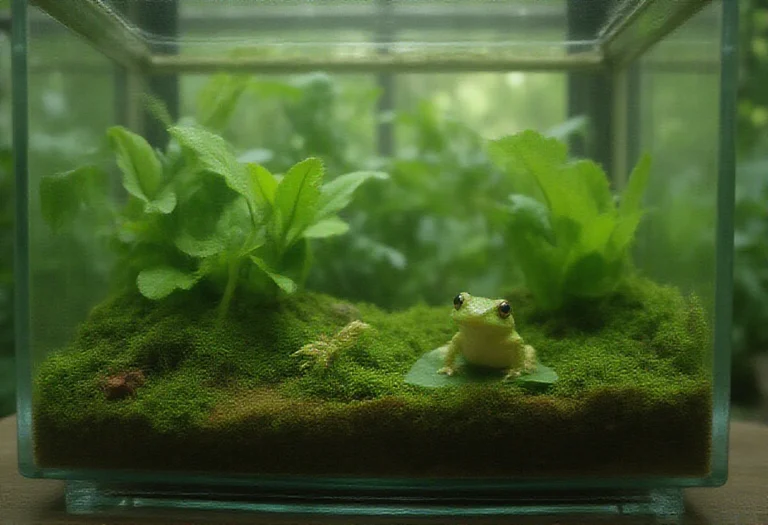
How a planted vivarium shapes your readings
DartFrog.pet describes a dart frog vivarium as an ecosystem with live plants and beneficial micro fauna. It says daily misting provides ambient water that evaporates gradually, so humidity rises and then falls. It also says plants provide shelter and help maintain humidity.
For a sensor, that means the number is rarely flat. Expect a peak after misting and a slow decline afterward. Lafeber recommends a heavily planted terrarium with visual barriers and tree limbs for one to four frogs, so dense foliage may also shield the sensor from the room air or from the mist stream, depending on where you put it. Where leaves hang over the probe, readings can differ from the open center of the tank. That last point is our reasoning, not a published finding.
Humidity versus fresh air
DartFrog.pet suggests enclosing the top with glass instead of a screen to help hold humidity. The MSD Veterinary Manual says adequate ventilation, with about one to two fresh air changes per hour, is needed to prevent disease. Those two pieces of advice pull in opposite directions.
A sensor helps you balance them. If humidity sits well below your species range with a screen lid, a partial cover may help, and if it sits at the top of the range with no fall at all, you may want more airflow. The sources do not give a formula, so change one thing at a time and watch the log for a few days.
Three patterns to look for in a log
- A spike after misting that fades over hours. DartFrog.pet describes this as water evaporating gradually. It is normal.
- A nightly dip in temperature. Lafeber says night temperatures may fall to 65 to 70°F for dart frogs, so a lower night reading is not always a fault.
- A slow decline across several days. This is not described in the sources. Check the battery, the substrate moisture, and any change in lids or vents before blaming the frogs.
Pair any odd pattern with a look at the frogs themselves. Appetite, activity, and skin appearance say more than a graph, and an exotics vet can interpret a persistent change.
Moving a sensor without stressing the frogs
Lafeber notes that dart frogs have sensitive skin that secretes toxins, and advises minimal handling. If handling is unavoidable, it recommends moistened hands or moistened latex gloves. You can usually move a sensor without touching a frog at all.
- Wait until the frogs are hiding or away from the area.
- Keep your hands slow and low, and avoid pressing on plants where frogs sleep.
- Move one sensor at a time, so you do not lose your reference reading.
- Wash your hands with soap and running water afterward, as the CDC advises after touching amphibians or their equipment.
A second sensor for quarantine boxes
DartFrog.pet says a quarantine enclosure for new frogs can be as simple as a closed plastic shoe box lined with moistened sphagnum moss and leaf litter, kept for at least one week. The MSD Veterinary Manual says a 6- to 8-week period is typically adequate. The two sources disagree on length, so ask an exotics vet how long to keep new animals separate.
A small sensor in a plastic box gives you a quick view of whether the box is drying out or overheating. Keep it separate from the main tank equipment and do not share tools between the two.
Water for misting
Since misting drives most of the humidity readings in a dart frog tank, the water you spray matters too. Lafeber Veterinary lists aged tap water left open for 24 to 48 hours, bottled spring water, or tap water filtered through sediment and activated charcoal. The MSD Veterinary Manual says water must be free of chlorine, ammonia, nitrite, pesticides, and heavy metals, and that distilled water should not be used in amphibian enclosures.
Local tap water differs, and chloramines do not simply dissipate by standing. The MSD manual says they need a dechlorinating agent. Ask an exotics vet which option suits your frogs and your water supply, and use the same source consistently so your readings are comparable day to day.
Frequently Asked Questions
What humidity do dart frogs need?
Lafeber gives 80 to 100 percent and DartFrog.pet gives 80 to 95 percent.
What temperature is right for frogs?
Most amphibians do well at 60 to 70°F, tropical species at 75 to 80°F. Dart frogs: 72 to 80°F by day (Lafeber).
Is a remote sensor better than a stick-on one?
It lets you check without opening the tank, and may log readings. Either needs a second check.
Where should I put it?
At frog level, away from spray, lights and heaters.
Do I still need daily checks?
Yes. Alerts help but do not replace looking at your frogs.
Can I use a reptile sensor?
Only if it reads your amphibian range and tolerates damp air.
Bottom Line
A remote sensor saves you from opening the tank and can reveal patterns. Place it at frog level, set alerts from a vet source and compare it with a second device.
If your frog stops eating or shows skin changes, contact an exotics vet. The ARAV directory can help you find one.
Sources
- MSD Veterinary Manual: Housing for Amphibians (pet owner version), accessed 12 November 2026. Used for: Thermometer, humidity gauge, ranges
- MSD Veterinary Manual: Environment and Husbandry for Amphibians, accessed 12 November 2026. Used for: Gradients, laser probe spot checks, aquatic testing
- Lafeber Veterinary: Basic Information Sheet, Poison Dart Frog, accessed 12 November 2026. Used for: Dart frog temperature and humidity
- CDC: Reptiles and Amphibians. Used for: Salmonella and hygiene
- DartFrog.pet: Getting Started with Dart Frogs, accessed 12 November 2026. Used for: dart frog temperature, humidity, vivarium, quarantine



2 Comments