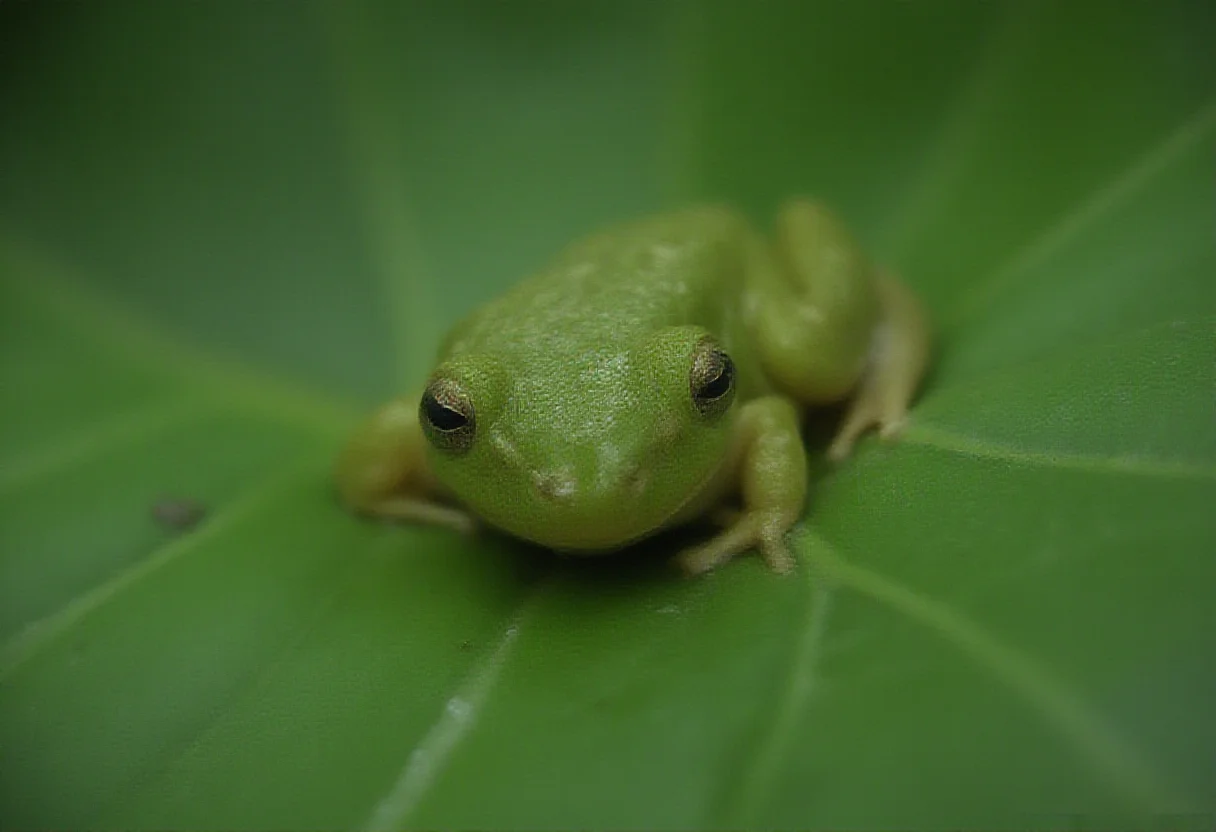
Antibiotic Ointment for Amphibians: Reptile-Safe Is Not Enough
This post contains affiliate links. As an Amazon Associate I earn from qualifying purchases. Prices and availability are shown by Amazon and can change.
Do not put antibiotic ointment on a frog, toad, newt or salamander without advice from an exotics vet. Amphibian skin absorbs chemicals, so a product labelled reptile-safe is not a tested amphibian treatment. A USGS handling procedure calls ointments and most antiseptics contraindicated in amphibians. For a wound, keep the water or enclosure very clean, reduce stress, and call a vet.
The original idea behind this page was to pick a reptile-safe antibiotic ointment for wound healing. For amphibians, that premise is wrong, and it is safer to say so plainly.
Amphibians have permeable skin that takes in water and many chemicals. What looks like a minor cream can enter the whole body. This guide explains why, what to do instead and which clean-care supplies are worth having.
How this was made: prepared with AI assistance and checked against the sources listed at the end. Images are AI-generated illustrations, not photographs of real animals or products.
Key Takeaways
- Reptile-safe does not mean amphibian-safe; skin and risks differ.
- A USGS procedure lists ointments as contraindicated in amphibians.
- Frog skin can absorb a broad range of chemicals, according to a published review.
- Clean water, low stress and a vet visit matter more than any cream.
- Keep supportive supplies on hand, such as dechlorinator and a clean quarantine tank.
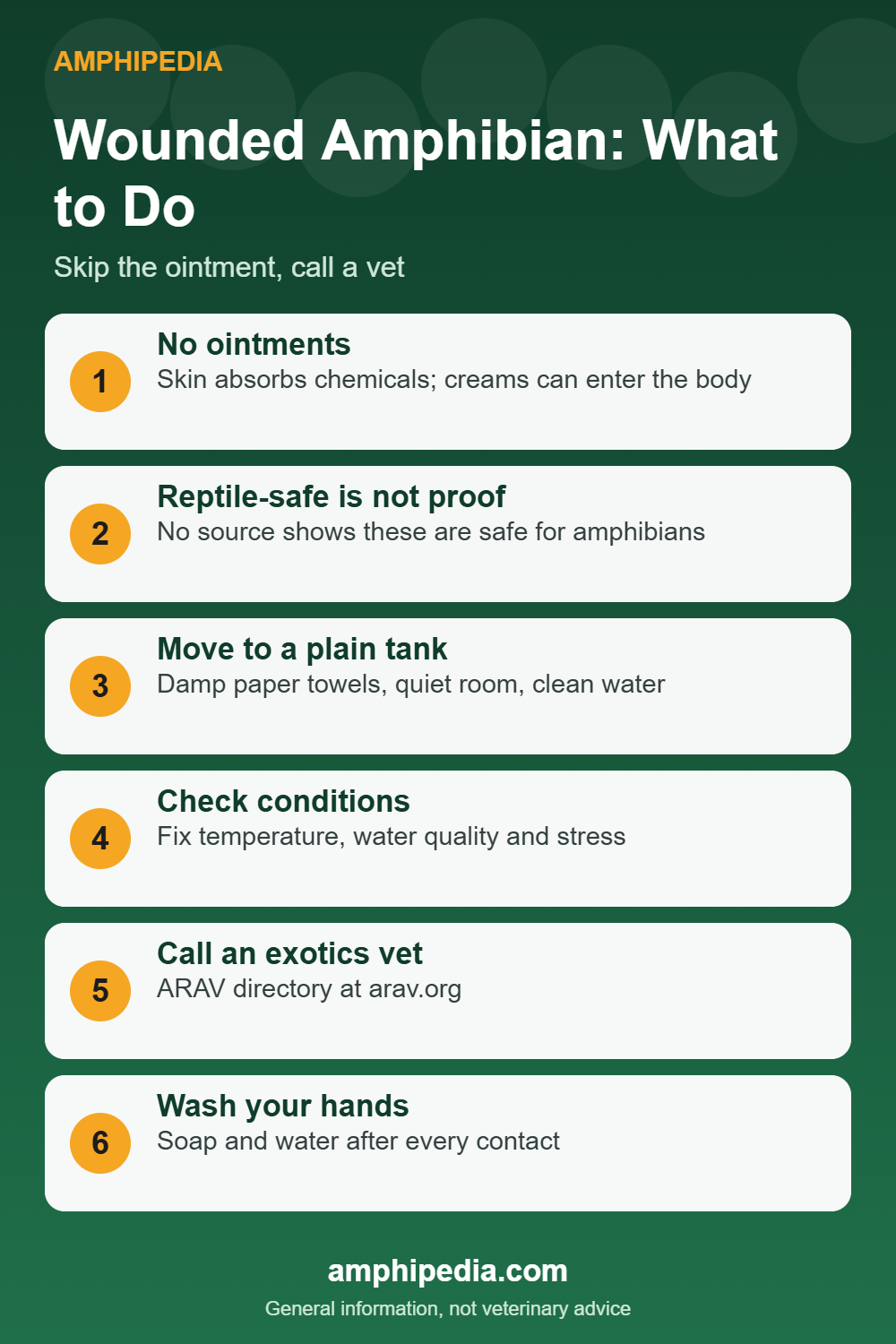
Pin this infographicShare on Facebook
Supplies for a clean recovery space (not medicine)
These supplies are drawn from live Amazon listings. They support clean water and stable conditions, and they are not treatments.




Product titles, prices and ratings are provided by Amazon and are accurate only at the time they are displayed.
Why amphibian skin is different
Amphibian skin is thin, moist and active. A review from James Cook University researchers found that postmetamorphic frogs appear to absorb a broad range of chemicals through the skin, even large molecules. The authors say more testing is needed to guide treatment.
That strength can become a weakness. A cream, alcohol or oil that stays on the surface of a reptile may pass into a frog. The same absorption route also lets ammonia and cleaning chemicals in.
What official sources say about ointments
An older USGS National Wildlife Health Center procedure for researchers states that, apart from one named spray, all other topical antiseptics and disinfectants, in both spray and ointment form, are contraindicated in amphibians. It also says to release wounded wild amphibians on land.
That guidance was written for field researchers, not pet owners, and it is not a treatment plan. It does show why guessing with a household or reptile product is risky.
Researchers also stress that treatments in frogs are still being studied. For now, the safest rule for owners is simple: no creams without vet advice.
What “reptile-safe” really means
A reptile-safe label is aimed at animals with scaled, dry skin. We found no source that tests such products on amphibians, so the label gives no assurance for a frog or newt.
The same caution applies to oils, lotions and many fish remedies. A pet-trade article notes that the entire skin of an amphibian allows transfer of medicine, so even fish treatments need expert guidance.
What to do if you see a wound
Keep calm and keep handling to a minimum. Move the animal to a clean quarantine tank with damp, unbleached paper towels or clean, dechlorinated water, depending on the species.
Then contact an exotics vet. The ARAV directory at arav.org lists vets who treat amphibians. Do not start medicines, dips or creams on your own.
- Handle the animal as little as possible and only with clean, wet, powder-free gloves or wet hands.
- Move it to a plain quarantine tank in a quiet room.
- Check temperature and water quality; fix any problems.
- Call an exotics vet and describe the wound and the animal’s behaviour.
- Photograph the area to show the vet.
Signs that need a vet quickly
Some skin problems are infections that spread fast. A pet-trade article on amphibian health describes Aeromonas as red patches, often on the underside of the legs and abdomen, and says treatment works only if caught early. It also describes a cottony Saprolegnia fungus that can take hold once the mucous layer is damaged.
These are not conditions to handle at home. Take photos and call a vet.
- Red patches or streaks.
- Cottony or fuzzy growth.
- Open sores or ulcers.
- Swelling, lumps or bleeding.
- Refusing food or hiding more than usual.
- Merck Veterinary Manual: Infectious Diseases of Amphibians, Red-leg, saprolegniasis, chytridiomycosis and diagnosis
Support healing without medicine
Clean, stable conditions are the safest way to support a recovering animal. Use dechlorinated water for dishes and misting; our dechlorinator guide explains how to choose one.
A plain setup from our quarantine tank guide is easier to keep clean than a planted display. For a short list of what is safe and what is not, see the first aid spray guide.
- Remove waste and uneaten food daily.
- Keep temperature in the species range.
- Reduce handling and noise.
- Do not mix with other animals.
- Wash your hands and tools between tanks.
Prevent wounds in the first place
Many wounds come from rough decor, tight lids, net strikes or tank mates. Smooth surfaces and soft nets help. A pet-trade source warns that stiff nylon nets can strip the mucous coat and invite infection.
Keep the tank clean and avoid overcrowding. Watch for fights, bites and escapes, and remove sharp objects.
Questions to ask your exotics vet
A vet visit goes best with notes. Write down when you first saw the problem, what the animal eats, the water source, the tank temperature and any recent changes such as a new animal or new decor.
Ask which cleaning products are safe near the tank, whether the animal should be isolated and what signs mean you must call again. Bring photos of the skin and a sample of tank water if the vet asks for one. Keep a short log so you can track progress without guessing.
- What do you think caused the wound?
- Does the animal need to be separated from tank mates?
- What water and cleaning products are safe for this species?
- Which signs would mean an urgent recheck?
- When should the animal eat and drink normally again?
Safe handling and household hygiene
The CDC says reptiles and amphibians can carry Salmonella even when healthy, and people can get sick from the tank, water and equipment. Wash your hands with soap and running water after contact.
Children under 5 should not handle amphibians or their habitats. Clean tanks outside the kitchen and pour waste water down the toilet.
Why skin problems often start with the water
The Merck Veterinary Manual links several amphibian skin diseases to the animal’s surroundings. Red-leg syndrome, a bacterial infection that spreads through the body, is described as most likely in malnourished, newly acquired amphibians kept in poor-quality water. Merck also lists poor water quality as a factor in fungal skin disease.
So a wound is often a sign to look at the whole setup. Merck says that a thorough review of husbandry, including water testing, temperature testing and a check for overcrowding, is part of working up a red-leg case.
Soaps, disinfectants and ammonia can damage the skin
Merck describes a cotton-like fungal growth, saprolegniasis, that usually appears where the skin has already been injured. It lists loss of the protective slime layer from chemical irritants as a predisposing factor, naming disinfectants, soaps, detergents and ammonia spikes.
The practical point is that a well-meant cleaning session can add to the problem. After any tank cleaning, rinse tools and decor thoroughly with fresh water, and keep soap and sprays out of the water.
- Rinse cleaned items until no smell or residue remains.
- Use dechlorinated water for rinsing amphibian items.
- Test for ammonia after a clean, since a spike can strip the slime layer.
Similar signs, different causes
Merck stresses that some signs are nonspecific. Red skin on the belly can occur with bacterial infection, toxins, ranavirus or chytridiomycosis, so a cream chosen for one cause may do nothing for another.
| What you see | Conditions Merck lists | Who can tell |
|---|---|---|
| Pinpoint red spots on legs and belly | Red-leg syndrome, ranavirus, chytridiomycosis, toxins | Exotics vet |
| White, cotton-like growth at an injury | Saprolegniasis (water mold) | Exotics vet |
| Brown or red skin, heavy shedding | Chytridiomycosis | Exotics vet |
| Gray nodules or ulcers | Mycobacteriosis, among others | Exotics vet |
None of these can be confirmed at home. The photos you take for your vet are more useful than any guess.
Diet is part of skin health
Merck names a shortage of vitamin A (hypovitaminosis A) as a contributor to both saprolegniasis and zygomycosis, a fungal disease that takes hold after skin injury. Malnutrition more generally is listed as a factor in several skin diseases.
That is a reason to feed a varied diet suited to the species and to ask your vet about supplements. It is not a reason to add vitamin products to the water or food on your own, because the right choice and amount depend on the animal.
What to expect at an exotics vet visit
Merck says confirmation of skin disease may involve a skin scrape examined under the microscope, swabs for DNA tests, or blood for culture. The vet may also ask about water source, temperature, diet and recent additions to the tank.
The vet may also give you hygiene instructions. Merck notes that mycobacteriosis can be passed to people, so ask whether you should wear gloves and how to clean the tank safely while an animal is under treatment.
Common mistakes with a wounded amphibian
- Treating a cottony growth or red patches as a cut and applying a cream.
- Moving the animal into a freshly disinfected tank without rinsing it.
- Waiting for the problem to resolve while water quality stays poor.
- Mixing the sick animal with healthy ones in the same water.
- Changing several things at once, which makes it hard for your vet to see what helped.
Frequently Asked Questions
Can I use triple antibiotic ointment on a frog?
Not without a vet. A USGS procedure lists ointments as contraindicated in amphibians, and frog skin can absorb many chemicals.
Are reptile products safe for amphibians?
Not necessarily. We found no source that tests reptile-labelled ointments on amphibians.
What should I do for a small cut?
Move the animal to a clean, quiet tank and call an exotics vet. Do not apply creams.
Can I use fish medicine on an amphibian?
Only under vet guidance. A pet-trade article says amphibian skin allows transfer of medicine across the whole body.
How do I find an amphibian vet?
Use the ARAV professional directory at arav.org or ask a local herpetological society.
Is hand washing really needed?
Yes. The CDC says healthy animals can still carry Salmonella.
Bottom Line
Skip the ointment. Amphibian skin takes in chemicals, and a reptile-safe label is not proof of safety for a frog or newt.
Move the animal to a clean, plain tank, keep water quality high and call an exotics vet.
Sources
- USGS NWHC: Restraint and Handling of Live Amphibians, accessed Topical products contraindicated; release wounded wild animals on land
- JCU: Percutaneous absorption of chemicals in frogs, accessed Frog skin absorbs a broad range of chemicals
- That Pet Place: Keeping Captive Amphibians Healthy, accessed Skin permeability, Aeromonas and Saprolegnia
- ARAV: Find a professional, accessed Directory of exotic animal vets
- CDC: Reptiles and Amphibians, accessed Salmonella and handwashing

One Comment